


 Скачать презентацию Transport Costs Factors and Issues Components of
648059d4a7cf4c2206ff67cc7890c7ca.ppt
- Количество слайдов: 24
 Transport Costs Factors and Issues
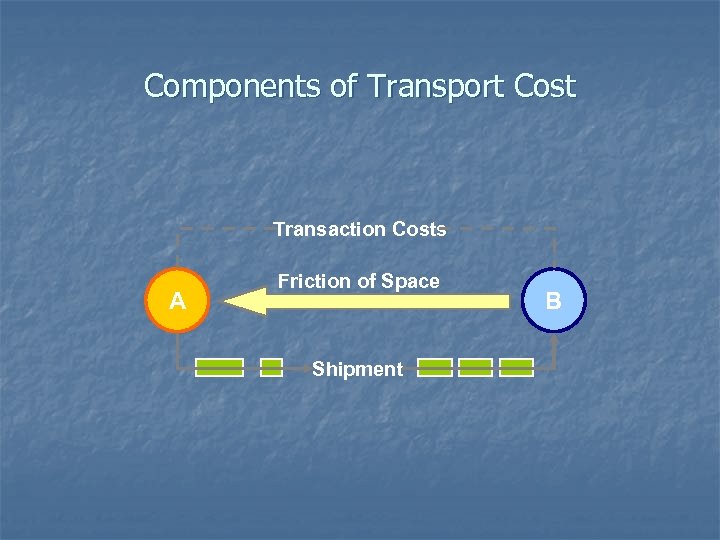 Components of Transport Cost Transaction Costs A Friction of Space Shipment B
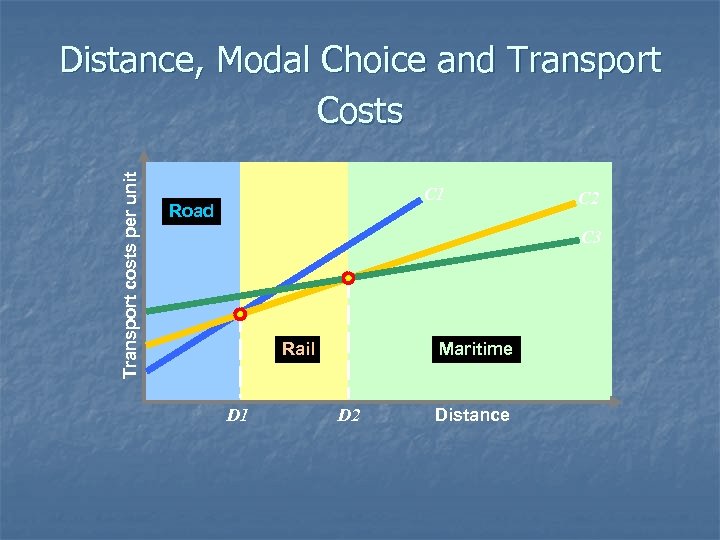 Transport costs per unit Distance, Modal Choice and Transport Costs C 1 Road C 2 C 3 Rail D 1 Maritime D 2 Distance
 Shape of Transport Cost Curves n n n n Many simple models, such as Von Thunen and Weber view transport costs as: 1. Proportional to distance 2. Each additional unit of distance adds an equal increment of cost In reality transport costs are less than proportional to distance—why? Existence of fixed costs of transport facilities incurred regardless of length of journey Fixed or terminal costs (interest on capital, costs of maintaining plant and equipment, depreciation) dilute the unit cost as distance increases Therefore costs per mile tend to decline with increasing distance
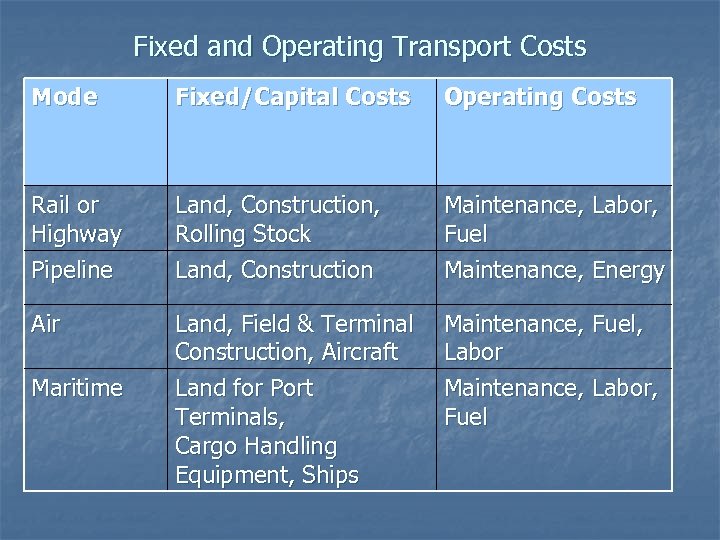 Fixed and Operating Transport Costs Mode Fixed/Capital Costs Operating Costs Rail or Highway Pipeline Land, Construction, Rolling Stock Land, Construction Maintenance, Labor, Fuel Maintenance, Energy Air Land, Field & Terminal Construction, Aircraft Land for Port Terminals, Cargo Handling Equipment, Ships Maintenance, Fuel, Labor Maintenance, Labor, Fuel Maritime
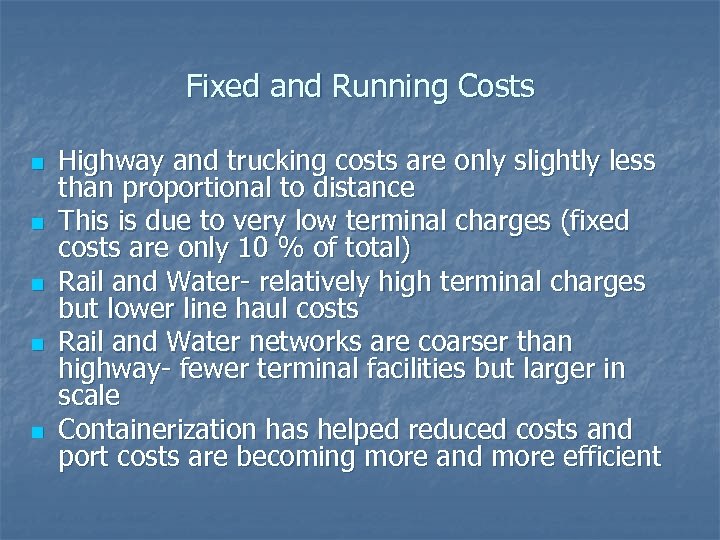 Fixed and Running Costs n n n Highway and trucking costs are only slightly less than proportional to distance This is due to very low terminal charges (fixed costs are only 10 % of total) Rail and Water- relatively high terminal charges but lower line haul costs Rail and Water networks are coarser than highway- fewer terminal facilities but larger in scale Containerization has helped reduced costs and port costs are becoming more and more efficient
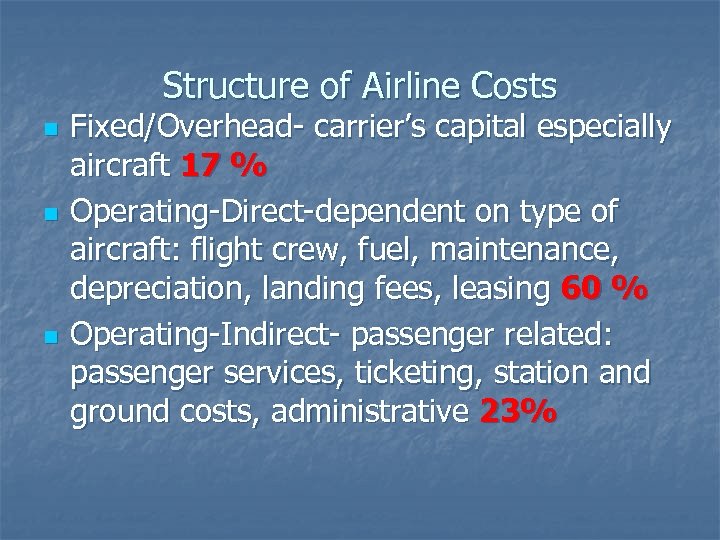 Structure of Airline Costs n n n Fixed/Overhead- carrier’s capital especially aircraft 17 % Operating-Direct-dependent on type of aircraft: flight crew, fuel, maintenance, depreciation, landing fees, leasing 60 % Operating-Indirect- passenger related: passenger services, ticketing, station and ground costs, administrative 23%
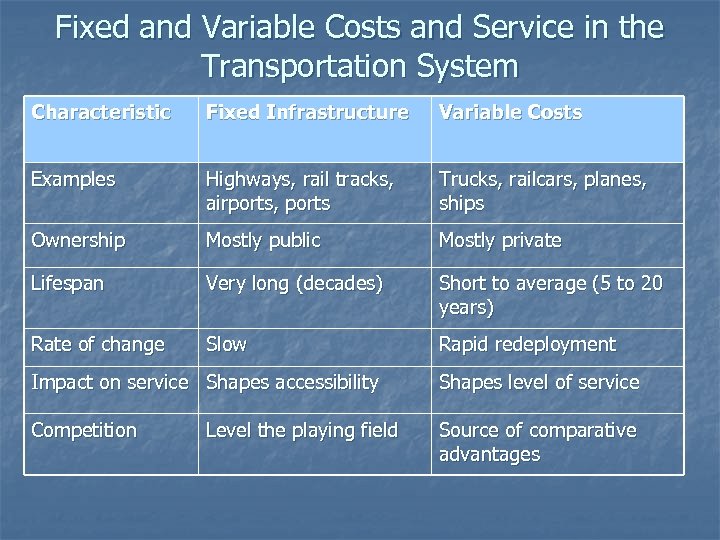 Fixed and Variable Costs and Service in the Transportation System Characteristic Fixed Infrastructure Variable Costs Examples Highways, rail tracks, airports, ports Trucks, railcars, planes, ships Ownership Mostly public Mostly private Lifespan Very long (decades) Short to average (5 to 20 years) Rate of change Slow Rapid redeployment Impact on service Shapes accessibility Shapes level of service Competition Source of comparative advantages Level the playing field
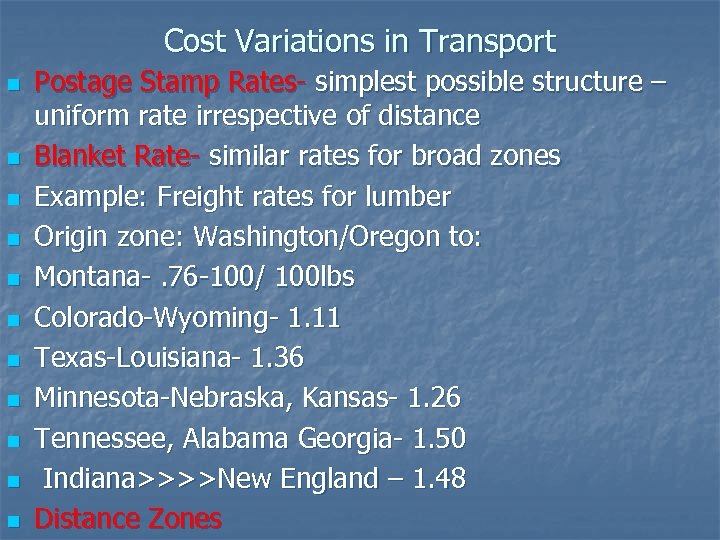 Cost Variations in Transport n n n Postage Stamp Rates- simplest possible structure – uniform rate irrespective of distance Blanket Rate- similar rates for broad zones Example: Freight rates for lumber Origin zone: Washington/Oregon to: Montana-. 76 -100/ 100 lbs Colorado-Wyoming- 1. 11 Texas-Louisiana- 1. 36 Minnesota-Nebraska, Kansas- 1. 26 Tennessee, Alabama Georgia- 1. 50 Indiana>>>>New England – 1. 48 Distance Zones
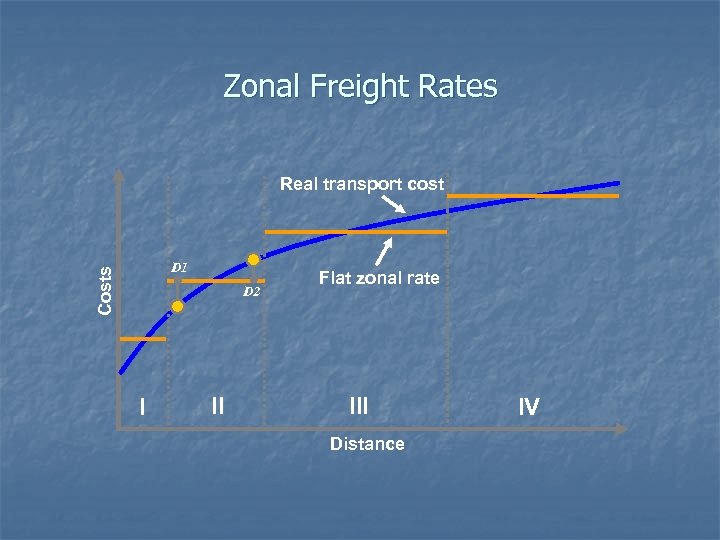 Zonal Freight Rates Real transport cost Costs D 1 D 2 I II Flat zonal rate III Distance IV
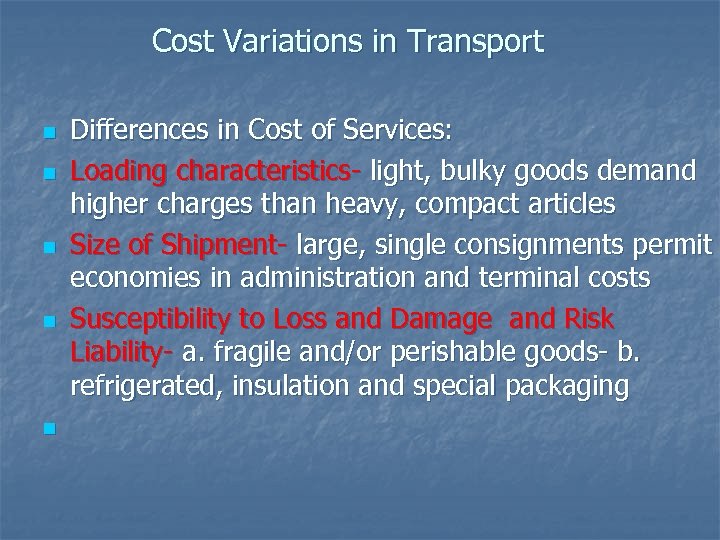 Cost Variations in Transport n n n Differences in Cost of Services: Loading characteristics- light, bulky goods demand higher charges than heavy, compact articles Size of Shipment- large, single consignments permit economies in administration and terminal costs Susceptibility to Loss and Damage and Risk Liability- a. fragile and/or perishable goods- b. refrigerated, insulation and special packaging
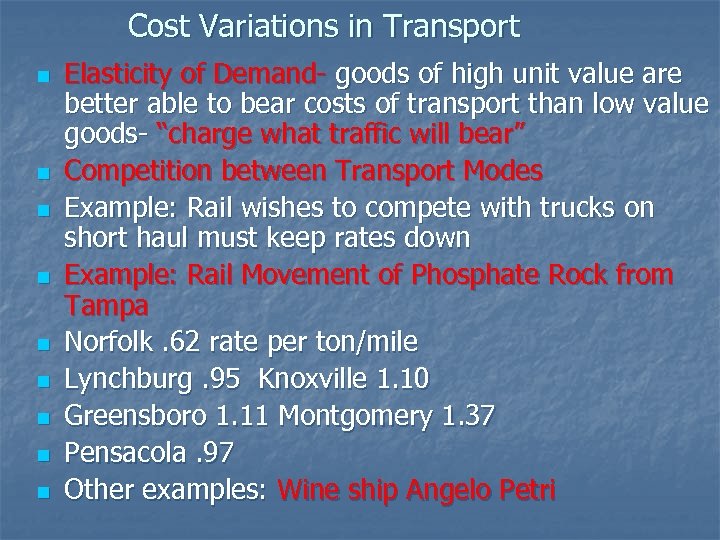 Cost Variations in Transport n n n n n Elasticity of Demand- goods of high unit value are better able to bear costs of transport than low value goods- “charge what traffic will bear” Competition between Transport Modes Example: Rail wishes to compete with trucks on short haul must keep rates down Example: Rail Movement of Phosphate Rock from Tampa Norfolk. 62 rate per ton/mile Lynchburg. 95 Knoxville 1. 10 Greensboro 1. 11 Montgomery 1. 37 Pensacola. 97 Other examples: Wine ship Angelo Petri
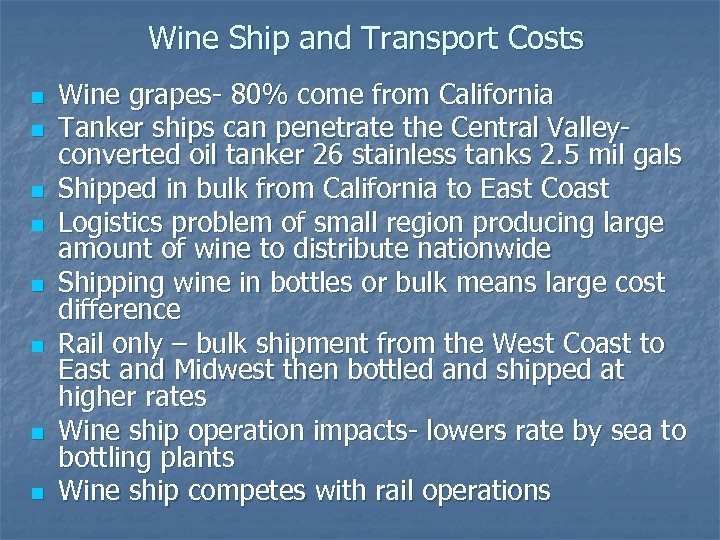 Wine Ship and Transport Costs n n n n Wine grapes- 80% come from California Tanker ships can penetrate the Central Valleyconverted oil tanker 26 stainless tanks 2. 5 mil gals Shipped in bulk from California to East Coast Logistics problem of small region producing large amount of wine to distribute nationwide Shipping wine in bottles or bulk means large cost difference Rail only – bulk shipment from the West Coast to East and Midwest then bottled and shipped at higher rates Wine ship operation impacts- lowers rate by sea to bottling plants Wine ship competes with rail operations
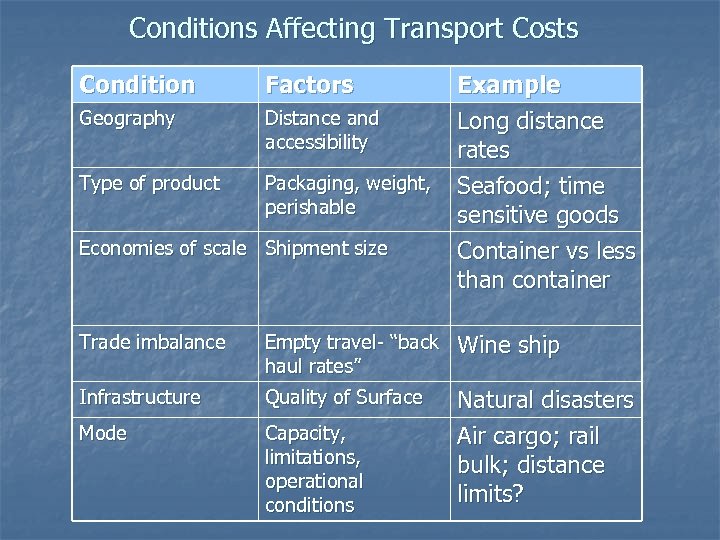 Conditions Affecting Transport Costs Condition Factors Geography Distance and accessibility Type of product Packaging, weight, perishable Economies of scale Shipment size Example Long distance rates Seafood; time sensitive goods Container vs less than container Trade imbalance Empty travel- “back haul rates” Wine ship Infrastructure Quality of Surface Mode Capacity, limitations, operational conditions Natural disasters Air cargo; rail bulk; distance limits?
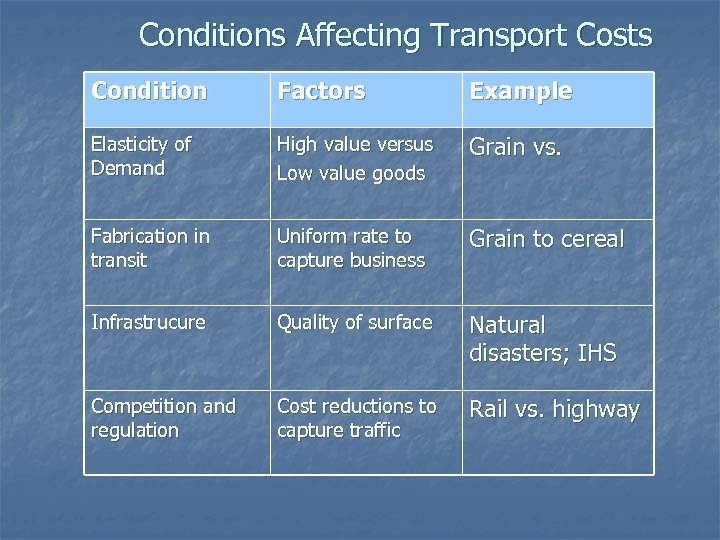 Conditions Affecting Transport Costs Condition Factors Example Elasticity of Demand High value versus Low value goods Grain vs. Fabrication in transit Uniform rate to capture business Grain to cereal Infrastrucure Quality of surface Natural disasters; IHS Competition and regulation Cost reductions to capture traffic Rail vs. highway
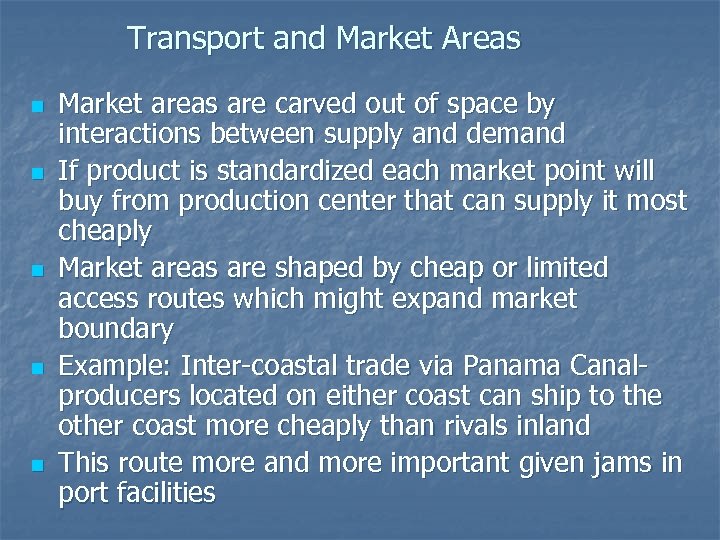 Transport and Market Areas n n n Market areas are carved out of space by interactions between supply and demand If product is standardized each market point will buy from production center that can supply it most cheaply Market areas are shaped by cheap or limited access routes which might expand market boundary Example: Inter-coastal trade via Panama Canalproducers located on either coast can ship to the other coast more cheaply than rivals inland This route more and more important given jams in port facilities
 n n n n n Market Boundary Overlap Boundaries between market areas are often blurred Implies absorption of distribution costs by buyer, seller or shipper Geographical Price Discrimination- extra costs of long distance distribution not reflected in price of commodity Seller will profit by adjusting or taking control of delivered prices not in accord with transfer rates Push down price where competition is high and demand is elastic Push price upwards where competition is low and demand is inelastic Freight Absorption- another form of geog price discrim Discriminate against near buyers so sellers assume transport costs to distant markets Sellers often has more intense competition in remote market than at home Freight absorption usually takes form of uniform price over large areas: toothpaste
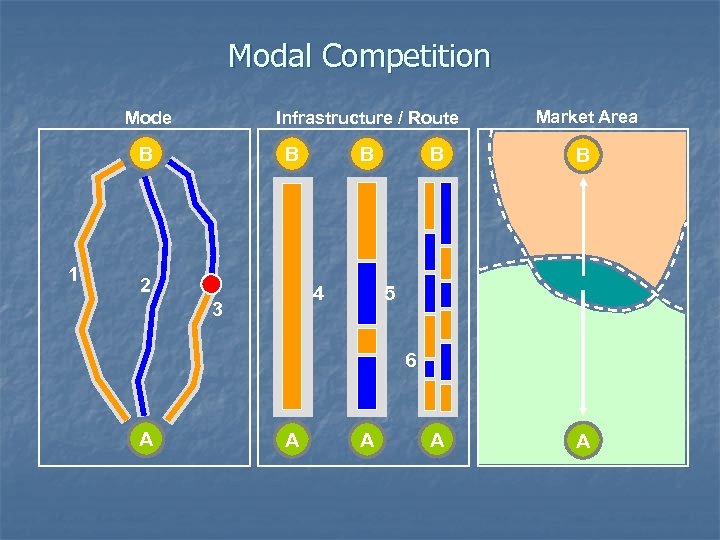 Modal Competition Infrastructure / Route Mode B 1 B 2 B B B A A 5 4 3 Market Area 6 A A A
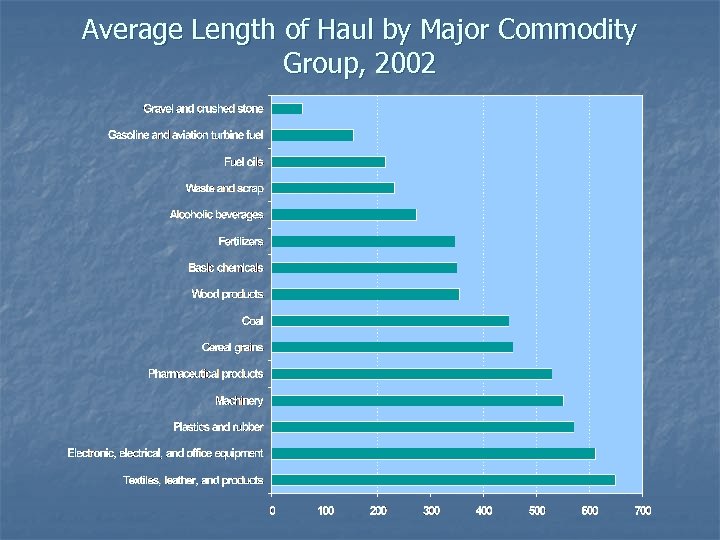 Average Length of Haul by Major Commodity Group, 2002
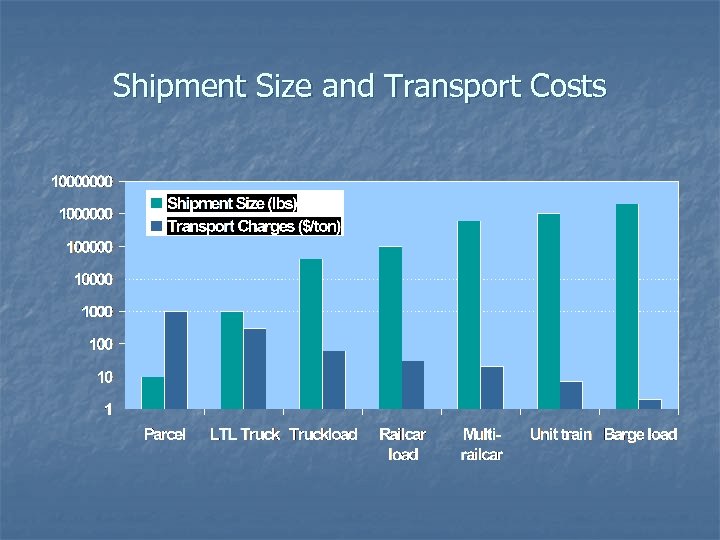 Shipment Size and Transport Costs
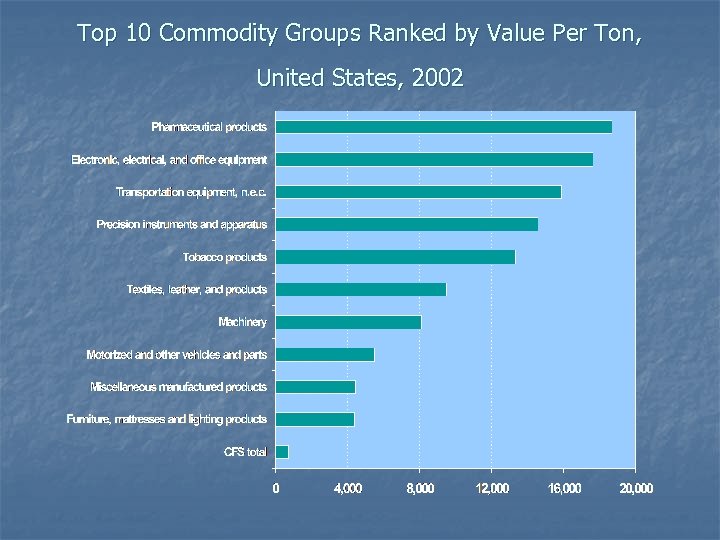 Top 10 Commodity Groups Ranked by Value Per Ton, United States, 2002
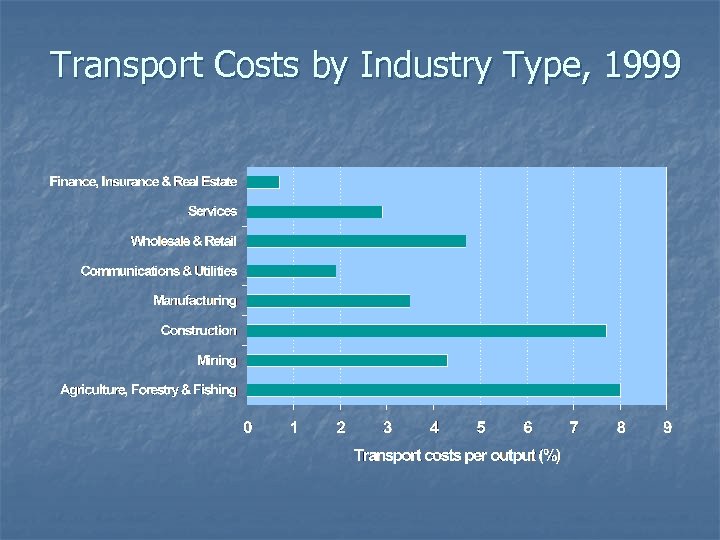 Transport Costs by Industry Type, 1999
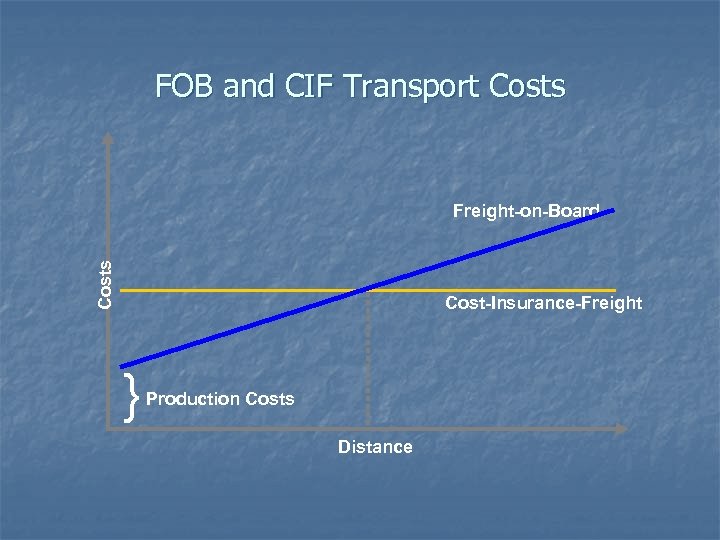 FOB and CIF Transport Costs Freight-on-Board Cost-Insurance-Freight } Production Costs Distance
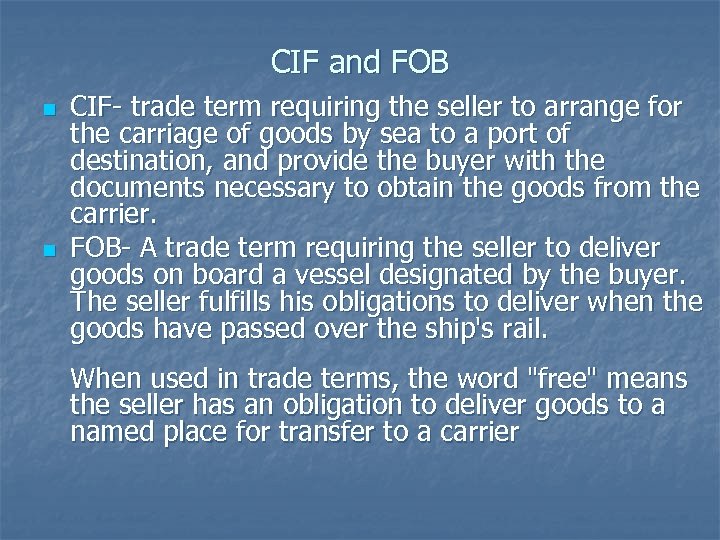 CIF and FOB n n CIF- trade term requiring the seller to arrange for the carriage of goods by sea to a port of destination, and provide the buyer with the documents necessary to obtain the goods from the carrier. FOB- A trade term requiring the seller to deliver goods on board a vessel designated by the buyer. The seller fulfills his obligations to deliver when the goods have passed over the ship's rail. When used in trade terms, the word "free" means the seller has an obligation to deliver goods to a named place for transfer to a carrier