 Скачать презентацию Translation Workflow Make or Buy Business Process Analysis
4247045da9a5e0b96ebb6d7e5065a7d7.ppt
- Количество слайдов: 30



Translation Workflow Make or Buy? Business Process Analysis and Workflow Design Frank Bergmann, 2005 -10 -22
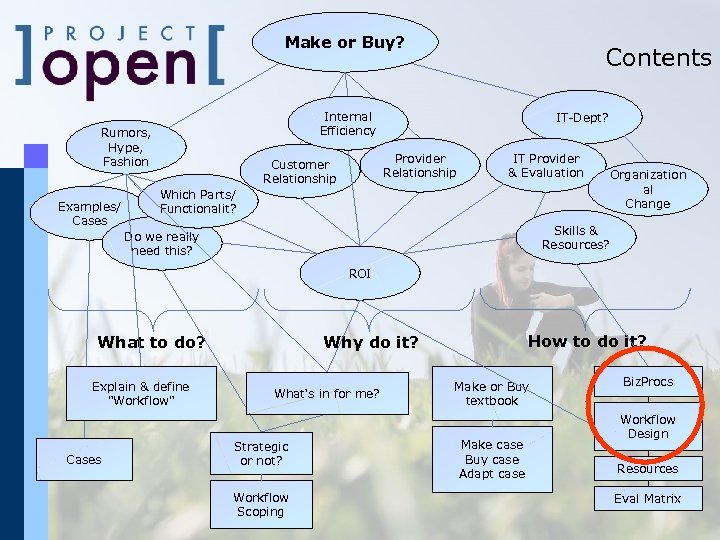
Make or Buy? Internal Efficiency Rumors, Hype, Fashion Examples/ Cases Contents IT-Dept? Provider Relationship Customer Relationship IT Provider & Evaluation Which Parts/ Functionalit? Organization al Change Skills & Resources? Do we really need this? ROI What to do? Explain & define "Workflow" Cases How to do it? Why do it? What‘s in for me? Strategic or not? Workflow Scoping Make or Buy textbook Make case Buy case Adapt case Biz. Procs Workflow Design Resources Eval Matrix
Why These Slides? Do we really have to go through this? § Reason #1: Understand ROI § Reason #2: Don't leave it to the Techies! (I‘m a techie!) § Reason #3: Know What You're Doing
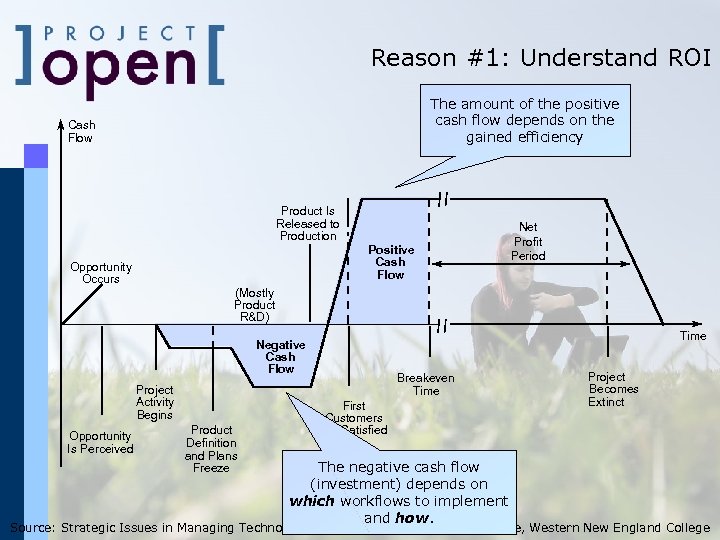
Reason #1: Understand ROI The amount of the positive cash flow depends on the gained efficiency Cash Flow Product Is Released to Production Positive Cash Flow Opportunity Occurs Net Profit Period (Mostly Product R&D) Time Negative Cash Flow Project Activity Begins Opportunity Is Perceived Product Definition and Plans Freeze Breakeven Time First Customers Are Satisfied The negative cash flow (investment) depends on which workflows to implement and how. Project Becomes Extinct Source: Strategic Issues in Managing Technology and Innovation, Anthony F. Chelte, Western New England College
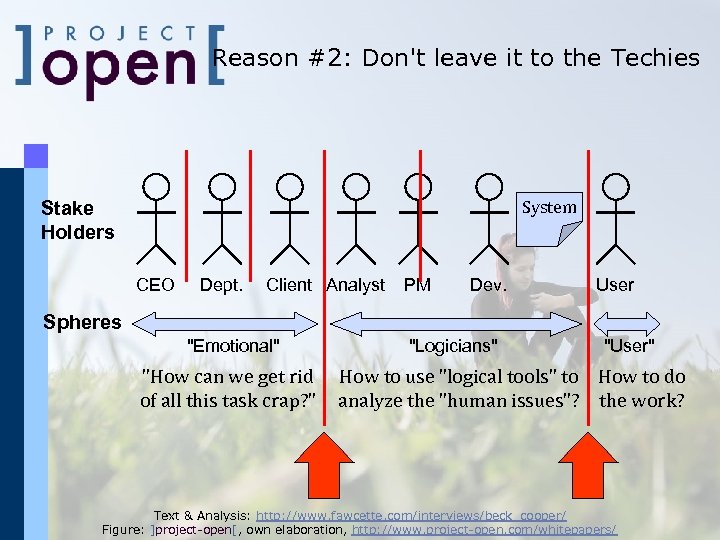
Reason #2: Don't leave it to the Techies System Stake Holders CEO Dept. Client Analyst PM Dev. User Spheres "Emotional" "How can we get rid of all this task crap? " "Logicians" "User" How to use "logical tools" to How to do analyze the "human issues"? the work? Text & Analysis: http: //www. fawcette. com/interviews/beck_cooper/ Figure: ]project-open[, own elaboration, http: //www. project-open. com/whitepapers/
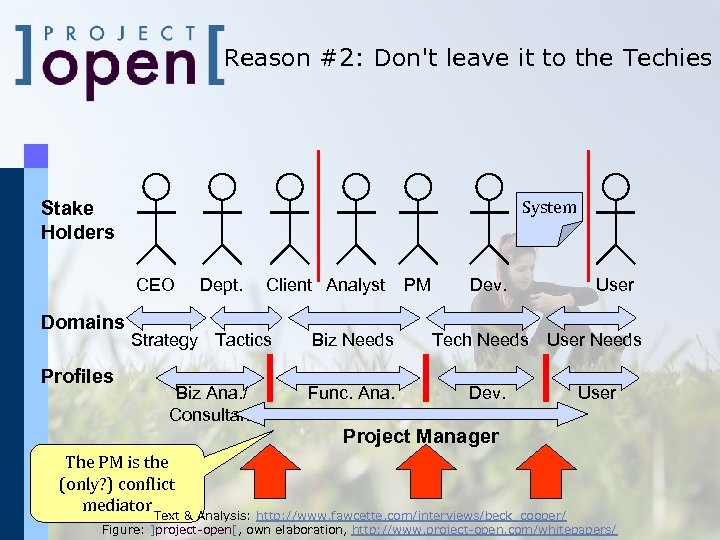
Reason #2: Don't leave it to the Techies System Stake Holders CEO Domains Profiles Dept. Client Analyst Strategy Tactics Biz Ana. / Consultant Biz Needs Func. Ana. PM Dev. Tech Needs User Needs Dev. User Project Manager The PM is the (only? ) conflict mediator Text & Analysis: http: //www. fawcette. com/interviews/beck_cooper/ Figure: ]project-open[, own elaboration, http: //www. project-open. com/whitepapers/
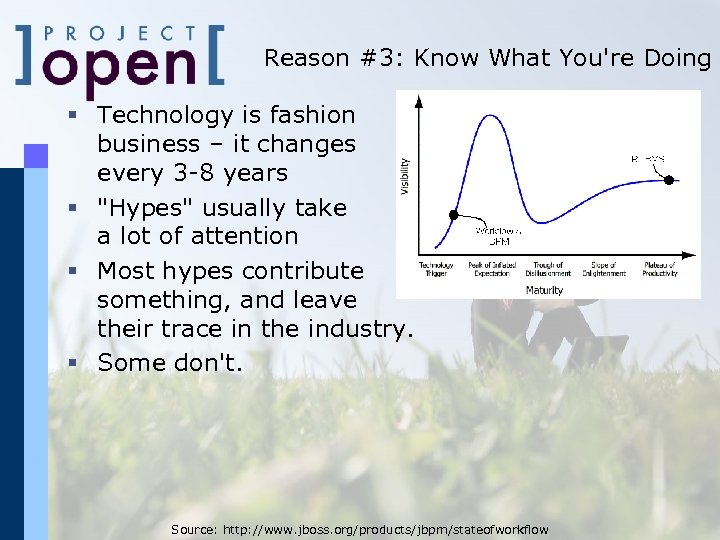
Reason #3: Know What You're Doing § Technology is fashion business – it changes every 3 -8 years § "Hypes" usually take a lot of attention § Most hypes contribute something, and leave their trace in the industry. § Some don't. Source: http: //www. jboss. org/products/jbpm/stateofworkflow
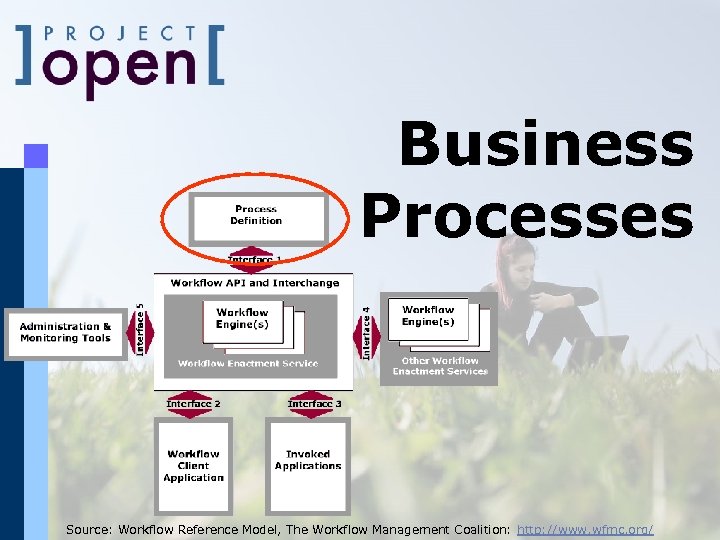
Business Processes Source: Workflow Reference Model, The Workflow Management Coalition: http: //www. wfmc. org/
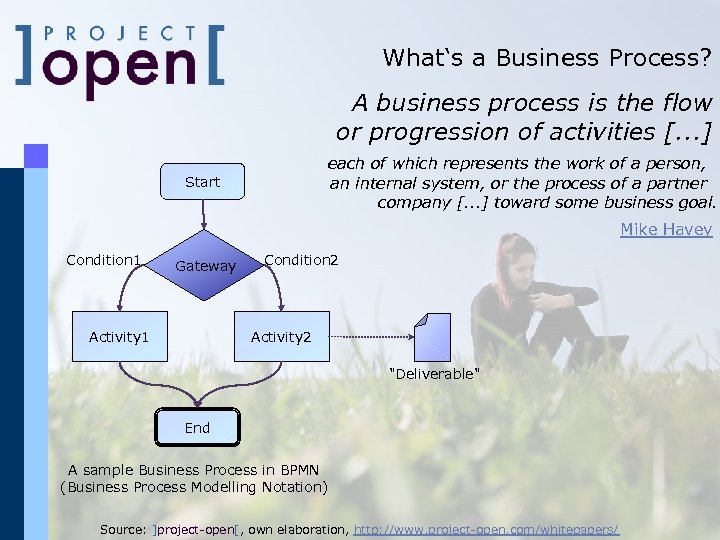
What‘s a Business Process? A business process is the flow or progression of activities [. . . ] each of which represents the work of a person, an internal system, or the process of a partner company [. . . ] toward some business goal. Start Mike Havey Condition 1 Gateway Activity 1 Condition 2 Activity 2 "Deliverable" End A sample Business Process in BPMN (Business Process Modelling Notation) Source: ]project-open[, own elaboration, http: //www. project-open. com/whitepapers/
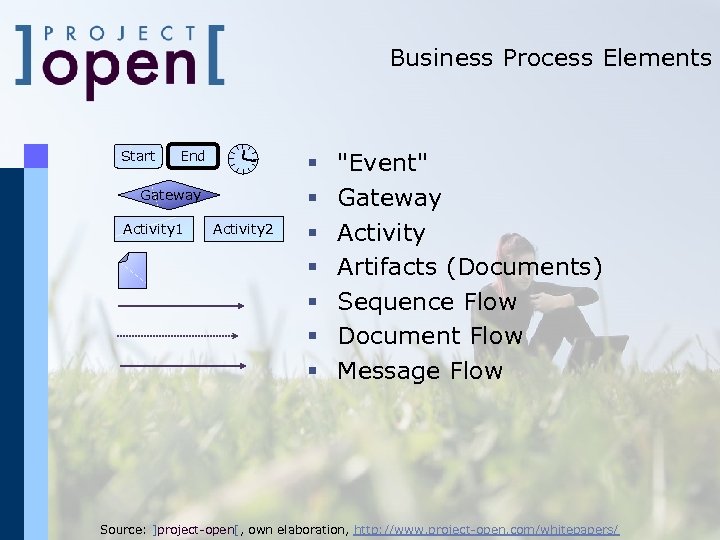
Business Process Elements Start End Gateway Activity 1 Activity 2 § § § § "Event" Gateway Activity Artifacts (Documents) Sequence Flow Document Flow Message Flow Source: ]project-open[, own elaboration, http: //www. project-open. com/whitepapers/
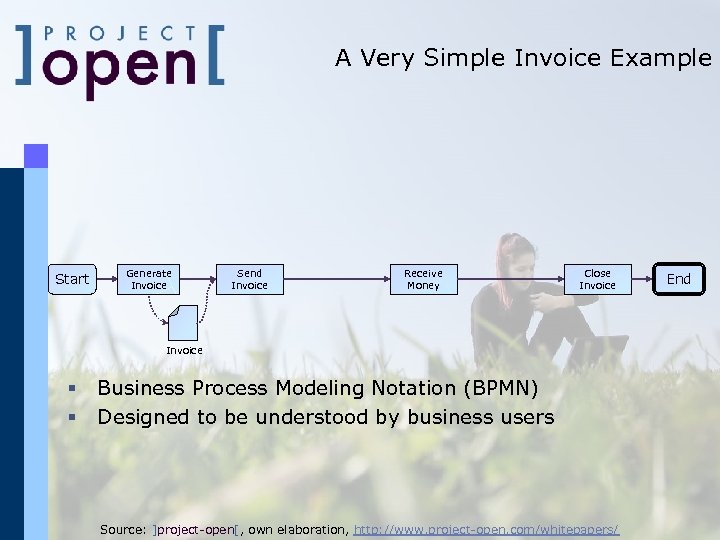
A Very Simple Invoice Example Start Generate Invoice Send Invoice Receive Money Close Invoice § § Business Process Modeling Notation (BPMN) Designed to be understood by business users Source: ]project-open[, own elaboration, http: //www. project-open. com/whitepapers/ End
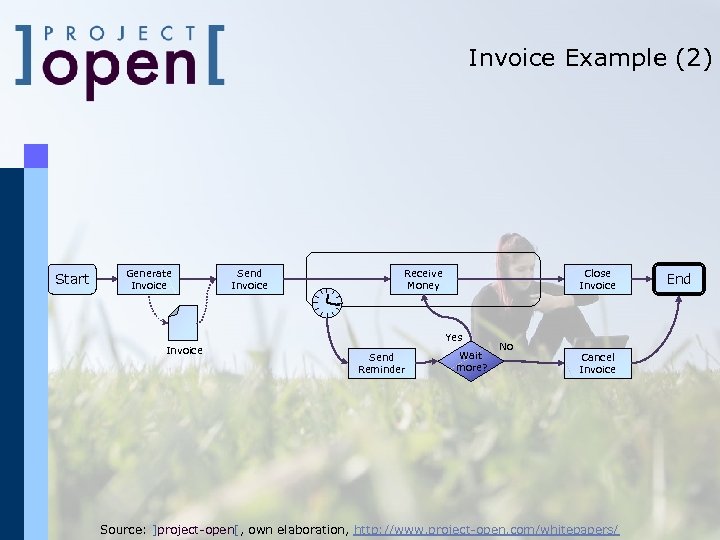
Invoice Example (2) Start Generate Invoice Send Invoice Receive Money Close Invoice Yes Invoice Send Reminder Wait more? No Cancel Invoice Source: ]project-open[, own elaboration, http: //www. project-open. com/whitepapers/ End
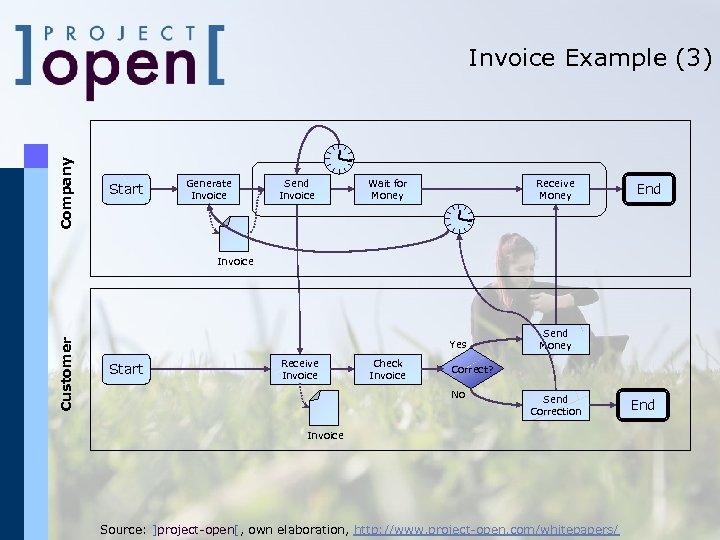
Company Invoice Example (3) Start Generate Invoice Send Invoice Wait for Money Receive Money End Customer Invoice Yes Start Receive Invoice Check Invoice Send Money Correct? No Send Correction Invoice Source: ]project-open[, own elaboration, http: //www. project-open. com/whitepapers/ End
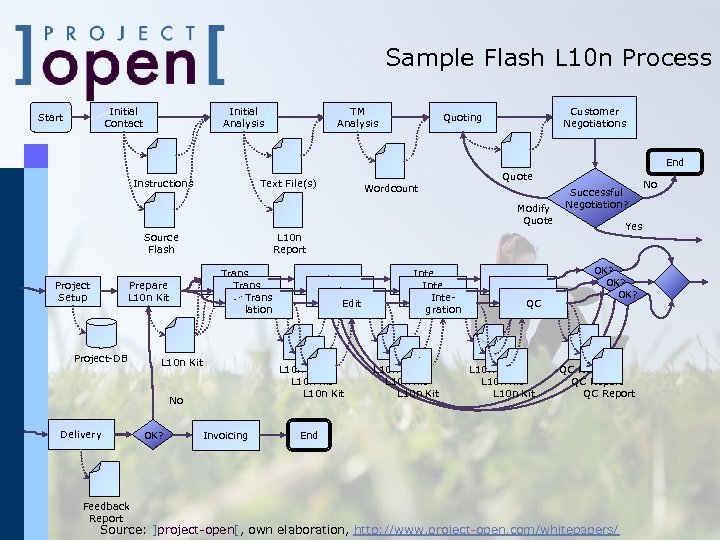
Sample Flash L 10 n Process Initial Contact Start Initial Analysis TM Analysis Customer Negotiations Quoting End Instructions Text File(s) Wordcount Quote Modify Quote Source Flash Project Setup Prepare L 10 n Kit Project-DB Trans lation L 10 n Kit Feedback Report OK? Yes L 10 n Report Edit L 10 n Kit No Delivery Successful Negotiation? Invoicing Inte gration Integration L 10 n Kit QC QC QC L 10 n Kit OK? OK? QC Report End Source: ]project-open[, own elaboration, http: //www. project-open. com/whitepapers/ No
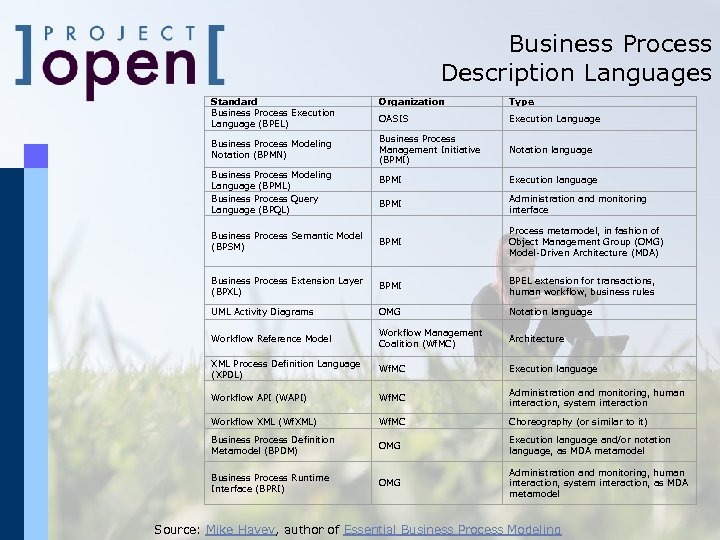
Business Process Description Languages Standard Business Process Execution Language (BPEL) Organization Type OASIS Execution Language Business Process Management Initiative (BPMI) Notation language BPMI Execution language BPMI Administration and monitoring interface Business Process Semantic Model (BPSM) BPMI Process metamodel, in fashion of Object Management Group (OMG) Model-Driven Architecture (MDA) Business Process Extension Layer (BPXL) BPMI BPEL extension for transactions, human workflow, business rules UML Activity Diagrams OMG Notation language Workflow Reference Model Workflow Management Coalition (Wf. MC) Architecture XML Process Definition Language (XPDL) Wf. MC Execution language Workflow API (WAPI) Wf. MC Administration and monitoring, human interaction, system interaction Workflow XML (Wf. XML) Wf. MC Choreography (or similar to it) Business Process Definition Metamodel (BPDM) OMG Execution language and/or notation language, as MDA metamodel Business Process Runtime Interface (BPRI) OMG Administration and monitoring, human interaction, system interaction, as MDA metamodel Business Process Modeling Notation (BPMN) Business Process Modeling Language (BPML) Business Process Query Language (BPQL) Source: Mike Havey, author of Essential Business Process Modeling
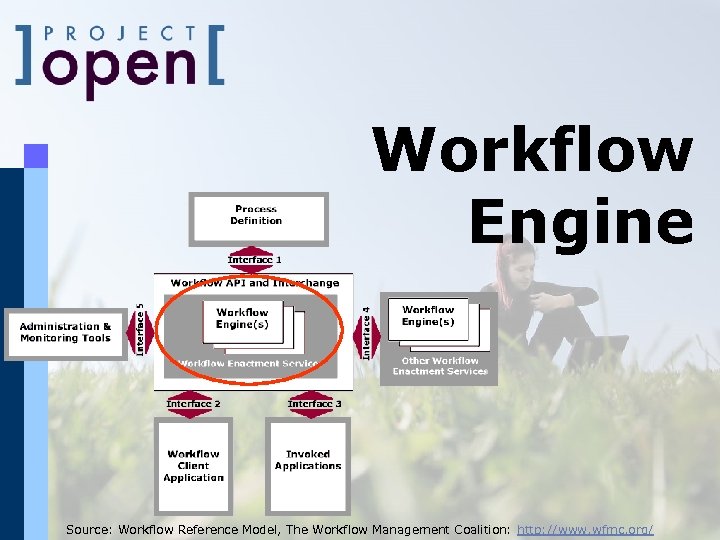
Workflow Engine Source: Workflow Reference Model, The Workflow Management Coalition: http: //www. wfmc. org/
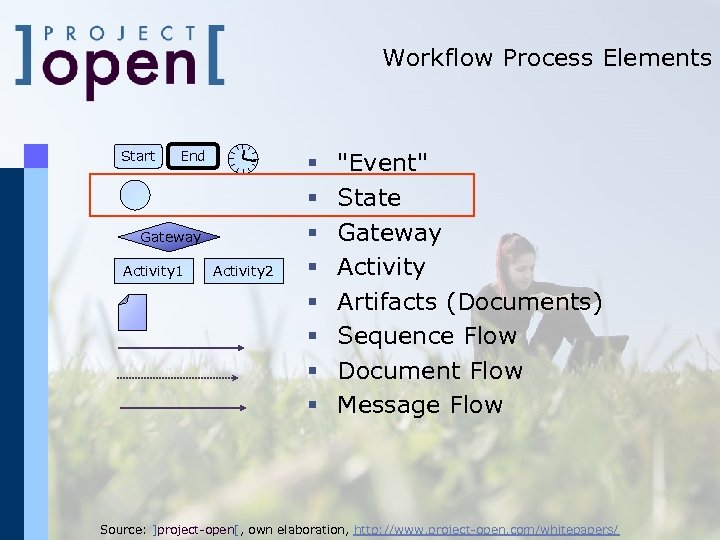
Workflow Process Elements Start End Gateway Activity 1 Activity 2 § § § § "Event" State Gateway Activity Artifacts (Documents) Sequence Flow Document Flow Message Flow Source: ]project-open[, own elaboration, http: //www. project-open. com/whitepapers/
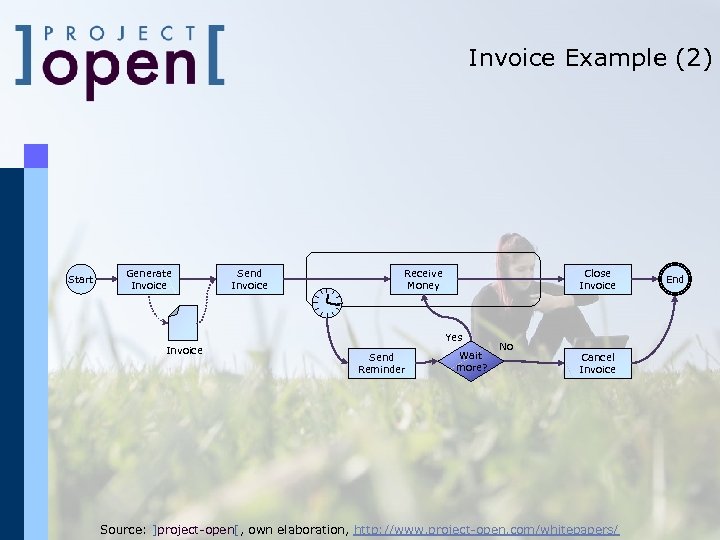
Invoice Example (2) Start Generate Invoice Send Invoice Receive Money Close Invoice Yes Invoice Send Reminder Wait more? No Cancel Invoice Source: ]project-open[, own elaboration, http: //www. project-open. com/whitepapers/ End
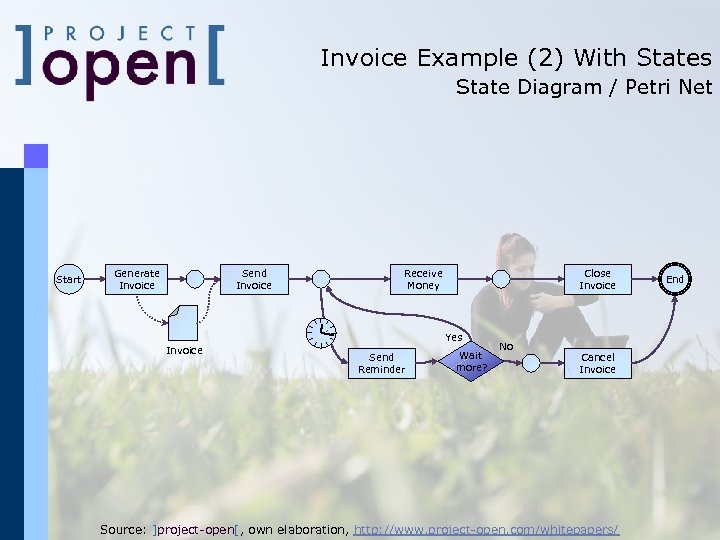
Invoice Example (2) With States State Diagram / Petri Net Start Generate Invoice Send Invoice Receive Money Close Invoice Yes Invoice Send Reminder Wait more? No Cancel Invoice Source: ]project-open[, own elaboration, http: //www. project-open. com/whitepapers/ End
What's the difference? § The "State" concept allows your IT guys to put this description into a computer system (specification) § "States" won't work in high-level process designs. It forces the business analyst to get down to "reality" Source: ]project-open[, own elaboration, http: //www. project-open. com/whitepapers/
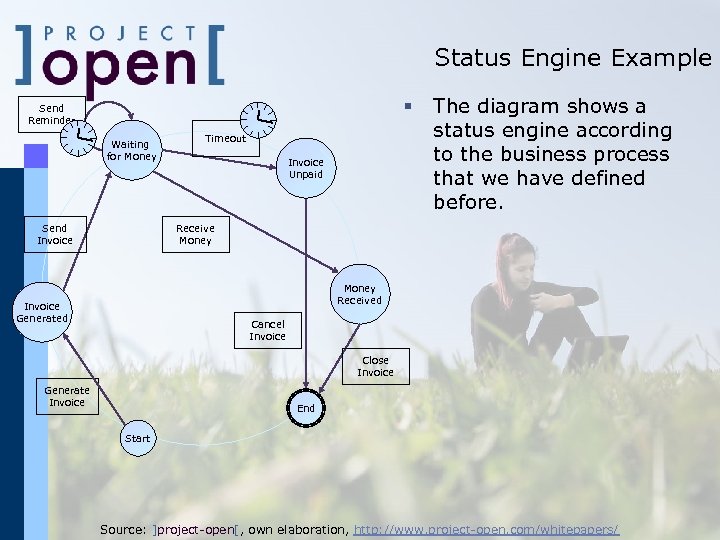
Status Engine Example § Send Reminder Waiting for Money Send Invoice Timeout Invoice Unpaid The diagram shows a status engine according to the business process that we have defined before. Receive Money Received Invoice Generated Cancel Invoice Close Invoice Generate Invoice End Start Source: ]project-open[, own elaboration, http: //www. project-open. com/whitepapers/
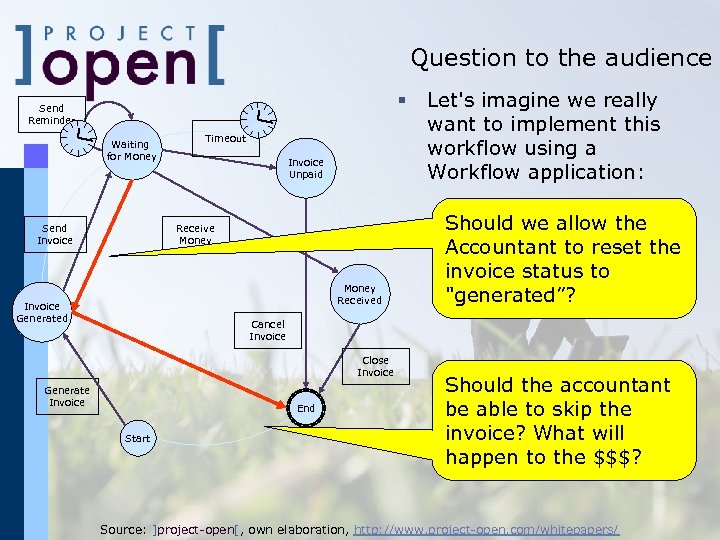
Question to the audience § Send Reminder Waiting for Money Send Invoice Timeout Invoice Unpaid Receive Money Received Invoice Generated Let's imagine we really want to implement this workflow using a Workflow application: Should we allow the Accountant to reset the invoice status to "generated”? Cancel Invoice Close Invoice Generate Invoice End Start Should the accountant be able to skip the invoice? What will happen to the $$$? Source: ]project-open[, own elaboration, http: //www. project-open. com/whitepapers/
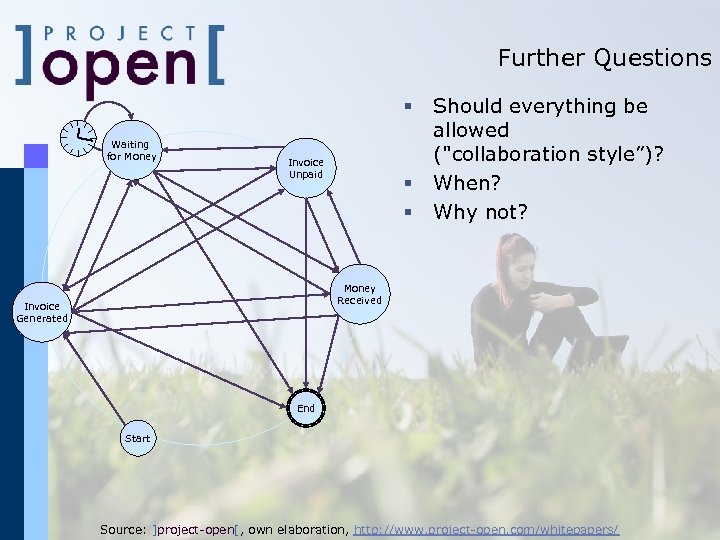
Further Questions § Waiting for Money Invoice Unpaid § § Should everything be allowed ("collaboration style”)? When? Why not? Money Received Invoice Generated End Start Source: ]project-open[, own elaboration, http: //www. project-open. com/whitepapers/
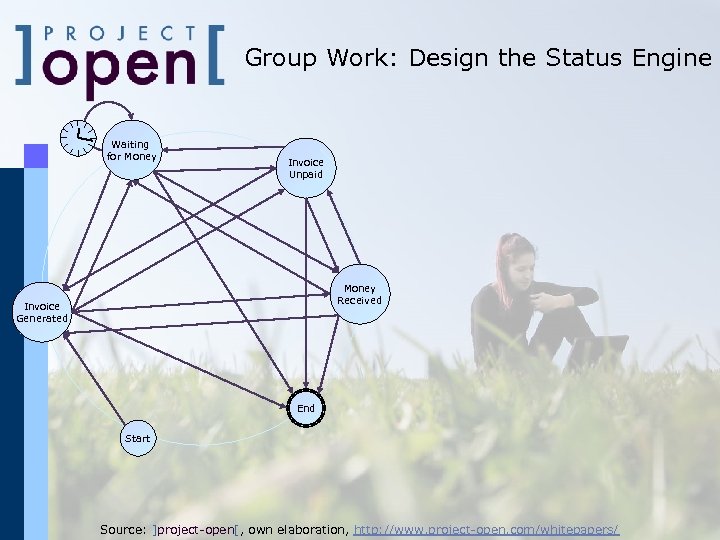
Group Work: Design the Status Engine Waiting for Money Invoice Unpaid Money Received Invoice Generated End Start Source: ]project-open[, own elaboration, http: //www. project-open. com/whitepapers/
Workflow Design
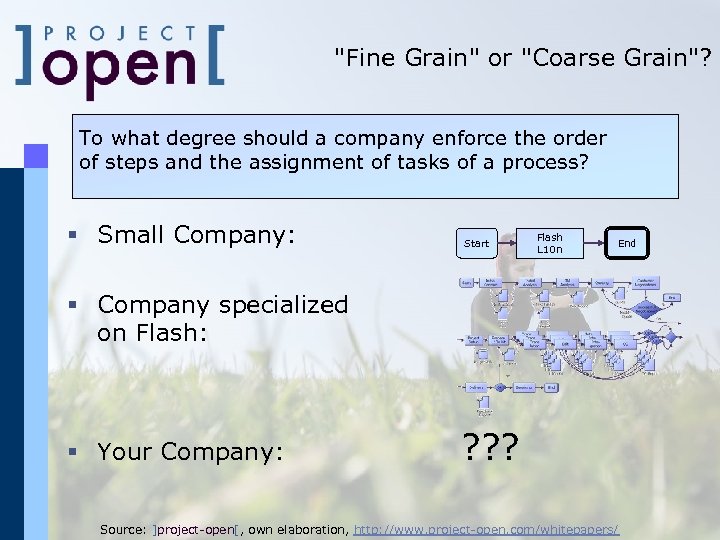
"Fine Grain" or "Coarse Grain"? To what degree should a company enforce the order of steps and the assignment of tasks of a process? § Small Company: Start Flash L 10 n End § Company specialized on Flash: § Your Company: ? ? ? Source: ]project-open[, own elaboration, http: //www. project-open. com/whitepapers/
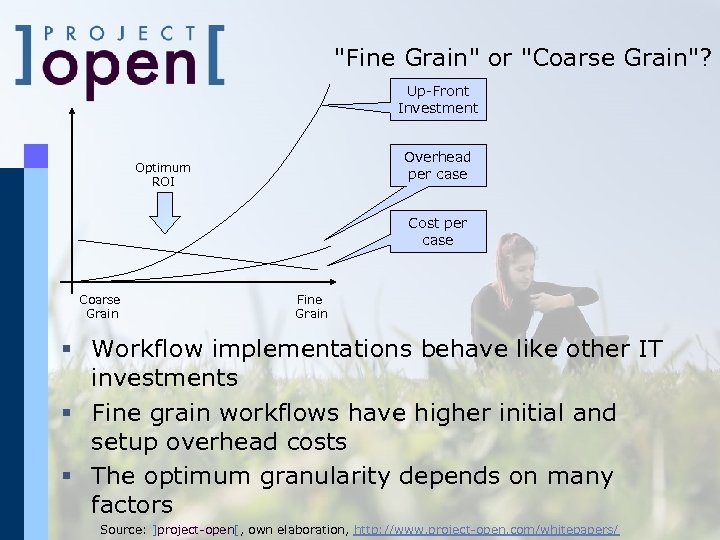
"Fine Grain" or "Coarse Grain"? Up-Front Investment Overhead per case Optimum ROI Cost per case Coarse Grain Fine Grain § Workflow implementations behave like other IT investments § Fine grain workflows have higher initial and setup overhead costs § The optimum granularity depends on many factors Source: ]project-open[, own elaboration, http: //www. project-open. com/whitepapers/
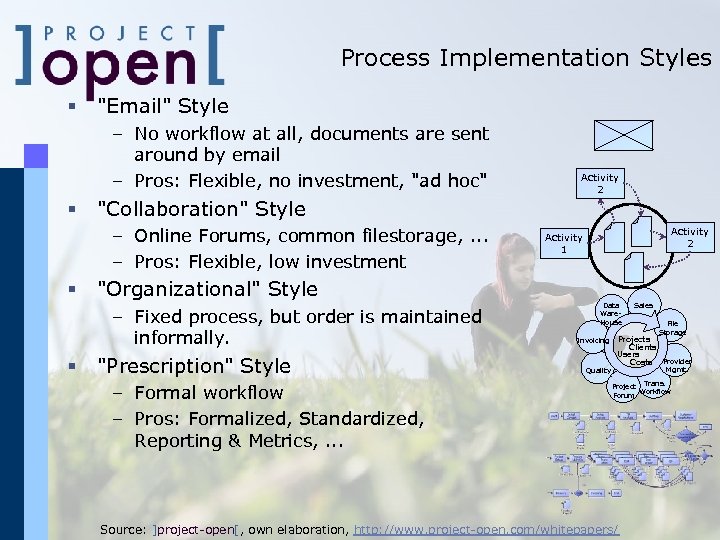
Process Implementation Styles § "Email" Style – No workflow at all, documents are sent around by email – Pros: Flexible, no investment, "ad hoc" § "Collaboration" Style – Online Forums, common filestorage, . . . – Pros: Flexible, low investment § Activity 2 Activity 1 "Organizational" Style – Fixed process, but order is maintained informally. § Activity 2 "Prescription" Style – Formal workflow – Pros: Formalized, Standardized, Reporting & Metrics, . . . Data Ware. House Invoicing Quality Sales File Storage Projects Clients Users Costs Provider Mgmt. Trans. Project Workflow Forum Source: ]project-open[, own elaboration, http: //www. project-open. com/whitepapers/
Workflow Design Criteria § Workflow design takes a Business Process and creates an IT application from it. – "Fine grain" or "coarse grain" implementation – Email, Collaboration or Prescription style implementation? – Short or long-lived processes? – Reporting & Workflow Metrics – Flexibility – Security & Permissions – "Trust Model" – "Water-tight" processes vs. Human Decisions? – Botton-Up or top-down design? Source: ]project-open[, own elaboration, http: //www. project-open. com/whitepapers/
End Frank Bergmann frank. bergmann@project-open. com www. project-open. com
Скачать презентацию Translation Workflow Make or Buy Business Process Analysis
4247045da9a5e0b96ebb6d7e5065a7d7.ppt