 Скачать презентацию Transient SETI Dan Werthimer University of California Berkeley
8dcce6541018de5ead6c4e81370344a9.ppt
- Количество слайдов: 62



Transient SETI Dan Werthimer University of California, Berkeley http: //seti. berkeley. edu/
University of California, Berkeley SETI Program • Graduate Students Chen Chang, Pierre Droz, Aaron Parsons, David Purdy • Undergraduate Students Daniel Chapman, Henry Chen, Charlie Conroy, Wonsop Sim • Astronomers, Computer Scientists and Engrs. David Anderson, Bob Bankay, Jeff Cobb, Court Cannick, Eric Korpela, Matt Lebofsky, Jeff Mock, Rom Walton, Dan Werthimer
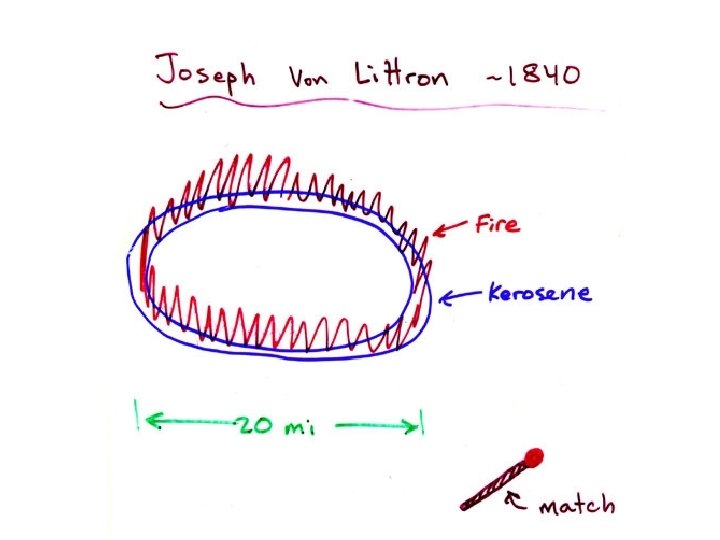
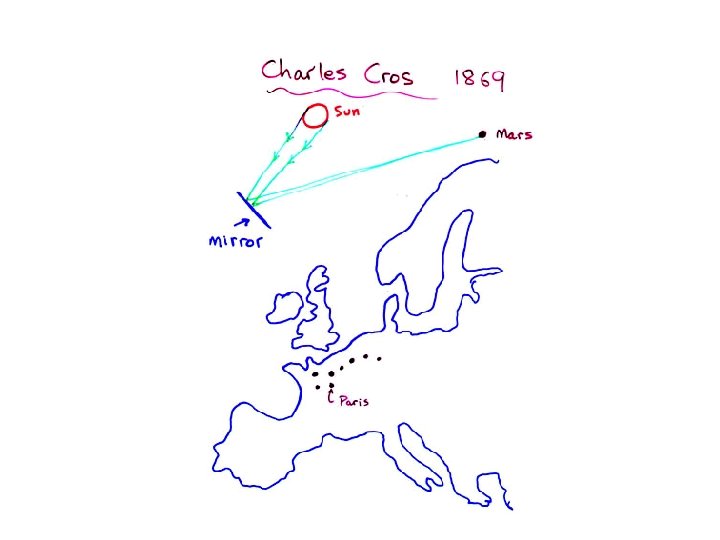
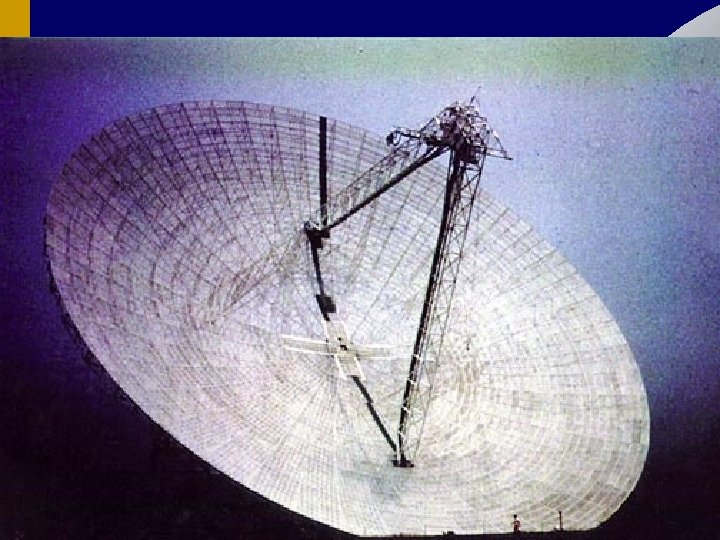
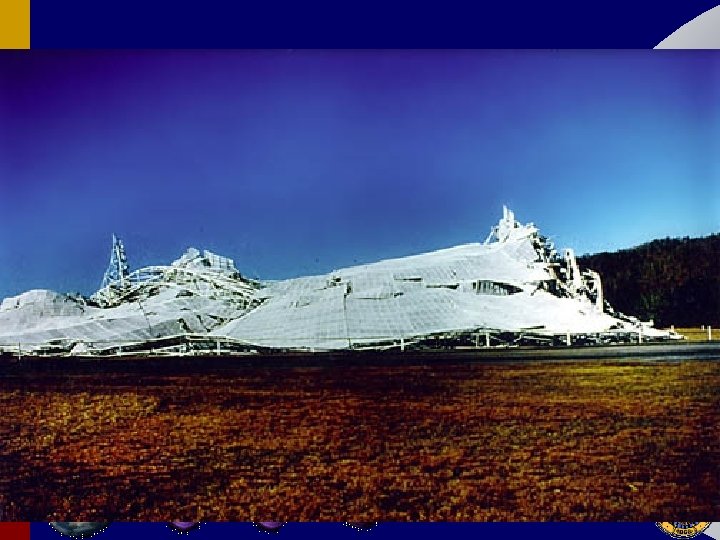
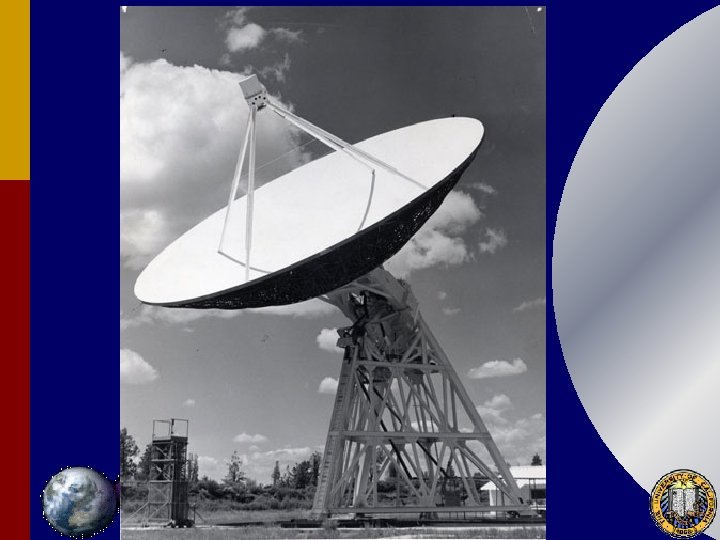
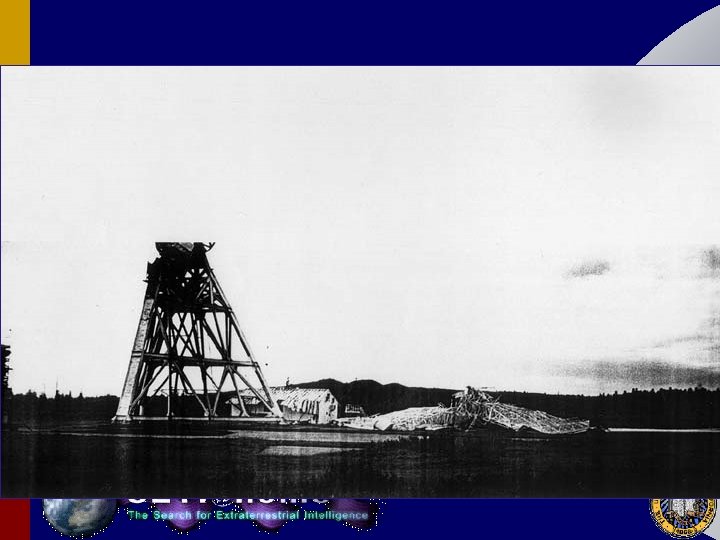
Early Transient Transmitters

NOT FUNDED

NOT FUNDED
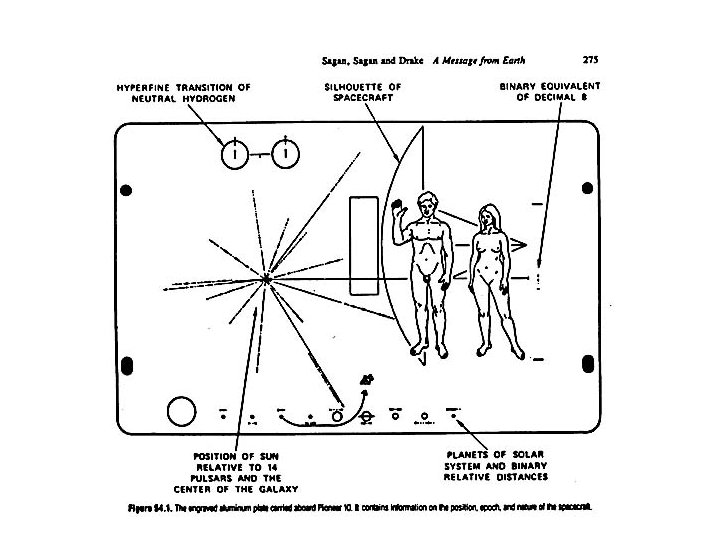

Porno in space: FUNDED!
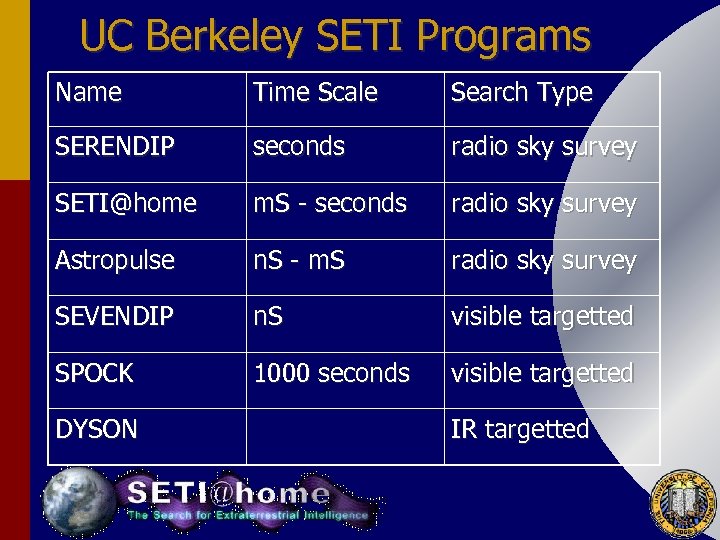
UC Berkeley SETI Programs Name Time Scale Search Type SERENDIP seconds radio sky survey SETI@home m. S - seconds radio sky survey Astropulse n. S - m. S radio sky survey SEVENDIP n. S visible targetted SPOCK 1000 seconds visible targetted DYSON IR targetted
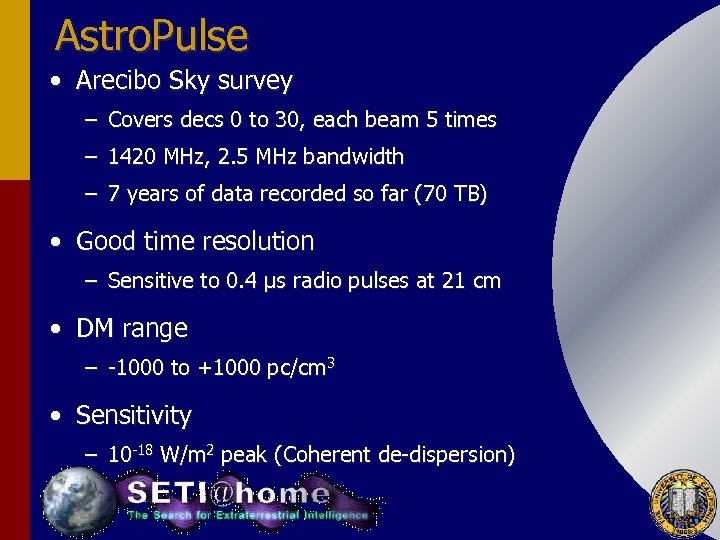
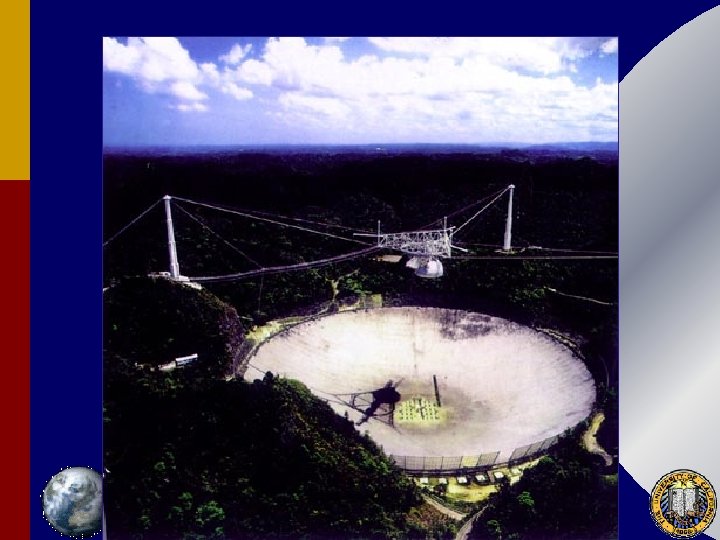
Astro. Pulse • Arecibo Sky survey – Covers decs 0 to 30, each beam 5 times – 1420 MHz, 2. 5 MHz bandwidth – 7 years of data recorded so far (70 TB) • Good time resolution – Sensitive to 0. 4 µs radio pulses at 21 cm • DM range – -1000 to +1000 pc/cm 3 • Sensitivity – 10 -18 W/m 2 peak (Coherent de-dispersion)
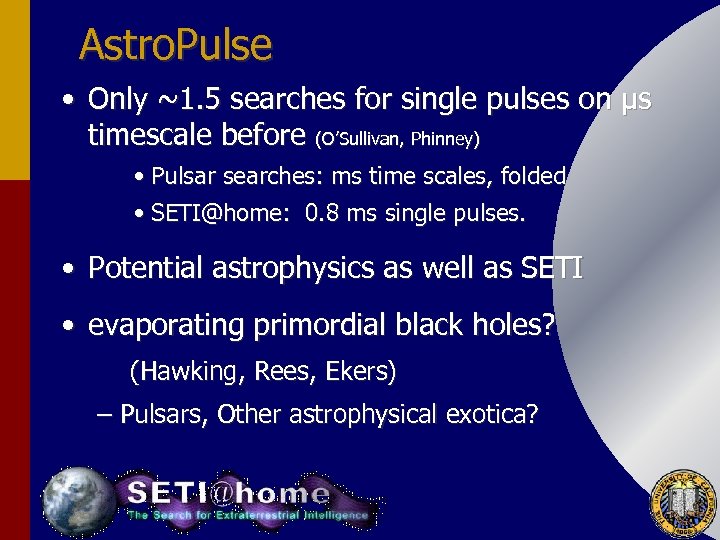
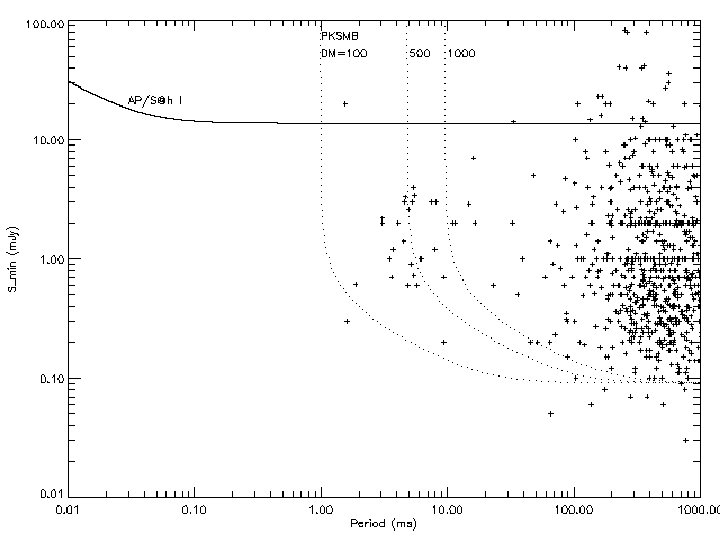
Astro. Pulse • Only ~1. 5 searches for single pulses on µs timescale before (O’Sullivan, Phinney) • Pulsar searches: ms time scales, folded • SETI@home: 0. 8 ms single pulses. • Potential astrophysics as well as SETI • evaporating primordial black holes? (Hawking, Rees, Ekers) – Pulsars, Other astrophysical exotica?
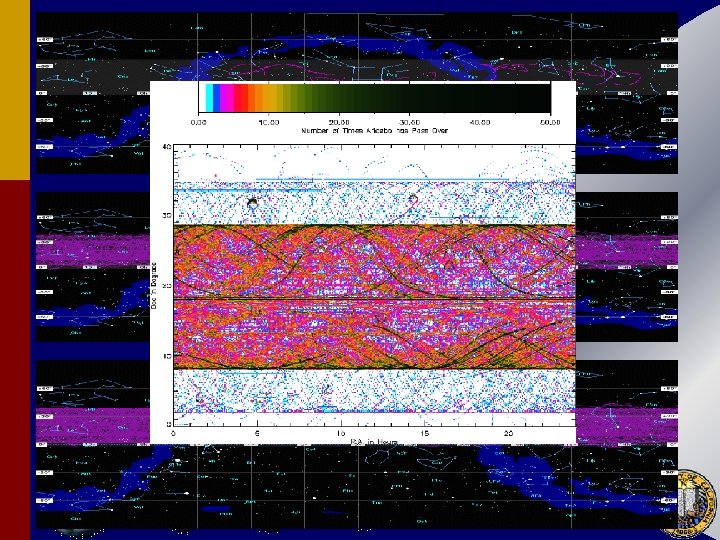
Piggyback ALFA Sky Survey • Improved sensitivity – Tsys, integration time • Uniform sky sampling – galactic plane concentration • Multibeam RFI rejection • Larger Bandwidth
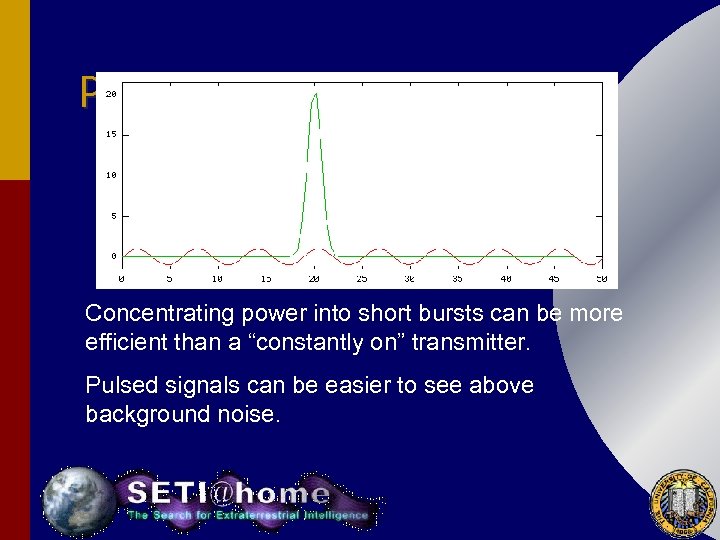
Pulsed vs. CW Concentrating power into short bursts can be more efficient than a “constantly on” transmitter. Pulsed signals can be easier to see above background noise.
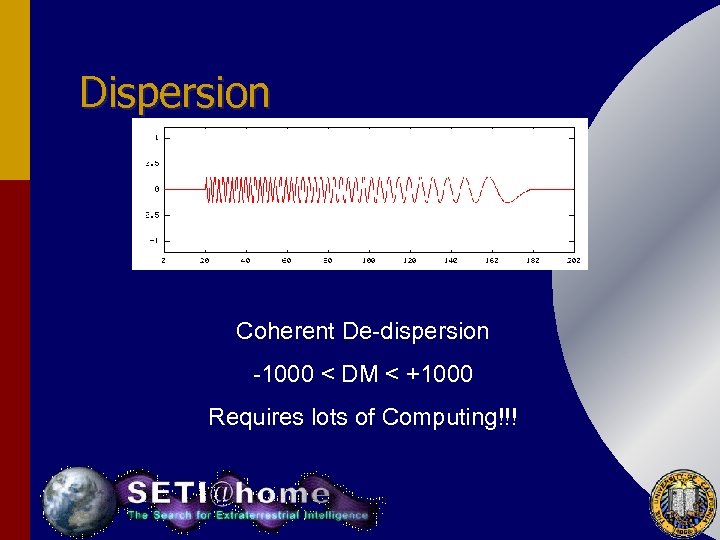
Dispersion Coherent De-dispersion -1000 < DM < +1000 Requires lots of Computing!!!
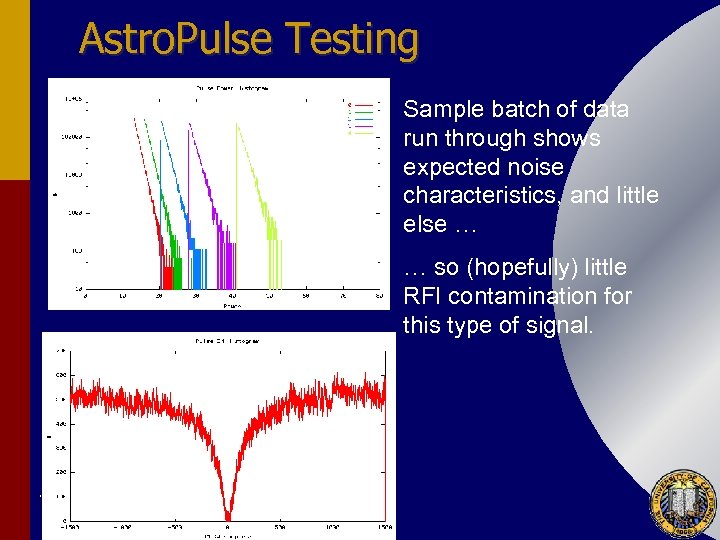
Astro. Pulse Testing Sample batch of data run through shows expected noise characteristics, and little else … … so (hopefully) little RFI contamination for this type of signal.
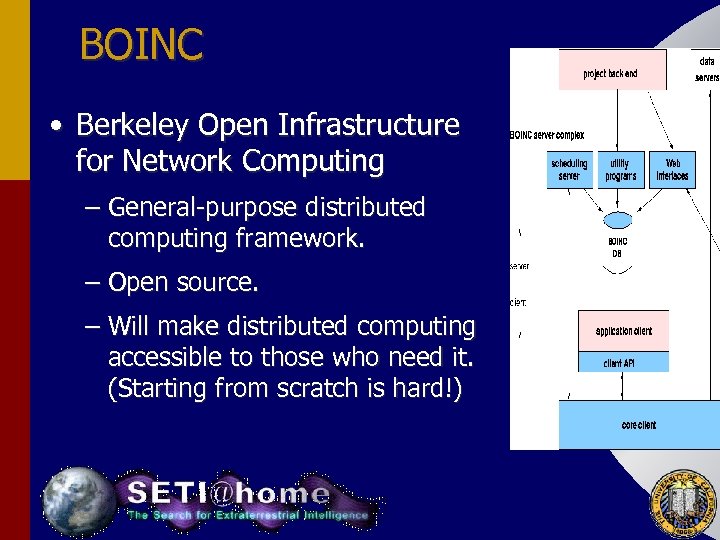
BOINC • Berkeley Open Infrastructure for Network Computing – General-purpose distributed computing framework. – Open source. – Will make distributed computing accessible to those who need it. (Starting from scratch is hard!)
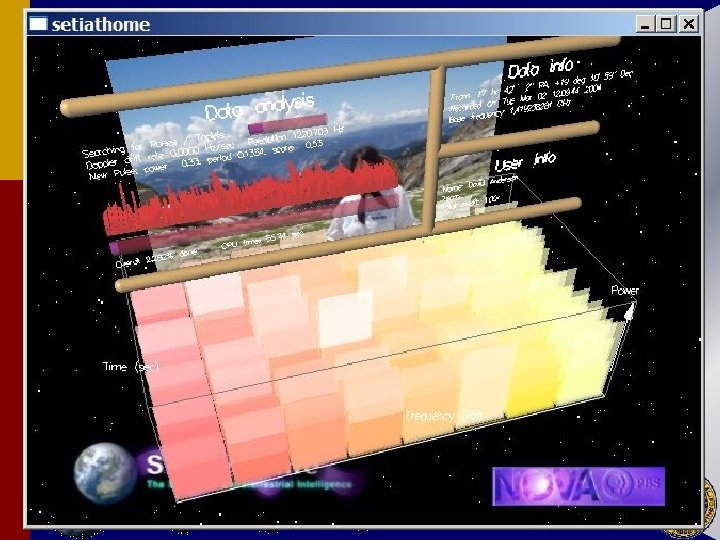
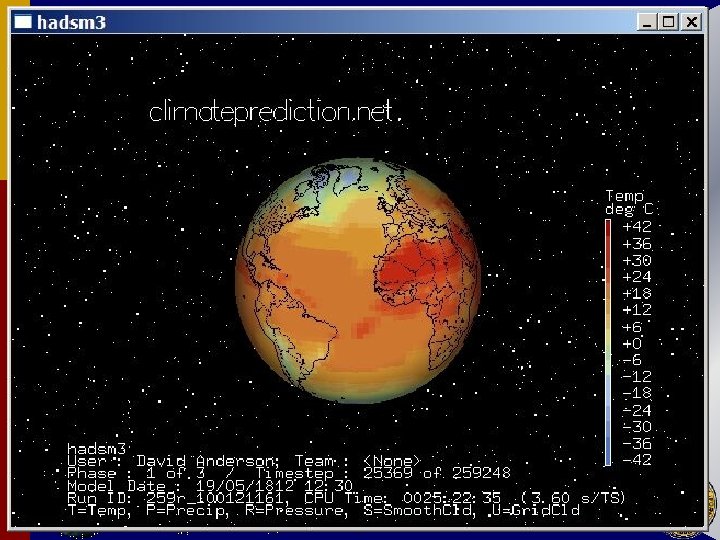
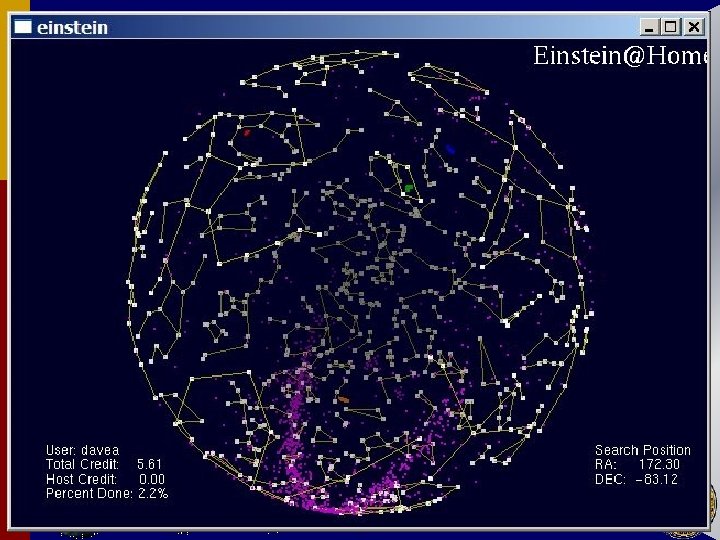
Projects • Astronomy – SETI@home (Berkeley) – Astropulse (Berkeley) – Einstein@home: gravitational pulsar search (Caltech, …) – Planet. Quest (SETI Institute) – Stardust@home (Berkeley, Univ. Washinton, …) • Earth science – Climateprediction. net • (Oxford) Biology/Medicine – Folding@home, Predictor@home (Stanford, Scripts) – Fight. AIDSathome: virtual drug discovery • Physics – LHC@home • (Cern) Other – Web indexing/search – Internet Resource mapping (UC Berkeley)
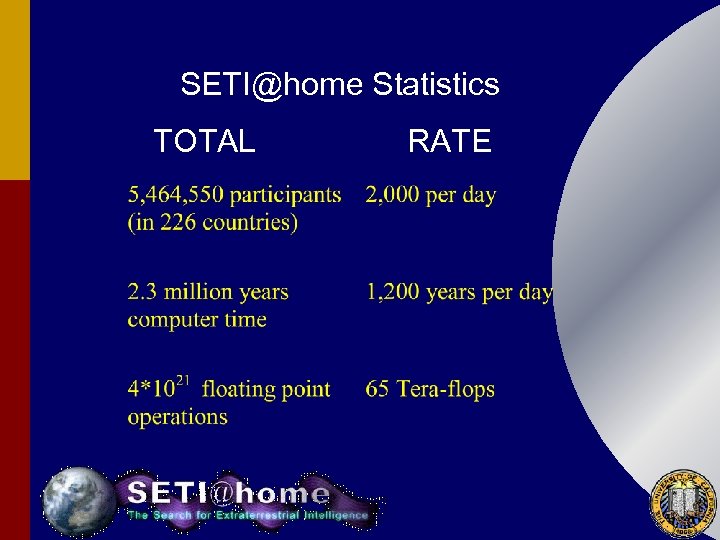
SETI@home Statistics TOTAL RATE
Optical SETI Pulse Search 1961 Charlie Townes Paper largely ingored until 1999 1971 Cyclops report calculates radio >> optical Today’s lasers can communicate across galaxy
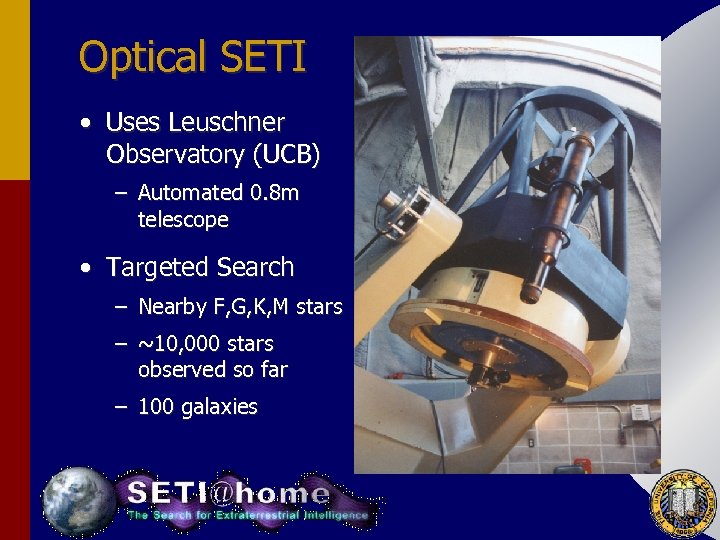
Optical SETI • Uses Leuschner Observatory (UCB) – Automated 0. 8 m telescope • Targeted Search – Nearby F, G, K, M stars – ~10, 000 stars observed so far – 100 galaxies
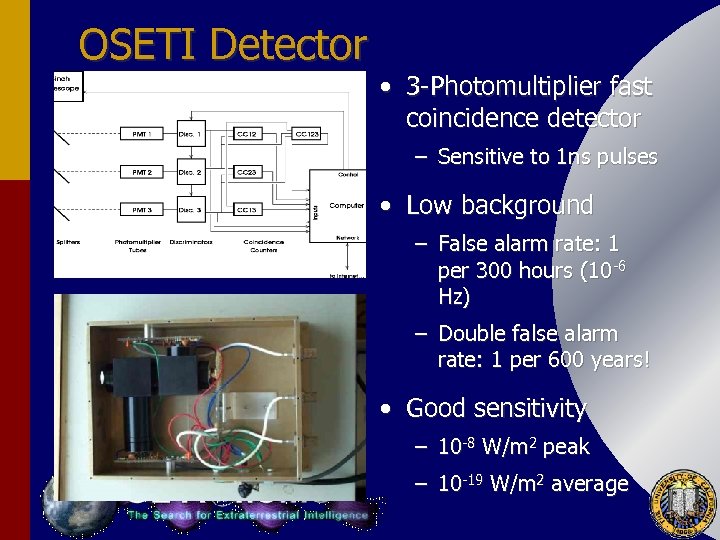
OSETI Detector • 3 -Photomultiplier fast coincidence detector – Sensitive to 1 ns pulses • Low background – False alarm rate: 1 per 300 hours (10 -6 Hz) – Double false alarm rate: 1 per 600 years! • Good sensitivity – 10 -8 W/m 2 peak – 10 -19 W/m 2 average
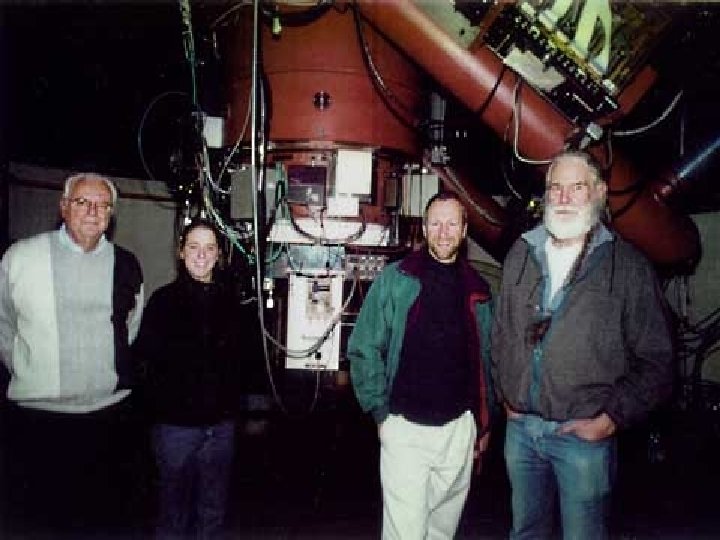
Transient Instrumentation
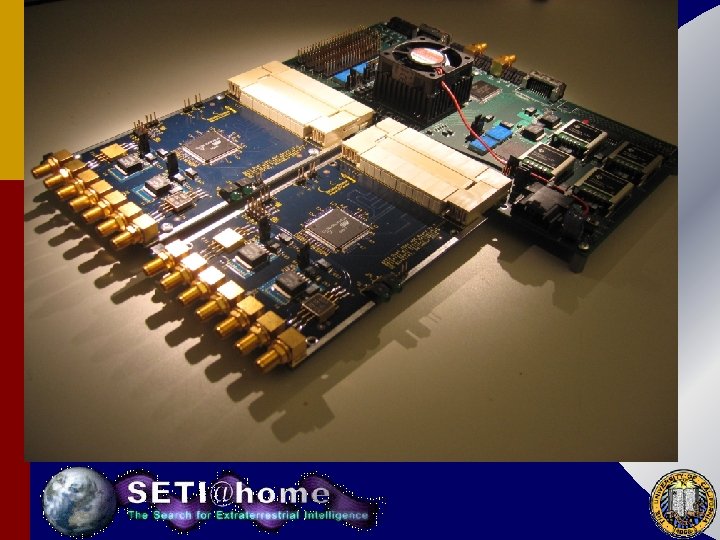
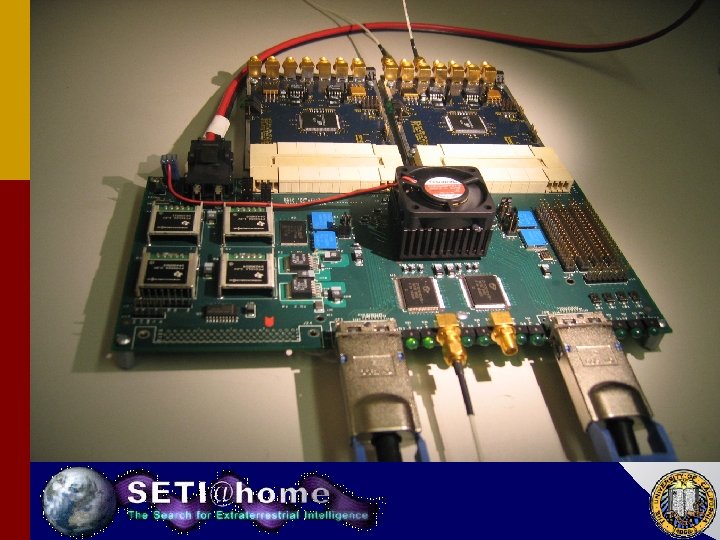
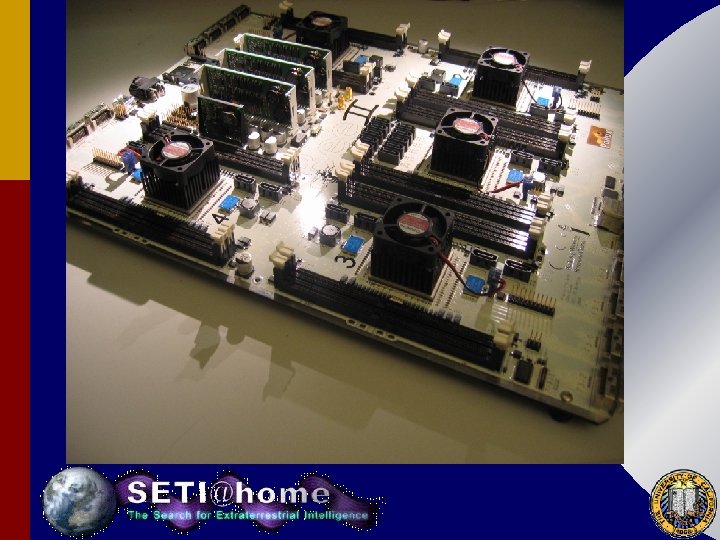
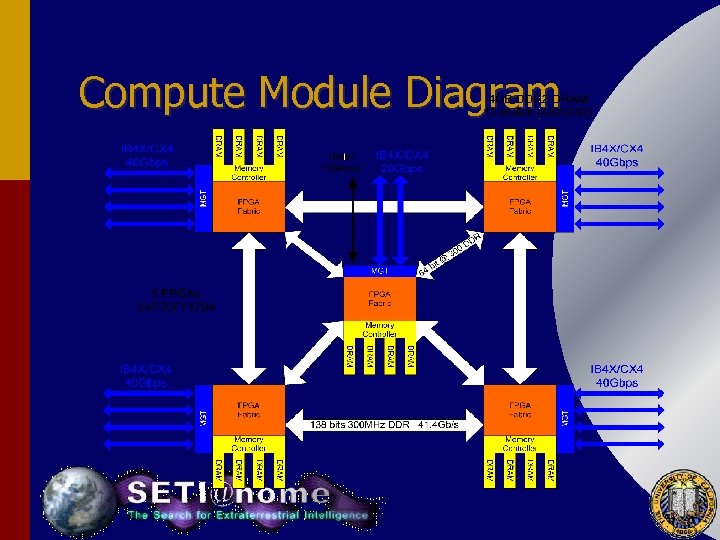
Compute Module Diagram
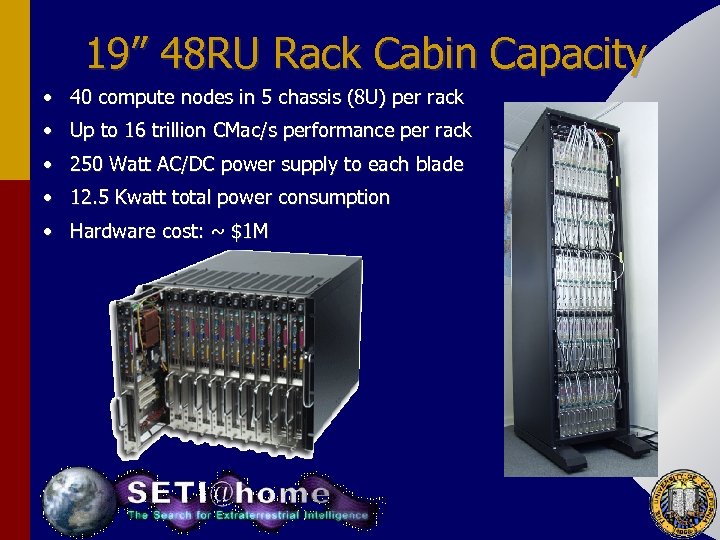
19” 48 RU Rack Cabin Capacity • 40 compute nodes in 5 chassis (8 U) per rack • Up to 16 trillion CMac/s performance per rack • 250 Watt AC/DC power supply to each blade • 12. 5 Kwatt total power consumption • Hardware cost: ~ $1 M
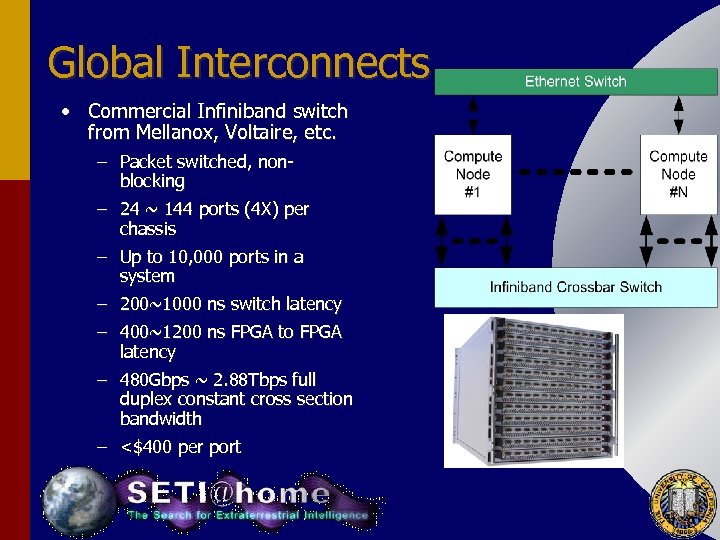
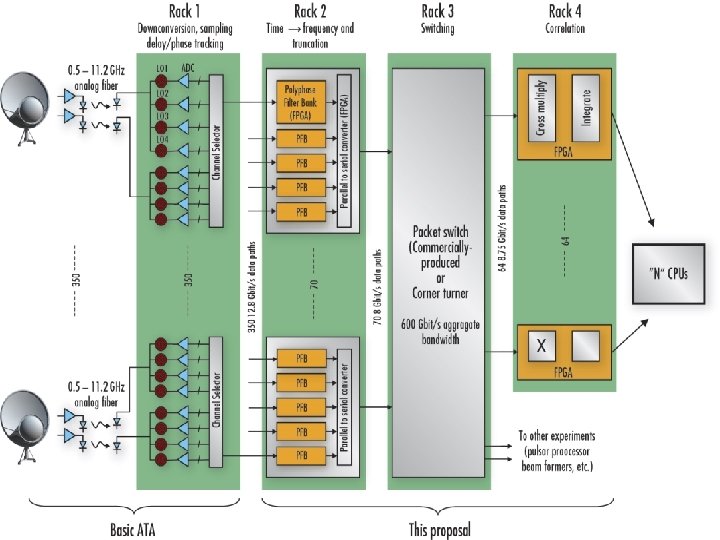
Global Interconnects • Commercial Infiniband switch from Mellanox, Voltaire, etc. – Packet switched, nonblocking – 24 ~ 144 ports (4 X) per chassis – Up to 10, 000 ports in a system – 200~1000 ns switch latency – 400~1200 ns FPGA to FPGA latency – 480 Gbps ~ 2. 88 Tbps full duplex constant cross section bandwidth – <$400 per port
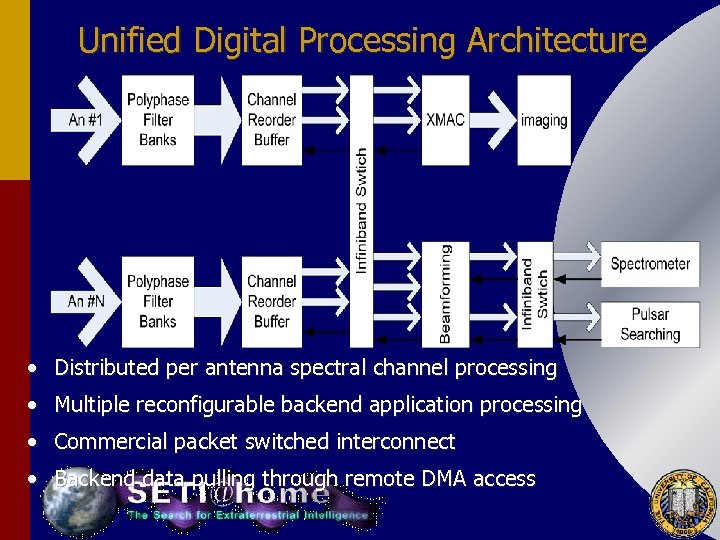
Unified Digital Processing Architecture • Distributed per antenna spectral channel processing • Multiple reconfigurable backend application processing • Commercial packet switched interconnect • Backend data pulling through remote DMA access
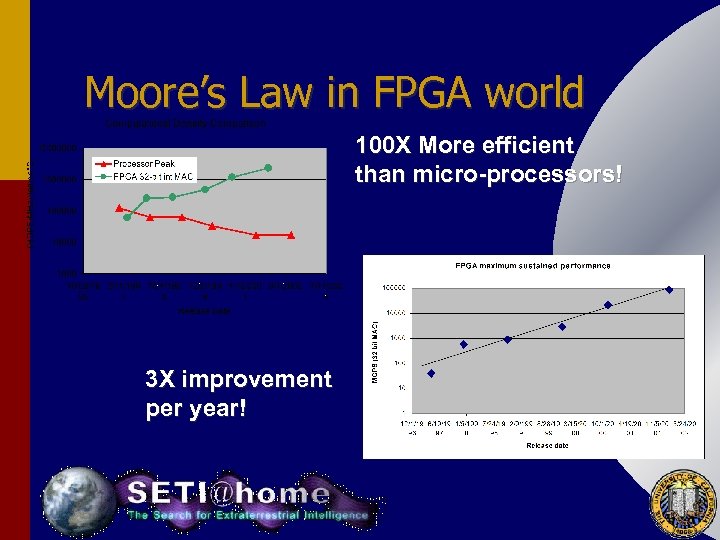
Moore’s Law in FPGA world 100 X More efficient than micro-processors! 3 X improvement per year!
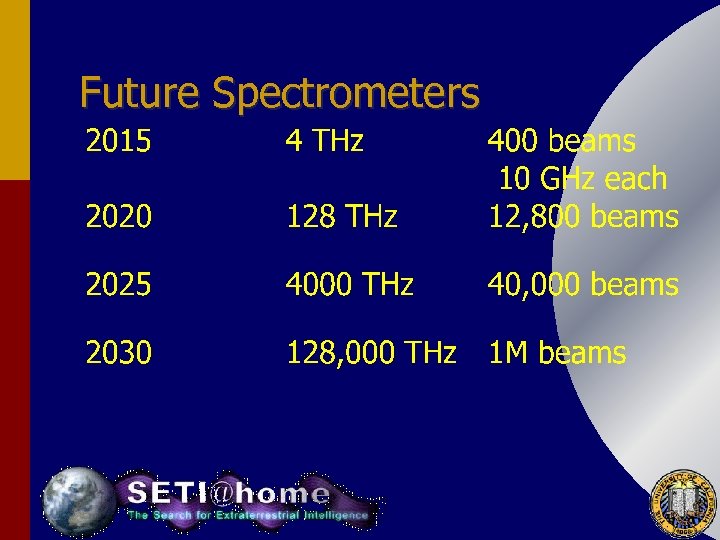
Future Spectrometers
Why you might not want to collaborate with us on Transient Observations
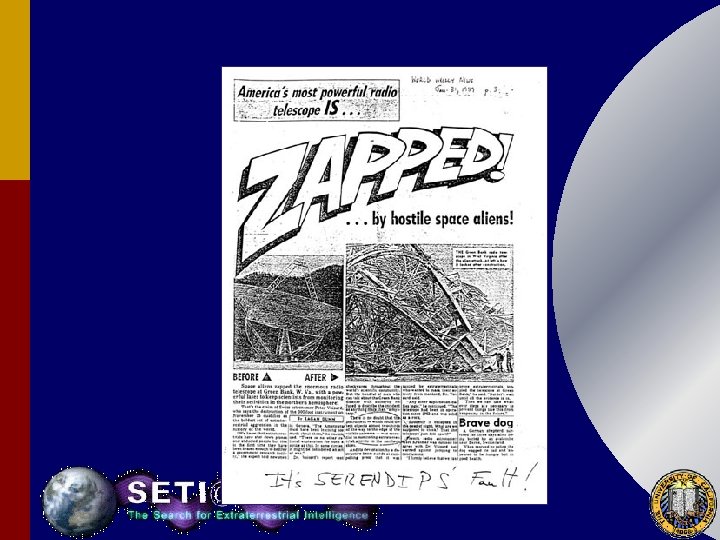

Seti Haiku
Searching for life Answers are revealed About ourselves Paula Cook, Duke University
One million earthlings Bounded by optimism Leave their PC’s on Dan Seidner
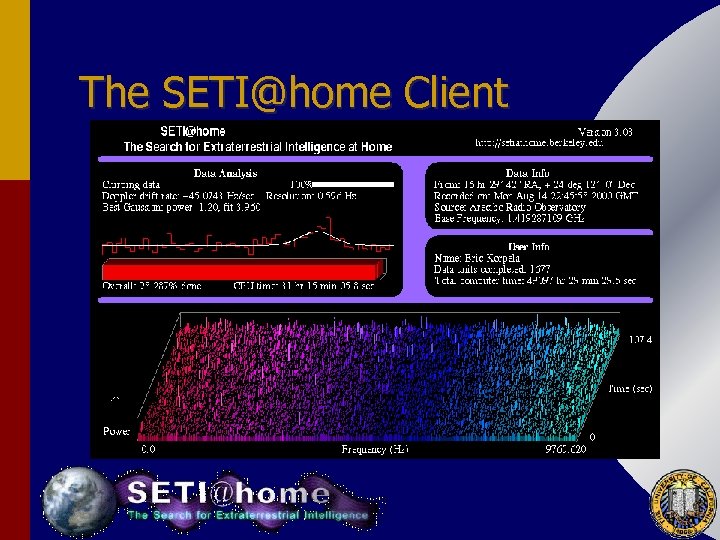
The SETI@home Client
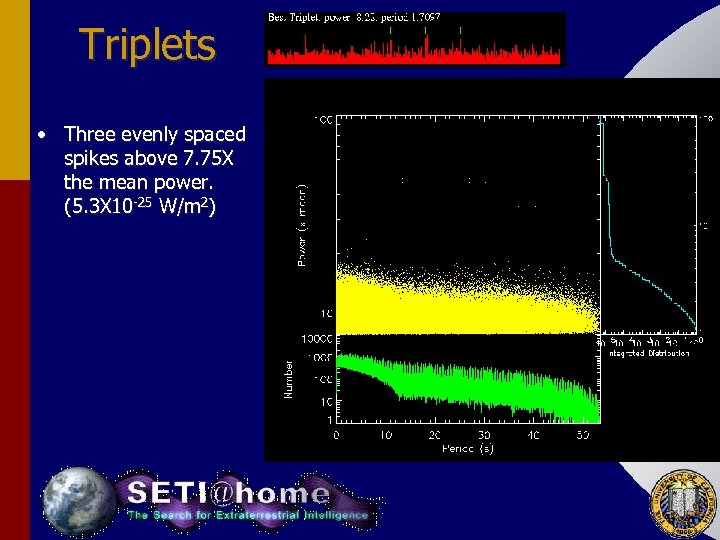
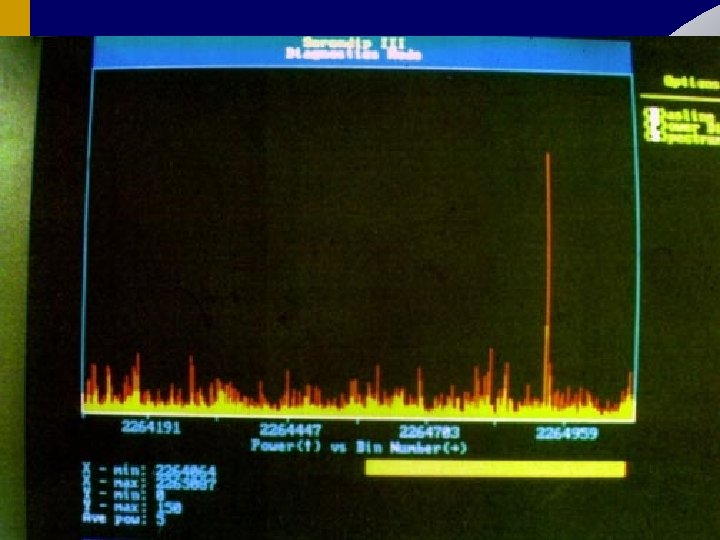
Triplets • Three evenly spaced spikes above 7. 75 X the mean power. (5. 3 X 10 -25 W/m 2)
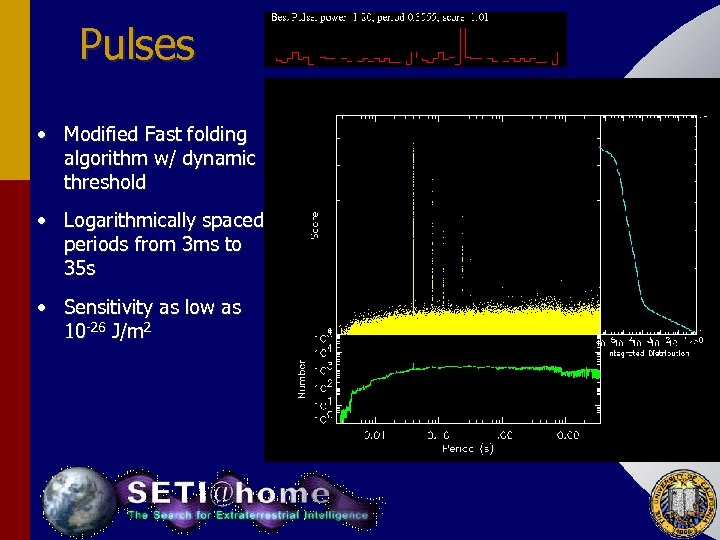
Pulses • Modified Fast folding algorithm w/ dynamic threshold • Logarithmically spaced periods from 3 ms to 35 s • Sensitivity as low as 10 -26 J/m 2
 Скачать презентацию Transient SETI Dan Werthimer University of California Berkeley
8dcce6541018de5ead6c4e81370344a9.ppt