


 Скачать презентацию TRANSFORMATION LEADERSHIP the CHANGE PROCESS Dr Mark
2b03b64e8ff4ae77fc0c1d51e50ec202.ppt
- Количество слайдов: 41
 TRANSFORMATION LEADERSHIP & the CHANGE PROCESS Dr Mark Manley 1
 Transform? Why? The transformation process is well illustrated around us. Trees Butterflies Frogs Birds and Reptiles Our greatest transformation is mental. ©Dr Mark Manley 2
 Six Cornerstones of the DCSF 1. 2. 3. 4. Transformational Leadership Citizen Transformation Evidence based Knowledge and Innovation Utilizing African Potential Skills and Resources 5. Developing Capacity of capacity Developers 6. Integrated Planning and Implementation for Results Dr Mark Manley 3
 4
4
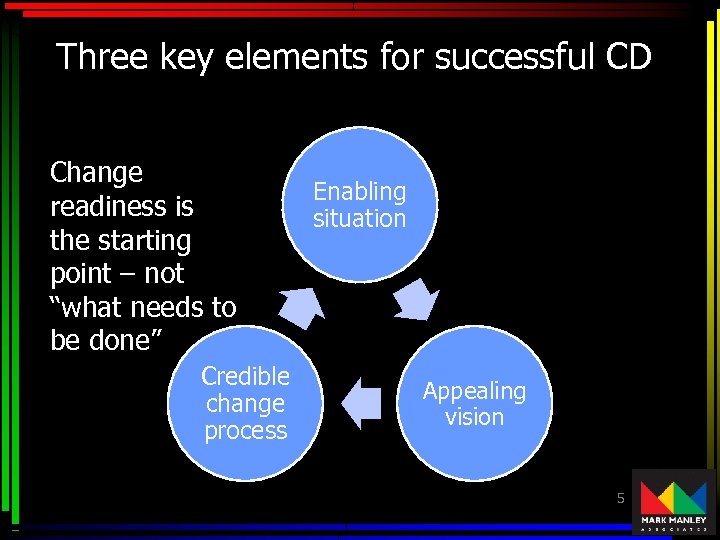 Three key elements for successful CD Change readiness is the starting point – not “what needs to be done” Credible change process Enabling situation Appealing vision 5
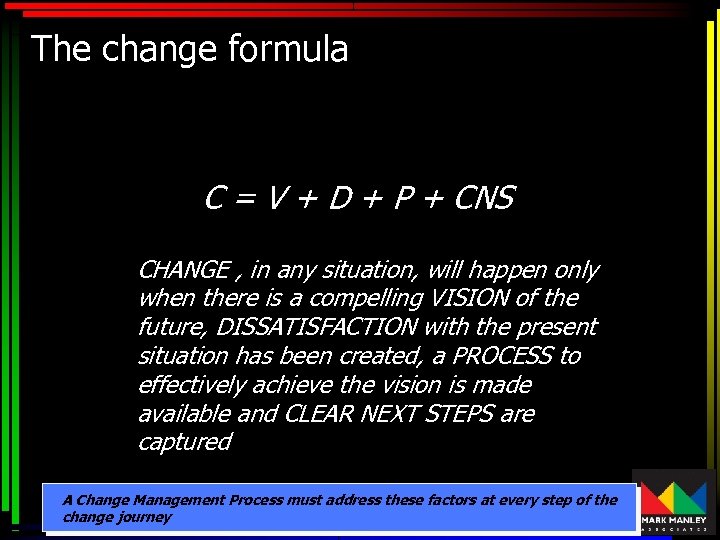 The change formula C = V + D + P + CNS CHANGE , in any situation, will happen only when there is a compelling VISION of the future, DISSATISFACTION with the present situation has been created, a PROCESS to effectively achieve the vision is made available and CLEAR NEXT STEPS are captured A Change Management Process must address these factors at every step of the change journey
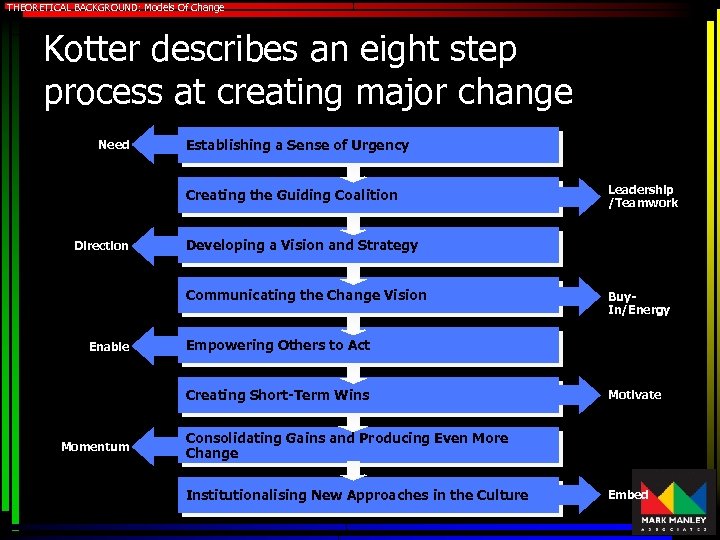 THEORETICAL BACKGROUND: Models Of Change Kotter describes an eight step process at creating major change Need Establishing a Sense of Urgency Creating the Guiding Coalition Direction Developing a Vision and Strategy Communicating the Change Vision Enable Buy. In/Energy Empowering Others to Act Creating Short-Term Wins Momentum Leadership /Teamwork Motivate Consolidating Gains and Producing Even More Change Institutionalising New Approaches in the Culture Embed
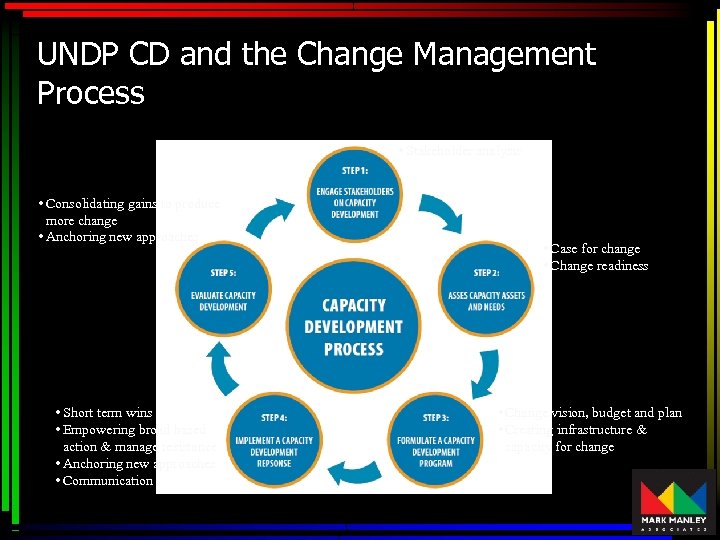 UNDP CD and the Change Management Process • Stakeholder analysis • Consolidating gains to produce more change • Anchoring new approaches • Short term wins • Empowering broad based action & manage resistance • Anchoring new approaches • Communication • Case for change • Change readiness • Change vision, budget and plan • Creating infrastructure & capacity for change
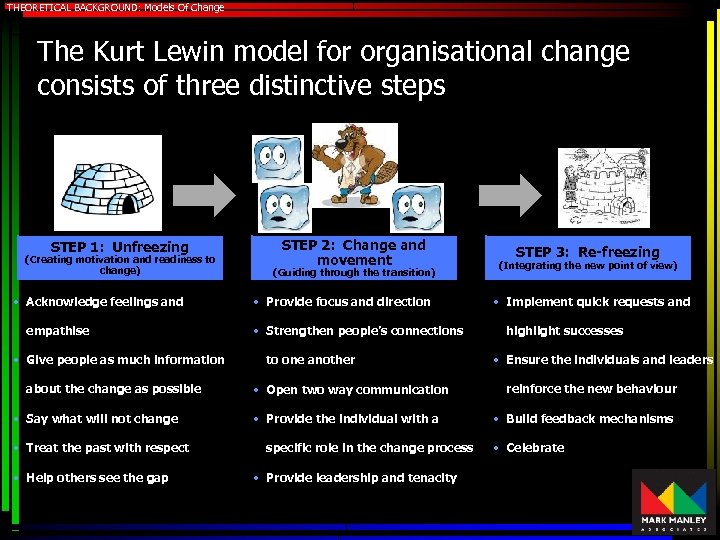 THEORETICAL BACKGROUND: Models Of Change The Kurt Lewin model for organisational change consists of three distinctive steps STEP 1: Unfreezing (Creating motivation and readiness to change) • Acknowledge feelings and empathise • Give people as much information about the change as possible • Say what will not change • Treat the past with respect • Help others see the gap STEP 2: Change and movement (Guiding through the transition) • Provide focus and direction • Strengthen people’s connections to one another • Open two way communication • Provide the individual with a specific role in the change process • Provide leadership and tenacity STEP 3: Re-freezing (Integrating the new point of view) • Implement quick requests and highlight successes • Ensure the individuals and leaders reinforce the new behaviour • Build feedback mechanisms • Celebrate
 Introduction Growth is demanded of us if we are to be excellent We all resist change – WE LOVE OUR SYSTEMS Growth is impossible without change New Paradigms are impossible without Transformation Dr Mark Manley 10
 Overview • • • Why Transform The Leadership Component The Leadership Focus Maximising Impact for Transformation Change and Transformation Process Personal Phases of Change Paradigms Identification of Needed Change Applications Dr Mark Manley 11
 Change Starts Where? Thinking is the hardest work there is, which is probably the reason why so few engage in it. Ford Dr Mark Manley 12
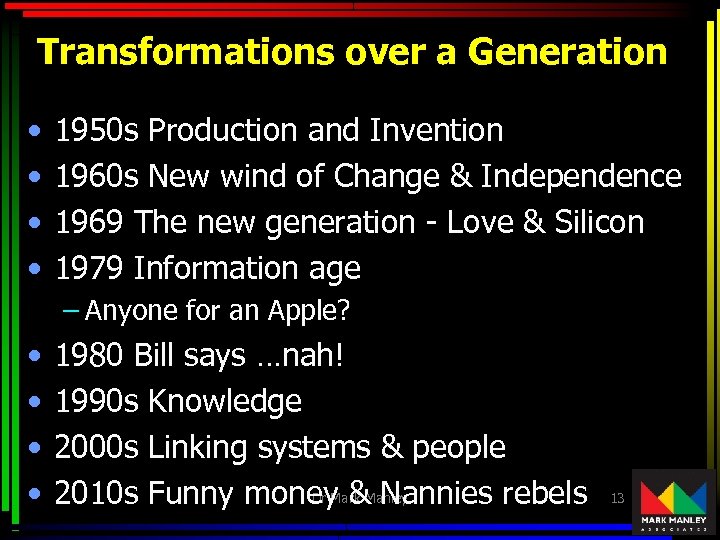 Transformations over a Generation • • 1950 s Production and Invention 1960 s New wind of Change & Independence 1969 The new generation - Love & Silicon 1979 Information age – Anyone for an Apple? • • 1980 Bill says …nah! 1990 s Knowledge 2000 s Linking systems & people Dr Mark Nannies rebels 2010 s Funny money &Manley 13
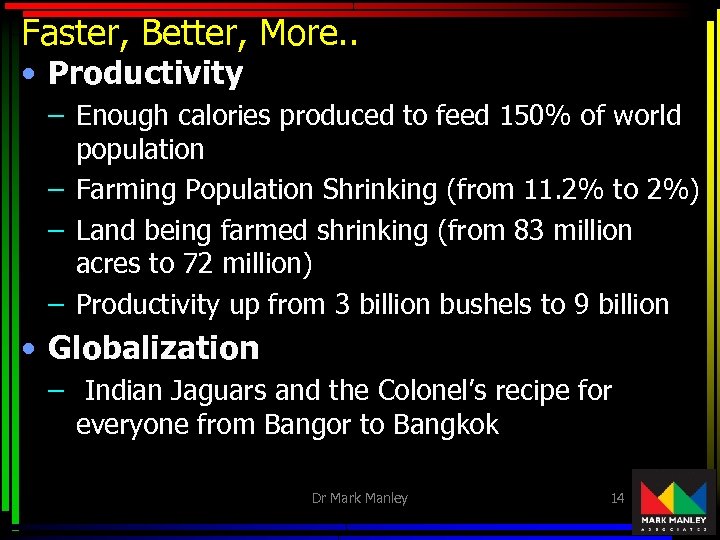 Faster, Better, More. . • Productivity – Enough calories produced to feed 150% of world population – Farming Population Shrinking (from 11. 2% to 2%) – Land being farmed shrinking (from 83 million acres to 72 million) – Productivity up from 3 billion bushels to 9 billion • Globalization – Indian Jaguars and the Colonel’s recipe for everyone from Bangor to Bangkok Dr Mark Manley 14
 The Future is so bright I gotta wear shades • Communication with no strings attached – Wi FI – Cell Phones – 3 G • Social Networking, speed dating & defriending – – – Twitter Facebook You Tube Blogs BBM • Technology? ? Dr Mark Manley 15
 And the point is…? Just because everything is different doesn't mean anything has changed. ~Irene Peter Dr Mark Manley 16
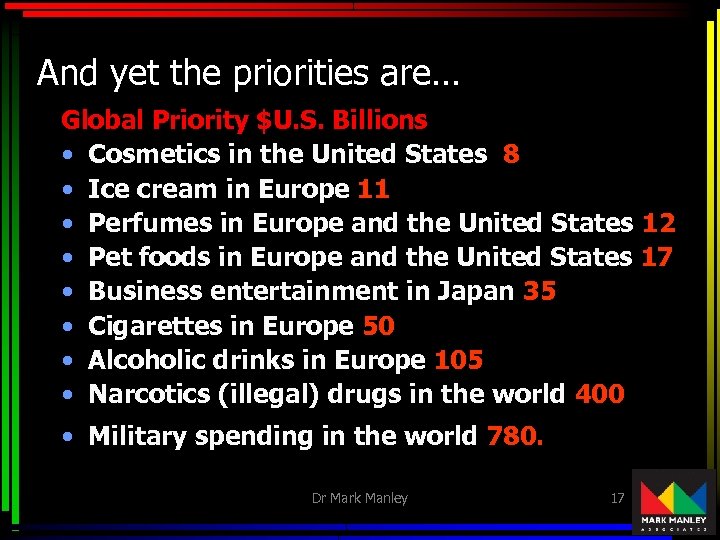 And yet the priorities are… Global Priority $U. S. Billions • Cosmetics in the United States 8 • Ice cream in Europe 11 • Perfumes in Europe and the United States 12 • Pet foods in Europe and the United States 17 • Business entertainment in Japan 35 • Cigarettes in Europe 50 • Alcoholic drinks in Europe 105 • Narcotics (illegal) drugs in the world 400 • Military spending in the world 780. Dr Mark Manley 17
 Look how far we’ve come • Half of the world’s population (3 billion) live on less than $2. 00 a day. • The GDP (Gross Domestic Product) of the poorest 48 nations (of the world's countries) is less than the combined wealth of the world's 3 richest people. 21 st Century Poverty Facts and Stats adapted from: http: //www. globalissues. org/Trade. Related/Facts. asp Dr Mark Manley 18
 Do we know who we are? • From 1999 -2010, less than 1% of the world's yearly weapon sales was needed to put every child into school. It didn't happen. • In the 21 st Century 1 billion unable to read a book, or sign their names. • 30 000 children die a day, due to poverty, which is a staggering 11 million a year. Dr Mark Manley 19
 The Leadership Component • Leaders bring change • If a “leader” is not changing things, s/he is just a maintenance authority Dr Mark Manley 20
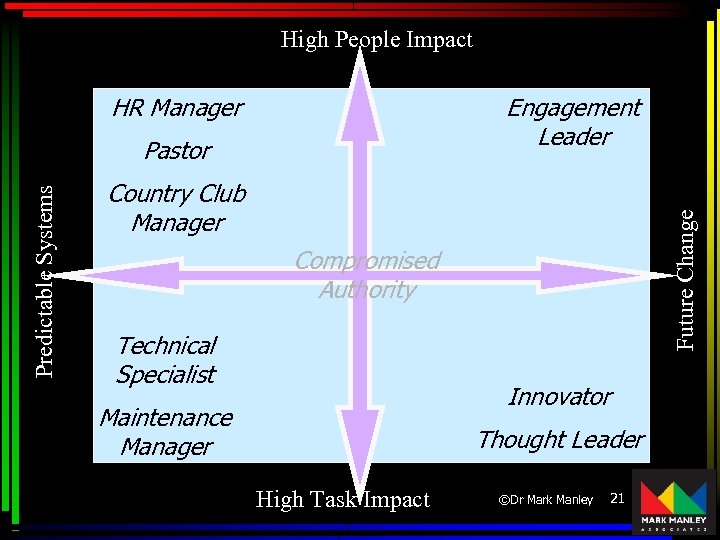 High People Impact HR Manager Engagement Leader Country Club Manager Future Change Predictable Systems Pastor Compromised Authority Technical Specialist Innovator Maintenance Manager Thought Leader High Task Impact ©Dr Mark Manley 21
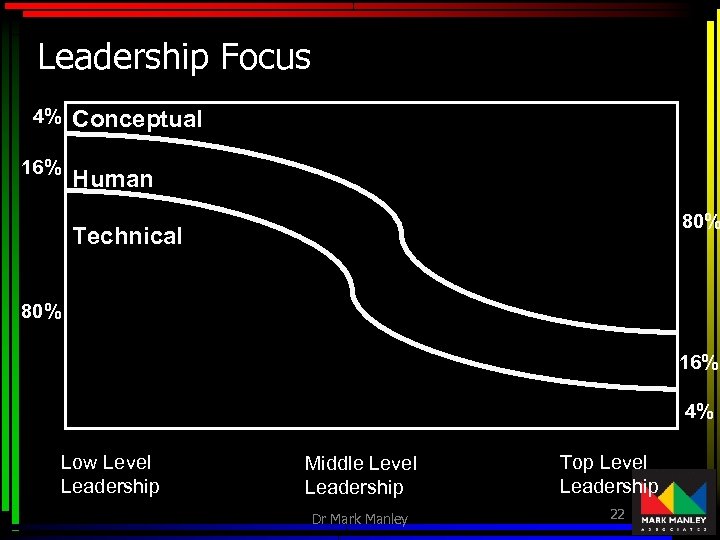 Leadership Focus 4% 16% Conceptual. Human 80% Technical 80% 16% 4% Low Level Leadership Middle Level Leadership Dr Mark Manley Top Level Leadership 22
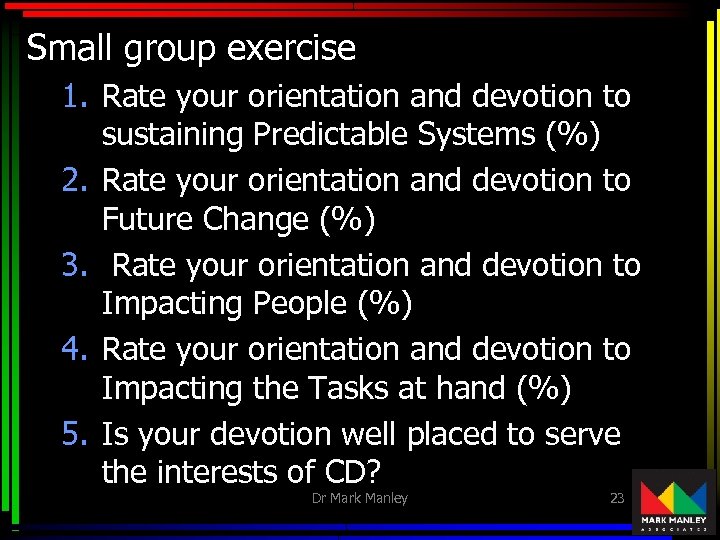 Small group exercise 1. Rate your orientation and devotion to sustaining Predictable Systems (%) 2. Rate your orientation and devotion to Future Change (%) 3. Rate your orientation and devotion to Impacting People (%) 4. Rate your orientation and devotion to Impacting the Tasks at hand (%) 5. Is your devotion well placed to serve the interests of CD? Dr Mark Manley 23
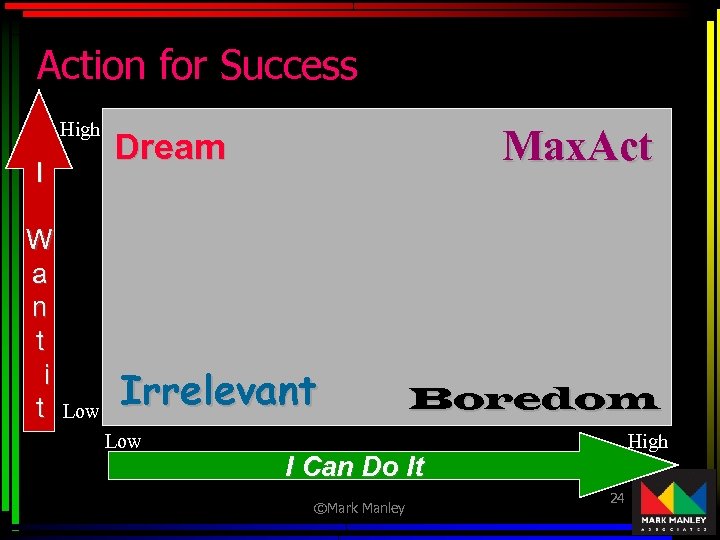 Action for Success High I W a n t i t Low Max. Act Dream Irrelevant Low Boredom High I Can Do It ©Mark Manley 24
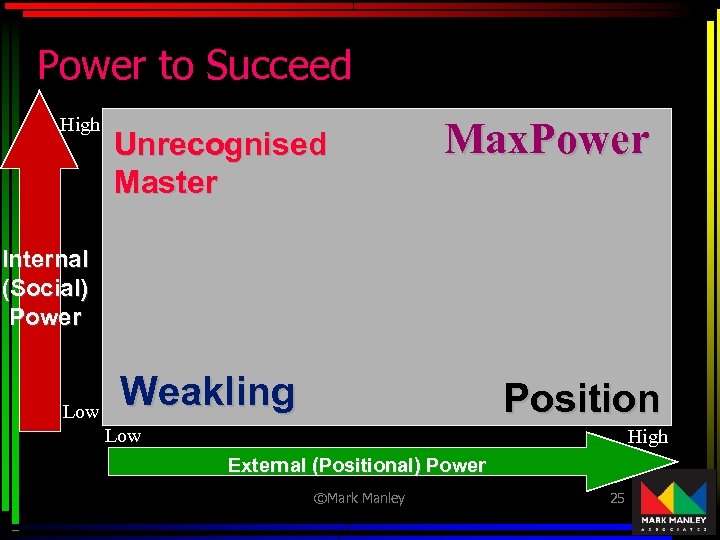 Power to Succeed High Unrecognised Master Max. Power Internal (Social) Power Low Weakling Position Low High External (Positional) Power ©Mark Manley 25
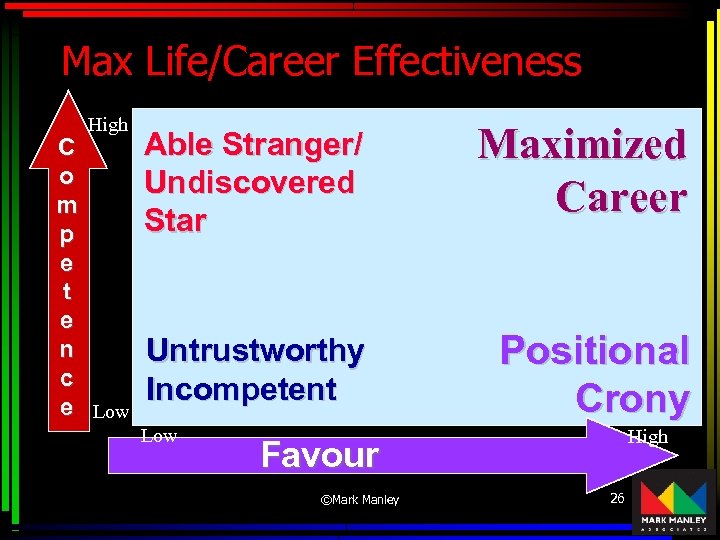 Max Life/Career Effectiveness High C o m p e t e n c e Low Able Stranger/ Undiscovered Star Maximized Career Untrustworthy Incompetent Positional Crony Low High Favour ©Mark Manley 26
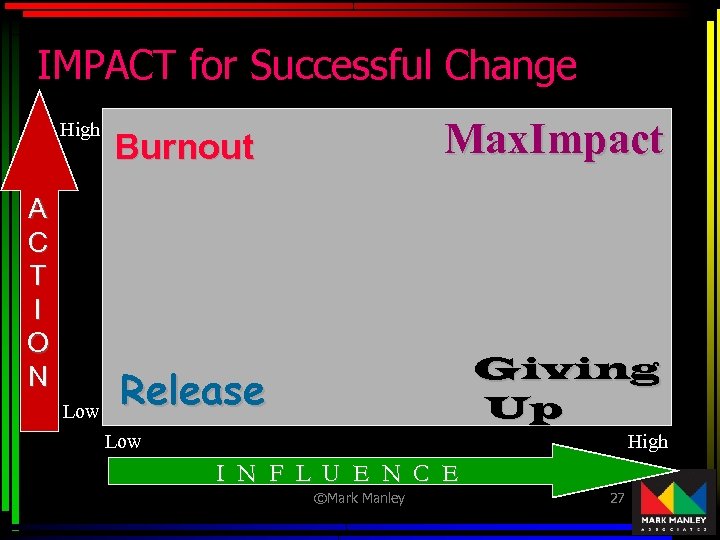 IMPACT for Successful Change High A C T I O N Low Max. Impact Burnout Giving Up Release Low High I N F L U E N C E ©Mark Manley 27
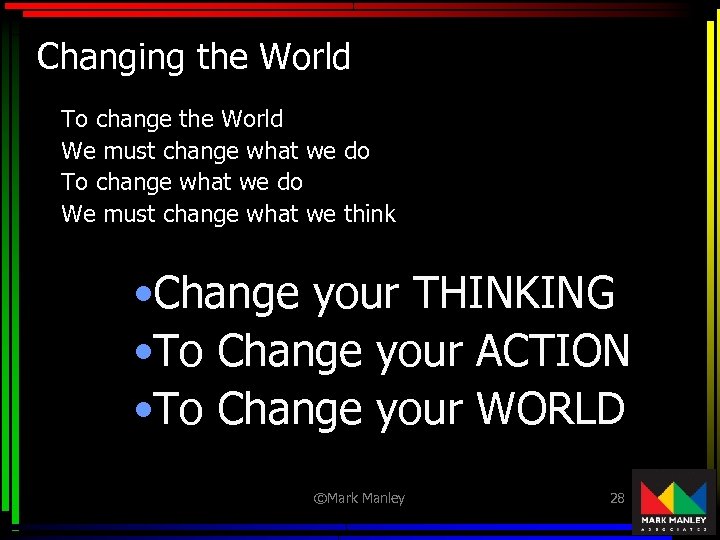 Changing the World To change the World We must change what we do To change what we do We must change what we think • Change your THINKING • To Change your ACTION • To Change your WORLD ©Mark Manley 28
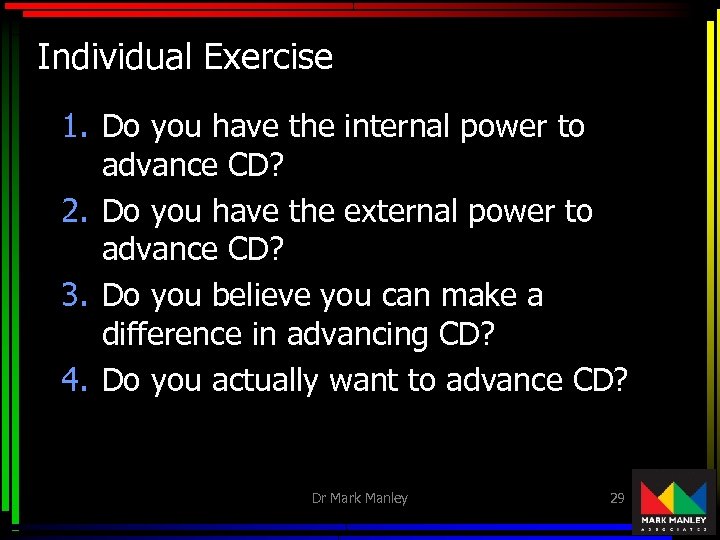 Individual Exercise 1. Do you have the internal power to advance CD? 2. Do you have the external power to advance CD? 3. Do you believe you can make a difference in advancing CD? 4. Do you actually want to advance CD? Dr Mark Manley 29
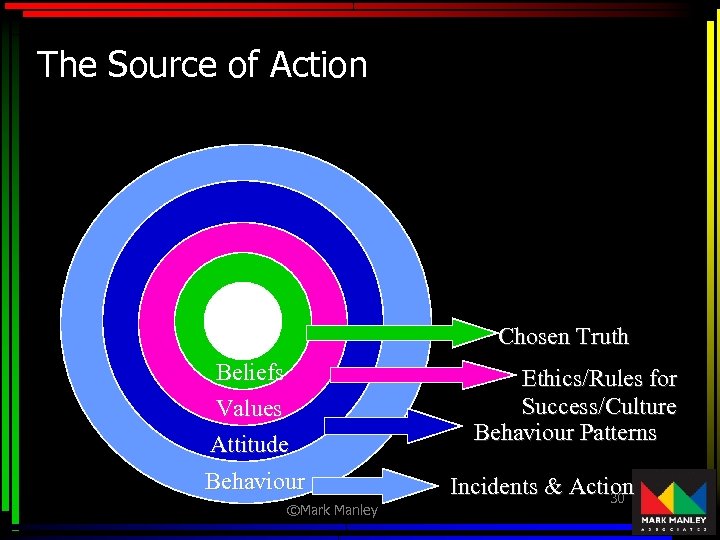 The Source of Action Chosen Truth Beliefs Values Attitude Behaviour ©Mark Manley Ethics/Rules for Success/Culture Behaviour Patterns Incidents & Action 30
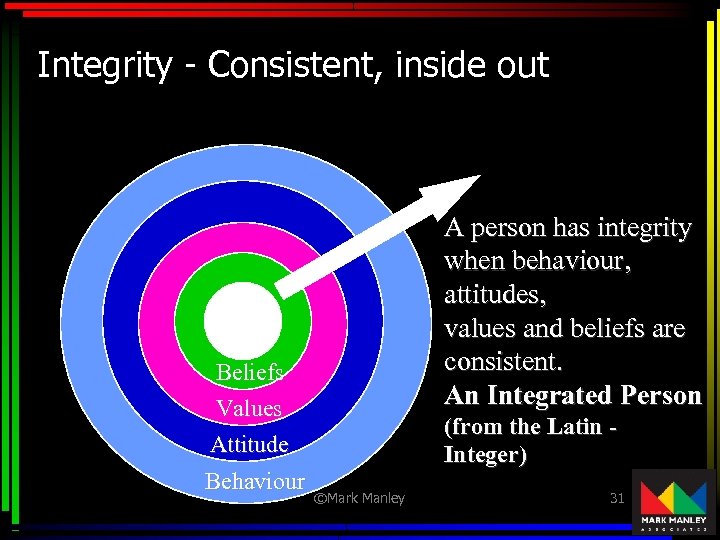 Integrity - Consistent, inside out A person has integrity when behaviour, attitudes, values and beliefs are consistent. An Integrated Person Beliefs Values Attitude Behaviour (from the Latin Integer) ©Mark Manley 31
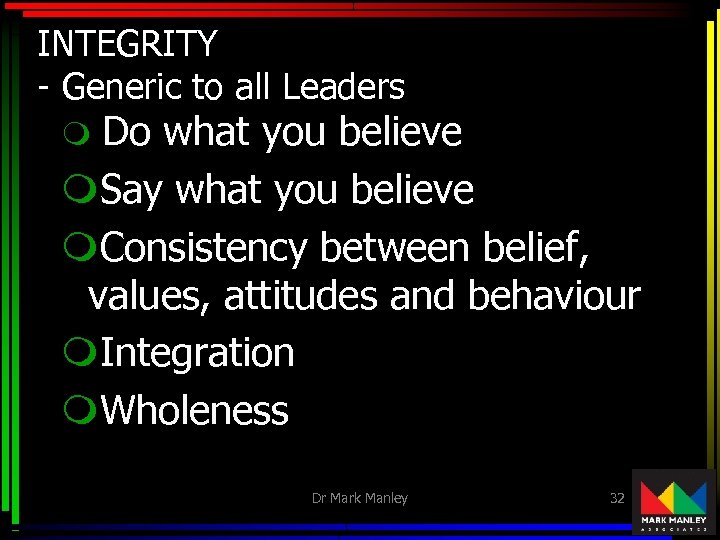 INTEGRITY - Generic to all Leaders Do what you believe m. Say what you believe m. Consistency between belief, values, attitudes and behaviour m. Integration m. Wholeness m Dr Mark Manley 32
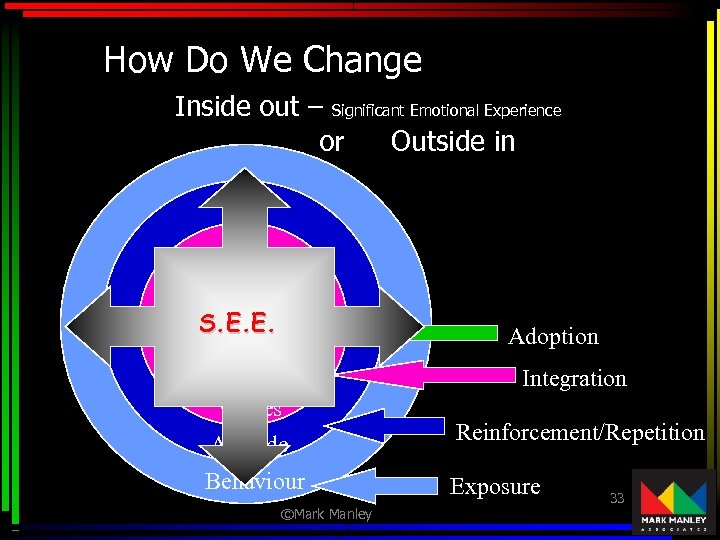 How Do We Change Inside out – Significant Emotional Experience or Outside in S. E. E. Adoption Beliefs Values Integration Attitude Reinforcement/Repetition Behaviour Exposure ©Mark Manley 33
 Reacting or Responding • • • How do we respond instead of react? Feel - Think - Act If the answer is not there, Feel (intuit) Think (cognate) Behave (act) Dr Mark Manley 34
 Truth to Action • Thinking should engage our core belief. • Shallow thinking = Superficial Action (reaction) • Inaccurate Truth = Inappropriate Behaviour ©Mark Manley 35
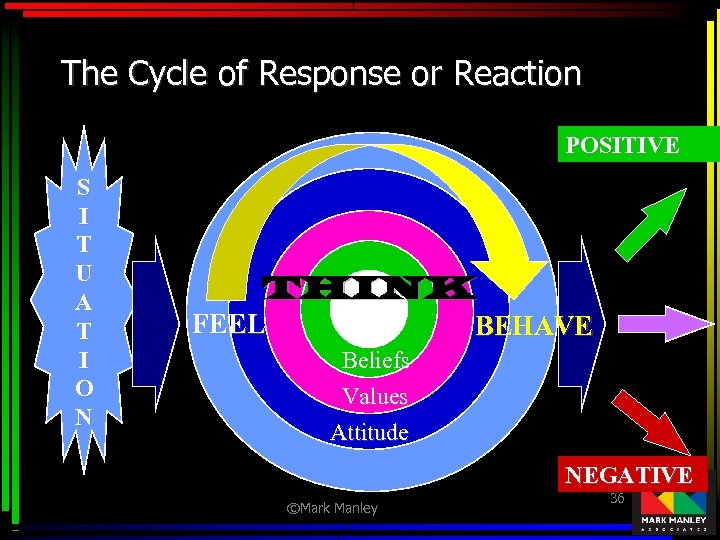 The Cycle of Response or Reaction POSITIVE S I T U A T I O N THINK FEEL BEHAVE Beliefs Values Attitude NEGATIVE ©Mark Manley 36
 What to Change? • The foundation to capacity development is ……. . • Understanding and perceiving in truth yourself and the world • Creating new values for success based on CD • Reinforcing the better way Dr Mark Manley 37
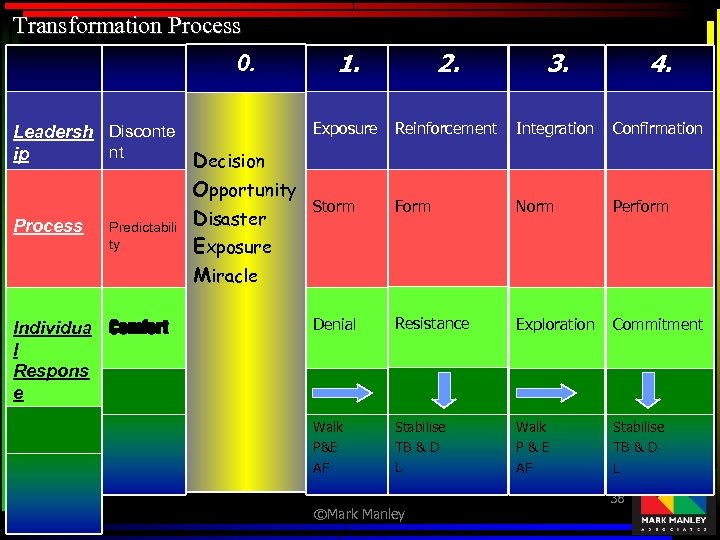 Transformation Process 0. Leadersh Disconte nt ip Decision Process Predictabili ty Individua Comfort l Respons e Opportunity Disaster Exposure Miracle 1. 2. 3. 4. Exposure Reinforcement Integration Confirmation Storm Form Norm Perform Denial Resistance Exploration Commitment Walk P&E AF Stabilise TB & D L ©Mark Manley 38
 Six Cornerstones of the DCSF 1. 2. 3. 4. Transformational Leadership Citizen Transformation Evidence based Knowledge and Innovation Utilizing African Potential Skills and Resources 5. Developing Capacity of capacity Developers 6. Integrated Planning and Implementation for Results Dr Mark Manley 39
 Change and Conformity Why be different? The comfort of predictability seduces us away from the uncertainty of change. It also seduces us away from progress, excellence, growth, excitement and opportunity. Dr Mark Manley 40
 BREAK Dr Mark Manley 41