


 Скачать презентацию Trans XML Survey and Scoping Study NCHRP Project
ea42cdfbecb2432c4b29da2517a237b0.ppt
- Количество слайдов: 16
 Trans. XML Survey and Scoping Study NCHRP Project 20 -07 Task 295 (2011) Frances Harrison Spy Pond Partners, LLC
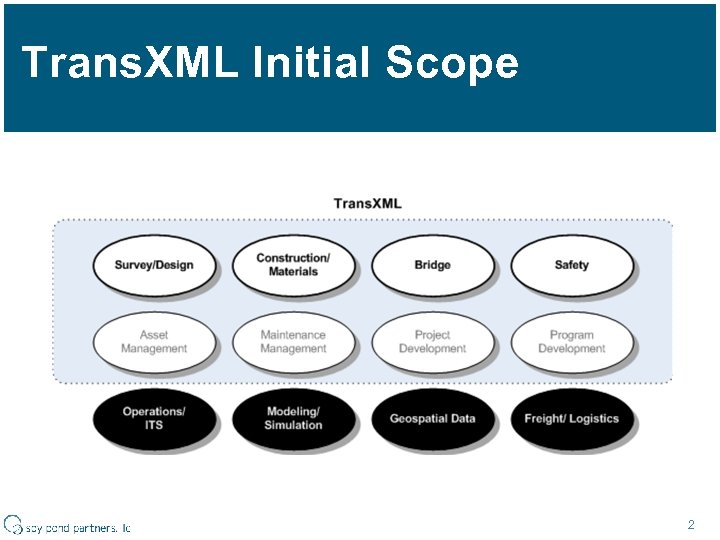 Trans. XML Initial Scope 2
 Study Objectives • Determine current use and support for Trans. XML and other standard, non-proprietary XML formats for data exchange • Determine need/support for extensions or modifications to existing Trans. XML schema based on experience to date • Identify priority areas for new common data schema based on opportunities for reduction in duplicate data entry or enhanced information sharing within and across organizations • Suggestions for new industry standard formats to facilitate data exchange 3
 Data Collection Approach • August/September 2011 • Online survey distributed via email to: – AASHTO Subcommittee on Information Systems – AASHTO Standing Committee on Planning – Four Highway Engineering Exchange Program (HEEP) area officers (with requests to distribute to HEEP members) – Attendee roster for the most recent GIS-T conference – Community members registered on the Trans. XML website – TRB Data Section committee chairs (with requests to distribute to members and friends) – Individuals at selected engineering firms and software vendors 4
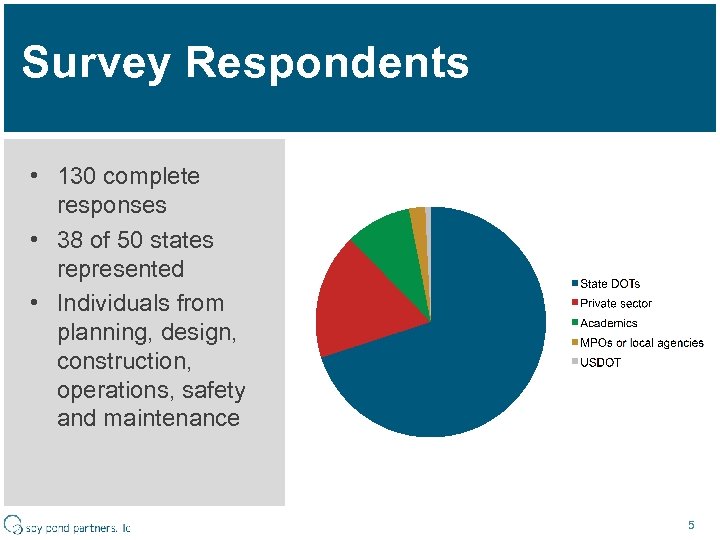 Survey Respondents • 130 complete responses • 38 of 50 states represented • Individuals from planning, design, construction, operations, safety and maintenance 5
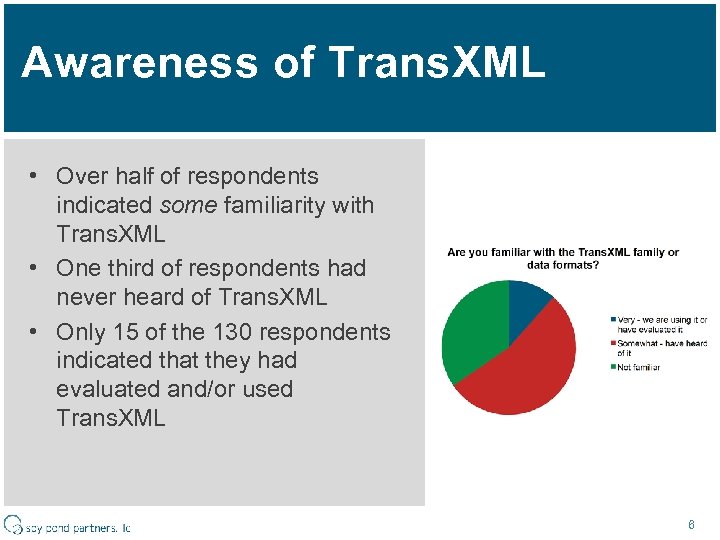 Awareness of Trans. XML • Over half of respondents indicated some familiarity with Trans. XML • One third of respondents had never heard of Trans. XML • Only 15 of the 130 respondents indicated that they had evaluated and/or used Trans. XML 6
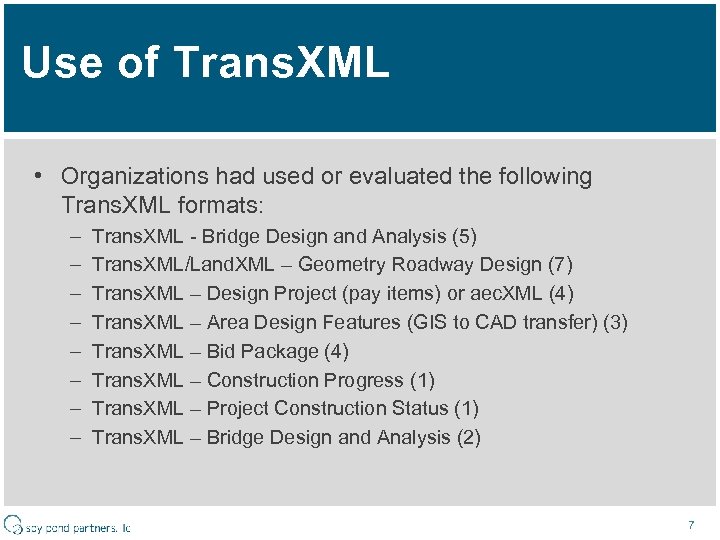 Use of Trans. XML • Organizations had used or evaluated the following Trans. XML formats: – – – – Trans. XML - Bridge Design and Analysis (5) Trans. XML/Land. XML – Geometry Roadway Design (7) Trans. XML – Design Project (pay items) or aec. XML (4) Trans. XML – Area Design Features (GIS to CAD transfer) (3) Trans. XML – Bid Package (4) Trans. XML – Construction Progress (1) Trans. XML – Project Construction Status (1) Trans. XML – Bridge Design and Analysis (2) 7
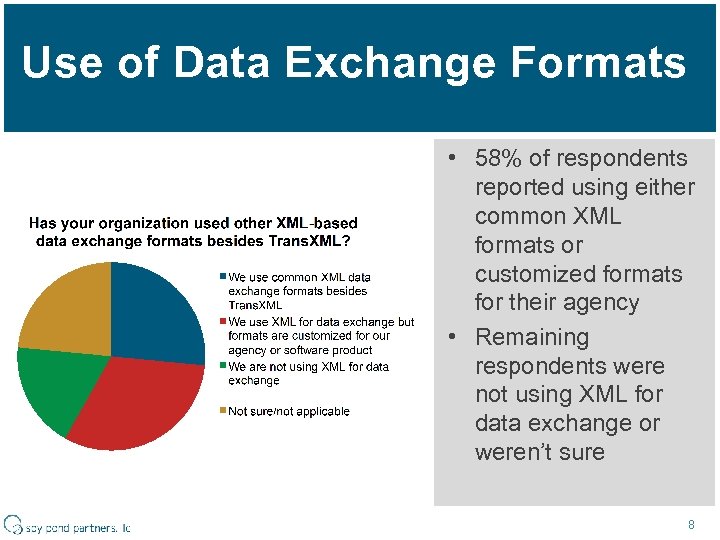 Use of Data Exchange Formats • 58% of respondents reported using either common XML formats or customized formats for their agency • Remaining respondents were not using XML for data exchange or weren’t sure 8
 XML Usage Examples • NYSDOT automated steel bridge design and detailing functions using Land. XML adapted with custom elements • Bentley Systems developed Permit. XML based on OS/OW system implementations in 20 US states and 1 Canadian province • Minnesota DOT used Payroll. XML(Infotech) for construction contractors submitting standard payroll information into Trns*port 9
 Opportunities and Priorities for New Data Exchange Formats • Opportunities for gaining efficiencies through use of common data exchange formats (respondents asked to assign high/medium/low rating to 12 options): – Sharing highway or asset inventory information among systems (60% high) – Bringing highway design data into inventory and asset management software (55% high) – Sharing traffic data among systems (50% high) – Sharing highway alignment data across different design software packages (45% high) – Sharing crash data among systems (45% high) – Sharing utility and right of way data among systems (44% high) 10
 Other Opportunities for Expansion • Respondents suggested the following other businesses areas for Trans. XML expansion: – – Pavement Management (61%) Maintenance Management (56%) Bridge Management (51%) Traffic Operations/ITS (51%) 11
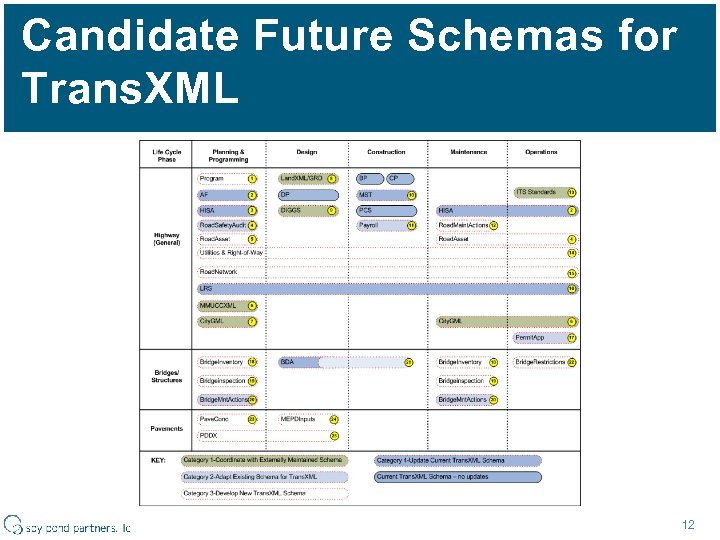 Candidate Future Schemas for Trans. XML 12
 Sample Trans. XML Expansion Area (25) Pavement Deflection Data Content: Pavement Deflection measurements and associated metadata Data Exchanges: Falling Weight Deflectometer (FWD) Equipment to Analysis Software Action: Develop new schema, drawing upon data structures and standards identified in: LTPP, HPMS, AASHTO Maintenance Manual, HPMS, AASHTO PP 37 -04. This would build upon the Road Network and Linear Referencing Trans. XML schemas. Comments: While there are multiple producers and consumers of FWD data (Ref: NCHRP Synthesis 381), the PDDX standard is already in place and being updated for compatibility with DARWIN ME; FWD converters already exist to translate to PDDX format - need to assess benefit of establishing XML schema based on PDDX - may not be sufficient incentives to switch to XML. Category: 2 Adapt Existing Schema 13
 Barriers to Adoption • Major barriers that limited agencies’ adoption of common data formats, included: – Lack of awareness of existing formats and how to implement them (70%) – Too costly to retrofit systems (56%) – Common data formats are not compatible with those in use (46%) – Other: • • Vendor application issues and incompatibilities across vendors Trans. XML complexity makes it difficult to justify the investment Resistance to standardization Lack of resources and stovepipe systems make integration costly 14
 Conclusions • Lack of awareness and understanding of Trans. XML – Absence of marketing and outreach – Challenges of communicating technical concepts – Survey targeted a broader group then the original project • Need additional education about existing schemas • Interest in expanding Trans. XML into other areas • DOTs committed to using XML technology (75% of agencies) • Respondents suggested a list of XML and non-XML schema that could be integrated with Trans. XML 15
 Link to Report • http: //onlinepubs. trb. org/onlinepubs/nchrp/docs/NCHRP 2007(295)_FR. pdf 16