 Скачать презентацию Training Module 9 Bidding Purchasing and Leasing Prepared
21b93eeb45e8d1b4157885b482e67ba0.ppt
- Количество слайдов: 40



Training Module 9 Bidding, Purchasing, and Leasing Prepared by RCAP Solutions for the PA Department of Environmental Protection
Smallville vs. Middleville Construction 1
Course Overview • Goals of the purchasing process • Purchasing options and procedures • Contracts • Understand legal requirements and avoid conflicts of interest 2
Goals of the Purchasing Process • Buy only what you need • Stick to your budget • Use competitive purchasing as much as possible 3
Additional Government Procurement Goals • Know the law and comply with it • Understand the intention of the law 4
Do you have a process? • Who decides • Identify needs versus wants • Limit the ability to spend among employees • Avoid unnecessary inventories of parts, supplies and office materials 5
Paying the Bills • Time purchases to fit cash flow constraints • Know or negotiate terms of payment before finalizing a purchase • Pay bills only when value is received, but once it is received, pay them on time 6
Procurement Options • Buy • Rent • Lease-Purchase • Services and Contracted Work 7
Buying • Funds must be available at time of purchase from: • General Funds Savings or Checking • Capital Reserve Account • Borrow the money 8
Renting • Reasons to rent • Disadvantage – high cost • Rental options 9
Leasing • Advantages • Disadvantages • Examples of when leasing works best 10
Lease-Purchase • Little or no money upfront • Equity in the end • More costly than buying outright 11
Contractors • One time or infrequent projects • During busy times when there is not enough manpower • For skilled or specialized tasks 12
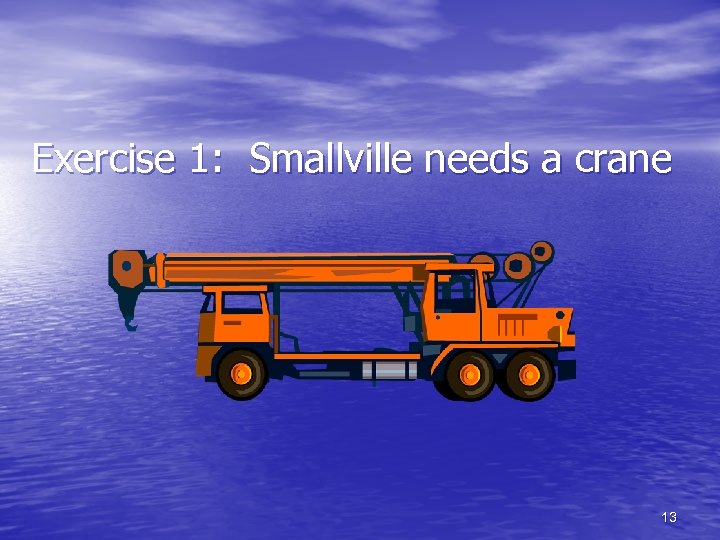
Exercise 1: Smallville needs a crane 13
To Bid or Not to Bid… • Usually, government purchases over $10, 000 require bidding • Bidding can be used below $10, 000 • Once you start the bidding process, you must stick with it 14
Quotes • Minimum three written or telephone price quotations required for all contracts between $4, 000 and $10, 000 • Not required for purchases under $4, 000, but may be a good idea, especially if the item or service will be ordered more than once 15
Exceptions to the Bidding Rule • Public works maintenance or repairs • Any work municipal employees can do themselves • “Sole source” purchases 16
Exceptions to the Bidding Rule • Professional services such as engineers or lawyers • Disaster emergency purchases Although these are allowable exceptions, bidding should be used if possible to ensure the best use of taxpayer dollars. 17
Exercise 2: Which purchases are exempt from bidding? 18
Bidding Procedures • Prepare “RFB “ Request for Bids documents • Advertise • Review proposals or bids after deadline • “Conform” the bids, ask for clarifications if needed • Check references • Select and award bid 19
Government Bidding Procedures • Government must follow certain bidding procedures • Bids must be published in a local newspaper of general publication • Check municipal codes for advertising requirements • Goes to the lowest responsible bidder 20
Bidding Documents • Specifications • Terms and Conditions • Bid format and contract instructions • Directions for Submittal 21
Specify What You Need • Common standard • What is needed by providing project or equipment specifications • Detail! • All bid packages sent out must be identical, and any changes in the specifications need to be re-advertised 22
Specify What You Need • Minimum requirements and tolerances • Reference codes or industry standards • Manufacturers’ standard specifications • Brand names 23
Specify What You Need • Recycled products • Minority-owned businesses • Deadline for submitting any questions 24
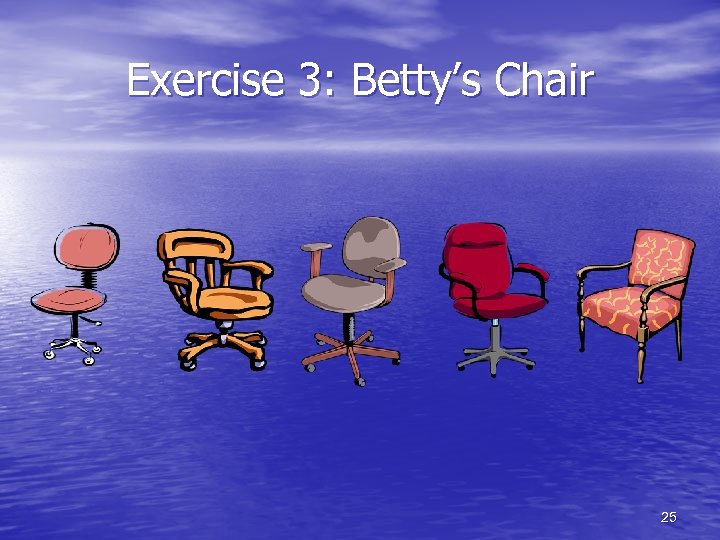
Exercise 3: Betty’s Chair 25
Advertising • Choose publications, websites, trade journals, etc. that suppliers are likely to read • Right to reject all bids 26
Comparing Bids • Check to make sure all bids fully meet the specifications, schedule, and terms and conditions • Check references and document the bidder is found to be ‘responsible’ • No exceptions 27
Bidding Procedures Awarding Bids • Award made by public announcement • Contracts exceeding $50, 000 must be awarded within 60 days 28
What do you do if no satisfactory bids are received? • Re-bid the item • After 45 days of the 2 nd advertisement, negotiate 29
Legal Challenges to Bid Awards • PA courts have ruled that disappointed bidders have no standing to challenge the bidding process • A taxpayer may challenge the bidding process if certain criteria are met 30
Withdrawal of Bids • Withdraw without forfeit • Next lowest bidder • Reject all bids 31
Contracts • Standard contract forms typically include: • • Statement of work Change orders Payment schedule and interest penalties Holdback of payments Liquidated damages Authority of the consultant Subcontracts 32
Contracts • Standard contract forms typically include: • Non-discrimination • Final cleanup • Contractor liability • Licenses, permits, and regulations • Anti-bid rigging 33
Bonds • Bid bonds • Performance bonds • Payment bonds 34
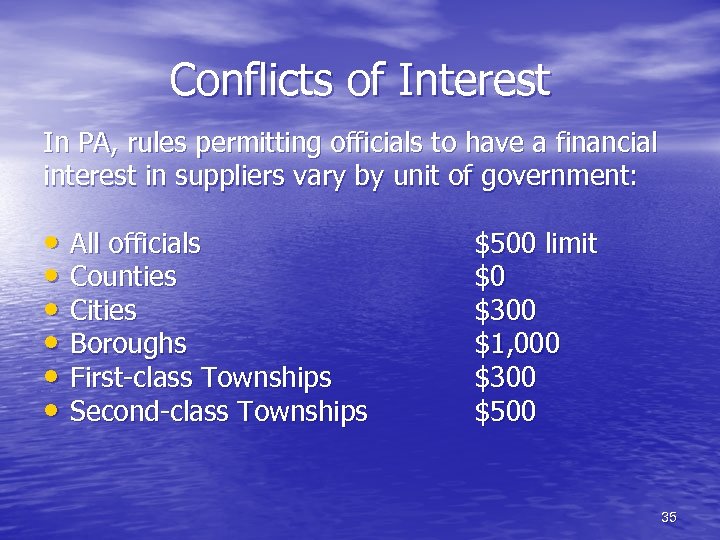
Conflicts of Interest In PA, rules permitting officials to have a financial interest in suppliers vary by unit of government: • All officials • Counties • Cities • Boroughs • First-class Townships • Second-class Townships $500 limit $0 $300 $1, 000 $300 $500 35
Other Issues • Davis-Bacon Act and Pennsylvania Prevailing Wage Act • Reverse auctions • Create economies of scale 36
Exercise • Take a few minutes to complete the exercise in the workbook 37

Summary 38
Resources • Pennsylvania State Association of Township Supervisors, (717) 763 -0930 • Governor’s Center for Local Government Services, (717) 720 -7395. This agency has a free publication called the “Purchasing Handbook”. • PA Dept. of Environmental Protection, Technical Assistance and Outreach, (717) 772 -4058, Dennis Lee • RCAP Solutions, (814) 861 -6093, Don Schwartz, PA/NJ Program Manager • National Institute for Supply Management (formerly NAPM) www. napm. org 39
Скачать презентацию Training Module 9 Bidding Purchasing and Leasing Prepared
21b93eeb45e8d1b4157885b482e67ba0.ppt