 Скачать презентацию Traffic-driven model of the World-Wide-Web Graph A Barrat
d3d9f8c06b04a6e67f8f9e8d42f8addc.ppt
- Количество слайдов: 24



Traffic-driven model of the World-Wide-Web Graph A. Barrat, LPT, Orsay, France M. Barthélemy, CEA, France A. Vespignani, LPT, Orsay, France
Outline o o o The Web. Graph Some empirical characteristics Various models Weights and strengths Our model: n n o Definition Analysis: analytics+numerics Conclusions
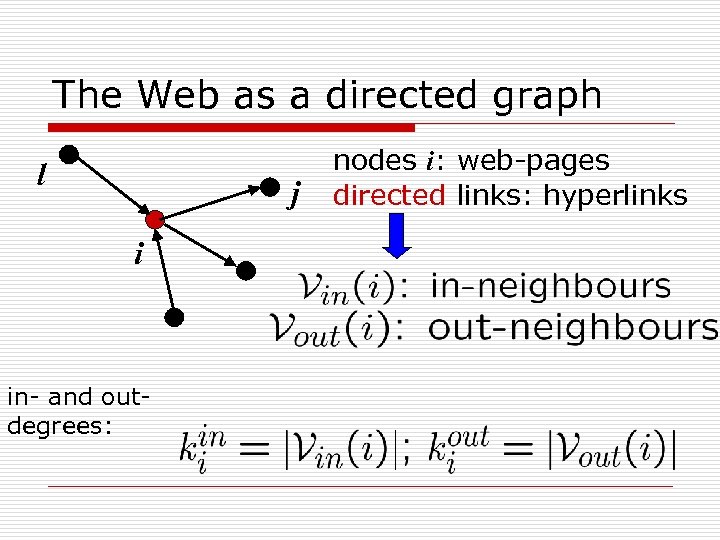
The Web as a directed graph l j i in- and outdegrees: nodes i: web-pages directed links: hyperlinks
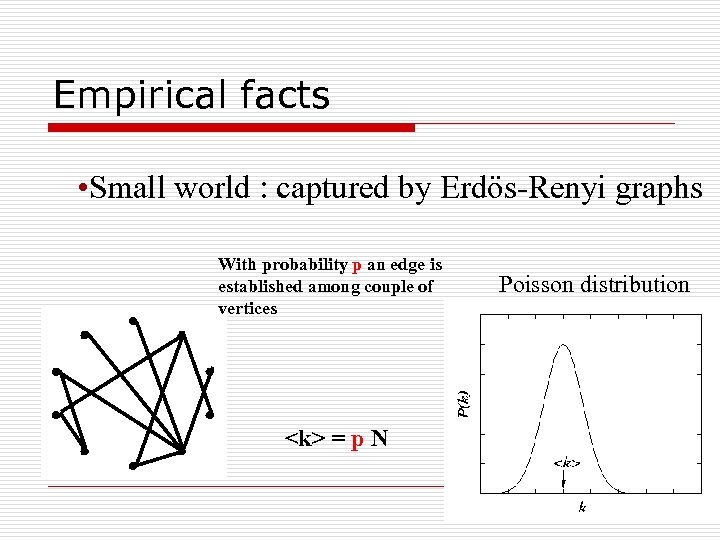
Empirical facts • Small world : captured by Erdös-Renyi graphs With probability p an edge is established among couple of vertices <k> = p N Poisson distribution
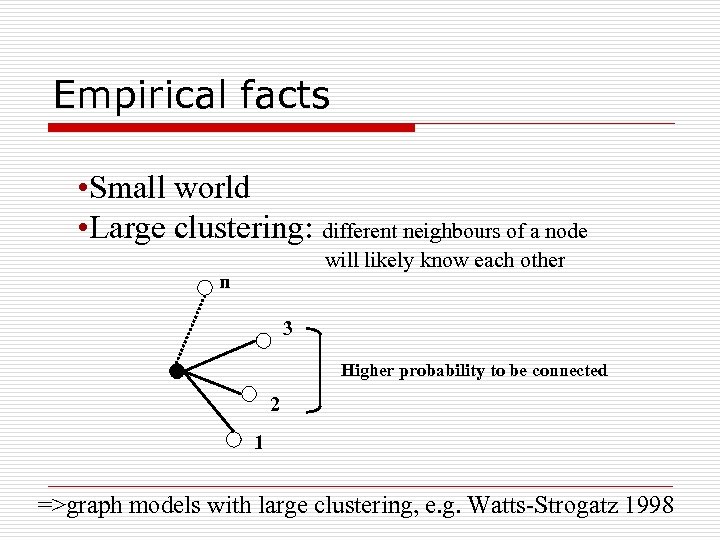
Empirical facts • Small world • Large clustering: different neighbours of a node will likely know each other n 3 Higher probability to be connected 2 1 =>graph models with large clustering, e. g. Watts-Strogatz 1998
Empirical facts • Small world • Large clustering • Dynamical network • Broad connectivity distributions • also observed in many other contexts (from biological to social networks) • huge activity of modeling (Barabasi-Albert 1999; Broder et al. 2000; Kumar et al. 2000; Adamic-Huberman 2001; Laura et al. 2003)
Various growing networks models o o o Barabási-Albert (1999): preferential attachment Many variations on the BA model: rewiring (Tadic 2001, Krapivsky et al. 2001), addition of edges, directed model (Dorogovtsev-Mendes 2000, Cooper -Frieze 2001), fitness (Bianconi-Barabási 2001), . . . Kumar et al. (2000): copying mechanism Pandurangan et al. (2002): Page. Rank+pref. attachment Laura et al. (2002): Multi-layer model Menczer (2002): textual content of web-pages
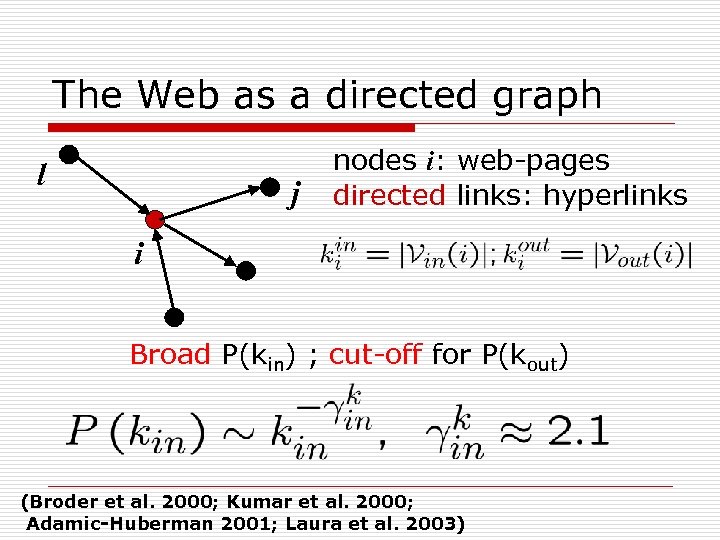
The Web as a directed graph l j nodes i: web-pages directed links: hyperlinks i Broad P(kin) ; cut-off for P(kout) (Broder et al. 2000; Kumar et al. 2000; Adamic-Huberman 2001; Laura et al. 2003)
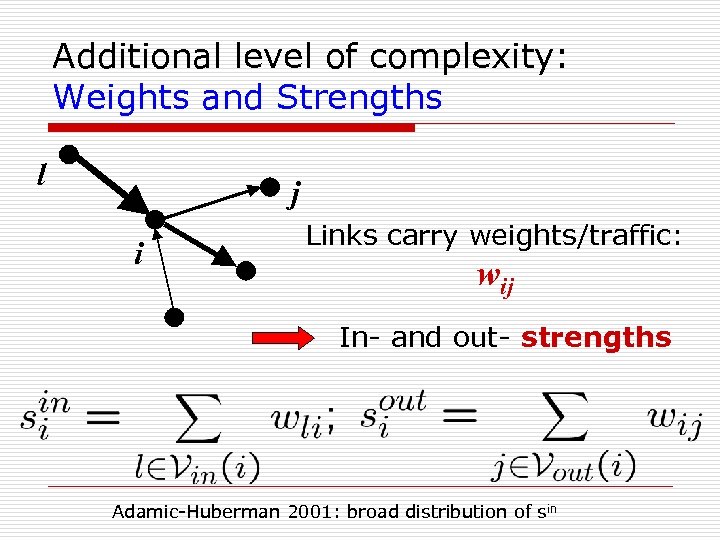
Additional level of complexity: Weights and Strengths l j i Links carry weights/traffic: wij In- and out- strengths Adamic-Huberman 2001: broad distribution of sin
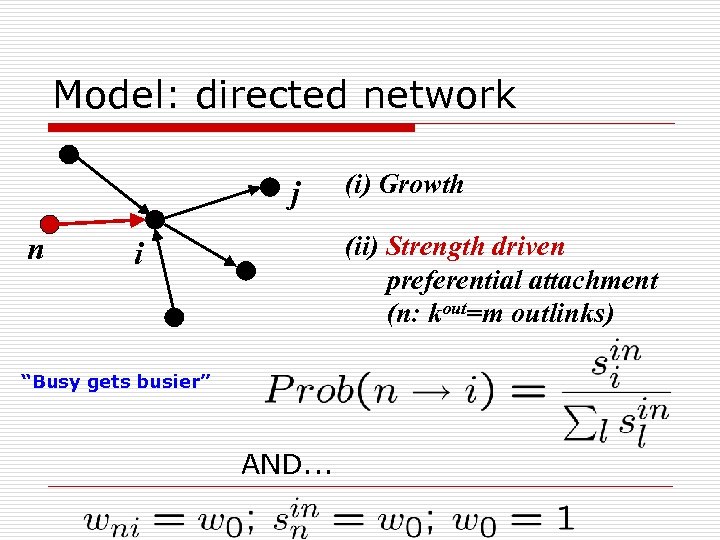
Model: directed network j n (i) Growth (ii) Strength driven preferential attachment (n: kout=m outlinks) i “Busy gets busier” AND. . .
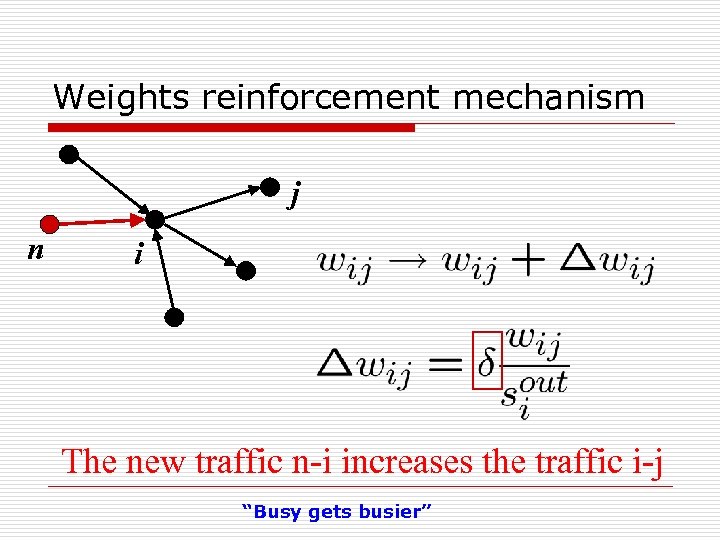
Weights reinforcement mechanism j n i The new traffic n-i increases the traffic i-j “Busy gets busier”
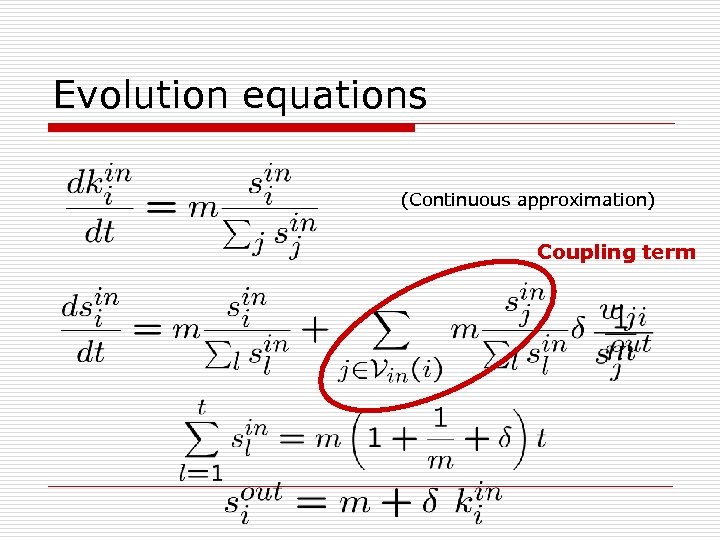
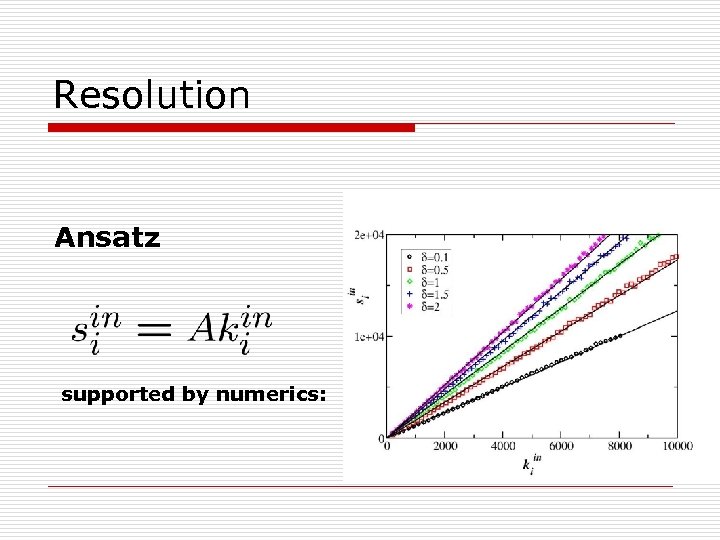
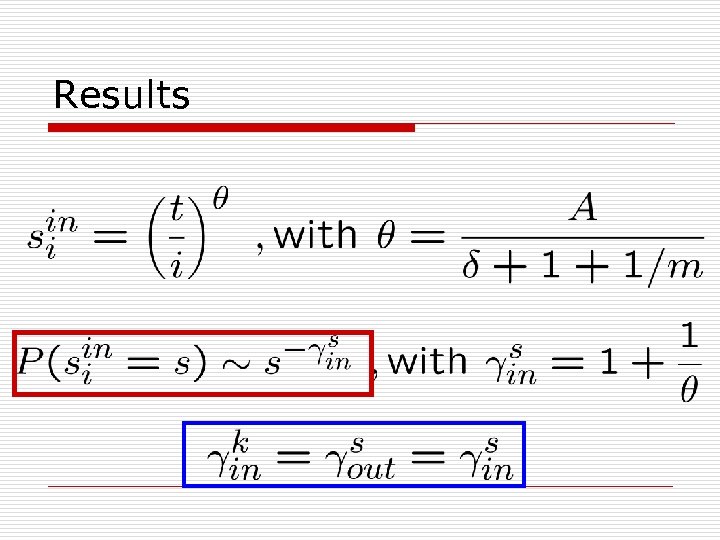
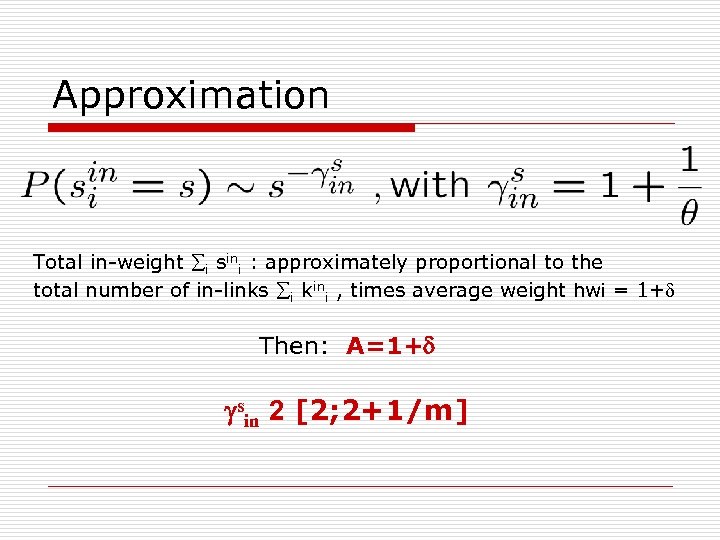
Evolution equations (Continuous approximation) Coupling term
Resolution Ansatz supported by numerics:
Results
Approximation Total in-weight i sini : approximately proportional to the total number of in-links i kini , times average weight hwi = 1+ Then: A=1+ sin 2 [2; 2+1/m]
Numerical simulations Measure of A prediction of Approx of
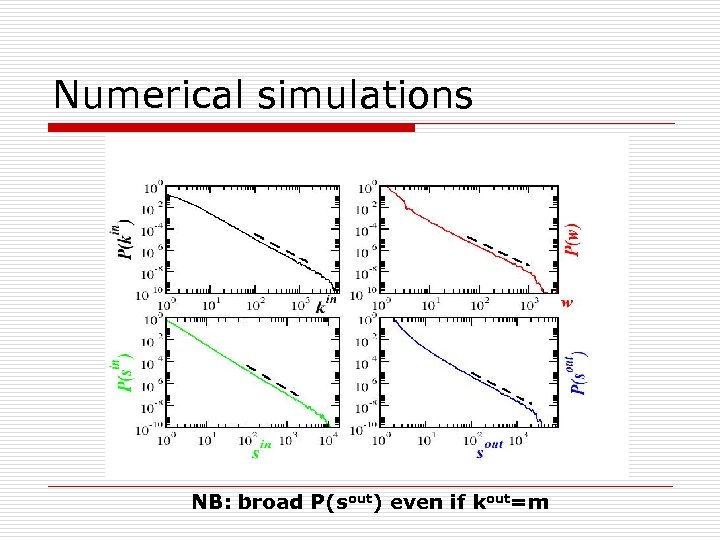
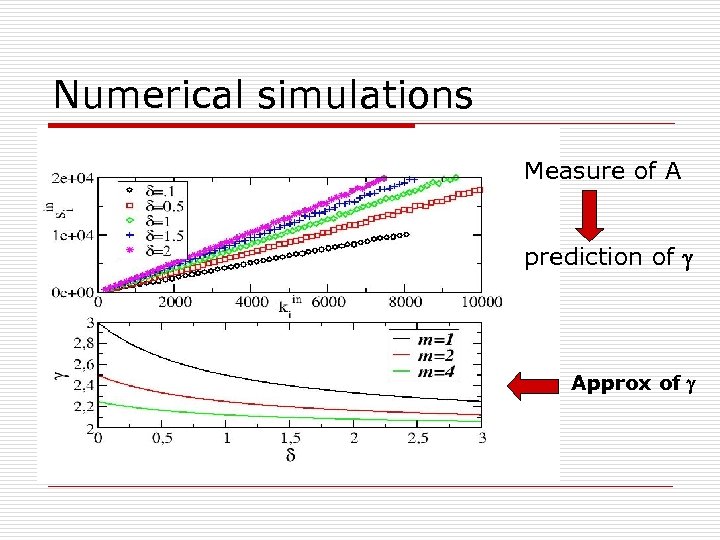
Numerical simulations NB: broad P(sout) even if kout=m
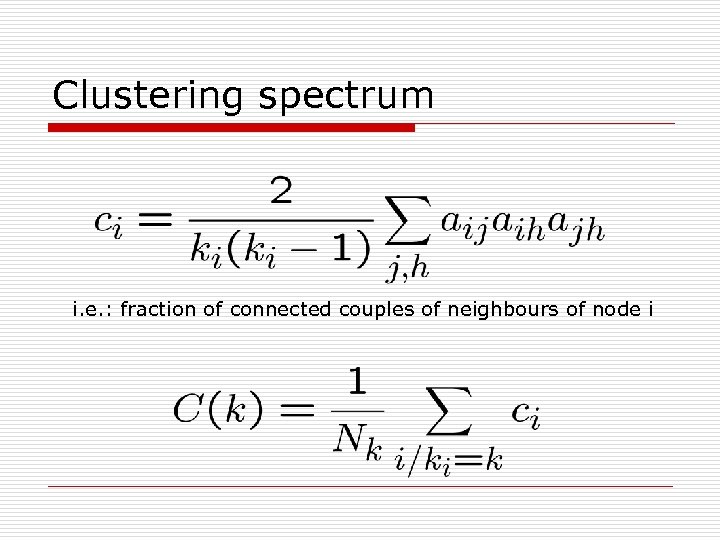
Clustering spectrum i. e. : fraction of connected couples of neighbours of node i
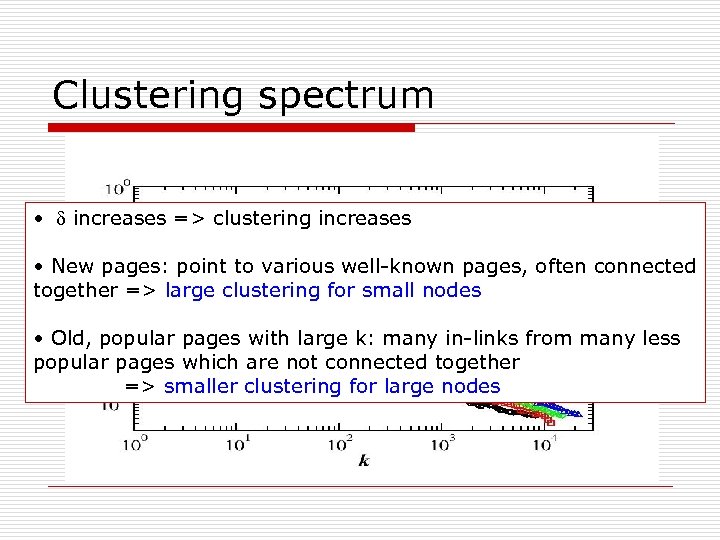
Clustering spectrum • increases => clustering increases • New pages: point to various well-known pages, often connected together => large clustering for small nodes • Old, popular pages with large k: many in-links from many less popular pages which are not connected together => smaller clustering for large nodes
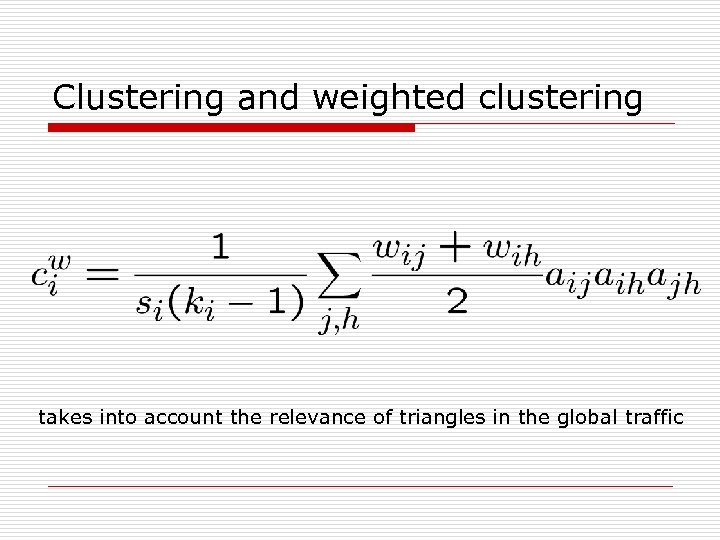
Clustering and weighted clustering takes into account the relevance of triangles in the global traffic
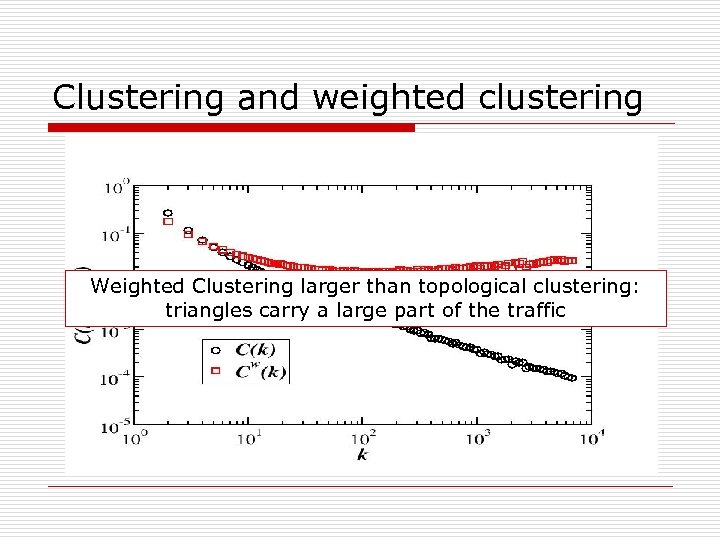
Clustering and weighted clustering Weighted Clustering larger than topological clustering: triangles carry a large part of the traffic
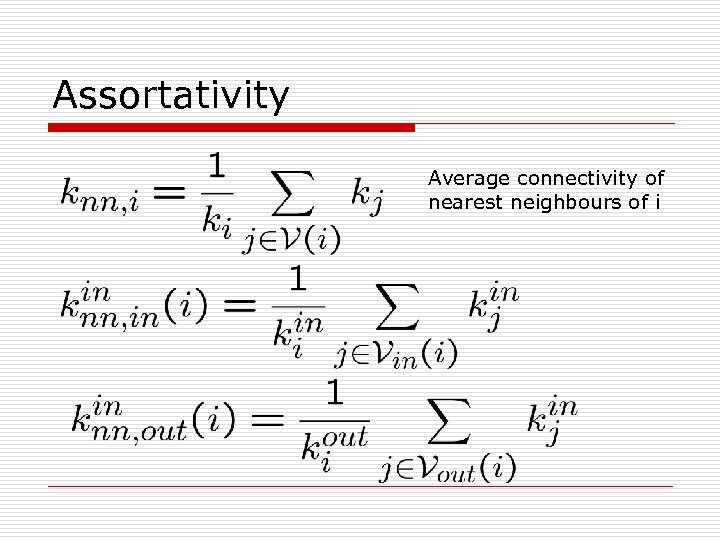
Assortativity Average connectivity of nearest neighbours of i
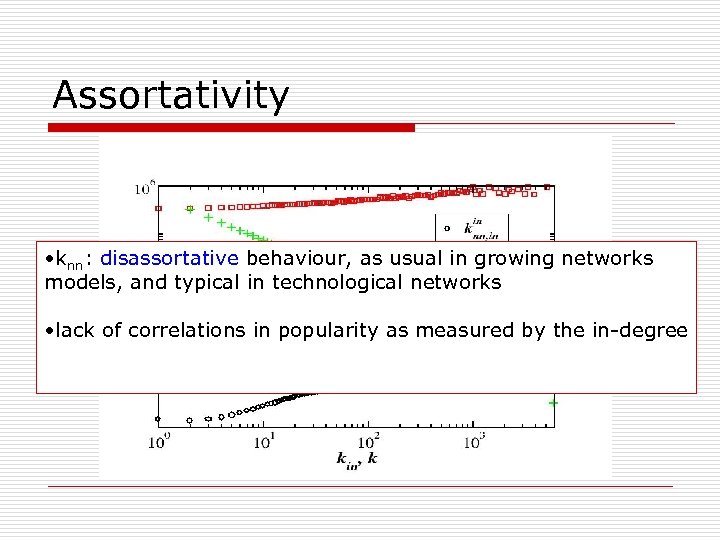
Assortativity • knn: disassortative behaviour, as usual in growing networks models, and typical in technological networks • lack of correlations in popularity as measured by the in-degree
Summary o o o o Web: heterogeneous topology and traffic Mechanism taking into account interplay between topology and traffic Simple mechanism=>complex behaviour, scale-free distributions for connectivity and traffic Analytical study possible Study of correlations: non-trivial hierarchical behaviour Possibility to add features (fitnesses, rewiring, addition of edges, etc. . . ), to modify the redistribution rule. . . Empirical studies of traffic and correlations?
Скачать презентацию Traffic-driven model of the World-Wide-Web Graph A Barrat
d3d9f8c06b04a6e67f8f9e8d42f8addc.ppt