


 Скачать презентацию Traditional forms of theater Participating countries
560b77fd3328bb67cfb4939864059c32.ppt
- Количество слайдов: 22
 Traditional forms of theater
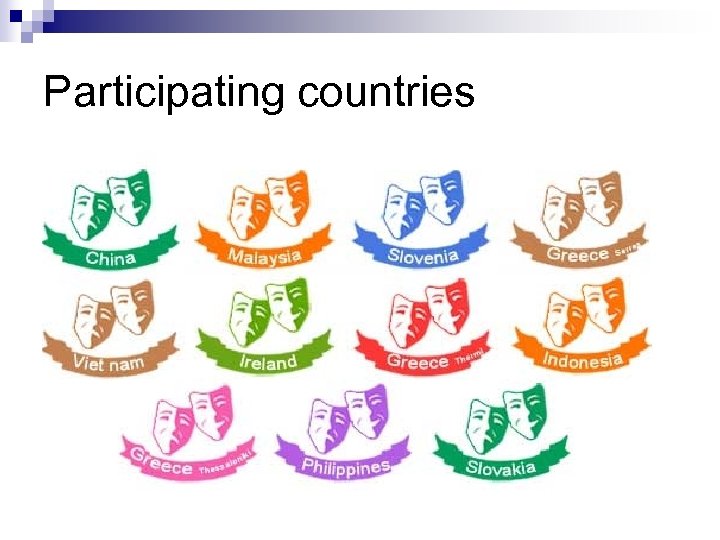 Participating countries
 RATIONALE FOR THE PROJECT: n n Humans throughout their history have used theatre as a means of communication through which they have expressed their ideas, feelings, political behavior and religious convictions. . Folk theatre expresses worries, expectations, trends, social classes, financial status etc. We would like to discover the similarities that exist between European and Asian culture through the exploration of the traditions of folk theatre. Practical skills in the use of multimedia, digital photography and digital video recording as well as ICT skills and collaborative learning strategies are all potential areas for development in this project. The project will encourage the use of ICT for practical and focused purposes - e. g. the exchange of profiles and discussions of themes in the Moodle Forums and the production of a Wiki (linked pages in Moodle) as well as informal a-synchronous exchanges between pupils
 Project phases: n Phase 1: Phase 2: n Phase 3: n Phase 4: n Personal Profiles with photograph uploaded to Moodle Collect (oral history) and exchange of information on Traditional Forms of Theatre using Moodle - including description, visual material. It is encouraged that the exchange of information included recorded Music themes which accompany the performances. Each school will respond in Moodle to the Information from at least one other school. Dissemination of the project - this will be done locally by each school and in the form of a project website by the coordinating countries
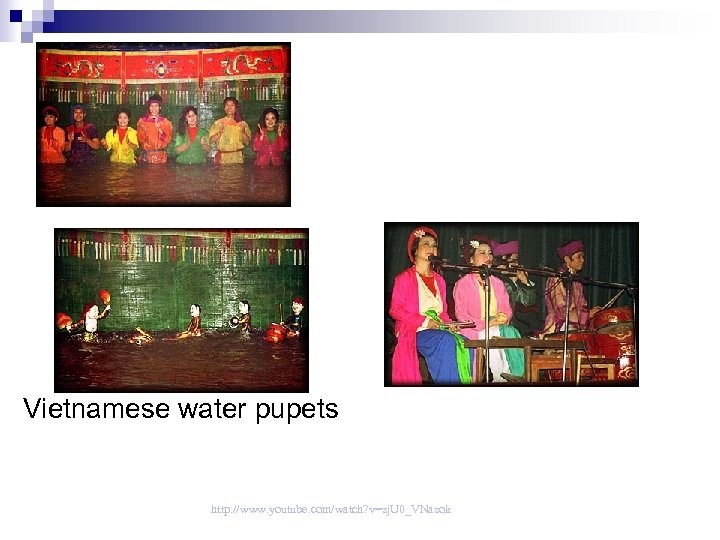 Vietnamese water pupets http: //www. youtube. com/watch? v=zj. U 0_VNazok
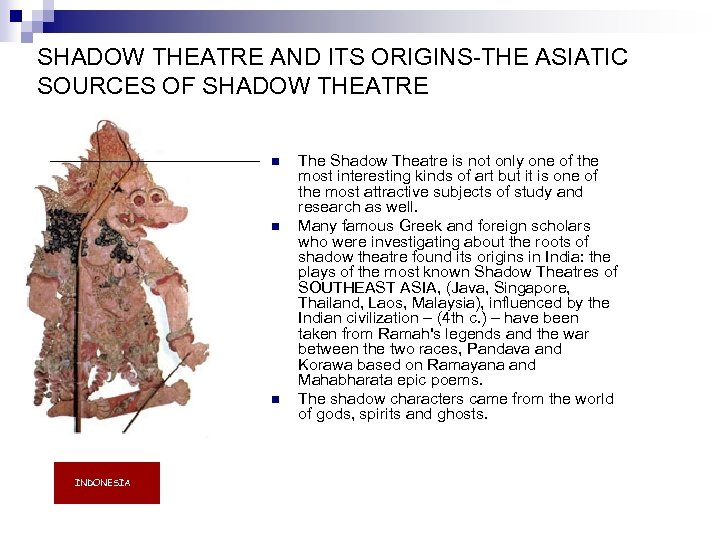 SHADOW THEATRE AND ITS ORIGINS-THE ASIATIC SOURCES OF SHADOW THEATRE n n n INDONESIA The Shadow Theatre is not only one of the most interesting kinds of art but it is one of the most attractive subjects of study and research as well. Many famous Greek and foreign scholars who were investigating about the roots of shadow theatre found its origins in India: the plays of the most known Shadow Theatres of SOUTHEAST ASIA, (Java, Singapore, Thailand, Laos, Malaysia), influenced by the Indian civilization – (4 th c. ) – have been taken from Ramah's legends and the war between the two races, Pandava and Korawa based on Ramayana and Mahabharata epic poems. The shadow characters came from the world of gods, spirits and ghosts.
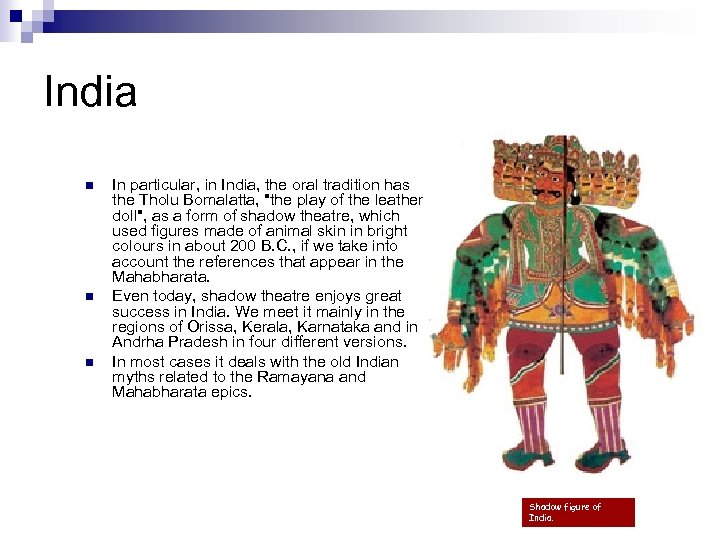 India n n n In particular, in India, the oral tradition has the Tholu Bomalatta, "the play of the leather doll", as a form of shadow theatre, which used figures made of animal skin in bright colours in about 200 B. C. , if we take into account the references that appear in the Mahabharata. Even today, shadow theatre enjoys great success in India. We meet it mainly in the regions of Orissa, Kerala, Karnataka and in Andrha Pradesh in four different versions. In most cases it deals with the old Indian myths related to the Ramayana and Mahabharata epics. Shadow figure of India.
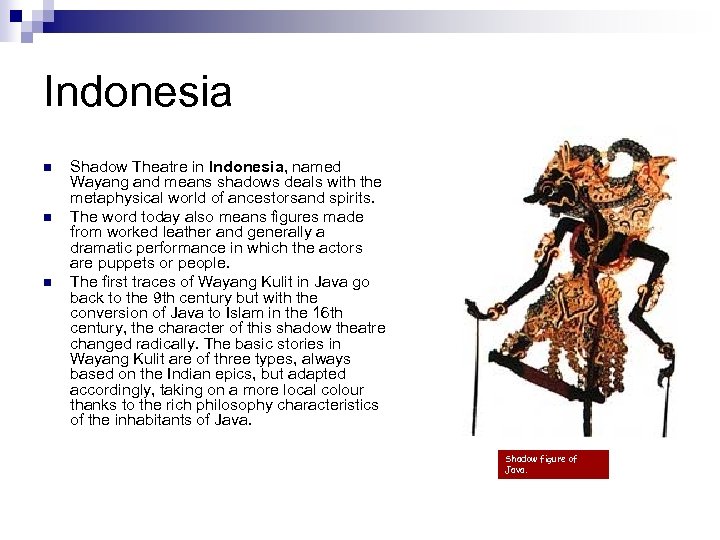 Indonesia n n n Shadow Theatre in Indonesia, named Wayang and means shadows deals with the metaphysical world of ancestorsand spirits. The word today also means figures made from worked leather and generally a dramatic performance in which the actors are puppets or people. The first traces of Wayang Kulit in Java go back to the 9 th century but with the conversion of Java to Islam in the 16 th century, the character of this shadow theatre changed radically. The basic stories in Wayang Kulit are of three types, always based on the Indian epics, but adapted accordingly, taking on a more local colour thanks to the rich philosophy characteristics of the inhabitants of Java. Shadow figure of Java.
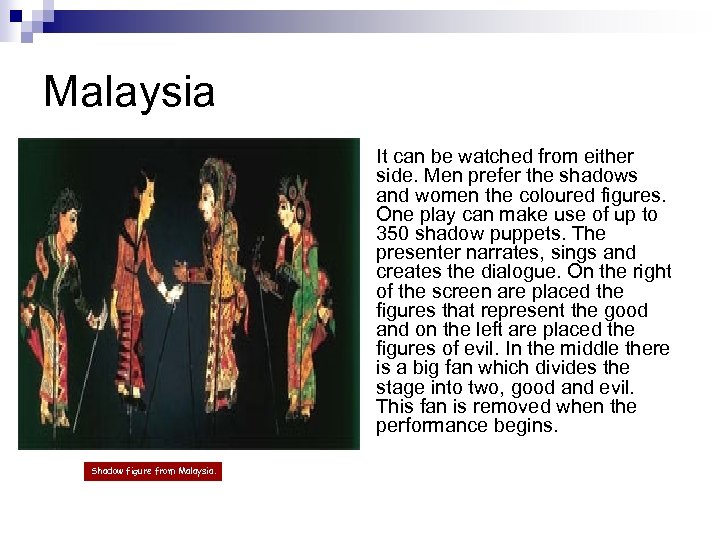 Malaysia n Shadow figure from Malaysia. It can be watched from either side. Men prefer the shadows and women the coloured figures. One play can make use of up to 350 shadow puppets. The presenter narrates, sings and creates the dialogue. On the right of the screen are placed the figures that represent the good and on the left are placed the figures of evil. In the middle there is a big fan which divides the stage into two, good and evil. This fan is removed when the performance begins.
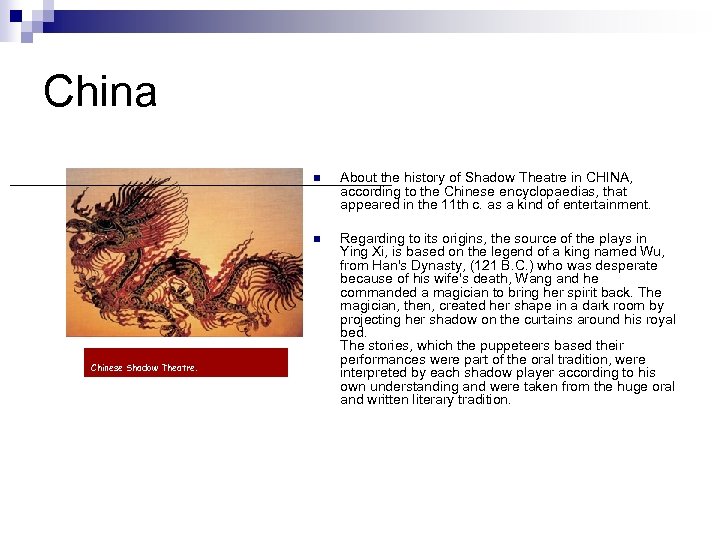 China n Chinese Shadow Theatre. About the history of Shadow Theatre in CHINA, according to the Chinese encyclopaedias, that appeared in the 11 th c. as a kind of entertainment. n Regarding to its origins, the source of the plays in Ying Xi, is based on the legend of a king named Wu, from Han's Dynasty, (121 B. C. ) who was desperate because of his wife's death, Wang and he commanded a magician to bring her spirit back. The magician, then, created her shape in a dark room by projecting her shadow on the curtains around his royal bed. The stories, which the puppeteers based their performances were part of the oral tradition, were interpreted by each shadow player according to his own understanding and were taken from the huge oral and written literary tradition.
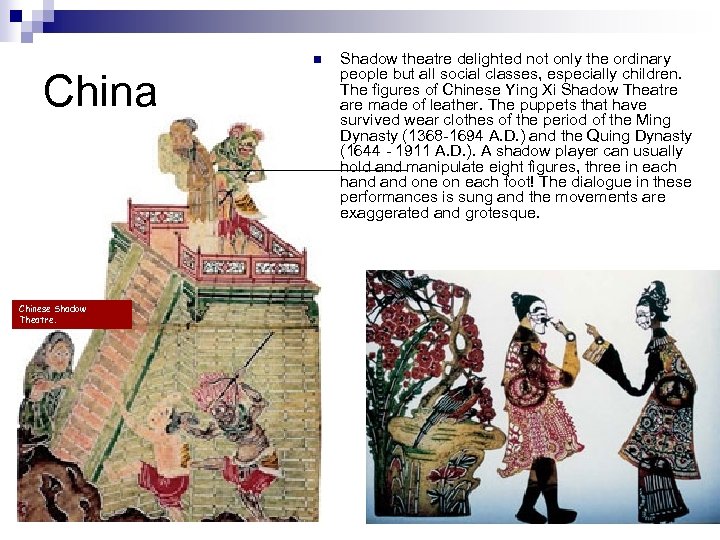 China Chinese Shadow Theatre. n Shadow theatre delighted not only the ordinary people but all social classes, especially children. The figures of Chinese Ying Xi Shadow Theatre are made of leather. The puppets that have survived wear clothes of the period of the Ming Dynasty (1368 -1694 A. D. ) and the Quing Dynasty (1644 - 1911 A. D. ). A shadow player can usually hold and manipulate eight figures, three in each hand one on each foot! The dialogue in these performances is sung and the movements are exaggerated and grotesque.
 The Karagiozis Puppet Theatre Traditional entertainment, was once to be found at the shadow puppet theatre, or “Karagiozis”. The puppets were manipulated by a single puppeteer, who would stand behind a white sheet, lit up from behind by a light. The themes of each play were adapted to current social and political issues, as well as to historical events. The main character was always the “antihero” Karagiozis: an unemployed poor man living in a shack near the pasha’s palace.
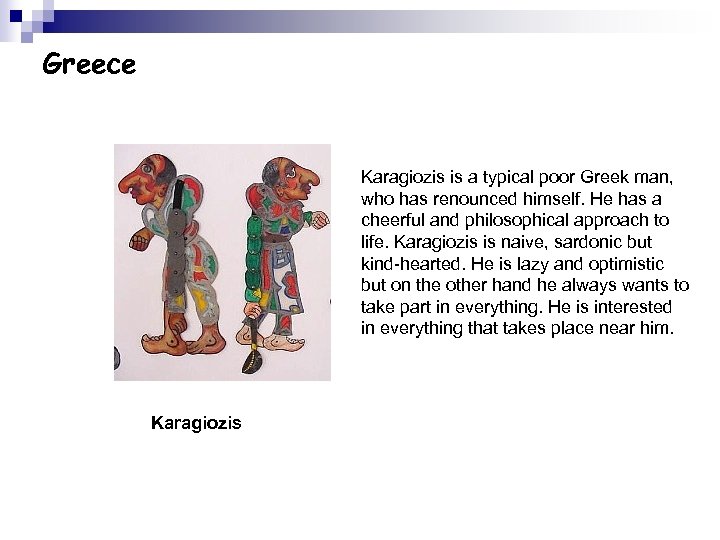 Greece Karagiozis is a typical poor Greek man, who has renounced himself. He has a cheerful and philosophical approach to life. Karagiozis is naive, sardonic but kind-hearted. He is lazy and optimistic but on the other hand he always wants to take part in everything. He is interested in everything that takes place near him. Karagiozis
 www. karagiozismuseum. gr
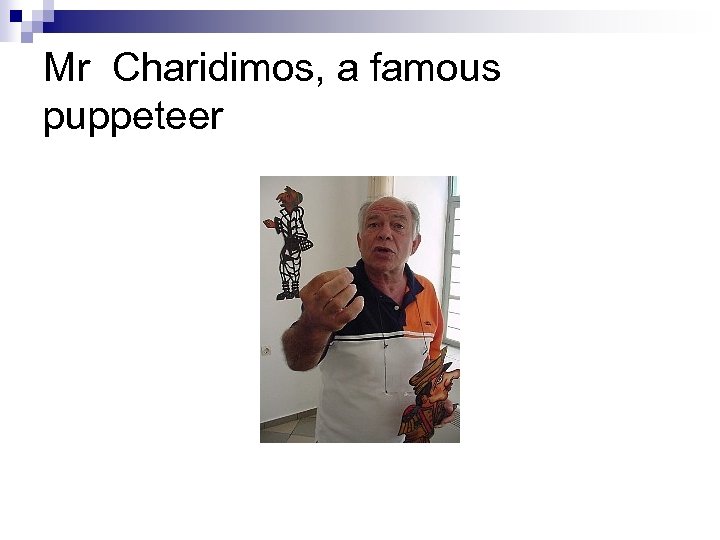 Mr Charidimos, a famous puppeteer
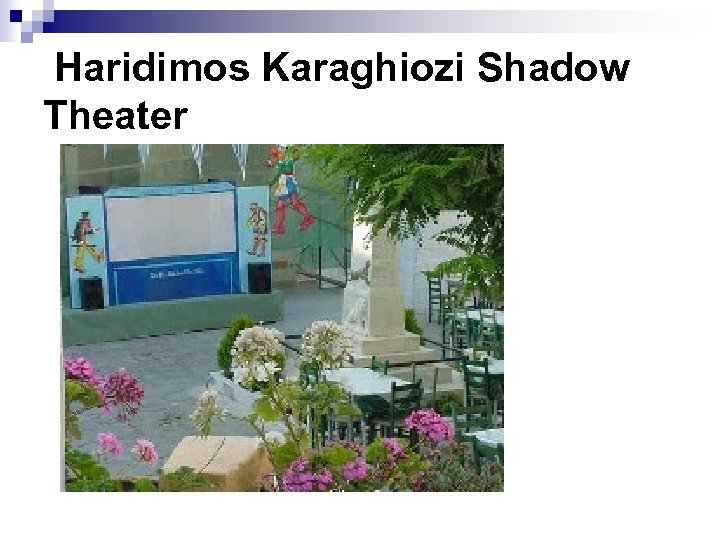 Haridimos Karaghiozi Shadow Theater
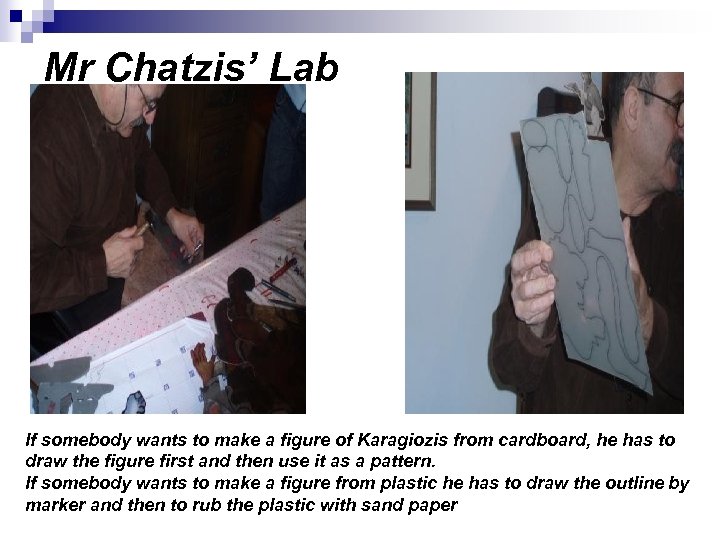 Mr Chatzis’ Lab If somebody wants to make a figure of Karagiozis from cardboard, he has to draw the figure first and then use it as a pattern. If somebody wants to make a figure from plastic he has to draw the outline by marker and then to rub the plastic with sand paper
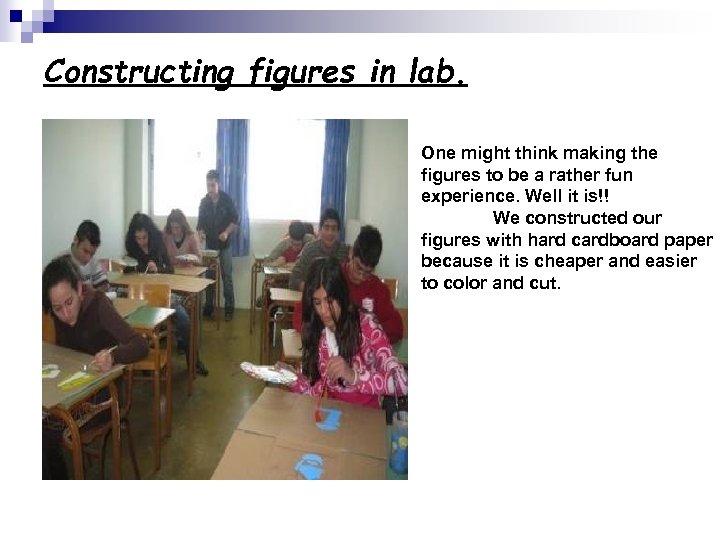 Constructing figures in lab. One might think making the figures to be a rather fun experience. Well it is!! We constructed our figures with hard cardboard paper because it is cheaper and easier to color and cut.
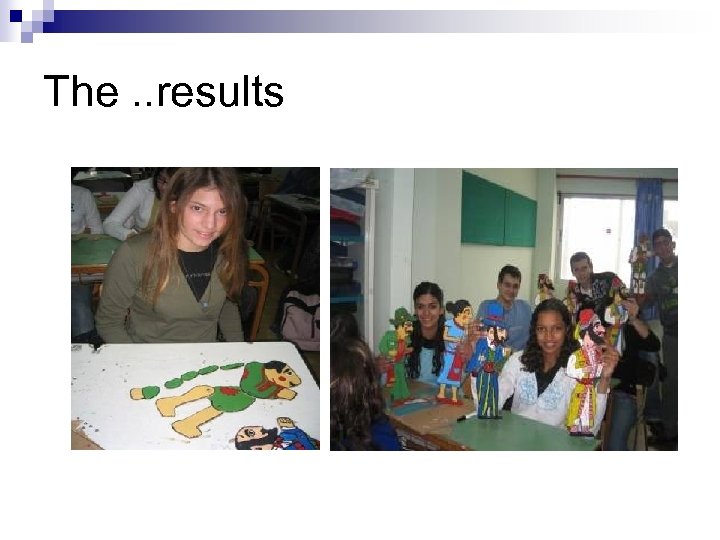 The. . results
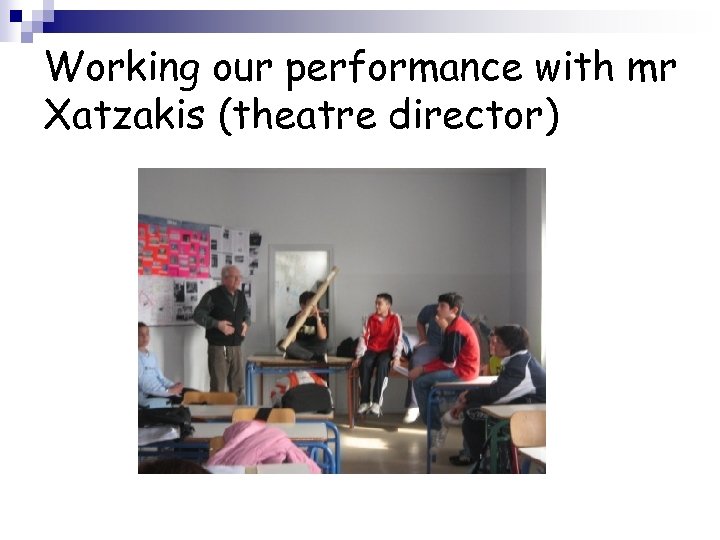 Working our performance with mr Xatzakis (theatre director)
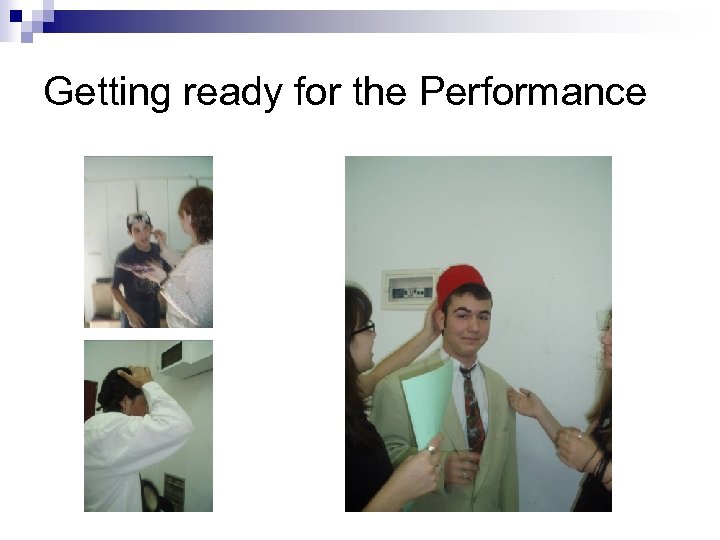 Getting ready for the Performance
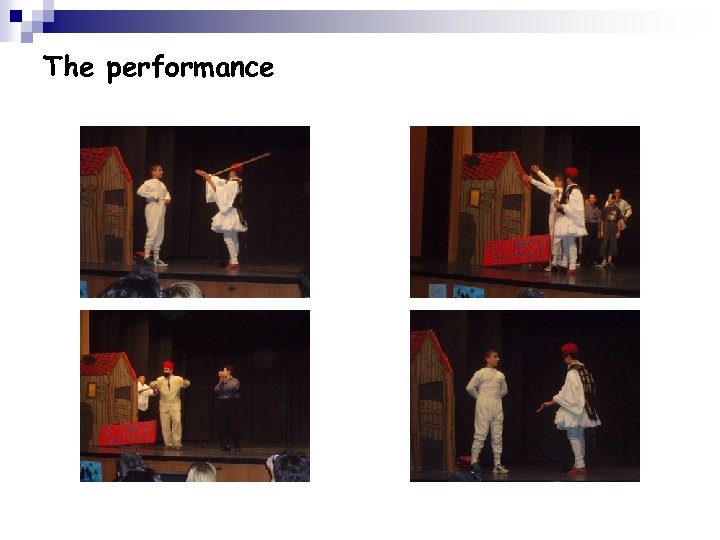 The performance