


 Скачать презентацию Trade and Transport Facilitation in Southeast Europe http
ec9663b1a0e8df6ee173597890163a2a.ppt
- Количество слайдов: 13
 Trade and Transport Facilitation in Southeast Europe http: //www. seerecon. org/ttfse. htm Preliminary Lessons and Challenges World Bank Stability Pact Working Group on Trade Liberalization and Facilitation May 13 -14, 2002
 TTFSE Program q Regional Investment Program - US$120 million, WB $78 million q Co-financed with the US, partnership with the EU q 8 countries/one project in each - implementation started in 2001 for first six q Three years implementation q Goals: (a) reduce : (i) processing time for legitimate traders/transporters, (ii) facilitation payments, and (iii) corruption related to international transport and trade; and (b) in parallel improve effectiveness of controls and of anti-smuggling efforts q Components: (i) TA for border agency modernization (Customs), (ii) IT equipment and TA, (iii) border crossing improvements, (iv) training to trade & transport communities, (v) website on all applicable rules/procedures of border agencies
 TTFSE Principles q Holistic approach (all border agencies included) q Measurement of performance related to trade and transport facilitation q Use of regional mechanisms: *Regional Steering Committee (RSC) *Regional Website *Regional Training for border users q Strong Involvement of users: *Constant dialogue (participation in RSC) *Building on an existing regional network (PRO-Committees) *User surveys (in each country) *implementation of trade facilitation component *Building distance learning programs with professional associations (IRU, FIATA)
 Performance Indicators comparable across countries q Customs efficiency indicators - 6 measures of national customs performance - allow for comparison (evolution) q Pilot site indicators - data collected regionally - overall processing measurement (from entry to exit) - three main indicators linked to loan/credit covenants : (I) percentage of vehicles cleared in less than 15 minutes; (ii) percentage of physical inspections; (iii) trucks opened at border. - consistency of data collection to ensure comparability www. seerecon. org/ttfse//Regional. Initiatives/TTFSE_Manual. pdf
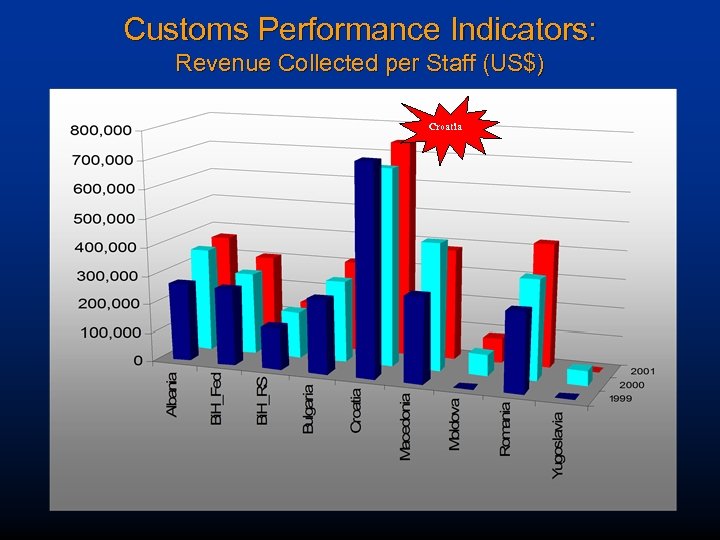 Customs Performance Indicators: Revenue Collected per Staff (US$) Croatia
 Regional User Survey First phase (2001/2002) – strengthening baseline and methodology q Objectives: - supplementing performance measurements through survey, interviews and discussion groups to analyze improvement of border agencies’ performance in each country - drawing attention to decision makers on areas of priority improvements (strong tool) q Sample: 150 companies, with validation from international cities q Six dimensions: Customs law; Communication; Procedures; Personnel; Logistics; Integrity q Phasing methodology: refined after phase I to increase comparability of results (2002, 2003); transfer to Chambers of Commerce in phase II
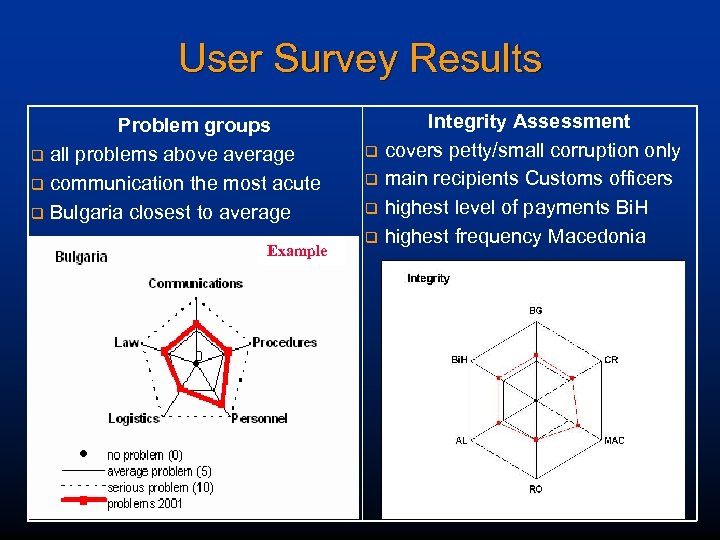 User Survey Results Problem groups q all problems above average q communication the most acute q Bulgaria closest to average Example Integrity Assessment q covers petty/small corruption only q main recipients Customs officers q highest level of payments Bi. H q highest frequency Macedonia
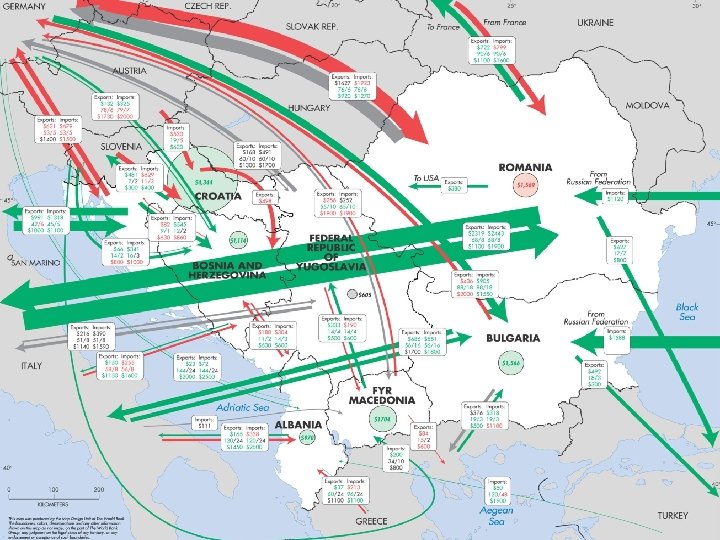 Ttfse cost and trade map
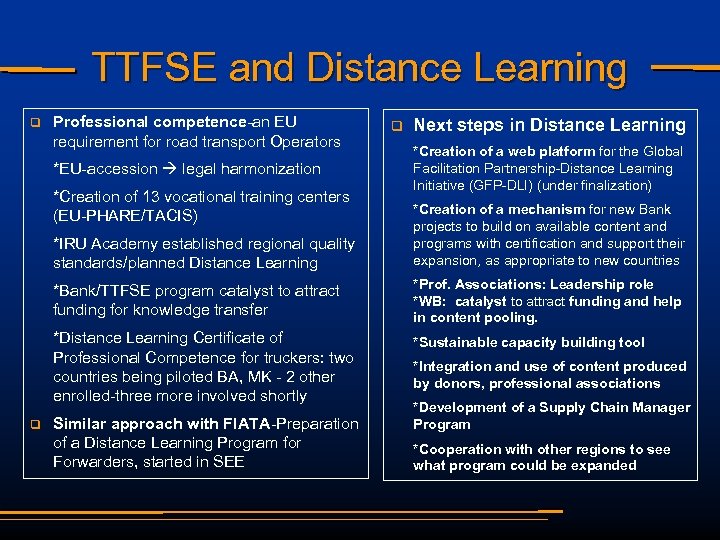 TTFSE and Distance Learning q Professional competence-an EU requirement for road transport Operators *EU-accession legal harmonization *Creation of 13 vocational training centers (EU-PHARE/TACIS) q Next steps in Distance Learning *Creation of a web platform for the Global Facilitation Partnership-Distance Learning Initiative (GFP-DLI) (under finalization) *IRU Academy established regional quality standards/planned Distance Learning *Bank/TTFSE program catalyst to attract funding for knowledge transfer *Prof. Associations: Leadership role *WB: catalyst to attract funding and help in content pooling. *Distance Learning Certificate of Professional Competence for truckers: two countries being piloted BA, MK - 2 other enrolled-three more involved shortly q *Creation of a mechanism for new Bank projects to build on available content and programs with certification and support their expansion, as appropriate to new countries *Sustainable capacity building tool Similar approach with FIATA-Preparation of a Distance Learning Program for Forwarders, started in SEE *Integration and use of content produced by donors, professional associations *Development of a Supply Chain Manager Program *Cooperation with other regions to see what program could be expanded
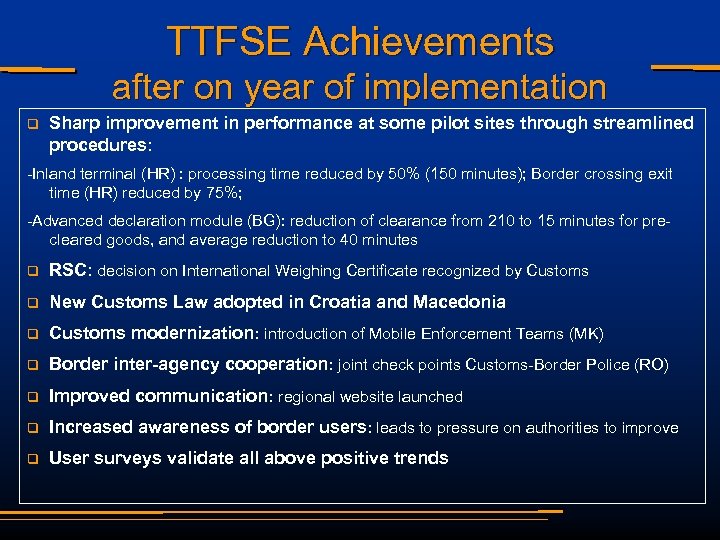 TTFSE Achievements after on year of implementation q Sharp improvement in performance at some pilot sites through streamlined procedures: -Inland terminal (HR) : processing time reduced by 50% (150 minutes); Border crossing exit time (HR) reduced by 75%; -Advanced declaration module (BG): reduction of clearance from 210 to 15 minutes for precleared goods, and average reduction to 40 minutes q RSC: decision on International Weighing Certificate recognized by Customs q New Customs Law adopted in Croatia and Macedonia q Customs modernization: introduction of Mobile Enforcement Teams (MK) q Border inter-agency cooperation: joint check points Customs-Border Police (RO) q Improved communication: regional website launched q Increased awareness of border users: leads to pressure on authorities to improve q User surveys validate all above positive trends
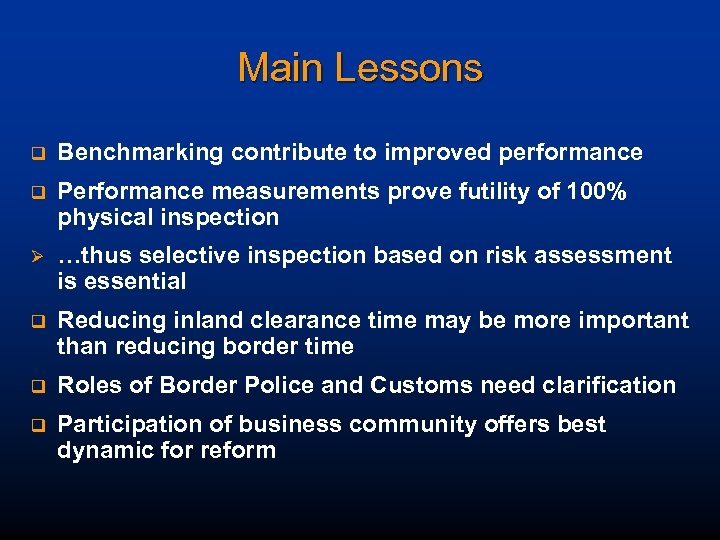 Main Lessons q Benchmarking contribute to improved performance q Performance measurements prove futility of 100% physical inspection Ø …thus selective inspection based on risk assessment is essential q Reducing inland clearance time may be more important than reducing border time q Roles of Border Police and Customs need clarification q Participation of business community offers best dynamic for reform
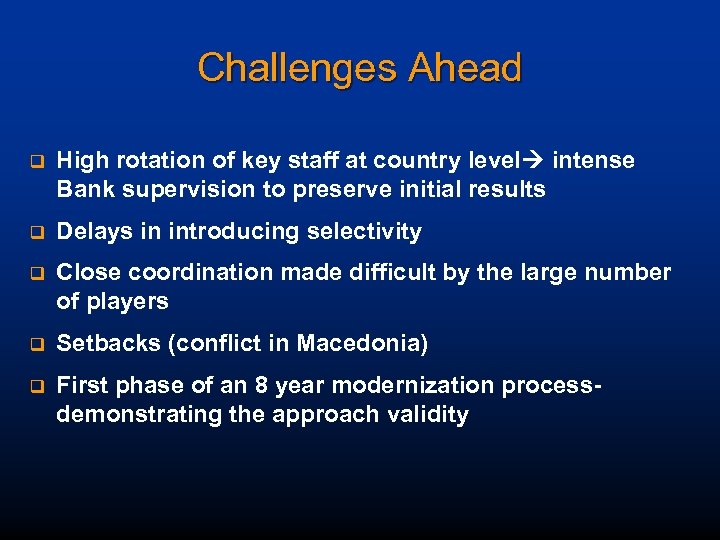 Challenges Ahead q High rotation of key staff at country level intense Bank supervision to preserve initial results q Delays in introducing selectivity q Close coordination made difficult by the large number of players q Setbacks (conflict in Macedonia) q First phase of an 8 year modernization processdemonstrating the approach validity
 Conclusions q q q Concrete positive results of TTFSE after one year Replication of pilot improvements to other sites will prove the success of the program Simultaneous projects yield a bonus Individual countries could also benefit Development of similar program in other regions (Caucasus, Central Asia)