


 Скачать презентацию Trade and domestic policies in an open economic
fd4d0cb954f56b04370d846f2a4339af.ppt
- Количество слайдов: 93
 Trade and domestic policies in an open economic setting Introduction Slides for lessons. Course in Trade and Domestic Policies in an Open Economic Settting Prof. Jose-Maria Garcia-Alvarez-Coque
 Why this subject may be useful? l No country is self-sufficient in everything. All measures have costs and distributive effects. l Endless debate between “globaphiles” and “globaphobes”. l l National policies have international impacts. l Is a common regulation needed? l Regional or multilateral strategies?
 Main questions • How measuring international trade and prices? • What are the main trends in world agricultural trade? • How globalisation of agricultural markets is arranged at international level? Why international rules are need? • What are the main arguments for trade liberalisation? • What are the factors explaining why a country is an exporter or an importer? • What is the impact of trade measures on consumers, producers, State and general efficiency? • What are the political factors explaining why do governments do what they do? • What is the international impact of domestic policies? • How trade distortions can be measured? • Why agricultural trade is from being free in current days?
 Trade and market concepts
 Main questions: l The first: How measuring international trade? : – Let’s consider the international prices. They represent what the commodity can earn as an export or what it costs to the economy as an import. (If Syria goes to the world market, what price? ). l Does a world market exists? l. Commodity prices? l l – Unit values? Seasonality and short-term variations.
 The second question l How using trade data? – Two extremes: data are too scarce or too abundant. – Please, use your common sense. If you have a theory, use the data needed to test such theory (sounds simple, but it is an “art” and requires some practice, but there are many more difficult things in life). –
 Border price: calculation problems l Choosing the appropriate border price: – FOB (free on board), CIF (Cost, insurance and freight) – Average prices? l Choosing the exchange rate. l Small country assumption: price taker?
 Is Syria a small country?
 A couple of trade concepts: Terms of Trade l Average export price / Average import price It is an indicator of relative profitability of exports against imports. l So, it might allow to see the relative performance of Syria against other countries. l Take care that the average export price depends on diversification of exports and concentration on low value or high value products. l Terms of trade can be applied to other types of transaction: eg. inter-sectoral terms of trade. l
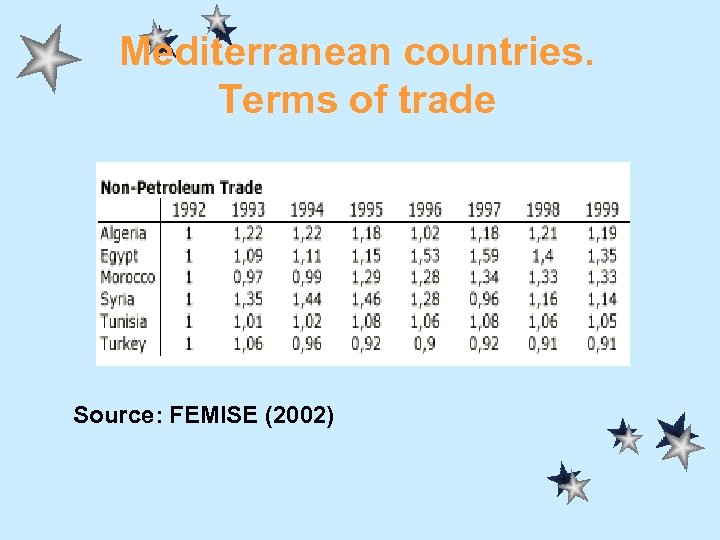 Mediterranean countries. Terms of trade Source: FEMISE (2002)
 A couple of trade concepts: Parity prices How estimating international prices where transport and handling costs appear? l Import parity price = Price of a major exporter + transport and handling costs from that market. l Export parity price = Price of a major market transport and handling costs to that market. l Thorugh parity prices you see a “net” international price adjusted by transport and handling costs. l
 Parity prices: Example Assume that international price (estimated at one representative market is about 100 US$/100 Kg). Assume that transport and handling costs are 50 US$/100 Kg. Calculate import and export parity prices. l l IPP = 150; EPP = 50. Trade can only hapen when domestic prices are outside the interval (50, 150). l
 Trends in world agricultural trade
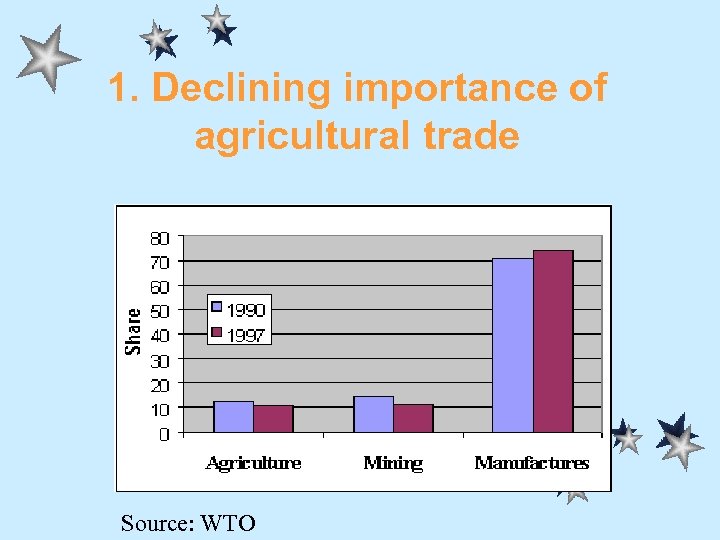 1. Declining importance of agricultural trade Source: WTO
 2. Trade mainly takes place between developed countries World agricultural trade is dominated by intra-zone trade l l 19 per cent of world agricultural trade is among NAFTA partners. 41 per cent is among EU Member States.
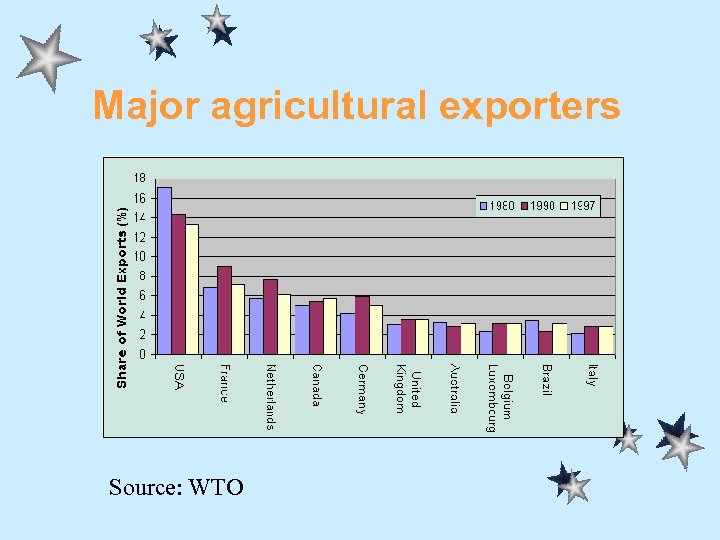 Major agricultural exporters Source: WTO
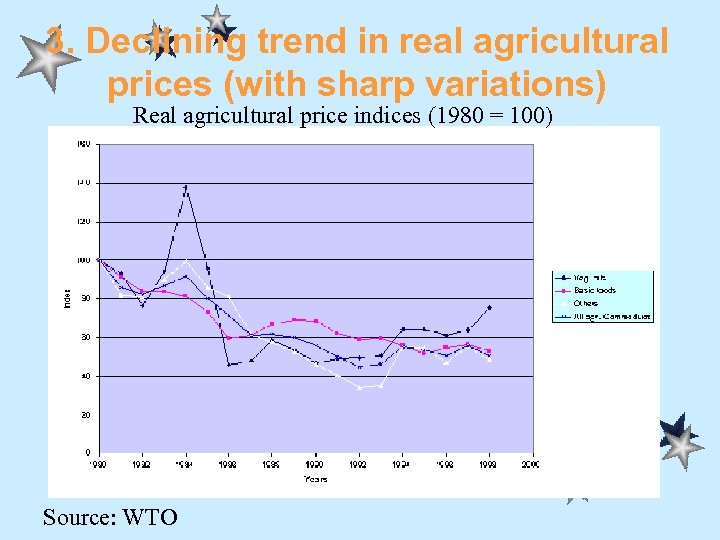 3. Declining trend in real agricultural prices (with sharp variations) Real agricultural price indices (1980 = 100) Source: WTO
 4. Trade is increasingly dominated by TNCs l Wal-Mart General Motors and Ford have a bigger turnover than Africa’s entire combined GDP. 500 corporations control over 70 percent of world (agricultural + industrial) trade. l A large proportion of international exchange by transnational companies takes place inside a given corporation (or between branches of this corporation). l l. TNCs: Increasingly important in agricultural trade. l Question: TNCs operating in Syria?
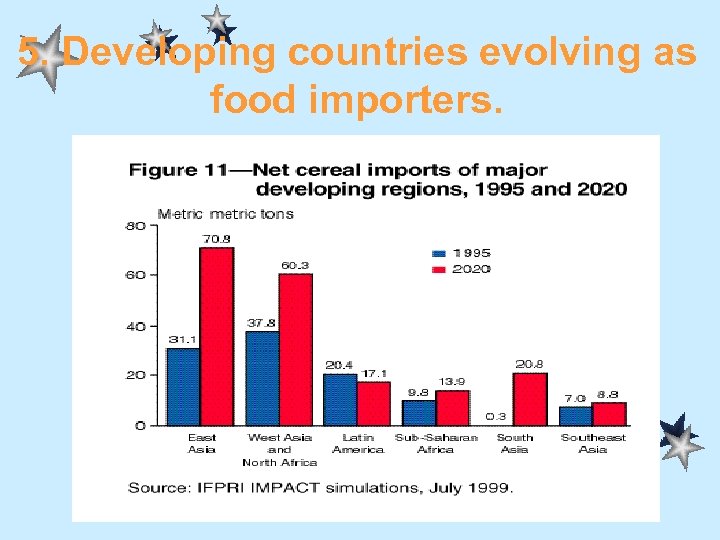 5. Developing countries evolving as food importers.
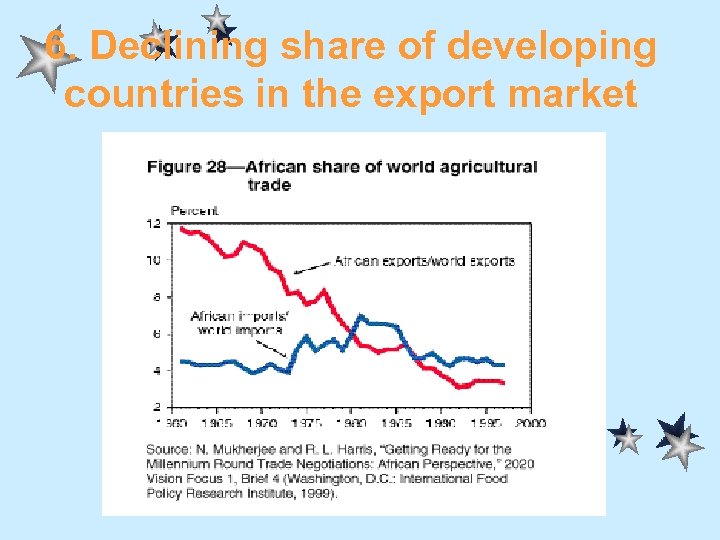 6. Declining share of developing countries in the export market
 7. Growing importance of highvalue products l Processed and Non traditional exports. Emerging actors: a challenge for the Mediterranean region? l
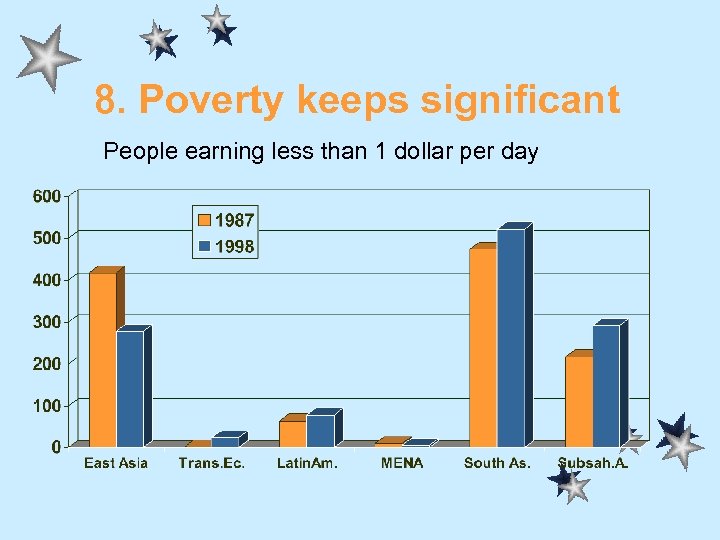 8. Poverty keeps significant People earning less than 1 dollar per day
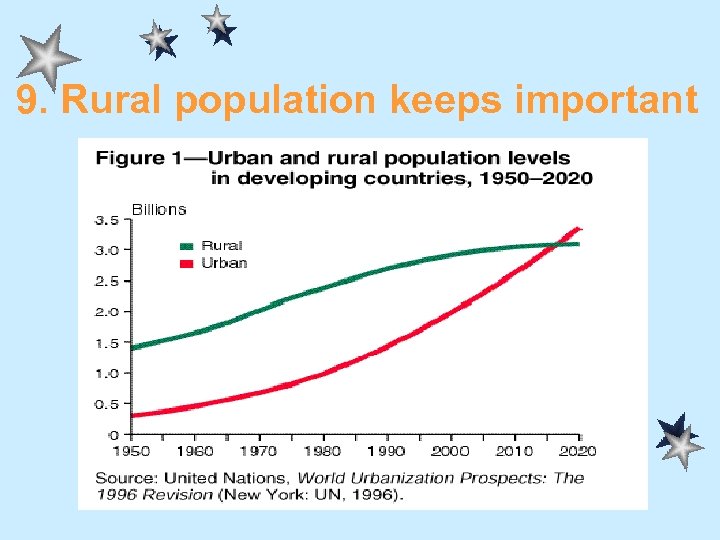 9. Rural population keeps important
 International trade and Economic Globalisation (I)
 About globalisation l It is not so new. It has evident disadvantages: l advantages and – Engine for wealth and prosperity. – But, financial volatility and social effects. 25
 Some macro developments l 1870 - 1914: rapid growth of global economy. l After WW 1 volatility, inflation and recessions. During the 1940 s, the Bretton Woods institutions are created: l – IMF: financing problems of countries with negative balance of payments. – World Bank: financing modernisation, restructuring and development. Between 1940 s and 1970 s: “a golden age of capitalism”. l Oil price shocks in 1970 s, debt crisis for developing countries in the 1980 s. l During 1990 s, some economic growth but financial instability. l
 The GATT and the WTO l The GATT is signed in 1947. General Agreement on Tariffs and Trade. l The GATT was an agreement, not an organisation. l The organisation is the WTO, but it was not created until 1995, until a long process of negotiations called Uruguay Round. l
 Is the GATT looking for trade liberalisation? l Some GATT aspects: – The Most Favoured Nation (MFN). – National Treatment. – Tariffication. – Prohibition of quantitative restrictions. – Antidumping and safeguards.
 Agriculture and the GATT l The Agricultural “Waiver” in the 1950 s. The Uruguay Round starts: 15 negotiating chapters, including agriculture. l After Uruguay Round there are imperfect rules for agriculture, but at least there are rules Is the bottle half full or half empty? l Agreement of Agriculture, Article 20: continuation of the reform process. l l Current issues: – Non-trade concerns. – WTO scope – The “double standards” issue for developing countries
 International trade and Economic Globalisation (II) Regional vs multilateral choices
 Regional integration and Art. XXIV Regional agreements: contradicting MFN? l GATT Article XXIV allows for an exception. l Tariffs to be abolished in “substantially” all sectors in countries involved. This has open the door to “free interpretation”. l 31
 Two types of agreements Customs Unions. Members set up common external tariffs. l Free Trade Areas. Members do not charge tariffs on each others’ products but they set their own tariffs against outside world. It needs Rules of Origin. l Examples: AFTA, NAFTA, Mercosur, EU, Association Agreements……………. . l There are deeper steps of integration, like the European Monetary Union……. . . l
 Which stategy? l. There are still some reasons to join a regional agreement: – Lowering transaction costs of negotiations. – Harmonisation of standards. Global public goods: environment, human rights, poverty alleviation, peace……. l – Anchoring reforms. l But, who takes the leadership?
 North-South integration It is now recommended as a boost for economic modernisation. l But, there is the risk of a vertical relation between the “hub” and the “spokes”. l South-South integration helps to break the radial “hub and spoke” system. l –
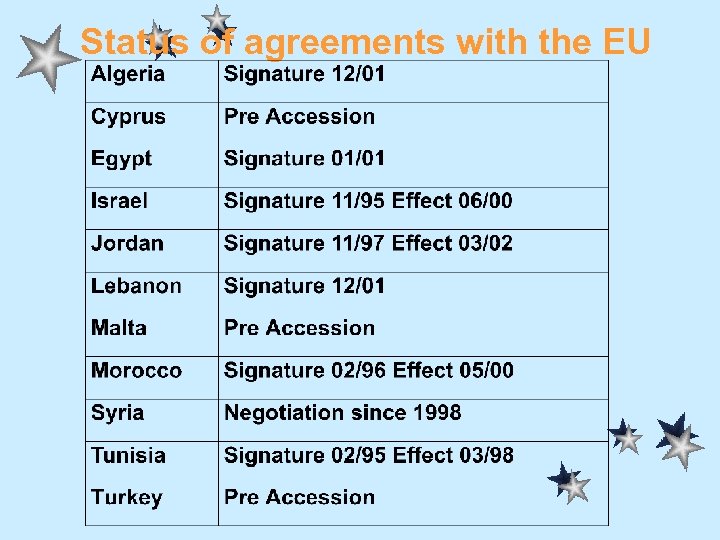 Status of agreements with the EU
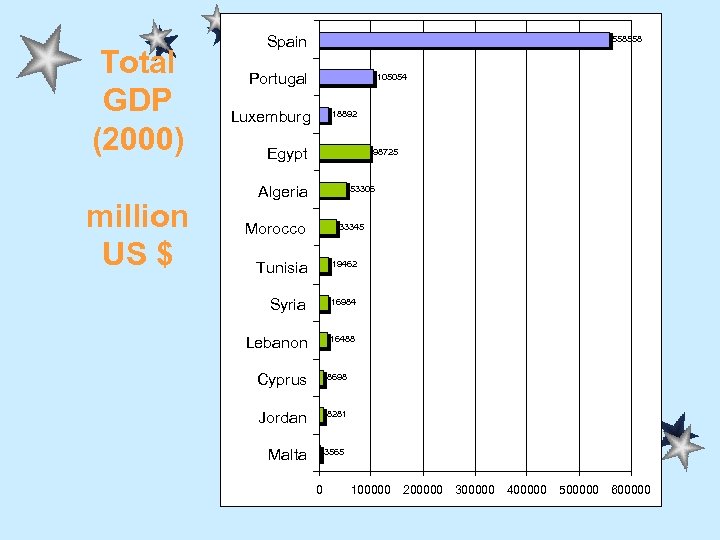 Total GDP (2000) million US $ Spain 558558 Portugal 105054 Luxemburg 18892 Egypt 98725 Algeria 53306 Morocco 33345 Tunisia 19462 Syria 16984 Lebanon 16488 Cyprus 8698 Jordan 8281 Malta 3565 0 100000 200000 300000 400000 500000 600000
 International trade theory (I)
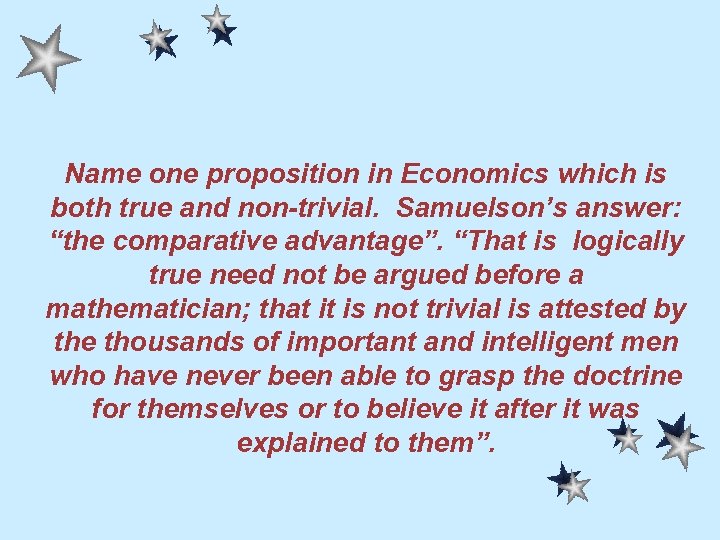 Name one proposition in Economics which is both true and non-trivial. Samuelson’s answer: “the comparative advantage”. “That is logically true need not be argued before a mathematician; that it is not trivial is attested by the thousands of important and intelligent men who have never been able to grasp the doctrine for themselves or to believe it after it was explained to them”.
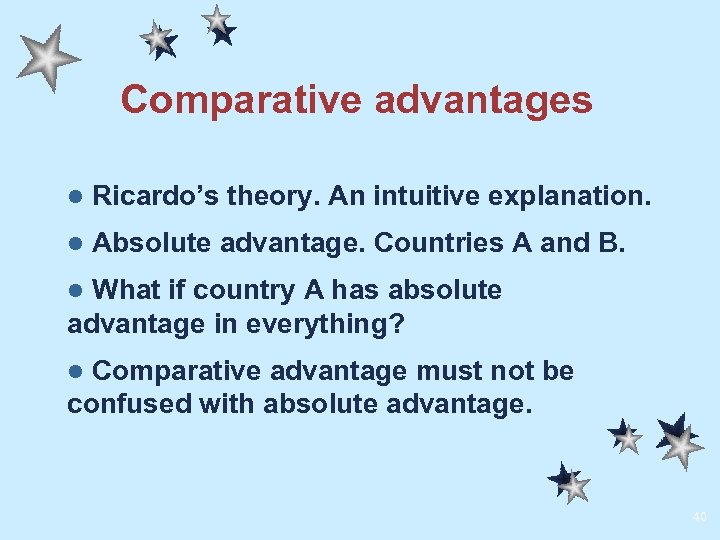 Comparative advantages l Ricardo’s theory. An intuitive explanation. l Absolute advantage. Countries A and B. What if country A has absolute advantage in everything? l Comparative advantage must not be confused with absolute advantage. l 40
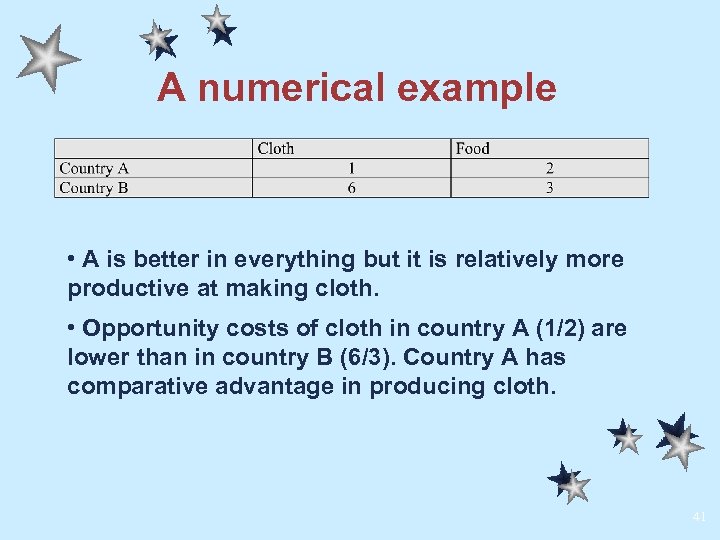 A numerical example • A is better in everything but it is relatively more productive at making cloth. • Opportunity costs of cloth in country A (1/2) are lower than in country B (6/3). Country A has comparative advantage in producing cloth. 41
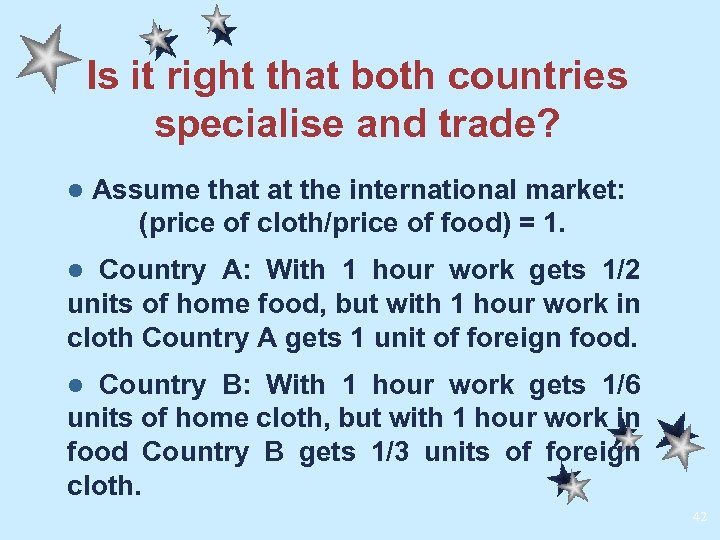 Is it right that both countries specialise and trade? l Assume that at the international market: (price of cloth/price of food) = 1. Country A: With 1 hour work gets 1/2 units of home food, but with 1 hour work in cloth Country A gets 1 unit of foreign food. l Country B: With 1 hour work gets 1/6 units of home cloth, but with 1 hour work in food Country B gets 1/3 units of foreign cloth. l 42
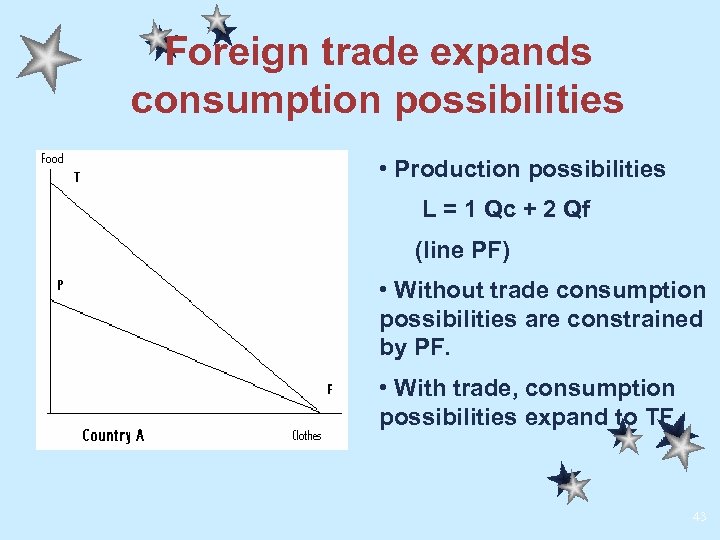 Foreign trade expands consumption possibilities • Production possibilities L = 1 Qc + 2 Qf (line PF) • Without trade consumption possibilities are constrained by PF. • With trade, consumption possibilities expand to TF 43
 Right statements? “Free trade is only beneficial if your country has a higher productivity”. l “What can we do if cannot be more efficient than anyone else? ” l “Trade exploits a country where workers receive lower wages”. l 44
 The Hecksher-Ohlin model (factor-proportions theory) Ricardo model only looks at differences in labour productivity. l l Two basic concepts: –Factor intensities. – Abundant resources. H-O result: Countries tend to export goods that are intensive in the factors that are abundantly supplied in those countries. l 45
 Implications of the H-O model l Factor price equalisation. – With trade international prices converge. – If country A exports cloth because it is labour -intensive and labour is abundant (cheap), trade will increase relative price of labour in coutry A. – If country B exports food because it is landintensive and land is abundant (cheap), trade will increase relative price of land in country B. 46
 And. . . l Biased specialisation. – An increase in the supply of one factor expands production possibilities but in favour of the output of the good intensive in that factor. – What about Syria. Which factor has increased its supply? What would happen if this supply suddenly goes down? 47
 International trade theory (II)
 Economies of scale Many industries are characterised by increasing returns or economies of scale. l l Economies of scale may be: –Internal to the firm. – External to the firm but internal to the industry. Economies of scale can be given by history or accident. l 49
 Imperfect competition Economies of scale usually lead to imperfect competition. l A case of imperfect competition is dumping. l A case of dumping is reciprocal dumping: two monopolistic firms dump into each other’s home market. l 50
 Intra-industrial trade l “One-way trade: Inter-industrial trade. l “Two-way trade: intra-industrial trade. l Two-way trade seems good: – Larger choice of varieties. – Less strong effect on income distribution. 51
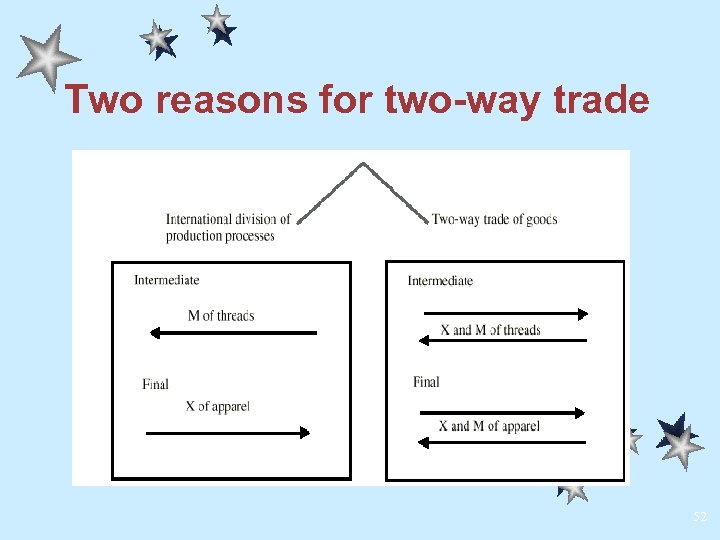 Two reasons for two-way trade 52
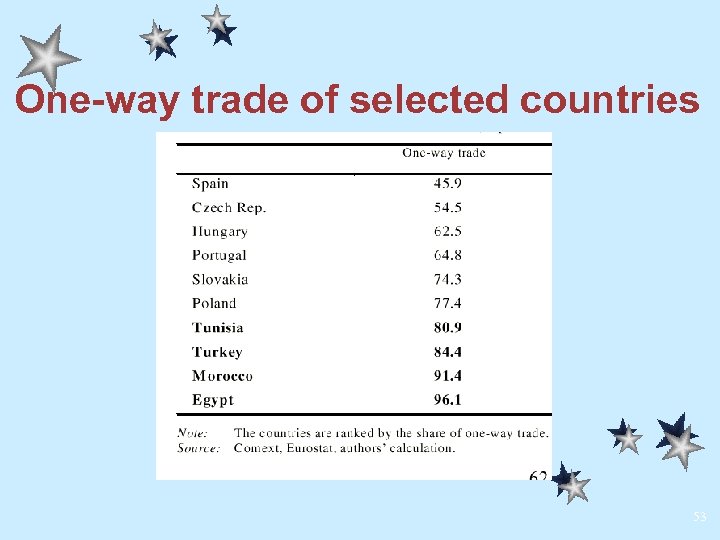 One-way trade of selected countries 53
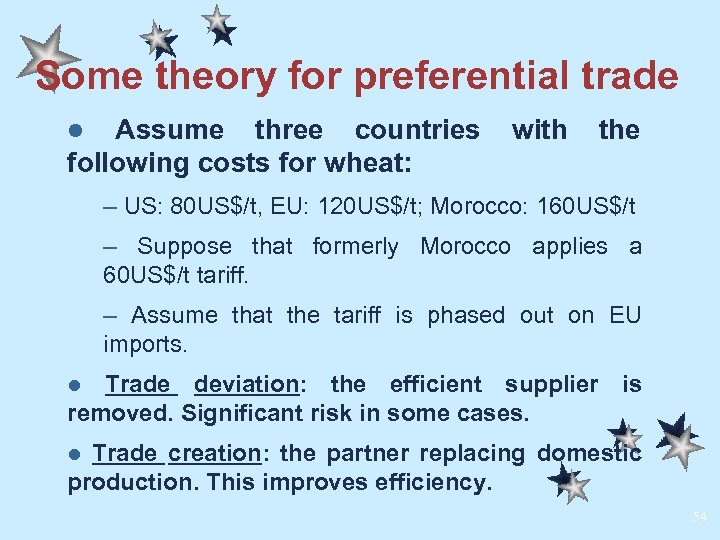 Some theory for preferential trade Assume three countries following costs for wheat: l with the – US: 80 US$/t, EU: 120 US$/t; Morocco: 160 US$/t – Suppose that formerly Morocco applies a 60 US$/t tariff. – Assume that the tariff is phased out on EU imports. Trade deviation: the efficient supplier is removed. Significant risk in some cases. l Trade creation: the partner replacing domestic production. This improves efficiency. l 54
 FDI and regional integration l Two strategies for TNCs: – “Vertical” or “outsourcing”. Needs incentives to attract FDI such as low production costs or market access in industrial economies. – “horizontal or “market seeking”. Needs large consumer markets. Again this calls for South-South integration. l Domestic factors: – Institutional background and investment climate. – Endowment of human resources. – Presence of efficient local firms. – Fiscal incentives 55
 Trade policy interventions
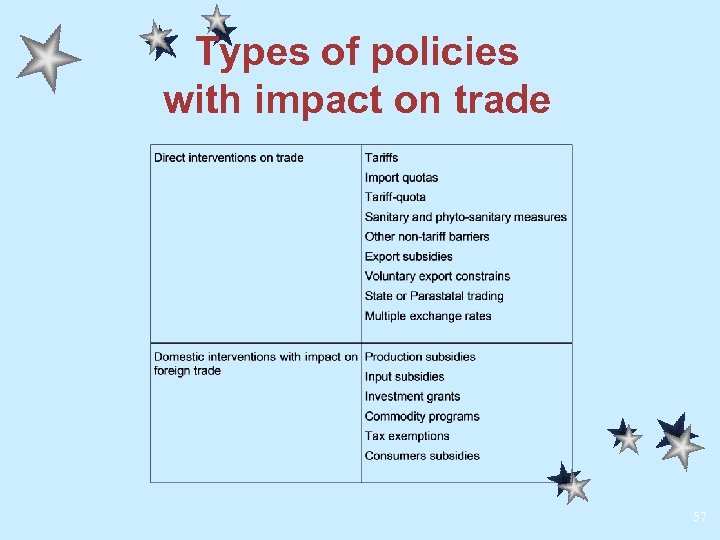 Types of policies with impact on trade 57
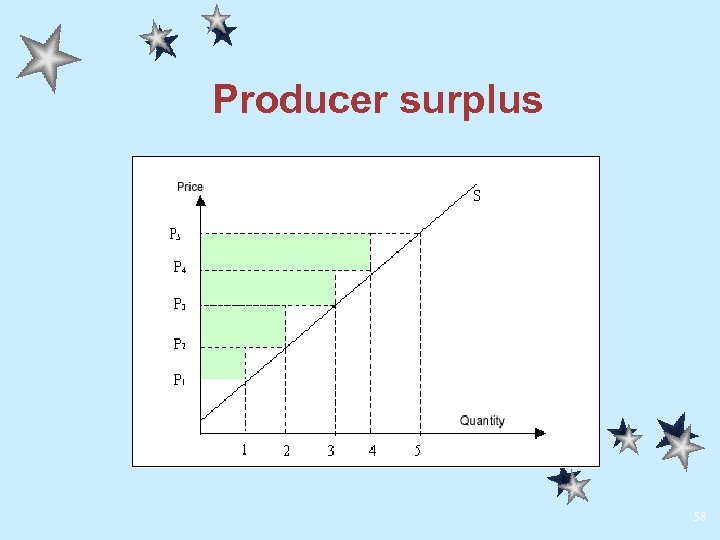 Producer surplus 58
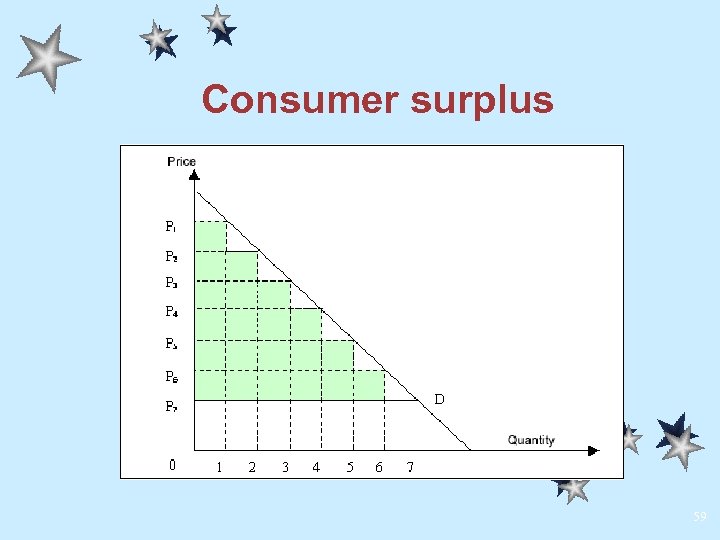 Consumer surplus 59
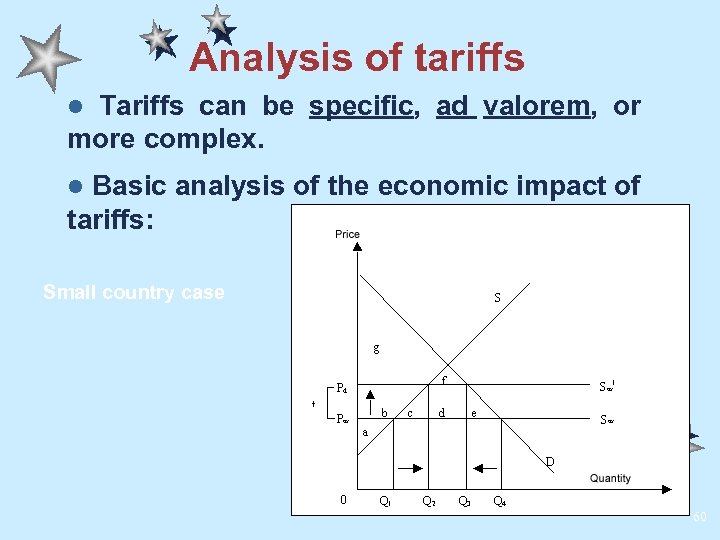 Analysis of tariffs Tariffs can be specific, ad valorem, or more complex. l Basic analysis of the economic impact of tariffs: l Small country case 60
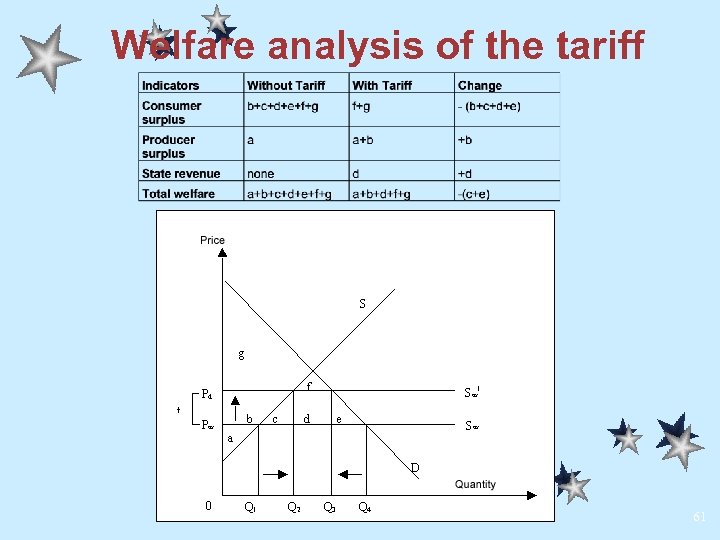 Welfare analysis of the tariff 61
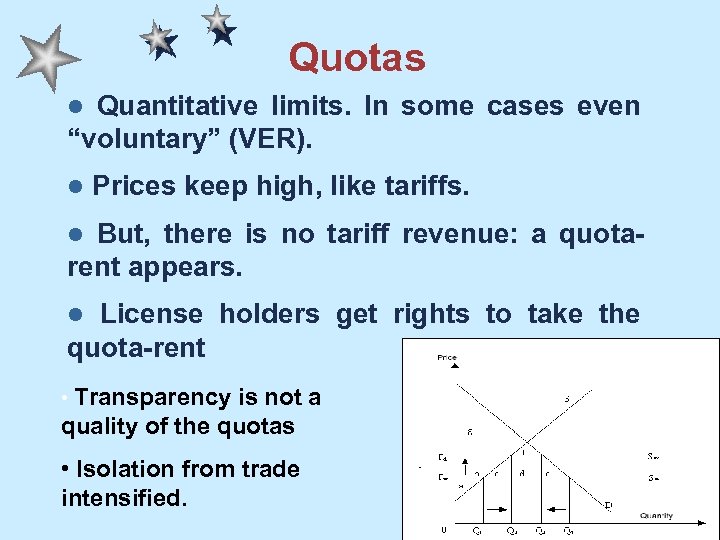 Quotas Quantitative limits. In some cases even “voluntary” (VER). l l Prices keep high, like tariffs. But, there is no tariff revenue: a quotarent appears. l License holders get rights to take the quota-rent l • Transparency is not a quality of the quotas • Isolation from trade intensified. 62
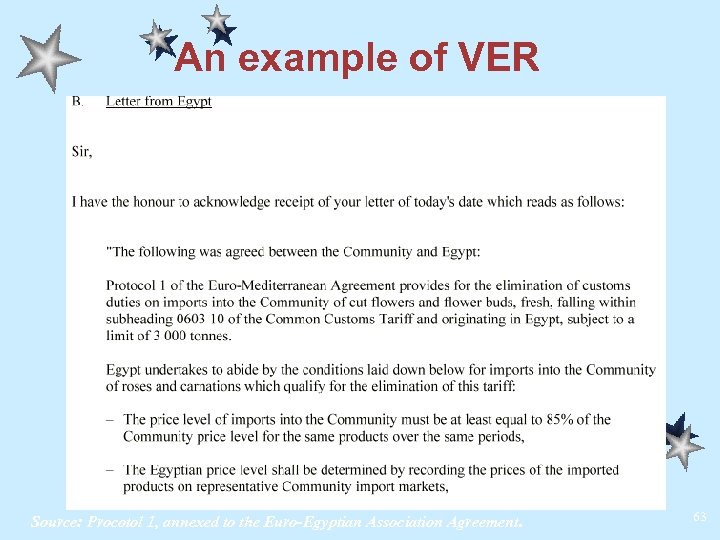 An example of VER Source: Procotol 1, annexed to the Euro-Egyptian Association Agreement. 63
 Tariff-Rate Quotas (TRQs) TRQs: an amount of imports benefitting from lower tariffs. l Created with good intentions: avoid that tariffication becomes prohibitve. l In practice, a great deal of managed trade remains in the TRQs. l 64
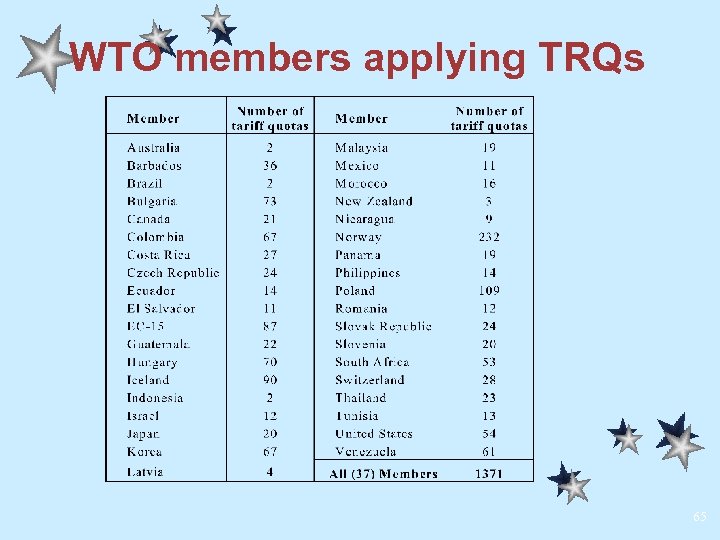 WTO members applying TRQs 65
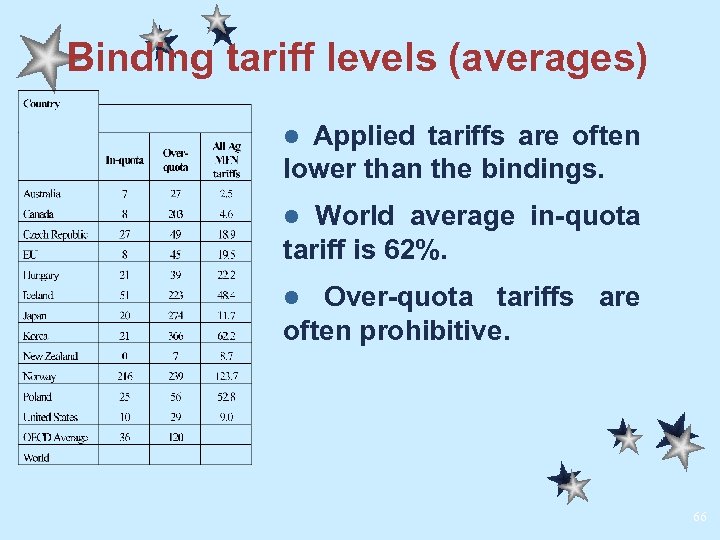 Binding tariff levels (averages) Applied tariffs are often lower than the bindings. l World average in-quota tariff is 62%. l Over-quota tariffs are often prohibitive. l 66
 Political Economy of Trade Policies
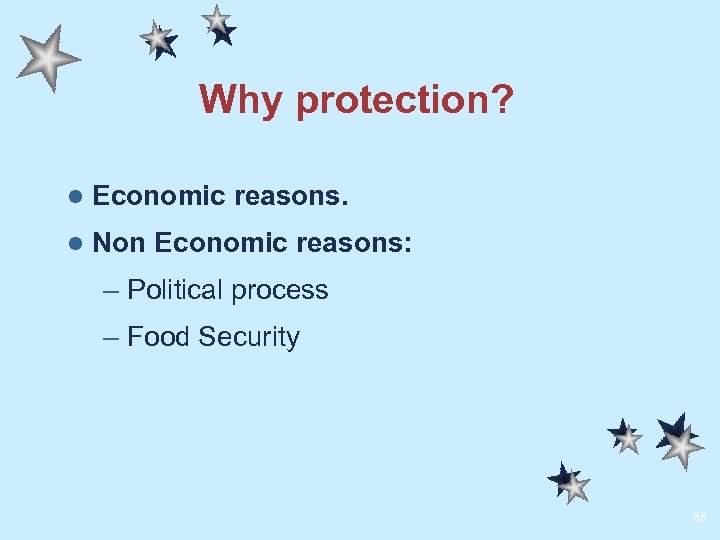 Why protection? l Economic reasons. l Non Economic reasons: – Political process – Food Security 68
 Economic arguments (I) l Protection of infant industry. l Market failures – Domestic distorsions in factor markets; externalities. Protection leading to secondbest solutions. – Two objections to this argument: Addressing the source of the problems may be more efficient. l Responses to protection policies are unknown. l 69
 Economic arguments (II) l Protection may improve terms of trade – Optimum tariff. l Contingent protection – Counteract “unfair” trading actions of other countries. 70
 Political arguments Industrial countries protect agriculture, at a high cost for their societies. Is democracy failing? l – Public fails to understand the true costs. – Political activities as a public good. The costs for collective action are very high for particular individuals (Olson’s paradox). – Interest groups “buy” policies. A negative outcome: protection encourages “rent-seeking”. l 71
 Food Security (FS) FAO definition of FS is based on availability, stability and access. l l Trade can contribute to improve FS. But, trade-reliance may bring some problems. l Trade-reliance does not rule out a food self-reliance policy. l Self-sufficiency does not solve all FS problems. l 72
 Some basic recommendations l Be aware of political factors, But, there may be alternatives cheaper than the existing policies. l And think about the most direct ways of addressing market failures. l – 73
 Domestic policies in an open economy
 Decoupling Decoupled policies mean no to encourage farmers’ incentives to increase yields or production. l l No measure is fully decoupled. However, WTO negotiators agreed on a “green box” with a list of seemingly decoupled measures. l 75
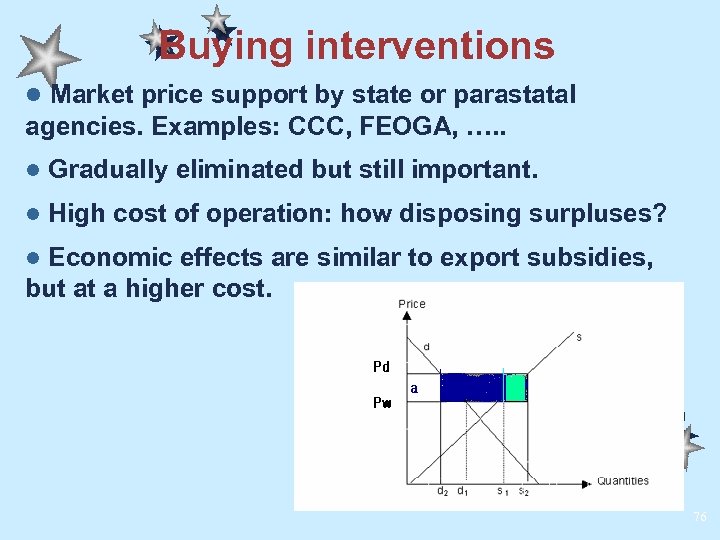 Buying interventions l Market price support by state or parastatal agencies. Examples: CCC, FEOGA, …. . l Gradually eliminated but still important. l High cost of operation: how disposing surpluses? Economic effects are similar to export subsidies, but at a higher cost. l 76
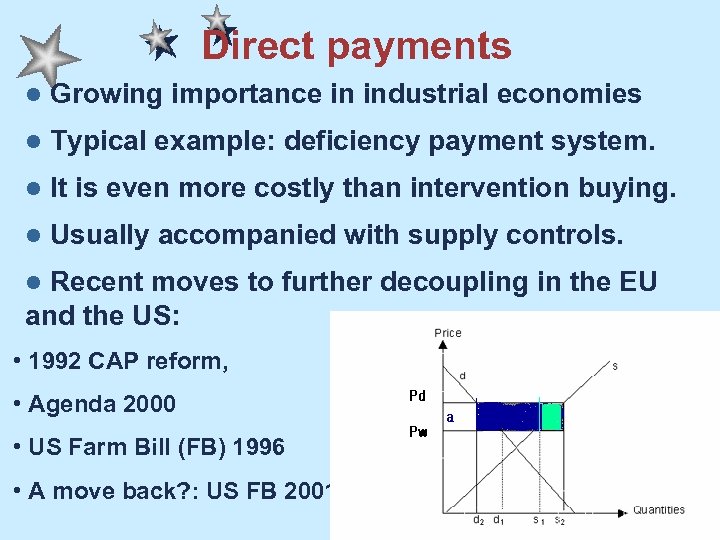 Direct payments l Growing importance in industrial economies l Typical example: deficiency payment system. l It is even more costly than intervention buying. l Usually accompanied with supply controls. Recent moves to further decoupling in the EU and the US: l • 1992 CAP reform, • Agenda 2000 • US Farm Bill (FB) 1996 • A move back? : US FB 2001 77
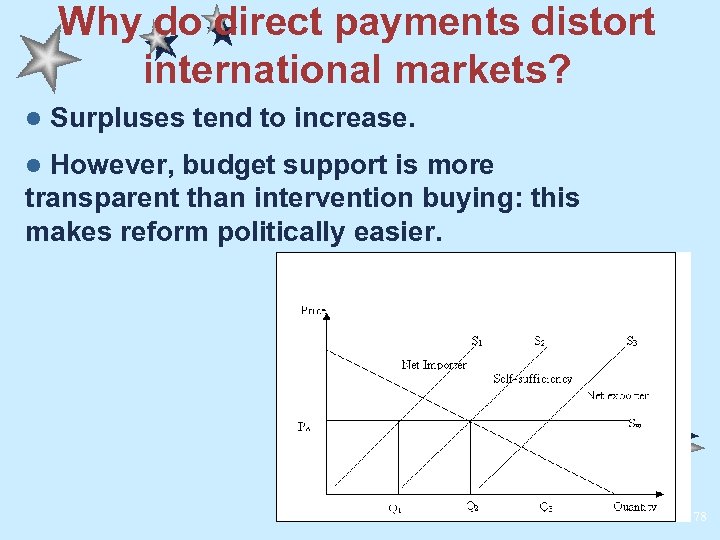 Why do direct payments distort international markets? l Surpluses tend to increase. However, budget support is more transparent than intervention buying: this makes reform politically easier. l 78
 General criticisms on EU and US domestic policies l "Intense disappointment" over the $180 billion farm bill (Cairns Group). “the new American agriculture policy has created the "most profound" division between Europe and the United States” (Javier Solana, EU). l “One of the biggest obstacles to creating vital opportunities for poor farmers” (Developing countries at the Food Summit. l “The 15 -nation European Union is notorious for giving lavish subsidies to its seven million farmers” (US authorities). l . "We're all free traders and we're all hypocrites” (Peter Scher, former trade negotiator, Clinton Administration). l 79
 Measures of protection and support
 Measuring protection Protection indicators measure distortions due to trade policy interventions. l l Some indicators: – Nominal Protection Coefficient (NPC) – OECD support estimates (PSE, CSE, TSE) – WTO Aggregate Measure of Support 81
 Nominal Protection Coefficient Ratio between (average) domestic price and border parity prices. l Adjustments are needed by transport and marketing costs to make comparison possible at the same spot. l NPC can be adjusted by exchange rate (ER) distortions: l –Gross NPC (or simply NPC). Official ER. – Net NPC: border prices are converted by equilibrium or shadow ER. 82
 Producer Support Estimate (PSE) Gross transfers from consumers and taxpayers to support agricultural producers arising from agricultural policies. l l Two types of components: – Market Price Support (MPS): Price gap x Total production – Other transfers from taxpayers to producers l Net of feed costs. l Percentage PSE 83
 General Services Support Estimate Transfers to general services provided to agriculture collectively. l GSSE represents transfers that are not received by producers individually, and do not affect farm revenues. l l Examples: – Agricultural training and extension. – Improvement of off-farm collective infrastructures. – Depreciation of Public storage. 84
 Consumer Support Estimate (CSE) gross transfers to (from) consumers of agricultural commodities, arising from policy measures which support agriculture. l Includes MPS + Transfers from consumers to the budget and quota-rents. l l But it is net of – transfers from taxpayers – excess feed cost: MPS on crops used in animal feeding. 85
 Total Support Estimate (TSE) l All transfers from taxpayers and consumers arising from agricultural policies, net of budgetary receipts. l Including: – Transfers from consumers to producers + – Transfers from taxpayers to general services + – Transfers from taxpayers to consumers Also TSE = PSE + GSSE + transfers from taxpayers to consumers. l Also TSE = transfers from consumers + transfers from taxpayers - import receipts (or renta-quotas). l 86
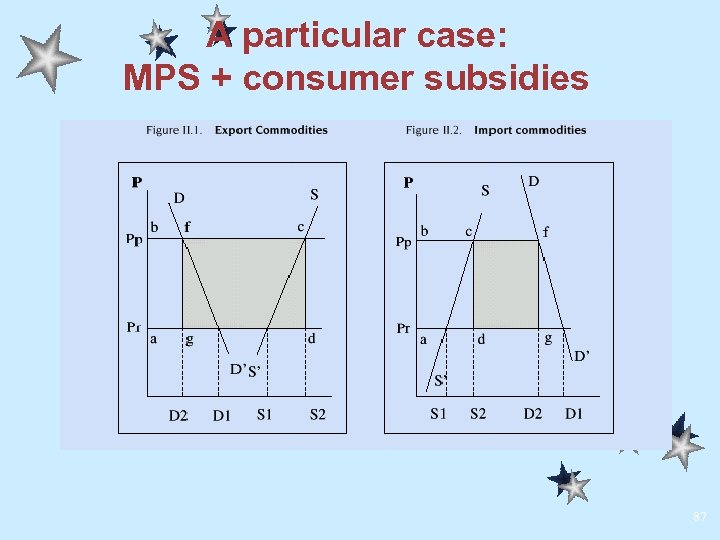 A particular case: MPS + consumer subsidies 87
 WTO Aggregate Measure of Support l Indicator used in WTO negotiations l. AMS is different from the PSE. The AMS: – excludes “green box” and “blue box” – only defines MPS when administered prices exist. – uses fixed reference (international) prices. – ignores negative transfers. Also, de minimis clause. – Does not adjust for excess feed costs. 88
 Selected topics
 Allocation of import quotas. The banana case 1993: Creation of the Single Market in the EU: need for a common import regime. l l Two tariff quota: – For traditional ACP countries (preference) – For Latin America and non-traditional ACP. Traditional operators of domestic banana and ACP suppliers were allocated 30 percent of licenses for importing from Latin America. l l The banana Framework Agreement l The panel. Towards a tariff-only regime. 90
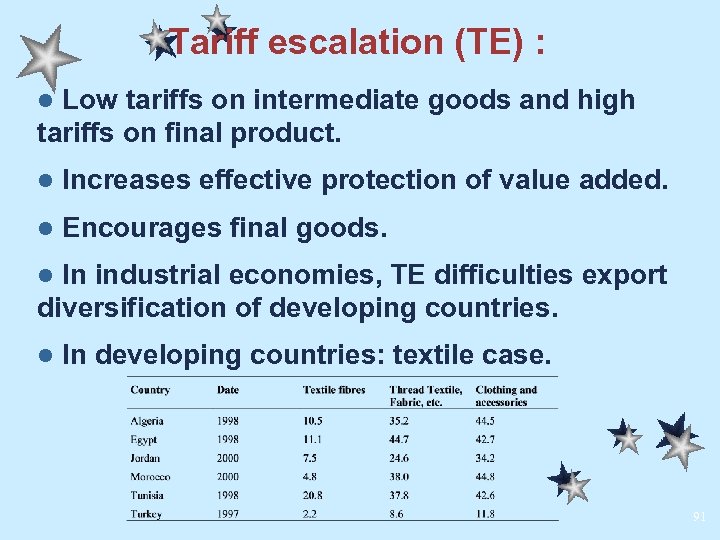 Tariff escalation (TE) : Low tariffs on intermediate goods and high tariffs on final product. l l Increases effective protection of value added. l Encourages final goods. In industrial economies, TE difficulties export diversification of developing countries. l l In developing countries: textile case. 91
 Variable tariffs: the entry prices Ideally, tariffs should be constant and predictable. l Entry price applies to some fruit and vegetables and seasons and. l Additional tariffs when import value undercuts the entry prices. l Administrative problems: Importers tend to declared higher CIF prices than the entry prices. l Possible co-ordination in the exporting country for increasing export prices. l 92
 Rules of origin (ROO): making preferences complex l FTAs needs ROO Products adquire origin with “sufficient transformation” l l What is sufficient transformation? – Bilateral cumulation. l Problems with ROO – Administrative costs – Possible trade diversion – “Hub and spoke” trade l Easing the ROO: diagonal cumulation. 93