


 Скачать презентацию Toyota Corporate Real Estate and Facilities Jennifer Drilling
43cd252ad4f38f8fd067d85d2e2b460f.ppt
- Количество слайдов: 51
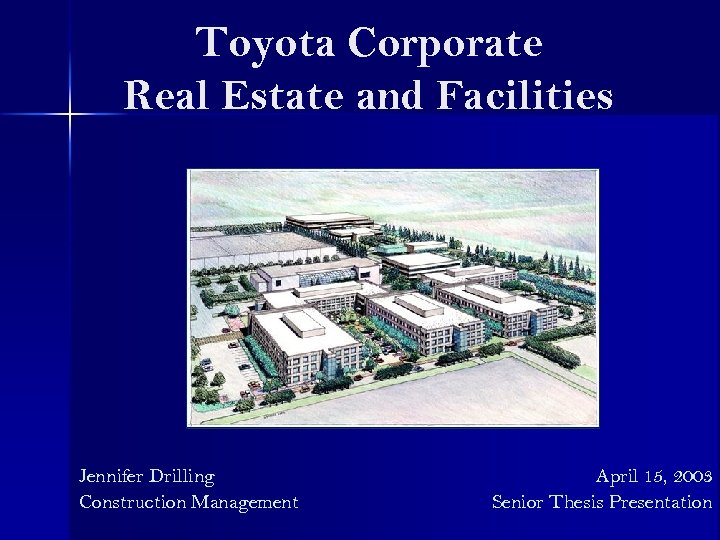 Toyota Corporate Real Estate and Facilities Jennifer Drilling Construction Management April 15, 2003 Senior Thesis Presentation
 Presentation Agenda Project Background Critical Path Investigation Interior Partitions Energy Optimization Mechanical Analysis Lighting Research Contractor’s Role on a Green Building Final Recommendations
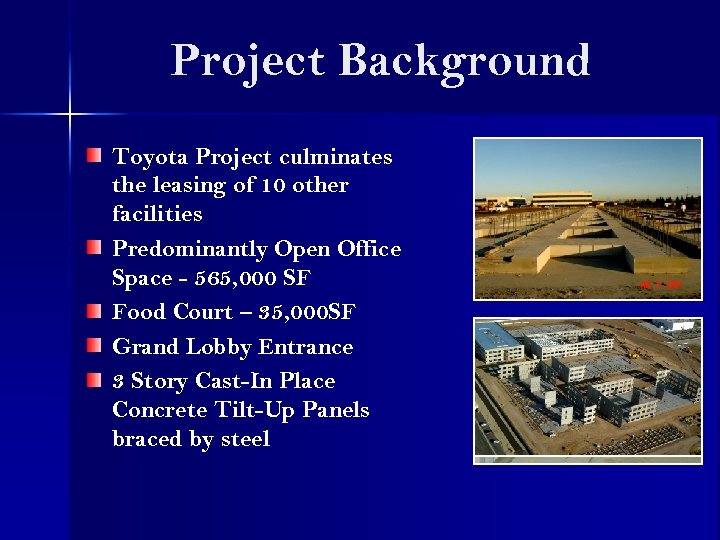 Project Background Toyota Project culminates the leasing of 10 other facilities Predominantly Open Office Space - 565, 000 SF Food Court – 35, 000 SF Grand Lobby Entrance 3 Story Cast-In Place Concrete Tilt-Up Panels braced by steel
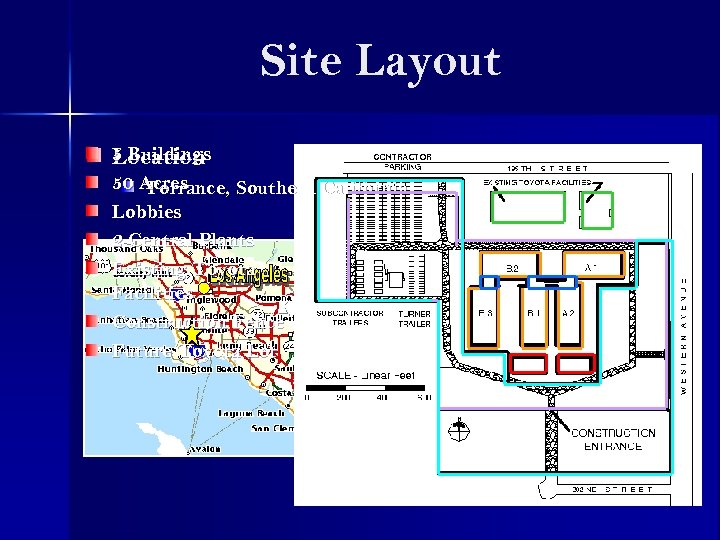 Site Layout 5 Buildings Location 50 Acres Torrance, Southern California Lobbies 2 Central Plants Existing Toyota Facilities Construction Fence Future Toyota Lot
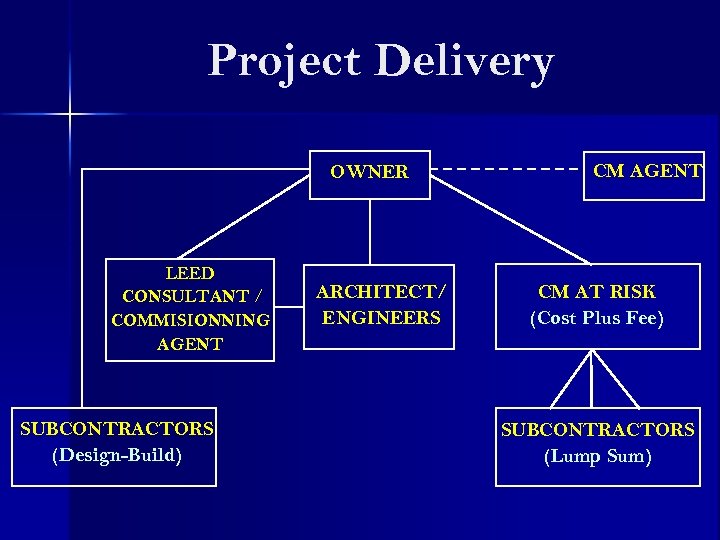 Project Delivery OWNER LEED CONSULTANT / COMMISIONNING AGENT SUBCONTRACTORS (Design-Build) ARCHITECT/ ENGINEERS CM AGENT CM AT RISK (Cost Plus Fee) SUBCONTRACTORS (Lump Sum)
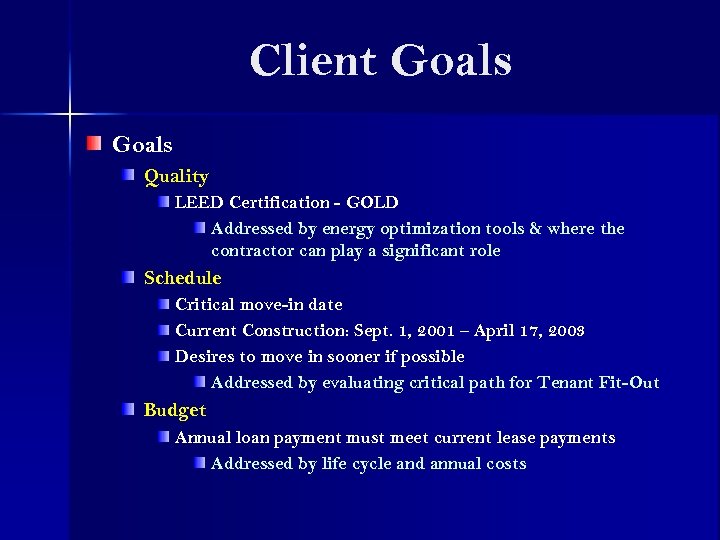 Client Goals Quality LEED Certification - GOLD Addressed by energy optimization tools & where the contractor can play a significant role Schedule Critical move-in date Current Construction: Sept. 1, 2001 – April 17, 2003 Desires to move in sooner if possible Addressed by evaluating critical path for Tenant Fit-Out Budget Annual loan payment must meet current lease payments Addressed by life cycle and annual costs
 Presentation Agenda Project Background Critical Path Investigation Interior Partitions Energy Optimization Mechanical Analysis Lighting Research Contractor’s Role on a Green Building Final Recommendations
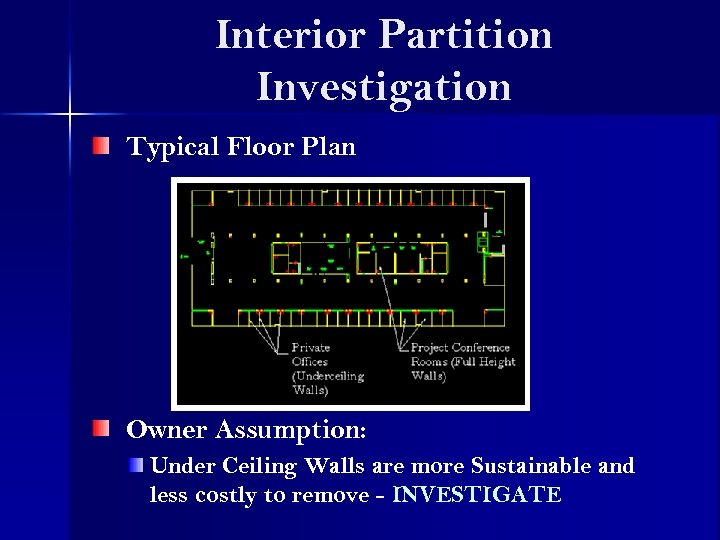 Interior Partition Investigation Typical Floor Plan Owner Assumption: Under Ceiling Walls are more Sustainable and less costly to remove - INVESTIGATE
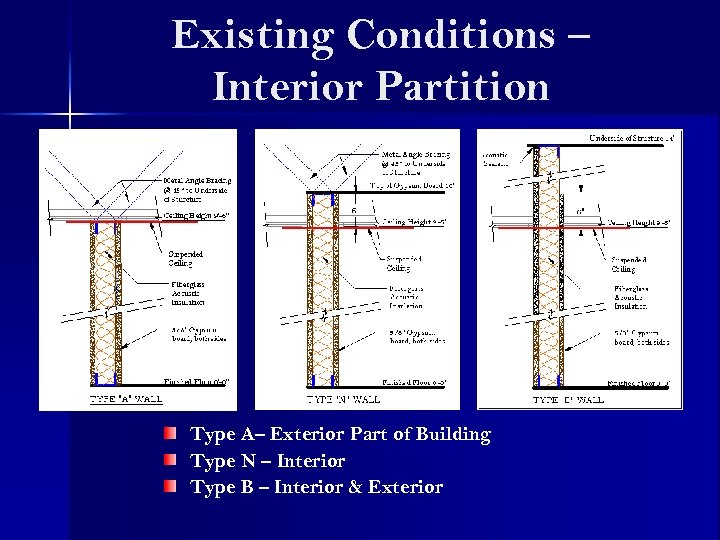 Existing Conditions – Interior Partition Type A– Exterior Part of Building Type N – Interior Type B – Interior & Exterior
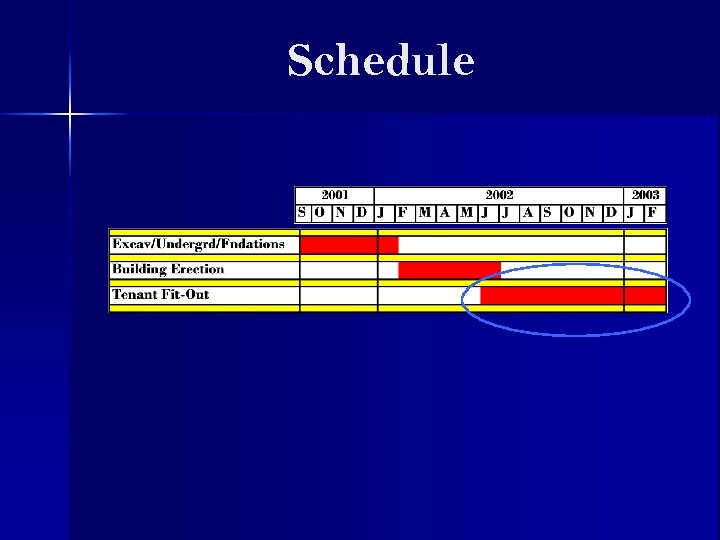
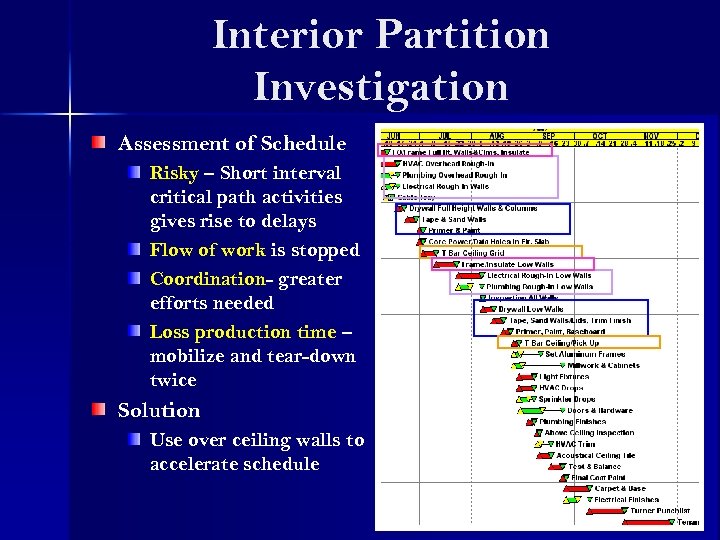 Interior Partition Investigation Assessment of Schedule Risky – Short interval critical path activities gives rise to delays Flow of work is stopped Coordination- greater efforts needed Loss production time – mobilize and tear-down twice Solution Use over ceiling walls to accelerate schedule
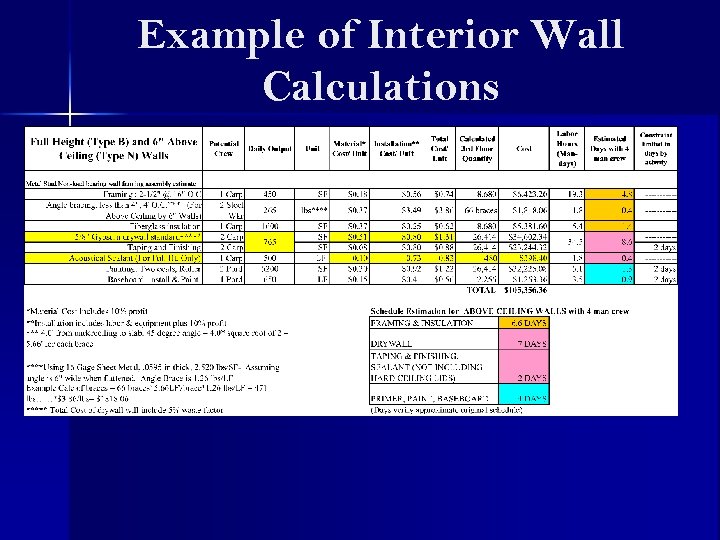
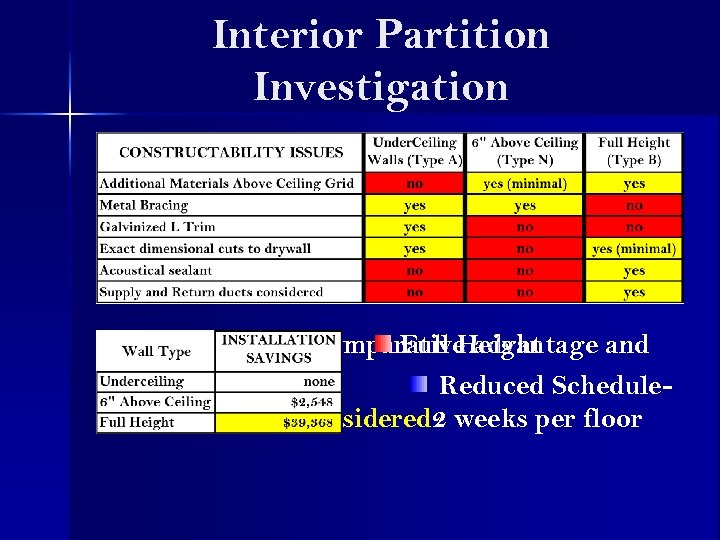 Interior Partition Investigation Every wall has comparative advantage and Full Height disadvantages Reduced Schedule. All should be considered 2 weeks per floor
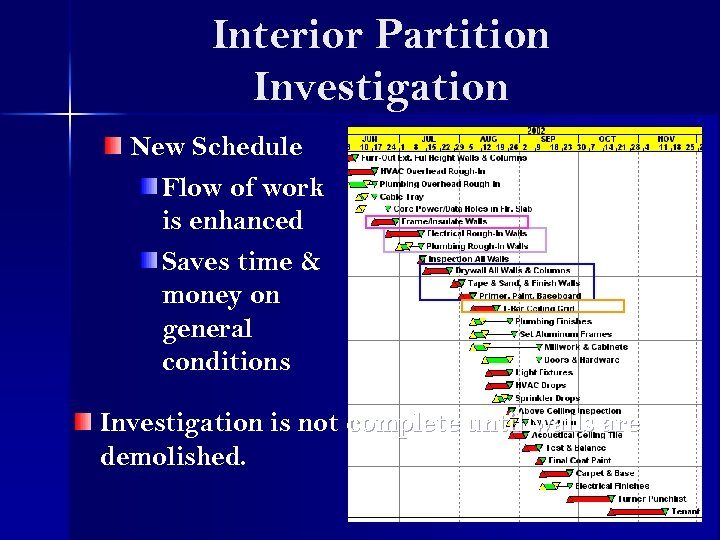 Interior Partition Investigation New Schedule Flow of work is enhanced Saves time & money on general conditions Investigation is not complete until walls are demolished.
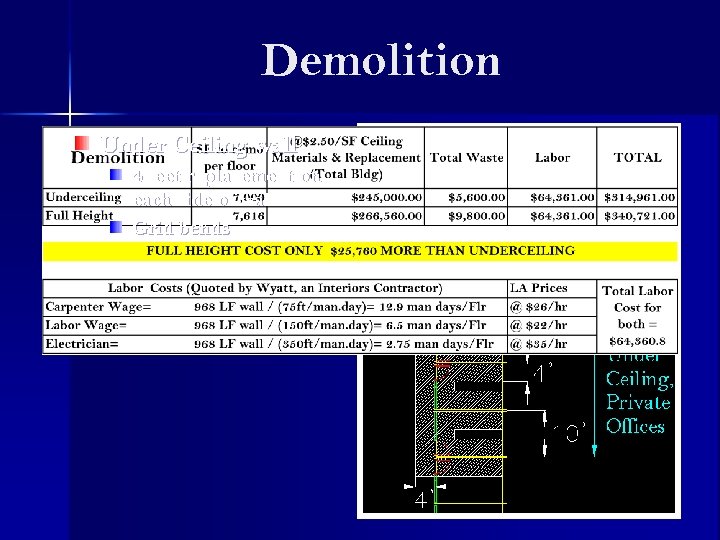 Demolition Under Ceiling wall 4 feet replacement on each side of wall Grid bends
 Presentation Agenda Project Background Critical Path Investigation Interior Partitions Energy Optimization Mechanical Analysis Lighting Research Contractor’s Role on a Green Building Final Recommendations
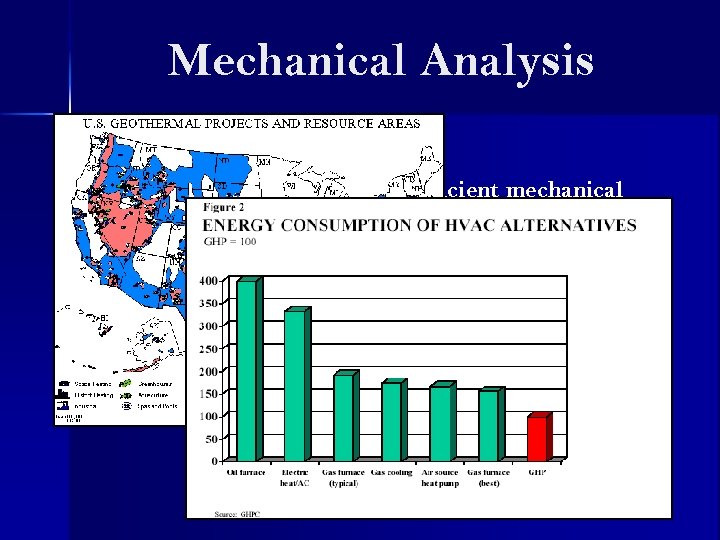 Mechanical Analysis Goal To assess the best energy efficient mechanical system for the Toyota Project To gain maximum LEED Points = 10 Basis for Investigation Research showed successful geothermal systems in California
 Mechanical Analysis Advantages Geo-thermal Systems Bring Mechanical equipment and space reduced Maintenance costs halved Piping would be reduced due to localized zoning systems Extremely quiet system Can be put virtually anywhere
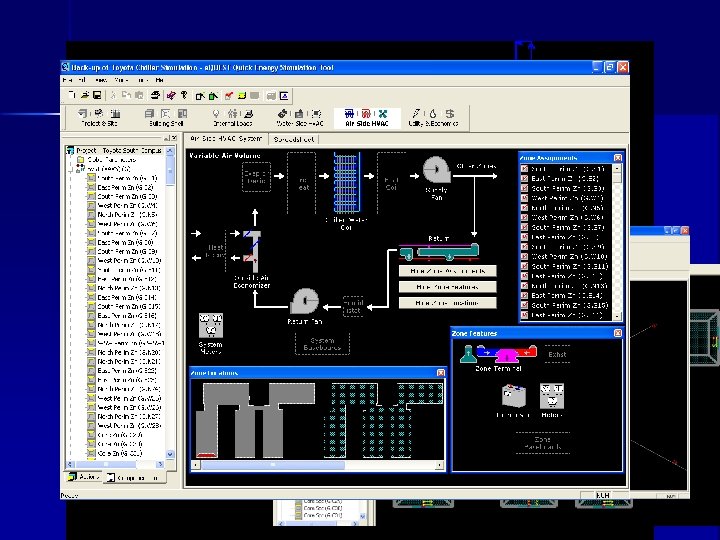 Mechanical Investigation of both systems on the Energy Modeling Tool for California Buildings EQuest Set up Zoning 3 D Model System Flow Diagram Detailed System
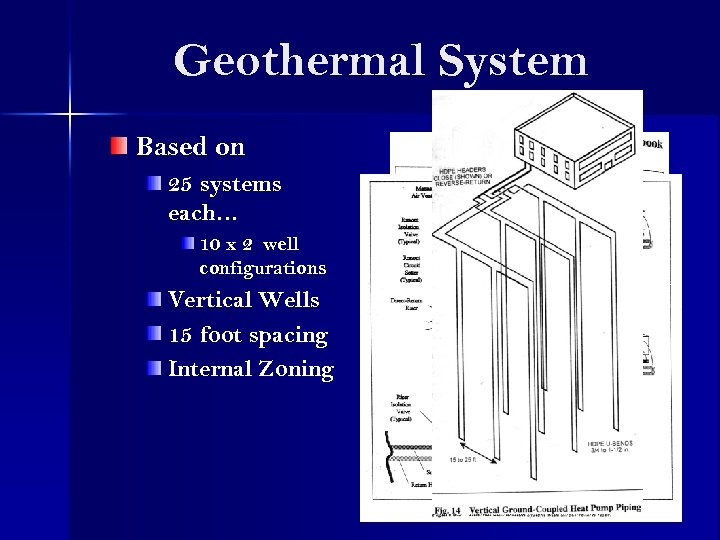 Geothermal System Based on 25 systems each… 10 x 2 well configurations Vertical Wells 15 foot spacing Internal Zoning
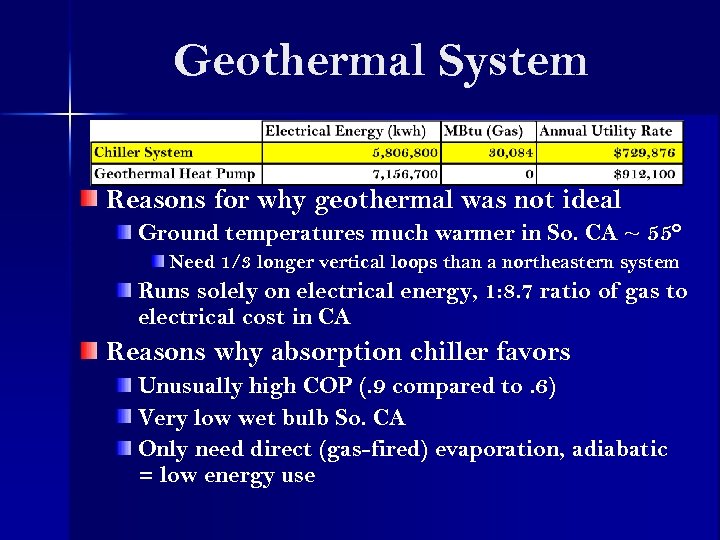 Geothermal System Reasons for why geothermal was not ideal Ground temperatures much warmer in So. CA ~ 55° Need 1/3 longer vertical loops than a northeastern system Runs solely on electrical energy, 1: 8. 7 ratio of gas to electrical cost in CA Reasons why absorption chiller favors Unusually high COP (. 9 compared to. 6) Very low wet bulb So. CA Only need direct (gas-fired) evaporation, adiabatic = low energy use
 Presentation Agenda Project Background Critical Path Investigation Interior Partitions Energy Optimization Mechanical Analysis Lighting Research Contractor’s Role on a Green Building Final Recommendations
 Lighting Analysis Goal To investigate the existing lighting system for Energy Efficiency Cost To incorporate more daylight into the space
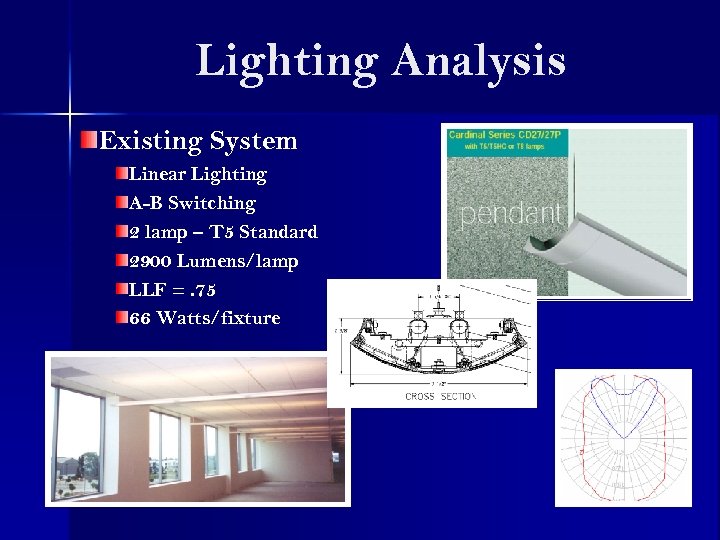 Lighting Analysis Existing System Linear Lighting A-B Switching 2 lamp – T 5 Standard 2900 Lumens/lamp LLF =. 75 66 Watts/fixture
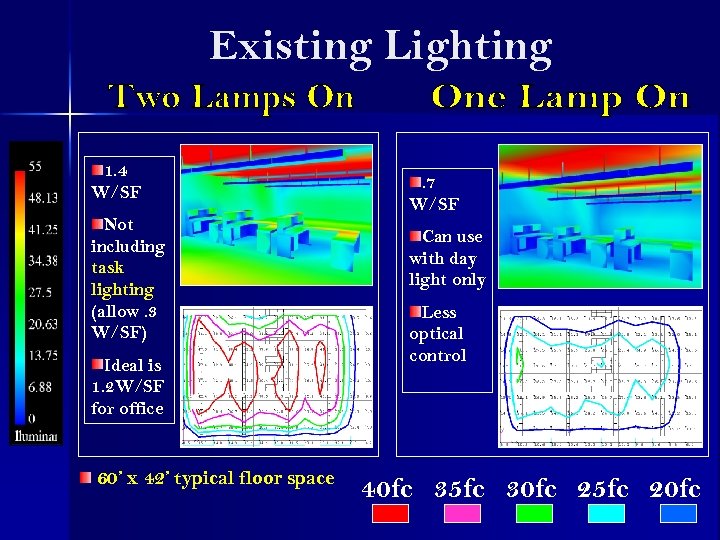 Existing Lighting 1. 4 W/SF Not including task lighting (allow. 3 W/SF) Ideal is 1. 2 W/SF for office 60’ x 42’ typical floor space . 7 W/SF Can use with day light only Less optical control 40 fc 35 fc 30 fc 25 fc 20 fc
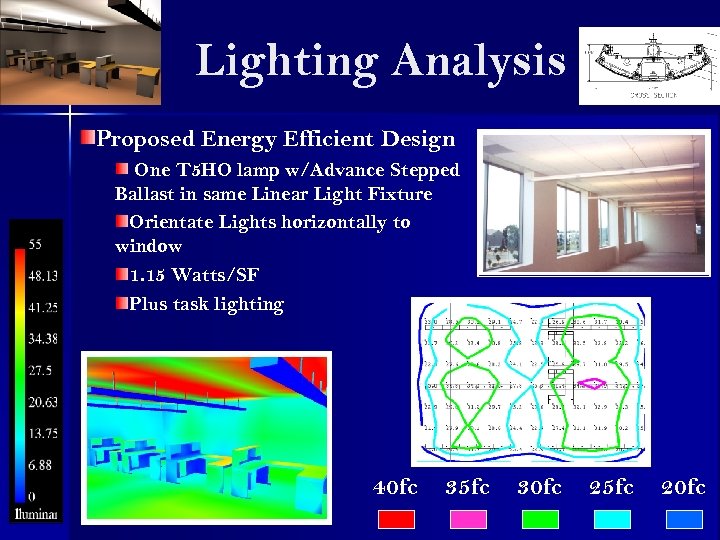 Lighting Analysis Proposed Energy Efficient Design One T 5 HO lamp w/Advance Stepped Ballast in same Linear Light Fixture Orientate Lights horizontally to window 1. 15 Watts/SF Plus task lighting 40 fc 35 fc 30 fc 25 fc 20 fc
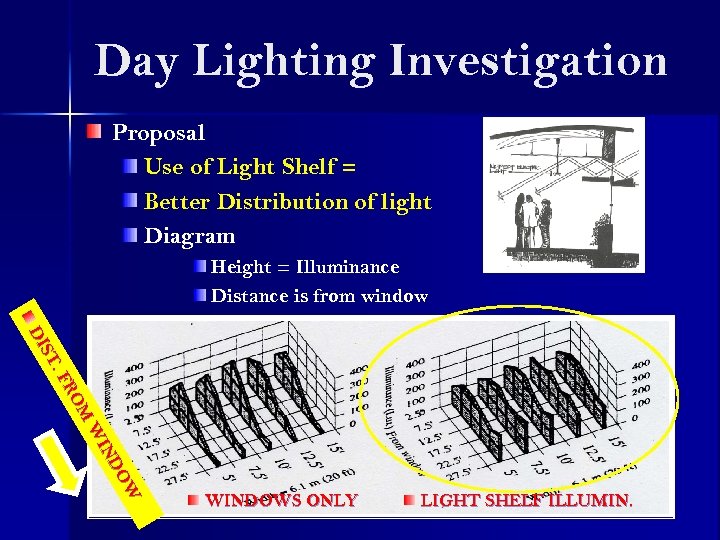 Day Lighting Investigation Proposal Use of Light Shelf = Better Distribution of light Diagram Height = Illuminance Distance is from window M OM RO FR. . F ST ST DI DI W OW DO IN IN W W WINDOWS ONLY LIGHT SHELF ILLUMIN.
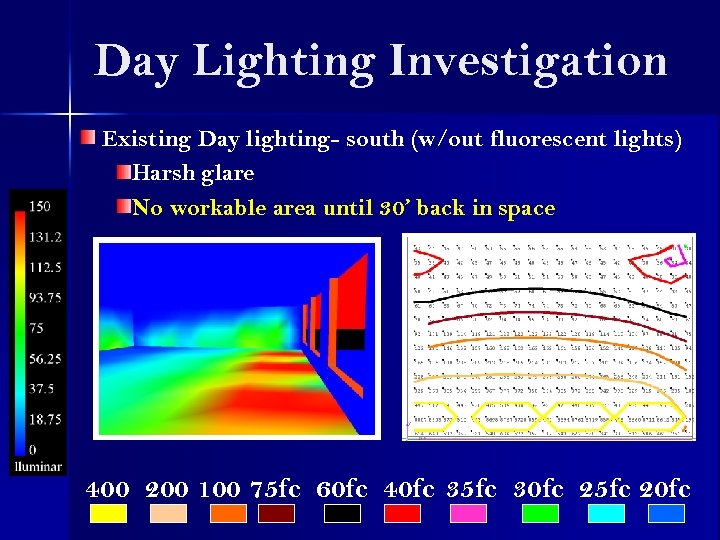 Day Lighting Investigation Existing Day lighting- south (w/out fluorescent lights) Harsh glare No workable area until 30’ back in space 400 200 100 75 fc 60 fc 40 fc 35 fc 30 fc 25 fc 20 fc
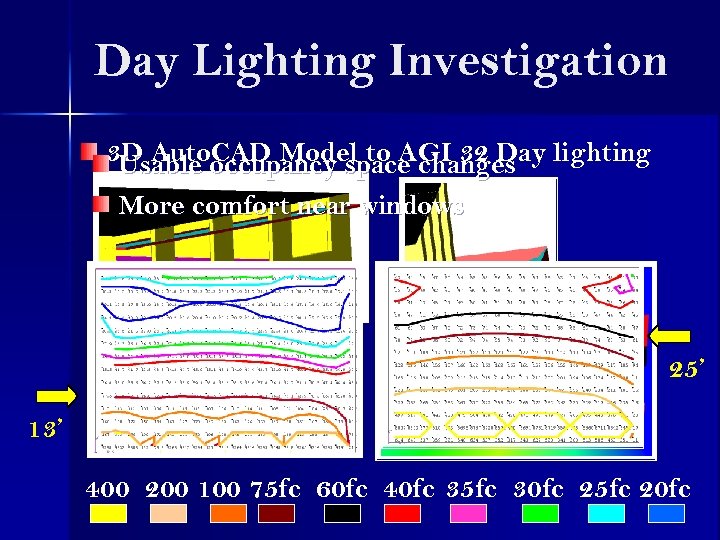 Day Lighting Investigation 3 D Auto. CAD Model to AGI 32 Day lighting Usable occupancy space changes More comfort near windows 25’ 13’ 400 200 100 75 fc 60 fc 40 fc 35 fc 30 fc 25 fc 20 fc
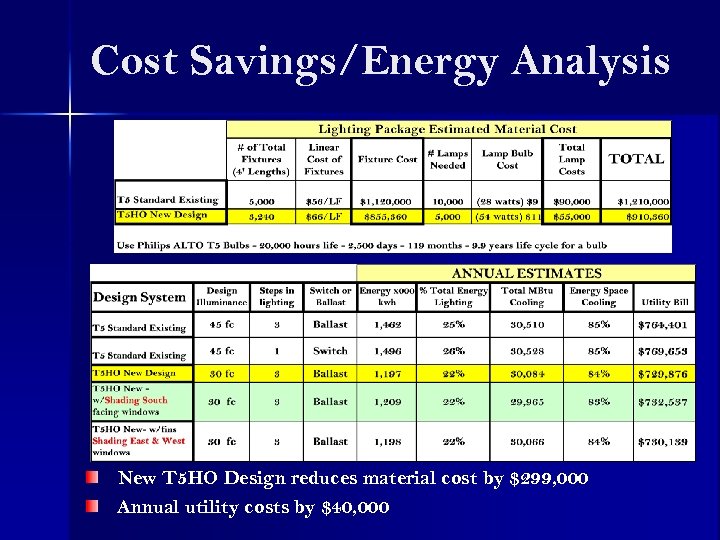 Cost Savings/Energy Analysis New T 5 HO Design reduces material cost by $299, 000 Annual utility costs by $40, 000
 Presentation Agenda Project Background Critical Path Investigation Interior Partitions Energy Optimization Mechanical Analysis Lighting Research Contractor’s Role on a Green Building Final Recommendations
 Contractor’s Role on a Green Building Literature Review Very little information gear towards the contractor’s role Goal To develop guidelines of valued added activities a contractor may perform during a green project Pre-Construction Where is their role most significant? Establish industry comments, concerns, and knowledge of issue
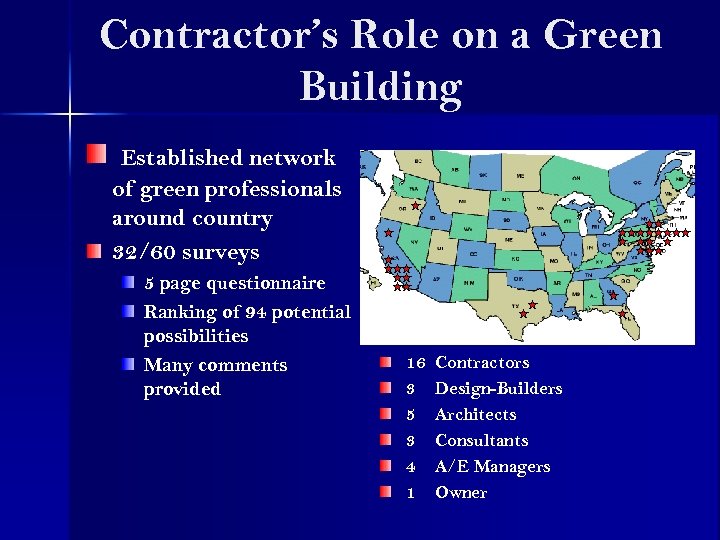 Contractor’s Role on a Green Building Established network of green professionals around country 32/60 surveys 5 page questionnaire Ranking of 94 potential possibilities Many comments provided 16 3 5 3 4 1 Contractors Design-Builders Architects Consultants A/E Managers Owner
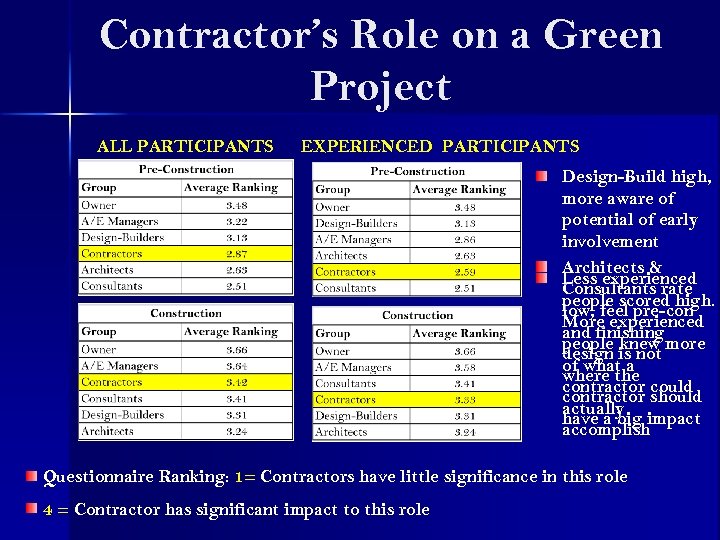 Contractor’s Role on a Green Project ALL PARTICIPANTS EXPERIENCED PARTICIPANTS Design-Build high, more aware of potential of early involvement Architects & Less experienced Consultants rate people scored high. low, feel pre-con More experienced and finishing people knew more design is not of what a where the contractor could contractor should actually have a big impact accomplish Questionnaire Ranking: 1= Contractors have little significance in this role 4 = Contractor has significant impact to this role
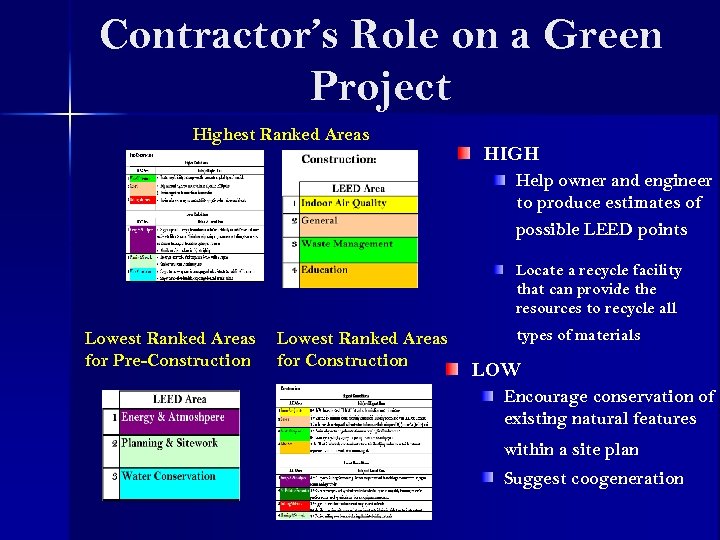 Contractor’s Role on a Green Project Highest Ranked Areas HIGH Help owner and engineer to produce estimates of possible LEED points Locate a recycle facility that can provide the resources to recycle all Lowest Ranked Areas for Pre-Construction Lowest Ranked Areas for Construction types of materials LOW Encourage conservation of existing natural features within a site plan Suggest coogeneration
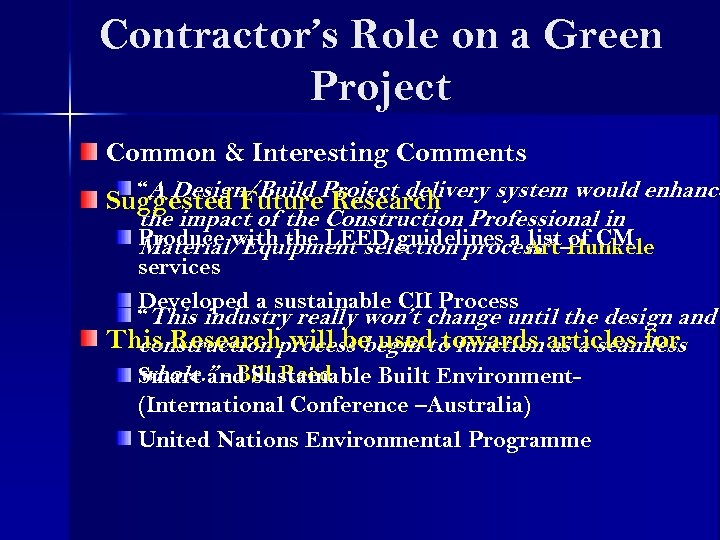 Contractor’s Role on a Green Project Common & Interesting Comments “A Design/Build Suggested Future. Project delivery system would enhance Research the impact of the Construction Professional in Produce with the LEED guidelines a Art–Hunkele list Material/Equipment selection process” of CM services Developed a sustainable CII Process “This industry really won’t change until the design and This Researchprocess begin to function articles for construction will be used towards as a seamless whole. ” - Bill Reed Smart and Sustainable Built Environment(International Conference –Australia) United Nations Environmental Programme
 Presentation Agenda Project Background Critical Path Investigation Interior Partitions Energy Optimization Mechanical Analysis Lighting Research Contractor’s Role on a Green Building Final Recommendations
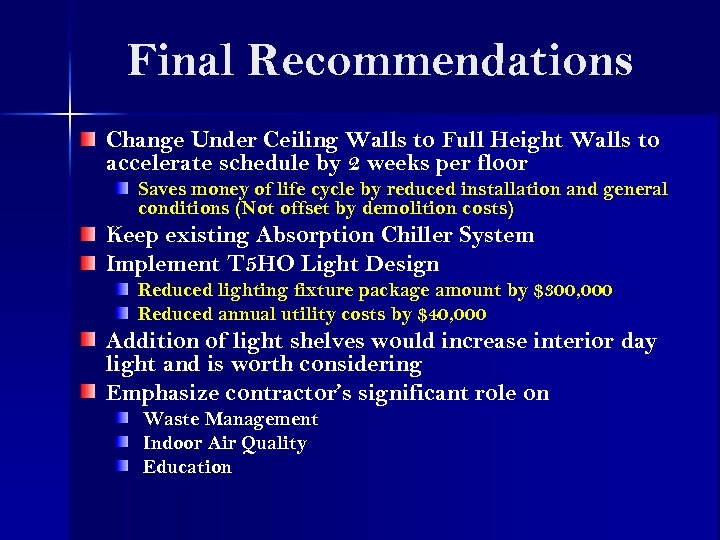 Final Recommendations Change Under Ceiling Walls to Full Height Walls to accelerate schedule by 2 weeks per floor Saves money of life cycle by reduced installation and general conditions (Not offset by demolition costs) Keep existing Absorption Chiller System Implement T 5 HO Light Design Reduced lighting fixture package amount by $300, 000 Reduced annual utility costs by $40, 000 Addition of light shelves would increase interior day light and is worth considering Emphasize contractor’s significant role on Waste Management Indoor Air Quality Education
 Final Recommendations Challenges Interior Walls might not meet sustainable environmental needs to reduce waste during the demolition phase Geothermal Heat Pump will not be beneficial in high electrical priced environment Hard to investigate energy analysis with light shelf due to limited energy modeling systems A contractor’s role on a green project is challenging to define, varying with the opinion of different project team members
 Special Thanks Toyota Facilities Director: Sandy Smith AND ALL OF THE TOYOTA PROJECT STAFF (MANY FROM TURNER CONSTRUCTION) Faculty David Riley Dan Mattern Andy Lau Richard Mistrick Kenneth Davidson Moses Ling John Messner Industry Consultants Kim Pexton Chris Leyenberger Andy Pkacik Jim Blint Research Participants Family & Friends
 Questions?
 Schedule
 Example of Interior Wall Calculations
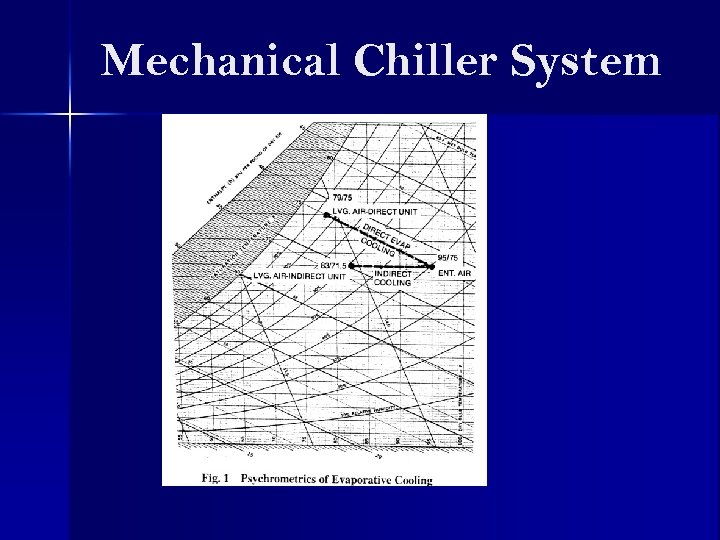 Mechanical Chiller System
 Mechanical Design Parameters ASHRAE Commercial Ground-Source Heat Pump Engineering Manual – 1995 ASHRAE 62 -2001, Ventilation for Acceptable Indoor Air Quality ASHRAE 90. 1 -1999, Energy Standard for Buildings
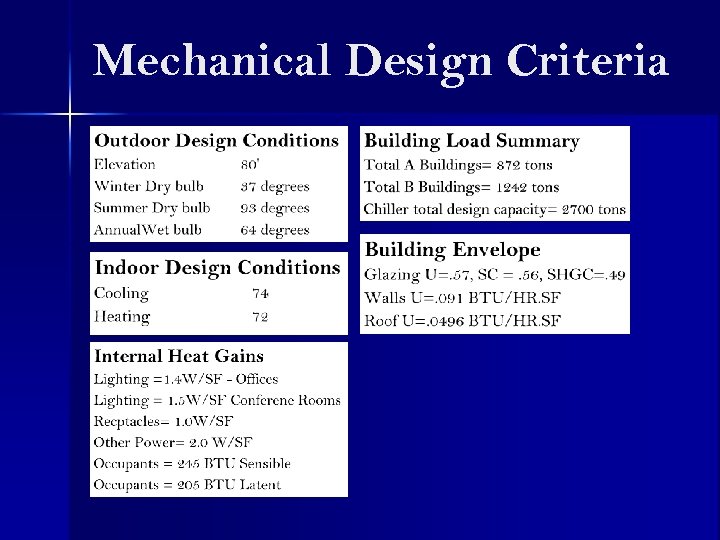 Mechanical Design Criteria
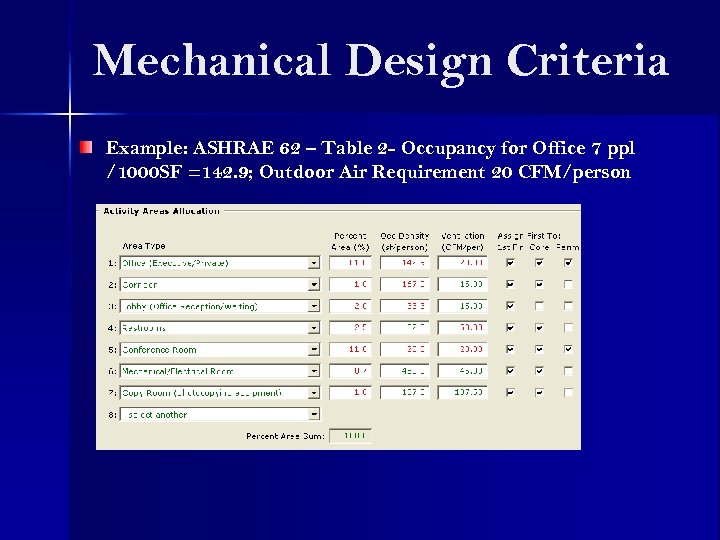 Mechanical Design Criteria Example: ASHRAE 62 – Table 2 - Occupancy for Office 7 ppl /1000 SF =142. 9; Outdoor Air Requirement 20 CFM/person
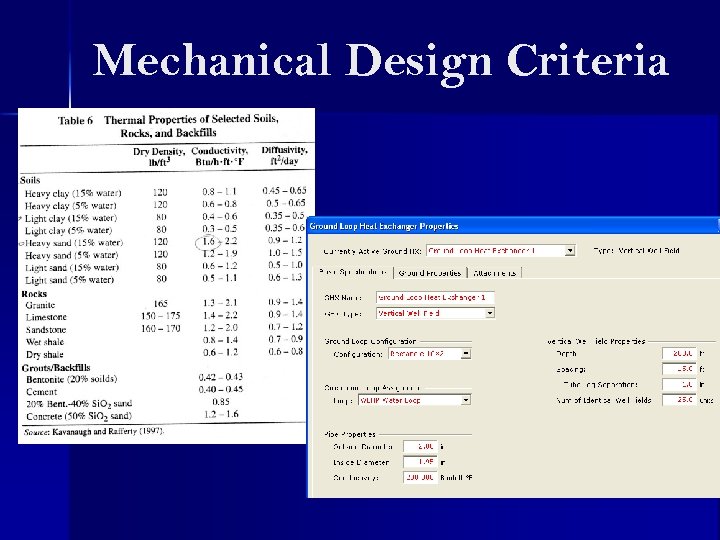 Mechanical Design Criteria
 Geothermal Cost Factors affecting cost if you were to use a geothermal Higher installation price Possible structural enhancement if equipment were placed at the core of each floor The reduction of Central Plant space (possible elimination) Must increase area slightly for main buildings
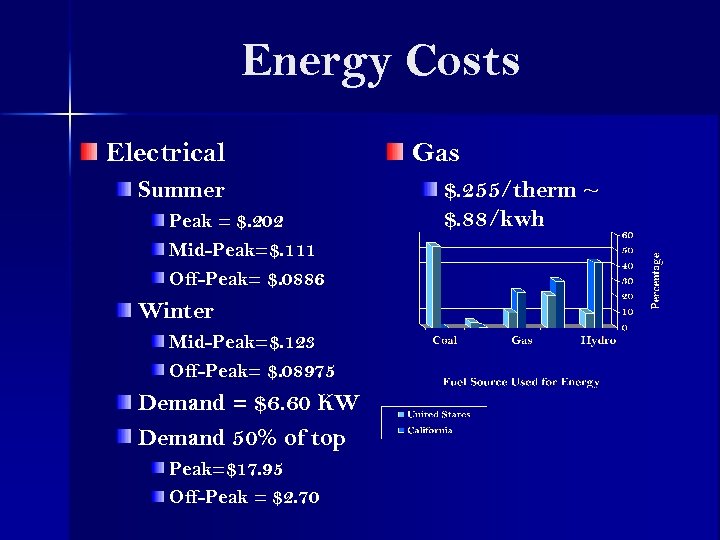 Energy Costs Electrical Summer Peak = $. 202 Mid-Peak=$. 111 Off-Peak= $. 0886 Winter Mid-Peak=$. 123 Off-Peak= $. 08975 Demand = $6. 60 KW Demand 50% of top Peak=$17. 95 Off-Peak = $2. 70 Gas $. 255/therm ~ $. 88/kwh
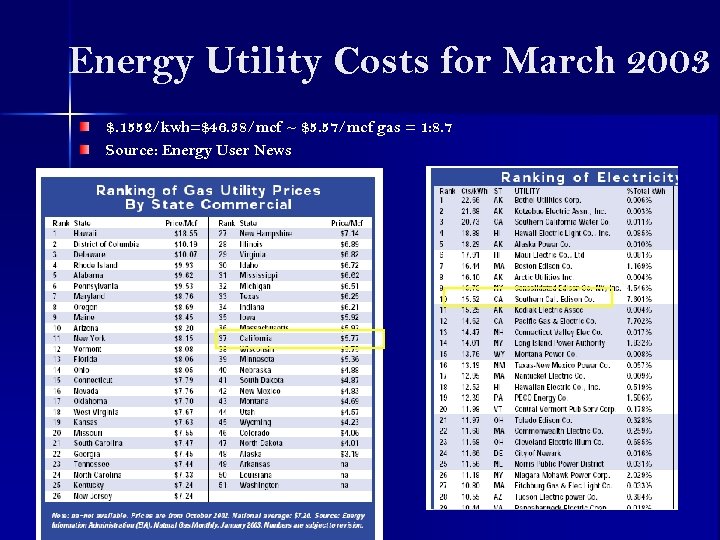 Energy Utility Costs for March 2003 $. 1552/kwh=$46. 38/mcf ~ $5. 57/mcf gas = 1: 8. 7 Source: Energy User News
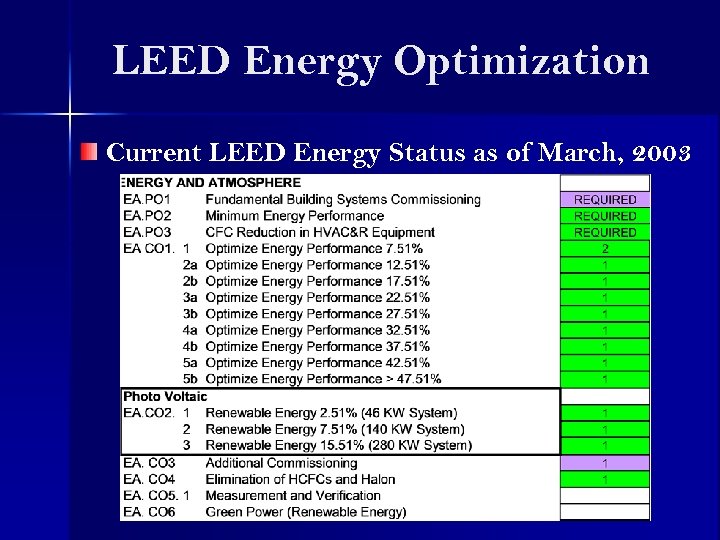 LEED Energy Optimization Current LEED Energy Status as of March, 2003
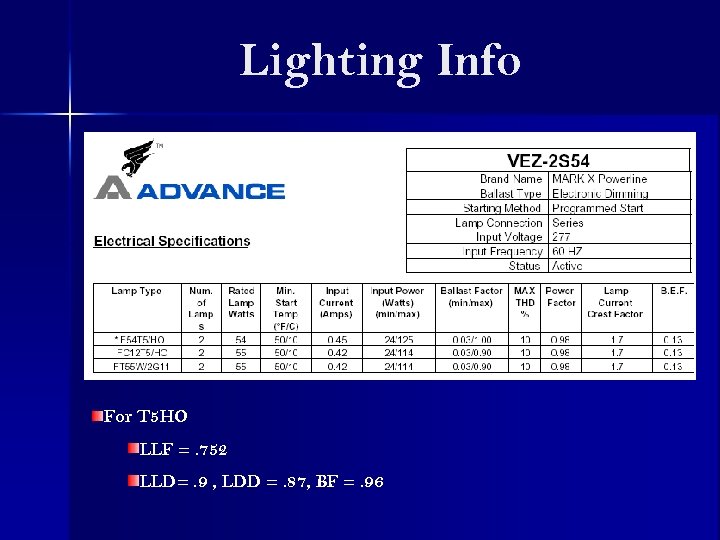 Lighting Info For T 5 HO LLF =. 752 LLD=. 9 , LDD =. 87, BF =. 96