


 Скачать презентацию Tourism A Strategic Approach to Managing Marketing
c091ca66059fbf0017fb41fcac7402ef.ppt
- Количество слайдов: 36
 Tourism: A Strategic Approach to Managing & Marketing Destinations Kiev, June 16/17/18, 2009 Sue Warren
 Tourism in developing economies §to improve and nurture places for people to live, work and invest in - and for people to visit §to influence regional development and generate greater economic benefits for local people by improving working conditions and access to new opportunities §tourism is a content area for new EU funding streams (eg CBC projects) §tourism has a major role in to safeguard and encourage sustainability (social / cultural, environmental / economic)
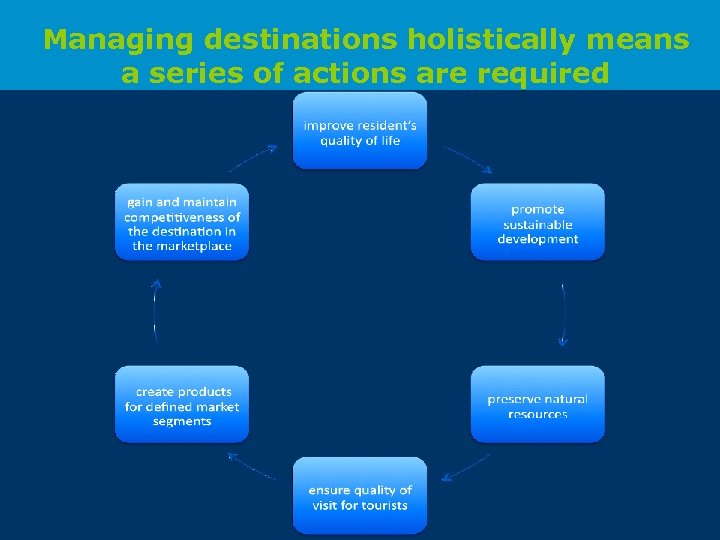 Managing destinations holistically means a series of actions are required
 Joining up this can best be addressed by all the different stakeholders working together at a destination level within the region this is where the needs of the environment, the local community and businesses come most closely together current fiscal environment means we must work harder!
 Then we get impact §quantifiable economic impact §(direct, indirect and induced economic benefits) §Tourism Satellite Accounting (TSA) measures §unquantifiable “soft” benefits §…. image, social inclusion, pride of place, quality of life, and poverty alleviation §usually non-quantifiable, not measured and will never be accurately measured §sustainability managed (Sustainable Indicators) §tourism is part of rural development – EU agendas
 Tourism is a competition. How to be a winner!!
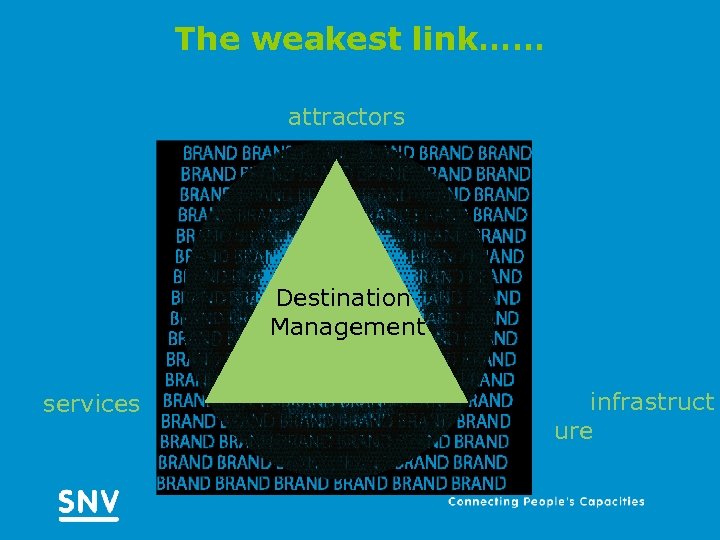 The weakest link…… attractors Destination Management services infrastruct ure
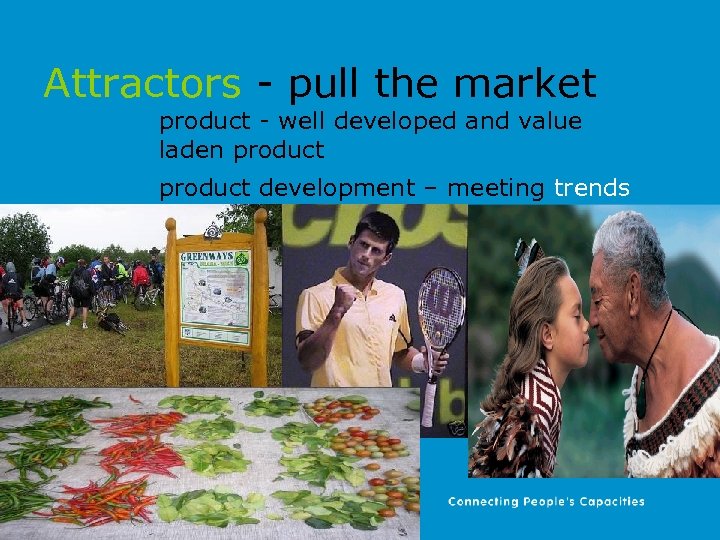 Attractors - pull the market product - well developed and value laden product development – meeting trends
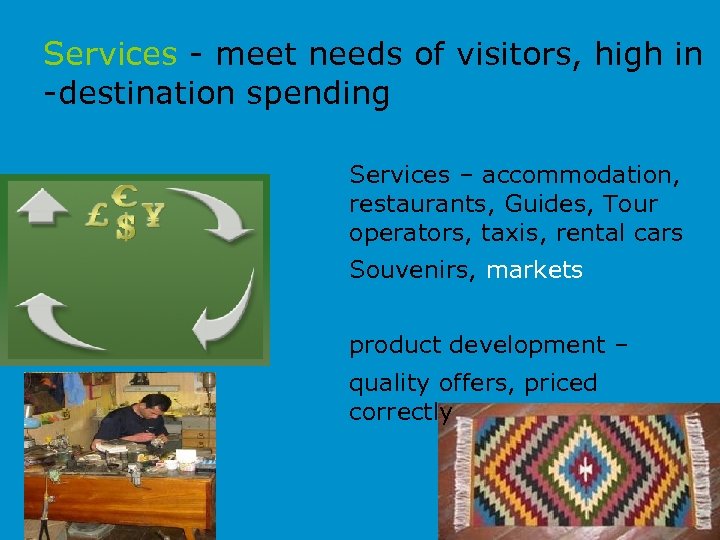 Services - meet needs of visitors, high in -destination spending Services – accommodation, restaurants, Guides, Tour operators, taxis, rental cars Souvenirs, markets product development – quality offers, priced correctly
 Quality Mark for accommodation & services
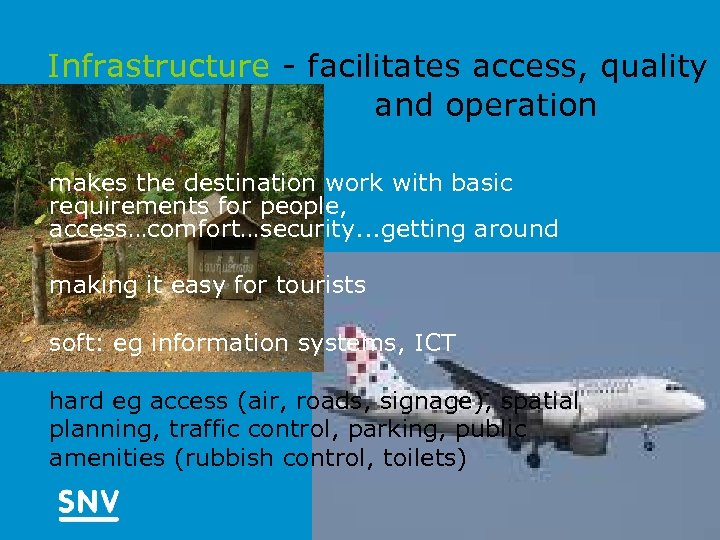 Infrastructure - facilitates access, quality and operation makes the destination work with basic requirements for people, access…comfort…security. . . getting around making it easy for tourists soft: eg information systems, ICT hard eg access (air, roads, signage), spatial planning, traffic control, parking, public amenities (rubbish control, toilets)
 brand requires agreement on § a consistent positioning § a common set of core values which flex by sector § a common tone of voice for all communications § one Brand Identity (visual and verbal language) The goal is to agree on a brand which drives all strategy, communication and behaviors
 Focussed marketing to identified niches noting trends….
 Promotional activities – do a few things well §Internet and individuality – move ahead §Engage the media §Imagery – convey values §Editorial and empathy – inspired literature, language carefully reviewed §Events – make a statement §Advertising – finding diversity in the story, review your language
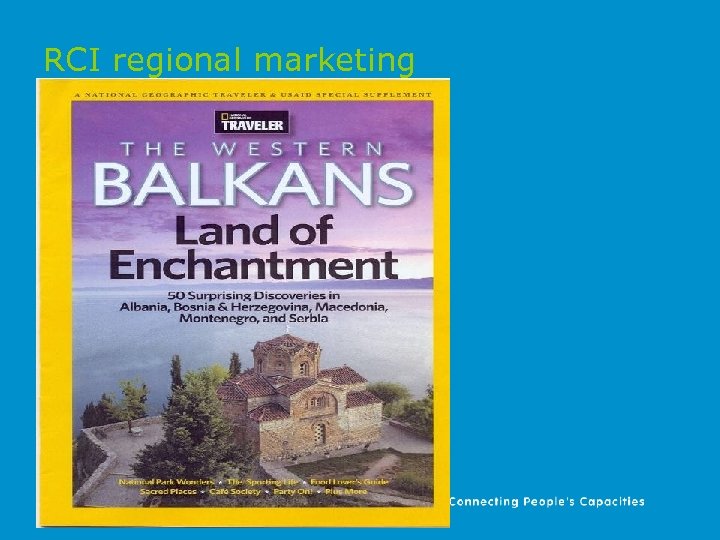 RCI regional marketing
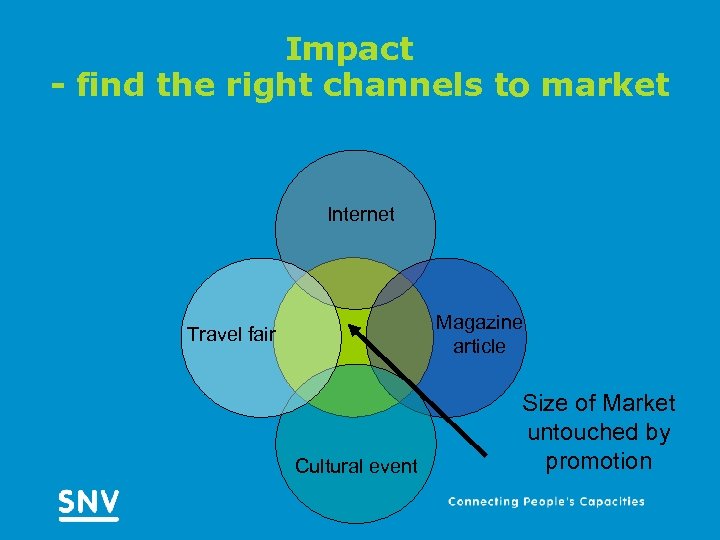 Impact - find the right channels to market Internet Magazine article Travel fair Cultural event Size of Market untouched by promotion
 Destination Management - partnership organisation, holistic approach destination management organisation (DMO)
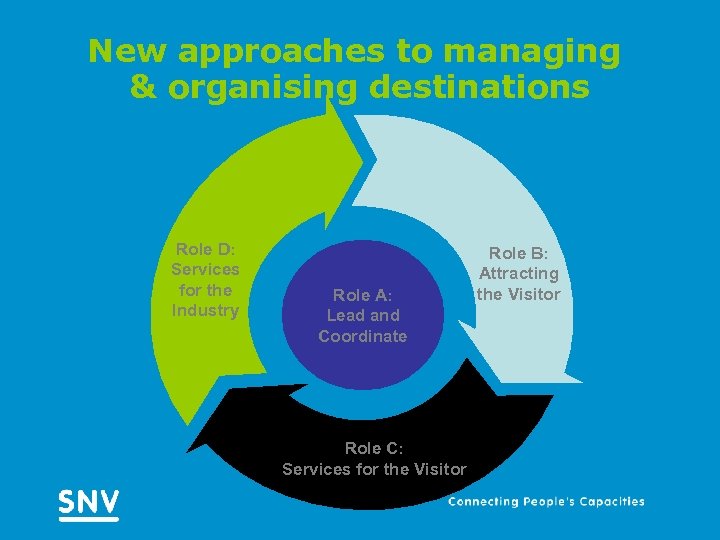 New approaches to managing & organising destinations Role D: Services for the Industry Role A: Lead and Coordinate Role C: Services for the Visitor Role B: Attracting the Visitor
 Benefits of this approach § A delivery structure that supports everyone in tourism § integrates tourism activity, harnesses resources & ability to obtain funds more easily § ability to prioritise infrastructure projects § manage branding & marketing for a market-facing destination § makes the money go further § reduces unnecessary duplication of costs & efforts
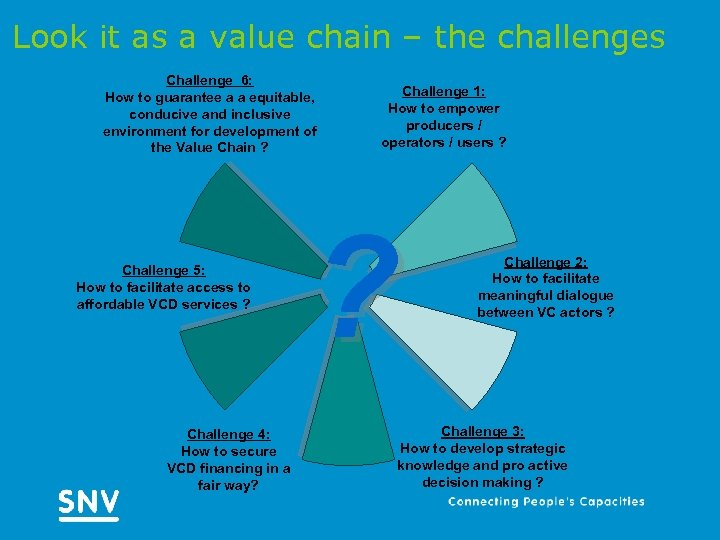 Look it as a value chain – the challenges Challenge 6: How to guarantee a a equitable, conducive and inclusive environment for development of the Value Chain ? Challenge 5: How to facilitate access to affordable VCD services ? Challenge 4: How to secure VCD financing in a fair way? Challenge 1: How to empower producers / operators / users ? ? Challenge 2: How to facilitate meaningful dialogue between VC actors ? Challenge 3: How to develop strategic knowledge and pro active decision making ?
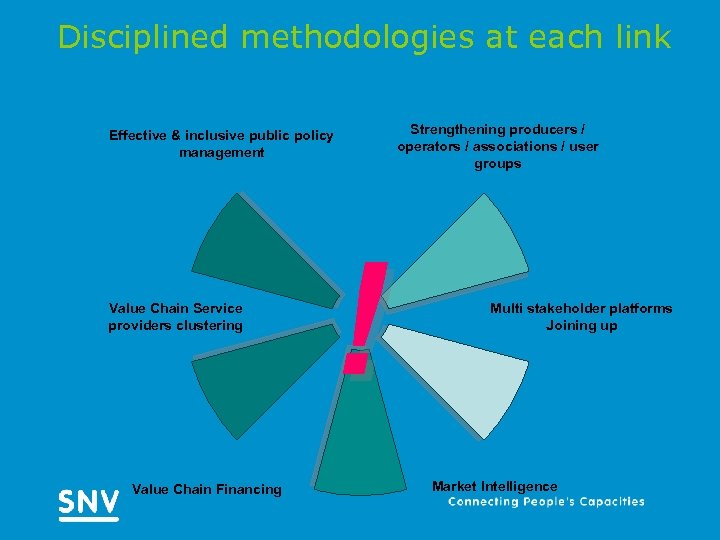 Disciplined methodologies at each link Effective & inclusive public policy management Value Chain Service providers clustering Value Chain Financing ! Strengthening producers / operators / associations / user groups Multi stakeholder platforms Joining up Market Intelligence
 EU Agenda – new opportunities requires a top down bottom up approach, and joined up §motivating for stakeholders §common preparation of EU project proposals dependent on coordination and collaboration §Structural funds; IPA funds - Cross Border Collaboration (CBC) projects which require linking rationales across borders
 Observe the principles of sustainable tourism 1. using resources sustainably 2. reducing over-consumption and waste 3. maintaining diversity 4. integrating tourism into planning 5. supporting local economies 6. involving local communities 7. consulting stakeholders and the public 8. training staff 9. marketing tourism responsibly 10. undertaking research
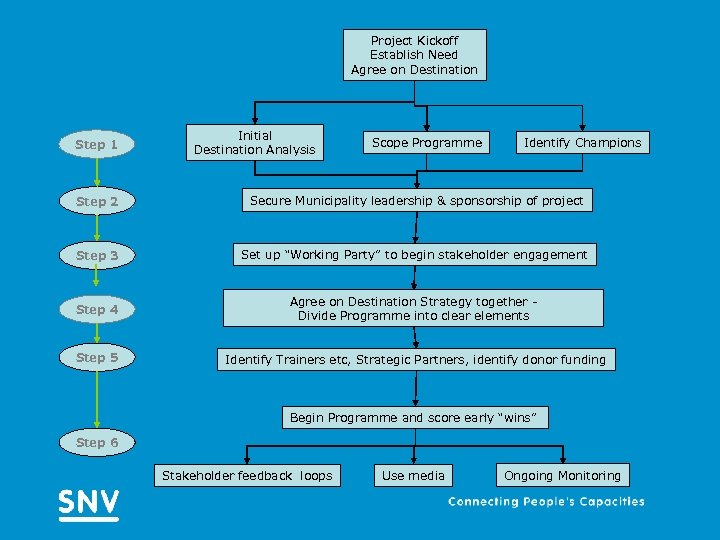 Project Kickoff Establish Need Agree on Destination Step 1 Initial Destination Analysis Scope Programme Identify Champions Step 2 Secure Municipality leadership & sponsorship of project Step 3 Set up “Working Party” to begin stakeholder engagement Step 4 Agree on Destination Strategy together Divide Programme into clear elements Step 5 Identify Trainers etc, Strategic Partners, identify donor funding Begin Programme and score early “wins” Step 6 Stakeholder feedback loops Use media Ongoing Monitoring
 Elements to consider § leadership & focus, genuine collaborative effort across public, private and civil (NGO) sectors § how to create a competitive tourism destination § quality & sustainability, in accommodation, amenities, services, and infrastructure § training to build capacity in product development, customer focus & service, professionalism, pride of place • identifying & securing sustainable funding streams • identifying & removing constraints to performance (eg laws, taxes)
 Benefits for stakeholders to engage § § § § § individual business success for the destination along the value chain (sum is greater than the parts) more jobs, improved incomes, quality staff more investment stronger lobbying influence possibility of securing EU funding streams advancement in everything - product, services, infrastructure, marketing, organisation linkages with related sectors and organisations more skills & training
 Plan…a destination audit § § § § define the destination identify trends understand the assets / products § scope the Programme…ENGAGE with stakeholders! assess core competencies of the group understand the markets understand the competition SWOT for destination identify the gaps, address the issues
 Cases studies: Montenegro programmes § § § § § defined destinations – market-facing defined success investigated EU opportunities and used these to motivate stakeholders inspired a client (LTO) to lead, stakeholders to join established “Steering Groups” agreed on needs – multiple programme elements began trainings: EU, branding & marketing; capacity building for activities relevant to each group eg mountaineers association, souvenirs and handicraft, Trail, working with Tour operators preparations to introduce Quality Mark programme
 § § § Ø Ø Results so far in Berane and Cetinje improved communication among local tourism related stakeholders aware of funding through IPA CBCs common preparation of project proposals with project-oriented stakeholders, joined up, & collaborating improving the overall destination and its parts More focussed marketing capacity building in: souvenirs and handicrafts & product development marketing and branding, sme development addressing organisation sustinability eg sustainability indicators
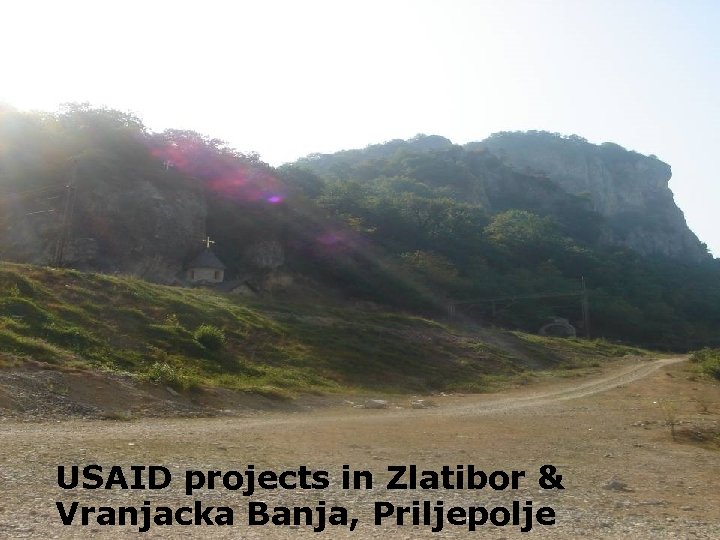 USAID projects in Zlatibor & Vranjacka Banja, Priljepolje
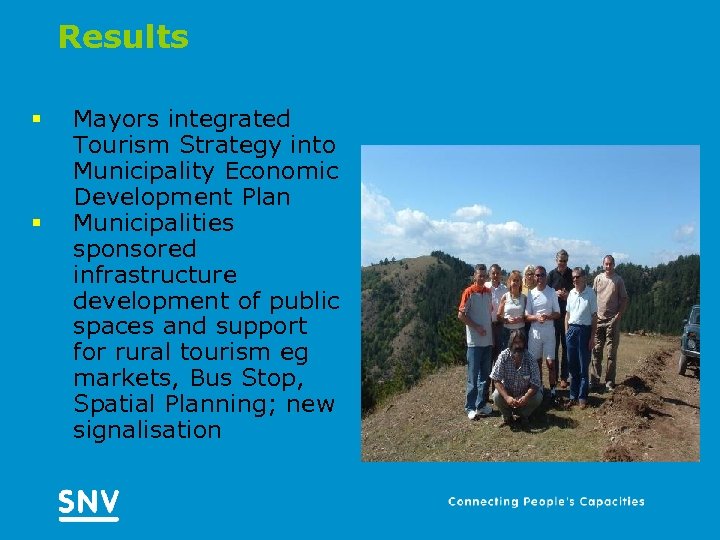 Results § § Mayors integrated Tourism Strategy into Municipality Economic Development Plan Municipalities sponsored infrastructure development of public spaces and support for rural tourism eg markets, Bus Stop, Spatial Planning; new signalisation
 Results § working with Strategic Partners doubled funding available § identified opportunities for investors supported privatisation of hotels & spa §
 Results § § § product development eg souvenirs, rural tourism – took study trips targeted & improved promotions eg developed Internet site integrated communications eg print brochure & maps etc all aligned & for all stakeholders
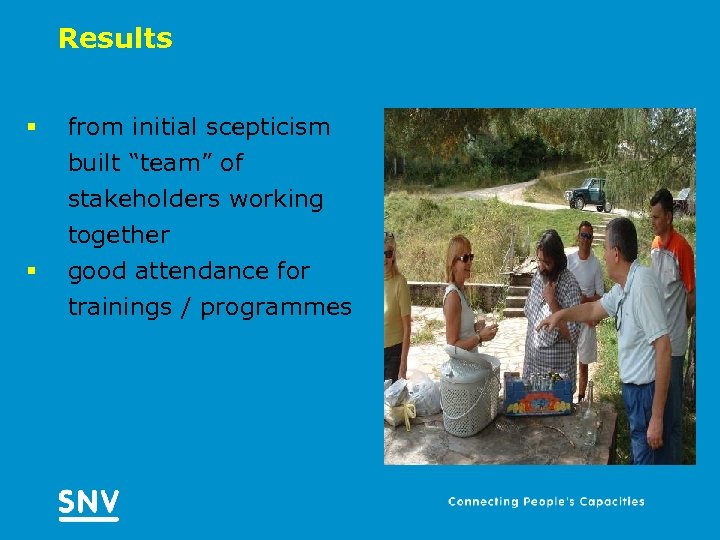 Results § § from initial scepticism built “team” of stakeholders working together good attendance for trainings / programmes
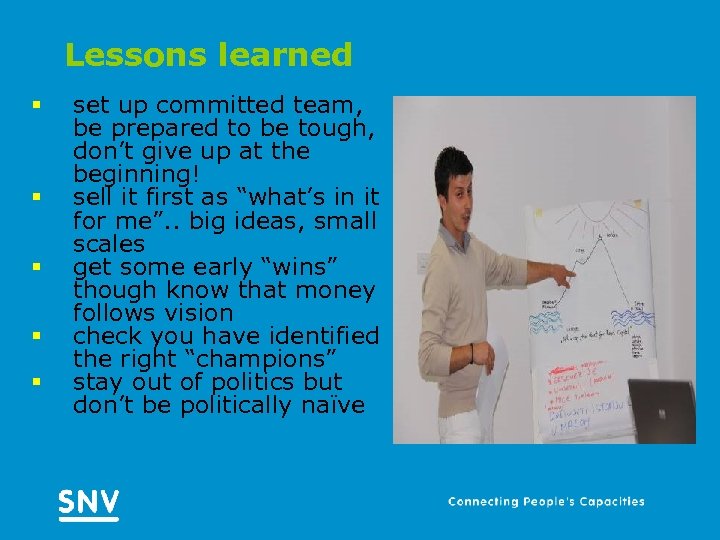 Lessons learned § § § set up committed team, be prepared to be tough, don’t give up at the beginning! sell it first as “what’s in it for me”. . big ideas, small scales get some early “wins” though know that money follows vision check you have identified the right “champions” stay out of politics but don’t be politically naïve
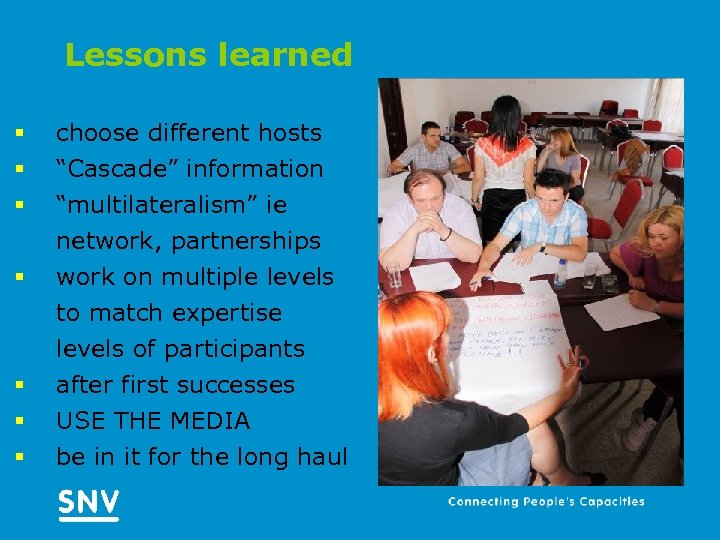 Lessons learned § § § § choose different hosts “Cascade” information “multilateralism” ie network, partnerships work on multiple levels to match expertise levels of participants after first successes USE THE MEDIA be in it for the long haul