


 Скачать презентацию Total Monte Carlo and related applications of the
e27f02c21f89c4aff0464673de417392.ppt
- Количество слайдов: 36
 Total Monte Carlo and related applications of the TALYS code system Arjan Koning NRG Petten, the Netherlands Technical Meeting on Neutron Cross. Section Covariances September 27 -30 2010, IAEA, Vienna
 Contents • Introduction: TALYS code system • Implications and possibilities: - Large scale nuclear data library production (TENDL) - “Total” Monte Carlo uncertainty propagation - Random search for the best data library • Conclusions 2
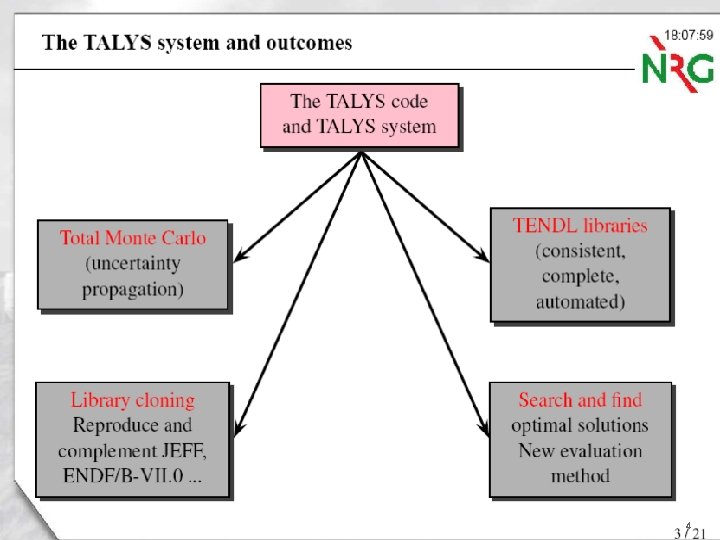
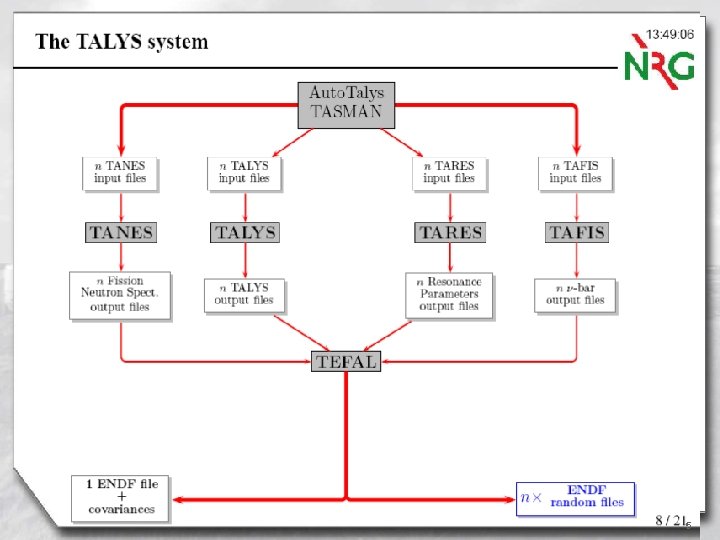
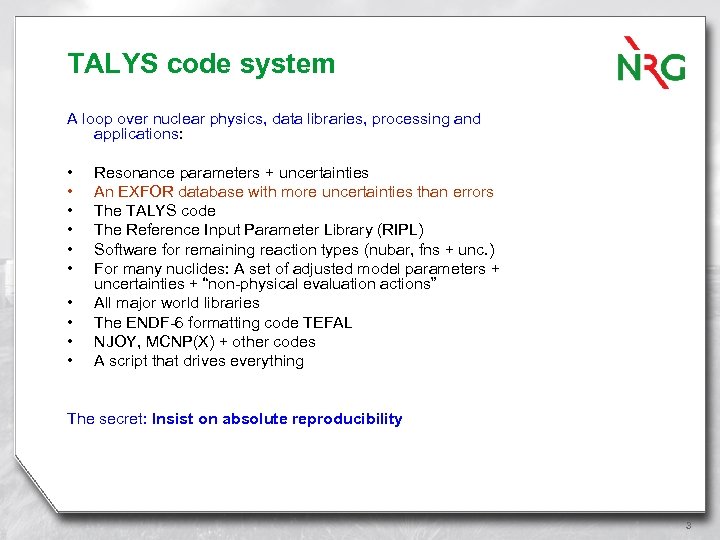 TALYS code system A loop over nuclear physics, data libraries, processing and applications: • • • Resonance parameters + uncertainties An EXFOR database with more uncertainties than errors The TALYS code The Reference Input Parameter Library (RIPL) Software for remaining reaction types (nubar, fns + unc. ) For many nuclides: A set of adjusted model parameters + uncertainties + “non-physical evaluation actions” All major world libraries The ENDF-6 formatting code TEFAL NJOY, MCNP(X) + other codes A script that drives everything The secret: Insist on absolute reproducibility 3
 4
4
 5
5
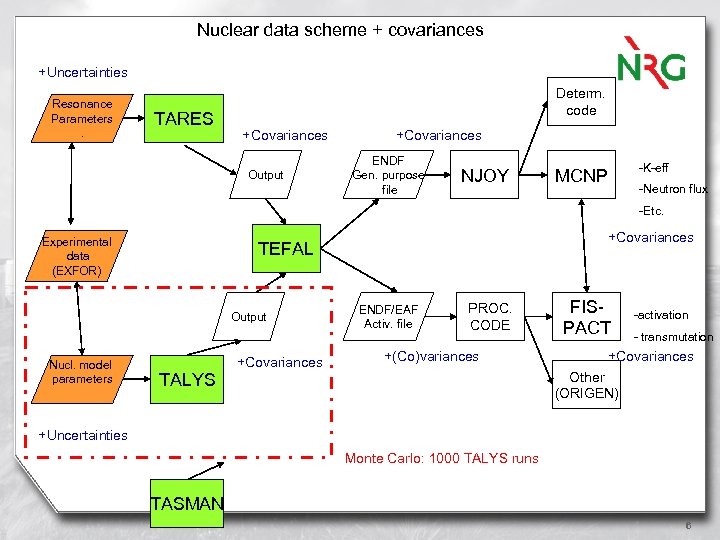 Nuclear data scheme + covariances +Uncertainties Resonance Parameters. TARES Determ. code +Covariances Output +Covariances ENDF Gen. purpose file NJOY -K-eff MCNP -Neutron flux -Etc. Experimental data (EXFOR) Output Nucl. model parameters +Covariances TEFAL TALYS +Covariances ENDF/EAF Activ. file PROC. CODE +(Co)variances FISPACT -activation - transmutation +Covariances Other (ORIGEN) +Uncertainties Monte Carlo: 1000 TALYS runs TASMAN 6
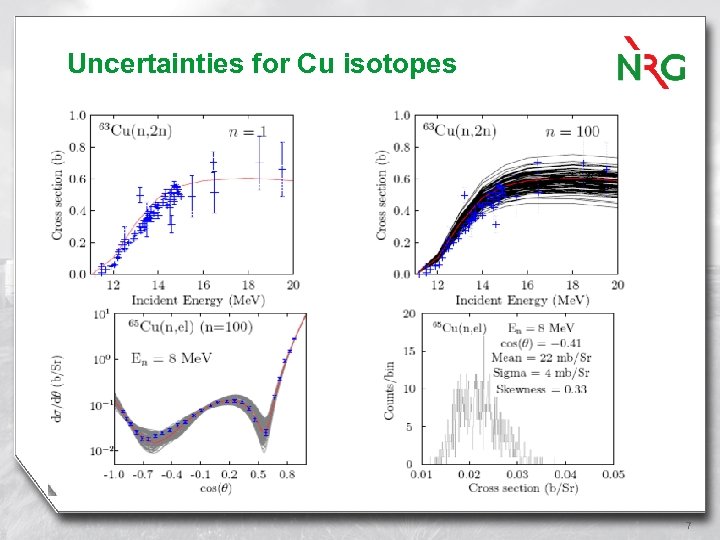 Uncertainties for Cu isotopes 7
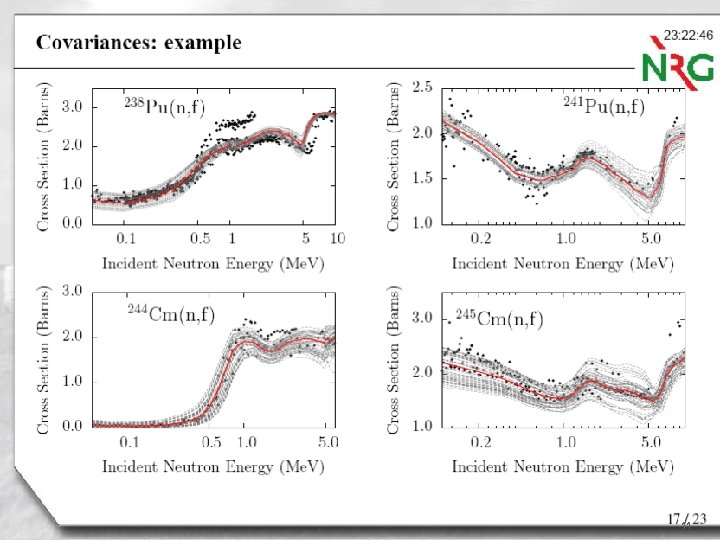
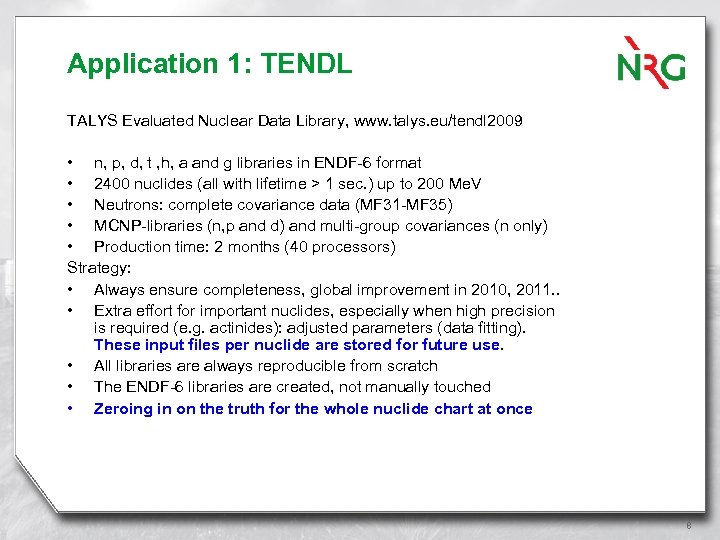 Application 1: TENDL TALYS Evaluated Nuclear Data Library, www. talys. eu/tendl 2009 • n, p, d, t , h, a and g libraries in ENDF-6 format • 2400 nuclides (all with lifetime > 1 sec. ) up to 200 Me. V • Neutrons: complete covariance data (MF 31 -MF 35) • MCNP-libraries (n, p and d) and multi-group covariances (n only) • Production time: 2 months (40 processors) Strategy: • Always ensure completeness, global improvement in 2010, 2011. . • Extra effort for important nuclides, especially when high precision is required (e. g. actinides): adjusted parameters (data fitting). These input files per nuclide are stored for future use. • All libraries are always reproducible from scratch • The ENDF-6 libraries are created, not manually touched • Zeroing in on the truth for the whole nuclide chart at once 8
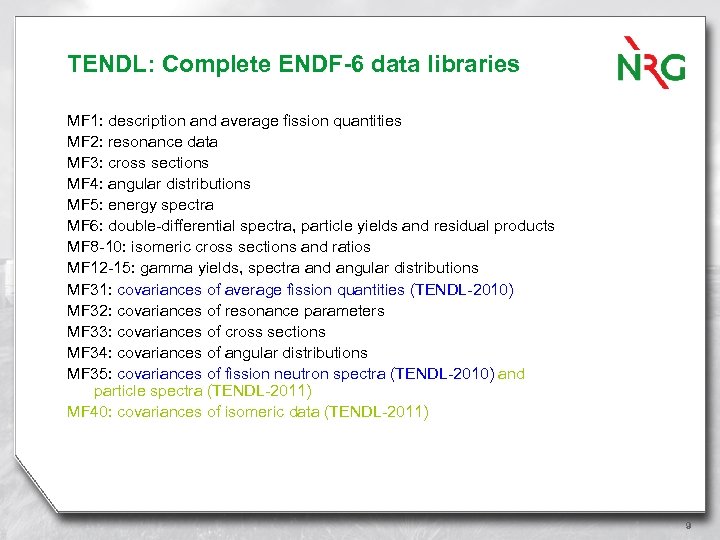 TENDL: Complete ENDF-6 data libraries MF 1: description and average fission quantities MF 2: resonance data MF 3: cross sections MF 4: angular distributions MF 5: energy spectra MF 6: double-differential spectra, particle yields and residual products MF 8 -10: isomeric cross sections and ratios MF 12 -15: gamma yields, spectra and angular distributions MF 31: covariances of average fission quantities (TENDL-2010) MF 32: covariances of resonance parameters MF 33: covariances of cross sections MF 34: covariances of angular distributions MF 35: covariances of fission neutron spectra (TENDL-2010) and particle spectra (TENDL-2011) MF 40: covariances of isomeric data (TENDL-2011) 9
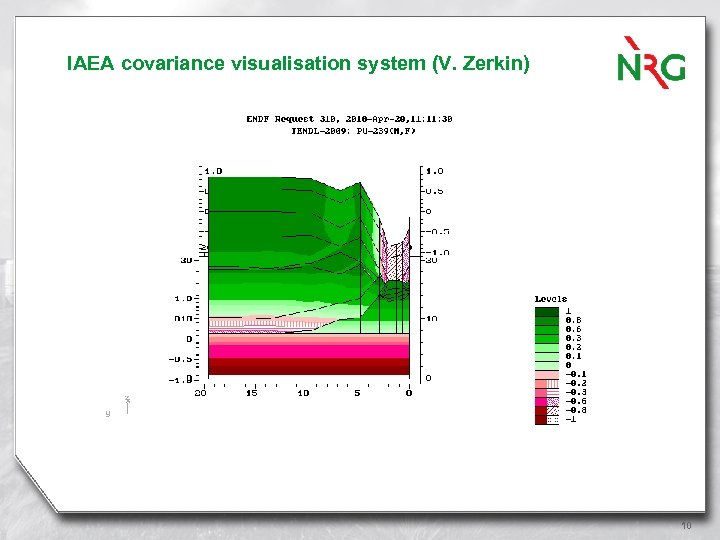 IAEA covariance visualisation system (V. Zerkin) 10
 11
11
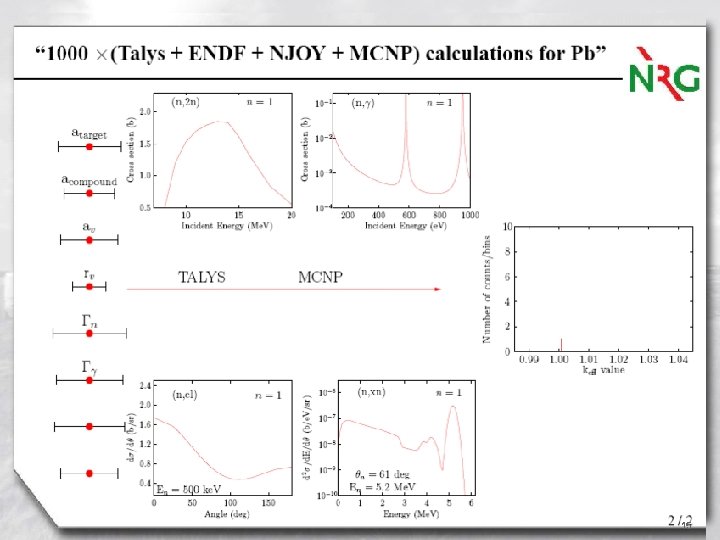
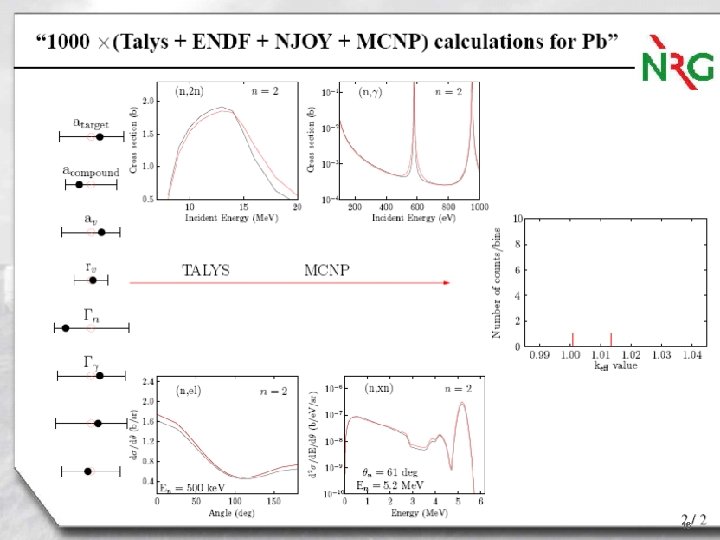
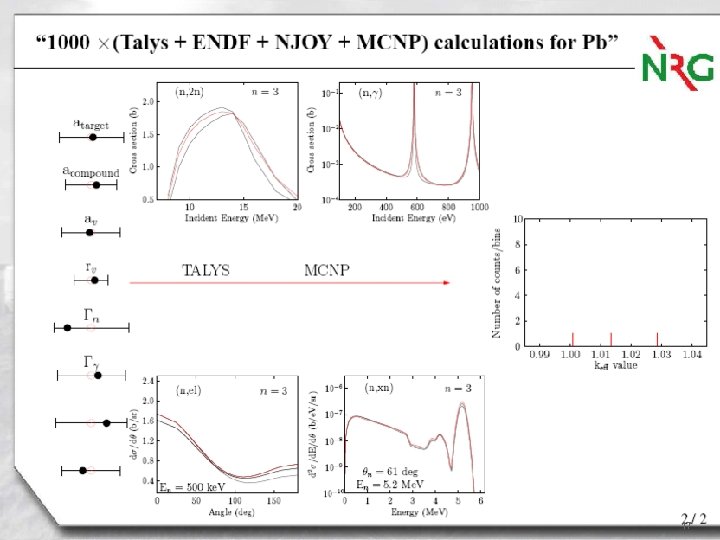
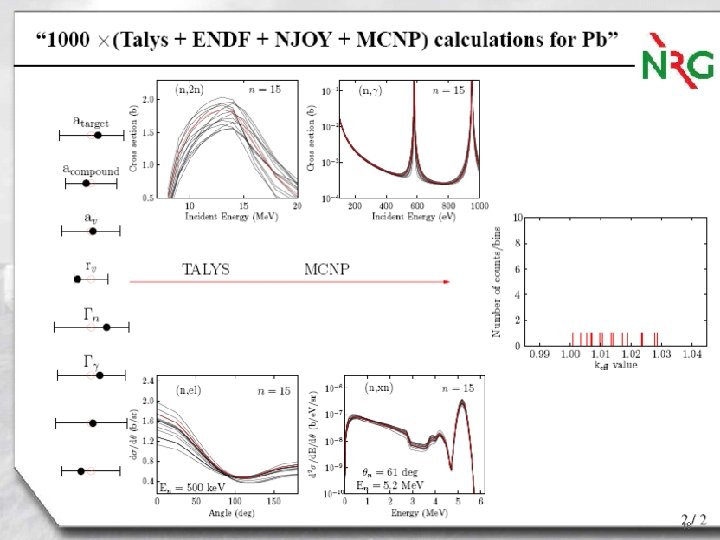
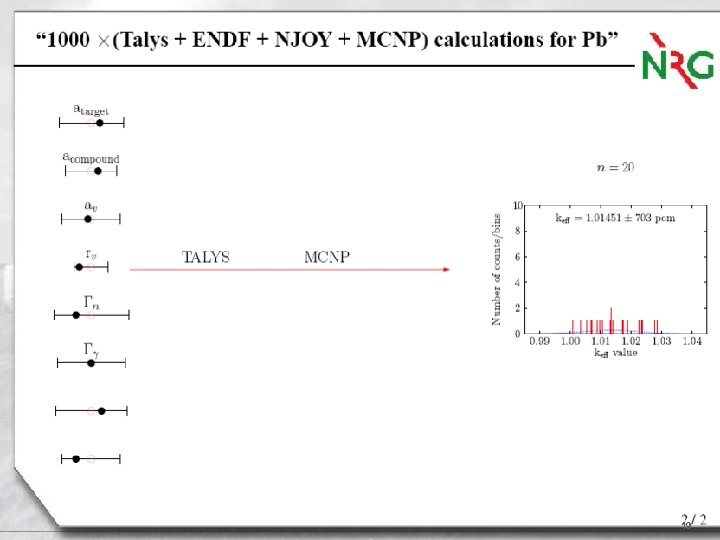
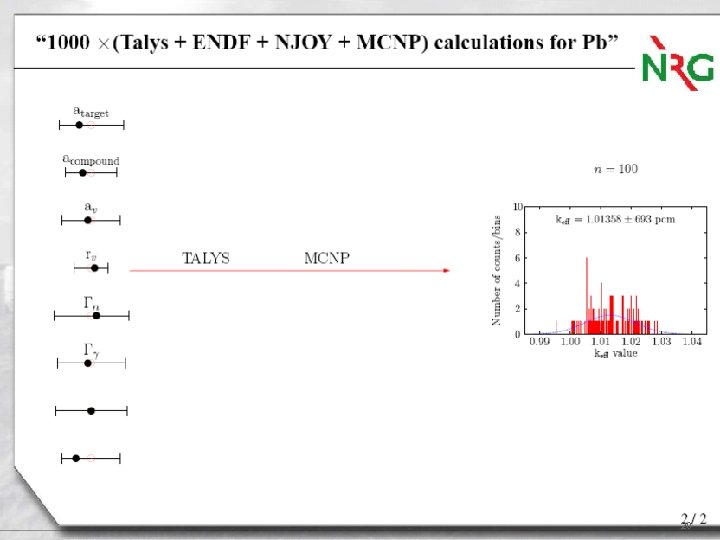
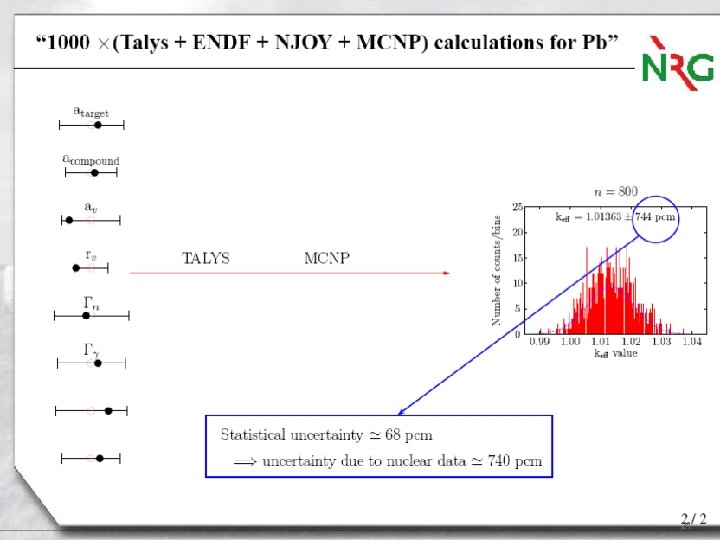
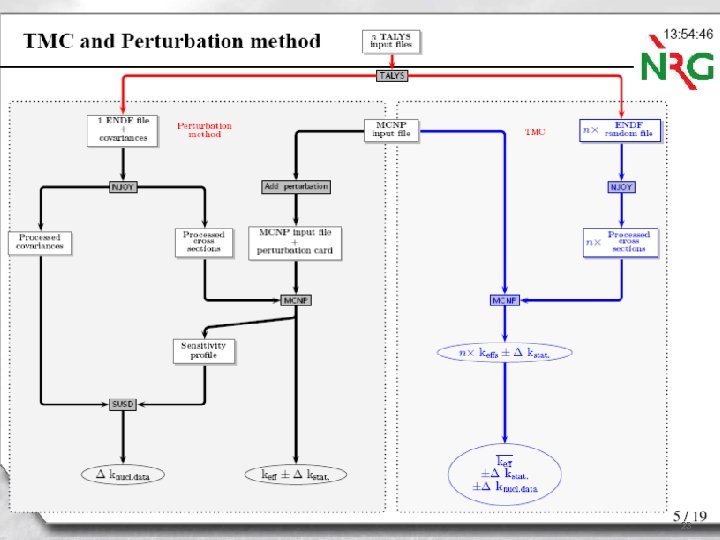
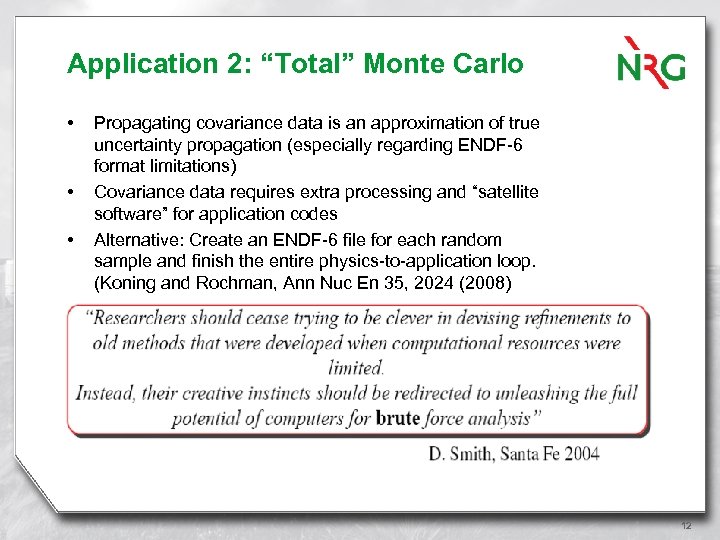 Application 2: “Total” Monte Carlo • • • Propagating covariance data is an approximation of true uncertainty propagation (especially regarding ENDF-6 format limitations) Covariance data requires extra processing and “satellite software” for application codes Alternative: Create an ENDF-6 file for each random sample and finish the entire physics-to-application loop. (Koning and Rochman, Ann Nuc En 35, 2024 (2008) 12
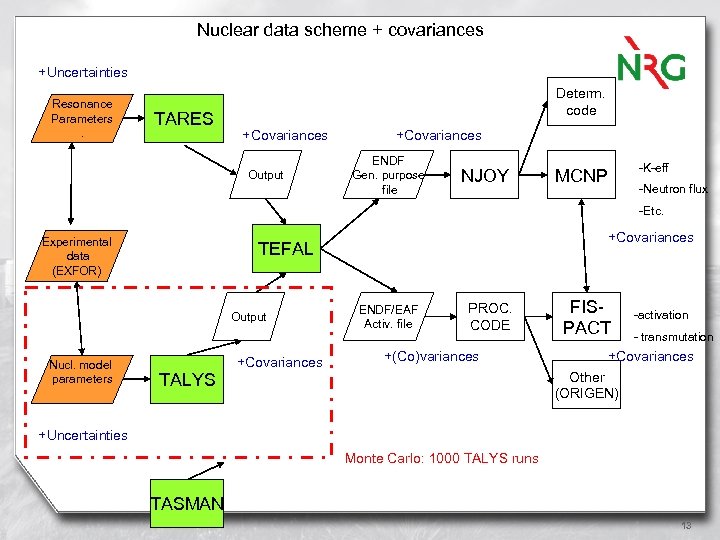 Nuclear data scheme + covariances +Uncertainties Resonance Parameters. TARES Determ. code +Covariances Output +Covariances ENDF Gen. purpose file NJOY -K-eff MCNP -Neutron flux -Etc. Experimental data (EXFOR) Output Nucl. model parameters +Covariances TEFAL TALYS +Covariances ENDF/EAF Activ. file PROC. CODE +(Co)variances FISPACT -activation - transmutation +Covariances Other (ORIGEN) +Uncertainties Monte Carlo: 1000 TALYS runs TASMAN 13
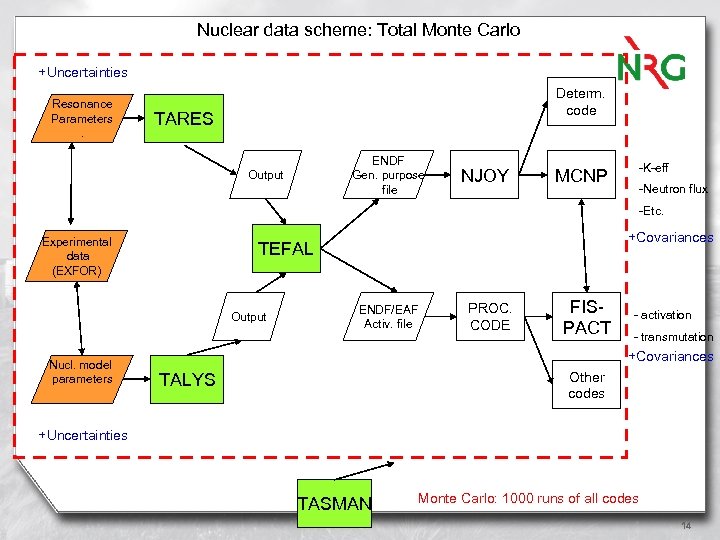 Nuclear data scheme: Total Monte Carlo +Uncertainties Resonance Parameters. Determ. code TARES ENDF Gen. purpose file Output NJOY -K-eff MCNP -Neutron flux -Etc. Experimental data (EXFOR) Output Nucl. model parameters +Covariances TEFAL ENDF/EAF Activ. file PROC. CODE FISPACT - activation - transmutation +Covariances Other codes TALYS +Uncertainties TASMAN Monte Carlo: 1000 runs of all codes 14
 15
15
 16
16
 17
17
 18
18
 19
19
 20
20
 21
21
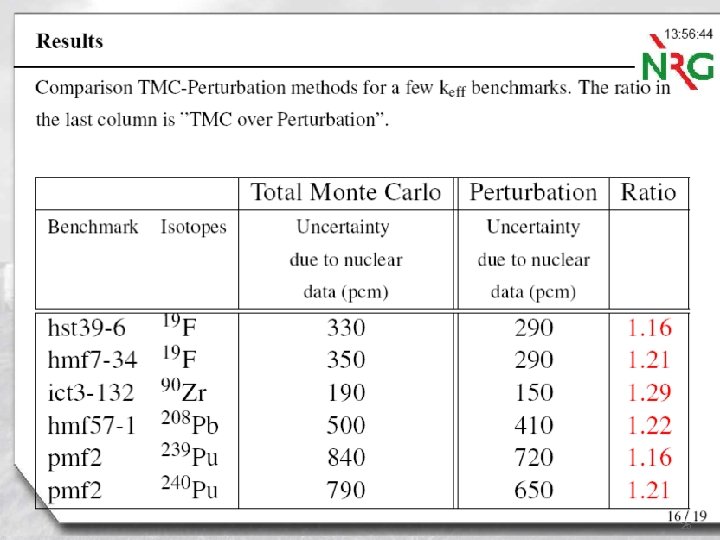
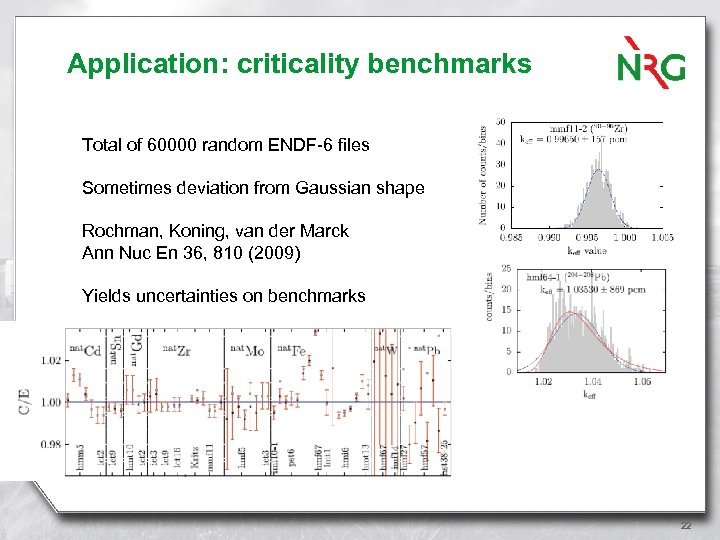 Application: criticality benchmarks Total of 60000 random ENDF-6 files Sometimes deviation from Gaussian shape Rochman, Koning, van der Marck Ann Nuc En 36, 810 (2009) Yields uncertainties on benchmarks 22
 23
23
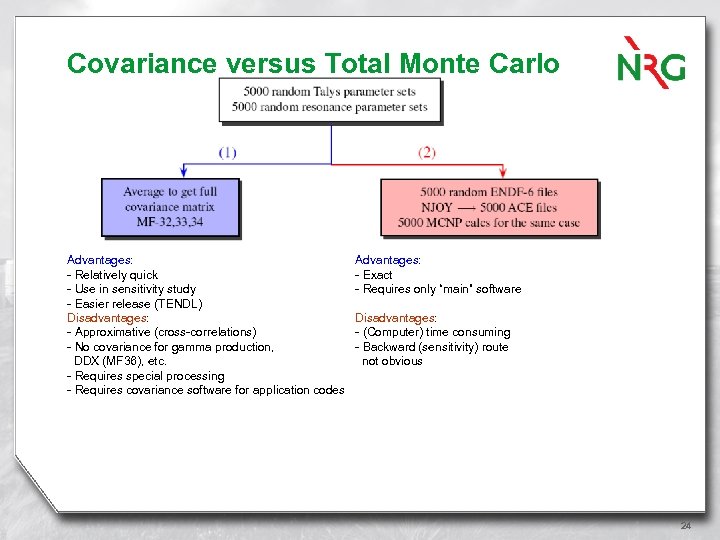 Covariance versus Total Monte Carlo Advantages: - Relatively quick - Use in sensitivity study - Easier release (TENDL) Disadvantages: - Approximative (cross-correlations) - No covariance for gamma production, DDX (MF 36), etc. - Requires special processing - Requires covariance software for application codes Advantages: - Exact - Requires only “main” software Disadvantages: - (Computer) time consuming - Backward (sensitivity) route not obvious 24
 25
25
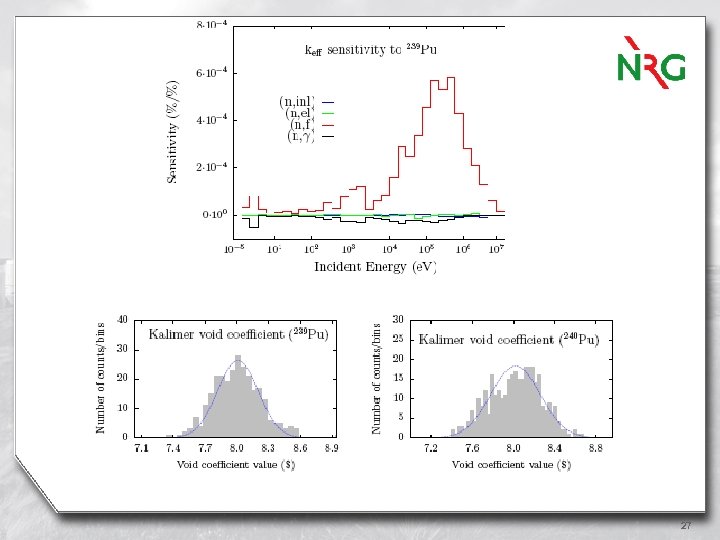
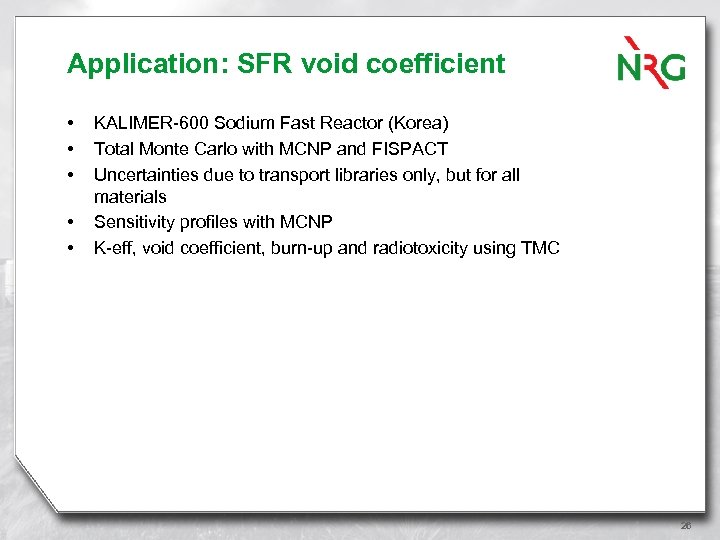 Application: SFR void coefficient • • • KALIMER-600 Sodium Fast Reactor (Korea) Total Monte Carlo with MCNP and FISPACT Uncertainties due to transport libraries only, but for all materials Sensitivity profiles with MCNP K-eff, void coefficient, burn-up and radiotoxicity using TMC 26
 27
27
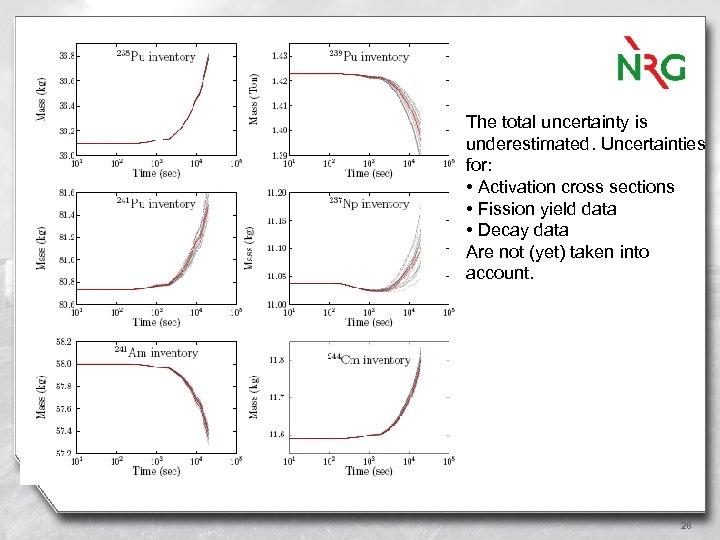 The total uncertainty is underestimated. Uncertainties for: • Activation cross sections • Fission yield data • Decay data Are not (yet) taken into account. 28
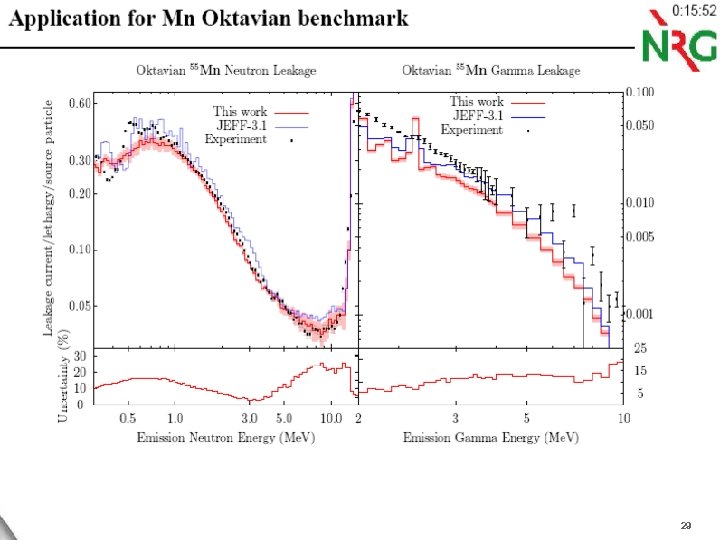 29
29
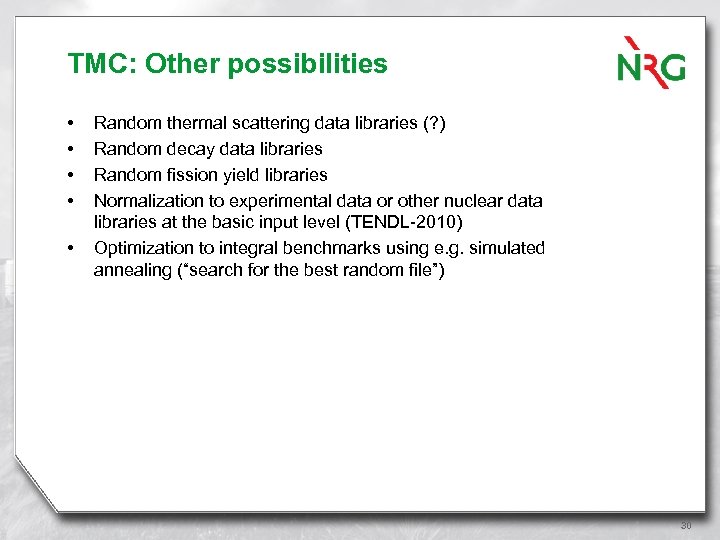 TMC: Other possibilities • • • Random thermal scattering data libraries (? ) Random decay data libraries Random fission yield libraries Normalization to experimental data or other nuclear data libraries at the basic input level (TENDL-2010) Optimization to integral benchmarks using e. g. simulated annealing (“search for the best random file”) 30
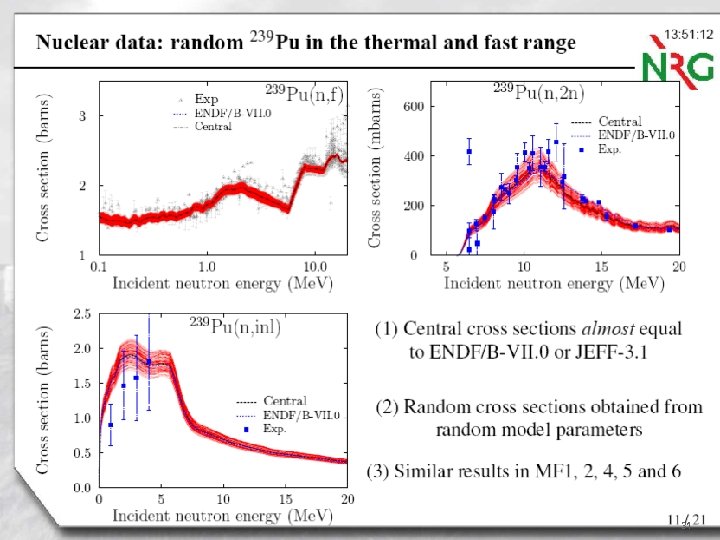 31
31
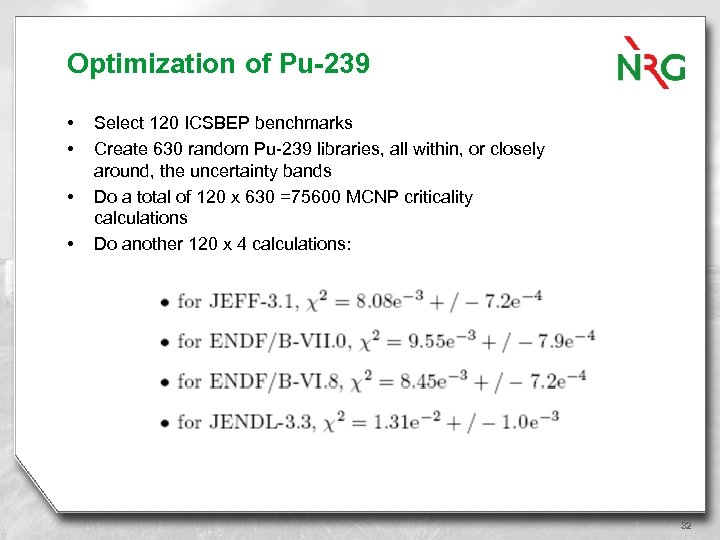 Optimization of Pu-239 • • Select 120 ICSBEP benchmarks Create 630 random Pu-239 libraries, all within, or closely around, the uncertainty bands Do a total of 120 x 630 =75600 MCNP criticality calculations Do another 120 x 4 calculations: 32
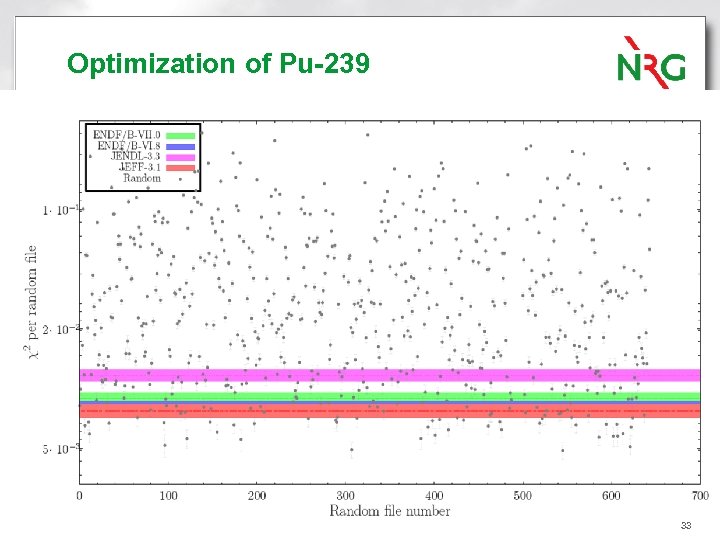 Optimization of Pu-239 33
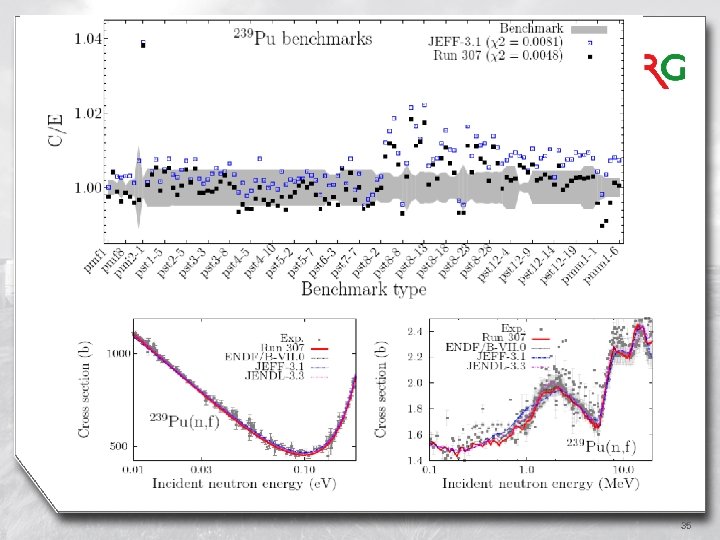
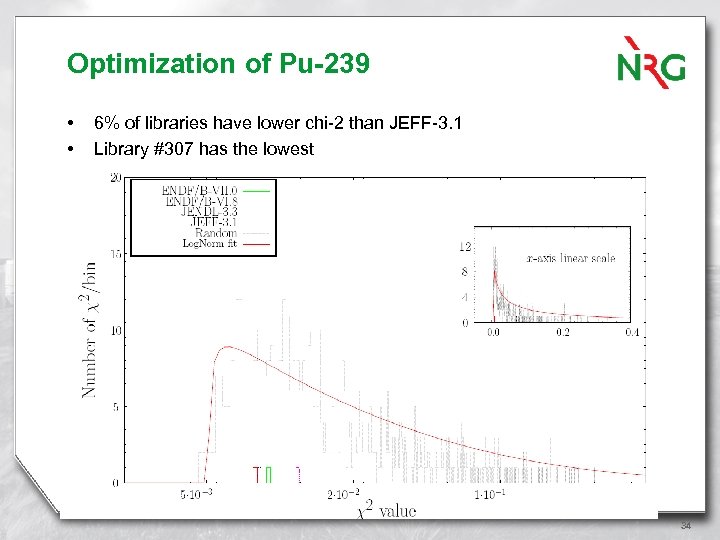 Optimization of Pu-239 • • 6% of libraries have lower chi-2 than JEFF-3. 1 Library #307 has the lowest 34
 35
35
 Conclusions • To improve evaluated libraries, TMC is an easier tool than covariances + perturbation + sensitivity • However, the world wants covariances, and they get covariances (TENDL) • With a reproducible automated system, almost anything is possible. After some years of serious software development we can now fork into various branches: - TALYS Evaluated Nuclear Data Library (TENDL) including complete covariance data (MF 31 -35) - Total Monte Carlo uncertainty propagation - Nuclear data library optimization - Other applications (not discussed here) The results of all improvements in uncertainly handling (UMC, model uncertainties, etc. ) will be directly visible 36