


 Скачать презентацию Tornados R T Schindler Spring storm and
eefb593b9a4930903257d17b06045929.ppt
- Количество слайдов: 46
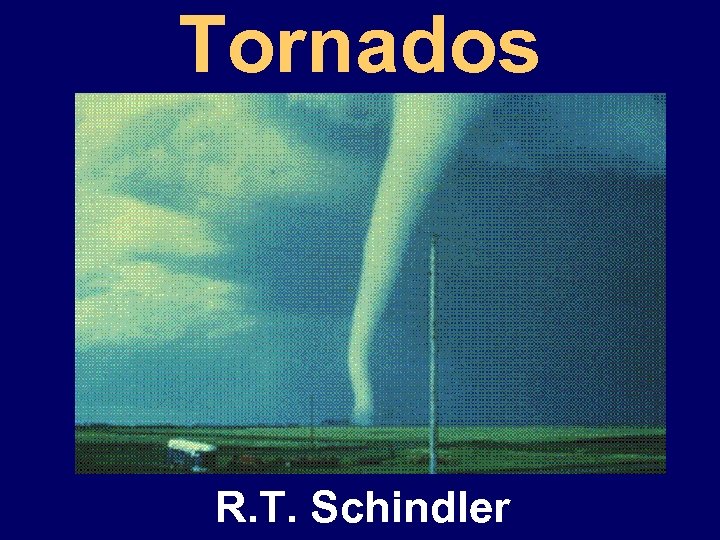 Tornados R. T. Schindler
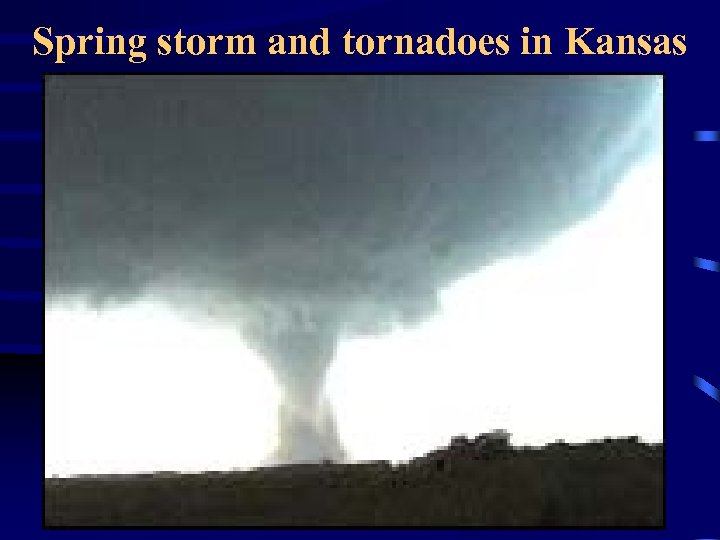 Spring storm and tornadoes in Kansas
 Additional Lectures by world experts "Tornadoes" lecture by Lillibridge, Scott R "A Historical Look at Tornadoes: Damage and Death” by Harold Brooks which have also three more links to online lectures: 1. Development of synthetic severe thunderstorm climatologies 2. Tornado deaths in the US and mobile homes 3. The distribution of tornadoes by F-scale in time and space. Harold Brooks “Tornado-Related deaths and injuries due to the May 3, 1999 by Sheryll Brown, Pam Archer, Elizabeth Kruger and corresponding author Sue Mallonee from Injury Prevention Service, Oklahoma State Department of Health
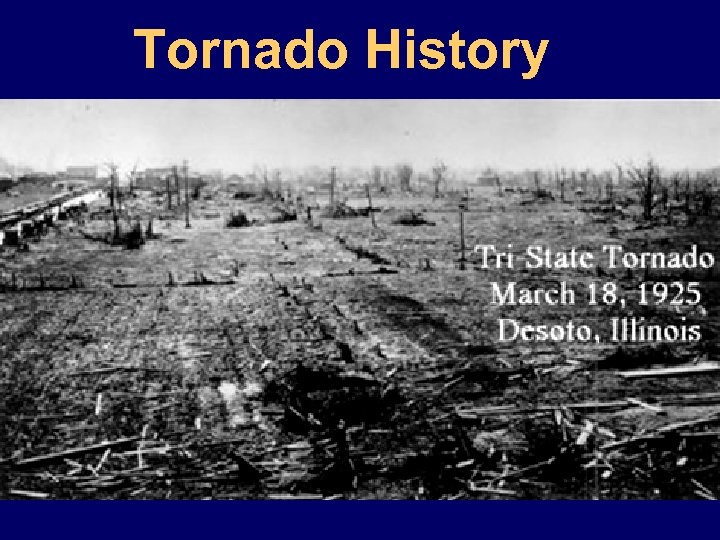 Tornado History
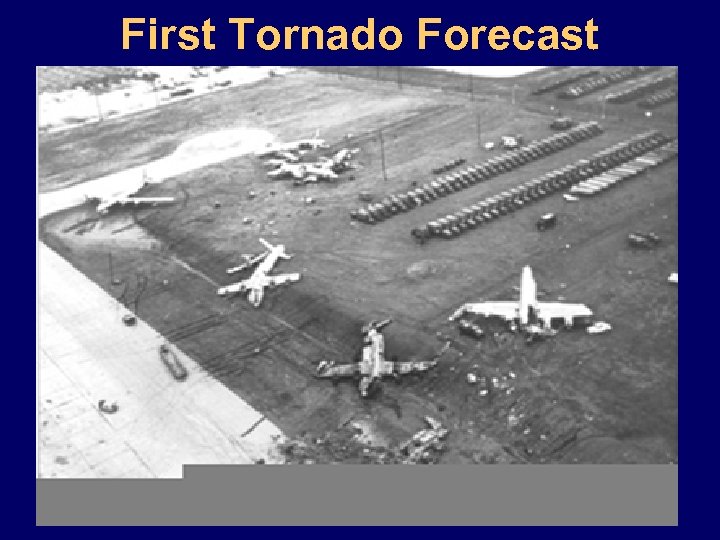 First Tornado Forecast
 Tornado A violently rotating column of air (vortex), hanging from a cumulonimbus cloud, with circulation that touches the surface of the earth
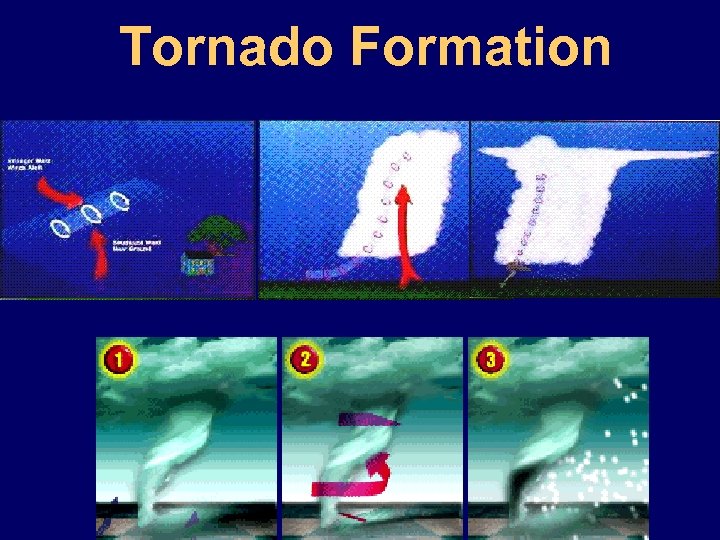 Tornado Formation
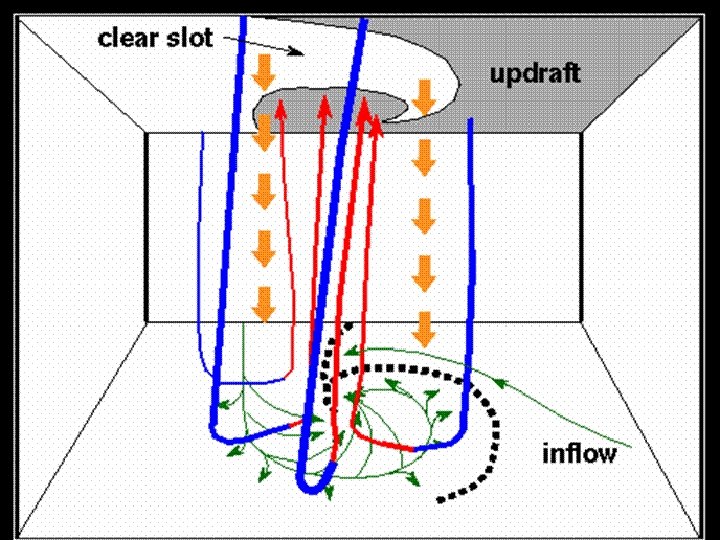
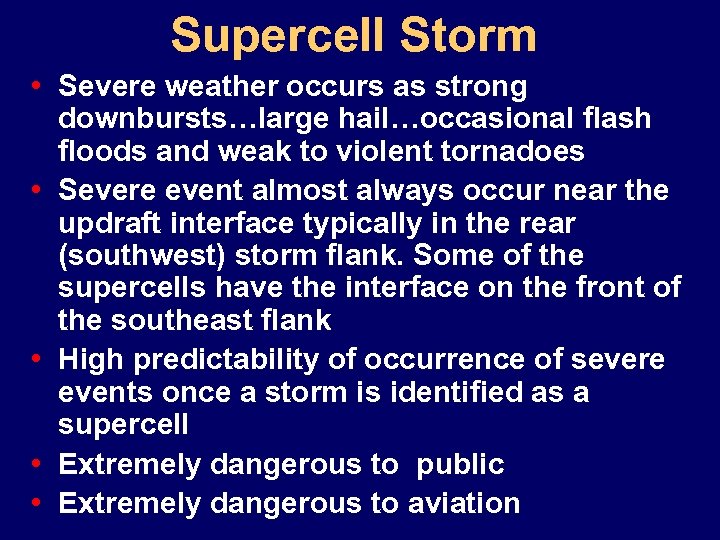 Supercell Storm • Severe weather occurs as strong downbursts…large hail…occasional flash floods and weak to violent tornadoes • Severe event almost always occur near the updraft interface typically in the rear (southwest) storm flank. Some of the supercells have the interface on the front of the southeast flank • High predictability of occurrence of severe events once a storm is identified as a supercell • Extremely dangerous to public • Extremely dangerous to aviation
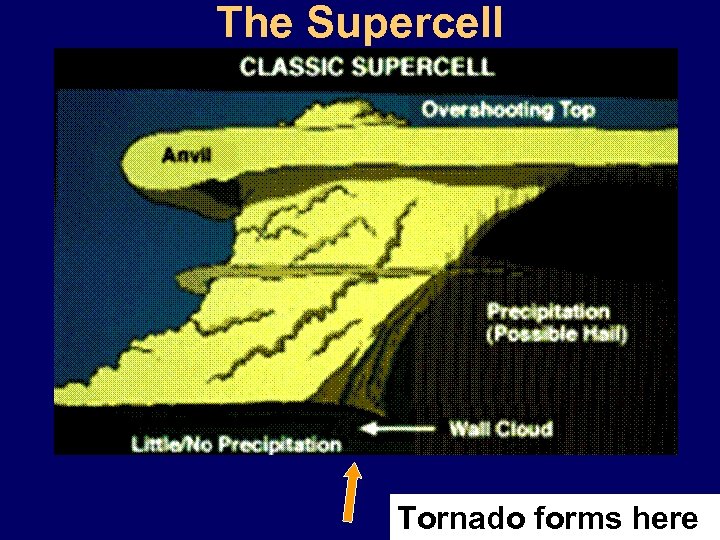 The Supercell Tornado forms here
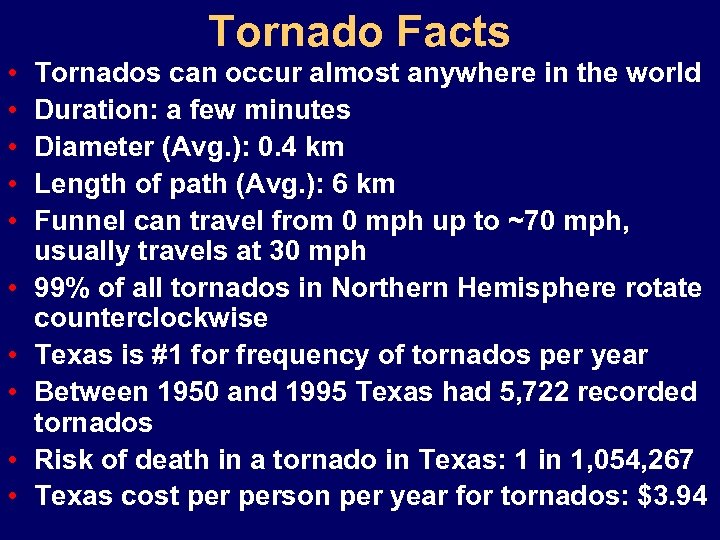 Tornado Facts • • • Tornados can occur almost anywhere in the world Duration: a few minutes Diameter (Avg. ): 0. 4 km Length of path (Avg. ): 6 km Funnel can travel from 0 mph up to ~70 mph, usually travels at 30 mph 99% of all tornados in Northern Hemisphere rotate counterclockwise Texas is #1 for frequency of tornados per year Between 1950 and 1995 Texas had 5, 722 recorded tornados Risk of death in a tornado in Texas: 1 in 1, 054, 267 Texas cost person per year for tornados: $3. 94
 Tornado Myths • A highway overpass is a safe place to take shelter under during a tornado • Opening windows during a tornado will help balance the pressure between the inside and outside of the house and may prevent destruction of the structure • One should seek shelter in the southwest corner of a house or basement
 Tornado Oddities • Tornados are reported to routinely carry • • • objects many miles and have: sucked the frogs out of a pond and dropped them on a town carried a necktie rack with 10 ties attached 40 miles carried a flour sack 110 miles from a mill Tornados also drive objects into other objects and have: Driven splinters into an iron fire hydrant Driven straw and grass into telephone poles
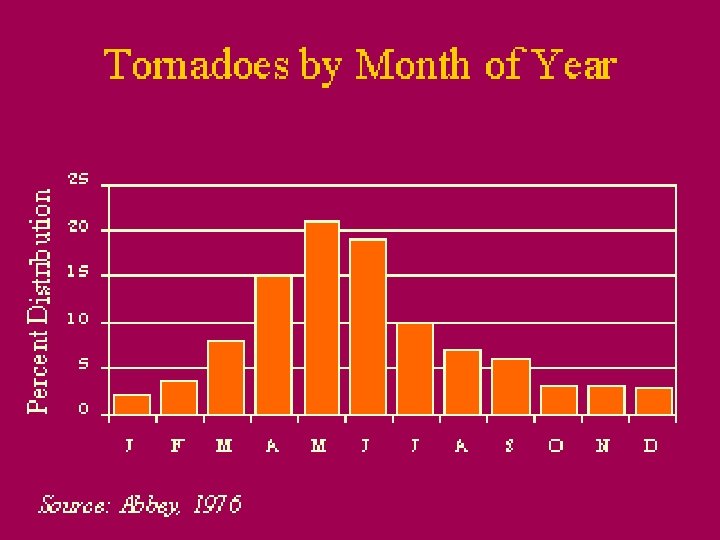
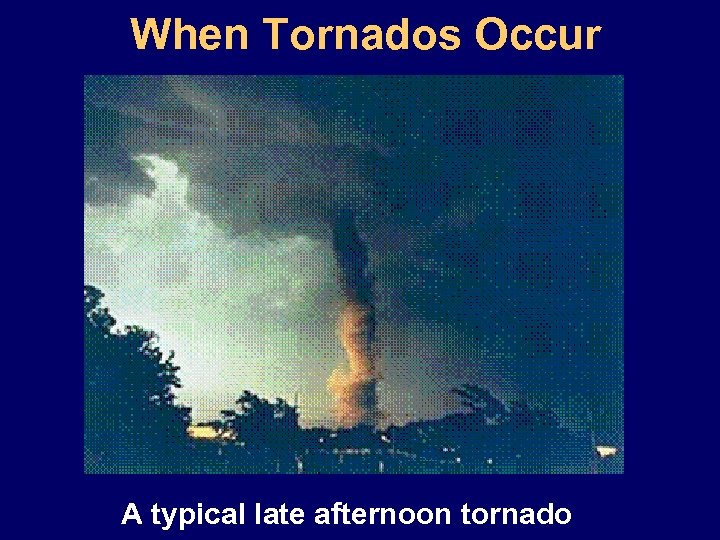 When Tornados Occur A typical late afternoon tornado
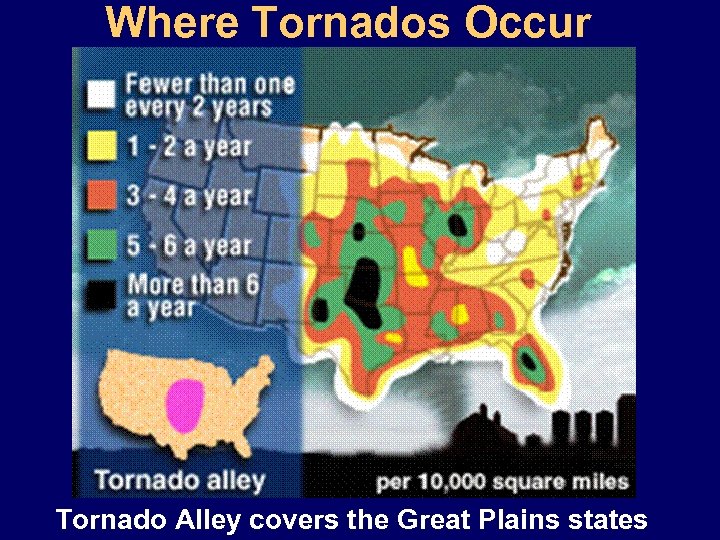 Where Tornados Occur Tornado Alley covers the Great Plains states
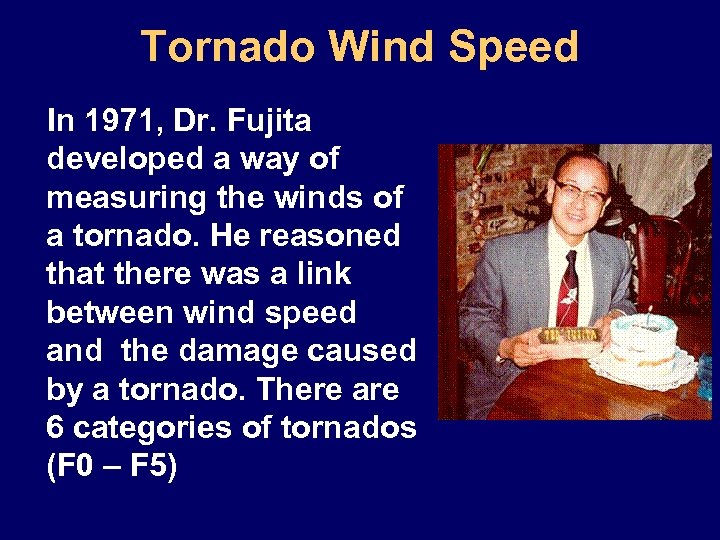 Tornado Wind Speed In 1971, Dr. Fujita developed a way of measuring the winds of a tornado. He reasoned that there was a link between wind speed and the damage caused by a tornado. There are 6 categories of tornados (F 0 – F 5)
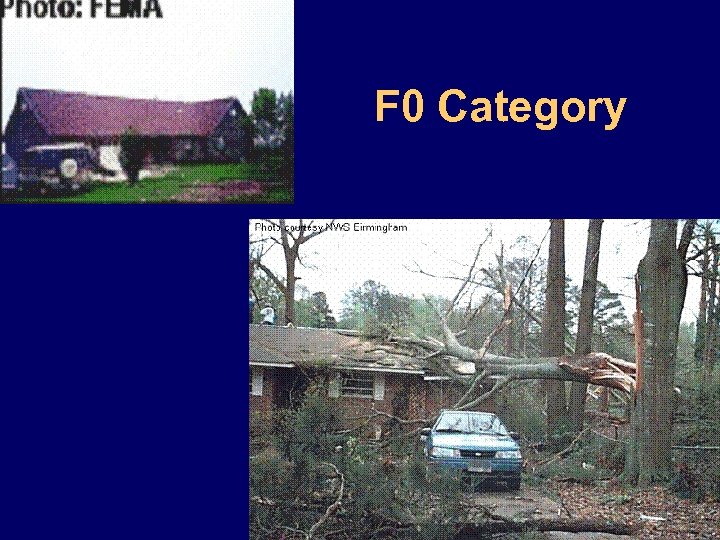 F 0 Category
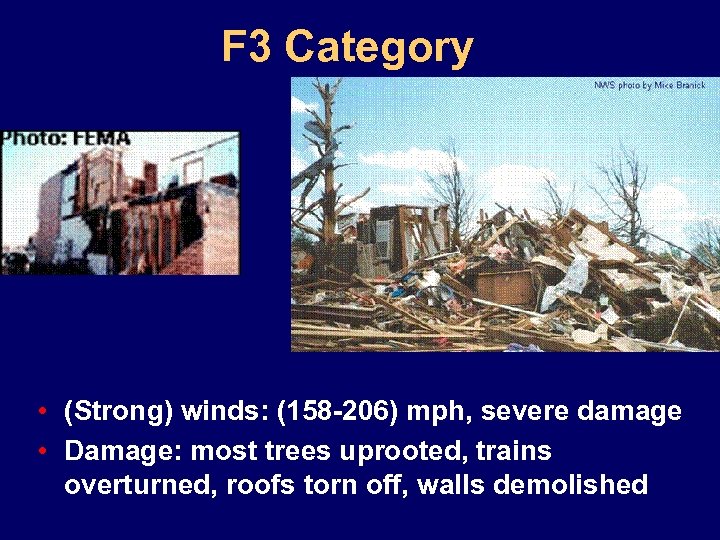 F 3 Category • (Strong) winds: (158 -206) mph, severe damage • Damage: most trees uprooted, trains overturned, roofs torn off, walls demolished
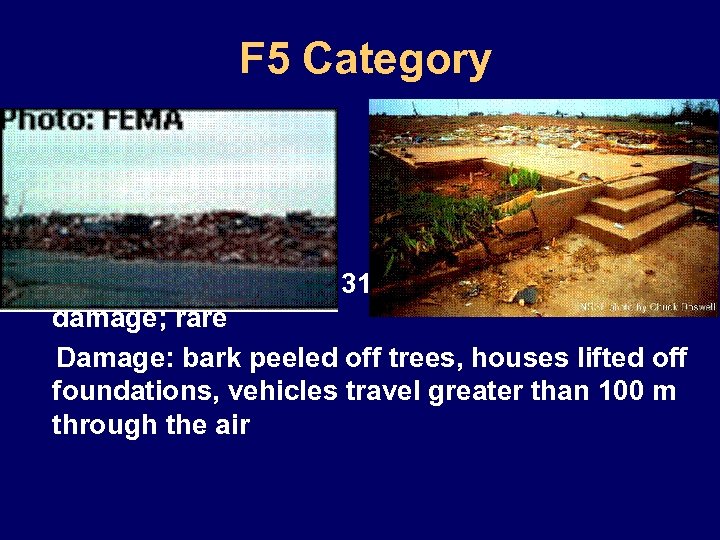 F 5 Category • (Violent) winds: (261 - 319) mph, incredible damage; rare Damage: bark peeled off trees, houses lifted off foundations, vehicles travel greater than 100 m through the air
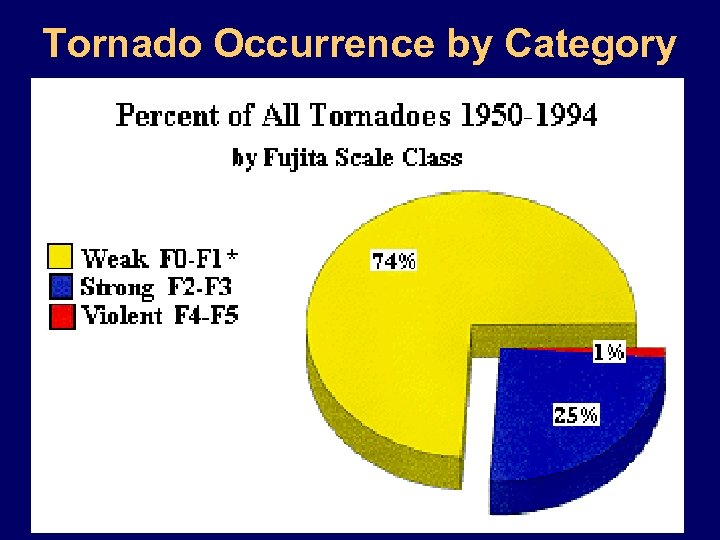 Tornado Occurrence by Category
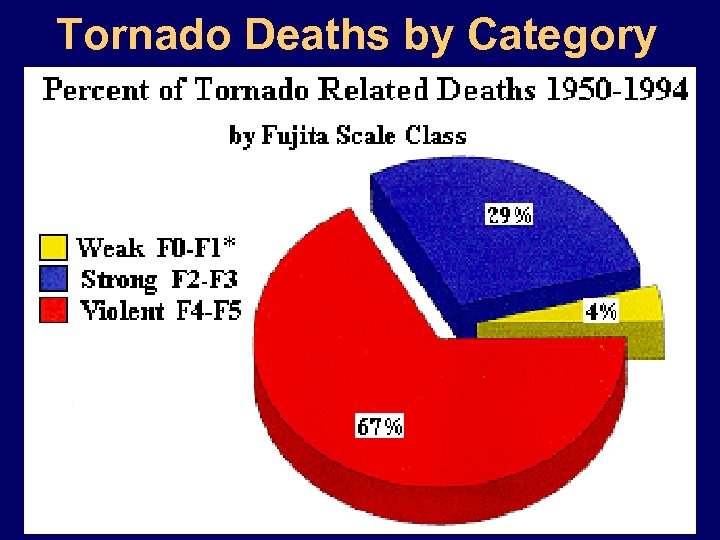 Tornado Deaths by Category
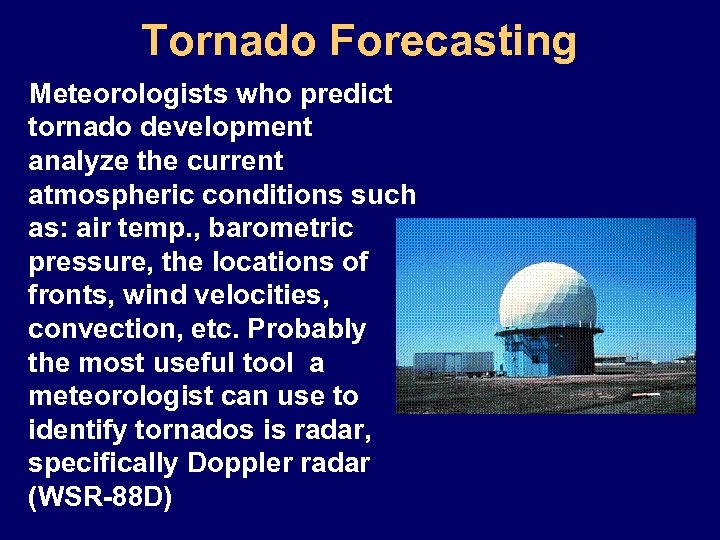 Tornado Forecasting Meteorologists who predict tornado development analyze the current atmospheric conditions such as: air temp. , barometric pressure, the locations of fronts, wind velocities, convection, etc. Probably the most useful tool a meteorologist can use to identify tornados is radar, specifically Doppler radar (WSR-88 D)
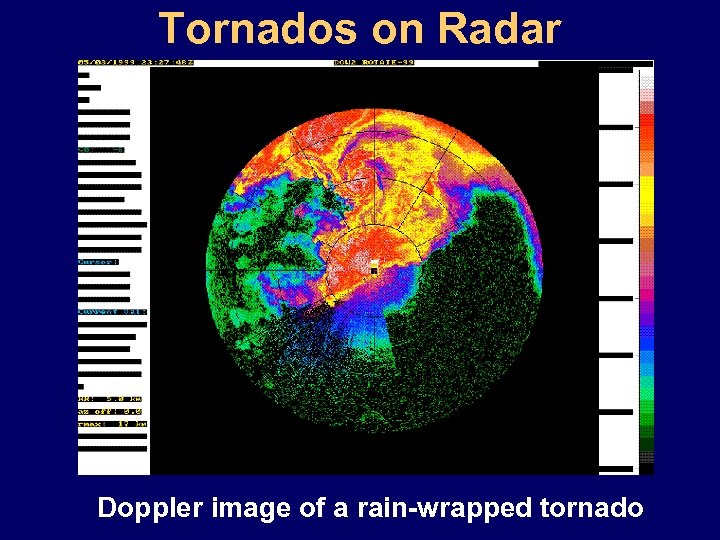 Tornados on Radar Doppler image of a rain-wrapped tornado
 The Life cycle of a Tornado • The “Life Cycle” of a tornado consists of four distinct stages. • These stages were first determined during the Union City, OK tornado of 1973 • Most tornadic events are difficult to classify and may not exhibit stages that are obvious to the observer • Sometimes events become unclear: one tornado weakens another appears, or single event? • Tornados do not “skip” – gaps in damage path may indicate a temporary weakening in intensity
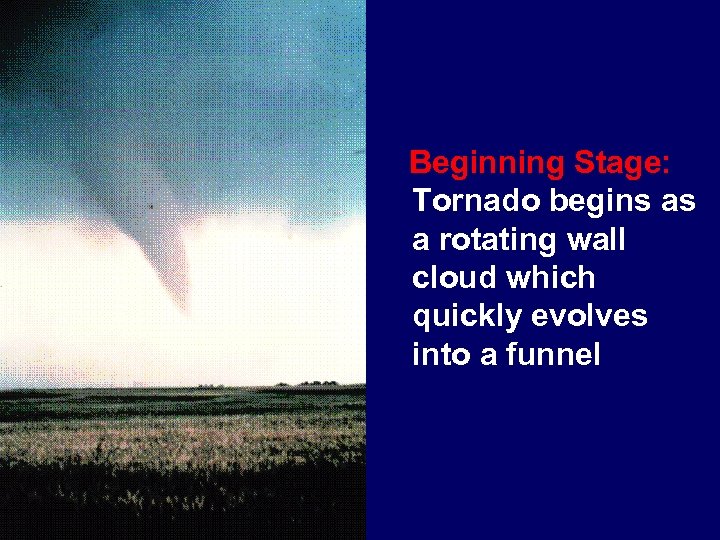 Beginning Stage: Tornado begins as a rotating wall cloud which quickly evolves into a funnel
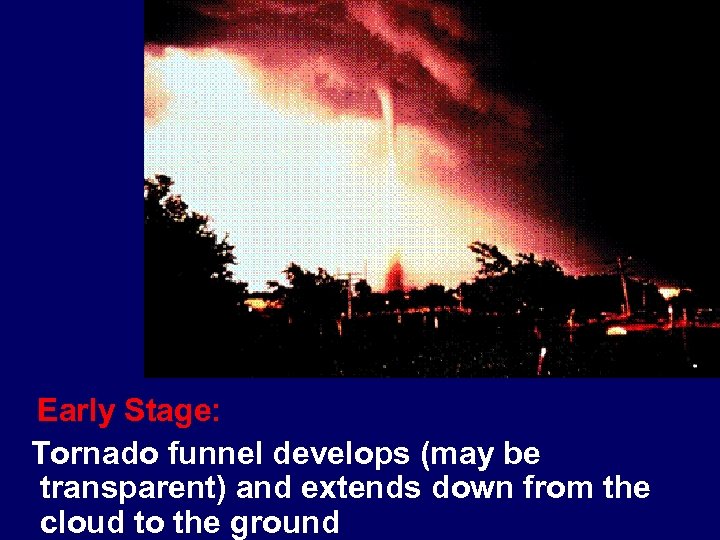 Early Stage: Tornado funnel develops (may be transparent) and extends down from the cloud to the ground
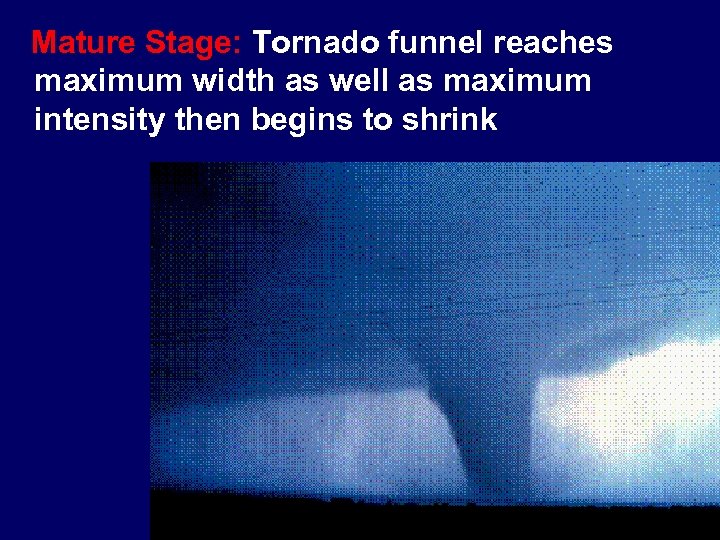 Mature Stage: Tornado funnel reaches maximum width as well as maximum intensity then begins to shrink
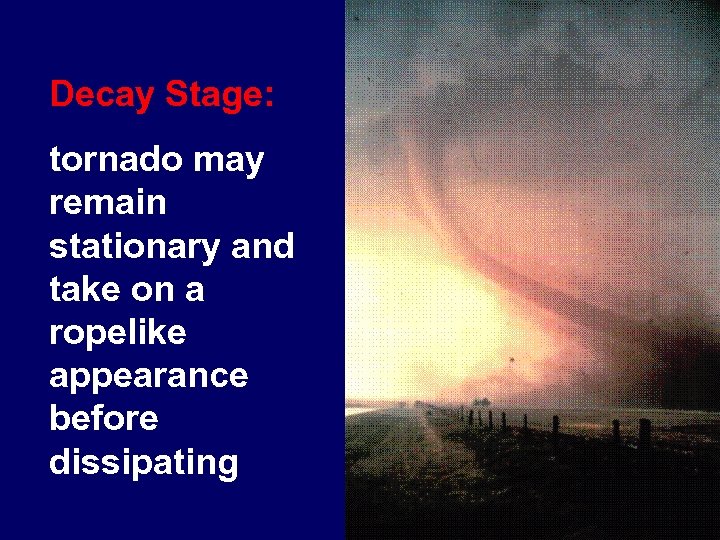 Decay Stage: tornado may remain stationary and take on a ropelike appearance before dissipating
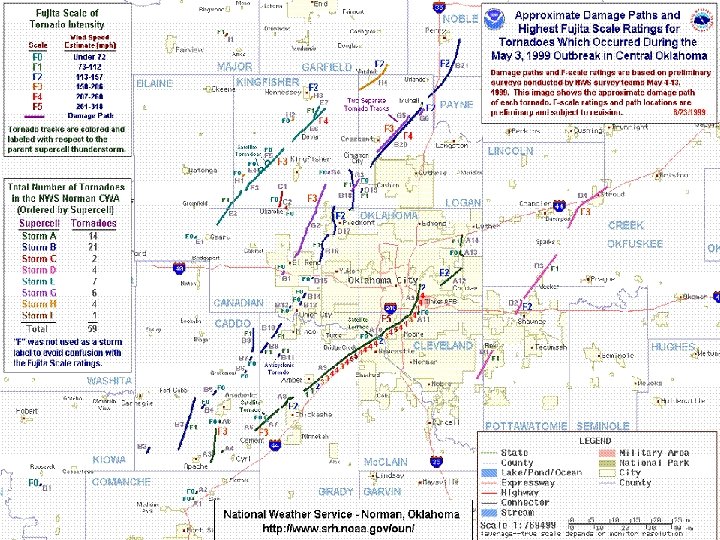
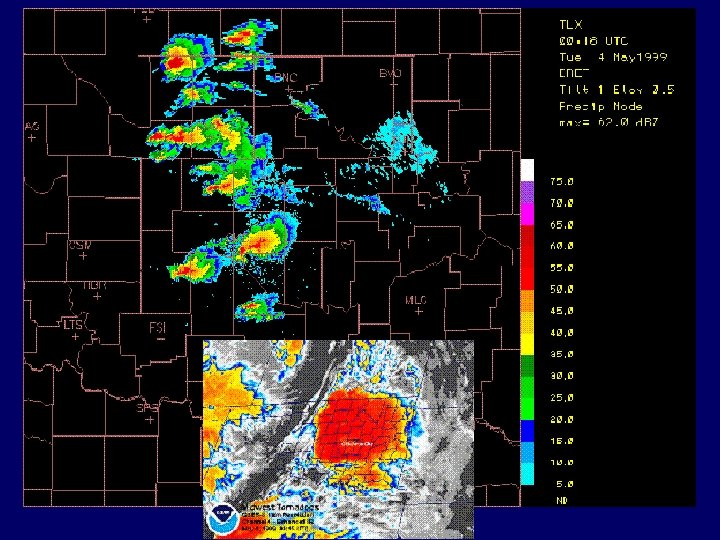
 The Tornado Outbreak of May 3, 1999 • Severe thunderstorms move into Ok, TX, Ks and spawn estimated 70 tornados, most occurred in Oklahoma • In Oklahoma 40 people killed, 675 injured • Damage: $1. 2 billion • Largest tornado outbreak in Oklahoma history • 1, 780 homes completely destroyed • 6, 550 homes damaged
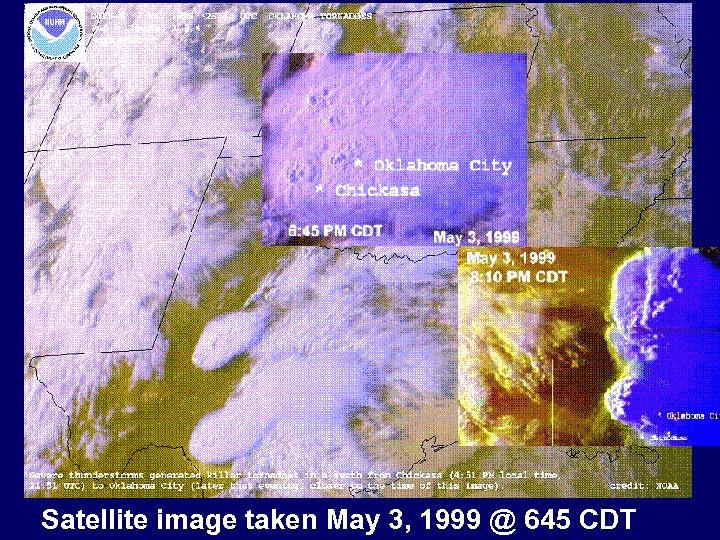 Satellite image taken May 3, 1999 @ 645 CDT
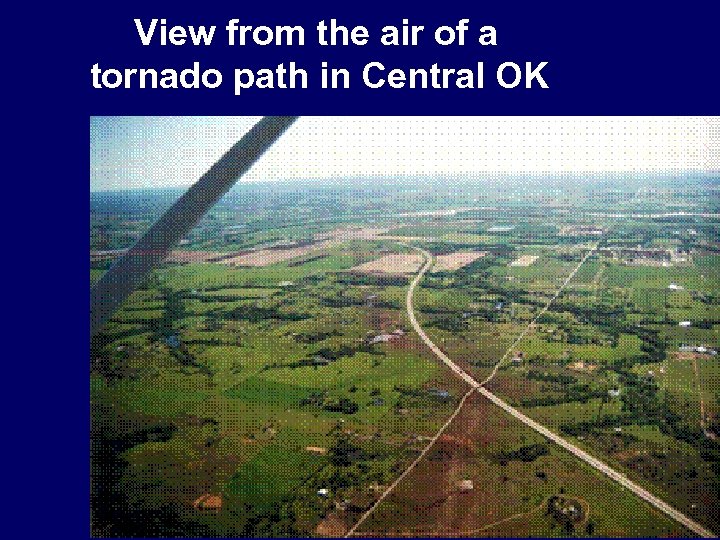 View from the air of a tornado path in Central OK
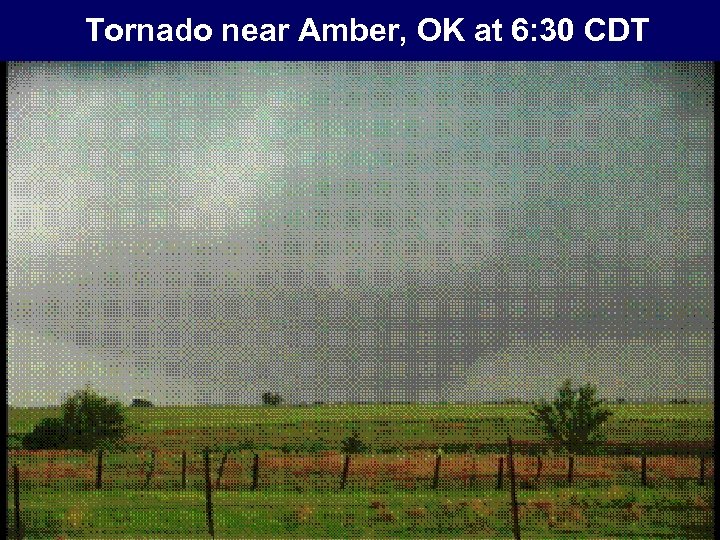 Tornado near Amber, OK at 6: 30 CDT
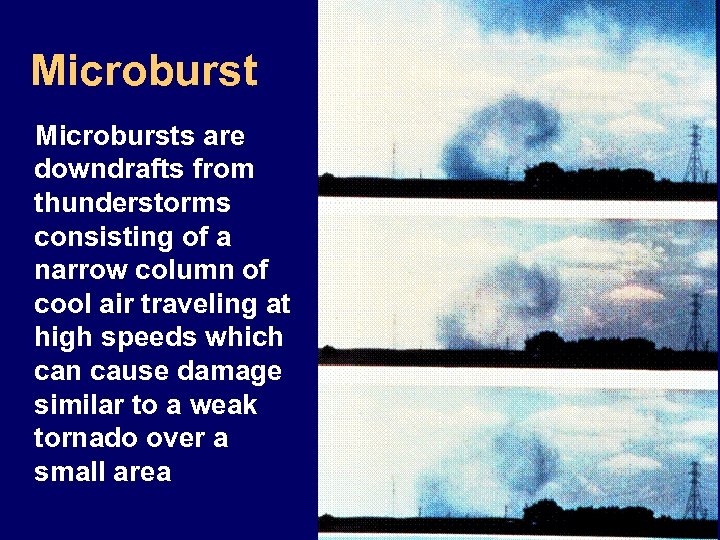 Microbursts are downdrafts from thunderstorms consisting of a narrow column of cool air traveling at high speeds which can cause damage similar to a weak tornado over a small area
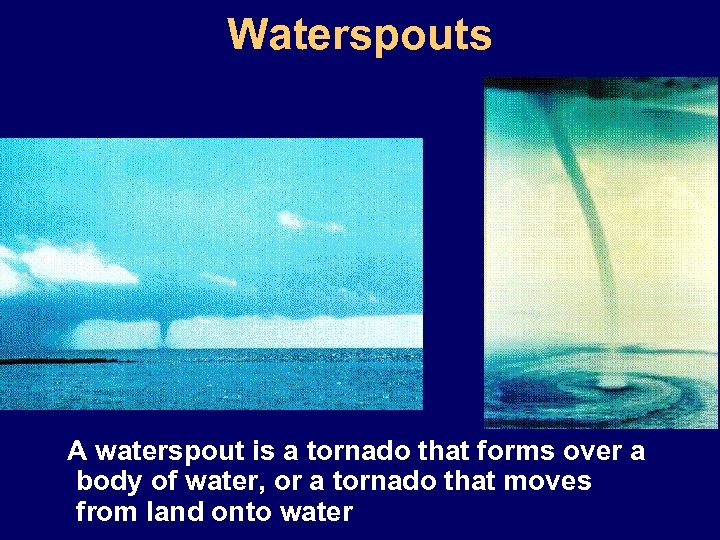 Waterspouts A waterspout is a tornado that forms over a body of water, or a tornado that moves from land onto water
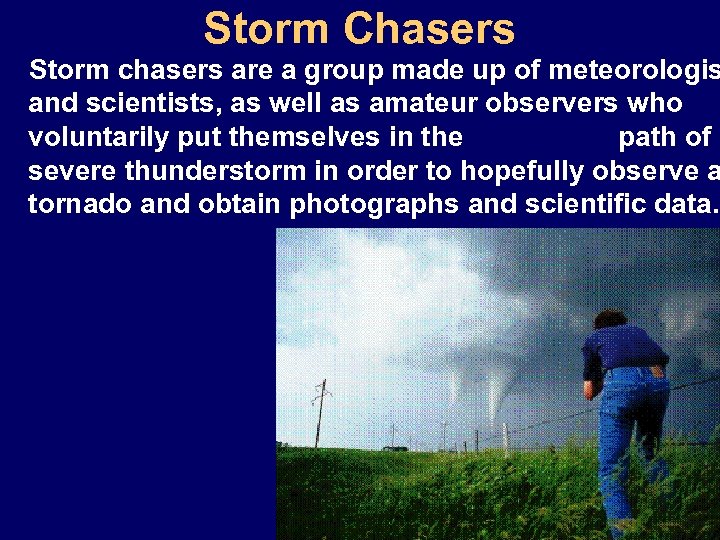 Storm Chasers Storm chasers are a group made up of meteorologis and scientists, as well as amateur observers who voluntarily put themselves in the path of a severe thunderstorm in order to hopefully observe a tornado and obtain photographs and scientific data.
 Tornado Indicators • A greenish colored sky associated with the thunderstorm (caused possibly by the scattering of light by particles in the sky) • Mammatus clouds • A sudden drop in barometric pressure • Large hail of at least. 75 in. diameter • Strong winds > 60 mph • Frequent and intense lightning • A rotating wall cloud or a cloud that appears to hang from the sky • A loud rumbling noise- seek shelter!
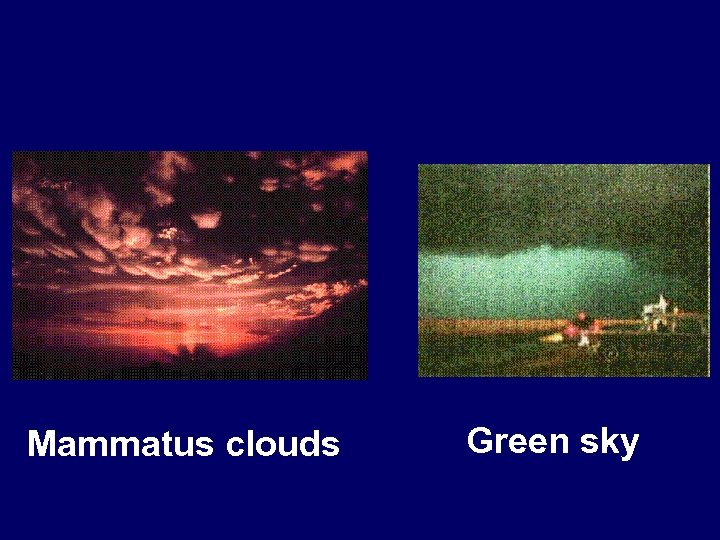 Mammatus clouds Green sky
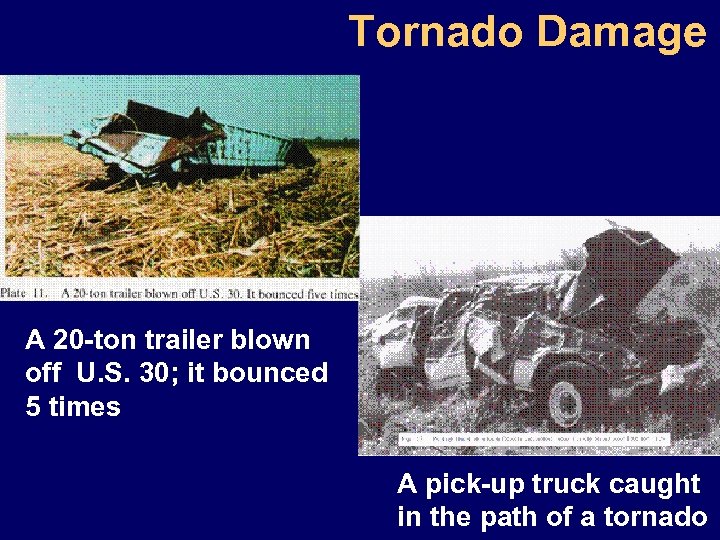 Tornado Damage A 20 -ton trailer blown off U. S. 30; it bounced 5 times A pick-up truck caught in the path of a tornado
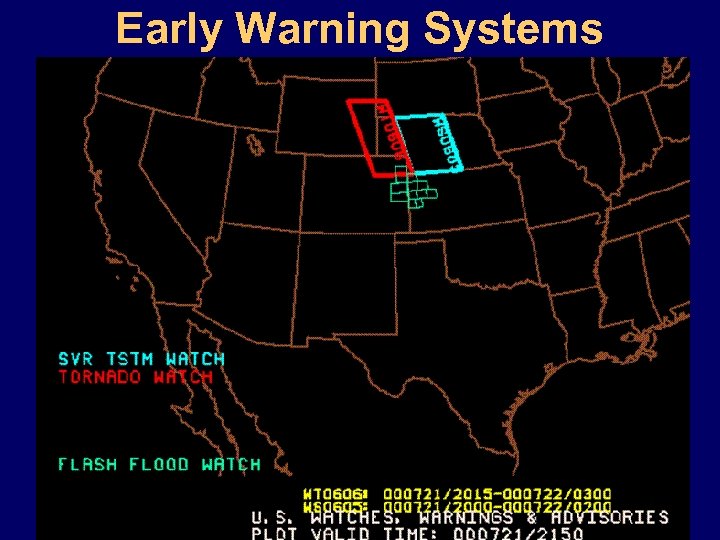
 Early Warning Systems The National Storm Prediction Center constantly monitors the weather and radars across the U. S. They are responsible for issuing tornado watches and warnings. • Tornado Watch: a parallelogram is drawn around a 10, 000 mi. ^2 s area where the atmosphere seems to possess the conditions necessary for tornado development (severe thunderstorm) • Tornado warning: a county has a thunderstorm which appears to have produced a tornado or someone has physically spotted a tornado, apparent funnel, or observed damage from what could be a tornado! SEEK SHELTER IMMEDIATELY!!
 Early Warning Systems
 Bibliography • • http//www. photolib. noaa. gov/ http: //www. nsl. noaa. gov/Golden. Anniversary http: //www. srh. noaa. gov/oun/ http: //www. usatoday. com/weather www. nsl. noaa. gov/~doswell? a_tornado/atornado. html http: //www. disastercenter. com/ http: //www. tornadoproject. com/ Church C. , Burgess D. , Doswell C. , Davies-Jones, R. , e The Tornado: Its Structure, Dynamics, Prediction, and Hazards. • American Geophysical Union Press: 2000 • Liu, Henry. Calculation Of Wind Speeds Required to Damage or Destroy Buildings. Publication within The Tornado