


 Скачать презентацию Topical lectures June 2007 01 11 010 001
6586f73bb10635816e79d5530fd85731.ppt
- Количество слайдов: 67
 Topical lectures June 2007 01 11 010 001 1110 11001 01011 110110 001101 1111111 0111000 11101010 01001110 110111001 000101101 1111010001 0101111100 111101001111 010110000101 Introduction to computer networks Sander Klous Acknowledgements: W H t 0 Z • Cees de Laat • Jan Just Keijser • Oscar Koeroo Reference: • Cisco systems – CCNA ISBN: 1 -58720 -095 -3
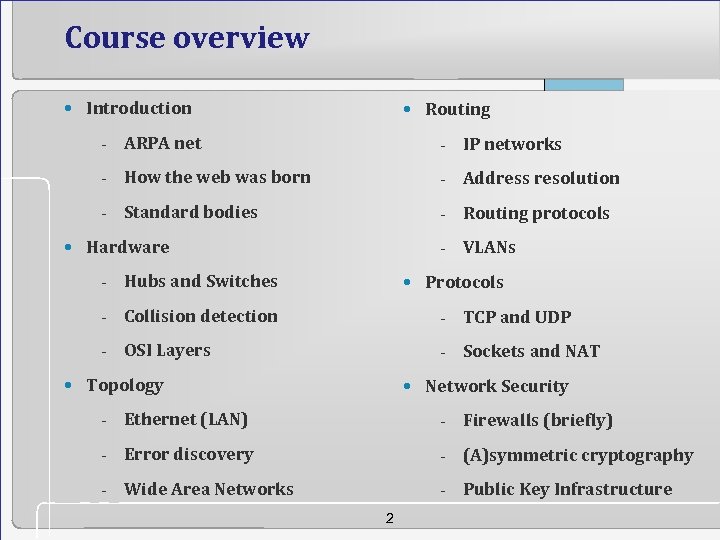 Course overview • Introduction • Routing - ARPA net - IP networks - How the web was born - Address resolution - Standard bodies - Routing protocols • Hardware - VLANs - Hubs and Switches • Protocols - Collision detection - TCP and UDP - OSI Layers - Sockets and NAT • Topology • Network Security - Ethernet (LAN) - Firewalls (briefly) - Error discovery - (A)symmetric cryptography - Wide Area Networks - Public Key Infrastructure 2
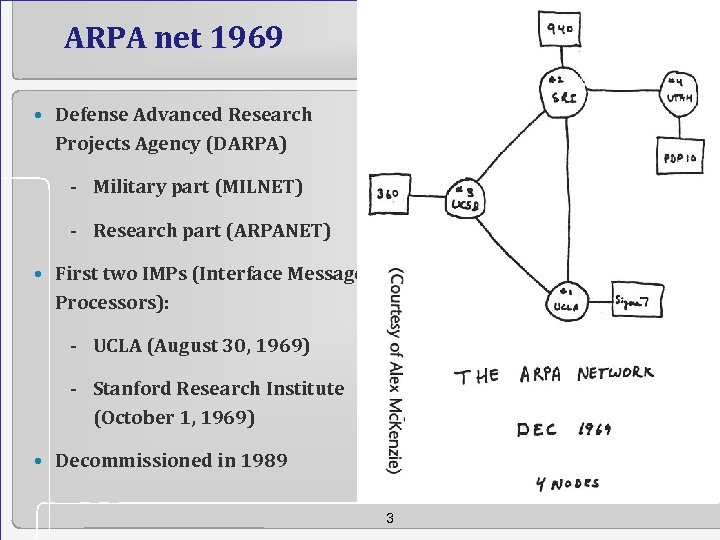 ARPA net 1969 • Defense Advanced Research Projects Agency (DARPA) - Military part (MILNET) - Research part (ARPANET) • First two IMPs (Interface Message Processors): - UCLA (August 30, 1969) - Stanford Research Institute (October 1, 1969) • Decommissioned in 1989 3
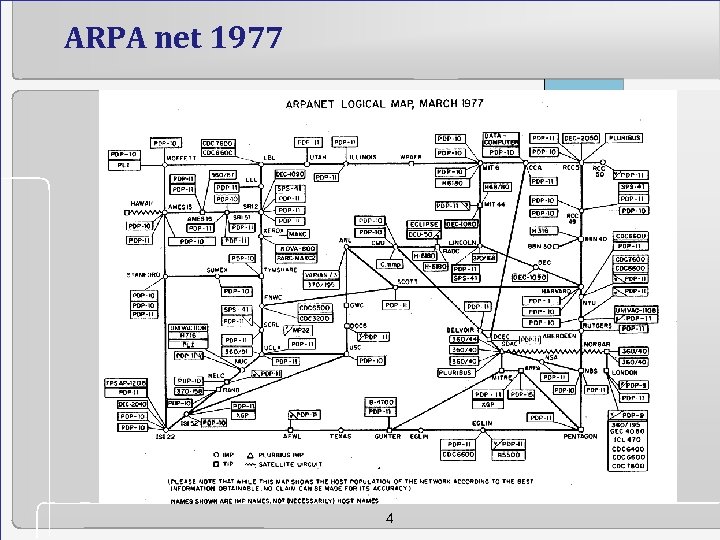 ARPA net 1977 4
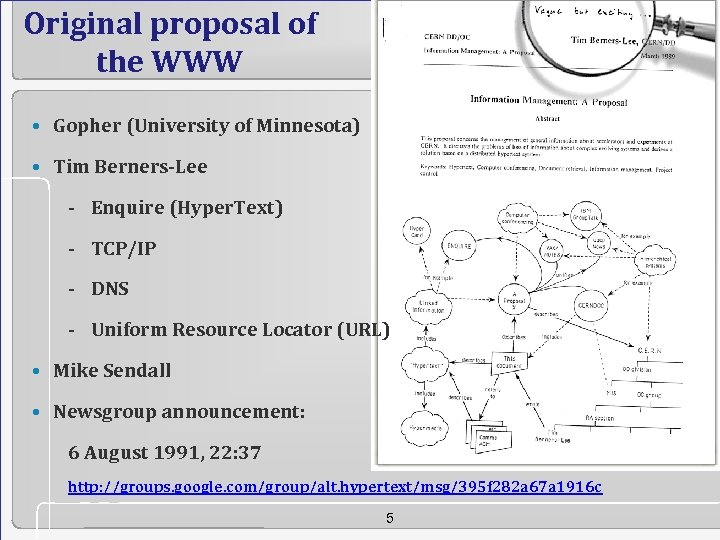 Original proposal of the WWW • Gopher (University of Minnesota) • Tim Berners-Lee - Enquire (Hyper. Text) - TCP/IP - DNS - Uniform Resource Locator (URL) • Mike Sendall • Newsgroup announcement: 6 August 1991, 22: 37 http: //groups. google. com/group/alt. hypertext/msg/395 f 282 a 67 a 1916 c 5
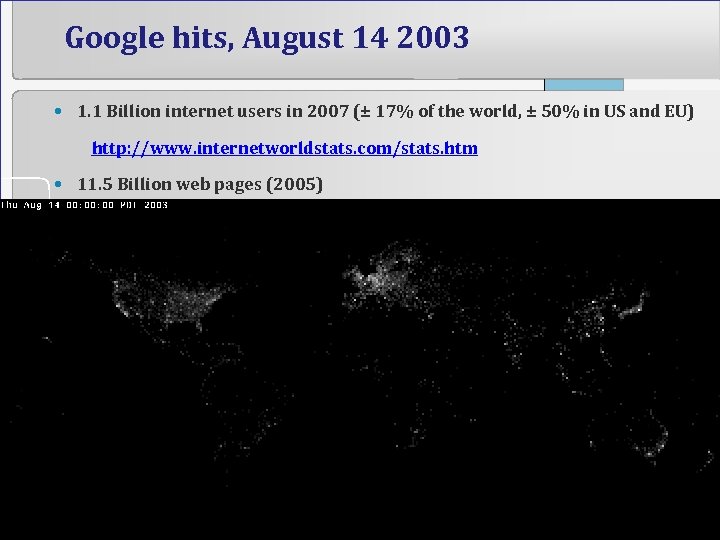 Google hits, August 14 2003 • 1. 1 Billion internet users in 2007 (± 17% of the world, ± 50% in US and EU) http: //www. internetworldstats. com/stats. htm • 11. 5 Billion web pages (2005) 6
 Standard bodies • Institute of Electrical and Electronics Engineers (IEEE) - Advancement of technology related to electricity - IEEE 802. X Ethernet standards • Internet Engineering Task Force (IETF) - Rob Blokzijl ISOC member - Develops and promotes internet standards Requests for Comments (RFCs) - In close cooperation with W 3 C • World Wide Web Consortium (W 3 C) - Founded by Tim Berners-Lee, director - International standards organization for WWW 7
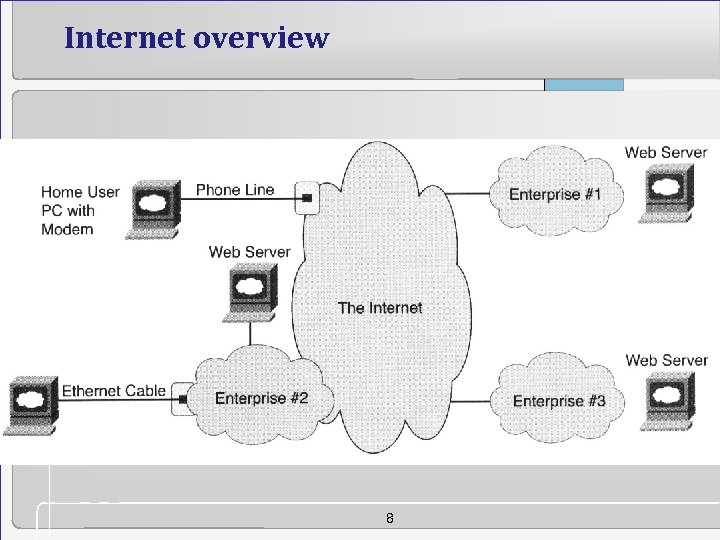 Internet overview 8
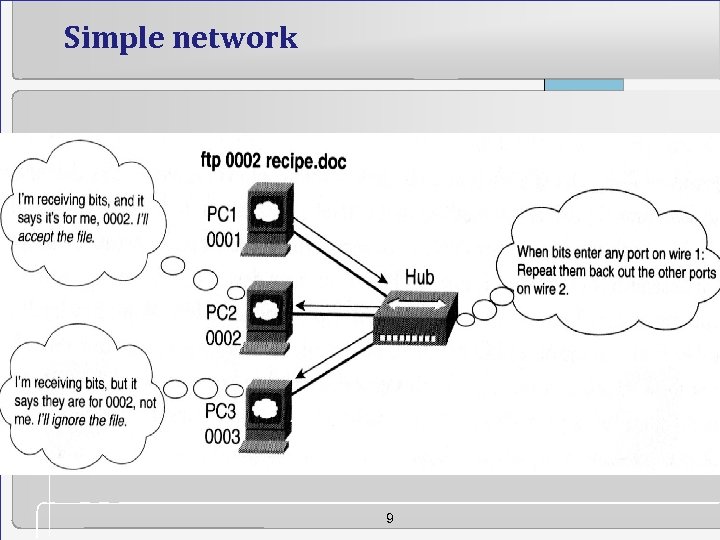 Simple network 9
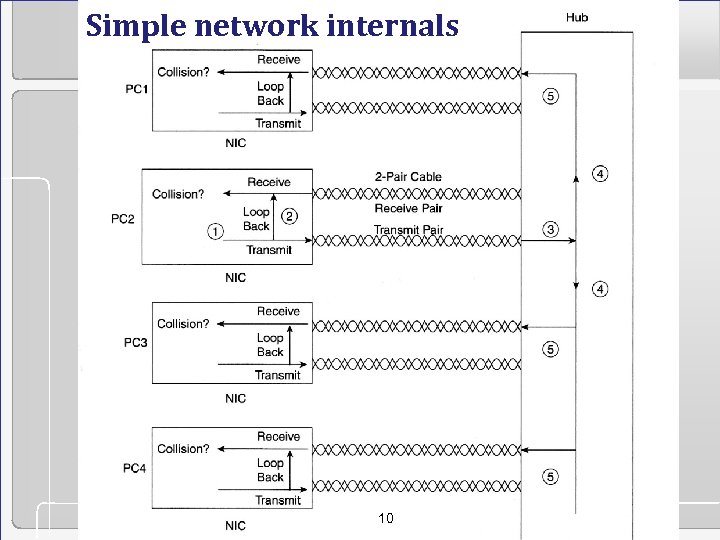 Simple network internals 10
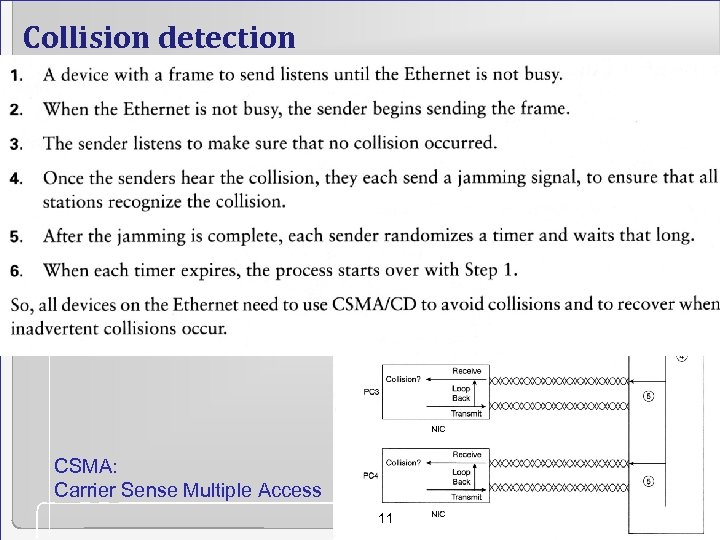 Collision detection CSMA: Carrier Sense Multiple Access 11
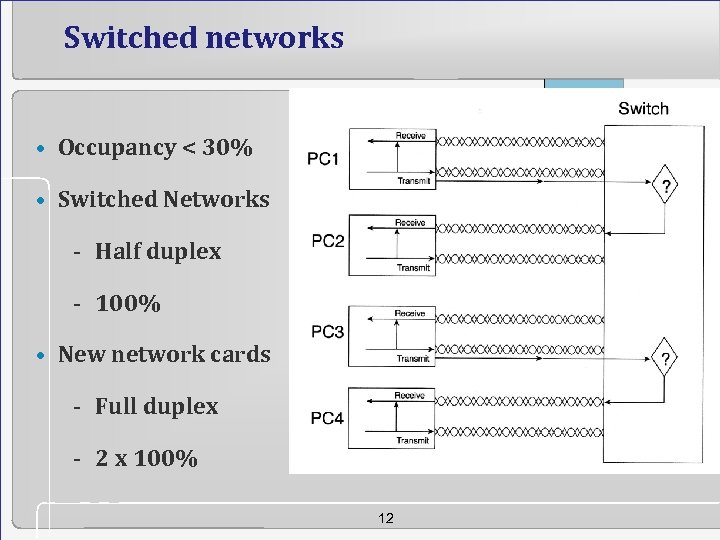 Switched networks • Occupancy < 30% • Switched Networks - Half duplex - 100% • New network cards - Full duplex - 2 x 100% 12
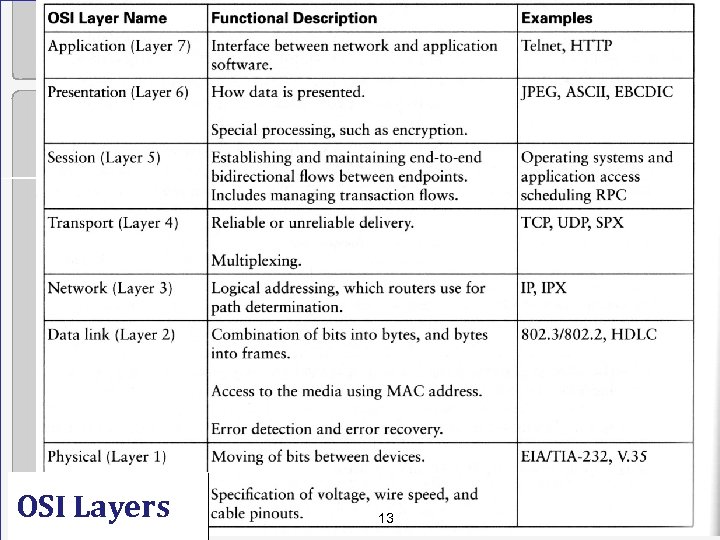 OSI Layers 13
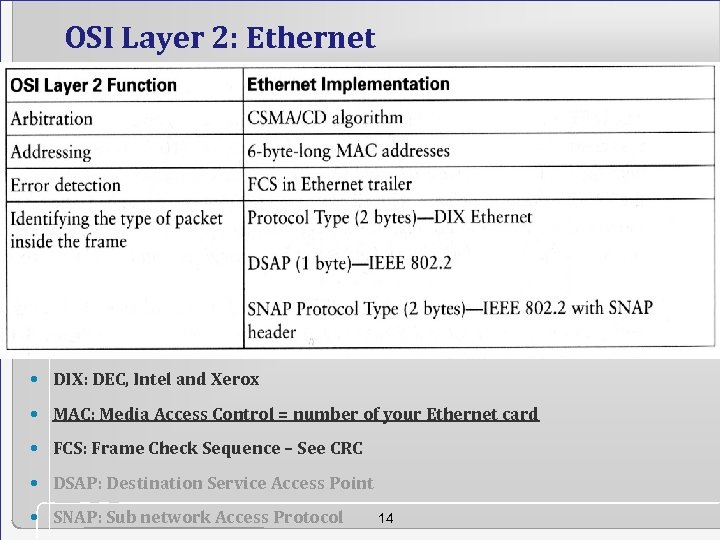 OSI Layer 2: Ethernet • DIX: DEC, Intel and Xerox • MAC: Media Access Control = number of your Ethernet card • FCS: Frame Check Sequence – See CRC • DSAP: Destination Service Access Point • SNAP: Sub network Access Protocol 14
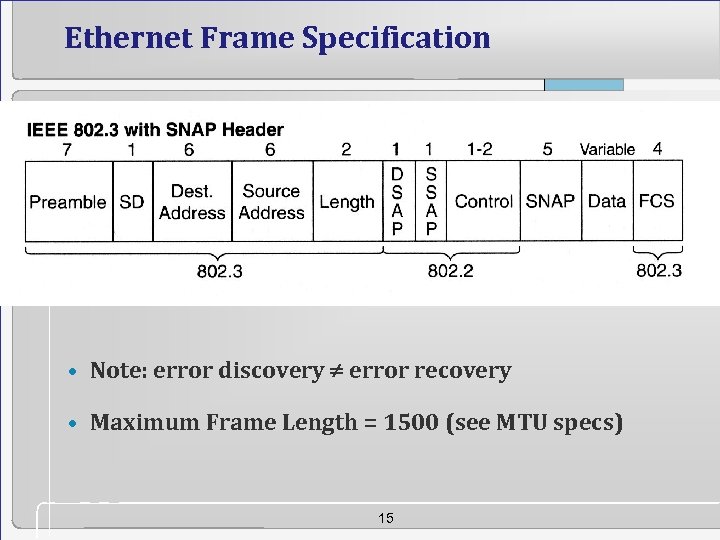 Ethernet Frame Specification • Note: error discovery error recovery • Maximum Frame Length = 1500 (see MTU specs) 15
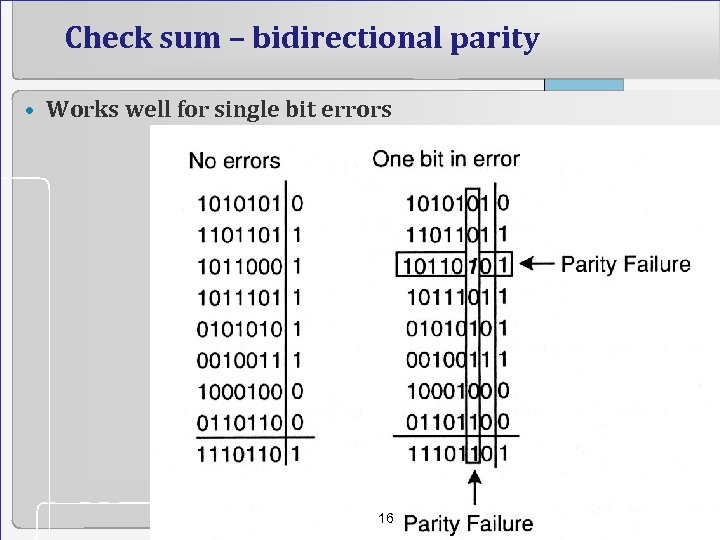 Check sum – bidirectional parity • Works well for single bit errors 16
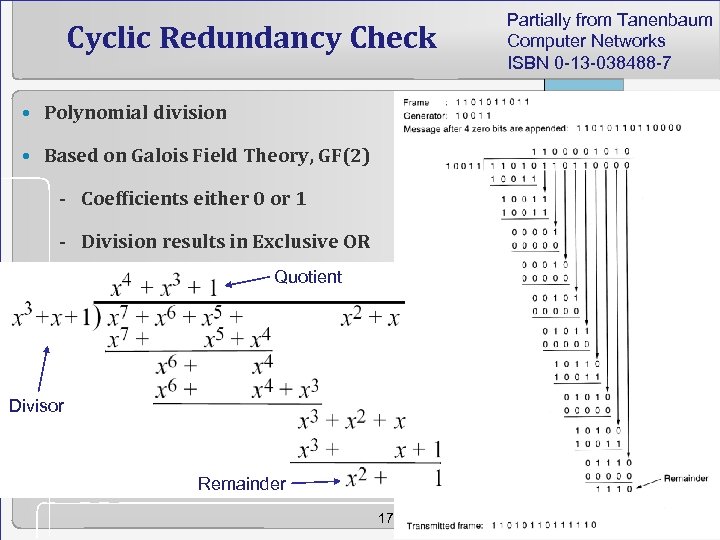 Cyclic Redundancy Check • Polynomial division • Based on Galois Field Theory, GF(2) - Coefficients either 0 or 1 - Division results in Exclusive OR Quotient Divisor Remainder 17 Partially from Tanenbaum Computer Networks ISBN 0 -13 -038488 -7
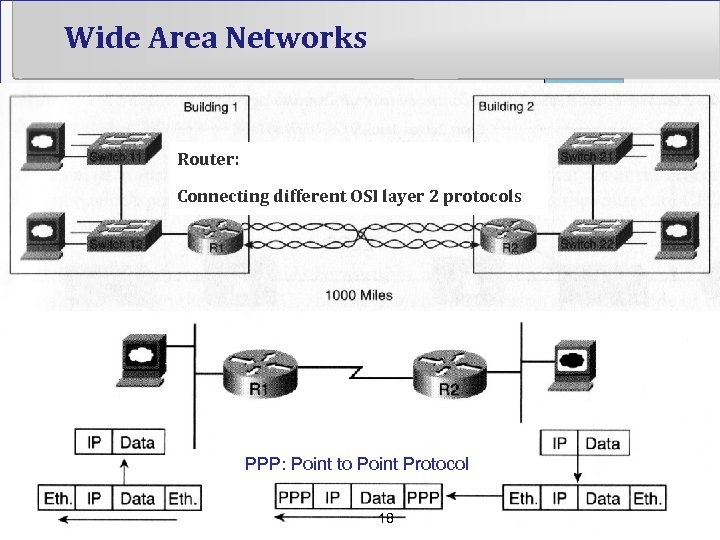 Wide Area Networks Router: Connecting different OSI layer 2 protocols PPP: Point to Point Protocol 18
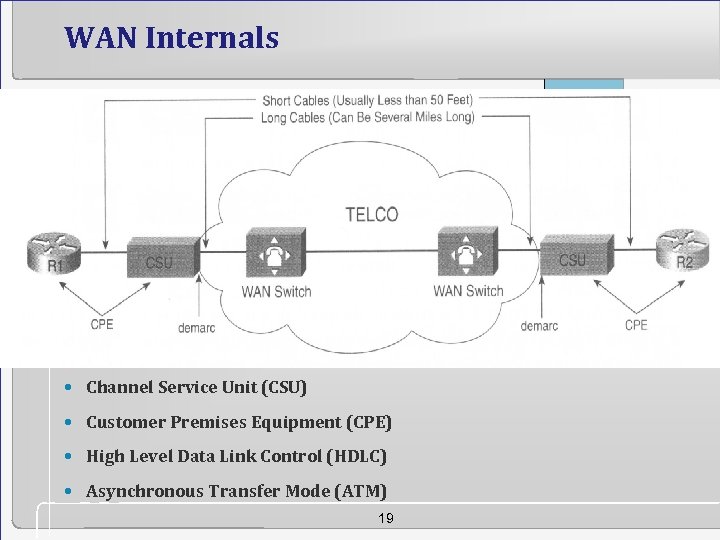 WAN Internals • Channel Service Unit (CSU) • Customer Premises Equipment (CPE) • High Level Data Link Control (HDLC) • Asynchronous Transfer Mode (ATM) 19
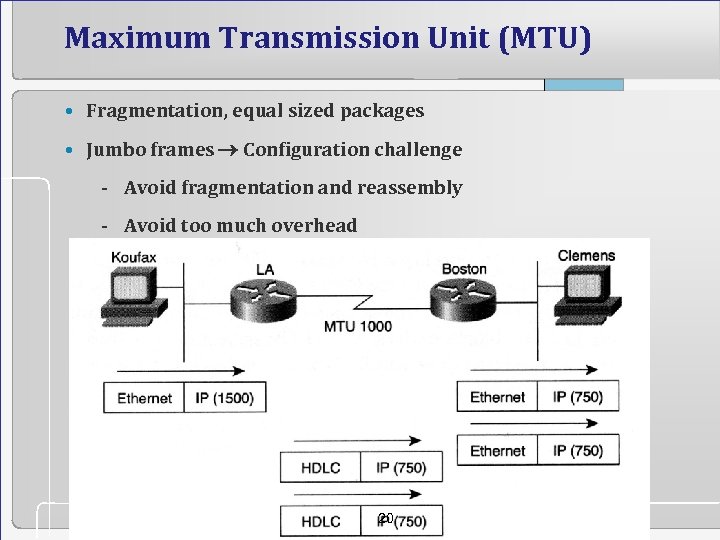 Maximum Transmission Unit (MTU) • Fragmentation, equal sized packages • Jumbo frames Configuration challenge - Avoid fragmentation and reassembly - Avoid too much overhead 20
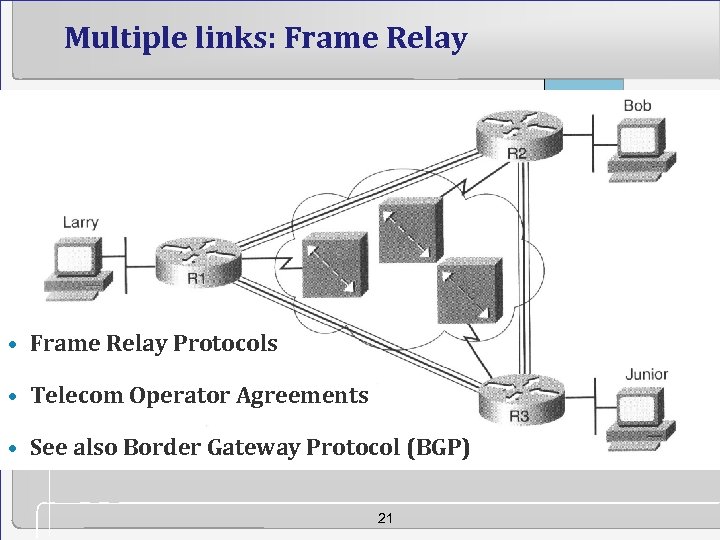 Multiple links: Frame Relay • Frame Relay Protocols • Telecom Operator Agreements • See also Border Gateway Protocol (BGP) 21
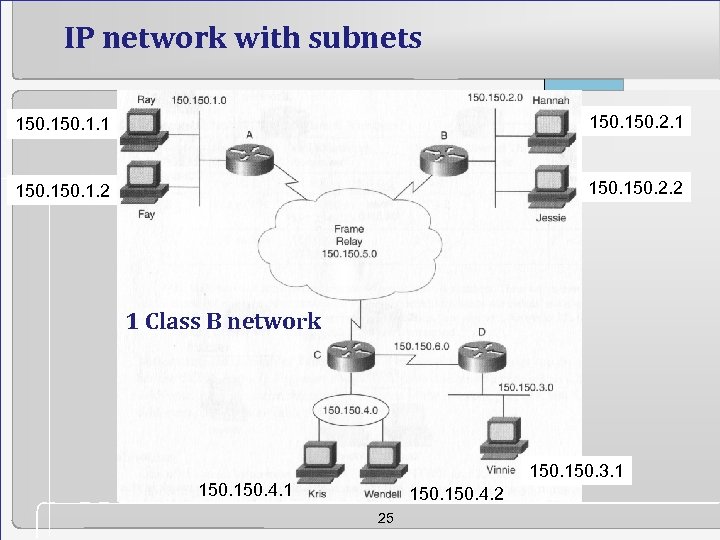
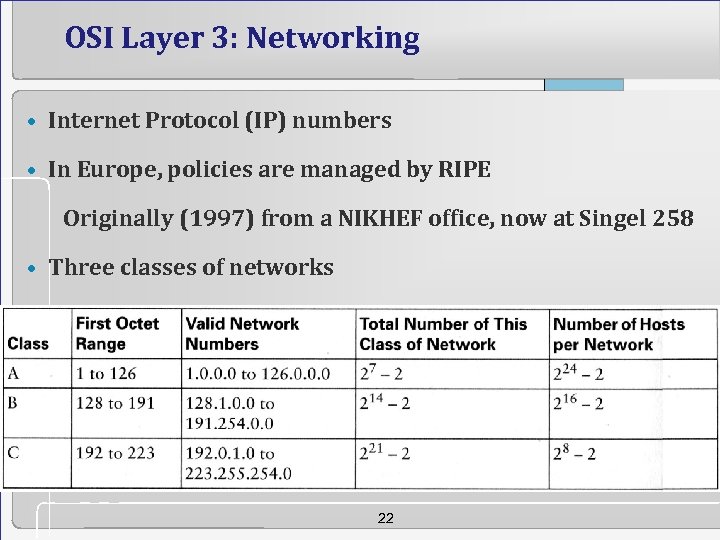 OSI Layer 3: Networking • Internet Protocol (IP) numbers • In Europe, policies are managed by RIPE Originally (1997) from a NIKHEF office, now at Singel 258 • Three classes of networks 22
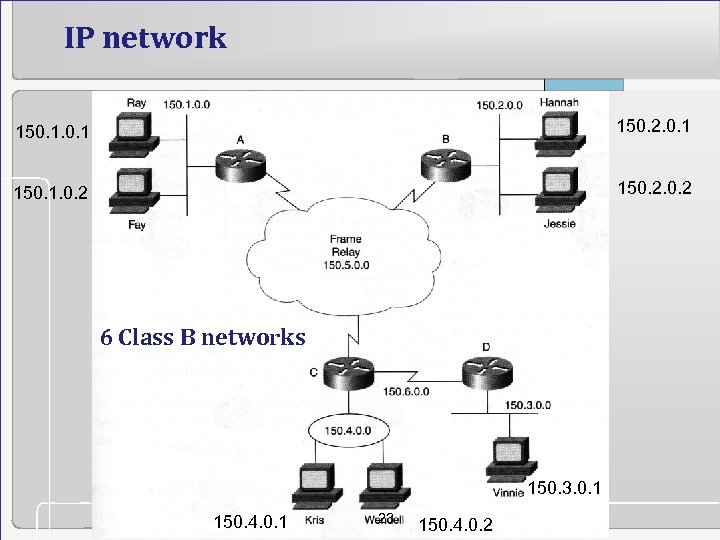 IP network 150. 1 150. 2. 0. 1 150. 1. 0. 2 150. 2 6 Class B networks 150. 3. 0. 1 150. 4. 0. 1 23 150. 4. 0. 2
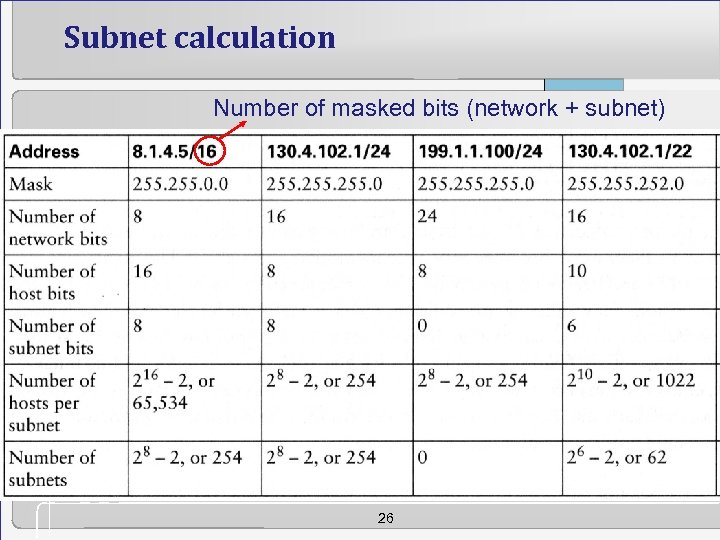
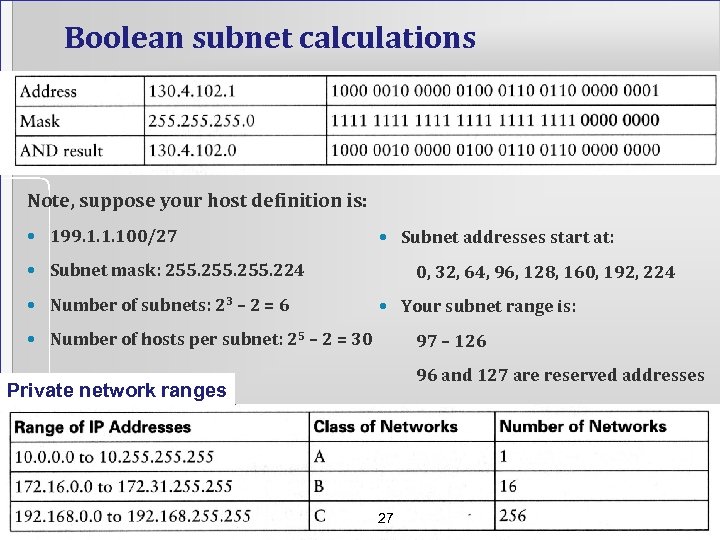
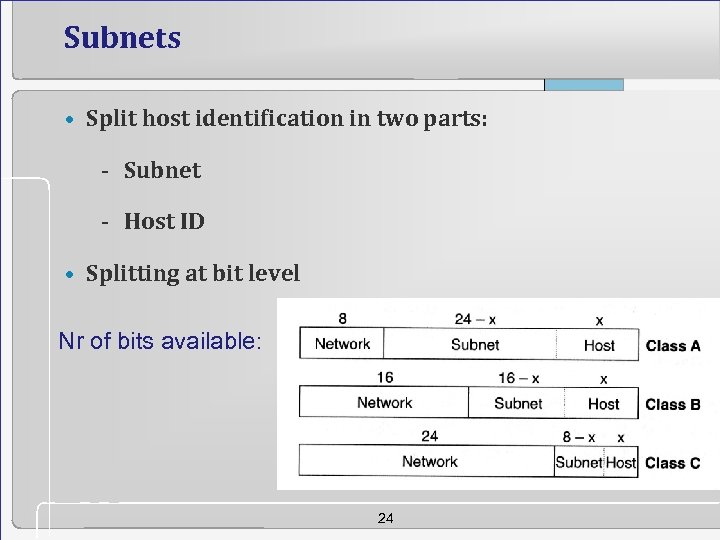 Subnets • Split host identification in two parts: - Subnet - Host ID • Splitting at bit level Nr of bits available: 24
 IP network with subnets 150. 1. 1 150. 2. 1 150. 1. 2 150. 2. 2 1 Class B network 150. 3. 1 150. 4. 2 25
 Subnet calculation Number of masked bits (network + subnet) 26
 Boolean subnet calculations Note, suppose your host definition is: • 199. 1. 1. 100/27 • Subnet addresses start at: • Subnet mask: 255. 224 • Number of subnets: 23 – 2 = 6 0, 32, 64, 96, 128, 160, 192, 224 • Your subnet range is: • Number of hosts per subnet: 25 – 2 = 30 97 – 126 96 and 127 are reserved addresses Private network ranges 27
 Address Resolution Protocol (ARP) • Ethernet does not use IP numbers • Ethernet needs the MAC address • Address Resolution Protocol ties them together 28
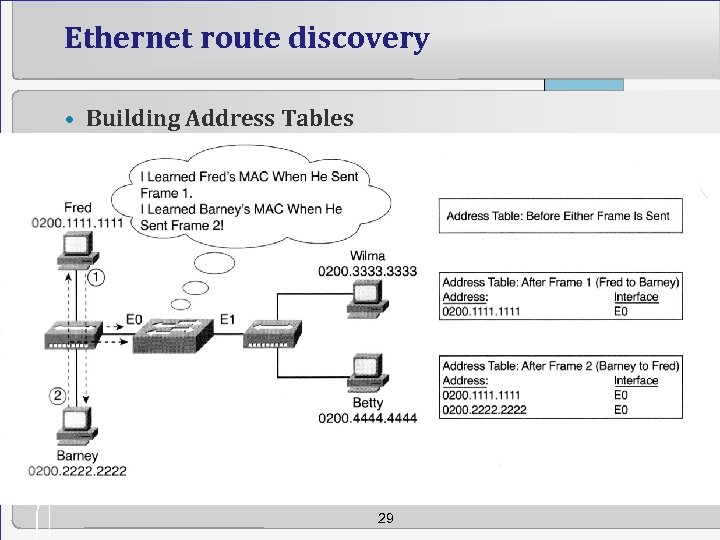 Ethernet route discovery • Building Address Tables 29
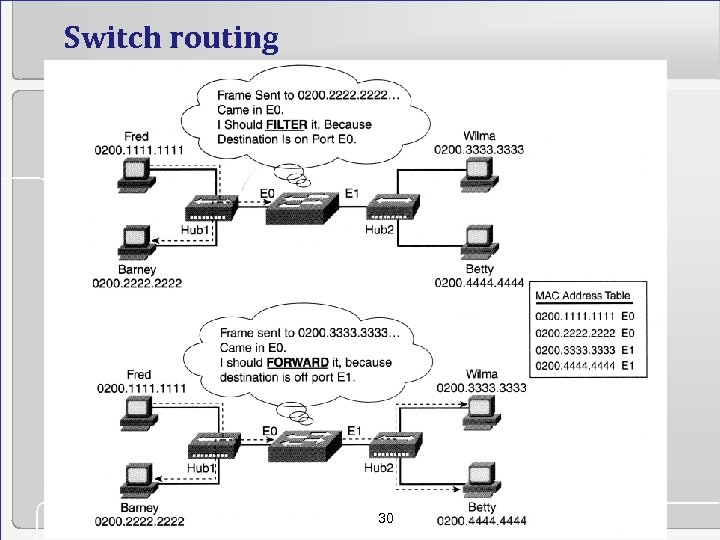 Switch routing 30
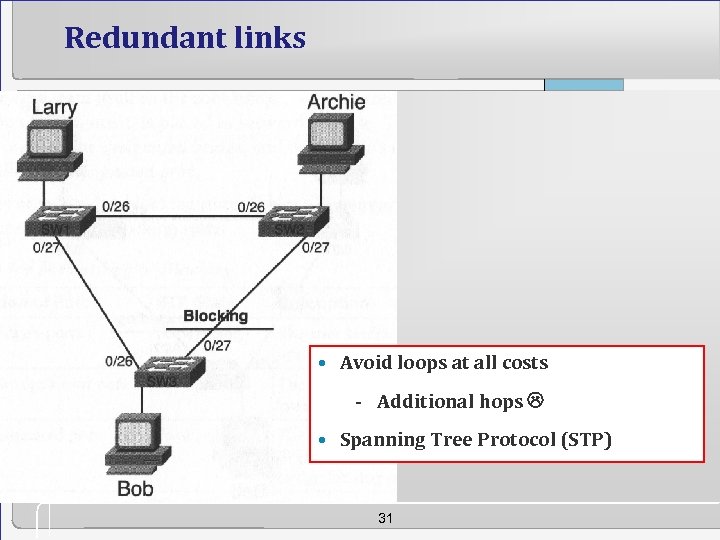 Redundant links • Avoid loops at all costs - Additional hops • Spanning Tree Protocol (STP) 31
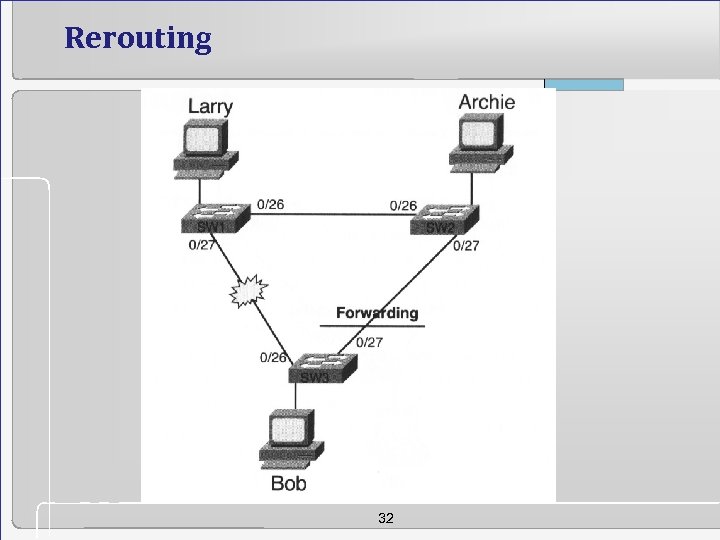 Rerouting 32
 Spanning Tree Protocol rules 1. Decide which switch is the root switch - Based on priority (set manually) - Based on switch MAC address 2. All ports of root switch are open 3. All ports with shortest route to root switch are open 4. In case an existing route fails: rerun procedure • Convergence takes about 50 seconds Improved version: (Rapid Spanning Tree Protocol) 33
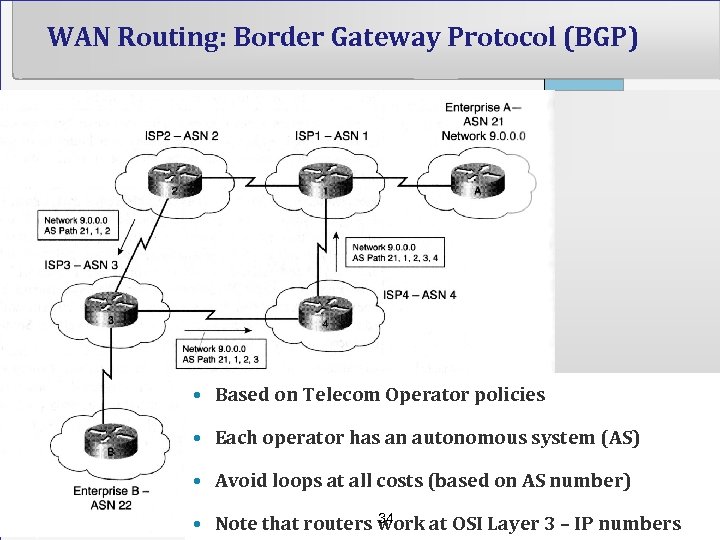 WAN Routing: Border Gateway Protocol (BGP) • Based on Telecom Operator policies • Each operator has an autonomous system (AS) • Avoid loops at all costs (based on AS number) 34 • Note that routers work at OSI Layer 3 – IP numbers
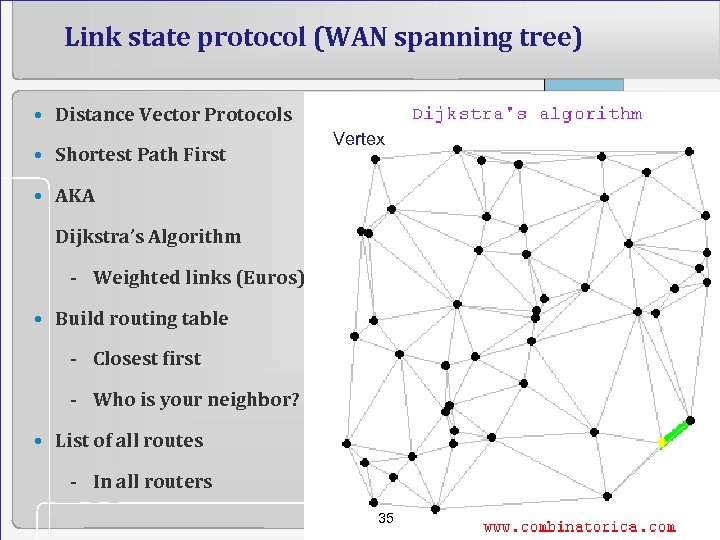 Link state protocol (WAN spanning tree) • Distance Vector Protocols • Shortest Path First Vertex • AKA Dijkstra’s Algorithm - Weighted links (Euros) • Build routing table - Closest first - Who is your neighbor? • List of all routes - In all routers 35
 Dijkstra’s algorithm Graph (V), where V is a set of vertices (vi) 1. The length of a path from any vertex vk to a vertex v 0 is l (vk) - So l (v 0) = 0, initialize all other lengths l (vk) to 2. Start from a vertex vj (j=0) and consider all unlabeled neighbors (yi) 3. Replace l (yi) with min{ l (yi), l (vj) + w( {vj, yi} ) } 1. Where w( {vj, yi} ) is the weight of the link between vj and yi 4. Choose the smallest value from all yi and label it vj+1 5. Include the route from v to v 1 as shortest path 6. Add all unlabeled neighbors from vj+1 to the set (yi) 7. Increase counter, j=j+1 and repeat procedure from step 4 8. Algorithm is completed when all vertices are included 36
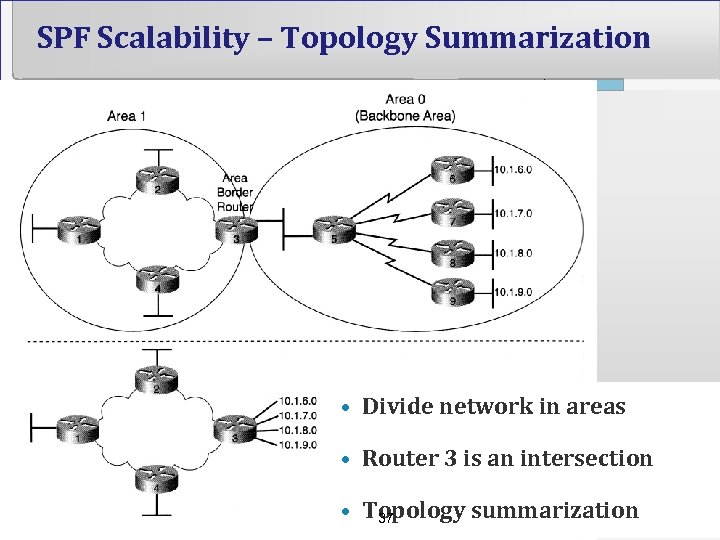 SPF Scalability – Topology Summarization • Divide network in areas • Router 3 is an intersection • Topology summarization 37
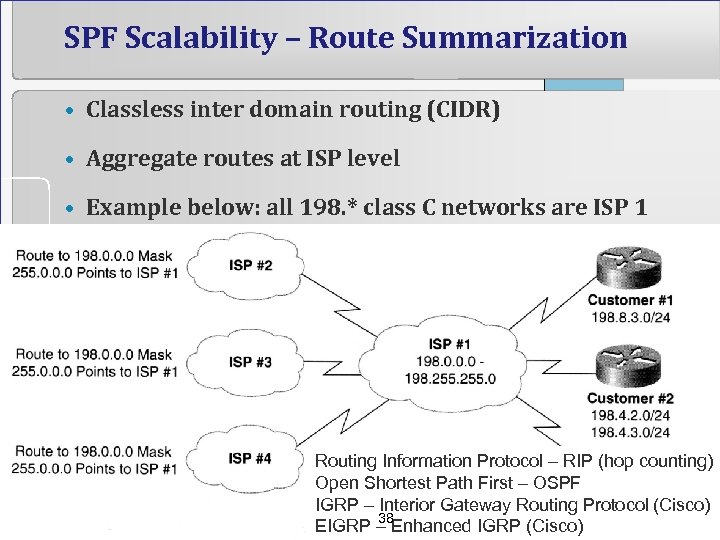 SPF Scalability – Route Summarization • Classless inter domain routing (CIDR) • Aggregate routes at ISP level • Example below: all 198. * class C networks are ISP 1 Routing Information Protocol – RIP (hop counting) Open Shortest Path First – OSPF IGRP – Interior Gateway Routing Protocol (Cisco) 38 EIGRP – Enhanced IGRP (Cisco)
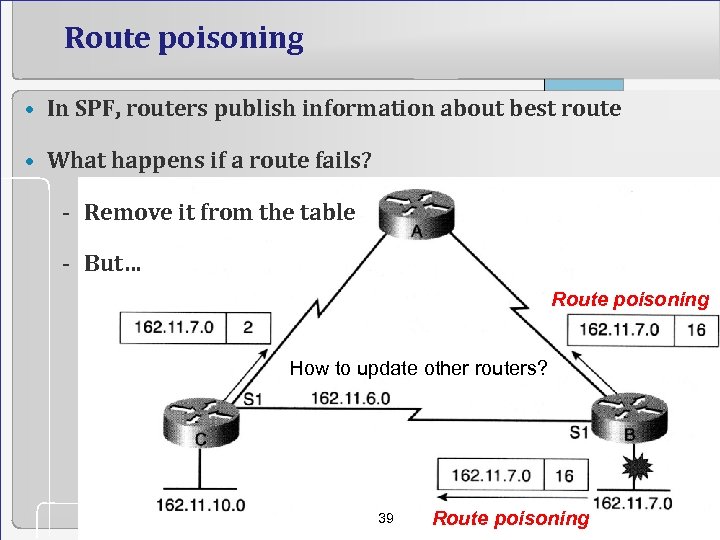 Route poisoning • In SPF, routers publish information about best route • What happens if a route fails? - Remove it from the table - But… Route poisoning How to update other routers? 39 Route poisoning
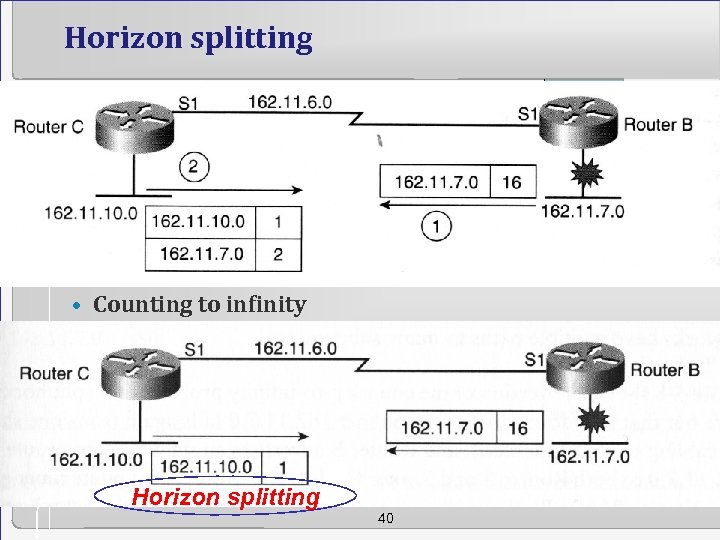 Horizon splitting • Counting to infinity Horizon splitting 40
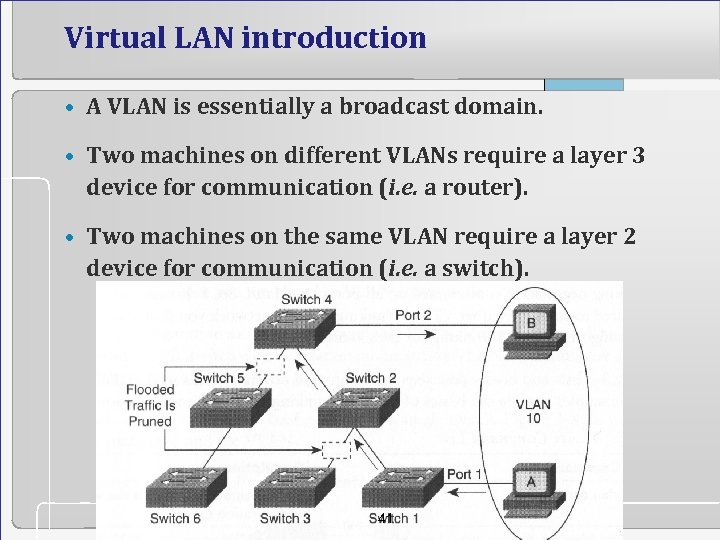 Virtual LAN introduction • A VLAN is essentially a broadcast domain. • Two machines on different VLANs require a layer 3 device for communication (i. e. a router). • Two machines on the same VLAN require a layer 2 device for communication (i. e. a switch). 41
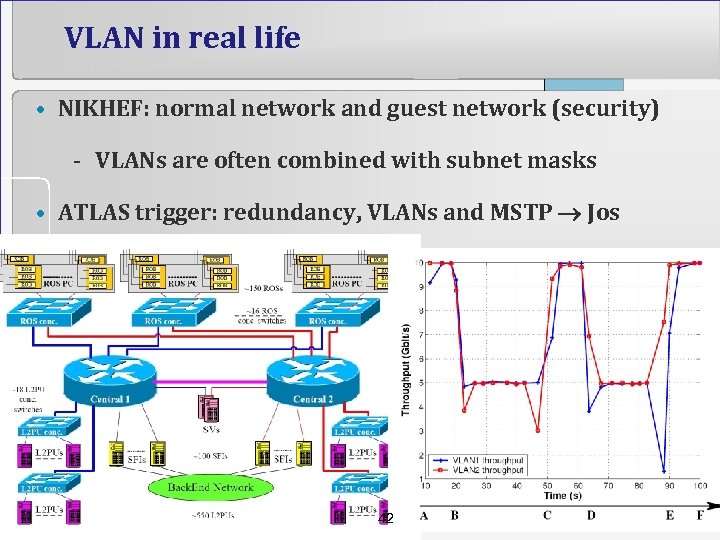 VLAN in real life • NIKHEF: normal network and guest network (security) - VLANs are often combined with subnet masks • ATLAS trigger: redundancy, VLANs and MSTP Jos 42
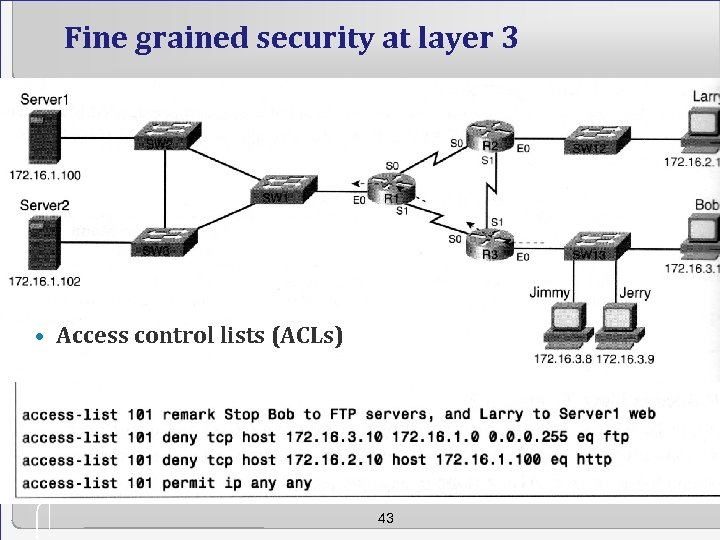 Fine grained security at layer 3 • Access control lists (ACLs) 43
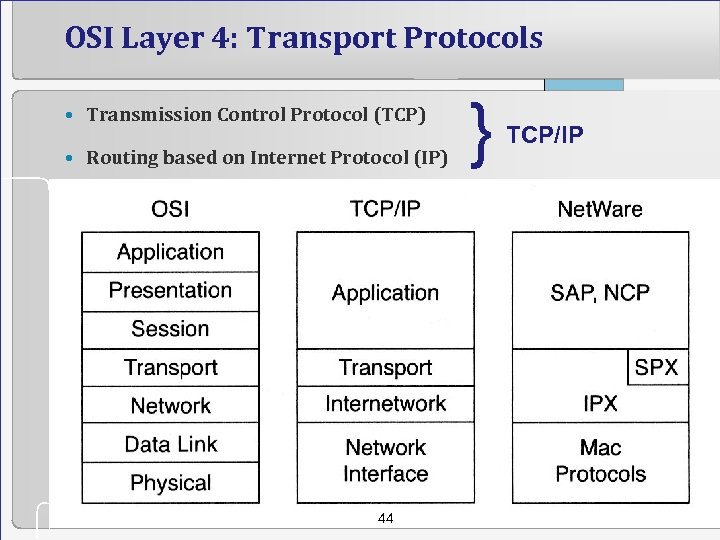 OSI Layer 4: Transport Protocols • Transmission Control Protocol (TCP) • Routing based on Internet Protocol (IP) 44 } TCP/IP
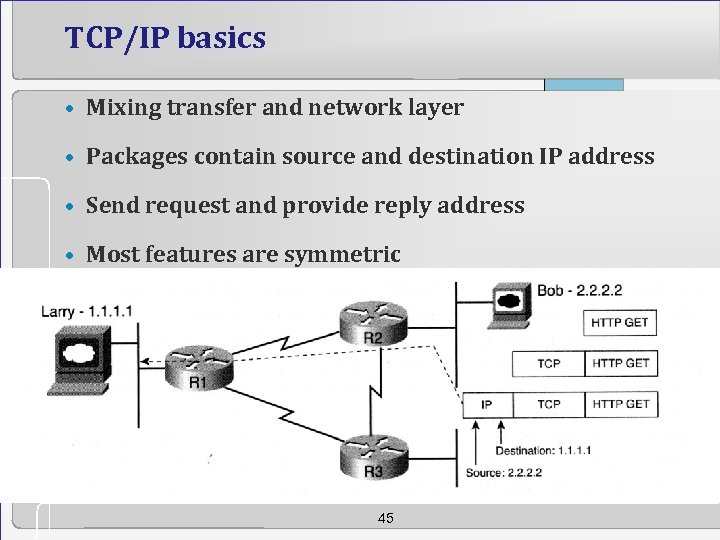 TCP/IP basics • Mixing transfer and network layer • Packages contain source and destination IP address • Send request and provide reply address • Most features are symmetric 45
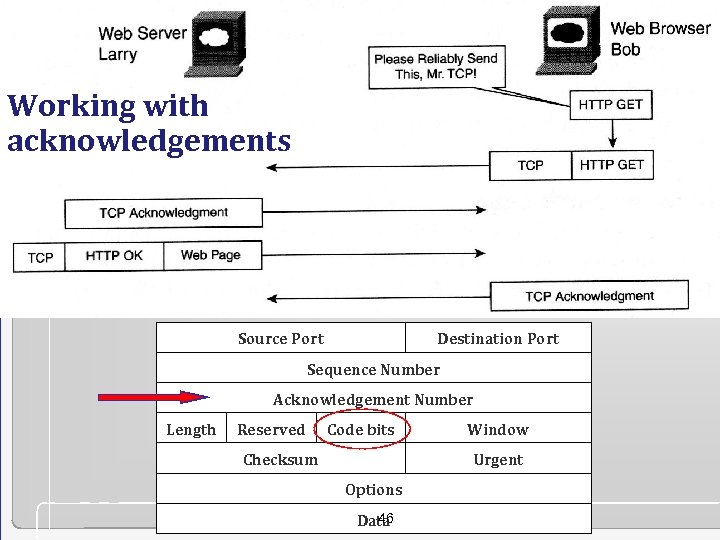 Working with acknowledgements Source Port Destination Port Sequence Number Acknowledgement Number Length Reserved Code bits Checksum Window Urgent Options 46 Data
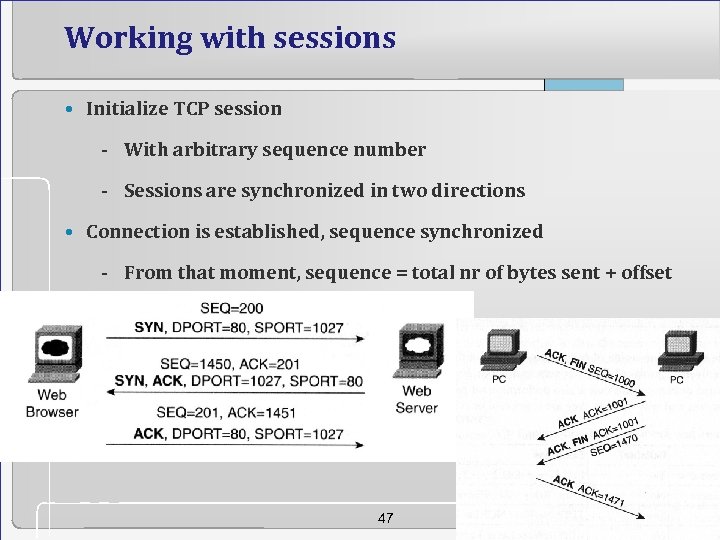 Working with sessions • Initialize TCP session - With arbitrary sequence number - Sessions are synchronized in two directions • Connection is established, sequence synchronized - From that moment, sequence = total nr of bytes sent + offset 47
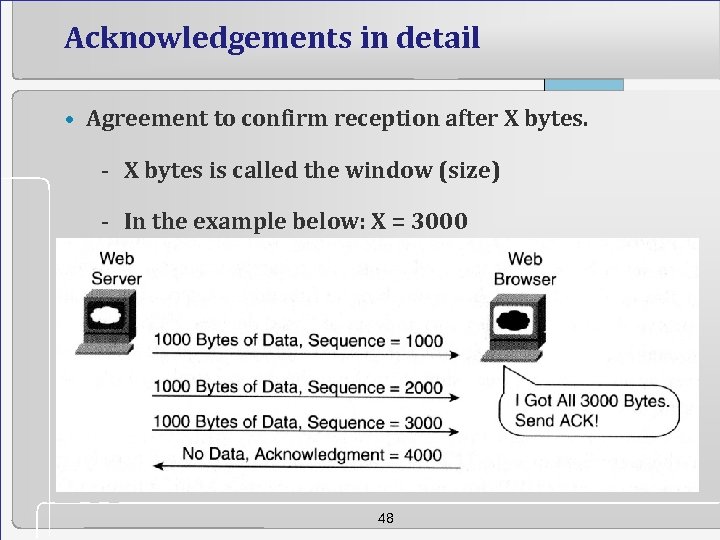 Acknowledgements in detail • Agreement to confirm reception after X bytes. - X bytes is called the window (size) - In the example below: X = 3000 48
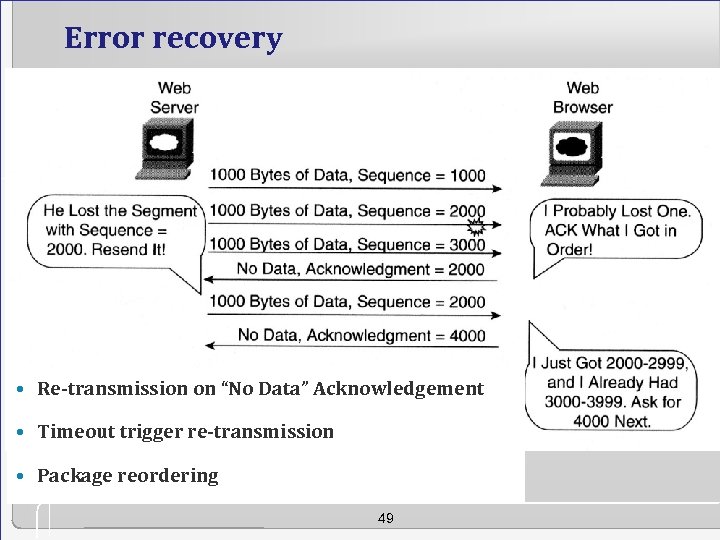 Error recovery • Re-transmission on “No Data” Acknowledgement • Timeout trigger re-transmission • Package reordering 49
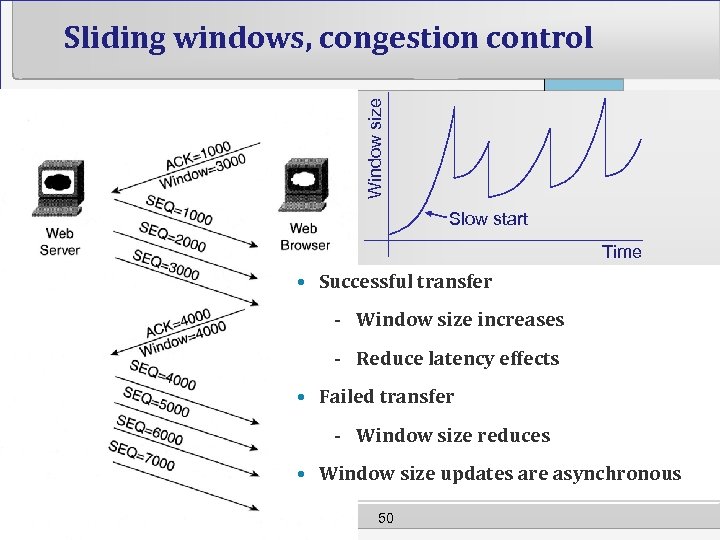 Window size Sliding windows, congestion control Slow start Time • Successful transfer - Window size increases - Reduce latency effects • Failed transfer - Window size reduces • Window size updates are asynchronous 50
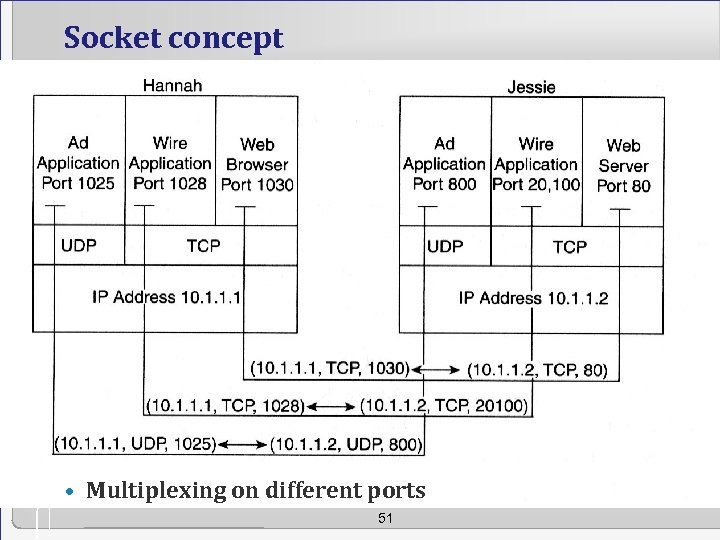 Socket concept • Multiplexing on different ports 51
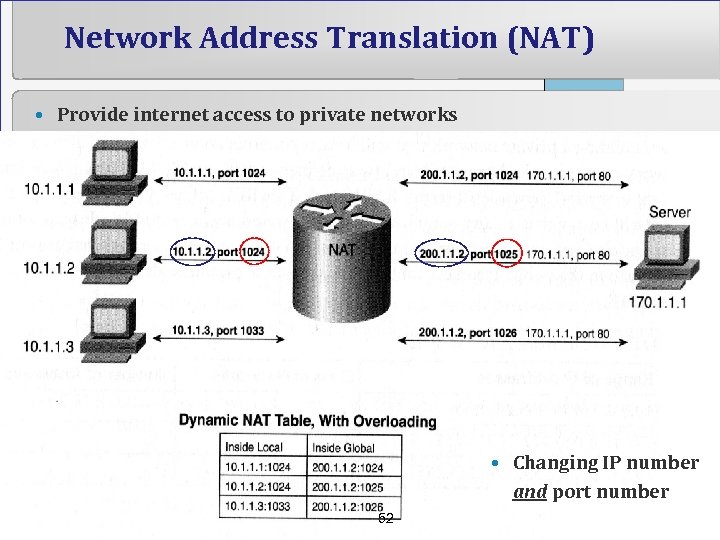 Network Address Translation (NAT) • Provide internet access to private networks • Changing IP number and port number 52
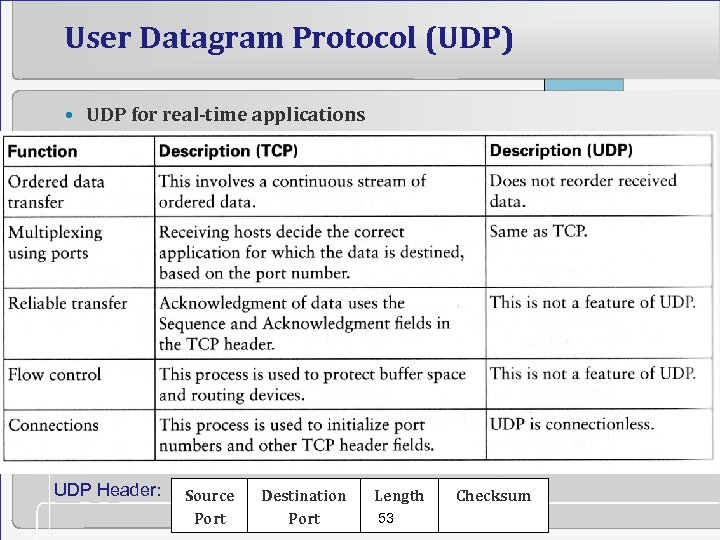 User Datagram Protocol (UDP) • UDP for real-time applications UDP Header: Source Port Destination Port Length 53 Checksum
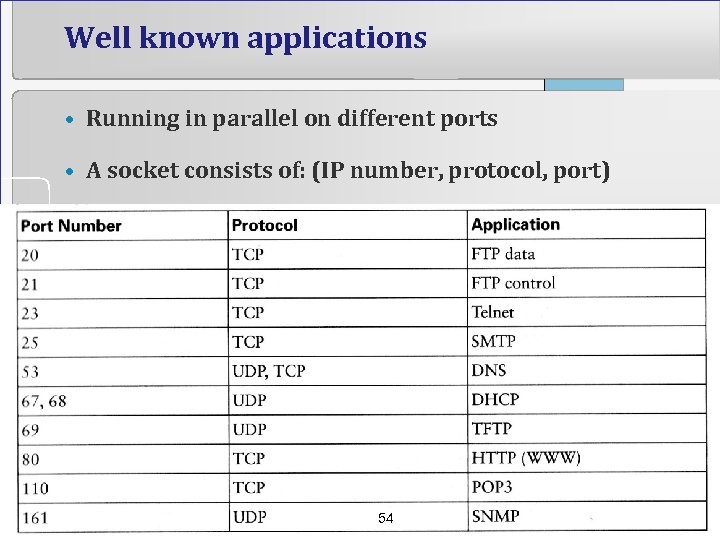 Well known applications • Running in parallel on different ports • A socket consists of: (IP number, protocol, port) 54
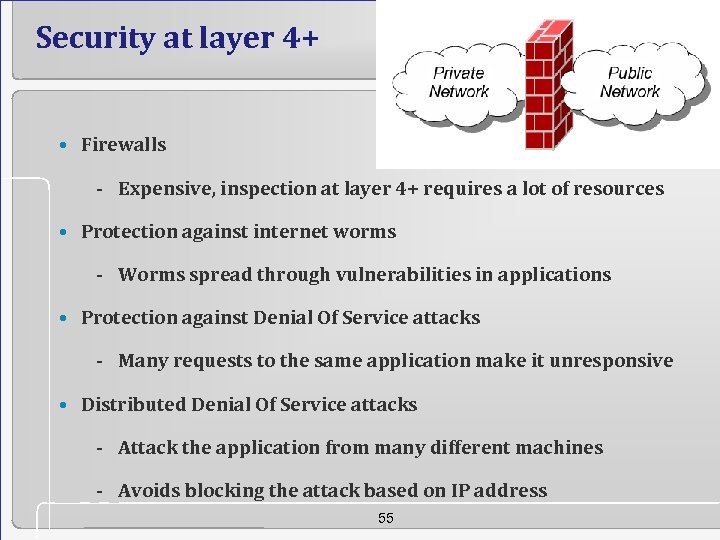 Security at layer 4+ • Firewalls - Expensive, inspection at layer 4+ requires a lot of resources • Protection against internet worms - Worms spread through vulnerabilities in applications • Protection against Denial Of Service attacks - Many requests to the same application make it unresponsive • Distributed Denial Of Service attacks - Attack the application from many different machines - Avoids blocking the attack based on IP address 55
 Firewall types • First generation - Packet inspection - Check IP address and port number and filter • Second generation - State full firewall (i. e. state aware) - Distinguishes between existing and new connections • Third generation - Proxy based firewalls - Application aware - Inspects traffic on application specific features 56
 From Tanenbaum Computer Networks ISBN 0 -13 -038488 -7 Cryptography • Cryptography: Dk ( Ek (P) ) = P - D = Decryption algorithm, E = Encryption algorithm and k = key - P = Plain text • Kerckhoff’s principle: - All algorithms should be public, only keys are secret • Symmetric (Asymmetric) key algorithms: - Same (Different) key is used for encryption and decryption • Examples of symmetric key algorithms (based on substitutions and permutations): - (Triple) DES = Data Encryption Standard - AES = Advanced Encryption Standard 57
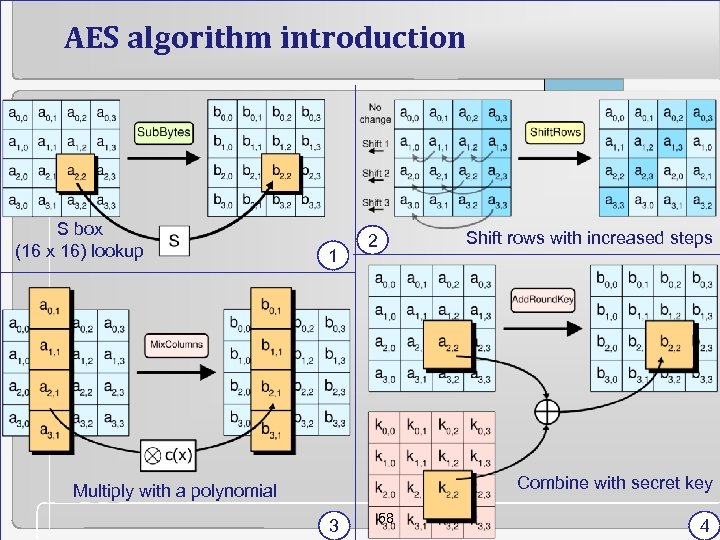 AES algorithm introduction S box (16 x 16) lookup 1 Shift rows with increased steps 2 Combine with secret key Multiply with a polynomial 3 58 4
 Asymmetric key algorithms • Weak point in AES: distribution of the key - If the key is known, Dk and Ek are known • Solution: use different keys for Encryption/Decryption - Still: Dk 2 (Ek 1 (P) ) = P • Make Ek 1 publicly available - It should be very difficult to deduce Dk 2 from Ek 1 • Additional complication - Part of the information is out in the open (k 1) • Examples of asymmetric key algorithms: - DSA = Digital Signature Algorithm - RSA = Rivest, Shamir and Adleman (MIT) 59
 RSA overview • Choose two large prime numbers (1024 bits or more) • Compute n = p x q and z = (p - 1) x (q - 1) • Find a number d smaller than z - Where d and z should not have a common factor • Find a number e - Where e x d = 1 mod z i. e. 1 + (k x z) • You need (e, n) to encrypt and (p, n) to decrypt - See example on next page • It is extremely difficult to find p and q from n (factorization) 60
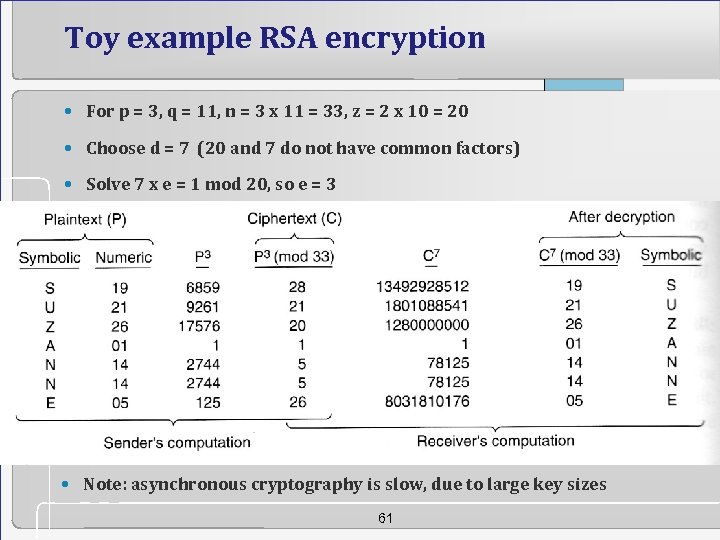 Toy example RSA encryption • For p = 3, q = 11, n = 3 x 11 = 33, z = 2 x 10 = 20 • Choose d = 7 (20 and 7 do not have common factors) • Solve 7 x e = 1 mod 20, so e = 3 • Note: asynchronous cryptography is slow, due to large key sizes 61
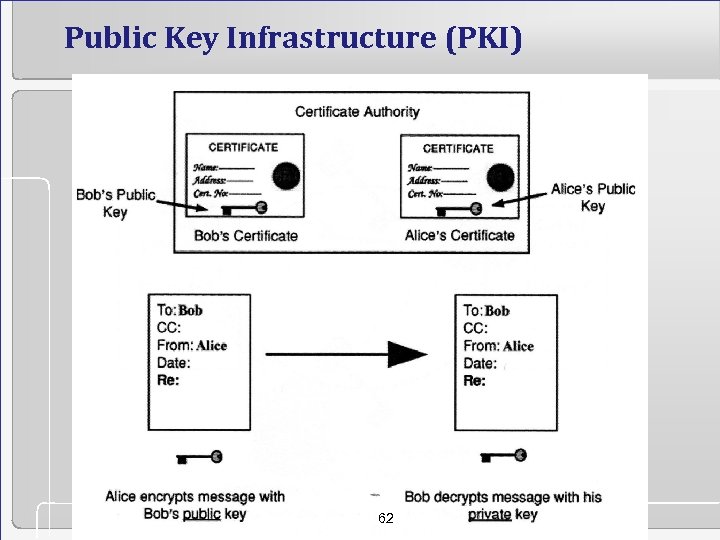 Public Key Infrastructure (PKI) 62
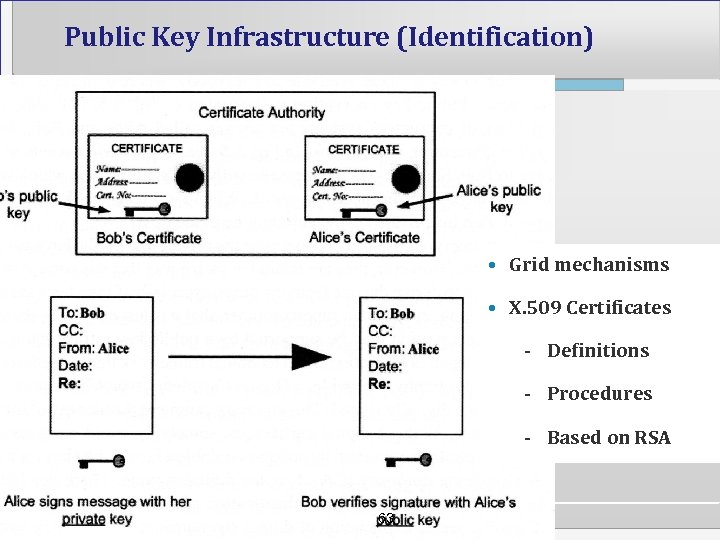 Public Key Infrastructure (Identification) • Grid mechanisms • X. 509 Certificates - Definitions - Procedures - Based on RSA 63
 Transport Layer Security (TLS) State of the art in secure connections 1. Client contacts server, server sends its certificate 2. Client checks digital signature of the CA 3. Client checks server certificate • Protection against man in the middle attacks 4. Client proposes encryption method 5. Switch to symmetric encryption (e. g. AES) 6. All kinds of additional measures 64
 Advanced topics, not covered • Network layer security - PAP, CHAP • IPv 6 and IPSec - Successor of IPv 4, 128 bit = 5 x 10128 addresses - Backward compatible • Optical networks (lambdas) - Dense Wave Length Division Multiplexing (DWDM) - Optical Private Networks (OPNs) - Switching optical networks (ONS boxes) 65
 Advanced topics, not covered - continued • Application layer - DNS, P 2 P, VPN - Email, Hyper. Text • Distributed File Systems - AFS, NFS, etc. • Unicast versus Multicast - Time To Live (TTL) • Grid 66
 Cees de Laat 67