

TOPIC #1 MANAGING THE NEW WORKPLACE Olga Myronova,

 Скачать презентацию TOPIC #1 MANAGING THE NEW WORKPLACE Olga Myronova,
14290-topic_1.ppt
- Количество слайдов: 22
TOPIC #1 MANAGING THE NEW WORKPLACE Olga Myronova, PhD, Management and Business Department KhNUE MANAGER’S LABOR ORGANIZING
The definition of management MANAGEMENT The attainment the organizational goals in an effective and efficient manner through planning, organizing, leading, and controlling organizational resources.
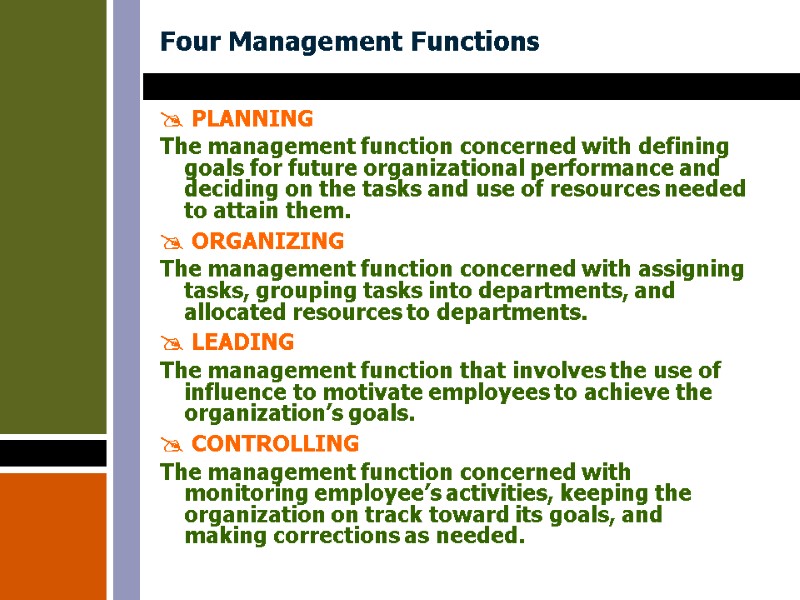
Four Management Functions PLANNING The management function concerned with defining goals for future organizational performance and deciding on the tasks and use of resources needed to attain them. ORGANIZING The management function concerned with assigning tasks, grouping tasks into departments, and allocated resources to departments. LEADING The management function that involves the use of influence to motivate employees to achieve the organization’s goals. CONTROLLING The management function concerned with monitoring employee’s activities, keeping the organization on track toward its goals, and making corrections as needed.
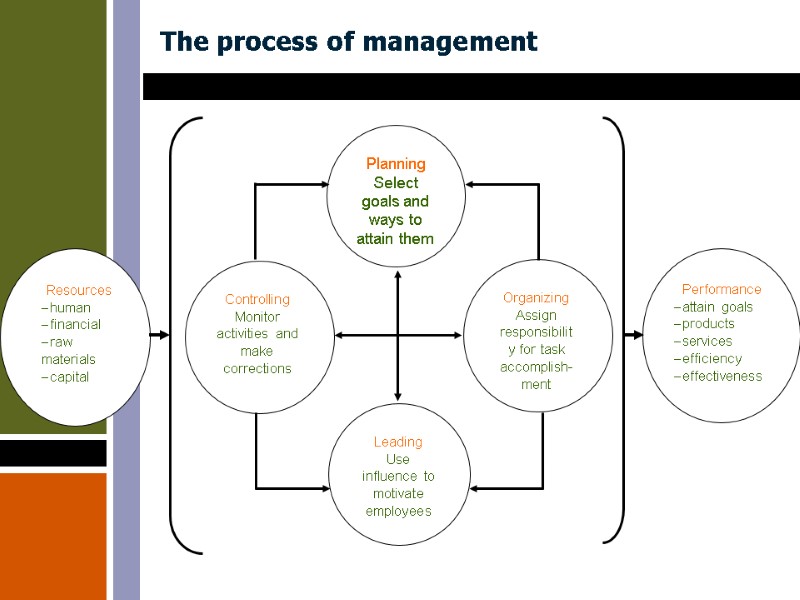
The process of management
Organizational Performance
Organizational Performance ORGANIZATION A social entity that is goal directed and deliberately structured. Social entity means made up of two or more people. Goal directed means designed to achieve some outcome, such as make a profit. Deliberately structured means that tasks are divided and responsibility for their performance is assigned to organization members.
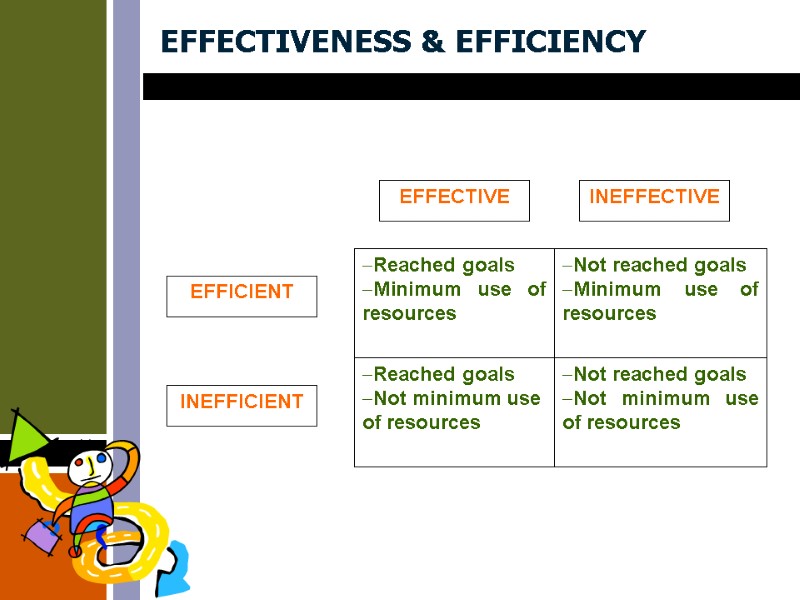
ORGANIZATIONAL EFFECTIVENESS The degree which the organization achieves a stated goals. ORGANIZATIONAL EFFICIENCY The use of minimal resources – raw materials, money, and people – to produce a desired volume of output. The ultimate responsibility of managers is to achieve high performance, which is the attainment of organizational goals by using resources in an efficient and effective manner.
EFFECTIVENESS & EFFICIENCY
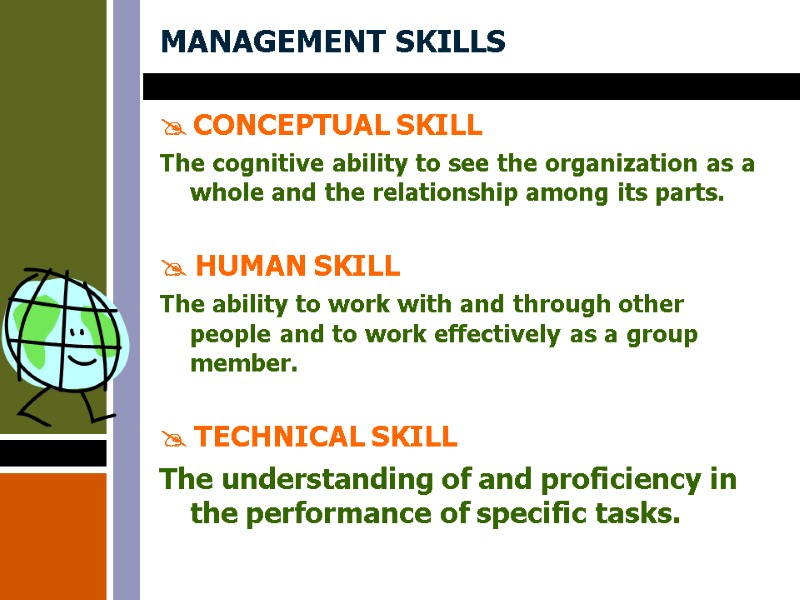
MANAGEMENT SKILLS CONCEPTUAL SKILL The cognitive ability to see the organization as a whole and the relationship among its parts. HUMAN SKILL The ability to work with and through other people and to work effectively as a group member. TECHNICAL SKILL The understanding of and proficiency in the performance of specific tasks.
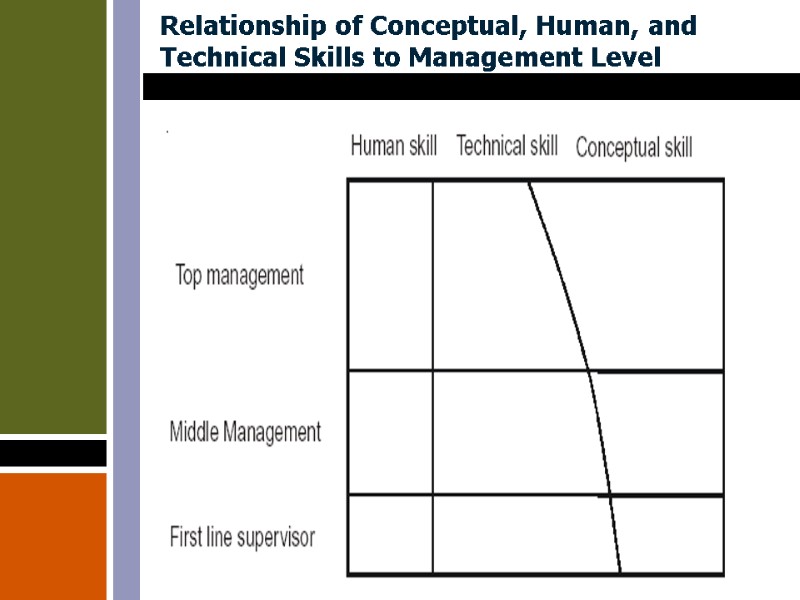
Relationship of Conceptual, Human, and Technical Skills to Management Level
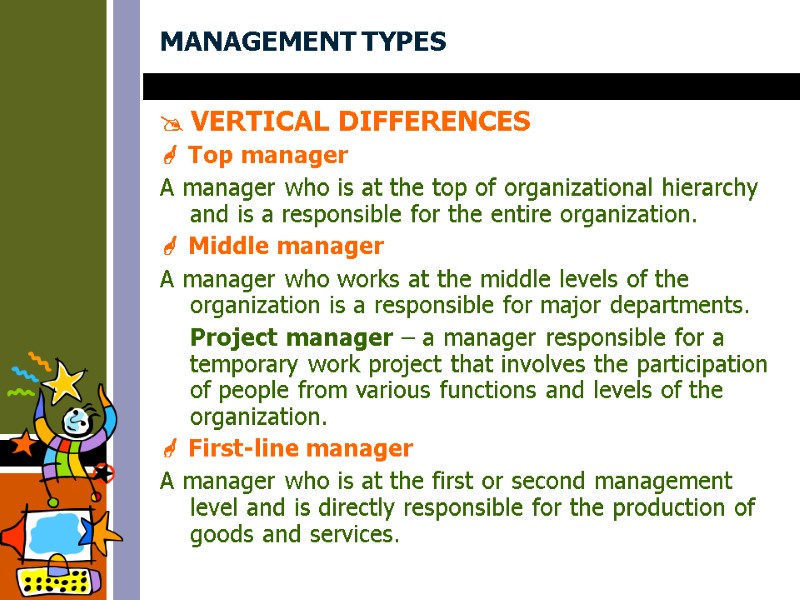
MANAGEMENT TYPES VERTICAL DIFFERENCES Top manager A manager who is at the top of organizational hierarchy and is a responsible for the entire organization. Middle manager A manager who works at the middle levels of the organization is a responsible for major departments. Project manager – a manager responsible for a temporary work project that involves the participation of people from various functions and levels of the organization. First-line manager A manager who is at the first or second management level and is directly responsible for the production of goods and services.
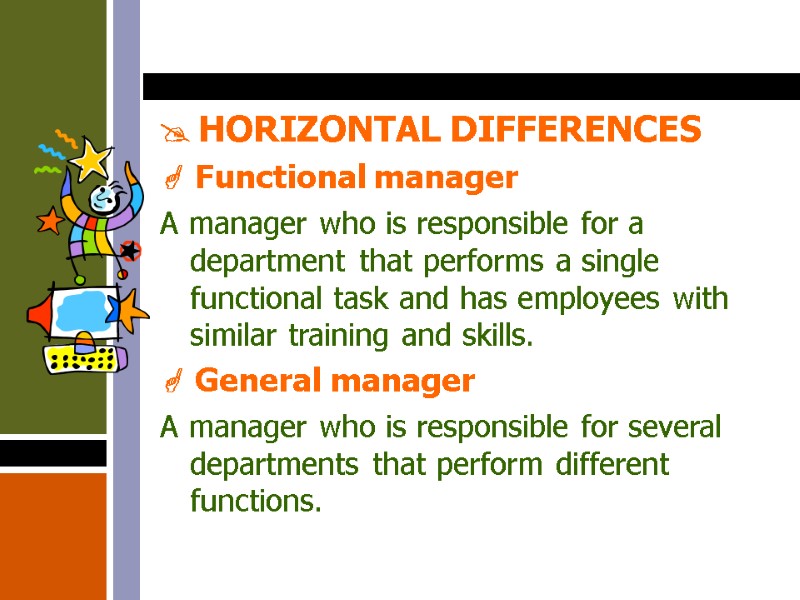
HORIZONTAL DIFFERENCES Functional manager A manager who is responsible for a department that performs a single functional task and has employees with similar training and skills. General manager A manager who is responsible for several departments that perform different functions.
What Is It Like to Be a Manager? Managerial activity is characterized by variety; fragmentation (the act or process of dividing); brevity (shortness of duration). The manager performs a great deal of work at an unrelenting (not relaxing or slackening) pace.
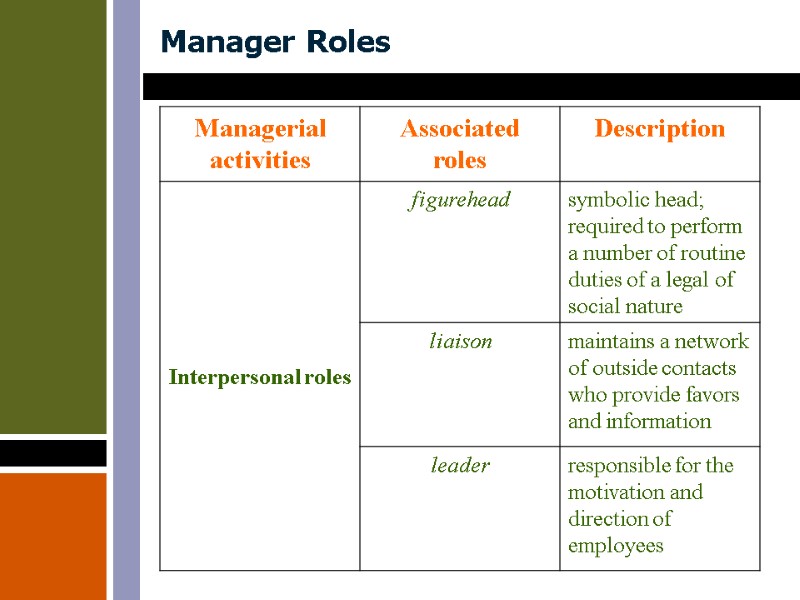
Manager Roles
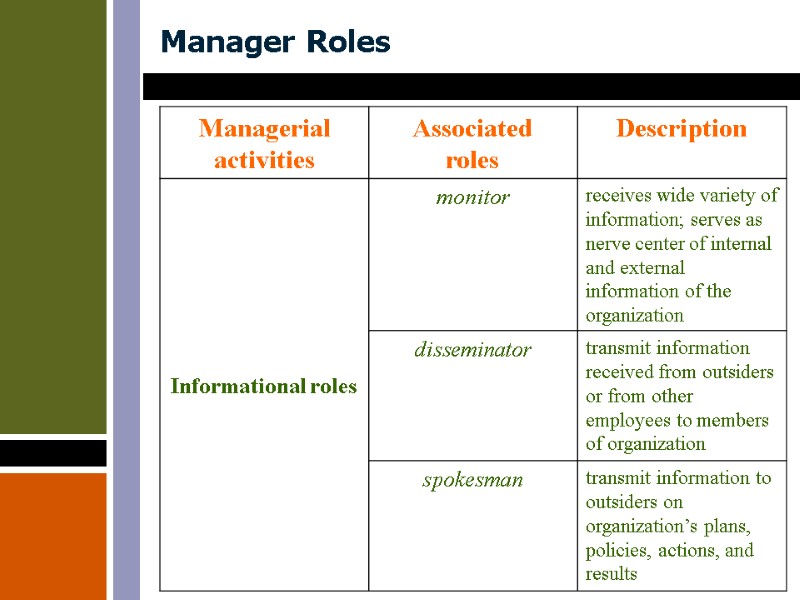
Manager Roles
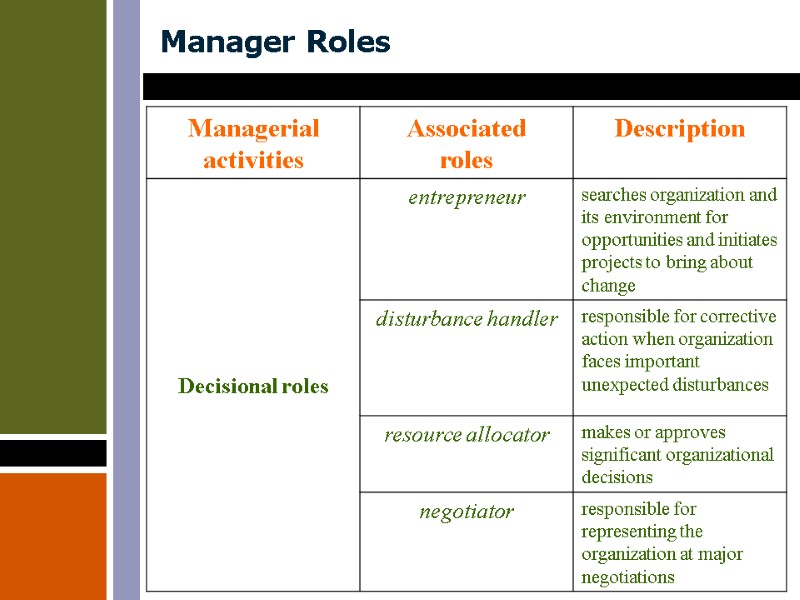
Manager Roles
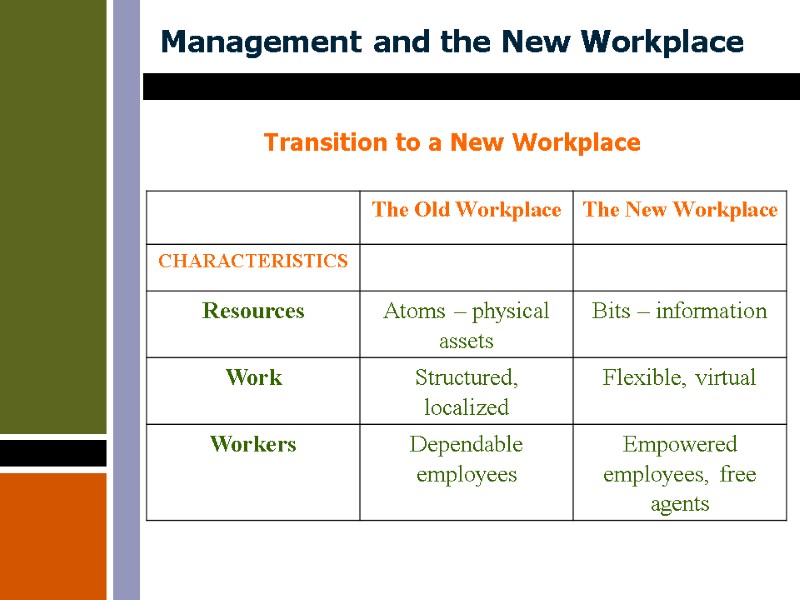
Management and the New Workplace Transition to a New Workplace
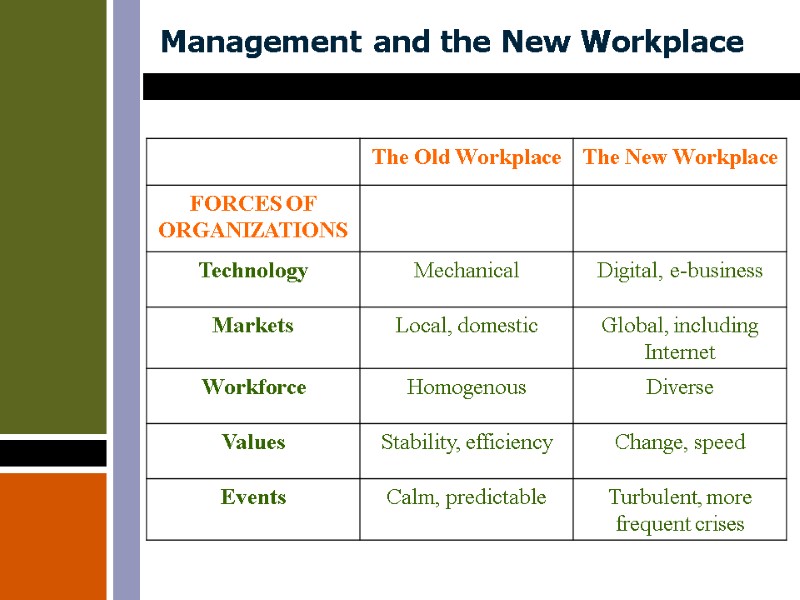
Management and the New Workplace
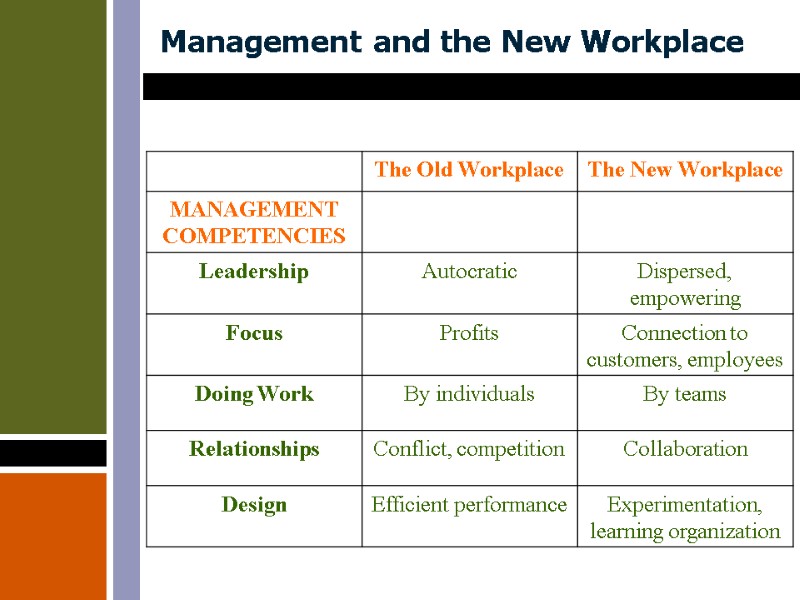
Management and the New Workplace
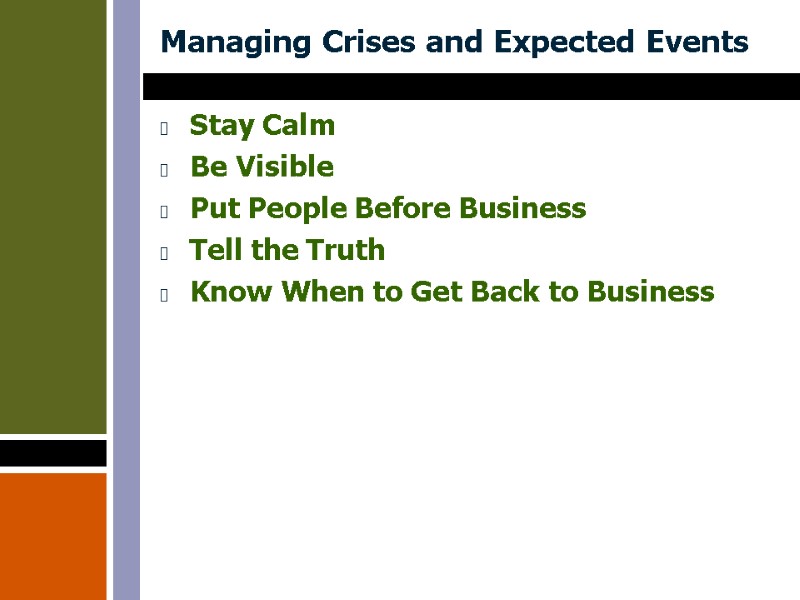
Managing Crises and Expected Events Stay Calm Be Visible Put People Before Business Tell the Truth Know When to Get Back to Business
Questions?
Thank you