 Скачать презентацию Tools for global warming policy makers Harvey Lam
04f274f8615c7ee0903a25f9eb8d66e7.ppt
- Количество слайдов: 34



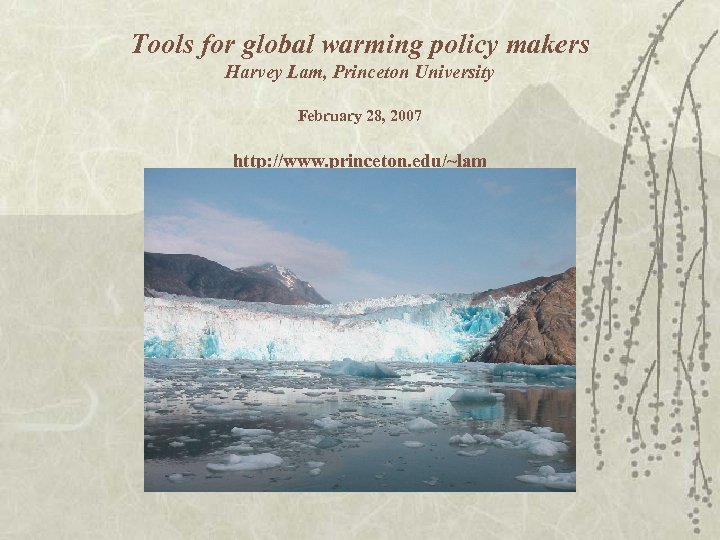
Tools for global warming policy makers Harvey Lam, Princeton University February 28, 2007 http: //www. princeton. edu/~lam
We accept the following premises • CO 2 emitted by the burning of fossil fuels is primarily responsible for the observed rise of atmospheric CO 2 content. • CO 2 is a major greenhouse gas. • Continued and indefinite increase of CO 2 can have significant adverse consequences. • The “fix” should have the consent of an informed public.
Critiques of current public discourse 1. Inadequate appreciation of the magnitude of the global warming problem. Confusion between global warming, energy independence, and air pollutions. 2. Inadequate appreciation of the timescale of the problem. 3. Inadequate appreciation of the role of the invisible hand of free market capitalism.
Notations t Time (years) C Atmospheric carbon content (Gt. C) E Annual emissions rate (Gt. C/yr) Cstab Stabilized C target ceiling Estab Allowed E when C=Cstab CO 2 concentration: 1 ppm=2. 1 Gt. C C(before 19 th century)~286 ppm ~600 Gt. C
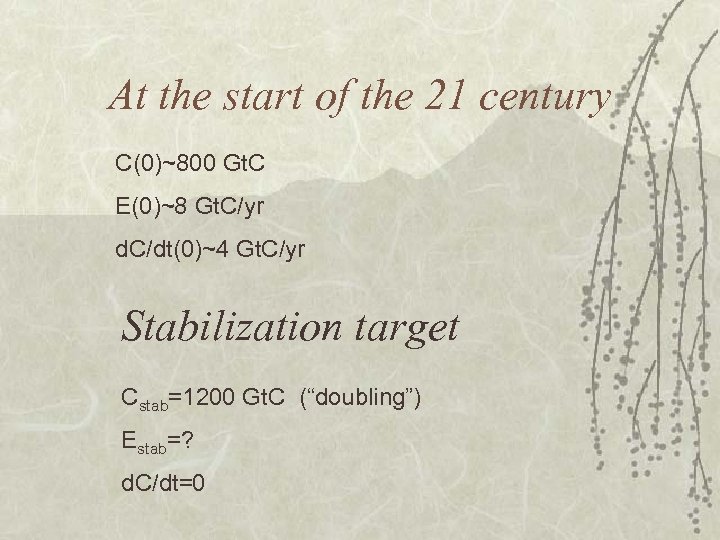
At the start of the 21 century C(0)~800 Gt. C E(0)~8 Gt. C/yr d. C/dt(0)~4 Gt. C/yr Stabilization target Cstab=1200 Gt. C (“doubling”) Estab=? d. C/dt=0
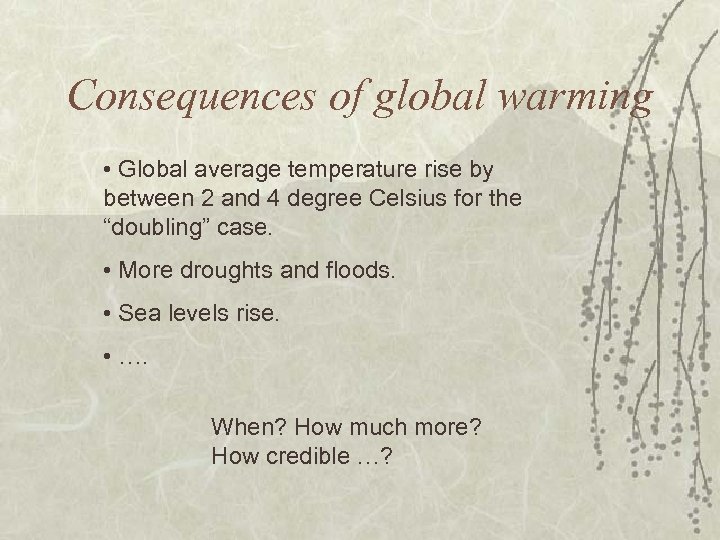
Consequences of global warming • Global average temperature rise by between 2 and 4 degree Celsius for the “doubling” case. • More droughts and floods. • Sea levels rise. • …. When? How much more? How credible …?
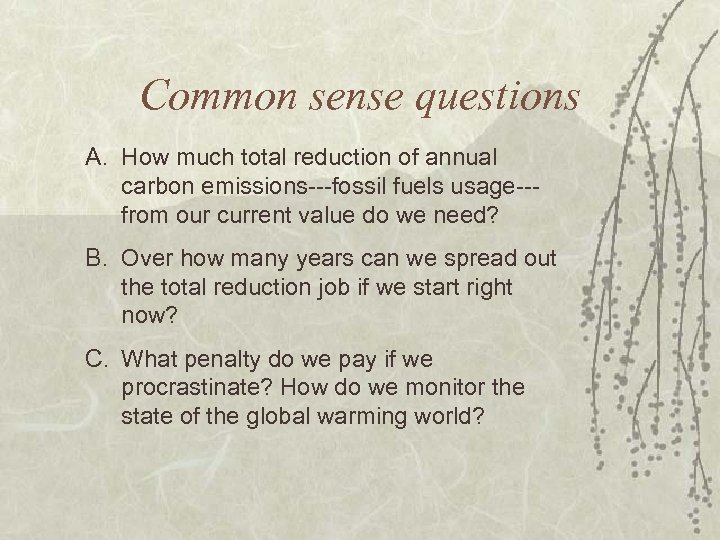
Common sense questions A. How much total reduction of annual carbon emissions---fossil fuels usage--from our current value do we need? B. Over how many years can we spread out the total reduction job if we start right now? C. What penalty do we pay if we procrastinate? How do we monitor the state of the global warming world?
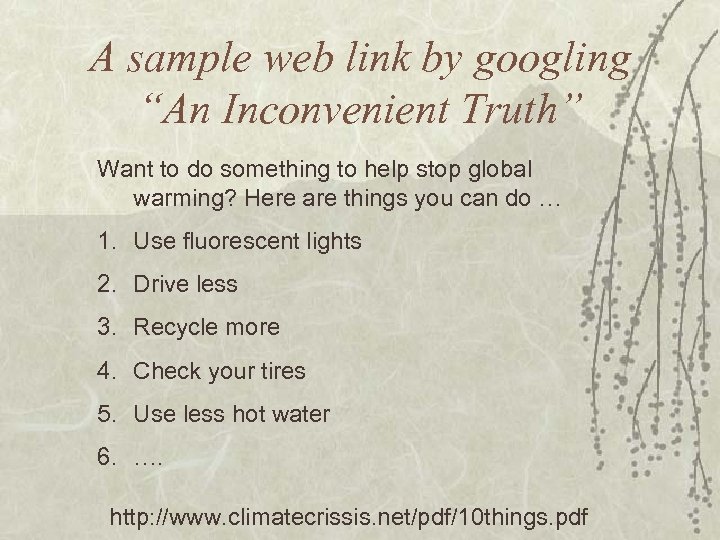
A sample web link by googling “An Inconvenient Truth” Want to do something to help stop global warming? Here are things you can do … 1. Use fluorescent lights 2. Drive less 3. Recycle more 4. Check your tires 5. Use less hot water 6. …. http: //www. climatecrissis. net/pdf/10 things. pdf
Messages from the media • Windmills off Cape Cod? No. • Nuclear energy? No. • Perhaps the global GDP might drop 1%. • Executive orders setting goals. Yes. • Fine the polluters. Yes. • Ethanol from corn. Yes. • We can stop global warming now if we only have the will. • …
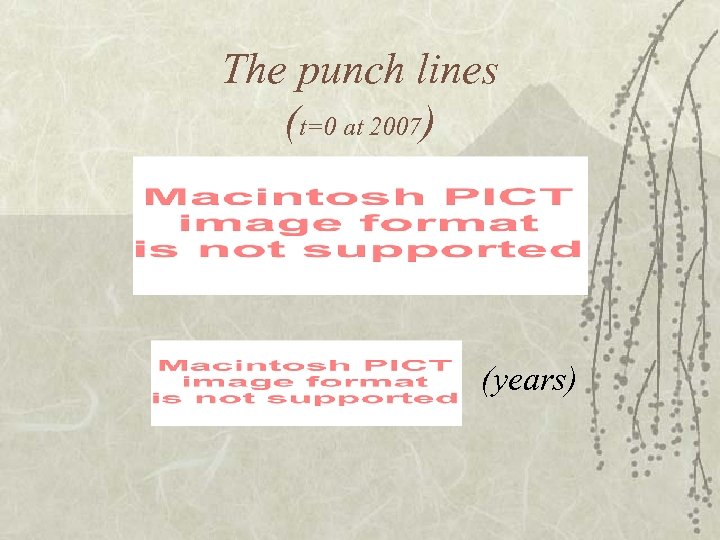
The punch lines (t=0 at 2007) (years)
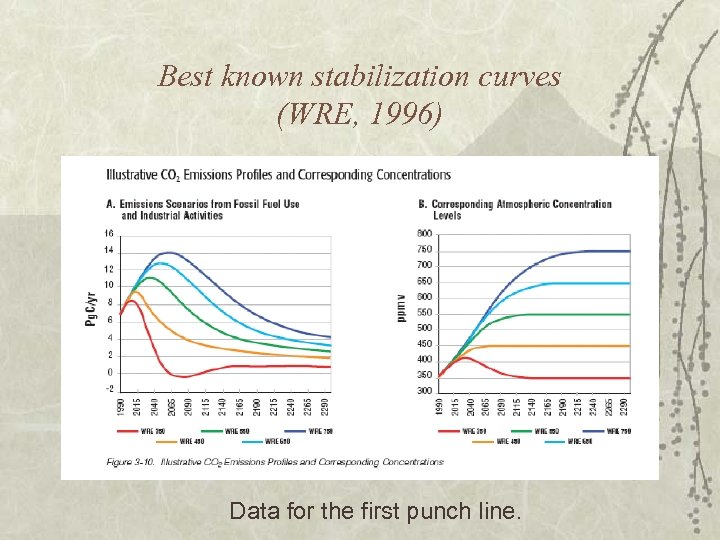
Best known stabilization curves (WRE, 1996) Data for the first punch line.
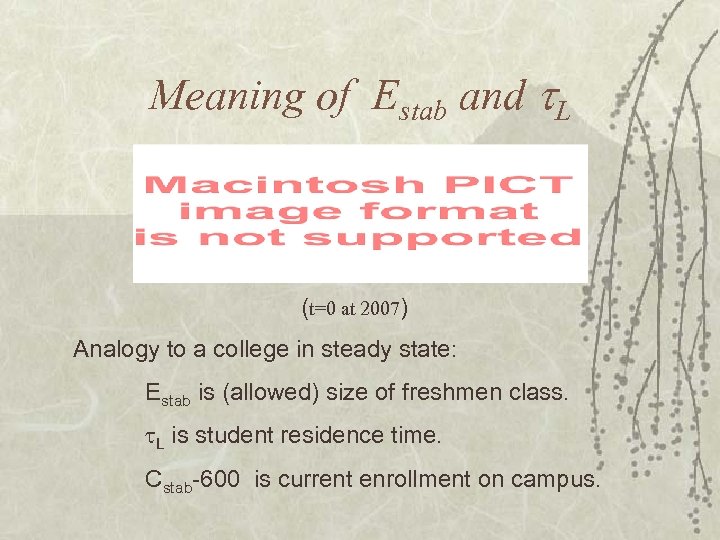
Meaning of Estab and L (t=0 at 2007) Analogy to a college in steady state: Estab is (allowed) size of freshmen class. L is student residence time. Cstab-600 is current enrollment on campus.
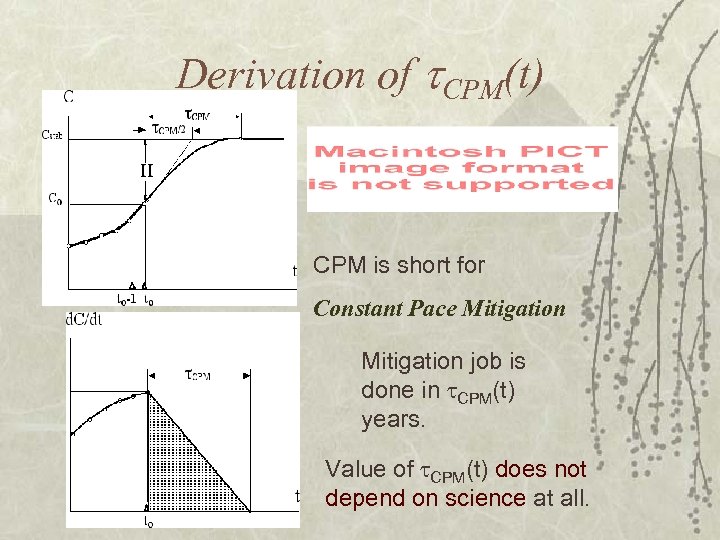
Derivation of CPM(t) CPM is short for Constant Pace Mitigation job is done in CPM(t) years. Value of CPM(t) does not depend on science at all.

Where does science come in? The following comes from published science -based studies: Better science will provide better L(t; …). Repeat CPM(t) is independent of science.
Answers to question A For simplicity, we use L(t)~200 years It is not a 10% or 20% problem! Cstab=1200, Estab=3 Gt. C/yr Cstab=1000, Estab=2 Gt. C/yr Cstab=900, Estab=1. 5 Gt. C/yr Cstab=800, Estab=1 Gt. C/yr Currently, C~800 Gt. C, and E~8 Gt. C/yr
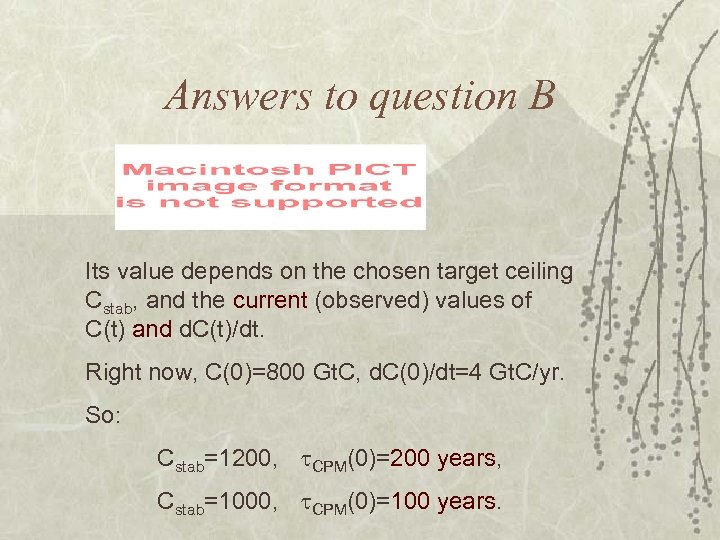
Answers to question B Its value depends on the chosen target ceiling Cstab, and the current (observed) values of C(t) and d. C(t)/dt. Right now, C(0)=800 Gt. C, d. C(0)/dt=4 Gt. C/yr. So: Cstab=1200, CPM(0)=200 years, Cstab=1000, CPM(0)=100 years.

Historical data of CPM(t)
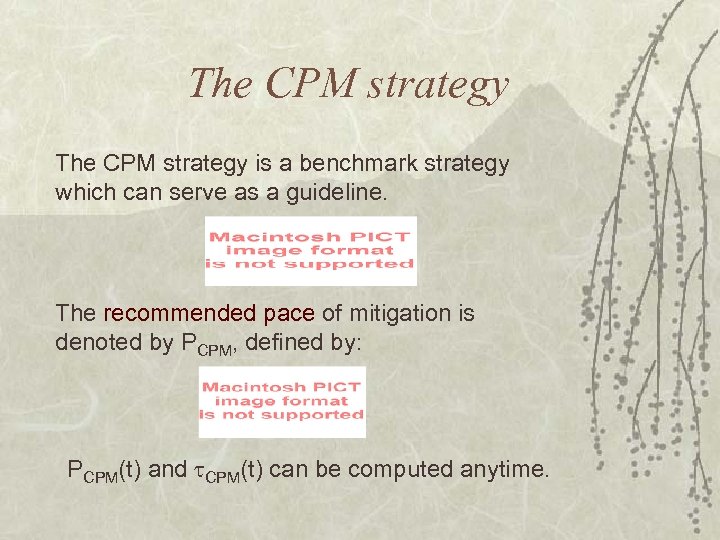
The CPM strategy is a benchmark strategy which can serve as a guideline. The recommended pace of mitigation is denoted by PCPM, defined by: PCPM(t) and CPM(t) can be computed anytime.
State of the global warming world CPM(t) tells how many years do we have (at most) to stabilized at the chosen Cstab. PCPM(t) tells how much annual emissions reduction is needed now to stabilized at the chosen Cstab for each of the next CPM(t) years (it is the lower bound of the future pace). When we are not doing what we should be doing, CPM(t) would drop by more than one year each year, and PCPM(t) would rise.

Answers to question C 20 GW/yr per year > Consequences of business-as-usual

The Do-the-best-we-can scenario
Carbon cycle emulator § Carbon that used to be buried underground is being dug up, pumped out, burned and emitted into the atmosphere. § Once in the atmosphere, it somehow migrates into the biosphere and the deep oceans, leaving some to stay on. § Conservation of carbon mass must be respected.
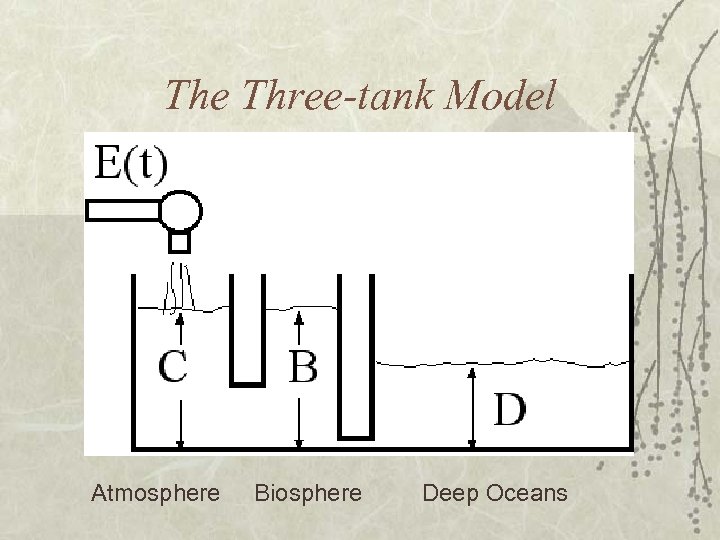
The Three-tank Model Atmosphere Biosphere Deep Oceans
The three-tank model This is a linear model, with four constants: S, L, and . E(t) is the forcing function.
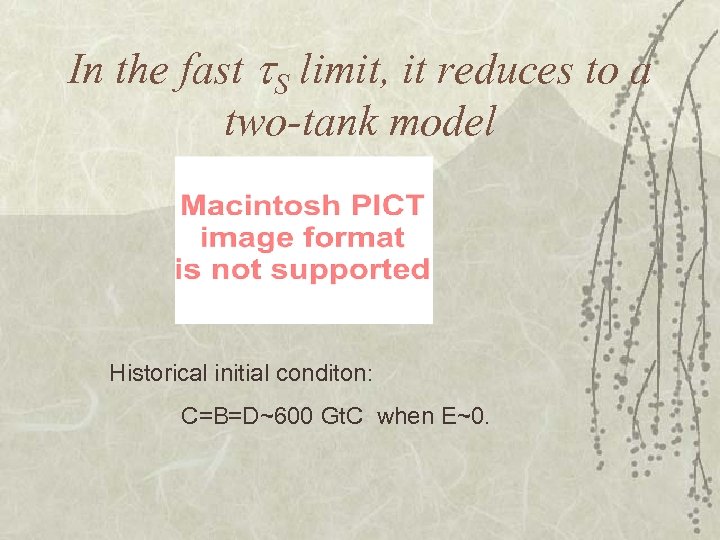
In the fast S limit, it reduces to a two-tank model Historical initial conditon: C=B=D~600 Gt. C when E~0.
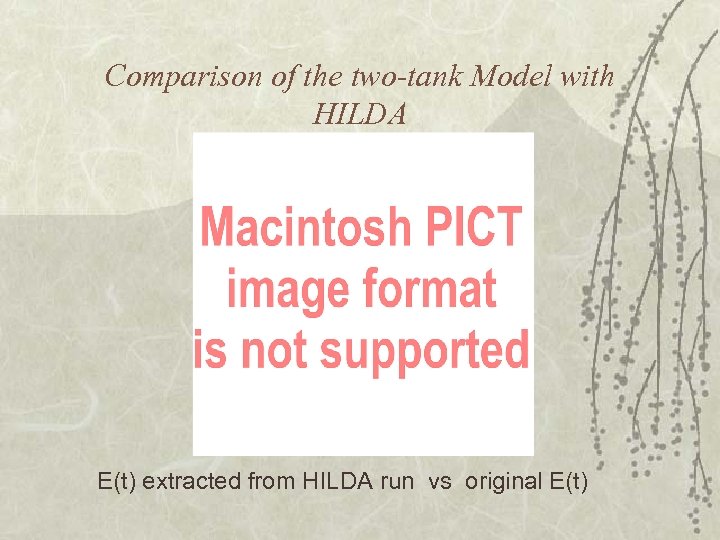
Comparison of the two-tank Model with HILDA E(t) extracted from HILDA run vs original E(t)
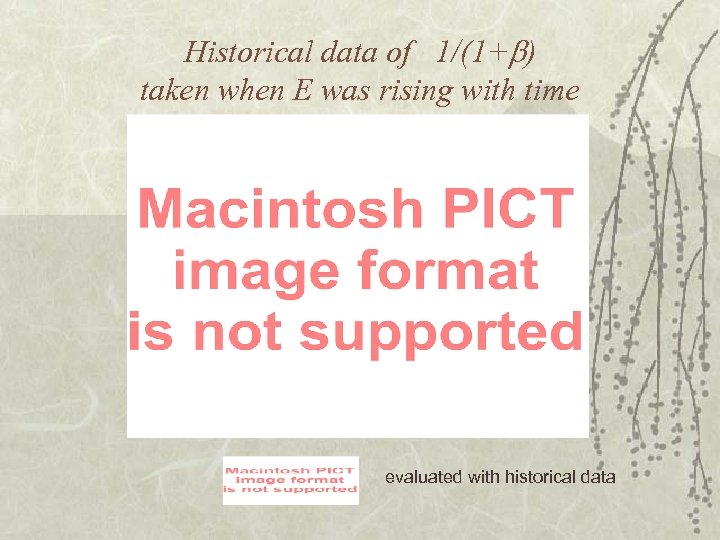
Historical data of 1/(1+ ) taken when E was rising with time evaluated with historical data
Fantasies 1. A California bio-engineering team has cultivated a strain of termites that eats carbon-based garbage, reproduces madly when exposed to sun light and water vapor, and dies happily as greasy oily balls which have the same chemical structure as crude oil from the Middle East. Good quality termite-based crude oil can be produced at $20 per barrel. 2. OPEC announces a price cut and vows to defend its market share.
Tools for policy makers (t=0 at 2007) Science dependent (years)
Conclusions 1. Global warming is not a 10% or 20% problem. It is a more than 60% problem. 2. No single technology is likely to be able to do the job. It needs the sum of all the 5% and 10% contributions it can get. Conservation helps. Fission nuclear should not be preemptively be discarded. 3. CPM(t) for several interesting Cstab’s should be publicized annually to keep the public informed. 4. Technology alone cannot solve the problem. The invisible hand of free market capitalism must be removed.
Parting remarks Ø Political leaders (Gore, Blair, Corzine, Schwarzenegger, …) must recognize that having the will to do the job is not enough. Ø The general public (you, me, and our grandchildren, …) must be willing to pay the costs and bear the burdens of doing the job. Ø The global warming problem is much bigger than the ‘energy independence’ and the ‘air pollutions’ problems. Conservation can play a dominant role, but cannot be the whole show.
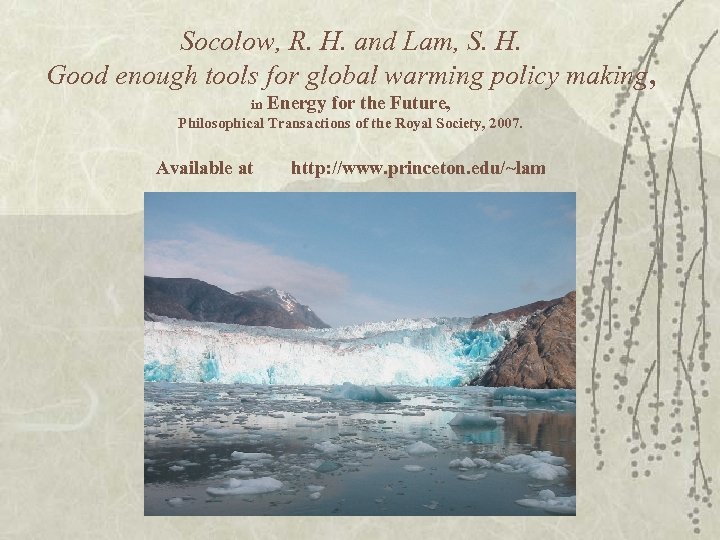
Socolow, R. H. and Lam, S. H. Good enough tools for global warming policy making, in Energy for the Future, Philosophical Transactions of the Royal Society, 2007. Available at http: //www. princeton. edu/~lam

Historical data of d( CPM)/dt
Plot of d. C/dt vs E using solutions from the One-tank Model
Скачать презентацию Tools for global warming policy makers Harvey Lam
04f274f8615c7ee0903a25f9eb8d66e7.ppt