


 Скачать презентацию Tool Development for Peak Electrical Demand Limiting Using
f753d8fbfbdc9614059479009a0ef675.ppt
- Количество слайдов: 21
 Tool Development for Peak Electrical Demand Limiting Using Building Thermal Mass January 2004 Jim Braun and Kyoung-Ho Lee Purdue University Ray W. Herrick Laboratories Purdue University
 Project Objectives l Further develop and validate inverse building modeling tool » a tool for developing site-specific strategies and evaluating field site savings l Evaluate potential for demand reduction in a small commercial building structure
 Project Approach l Develop calibrated forward simulation model for the Iowa Energy Center (IEC) l Use forward simulation to evaluate model structure and data training requirements for an inverse building model l Train inverse building model using available data from the IEC l Study impact of precooling duration and on-peak period on peak cooling demand for the IEC
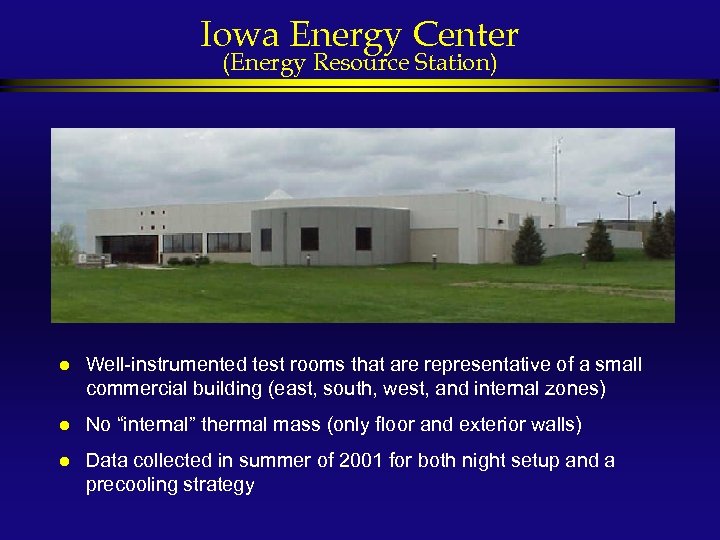 Iowa Energy Center (Energy Resource Station) l Well-instrumented test rooms that are representative of a small commercial building (east, south, west, and internal zones) l No “internal” thermal mass (only floor and exterior walls) l Data collected in summer of 2001 for both night setup and a precooling strategy
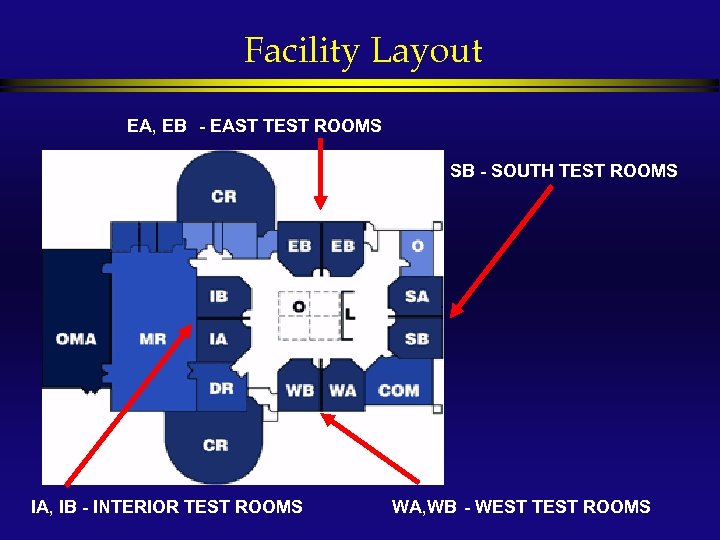 Facility Layout EA, EB - EAST TEST ROOMS SA, SB - SOUTH TEST ROOMS IA, IB - INTERIOR TEST ROOMS WA, WB - WEST TEST ROOMS
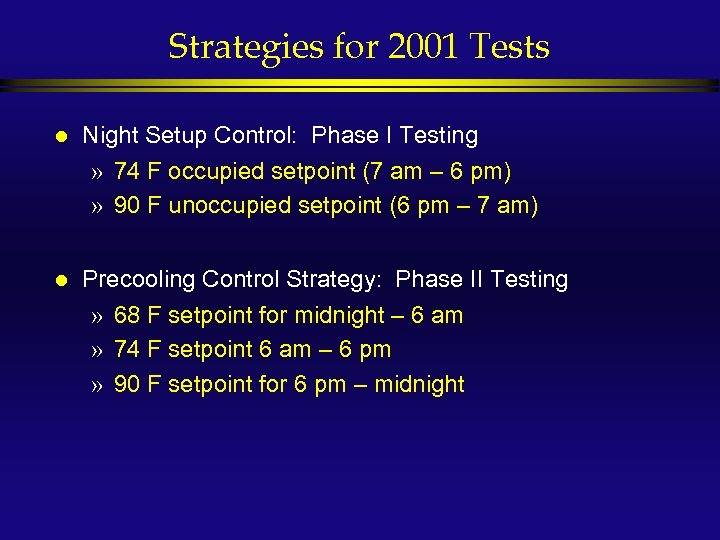 Strategies for 2001 Tests l Night Setup Control: Phase I Testing » 74 F occupied setpoint (7 am – 6 pm) » 90 F unoccupied setpoint (6 pm – 7 am) l Precooling Control Strategy: Phase II Testing » 68 F setpoint for midnight – 6 am » 74 F setpoint 6 am – 6 pm » 90 F setpoint for 6 pm – midnight
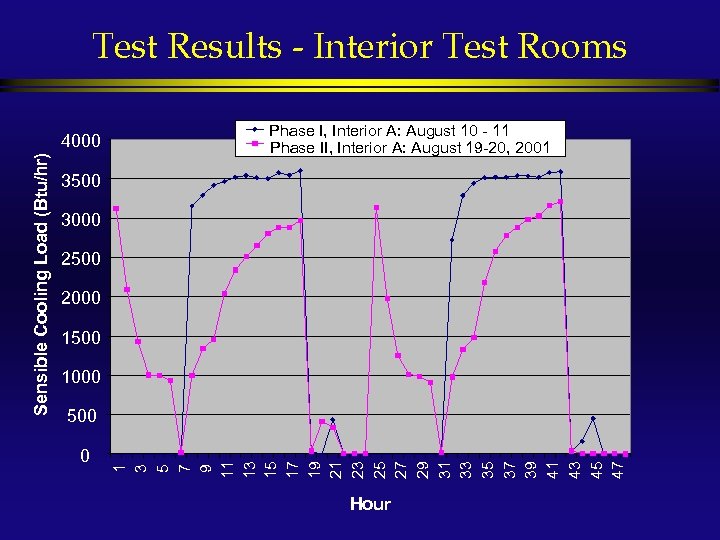 Test Results - Interior Test Rooms Phase I, Interior A: August 10 - 11 Phase II, Interior A: August 19 -20, 2001 3500 3000 2500 2000 1500 1000 500 0 1 3 5 7 9 11 13 15 17 19 21 23 25 27 29 31 33 35 37 39 41 43 45 47 Sensible Cooling Load (Btu/hr) 4000 Hour
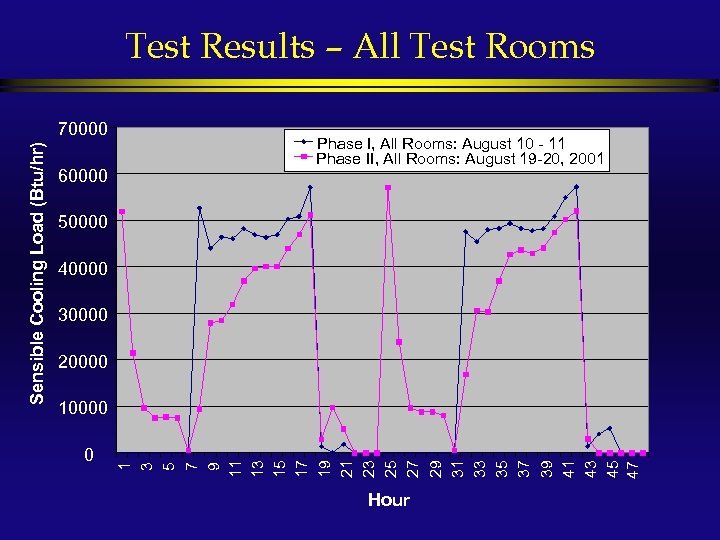 Test Results – All Test Rooms 60000 Phase I, All Rooms: August 10 - 11 Phase II, All Rooms: August 19 -20, 2001 50000 40000 30000 20000 10000 0 1 3 5 7 9 11 13 15 17 19 21 23 25 27 29 31 33 35 37 39 41 43 45 47 Sensible Cooling Load (Btu/hr) 70000 Hour
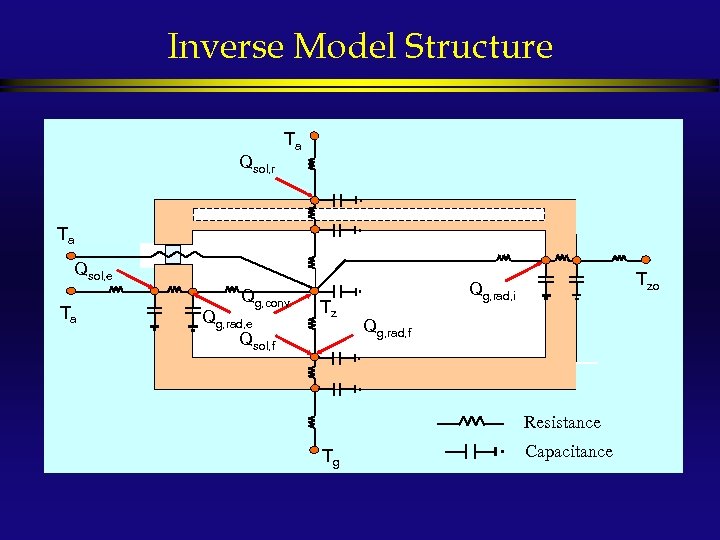 Inverse Model Structure Qsol, r Ta Ta Qsol, e Ta Qg, conv Qg, rad, e Qsol, f Tz Tzo Qg, rad, i Qg, rad, f Resistance Tg Capacitance
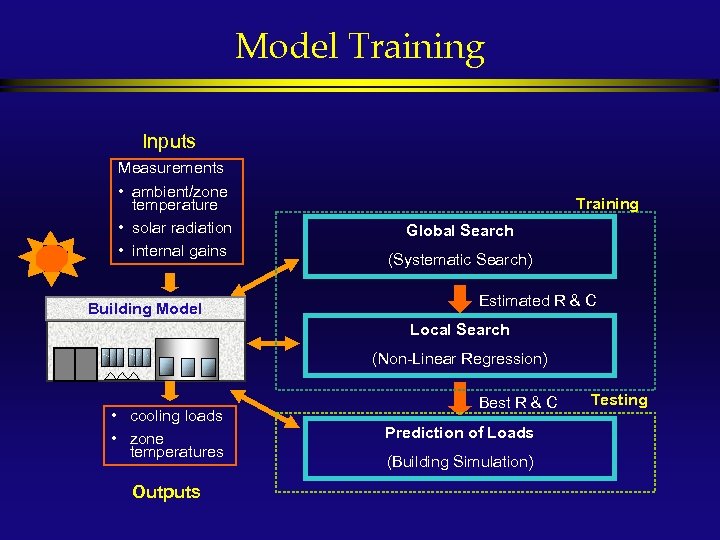 Model Training Inputs Measurements • ambient/zone temperature • solar radiation • internal gains Building Model Training Global Search (Systematic Search) Estimated R & C Local Search (Non-Linear Regression) • cooling loads • zone temperatures Outputs Best R & C Prediction of Loads (Building Simulation) Testing
 Effect of Training Length (simulated data, precooling strategy for training and testing)
 Effect of Control Strategy (simulated data, night setup for training and precooling for testing)
 Comparison with Test Results
 Demand-Limiting Control Evaluation Basic Demand-Limiting Strategy l Unoccupied Period: precool at 67 F l Occupied, Off-Peak Period: maintain zone at 69 F l Occupied, Demand-Limiting Period: maintain zone at 69 F until load exceeds target, then operate at maximum target capacity and allow temperature to float Parametric Studies l Considered individual days (steady-periodic condition) l Determined target that allowed temperature to float between 69 and 76 F within occupied period l Varied start times for precooling and demand-limiting periods
 Precooling with Afternoon Demand Limiting (South, East, West, and Interior Zones Combined) 30% Afternoon Peak-Load Reduction with No Precooling 69 F – 76 F Over Last 6 Hours of Occupancy
 No Precooling with Afternoon Demand Limiting (South, East, West, and Interior Zones Combined) 27% Afternoon Peak-Load Reduction with No Precooling 69 F – 76 F Over Last 6 Hours of Occupancy
 Precooling with All-Day Demand Limiting (South, East, West, and Interior Zones Combined) 23% Daytime Peak-Load Reduction with Precooling 69 F – 76 F Over 8 Hours of Occupancy
 Peak Load Reduction Potential (South, East, West, and Interior Zones Combined) Precooling Start-Time 20 -40% Peak-Load Reduction with Precooling
 West Zone Demand-Limiting Results (No Precooling, Afternoon Demand Limiting) 35% Peak-Load Reduction at End of Day 69 F – 76 F Over Last 3 Hours of Occupancy
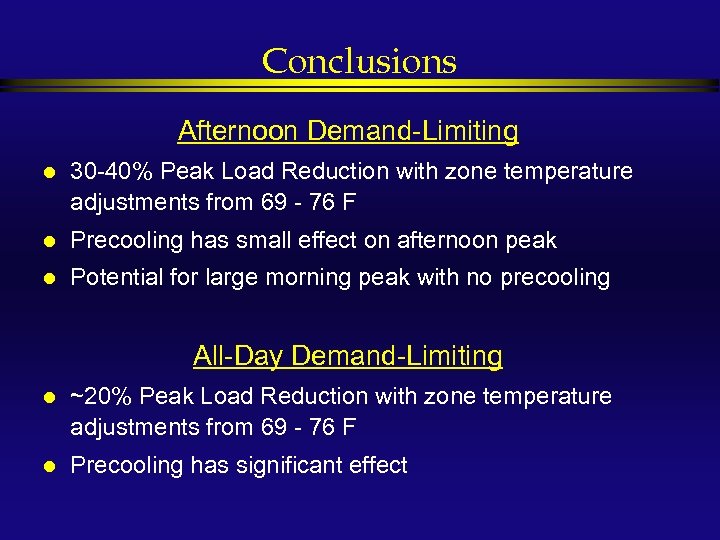 Conclusions Afternoon Demand-Limiting l 30 -40% Peak Load Reduction with zone temperature adjustments from 69 - 76 F l Precooling has small effect on afternoon peak l Potential for large morning peak with no precooling All-Day Demand-Limiting l ~20% Peak Load Reduction with zone temperature adjustments from 69 - 76 F l Precooling has significant effect
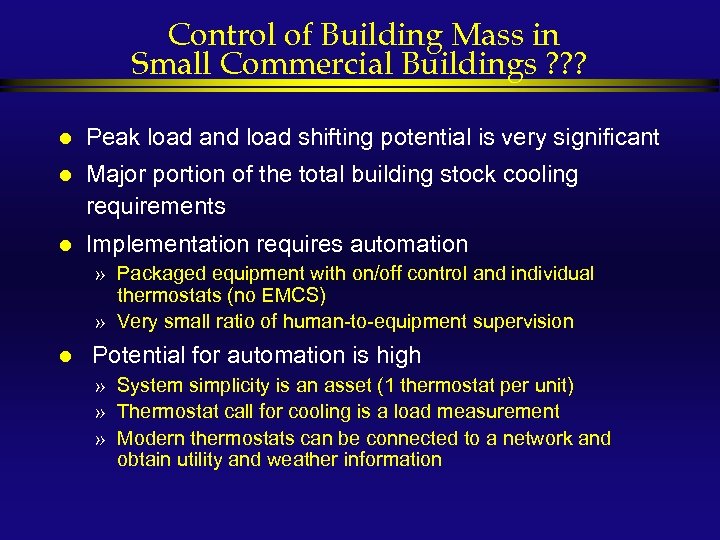 Control of Building Mass in Small Commercial Buildings ? ? ? l Peak load and load shifting potential is very significant l Major portion of the total building stock cooling requirements l Implementation requires automation » Packaged equipment with on/off control and individual thermostats (no EMCS) » Very small ratio of human-to-equipment supervision l Potential for automation is high » System simplicity is an asset (1 thermostat per unit) » Thermostat call for cooling is a load measurement » Modern thermostats can be connected to a network and obtain utility and weather information