 Скачать презентацию Toms River Downtown Master Plan Toms River Business
689b6f5c14ed8739ef480c0b2190f4ac.ppt
- Количество слайдов: 58



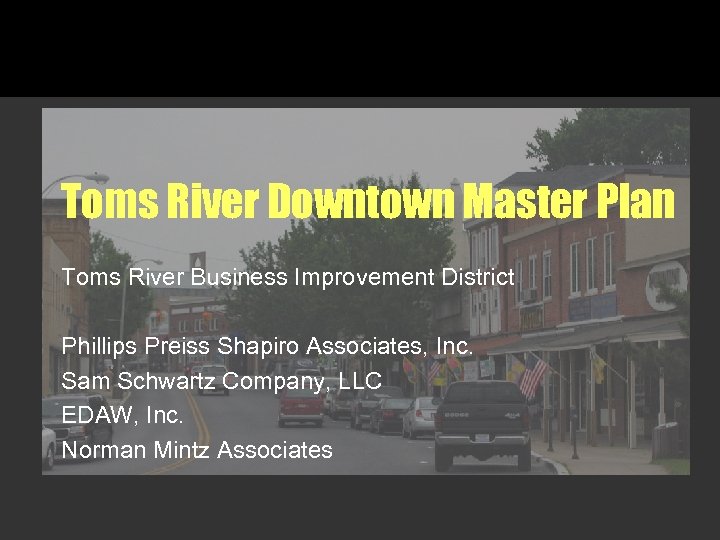
Toms River Downtown Master Plan Toms River Business Improvement District Phillips Preiss Shapiro Associates, Inc. Sam Schwartz Company, LLC EDAW, Inc. Norman Mintz Associates
Purpose • Set forth a vision of the future of downtown Toms River • Identify the implementing projects and actions • Provide the basis for amending the Dover Township Master Plan
![A complex study area… [insert study area map]](https://present5.com/presentation/689b6f5c14ed8739ef480c0b2190f4ac/image-3.jpg "A complex study area… [insert study area map]")
A complex study area… [insert study area map]
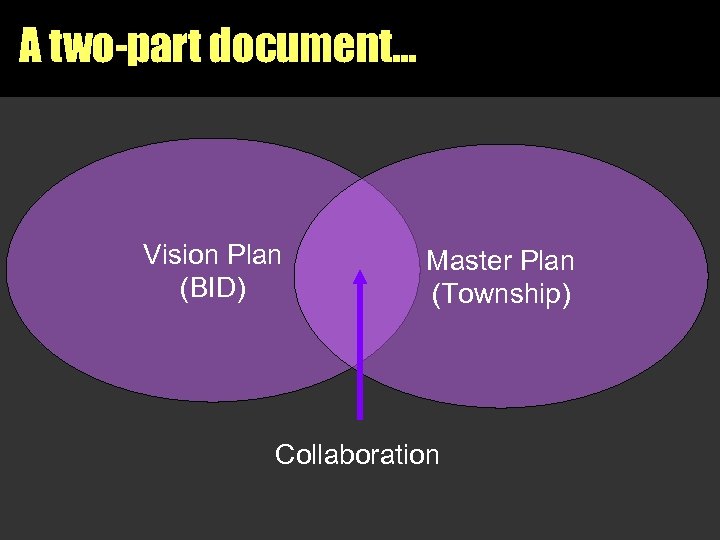
A two-part document… Vision Plan (BID) Master Plan (Township) Collaboration
Outline • Vision Plan – Downtown on the River – Downtown Ocean County – Cultural Center – Gateway • Master Plan – Land Use Element – Circulation Element – Urban Design Guidelines – Recreation Element
Vision • • Bringing the river to Main Street Expanded parks and greenways Restaurant rows on Main & Washington Mixed-use infill Critical mass of attractions Historic place & landscape Upgraded corridors and gateways
Process • • Field surveys Background reports Market analysis Stakeholder interviews – Township, County, others • BID Board oversight
Market foundation • Growth is in the outlying areas • To tap it, downtown must be a destination • At least 100, 000 SF of retail is required • Real estate market is strongest for housing and professionals offices • Mixed-use development can provide the incentives for new retail
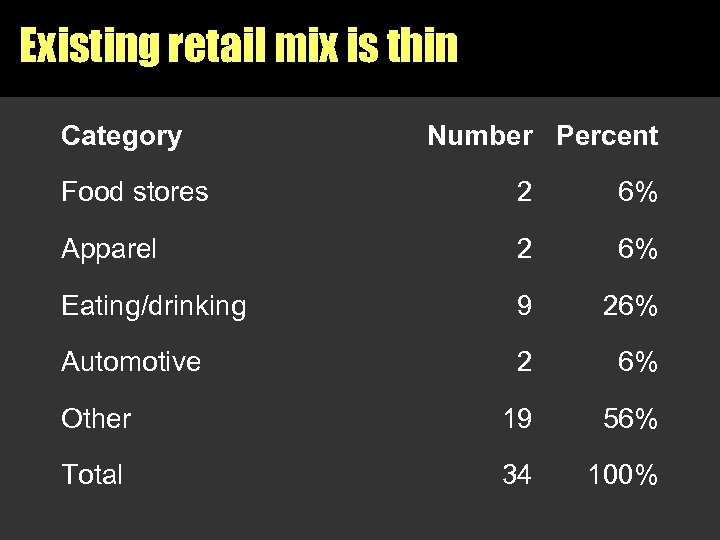
Existing retail mix is thin Category Number Percent Food stores 2 6% Apparel 2 6% Eating/drinking 9 26% Automotive 2 6% Other 19 56% Total 34 100%
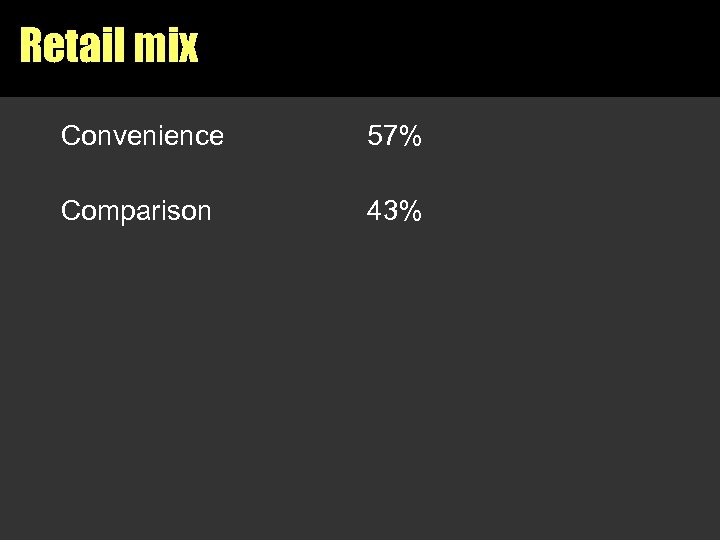
Retail mix Convenience 57% Comparison 43%
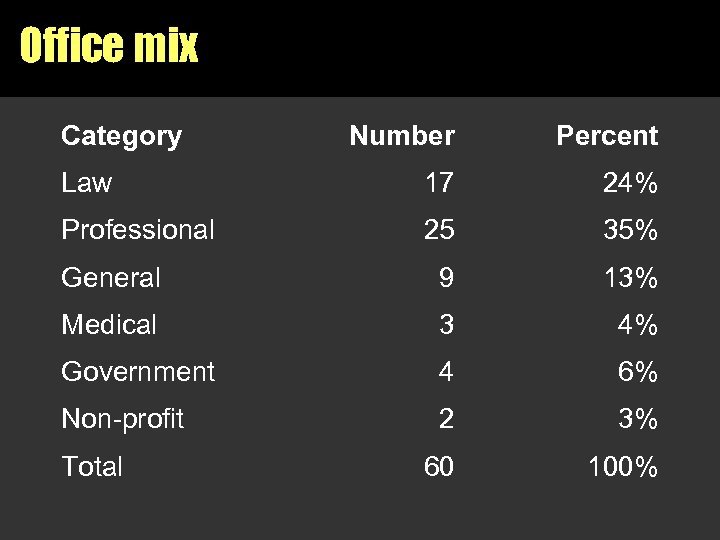
Office mix Category Number Percent Law 17 24% Professional 25 35% General 9 13% Medical 3 4% Government 4 6% Non-profit 2 3% 60 100% Total
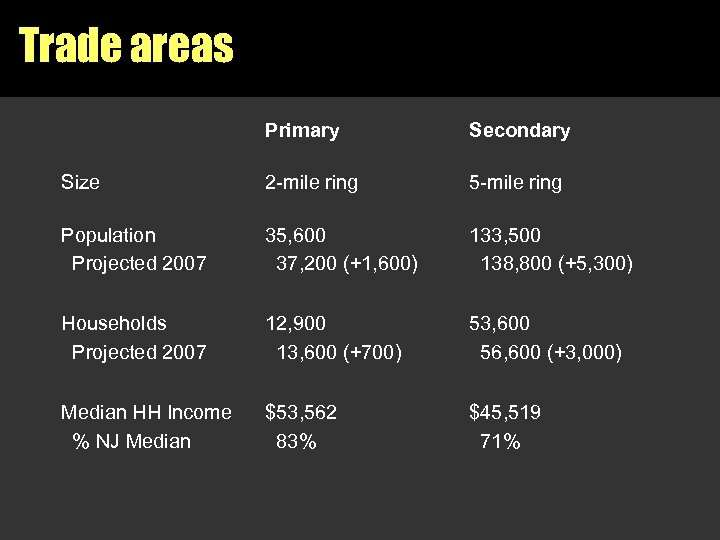
Trade areas Primary Secondary Size 2 -mile ring 5 -mile ring Population Projected 2007 35, 600 37, 200 (+1, 600) 133, 500 138, 800 (+5, 300) Households Projected 2007 12, 900 13, 600 (+700) 53, 600 56, 600 (+3, 000) Median HH Income % NJ Median $53, 562 83% $45, 519 71%
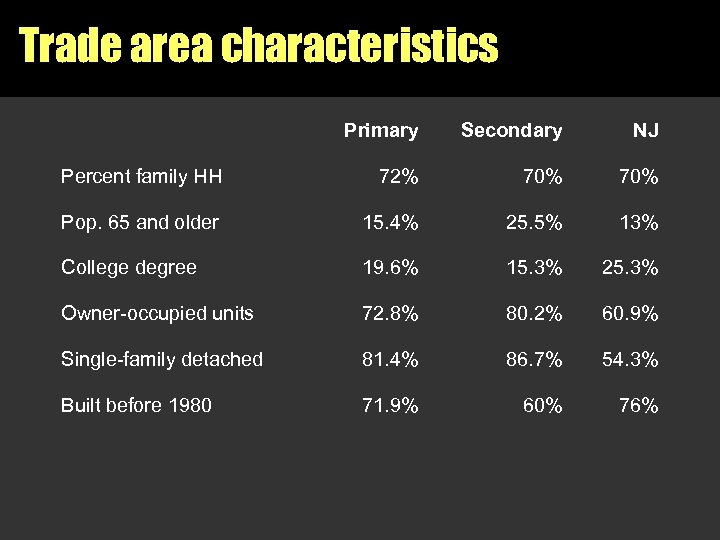
Trade area characteristics Primary Secondary NJ Percent family HH 72% 70% Pop. 65 and older 15. 4% 25. 5% 13% College degree 19. 6% 15. 3% 25. 3% Owner-occupied units 72. 8% 80. 2% 60. 9% Single-family detached 81. 4% 86. 7% 54. 3% Built before 1980 71. 9% 60% 76%
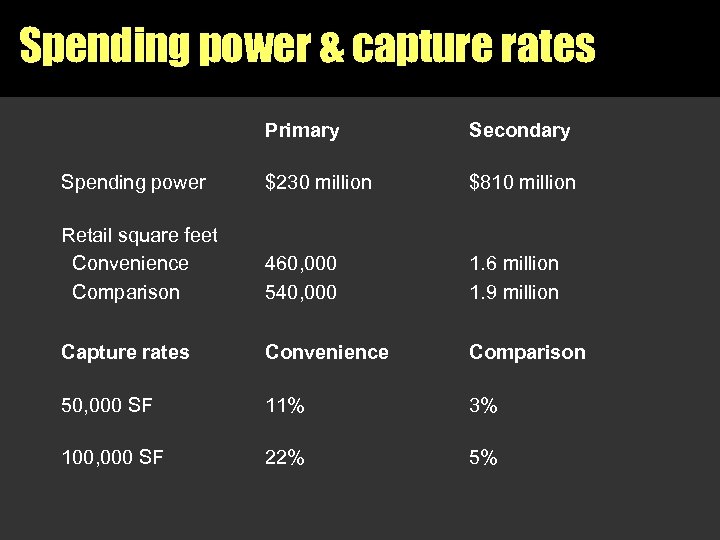
Spending power & capture rates Primary Secondary Spending power $230 million $810 million Retail square feet Convenience Comparison 460, 000 540, 000 1. 6 million 1. 9 million Capture rates Convenience Comparison 50, 000 SF 11% 3% 100, 000 SF 22% 5%
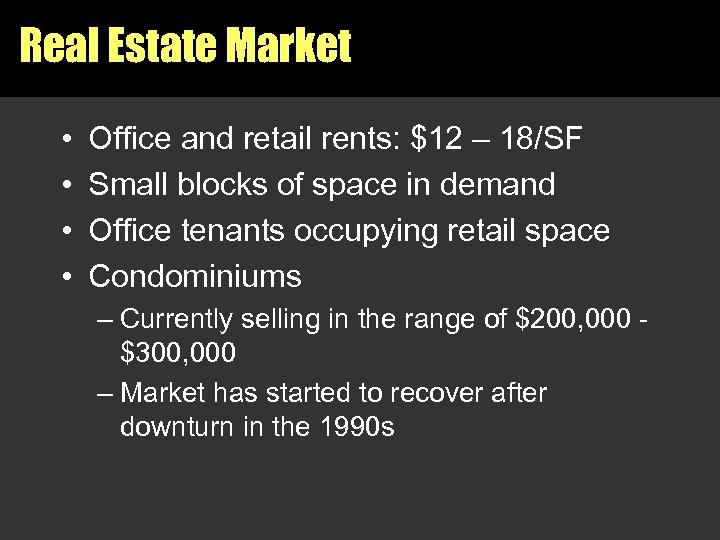
Real Estate Market • • Office and retail rents: $12 – 18/SF Small blocks of space in demand Office tenants occupying retail space Condominiums – Currently selling in the range of $200, 000 $300, 000 – Market has started to recover after downturn in the 1990 s

Residential Real Estate Trends
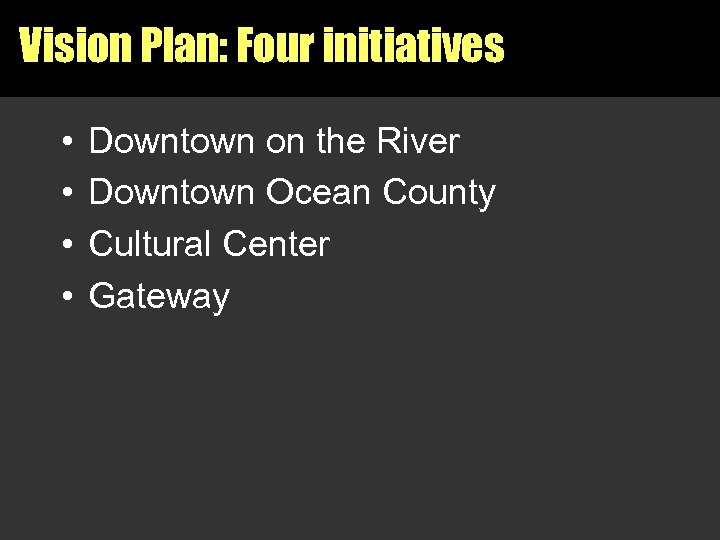
Vision Plan: Four initiatives • • Downtown on the River Downtown Ocean County Cultural Center Gateway
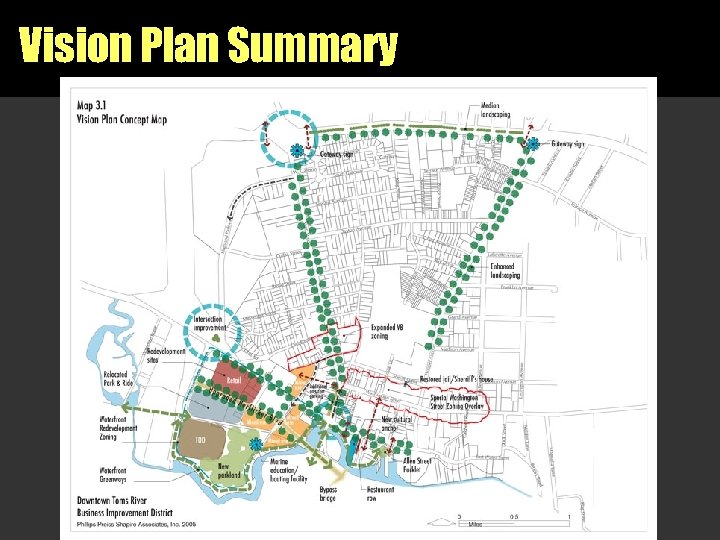
Vision Plan Summary
Downtown on the River • • • Connections across Water Street Waterfront activities & recreation Expanded greenways & parks “Branding” Focus on sustainability & ecology
Riverfront projects • Pocket park at foot of Allen Street… • …connecting to a promenade to Robbins Parkway. • Waterside attractions on Robbins Parkway • New park attractions at “ 100% corner” • Promenade and greenway to GSP
Riverfront projects • Rail to trail opportunity • Environmental education • Kayak/canoe/rowboat concession/launch/takeout • Potential designation of greenways as County parks • Incorporate riverfront into all promotions
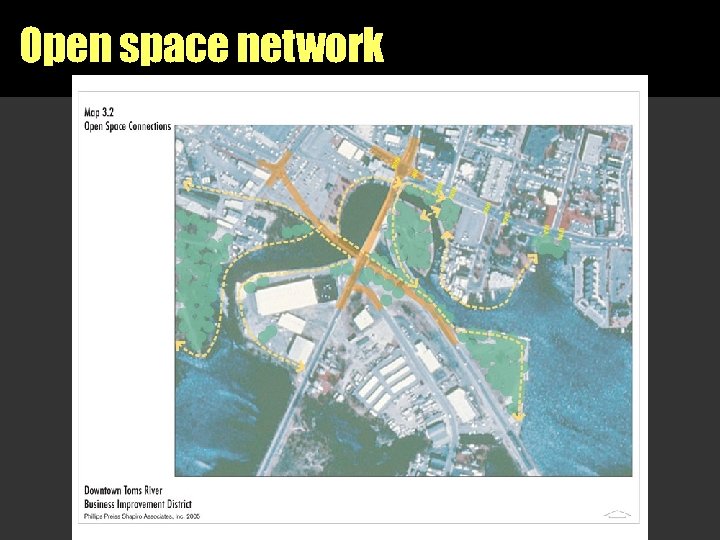
Open space network
Riverfront connections • Modified bypass and bypass bridge, reusing old Route 166 Bridge • Redesign of Water/Main intersection, and more connections across Water Street • Irons/Main one-way pair • Main Street pedestrian & parking improvements • Herflicker/Highland bypass
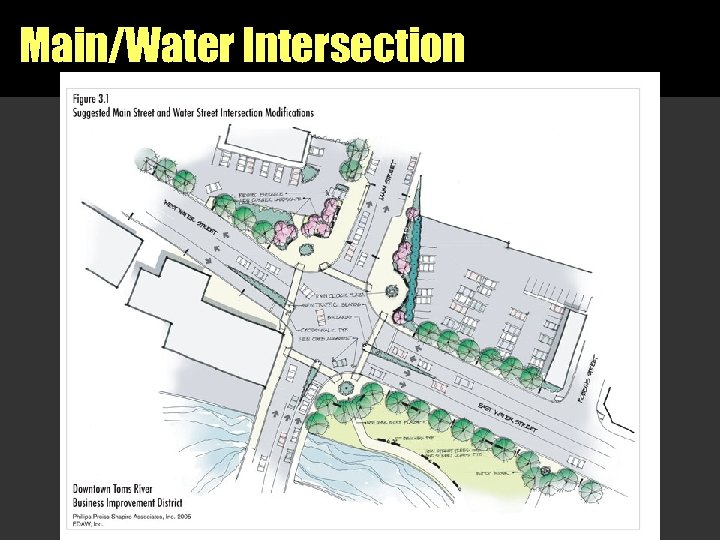
Main/Water Intersection
Downtown Ocean County • Three ingredients for a destination: – A major amenity (riverfront) – Attractions for a diverse clientele (cultural center) – Critical mass of retailing and dining • Strategies for expanding retail: – Incremental growth in and adjoining downtown – West Water Street “lifestyle” retail
Growing downtown • Encourage infill projects within downtown core • Restaurant row on Main and Washington Streets • Pedestrian-oriented development standards • Potential historic district design guidelines • Zoning incentives for ground floor retail
Growing downtown • New parking structure on Irons Street • Increase on-street parking—manage mindful of shopper convenience • Provide incentives for structured parking • Promote shared parking • Provide more walkways between parking areas and businesses • Joint marketing to bolster specialty attractions in downtown
New development • Bypass roadway system to open up West Water Street area for development • Lifestyle retail and riverfront housing • Promote site assemblage through incentive (PDD) zoning • Or, consider redevelopment area designation • Consider land swaps to create better development sites • Emphasize a neo-traditional design approach consistent with Transit-Oriented Development principles
COAH issues • Growth share means new housing will generate new obligations • New development on the riverfront should be neutral with respect to the Township’s obligations • But should not be used to fulfill unmet first- and second-round obligations
Cultural Center • Builds on the wealth of existing attractions Library • Seaport Society & Maritime Museum • Waterhouse Museum • galleries • Not about fabricating a civic identity, but enhancing and augmenting existing assets
Specific recommendations • Jointly market and augment the existing small yet jointly meaningful attractions • Calendar and promotional materials for culture-related special events • Use of NJ Transit Lot for event space and parking • Cultural or civic use on Robbins Parkway • Historic landscape enhancements
Gateway • Landscape & streetscape improvements for upper Main and Hooper, and Route 37 • Small-scale mixed-use infill on upper Main and Hooper • West Water Street traffic circulation improvements • Gateway intersection improvements
Downtown Master Plan • • Land use & zoning Circulation Urban design Recreation
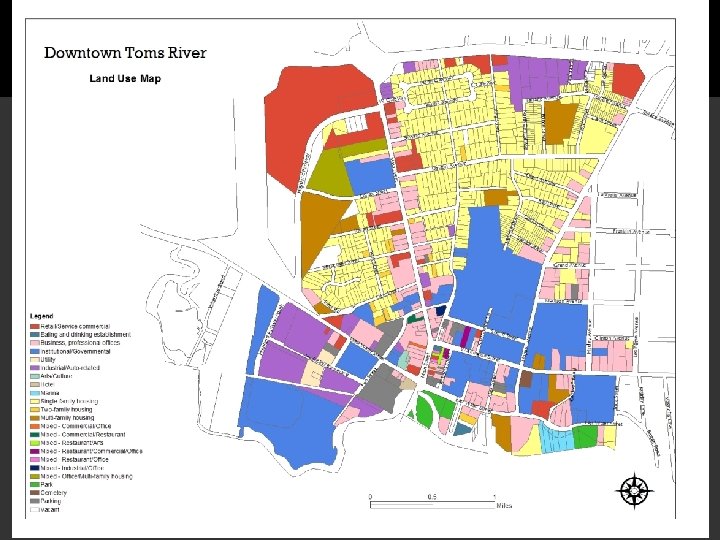
Existing land uses
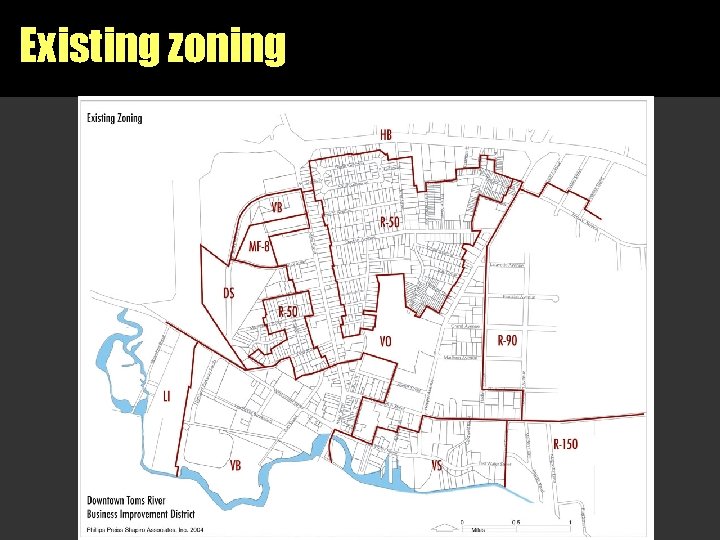
Existing zoning
Zoning observations • VB District – Upper floor residential prohibited – Zero-setback buildings prohibited – Parking can be provided via Parking Authority facilities • VS District – Restaurants must have minimum of 100 seats • DS District – Mapped over existing residential subdivision – Allows shopping centers but not retail stores
Land use objectives • Encourage retail expansion with an overall target of 100, 000 SF • Encourage market-rate housing in appropriate locations for a 24 -hour downtown • Facilitate office use expansion • Promote the redevelopment of the area bounded by West Water Street, the GSP, and the Toms River with a lively mix of uses
Modifications to VB District • Permit upper floor residential uses in buildings with ground floor retail only • Provide a one-story height bonus to buildings that provide on-site, structured parking • Do not require a front yard setback; instead, enforce a prevailing “build to” line
Modifications to VS District • Permit developments mixing residential and retail in addition to residential and office • Permit restaurants of any size • Allow retail uses up to 5, 000 square feet, to facilitate boutique retail and galleries • Allow individual retail stores • Permit townhouses in the DS district
Modifications to VO District • Allow mixed office and residential on Hooper Avenue, up to one unit per floor or two units per building • Adopt design and site plan guidelines consistent with the residential context and landscaped imagery
Other • Reduce excessive parking requirements throughout the ordinance • Permit B&Bs via special permit in all downtown districts: VB, VS, VO and DS • Identify important view corridors to the riverfront and historic buildings • Adopt design guidelines in the HB district to foster more attractive gateways and corridors
Proposed new districts • Special Waterfront Redevelopment District – Multi-tenant shopping centers along West Water, subject to design controls – Multifamily residential within 200 feet of riverfront – Mandatory ground floor commercial on Irons and Water, portions of Herflicker • Washington Street Overlay District – Uniform setbacks and minimum front yard landscaping
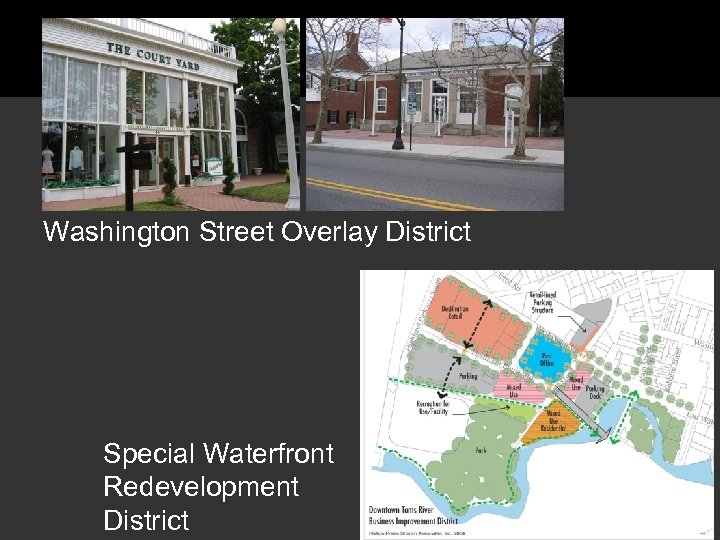
Washington Street Overlay District Special Waterfront Redevelopment District
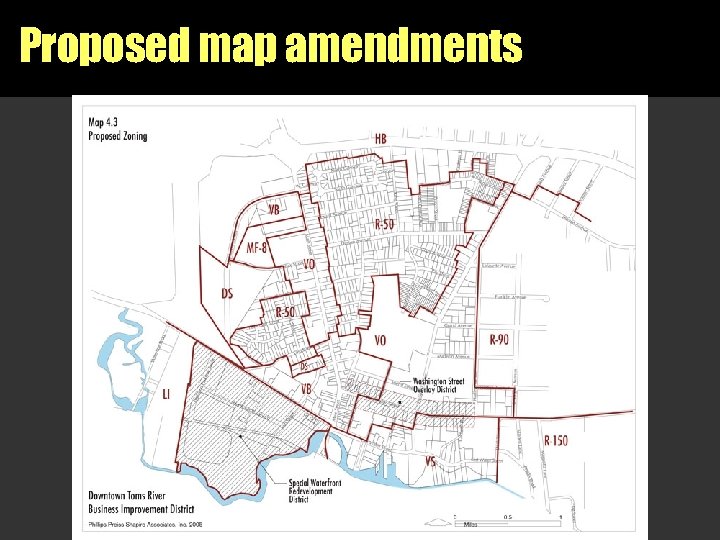
Proposed map amendments
Circulation: Objectives • Reestablish convenient, safe and comfortable pedestrian connections throughout the downtown • Capitalize on the full potential of the bypass bridge project to enhance pedestrian connectivity throughout the waterfront • Enhance utilization of remote parking resources through better connections
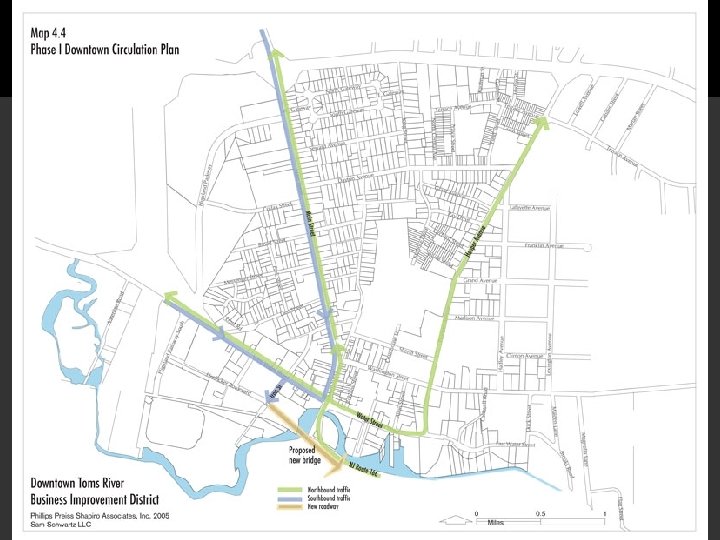
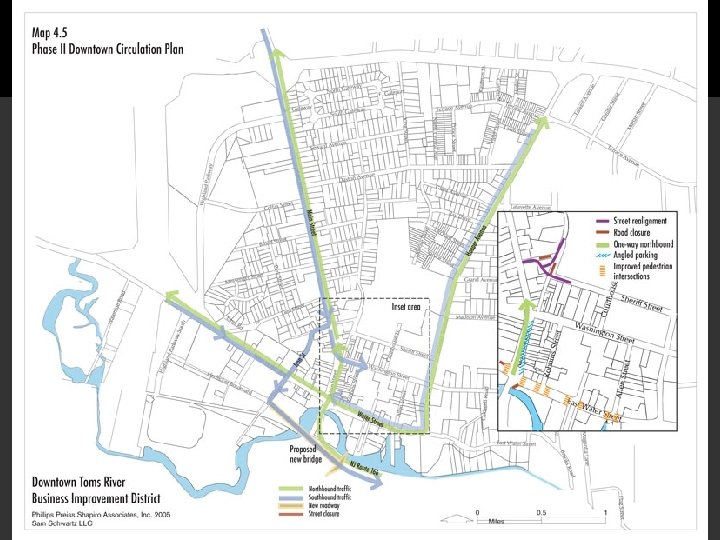
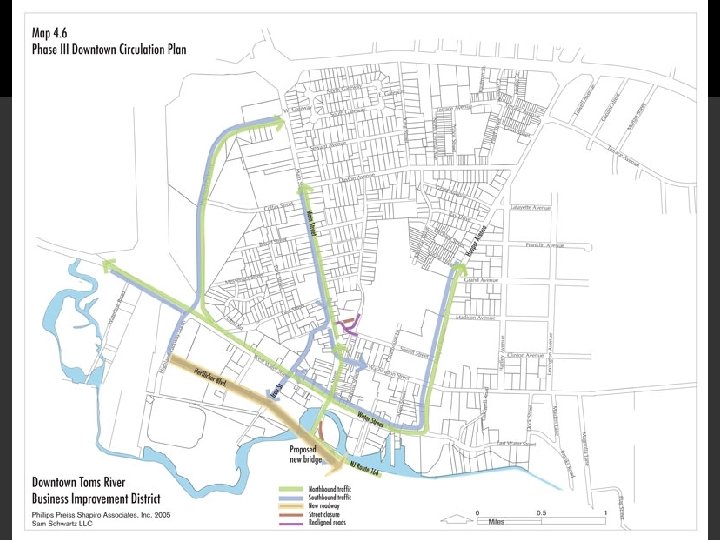
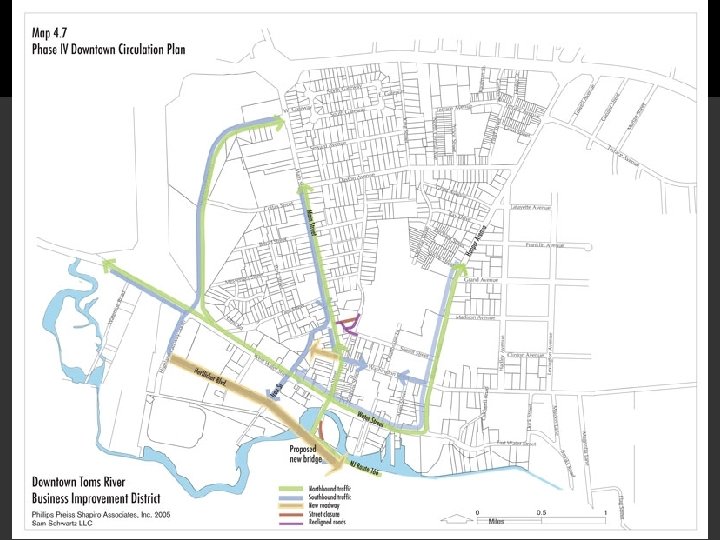
4 -phase plan • Phase 1: Reclaiming roadway space on West Water Street • Phase 2: One way pair on Main & Irons; pedestrian improvements; realign Sheriff with Irons; • Phase 3: Repurpose old Route 166 bridge; Herflicker upgrade • Phase 4: Extend Washington Street to Irons Street
Urban Design: Objectives • Upgrade the appearance image of downtown Toms River and its gateways. • Facilitate and encourage pedestrian circulation throughout the downtown. • Provide greater opportunities for people to sit and socialize in the downtown.
Public Realm • Reclaim underused street area for people use • Part time closing of Hyers Street at Washington Street • Increase street tree planting and improve street furniture – Tree plantings along Main and Hooper north of downtown core
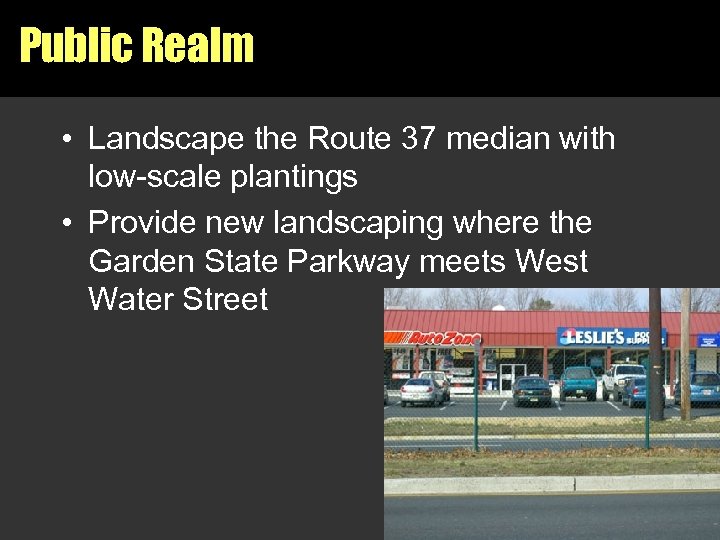
Public Realm • Landscape the Route 37 median with low-scale plantings • Provide new landscaping where the Garden State Parkway meets West Water Street
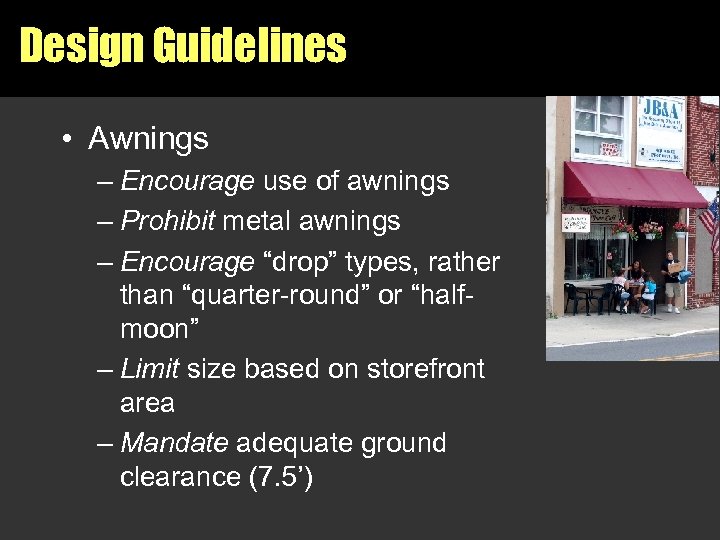
Design Guidelines • Awnings – Encourage use of awnings – Prohibit metal awnings – Encourage “drop” types, rather than “quarter-round” or “halfmoon” – Limit size based on storefront area – Mandate adequate ground clearance (7. 5’)
Design Guidelines • Discourage use of vinyl siding • Discourage boarding or reducing the size of upper floor windows • Mandate transparency on ground floor windows • Encourage good window design, even for office users
Signs • Enforce size limits on window signs • Clarify restrictions for neon signs; limit to one per business • Relax restrictions on color • Permit backlighting, but mandate dark backgrounds and light lettering • Increase size limit for projecting signs from four to nine square feet • Remove restrictions on lettering style • A “special review board” is encouraged
Implementation • Toms River BID – Design Review – Advocacy • Dover Township – Master Plan & Zoning – Redevelopment Areas(? ) • County & State – Roadway enhancements & reconfiguration
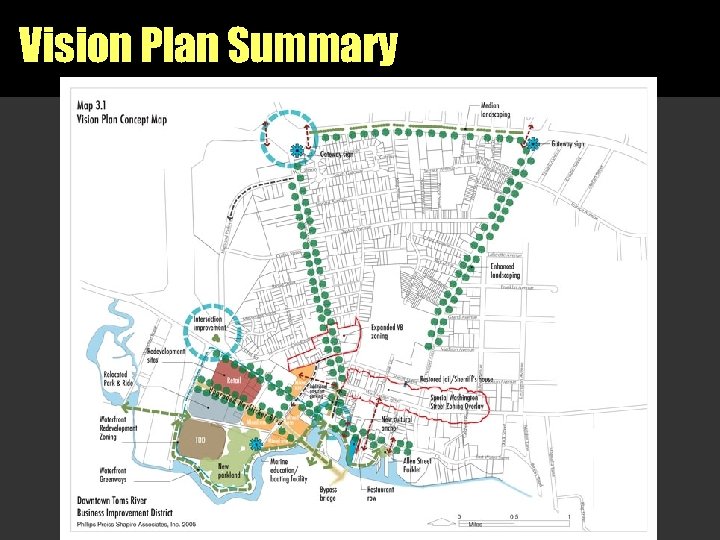
Vision Plan Summary
Скачать презентацию Toms River Downtown Master Plan Toms River Business
689b6f5c14ed8739ef480c0b2190f4ac.ppt