


 Скачать презентацию To DP or not to DP That is
ce821908ccebdc9899b58fdbf7e17e05.ppt
- Количество слайдов: 22
 To DP or not to DP, That is the Question? Dr Evans Tasmanian Institute of Agricultural Research University of Tasmania Australian Barley Biochemistry & Brewing Research Barley Malting Quality … from Grass to Glass.
 Starch is degraded by the four diastase enzymes
 Prediction of Fermentability in Commercial Malts
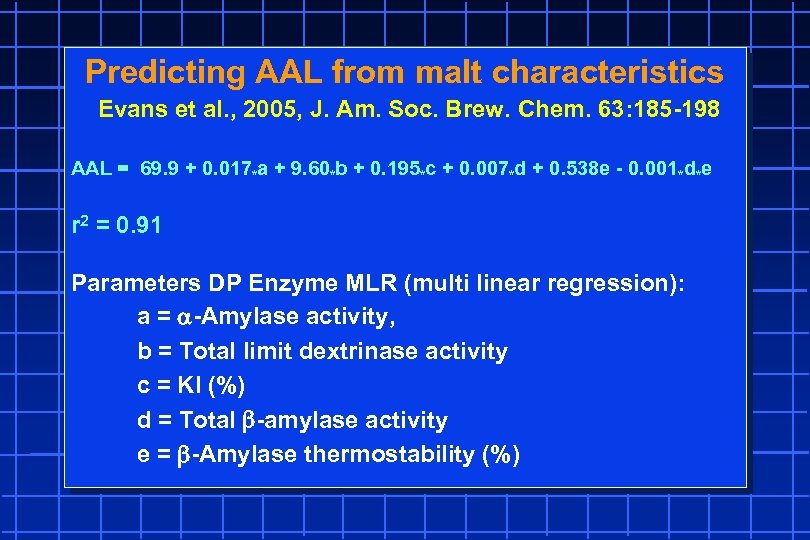 Predicting AAL from malt characteristics Evans et al. , 2005, J. Am. Soc. Brew. Chem. 63: 185 -198 AAL = 69. 9 + 0. 017*a + 9. 60*b + 0. 195*c + 0. 007*d + 0. 538 e - 0. 001*d*e r 2 = 0. 91 Parameters DP Enzyme MLR (multi linear regression): a = a-Amylase activity, b = Total limit dextrinase activity c = KI (%) d = Total -amylase activity e = -Amylase thermostability (%)
 Prediction (r 2) between DP enzymes and BEC data
 Commercial brewery fermentability variability explained by DP enzyme levels I
 Commercial brewery fermentability variability explained by DP enzyme levels II
 Variation in the levels of DP enzymes in Commercial malts
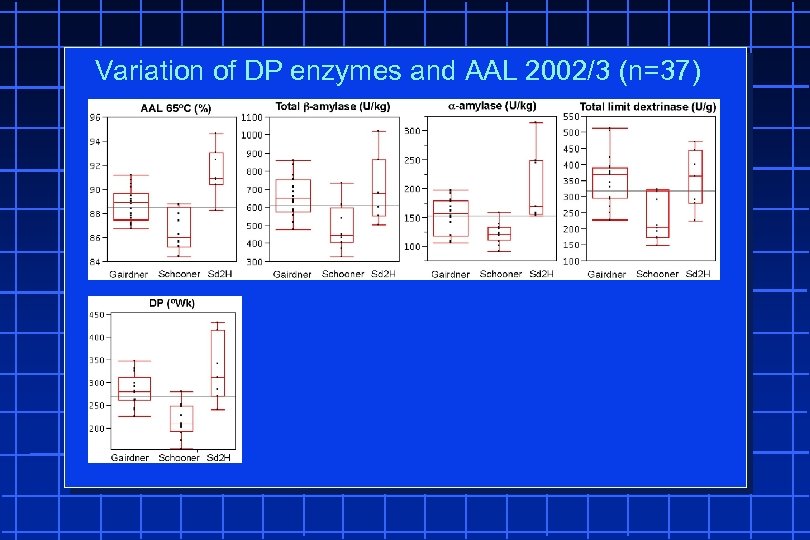 Variation of DP enzymes and AAL 2002/3 (n=37)
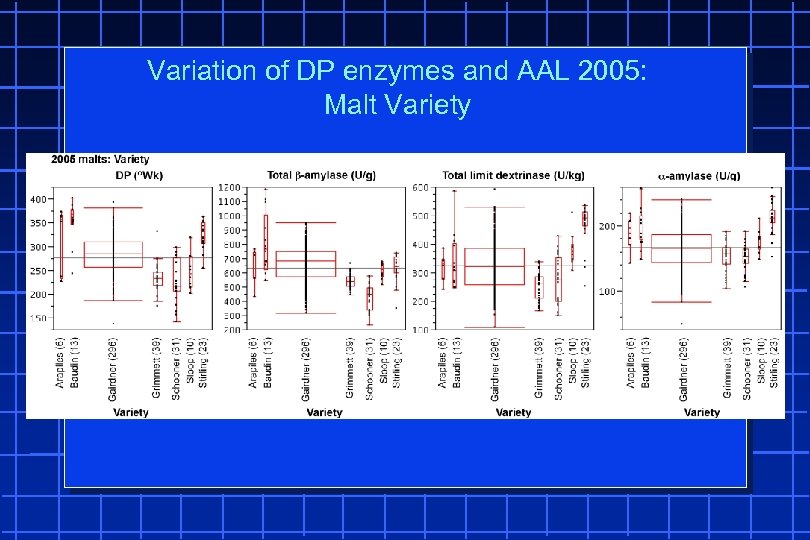 Variation of DP enzymes and AAL 2005: Malt Variety
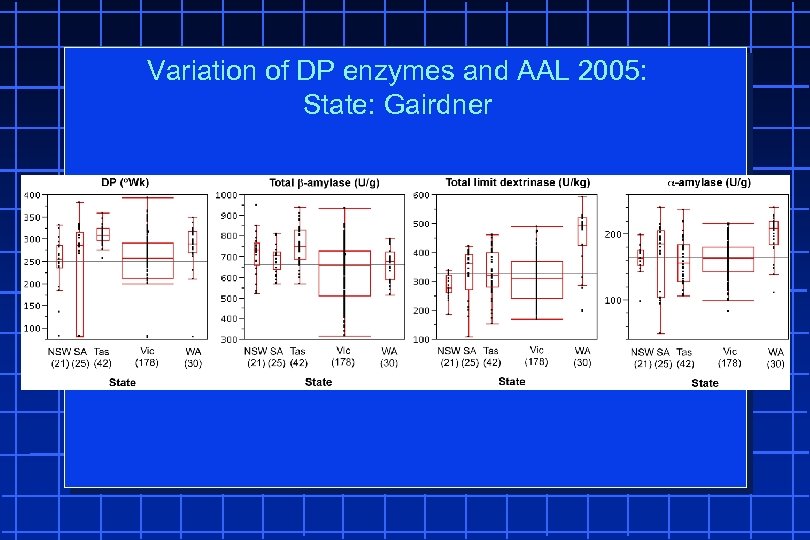 Variation of DP enzymes and AAL 2005: State: Gairdner
 Practical implications for delivering malt that satisfies brewers
 Considerations What best predicts wort fermentability? Prediction of malt fermentability performance based on: • -amylase thermostability and activity. • Level of a-amylase activity. • Limit dextrinase level. • Modification / KI. Is the DP malt specification redundant?
 Considerations If so, what are the implications in the quality lab? Discontinue DP evaluation? Analyses to be done: • -amylase thermostability specific to variety. • KI already routinely measured. New lab tests to be implemented: • -Amylase activity - Betamyl®. • a-Amylase activity - Ceralpha®. • Limit dextrinase - Limit Dextri. Zyme®.
 Maltster & brewer advantages? • More accurate description of malt quality. • Malt blending to balance DP enzyme levels. • Greater malt consistency and predictability. • Reduced surprises in brew house. • Warn brewers if malt not in spec • Better targeted selection by barley breeders.
 A future malt description
 Commercial Implementation? Opportunities to deliver better barley and malt: • Environment - Can we predict barley quality of regions-silos-farms? • Marketer/grain handler - Can barley be segregated - delivered to maltster or OS buyer. • Maltster - Can maltsters ameliorate variation in barley supplied? • Brewer - Information to adjust process for malt quality • Breeder - Select genes for targeted market.
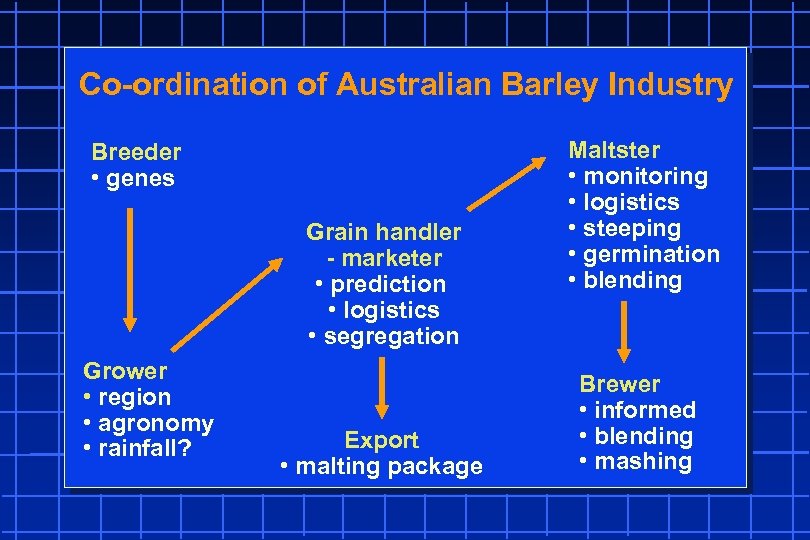 Co-ordination of Australian Barley Industry Breeder • genes Grain handler - marketer • prediction • logistics • segregation Grower • region • agronomy • rainfall? Export • malting package Maltster • monitoring • logistics • steeping • germination • blending Brewer • informed • blending • mashing
 New Australian malt varieties The new generation of malt varieties have very high levels of fermentability. Good for starch adjunct brewing. Varieties: • Baudin: Sd 1 -amylase, VERY high DP enzyme levels. • Flagship: Sd 2 H -amylase, high DP enzyme levels. • Buloke: Sd 2 H -amylase, high DP enzyme levels. Need variety/s with low/intermediate fermentability? • Look after domestic brewers requirements. • Allow blending to temper the fermentability of the above.
 Advice for Concept Adoption 1. Confidential + Potential competitive advantage internal - external. - Customers in ie China will not gain full value from concept. - Probably will not remain confidential very long. 2. Pre-competitive (release some of the information) + Gain full value from concepts adoption. + Confirm Australia now has world leading malting varieties. + Australia first to use (apply first in domestic industry). + Improvement associated with Australian industry (Volvo principle). ~ systems for batch selection and malting package confidential. - competitors able to adopt part of the concept.
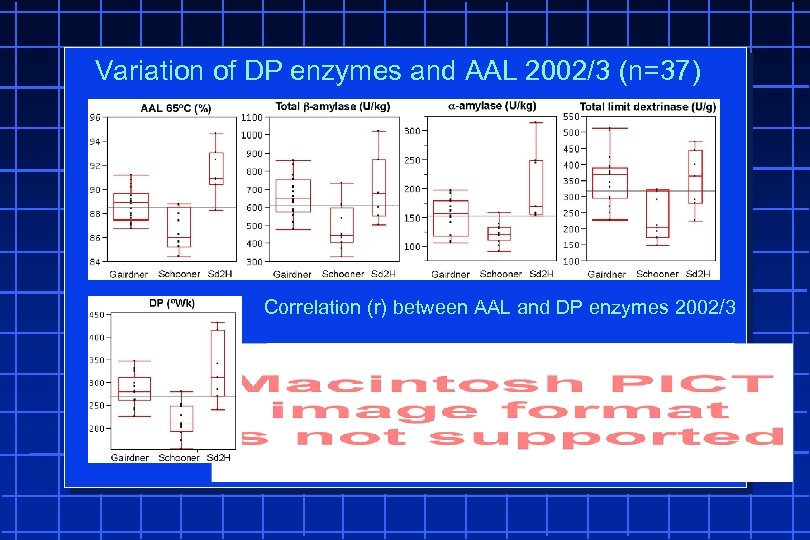 Variation of DP enzymes and AAL 2002/3 (n=37) Correlation (r) between AAL and DP enzymes 2002/3
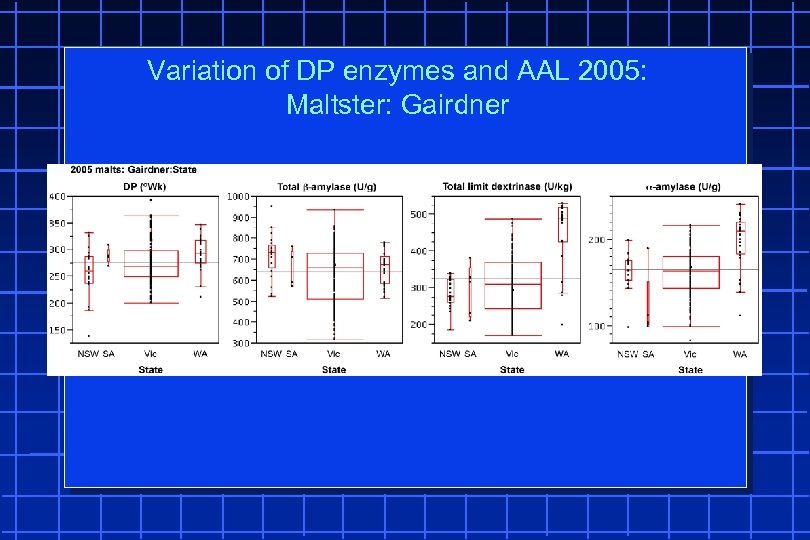 Variation of DP enzymes and AAL 2005: Maltster: Gairdner