 “To Die, To Sleep. . . ” A Discussion on SIDS COL H. Joel Schmidt Pediatric Pulmonology
 SIDS - outline n ALTE ä not n “near-miss SIDS” SIDS ä background ä definition ä etiology ä control of breathing ä epidemiology ä avoidable risk factors
 ALTE definition frightening to the observer n characterized by some combination of n ä apnea ä color change ä marked change in muscle tone ä choking ä gagging n (involves vigorous stimulation or resuscitation)
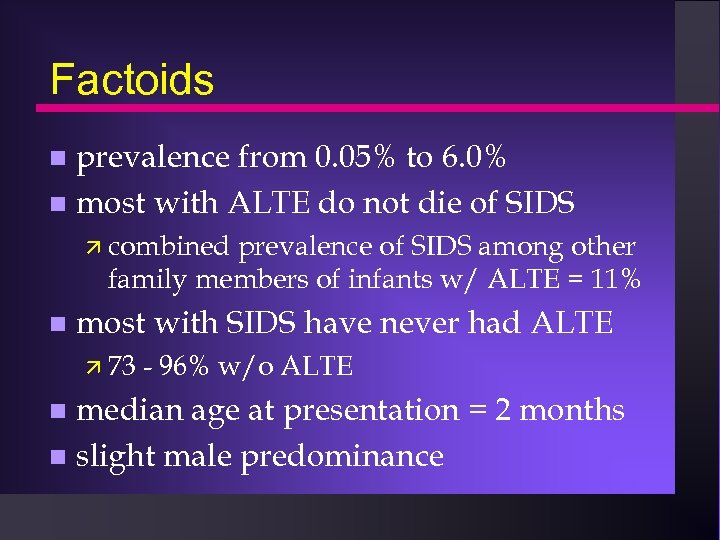 Factoids prevalence from 0. 05% to 6. 0% n most with ALTE do not die of SIDS n ä combined prevalence of SIDS among other family members of infants w/ ALTE = 11% n most with SIDS have never had ALTE ä 73 - 96% w/o ALTE median age at presentation = 2 months n slight male predominance n
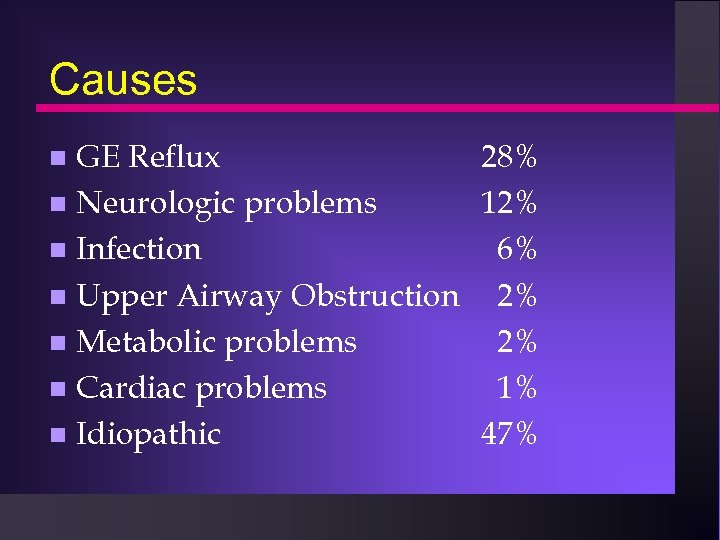 Causes GE Reflux 28% n Neurologic problems 12% n Infection 6% n Upper Airway Obstruction 2% n Metabolic problems 2% n Cardiac problems 1% n Idiopathic 47% n
 Work-Up History n History n
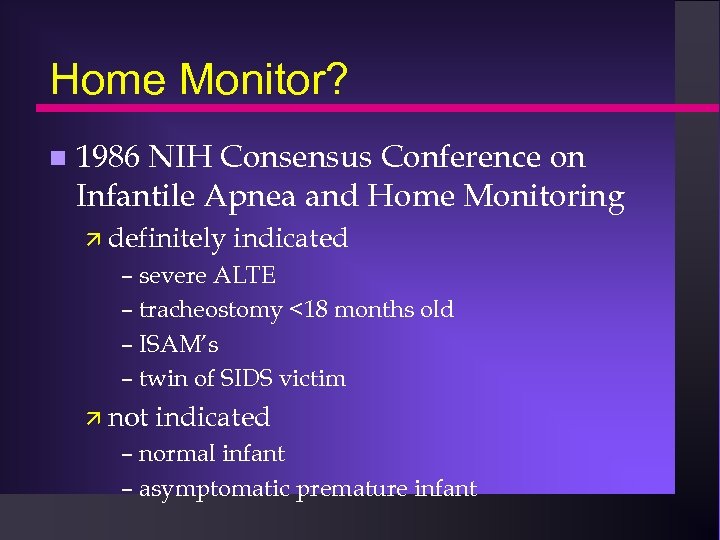 Home Monitor? n 1986 NIH Consensus Conference on Infantile Apnea and Home Monitoring ä definitely indicated – severe ALTE – tracheostomy <18 months old – ISAM’s – twin of SIDS victim ä not indicated – normal infant – asymptomatic premature infant
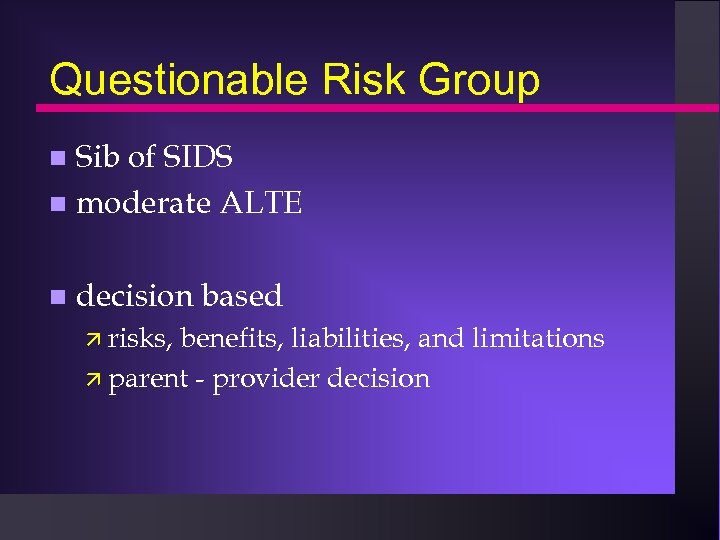 Questionable Risk Group Sib of SIDS n moderate ALTE n n decision based ä risks, benefits, liabilities, and limitations ä parent - provider decision
 Monitor Requirements home telephone n basic infant CPR instruction for all caregivers n use and trouble shooting of monitor for all caregivers n 24’ medical and technical back-up n
 SIDS background decreasing infant mortality this century n one category of infant death not decreasing n 1969 - “SIDS” title given n Steinschneider A: Prolonged apnea and the sudden infant death syndrome. Pediatrics 1972; 50 (4): 646. n 1991 - definition expanded by NICHD n
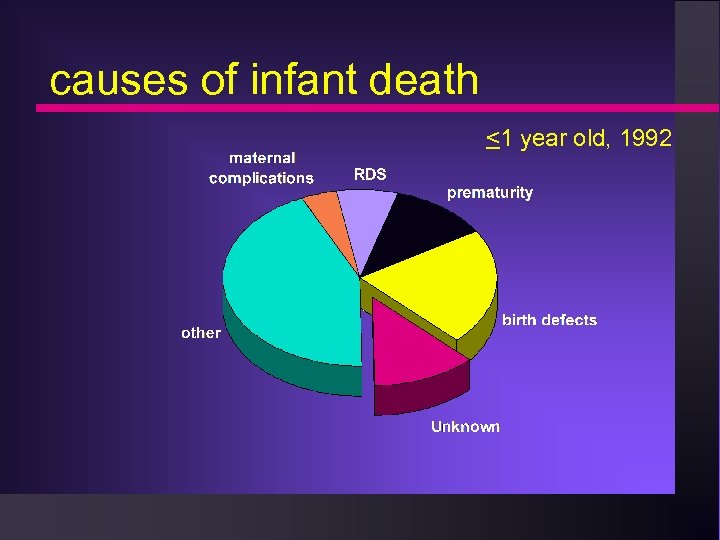 causes of infant death <1 year old, 1992
 definition of SIDS sudden death of an infant under 1 year old that can not be explained despite: ä autopsy within 24’ incl. skeletal survey, tox and metabolic screens ä prompt examination of the death scene including interviews of household members by knowledgeable indevidual ä review of the clinical history from caretaker, key medical providers and medical records
 AAP Addition to Evaluation n Exam of the dead infant at a hospital ED by a child maltreatment specialist ä 1 -5% of SIDS may be infanticide ä clues to infanticide – > 6 months old – previous unexpected or unexplained sib death – simultaneous death of twins
 etiology - broad no common etiology- multifactorial n final common pathway may be: n ä failure to arouse to cope w/ homeostatic challenge ä abnormal development of the control of cardiorespiratory systems ä maldevelopment of fetal to newborn transition mechanism
 etiology - focused developing nervous system n developing immune system n inherited metabolic disease n changes in cardiac conduction system n changes in respiratory control n non-accidental trauma n
 Baruch’s Observation “If all you have is a hammer, everything looks like a nail. ”
 CNS autopsy findings increased gliosis n increased brainstem dendritic spine density n delayed myelin maturation n
 epidemiologic studies NICHD Cooperative Epidemiologic Study of SIDS Risk Factors n New Zealand Cot Death Study n Avon Infant Mortality Study n King County Washington SIDS Study n
 NICHD SIDS Study Oct ‘ 78 - Dec '79 n multicenter, population based, case controlled n 838 SIDS n 1676 controls n ä age-matched living - randomly selected ä age-matched living - matched for race and low birth weight
 NICHD Study - conclusion n “None of the risk factors documented are of sufficient strength to enable identification of SIDS infants prior to their death. Instead a descriptive profile has emerged that associates several maternal, neonatal, and postnatal factors with increased SIDS risk. ”
 NICHD SIDS Study - results maternal factors n inadequate prenatal care n smoking n anemia n ISAM n VD n UTI
 NICHD SIDS Study - results other factors n low birth weight n inadequate post-natal care n lack of breast feeding n GI infections
 NICHD SIDS Study - results non-factors n URI’s n apnea of prematurity
 New Zealand Cot Death Study 1987 - 1990 n multicenter, prospective, casecontrolled n ä covered 78% of all births 485 cot deaths n 1800 random controls - matched for post -natal age n
 New Zealand Study - results significant avoidable risks n prone sleeping position n co-sleeping n not breast fed n maternal smoking
 Avon Infant Mortality Study 1984 - 1992 n Avon County in SW England n ä pop. 940, 000 with 13, 000 births/year ä 1 coroner, 1 Peds Path, 3 OB units n all unexpected deaths ä detailed history and conditions ä collection of bact, and virology specimens ä 2 controls/death matched for age, Hx, exam, and home
 Avon Study - results significant avoidable risks n prone sleeping position n thermal environment n role of infection n parental smoking
 avoidable SIDS risk factors prone sleeping position n thermal environment n parental smoking n co-sleeping? n
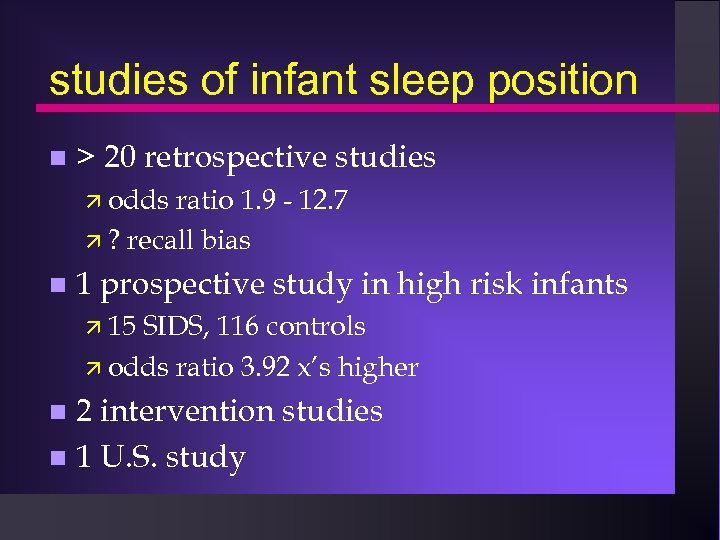 studies of infant sleep position n > 20 retrospective studies ä odds ratio 1. 9 - 12. 7 ä ? recall bias n 1 prospective study in high risk infants ä 15 SIDS, 116 controls ä odds ratio 3. 92 x’s higher 2 intervention studies n 1 U. S. study n
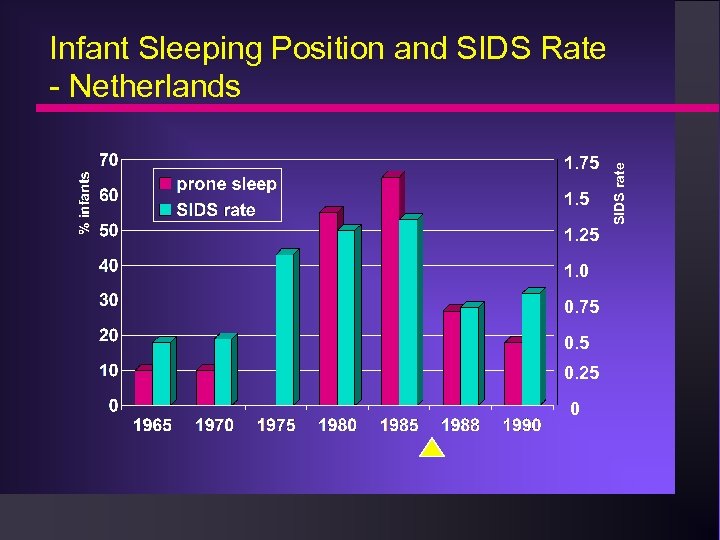 1. 75 1. 25 1. 0 0. 75 0. 25 0 SIDS rate Infant Sleeping Position and SIDS Rate - Netherlands
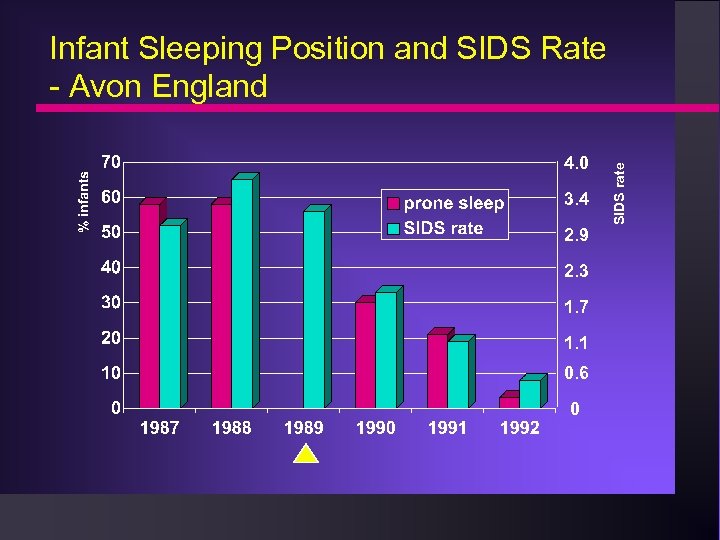 4. 0 3. 4 2. 9 2. 3 1. 7 1. 1 0. 6 0 SIDS rate Infant Sleeping Position and SIDS Rate - Avon England
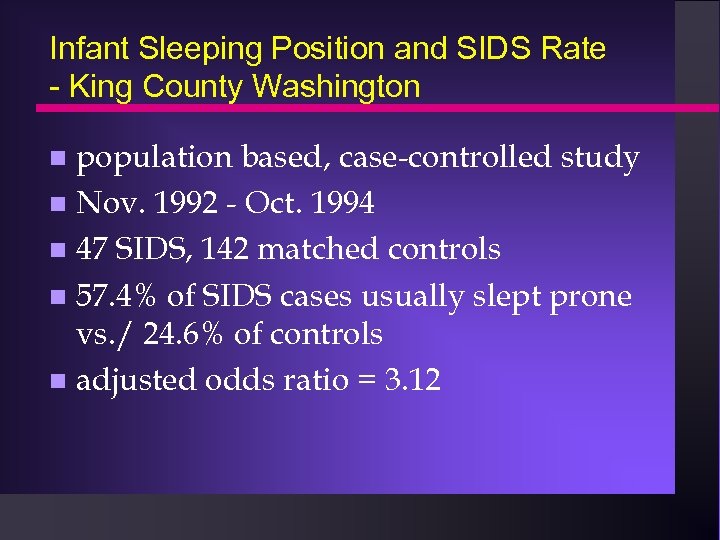 Infant Sleeping Position and SIDS Rate - King County Washington population based, case-controlled study n Nov. 1992 - Oct. 1994 n 47 SIDS, 142 matched controls n 57. 4% of SIDS cases usually slept prone vs. / 24. 6% of controls n adjusted odds ratio = 3. 12 n
 Infant Sleeping Position and SIDS Rate - King County Washington Conclusion: “Prone sleep position was significantly associated with an increased risk of SIDS among a group of American infants. ”
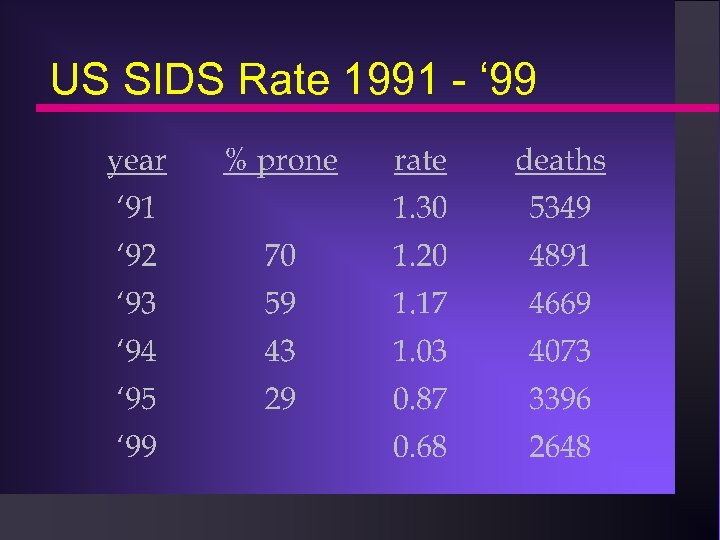 US SIDS Rate 1991 - ‘ 99
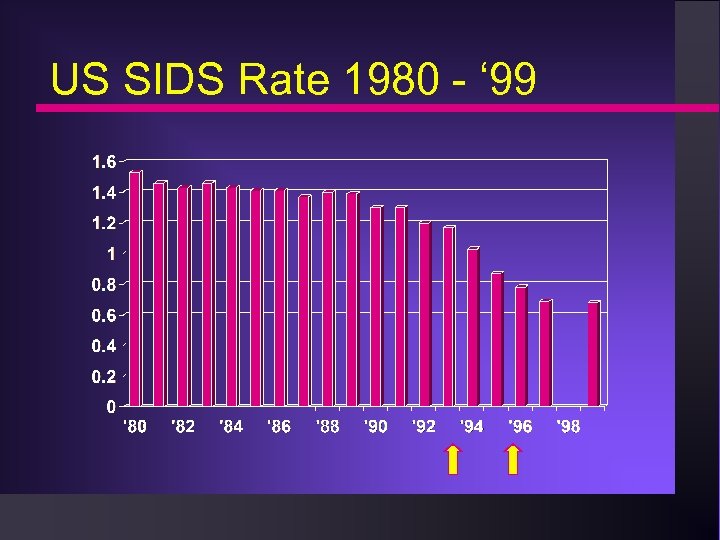 US SIDS Rate 1980 - ‘ 99
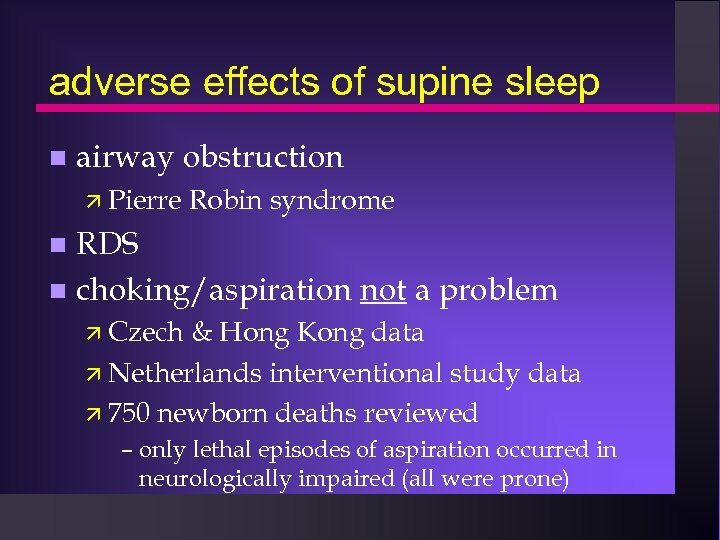 adverse effects of supine sleep n airway obstruction ä Pierre Robin syndrome RDS n choking/aspiration not a problem n ä Czech & Hong Kong data ä Netherlands interventional study data ä 750 newborn deaths reviewed – only lethal episodes of aspiration occurred in neurologically impaired (all were prone)
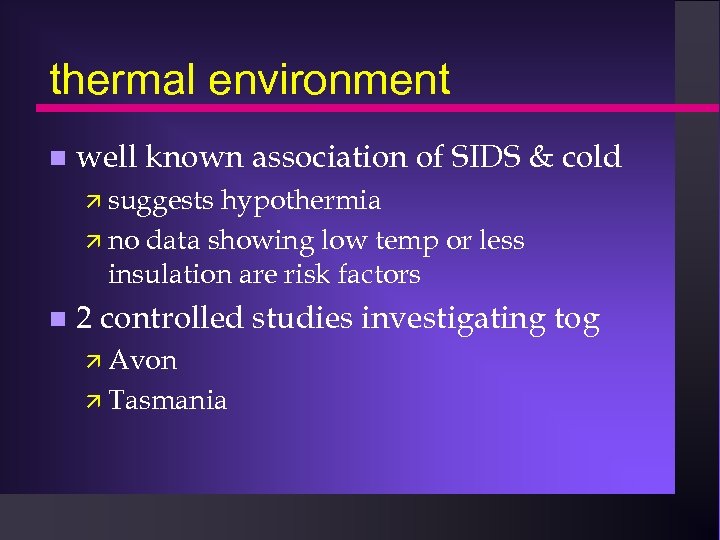 thermal environment n well known association of SIDS & cold ä suggests hypothermia ä no data showing low temp or less insulation are risk factors n 2 controlled studies investigating tog ä Avon ä Tasmania
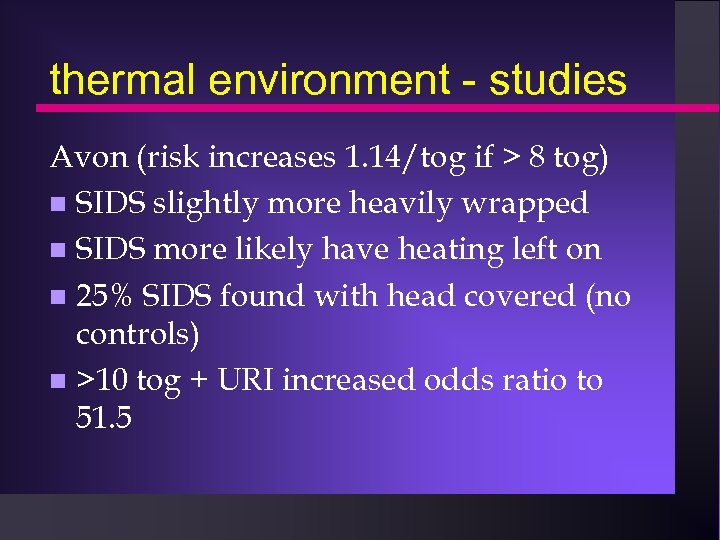 thermal environment - studies Avon (risk increases 1. 14/tog if > 8 tog) n SIDS slightly more heavily wrapped n SIDS more likely have heating left on n 25% SIDS found with head covered (no controls) n >10 tog + URI increased odds ratio to 51. 5
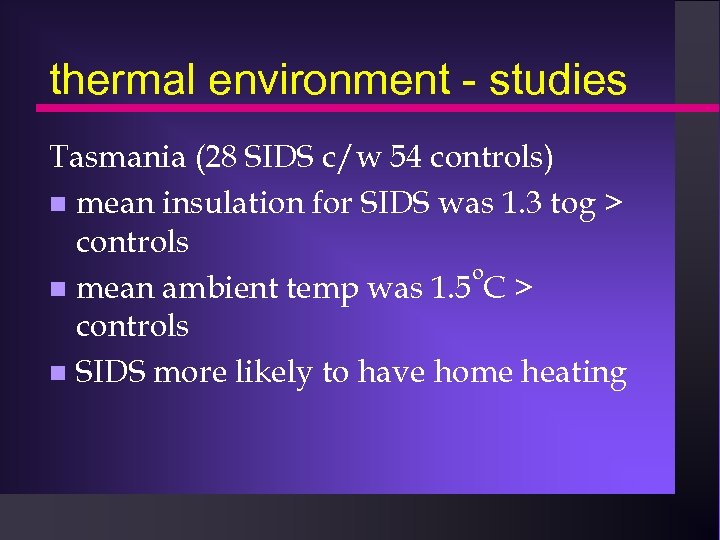 thermal environment - studies Tasmania (28 SIDS c/w 54 controls) n mean insulation for SIDS was 1. 3 tog > controls o n mean ambient temp was 1. 5 C > controls n SIDS more likely to have home heating
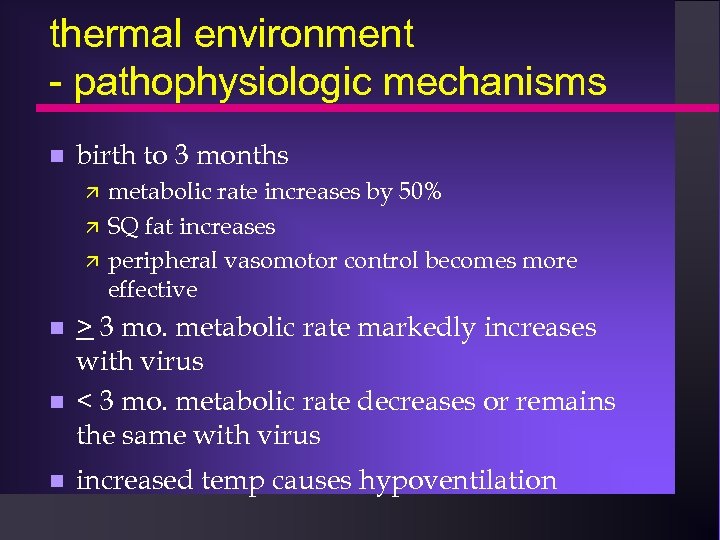 thermal environment - pathophysiologic mechanisms n birth to 3 months ä ä ä n n n metabolic rate increases by 50% SQ fat increases peripheral vasomotor control becomes more effective > 3 mo. metabolic rate markedly increases with virus < 3 mo. metabolic rate decreases or remains the same with virus increased temp causes hypoventilation
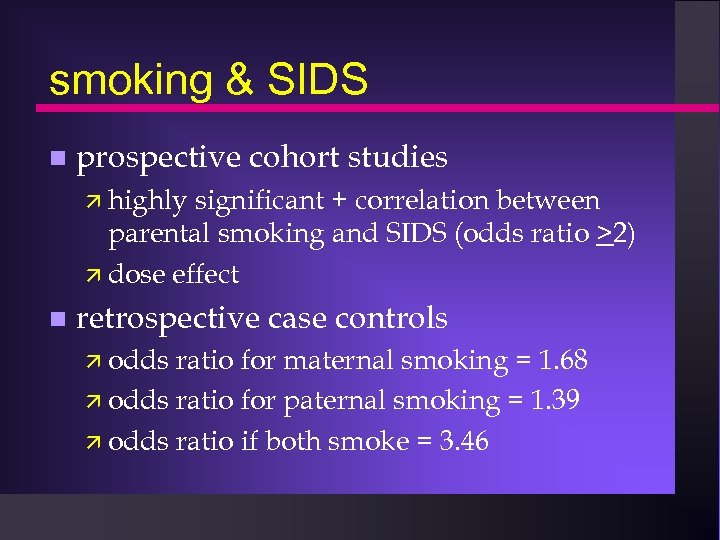 smoking & SIDS n prospective cohort studies ä highly significant + correlation between parental smoking and SIDS (odds ratio >2) ä dose effect n retrospective case controls ä odds ratio for maternal smoking = 1. 68 ä odds ratio for paternal smoking = 1. 39 ä odds ratio if both smoke = 3. 46
 “And this woman’s son died in the night because she lay on it. ” 1 Kings 3: 19
 co-sleeping n infants and children sleeping in contact or close proximity to their parents ä ä ä n common in: ä ä ä n same bed rocked or held while sleeping parent & child close enough to hear feel or smell one another pre-industrial societies Far, Near, & Middle East La Leche League discouraged in Euro. /Western society
 co sleeping & SIDS n sleep data demonstrate overlapping, partner induced arousals ä ä n ? fosters development of optimal sleep pattern ? gives infants practice arousing New Zealand cot death study ä increased in Maori Indians – also highest poverty, drug use, smoking n ? evolved with & to offset neurologic immaturity
 co sleeping & SIDS n Questions ä breastfeeding and co-sleeping relation ä infant safety (fall) ä adult sleeping surfaces (waterbed, soft mattress)
 AAP Recommendations: revised 12/96 n Placing infants to sleep supine carries the lowest risk of SIDS and is preferred. However, a side position carries a significantly lower risk than a prone position. If a side position is used, place the lower arm forward to reduce the risk of the infant rolling onto his or her stomach.
 AAP Recommendations: revised 12/96 Soft surfaces and gas trapping objects should be avoided in the crib or other sleeping surfaces. In particular, pillows or quilts should not be placed beneath a sleeping infant. n The recommendations are for healthy infants only. Some medical problems may prompt a pediatrician to recommend prone sleep. n
 AAP Recommendations: revised 12/96 n The recommendations are for sleeping babies. Some “tummy time” while the baby is awake and observed is recommended.