


 Скачать презентацию Title Modelling of Cascade Dams Reservoir Operation
741e6edee852affe5ca37b523eba15f5.ppt
- Количество слайдов: 58
 Title: Modelling of Cascade Dams & Reservoir Operation for Optimal Water Use: Application to the Omo River Basin, Ethiopia Supervisor Prof. Dr. rer. nat Manfred Koch (Uni-Kassel) Dr. Yilma Sileshi (AAU, Ethiopia) November 09, 2012 Kassel, Germany
 Outline 1. Background 2. Study Area 3. Objectives 4. SDSM application 5. SWAT Model 6. HEC-Res. Sim Model 7. References Modeling of Cascade Dams & Reservoir Operation
 1. Background • Over 45 000 times in the last century, people took the decision to build a dam. • Dams were built to provide water for irrigated agriculture, domestic or industrial use, to generate hydropower or help control floods (WCD, 2000). • Hydroelectric power dams currently provide 19% of the world’s electricity supply. • Worldwide, water demands have roughly tripled since 1950, & dams have helped satisfy that demand. • Contribute directly to 12– 16% of the global food production (WCD, 2000). Modeling of Cascade Dams & Reservoir Operation
 Background cont. . . • In relation to constructed dams, Africa contains some of the world’s largest dams (e. g. , Owen Falls (Uganda), Kariba (Zimbabwe) & Aswan High (Egypt). (ICOLD, 2003). • Furthermore, Ethiopia has 13 hydropower dams and out of these ten were completed & three are under construction. • According to 2005 plan of EEPCo, when the 3 dams complete, the capacity of the hydropower will increase to the capacity of 3, 125 MW which will satisfy the electricity demand of the country. Modeling of Cascade Dams & Reservoir Operation
 Background cont. . . • On the contrary, dams have considerable influence on d/s river ecosystems, in many cases extending for hundreds of kilometers below a dam. • One of the problem encountered for the Ethiopian Gov’t has been opposition from International River (IR)-People-Water-Life in the construction of Gibe dam III in Omo river which will expect catastrophic effect on the d/s users & ecosystem. Modeling of Cascade Dams & Reservoir Operation
 Background cont. . . • To take account of this problem the WCD called for a more equitable distribution of the benefits to be gained from large dams & proposed the inclusion of all identified stakeholders in the planning & management of water resources stored in a reservoir (WCD, 2000). • To achieve this, dams & reservoirs operation must take into account the availability of the water resource in the basin, water uses u/s & d/s of the dam & must give consideration to political, organizational, social & environmental factors, as well as economic factor (Mc. Cartney & Acreman, 2001). Modeling of Cascade Dams & Reservoir Operation
 Background cont. . . • Hence, 1. New strategies for effective use of the water in the basin particularly in the Omo River basin will be needed for water development & management to avert water scarcities that could depress d/s users & damage the environment. 2. A large share of water to meet new demands must come from water saved from existing uses through a comprehensive reform of water policy. 3. Integrated management must be the primary approach to addressing sustainable water resources, both for subsystem & river basin level. Modeling of Cascade Dams & Reservoir Operation
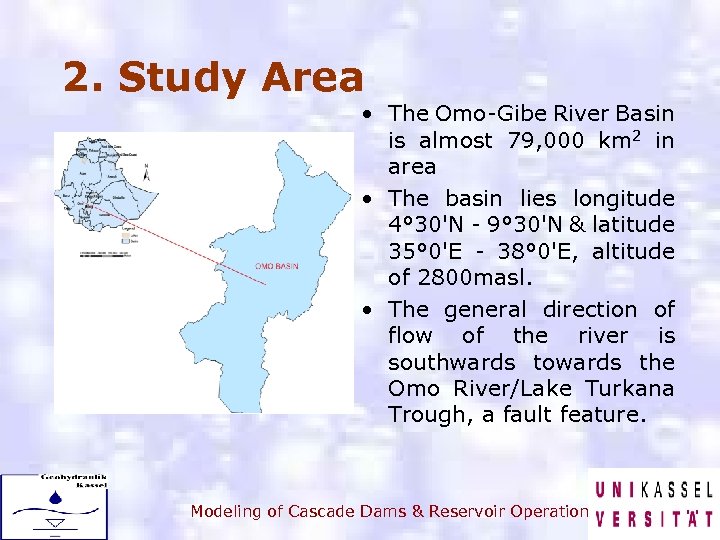 2. Study Area • The Omo-Gibe River Basin is almost 79, 000 km 2 in area • The basin lies longitude 4° 30'N - 9° 30'N & latitude 35° 0'E - 38° 0'E, altitude of 2800 masl. • The general direction of flow of the river is southwards towards the Omo River/Lake Turkana Trough, a fault feature. Modeling of Cascade Dams & Reservoir Operation
 3. Objective of Research Main objective • The purpose of this study is to model cascade dams & reservoirs operation in the Omo river basin to satisfactorily simulate the operation of dams & reservoirs for optimal water use. Modeling of Cascade Dams & Reservoir Operation
 Specific objectives The specific objectives of the proposed study are To simulate runoff & inflow to the reservoirs in the Omo river basin using the SWAT model. To develop & recommend optimal dam & reservoir operation rule curves for cascade dams & reservoirs, more soundly based on evaluating the feasibility of various reservoir operating alternatives. To evaluate the effects of various reservoir operating alternatives on either preventing flooding or avoiding precarious low flow at locations d/s of the reservoirs. Modeling of Cascade Dams & Reservoir Operation
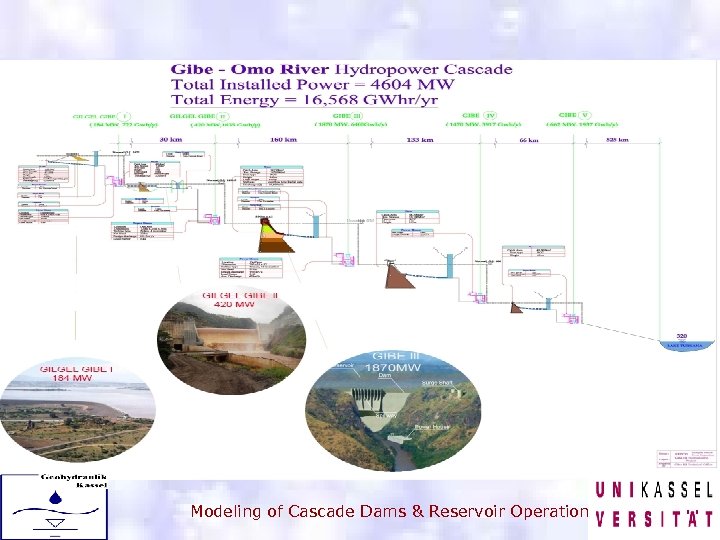 Hydrological & Hydraulic Situation in the Omo River Basin Modeling of Cascade Dams & Reservoir Operation
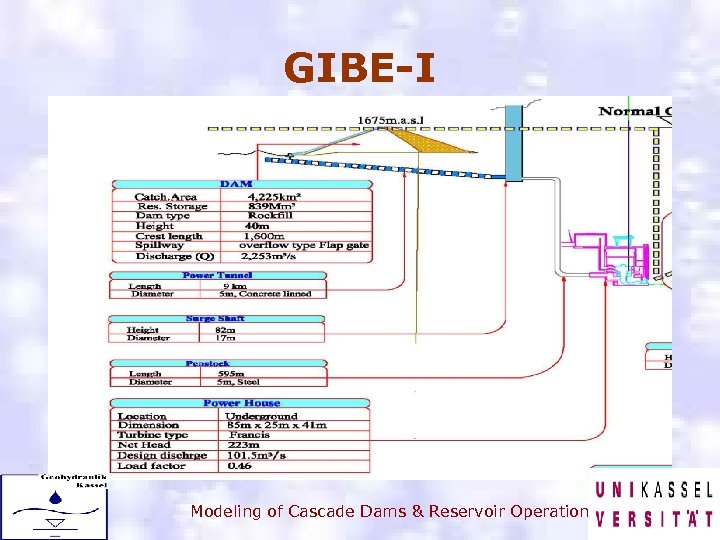 GIBE-I Modeling of Cascade Dams & Reservoir Operation
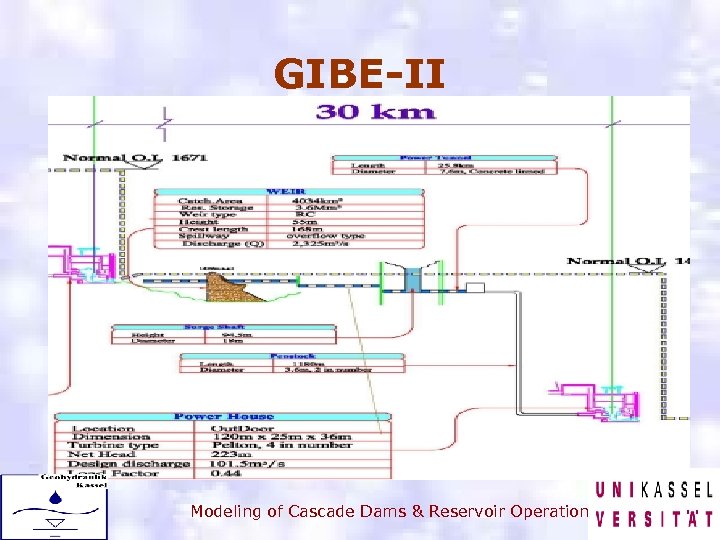 GIBE-II Modeling of Cascade Dams & Reservoir Operation
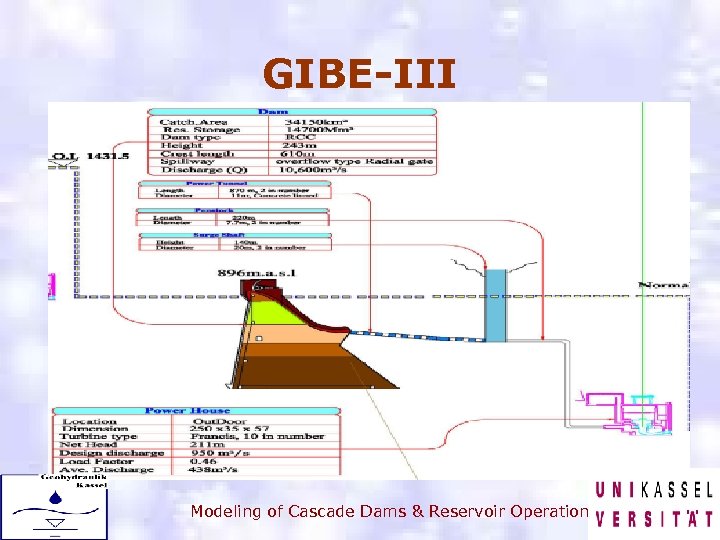 GIBE-III Modeling of Cascade Dams & Reservoir Operation
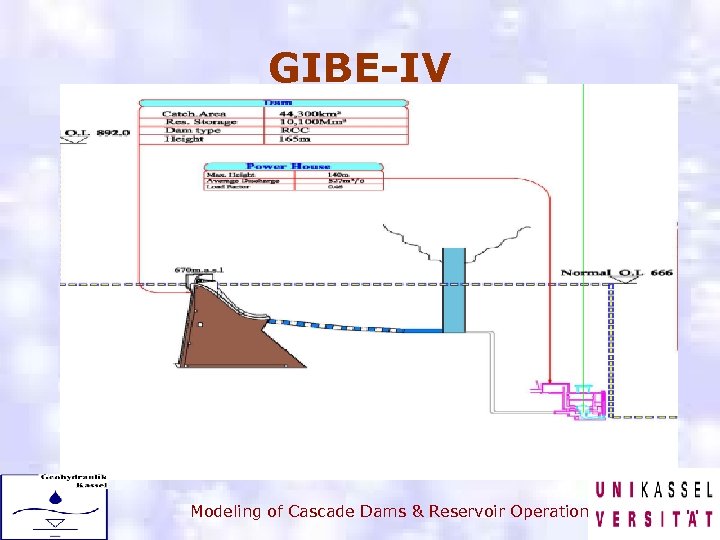 GIBE-IV Modeling of Cascade Dams & Reservoir Operation
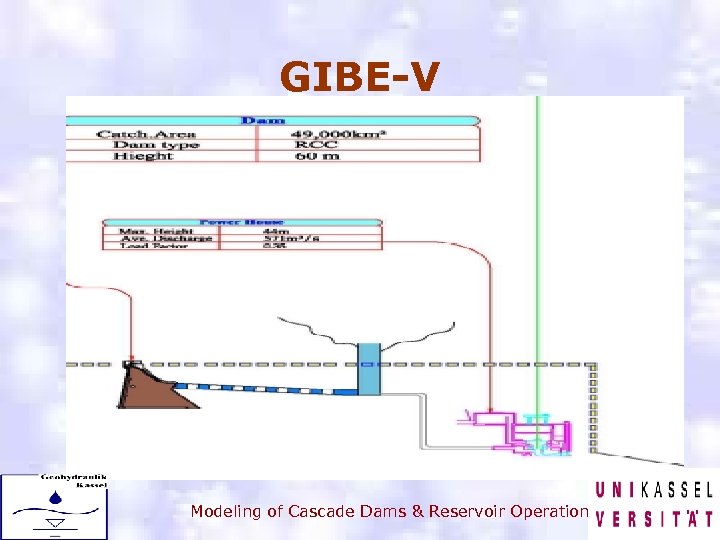 GIBE-V Modeling of Cascade Dams & Reservoir Operation
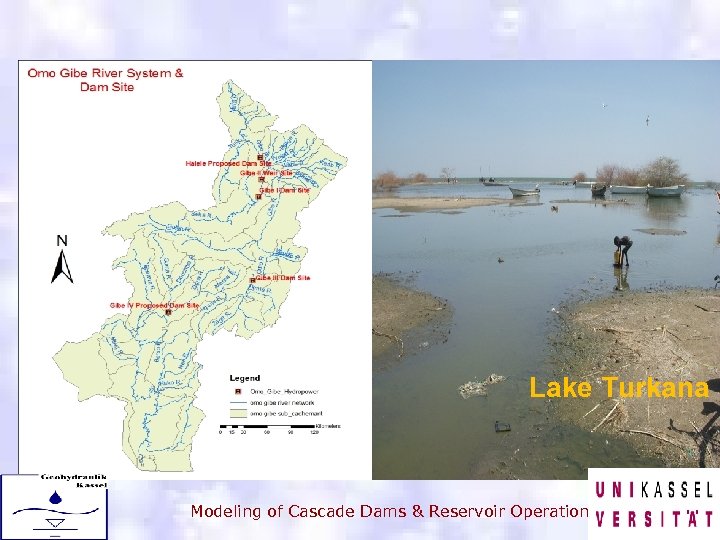 . Lake Turkana Modeling of Cascade Dams & Reservoir Operation
 4. The Statistical Down. Scaling Model: application to filling and forcasting Metrological data 4. 1 Introduction • The Statistical Down. Scaling Model (SDSM) is a freely available tool that produces high resolution climate change scenarios. • Downscaling is a technique by which properties of the free atmosphere are used to predict local meteorological conditions. • The large-scale information may originate from systematic weather observations or from climate model outputs. Modeling of Cascade Dams & Reservoir Operation
 SDSM cont. . • This freely available software enables the production of climate change time series at sites for which there are sufficient daily data for model calibration, as well as archived General Circulation Model (GCM) output to generate scenarios. • SDSM can also be used as a stochastic weather generator or to infill gaps in meteorological data. Modeling of Cascade Dams & Reservoir Operation
 Objective • To filling and forecasting Rainfall and Temperature data for Omo Metrological Stations Modeling of Cascade Dams & Reservoir Operation
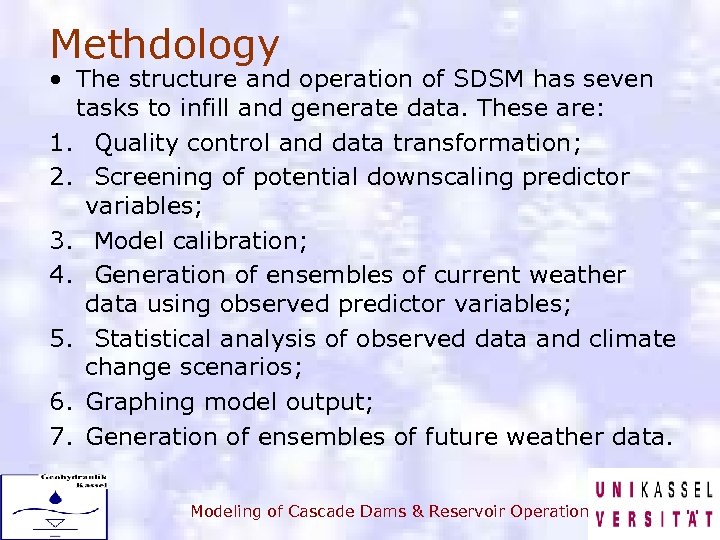 Methdology • The structure and operation of SDSM has seven tasks to infill and generate data. These are: 1. Quality control and data transformation; 2. Screening of potential downscaling predictor variables; 3. Model calibration; 4. Generation of ensembles of current weather data using observed predictor variables; 5. Statistical analysis of observed data and climate change scenarios; 6. Graphing model output; 7. Generation of ensembles of future weather data. Modeling of Cascade Dams & Reservoir Operation
 RESULT Modeling of Cascade Dams & Reservoir Operation
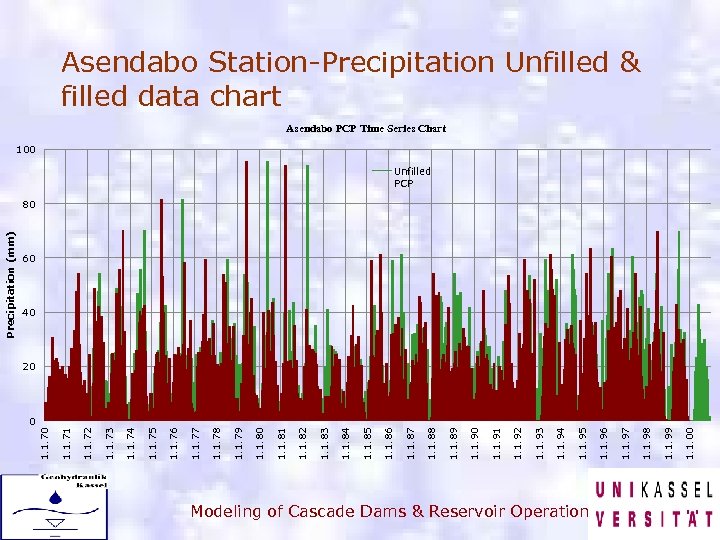 Modeling of Cascade Dams & Reservoir Operation 1. 1. 00 1. 1. 99 1. 1. 98 1. 1. 97 1. 1. 96 1. 1. 95 1. 1. 94 1. 1. 93 1. 1. 92 1. 1. 91 1. 1. 90 1. 1. 89 1. 1. 88 1. 1. 87 1. 1. 86 1. 1. 85 1. 1. 84 1. 1. 83 1. 1. 82 1. 1. 81 1. 1. 80 1. 1. 79 1. 1. 78 1. 1. 77 1. 1. 76 1. 1. 75 1. 1. 74 1. 1. 73 1. 1. 72 1. 1. 71 1. 1. 70 Precipitation (mm) Asendabo Station-Precipitation Unfilled & filled data chart Asendabo PCP Time Series Chart 100 Unfilled PCP 80 60 40 20 0
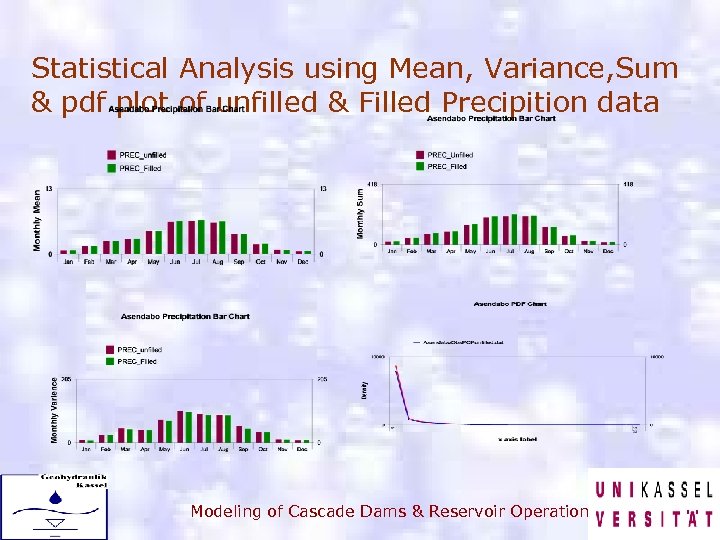 Statistical Analysis using Mean, Variance, Sum & pdf plot of unfilled & Filled Precipition data Modeling of Cascade Dams & Reservoir Operation
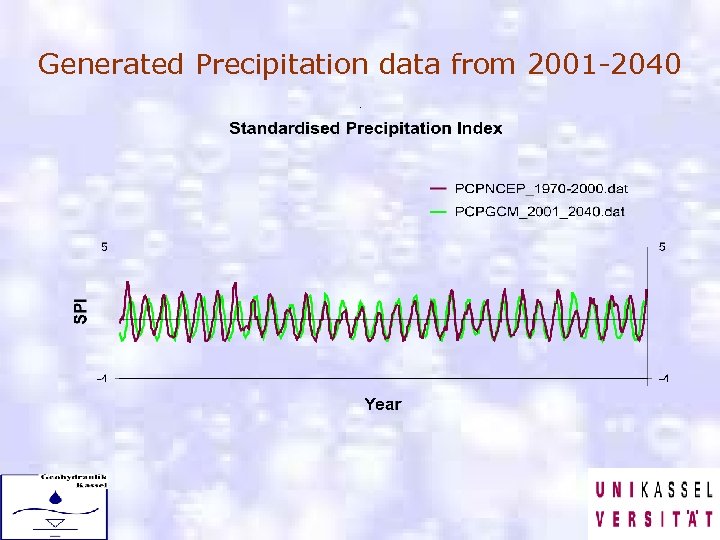 Generated Precipitation data from 2001 -2040.
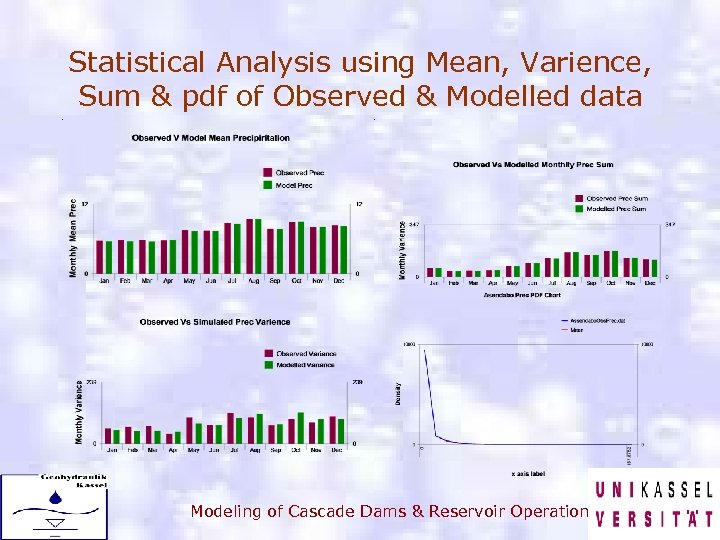 . Statistical Analysis using Mean, Varience, Sum & pdf of Observed & Modelled data. Modeling of Cascade Dams & Reservoir Operation
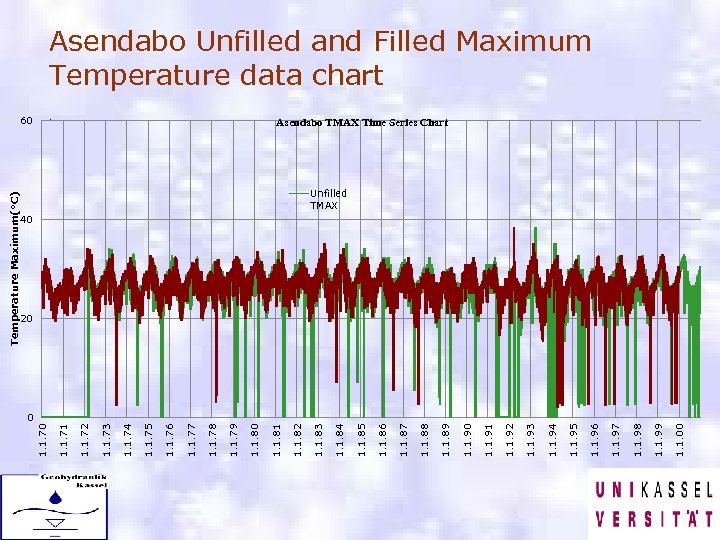 1. 1. 00 1. 1. 99 1. 1. 98 1. 1. 97 1. 1. 96 1. 1. 95 1. 1. 94 1. 1. 93 1. 1. 92 1. 1. 91 1. 1. 90 1. 1. 89 1. 1. 88 1. 1. 87 1. 1. 86 1. 1. 85 1. 1. 84 1. 1. 83 1. 1. 82 . 1. 1. 81 1. 1. 80 1. 1. 79 1. 1. 78 1. 1. 77 1. 1. 76 1. 1. 75 1. 1. 74 1. 1. 73 1. 1. 72 60 1. 1. 71 1. 1. 70 Temperature Maximum(°C) Asendabo Unfilled and Filled Maximum Temperature data chart Asendabo TMAX Time Series Chart Unfilled TMAX 40 20 0
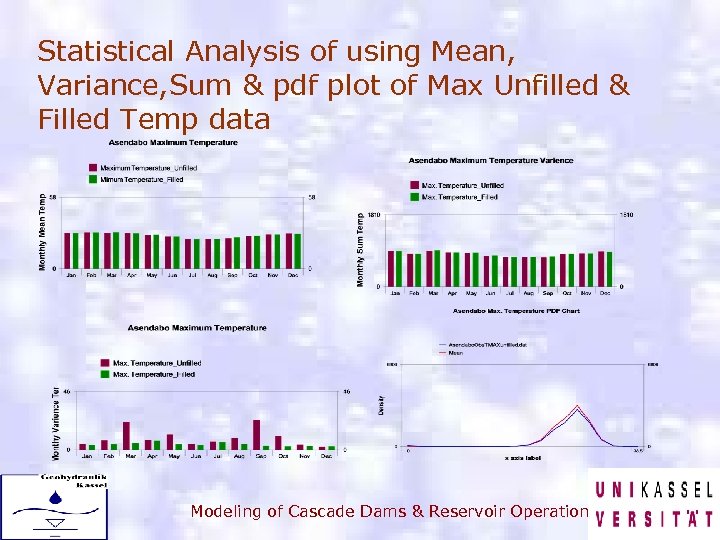 Statistical Analysis of using Mean, Variance, Sum & pdf plot of Max Unfilled & Filled Temp data Modeling of Cascade Dams & Reservoir Operation
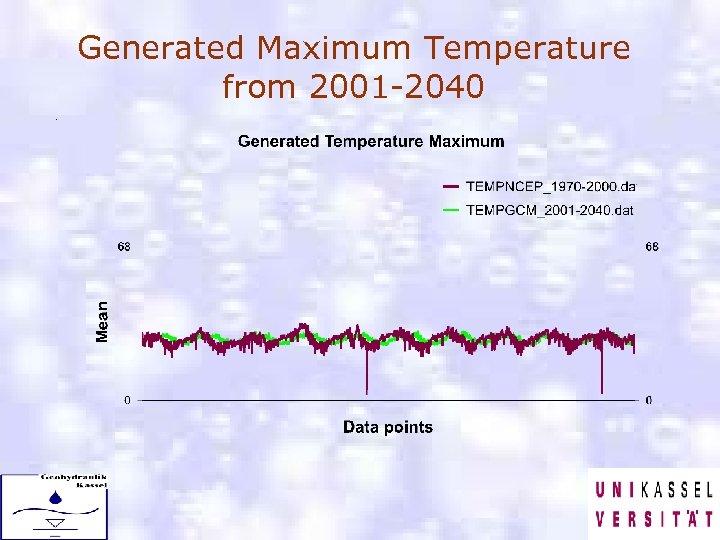 Generated Maximum Temperature from 2001 -2040.
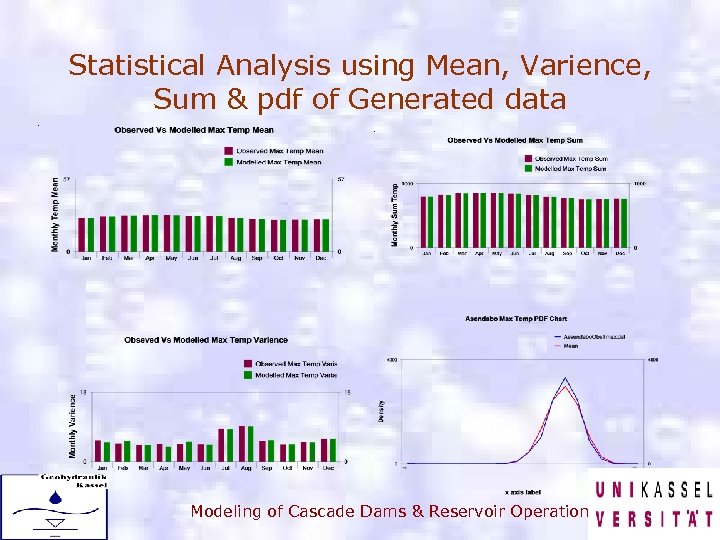 Statistical Analysis using Mean, Varience, Sum & pdf of Generated data. . Modeling of Cascade Dams & Reservoir Operation
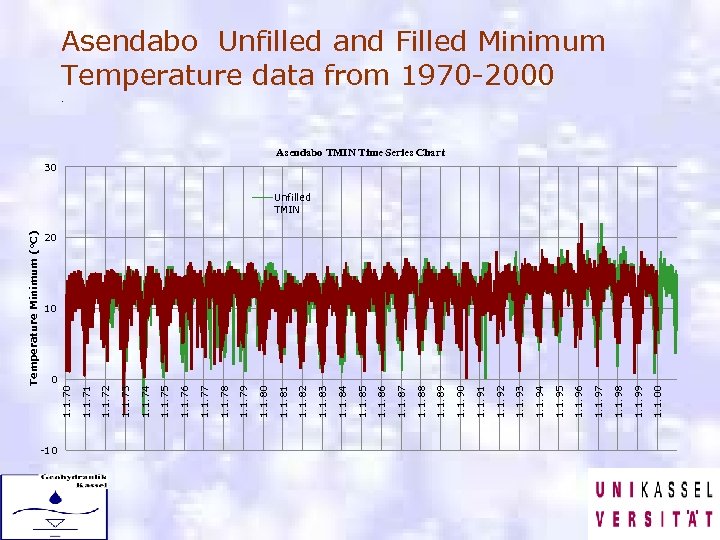 -10 1. 1. 00 1. 1. 99 1. 1. 98 1. 1. 97 1. 1. 96 1. 1. 95 1. 1. 94 1. 1. 93 1. 1. 92 1. 1. 91 1. 1. 90 1. 1. 89 1. 1. 88 1. 1. 87 1. 1. 86 1. 1. 85 1. 1. 84 1. 1. 83 1. 1. 82 1. 1. 81 1. 1. 80 1. 1. 79 1. 1. 78 1. 1. 77 1. 1. 76 1. 1. 75 1. 1. 74 1. 1. 73 1. 1. 72 1. 1. 71 1. 1. 70 Temperature Minimum (°C) Asendabo Unfilled and Filled Minimum Temperature data from 1970 -2000 . Asendabo TMIN Time Series Chart 30 Unfilled TMIN 20 10 0
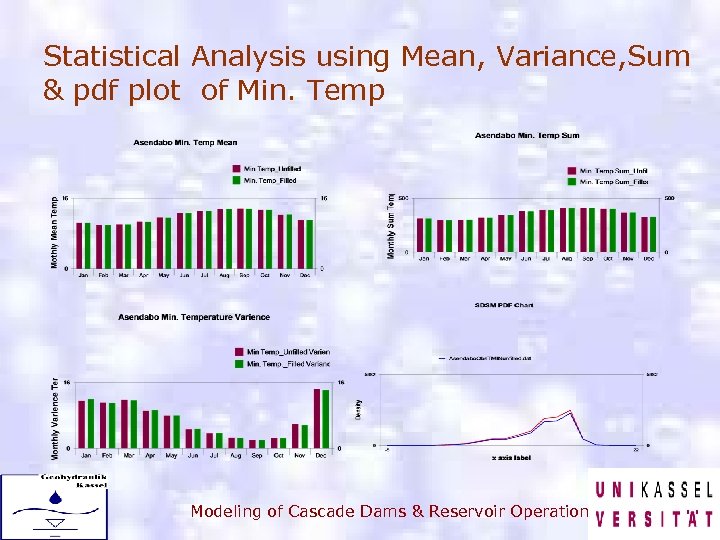 Statistical Analysis using Mean, Variance, Sum & pdf plot of Min. Temp Modeling of Cascade Dams & Reservoir Operation
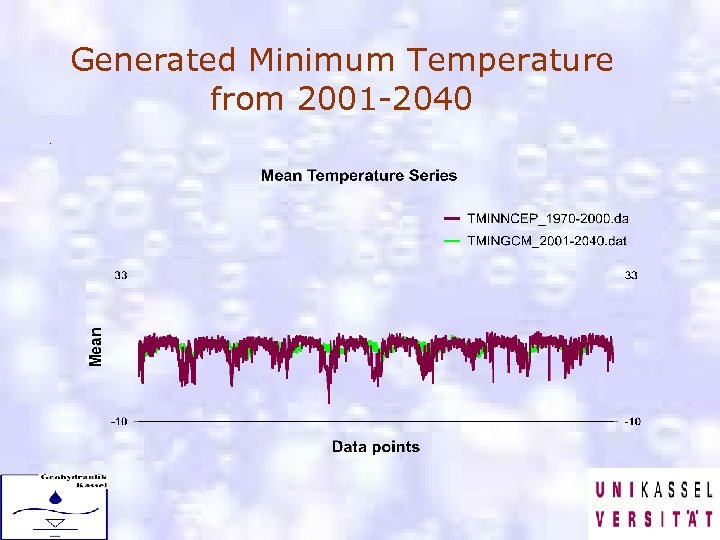 Generated Minimum Temperature from 2001 -2040.
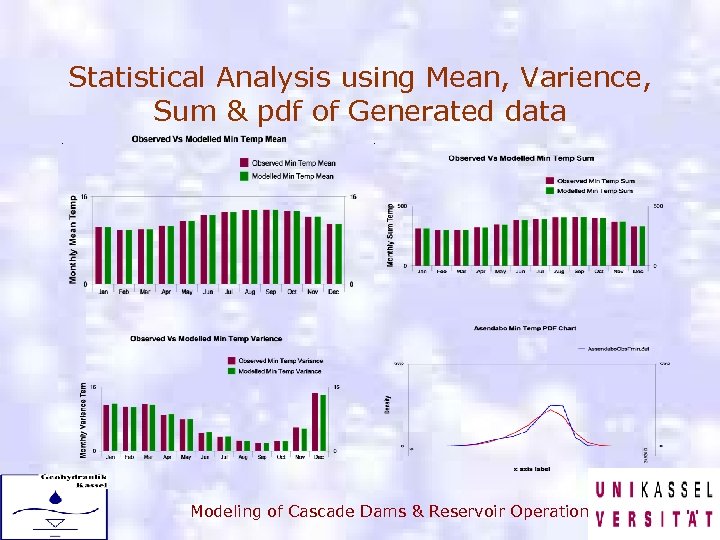 Statistical Analysis using Mean, Varience, Sum & pdf of Generated data. . Modeling of Cascade Dams & Reservoir Operation
 Summary By the same procedure • 18 Precipitation station were filled and generated • 13 Maximum and Minimum temperature station data were filled and generated
 5. Hydrological Model SWAT 5. 1. Introduction • SWAT is a hydrological model that attempt to describe the physical processes controlling the transformation of precipitation to runoff. • The major hydrologic processes described by this model include: Canopy interception, Evaporation, Transpiration, Snowmelt, Interflow, Overland flow, Channel flow, unsaturated subsurface flow and saturated subsurface flow. Modeling of Cascade Dams & Reservoir Operation
 Introduction cont. . . • SWAT was used to assess and predict the impact of land management practices on water in Omo river basin with varying soils, land use and management conditions over long periods of time. Modeling of Cascade Dams & Reservoir Operation
 5. 2. Objective • To simulate runoff & inflow to the reservoirs in the Omo river basin. Modeling of Cascade Dams & Reservoir Operation
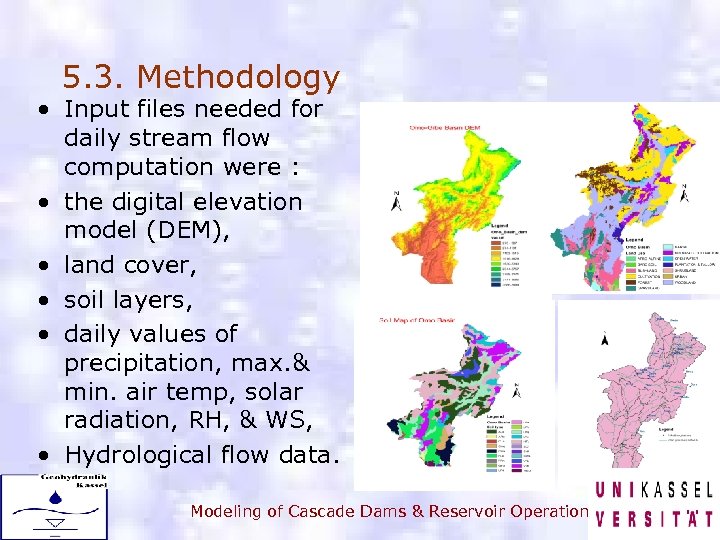 5. 3. Methodology • Input files needed for daily stream flow computation were : • the digital elevation model (DEM), • land cover, • soil layers, • daily values of precipitation, max. & min. air temp, solar radiation, RH, & WS, • Hydrological flow data. Modeling of Cascade Dams & Reservoir Operation
 Methodology cont. . . • Ø Ø Ø Missing metrological data were filled using WXGEN weather generator model of SWAT, SDSM, and Hydrological flow data were filled by Multiple regression of R program • The Digital Elevation Model (DEM) was used to create stream network, subbasin & delineate the watershed boundary & also calculate the sub basin parameters. • Threshold value of 2%, 5% & 5% were taken for land use, soil & slope in order to keep the number of HRUs to a reasonable number for modeling the water assessment of the basin. Modeling of Cascade Dams & Reservoir Operation
 Methodology cont. . . • Runoff was predicted separately for each HRU & routed to obtain the total runoff for the watershed, and • Calibration, Validation & Uncertainity of the model using SWAT_CUP 4. 3. 7. Modeling of Cascade Dams & Reservoir Operation
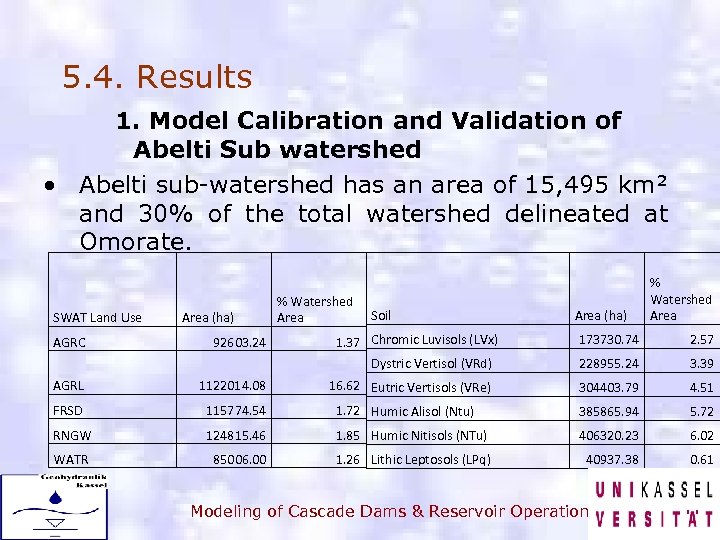 5. 4. Results 1. Model Calibration and Validation of Abelti Sub watershed • Abelti sub-watershed has an area of 15, 495 km² and 30% of the total watershed delineated at Omorate. SWAT Land Use Area (ha) % Watershed Area Soil 92603. 24 173730. 74 2. 57 Dystric Vertisol (VRd) AGRC 1. 37 Chromic Luvisols (LVx) Area (ha) % Watershed Area 228955. 24 3. 39 16. 62 Eutric Vertisols (VRe) 304403. 79 4. 51 AGRL 1122014. 08 FRSD 115774. 54 1. 72 Humic Alisol (Ntu) 385865. 94 5. 72 RNGW 124815. 46 1. 85 Humic Nitisols (NTu) 406320. 23 6. 02 WATR 85006. 00 1. 26 Lithic Leptosols (LPq) 40937. 38 0. 61 Modeling of Cascade Dams & Reservoir Operation
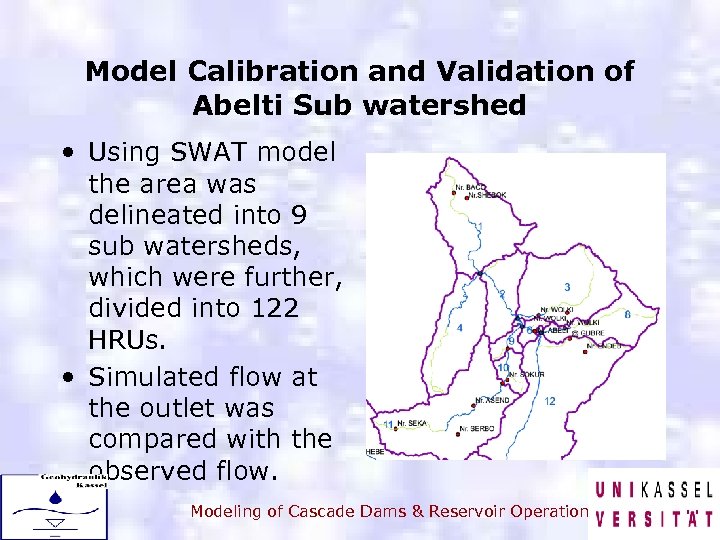 Model Calibration and Validation of Abelti Sub watershed • Using SWAT model the area was delineated into 9 sub watersheds, which were further, divided into 122 HRUs. • Simulated flow at the outlet was compared with the observed flow. Modeling of Cascade Dams & Reservoir Operation
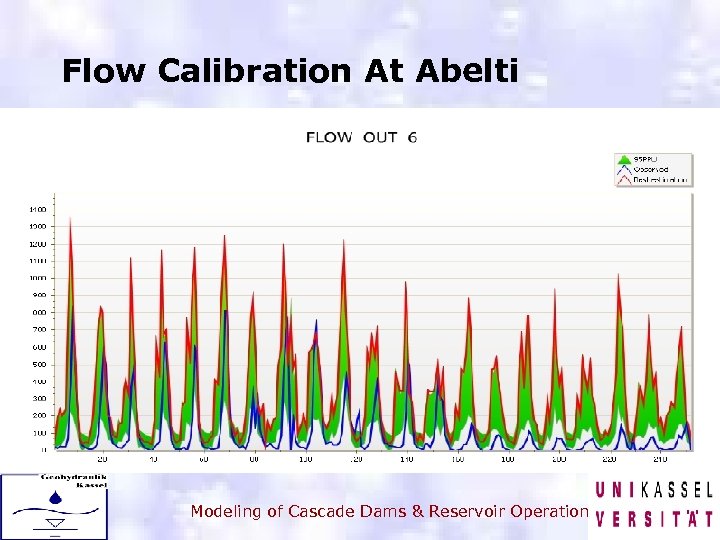 Flow Calibration At Abelti Modeling of Cascade Dams & Reservoir Operation
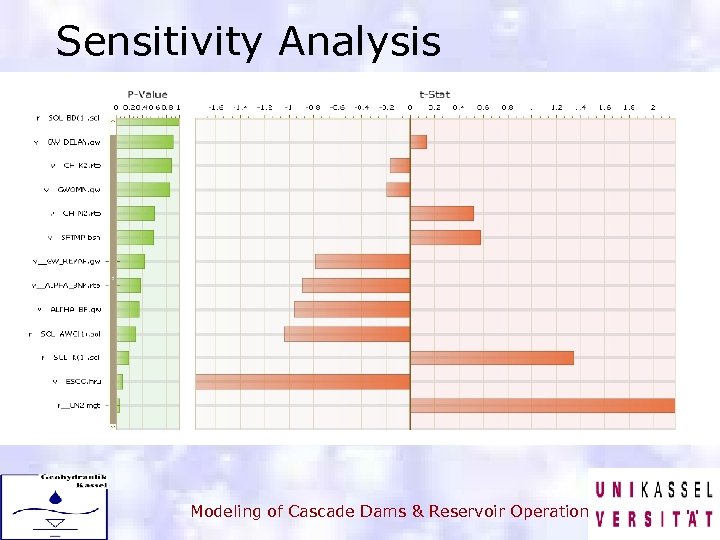 Sensitivity Analysis Modeling of Cascade Dams & Reservoir Operation
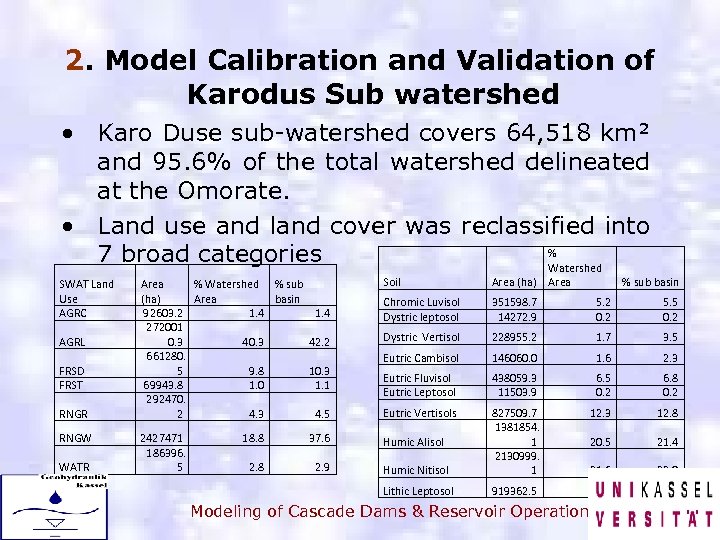 2. Model Calibration and Validation of Karodus Sub watershed • Karo Duse sub-watershed covers 64, 518 km² and 95. 6% of the total watershed delineated at the Omorate. • Land use and land cover was reclassified into % 7 broad categories Watershed SWAT Land Use AGRC AGRL FRSD FRST RNGR RNGW WATR Area % Watershed % sub (ha) Area basin 92603. 2 1. 4 272001 0. 3 42. 2 661280. 5 9. 8 10. 3 69943. 8 1. 0 1. 1 292470. 2 4. 3 4. 5 Soil Area (ha) Chromic Luvisol Dystric leptosol 351598. 7 14272. 9 5. 2 0. 2 5. 5 0. 2 Dystric Vertisol 228955. 2 1. 7 3. 5 Eutric Cambisol 146060. 0 1. 6 2. 3 Eutric Fluvisol Eutric Leptosol 438059. 3 11503. 9 6. 5 0. 2 6. 8 0. 2 Eutric Vertisols 12. 3 12. 8 2427471 186396. 5 20. 5 21. 4 31. 6 33. 0 13. 6 14. 3 18. 8 37. 6 Humic Alisol 2. 8 2. 9 Humic Nitisol 827509. 7 1381854. 1 2130999. 1 Lithic Leptosol Area 919362. 5 Modeling of Cascade Dams & Reservoir Operation % sub basin
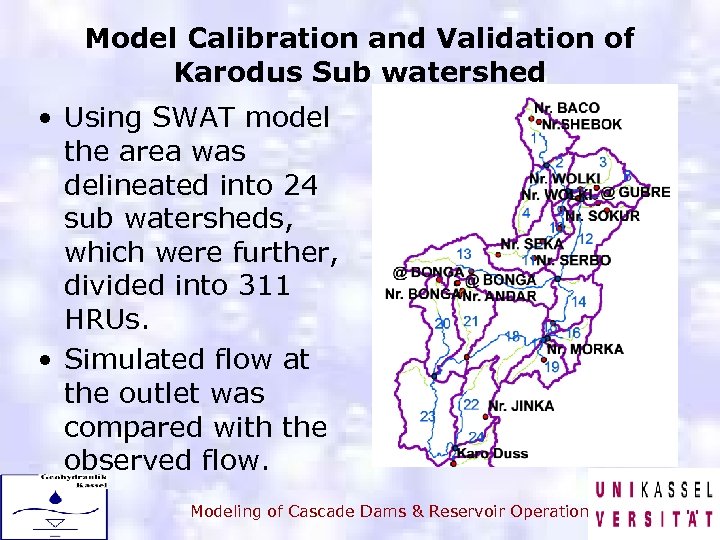 Model Calibration and Validation of Karodus Sub watershed • Using SWAT model the area was delineated into 24 sub watersheds, which were further, divided into 311 HRUs. • Simulated flow at the outlet was compared with the observed flow. Modeling of Cascade Dams & Reservoir Operation
 Flow Calibration At Karodus Modeling of Cascade Dams & Reservoir Operation
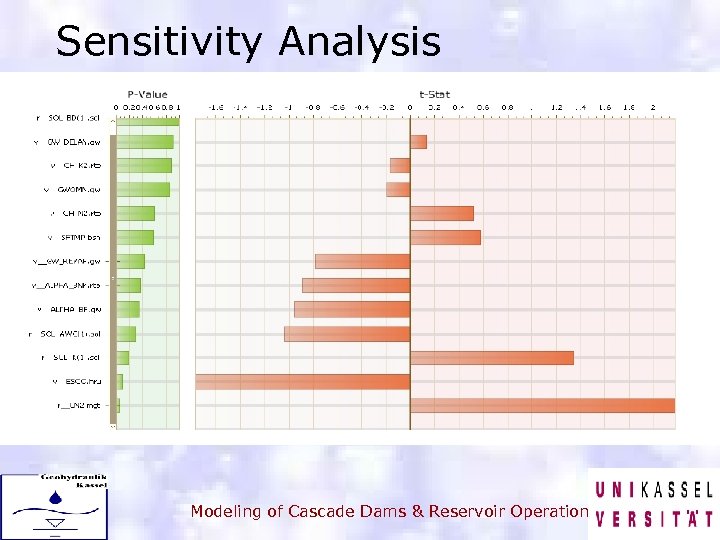 Sensitivity Analysis Modeling of Cascade Dams & Reservoir Operation
 6. HEC-Res. Sim (Reservoir System Simulation) Model 6. 1. Introduction • HEC-Res. Sim (USACE) is a modeling software program used to assist in planning studies for evaluating existing & proposed reservoirs, reservoir operations, & to assist in sizing the flood risk management and conservation storage requirements for each project. • It is intended to meet the needs of real-time reservoir regulators for a decision support tool, as well as the needs of modelers doing reservoir projects studies. Modeling of Cascade Dams & Reservoir Operation
 Introduction cont. . . • There are three modules that make up HECRes. Sim to simulate the dam & reservoir operations. • These are watershed set up, reservoir network and simulation. Each module has a unique purposes & an associated set of functions accessible through menus, toolbars and schematic. Modeling of Cascade Dams & Reservoir Operation
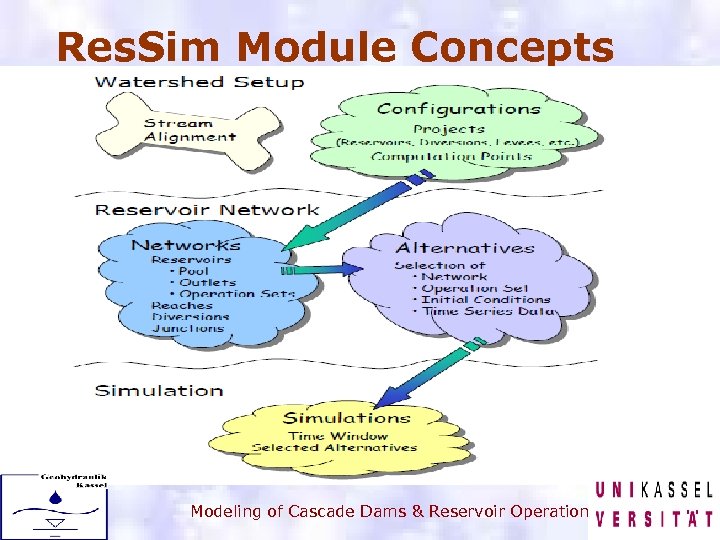 Res. Sim Module Concepts. Modeling of Cascade Dams & Reservoir Operation
 6. 2. Objective To develop & recommend optimal dam & reservoir operation rule curves for cascade dams & reservoirs To evaluate the effects of various reservoir operating alternatives on either preventing flooding or avoiding precarious low flow at locations d/s of the reservoirs Modeling of Cascade Dams & Reservoir Operation
 6. 3. Methodology • Insertion of the map layers in to the HECRes. Sim model • Schematization & configuration of stream alignment & configurations of the projects • Developing network schematic • Describing the physical & operational elements of the reservoir model & analyze the alternatives • Configuration of simulation to isolate the output analysis, • Simulation of the dams & reservoirs network, Modeling of Cascade Dams & Reservoir Operation
 Watershed Setup & Stream Alignment Modeling of Cascade Dams & Reservoir Operation
 Methodology cont… • Evaluation of the effects of various reservoir operating alternatives on flooding at locations d/s of the reservoirs, • Calibration & Verification of the model, • Development of a model that represents the cascade dams & reservoirs, • Delivery of optimal water use operational model for Omo River Basin and • Interpretation of the results. Modeling of Cascade Dams & Reservoir Operation
 6. References • Akter, T. & Simonovic, S. P. , (2004). Modelling uncertainties in short-term reservoir operation using fuzzy sets and a genetic algorithm. Hydrological Science Journal 49(6): 1081 -1079. • Arnold, J. G. , Srinivasan, R. S. , Muttiah, & J. R. Williams. (1998). Large area hydrologic modeling and assessment part I : Model development. J. American Water Resource. Assoc. 34(1): 73 -89. • Arunkumar, S. , & Yeh, W. W. G. (1973). Probabilistic models in the design and operation of a multi-purpose reservoir system. Modeling of Cascade Dams & Reservoir Operation
 Thanks For Your Attention! Modeling of Cascade Dams & Reservoir Operation