Скачать презентацию Tissue engineering research includes the following areas 1
46ff79c9672f03fd82b32c799f21c8b6.ppt
- Количество слайдов: 43





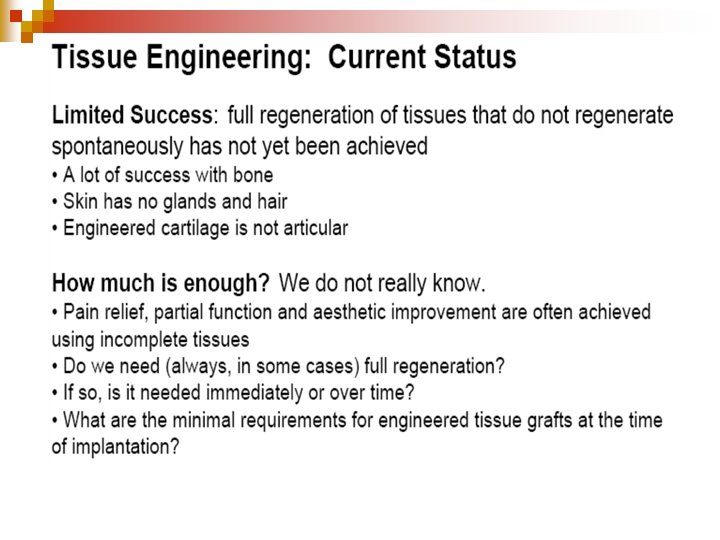
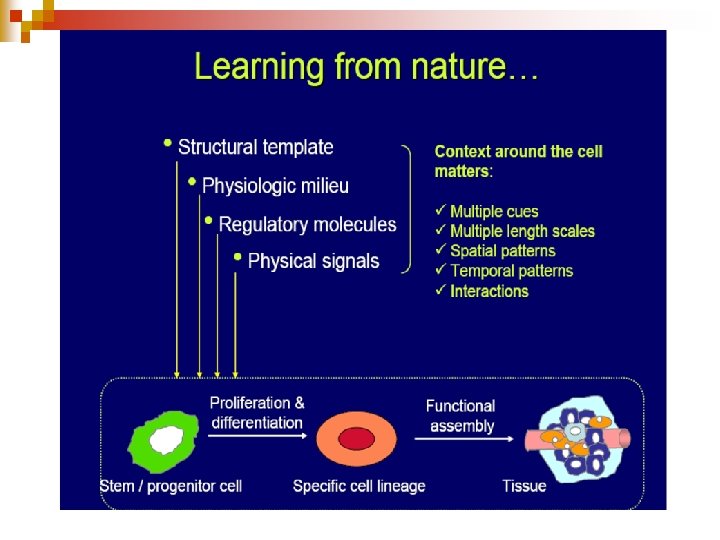
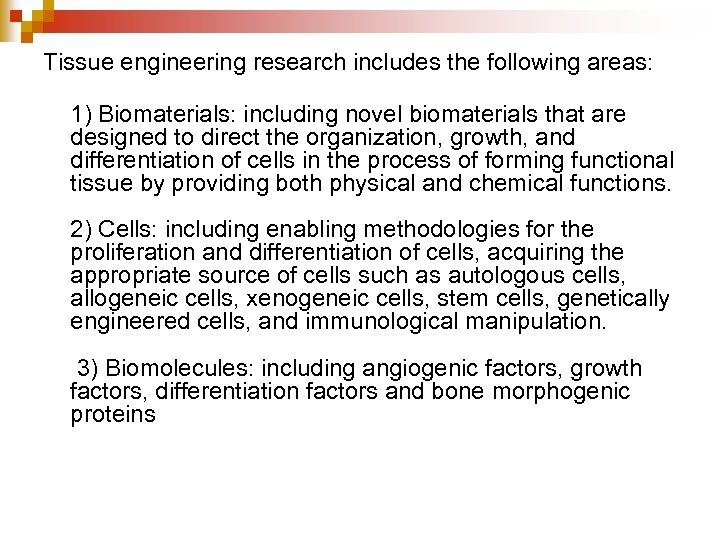 Tissue engineering research includes the following areas: 1) Biomaterials: including novel biomaterials that are designed to direct the organization, growth, and differentiation of cells in the process of forming functional tissue by providing both physical and chemical functions. 2) Cells: including enabling methodologies for the proliferation and differentiation of cells, acquiring the appropriate source of cells such as autologous cells, allogeneic cells, xenogeneic cells, stem cells, genetically engineered cells, and immunological manipulation. 3) Biomolecules: including angiogenic factors, growth factors, differentiation factors and bone morphogenic proteins
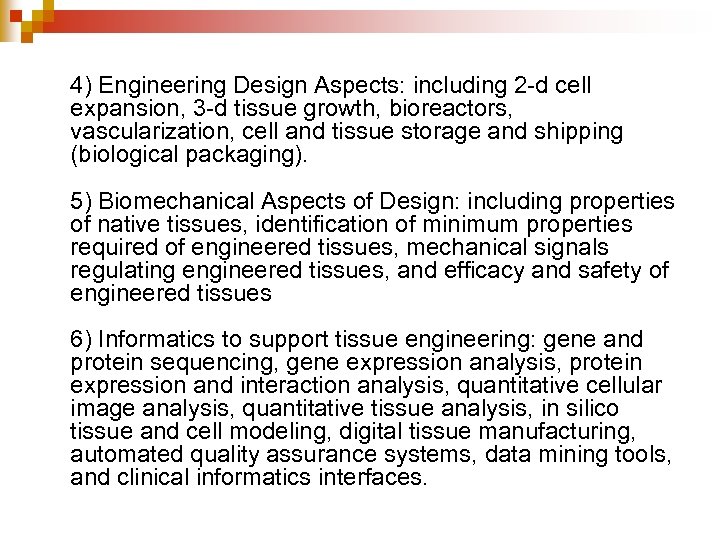 4) Engineering Design Aspects: including 2 -d cell expansion, 3 -d tissue growth, bioreactors, vascularization, cell and tissue storage and shipping (biological packaging). 5) Biomechanical Aspects of Design: including properties of native tissues, identification of minimum properties required of engineered tissues, mechanical signals regulating engineered tissues, and efficacy and safety of engineered tissues 6) Informatics to support tissue engineering: gene and protein sequencing, gene expression analysis, protein expression and interaction analysis, quantitative cellular image analysis, quantitative tissue analysis, in silico tissue and cell modeling, digital tissue manufacturing, automated quality assurance systems, data mining tools, and clinical informatics interfaces.






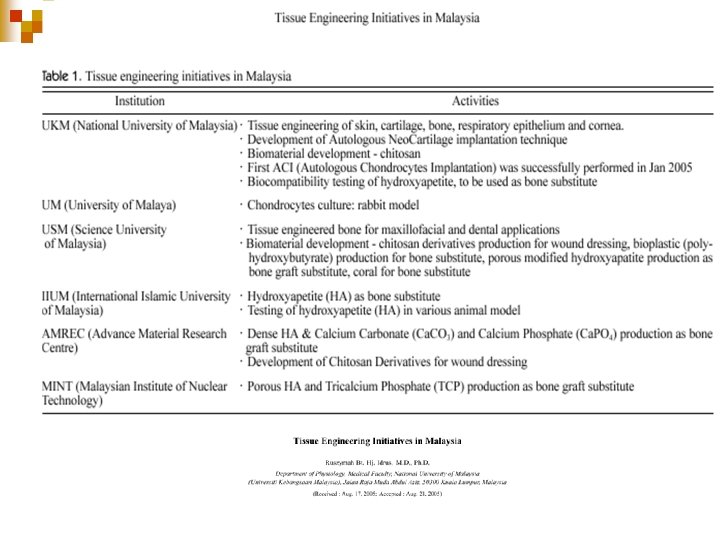










 Impact of Tissue Bank in Malaysia