 Скачать презентацию Tischer Creek Washburn Edison Middle School This
a01bc35a0e2437389d34d0622fbd313b.ppt
- Количество слайдов: 32



Tischer Creek: Washburn Edison Middle School • This slide show is adapted from slides used on 5/29/03 to introduce the website and discuss data collected by the 8 th grade science class at Washburn Edison Middle School. • It is viewable on-line via either the Netscape or Internet Explorer browsers and may be saved as a Powerpoint (. ppt) file for instructional use by educators. • There are Notes attached to some of the slides that provide additional information. [R. Axler 6/19/03; revised C. Hagley 7/8/03] Developed by: R. Axler and C. Hagley Updated:
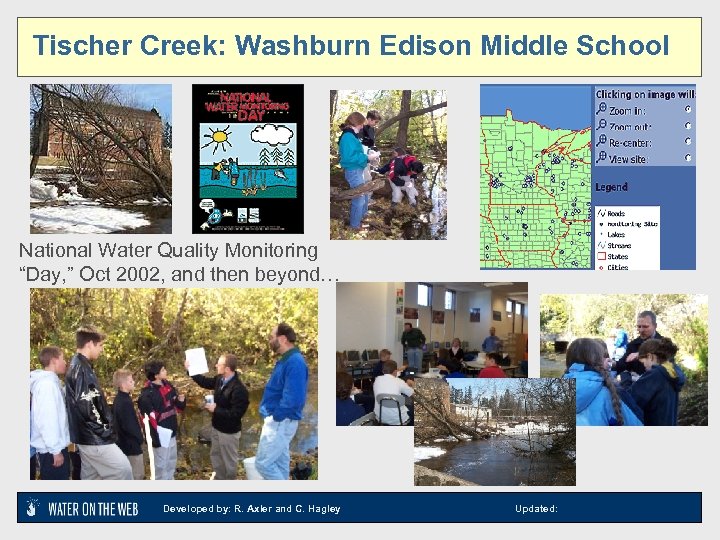
Tischer Creek: Washburn Edison Middle School National Water Quality Monitoring “Day, ” Oct 2002, and then beyond… Developed by: R. Axler and C. Hagley Updated:

What’s the biggest, nastiest, costliest, most difficult to fix problem facing our streams ? Developed by: R. Axler and C. Hagley Updated:
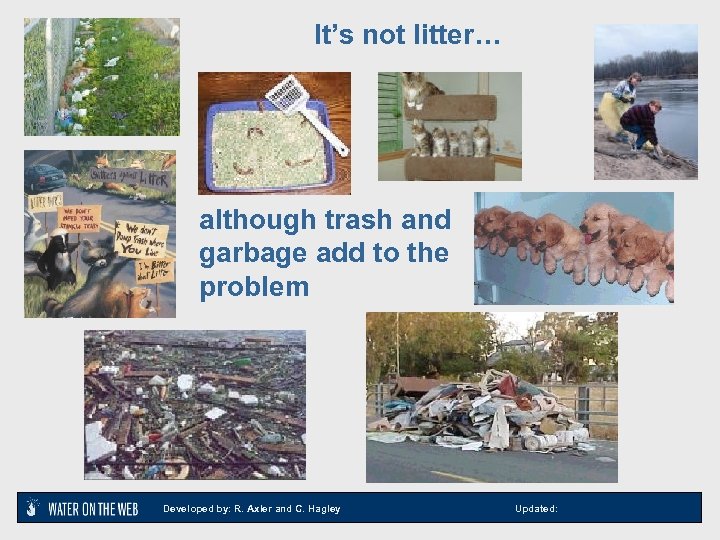
It’s not litter… although trash and garbage add to the problem Developed by: R. Axler and C. Hagley Updated:
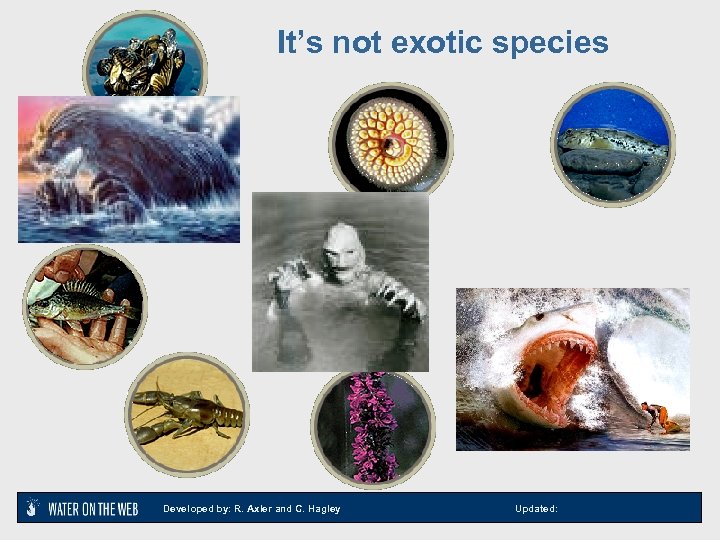
It’s not exotic species Developed by: R. Axler and C. Hagley Updated:
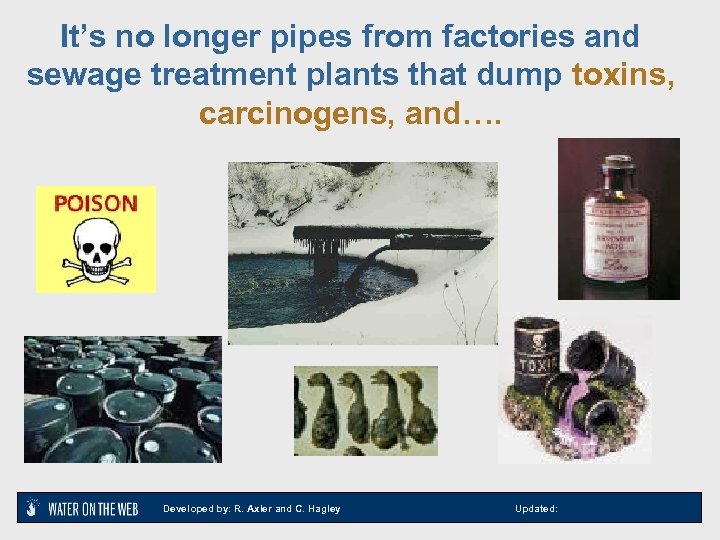
It’s no longer pipes from factories and sewage treatment plants that dump toxins, carcinogens, and…. Developed by: R. Axler and C. Hagley Updated:
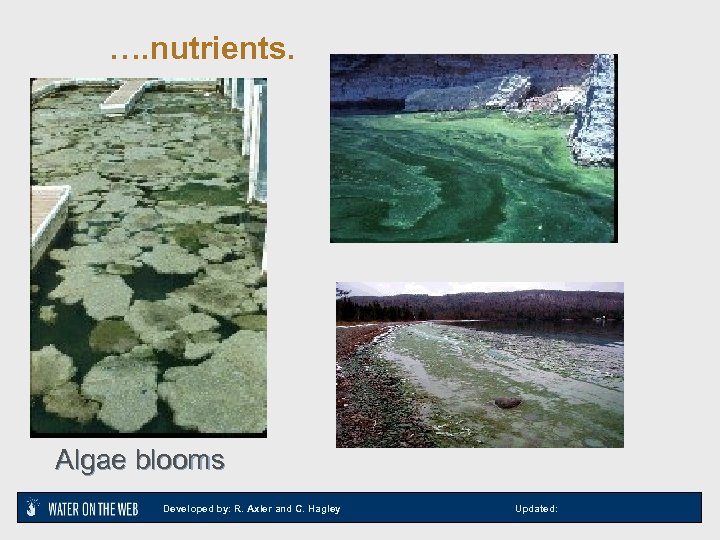
…. nutrients. Algae blooms Developed by: R. Axler and C. Hagley Updated:
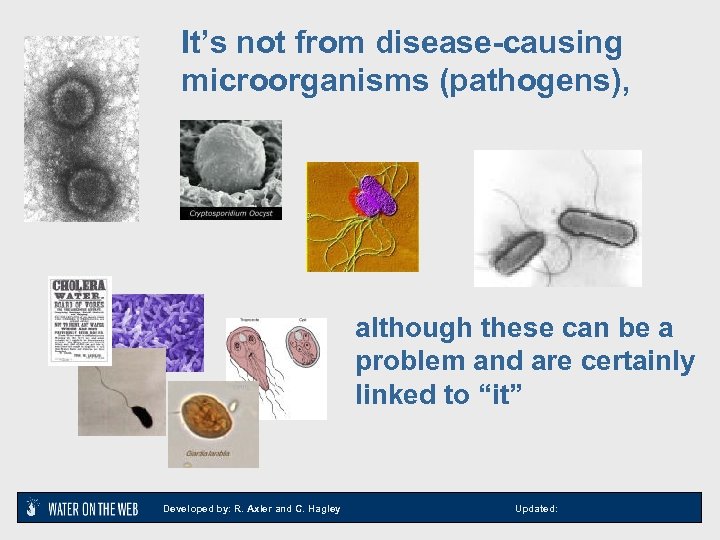
It’s not from disease-causing microorganisms (pathogens), although these can be a problem and are certainly linked to “it” Developed by: R. Axler and C. Hagley Updated:
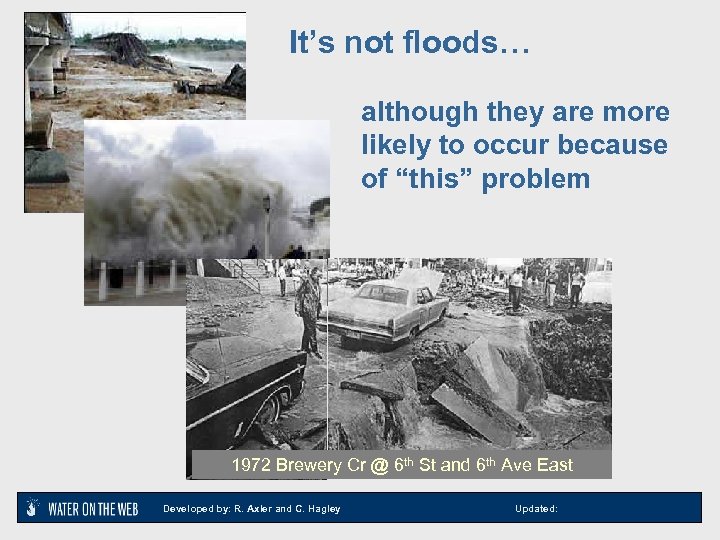
It’s not floods… although they are more likely to occur because of “this” problem 1972 Brewery Cr @ 6 th St and 6 th Ave East Developed by: R. Axler and C. Hagley Updated:
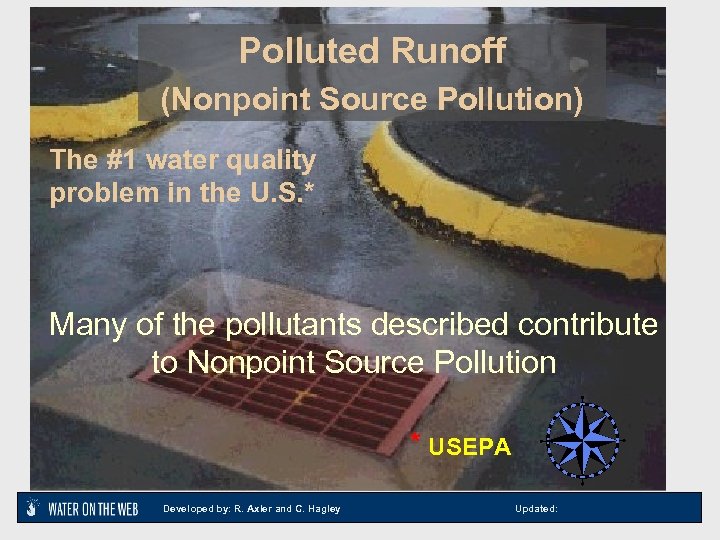
Polluted Runoff (Nonpoint Source Pollution) The #1 water quality problem in the U. S. * Many of the pollutants described contribute to Nonpoint Source Pollution * USEPA Developed by: R. Axler and C. Hagley Updated:
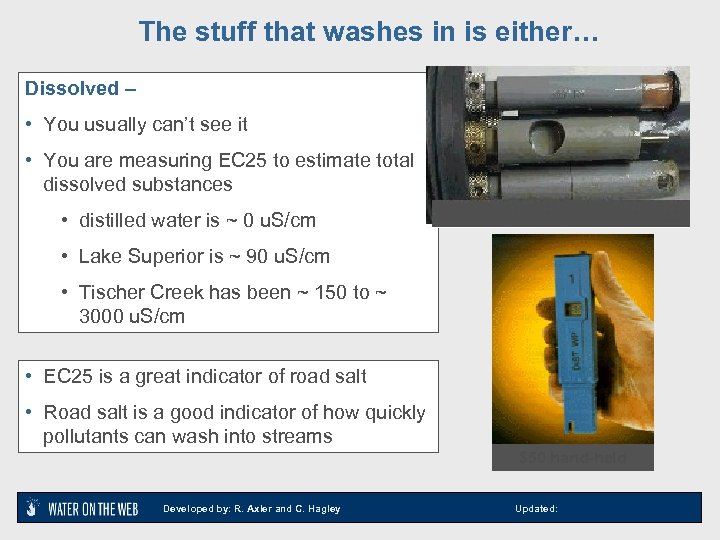
The stuff that washes in is either… Dissolved – • You usually can’t see it • You are measuring EC 25 to estimate total dissolved substances • distilled water is ~ 0 u. S/cm • Lake Superior is ~ 90 u. S/cm • Tischer Creek has been ~ 150 to ~ 3000 u. S/cm • EC 25 is a great indicator of road salt • Road salt is a good indicator of how quickly pollutants can wash into streams $50 hand-held Developed by: R. Axler and C. Hagley Updated:
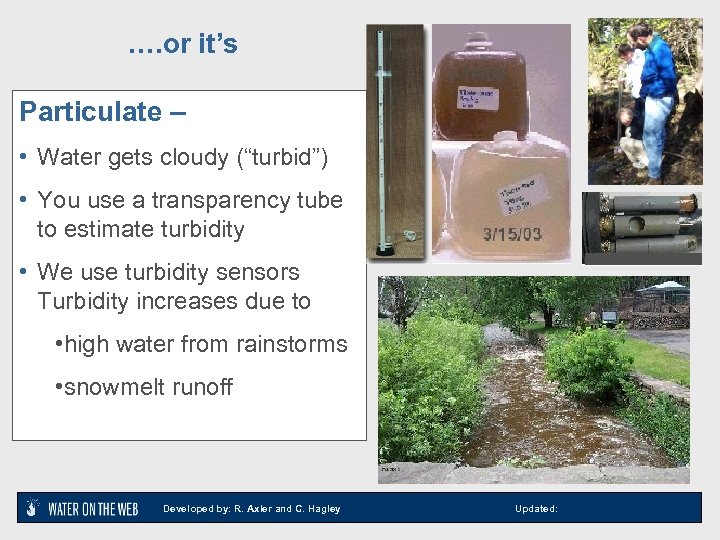
…. or it’s Particulate – • Water gets cloudy (“turbid”) • You use a transparency tube to estimate turbidity • We use turbidity sensors Turbidity increases due to • high water from rainstorms • snowmelt runoff Developed by: R. Axler and C. Hagley Updated:
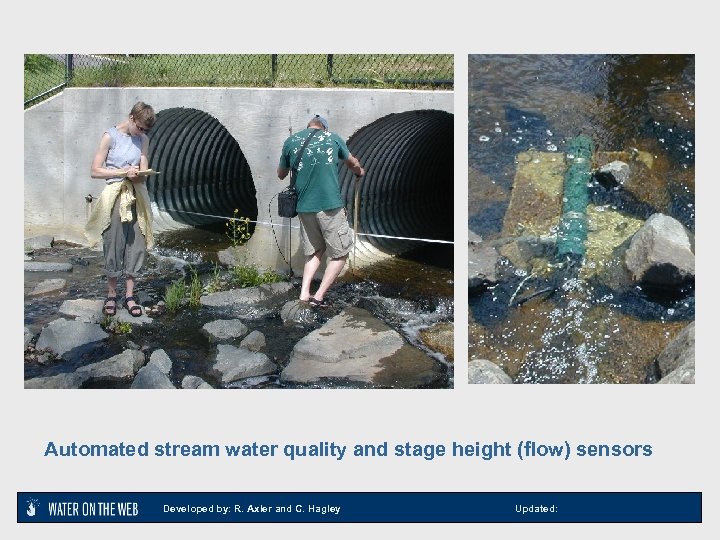
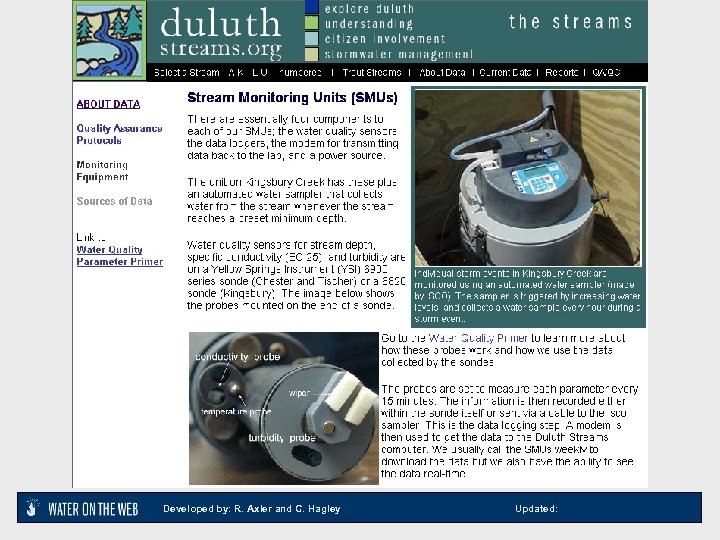
Automated stream water quality and stage height (flow) sensors Developed by: R. Axler and C. Hagley Updated:
Developed by: R. Axler and C. Hagley Updated:
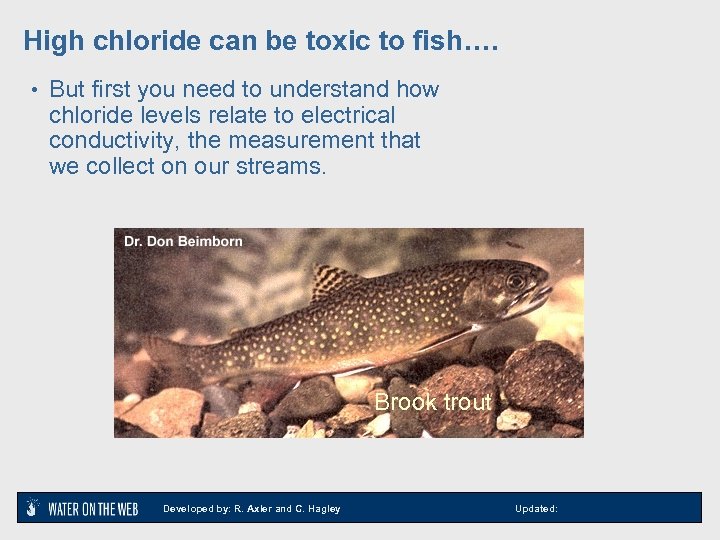
High chloride can be toxic to fish…. • But first you need to understand how chloride levels relate to electrical conductivity, the measurement that we collect on our streams. Brook trout Developed by: R. Axler and C. Hagley Updated:
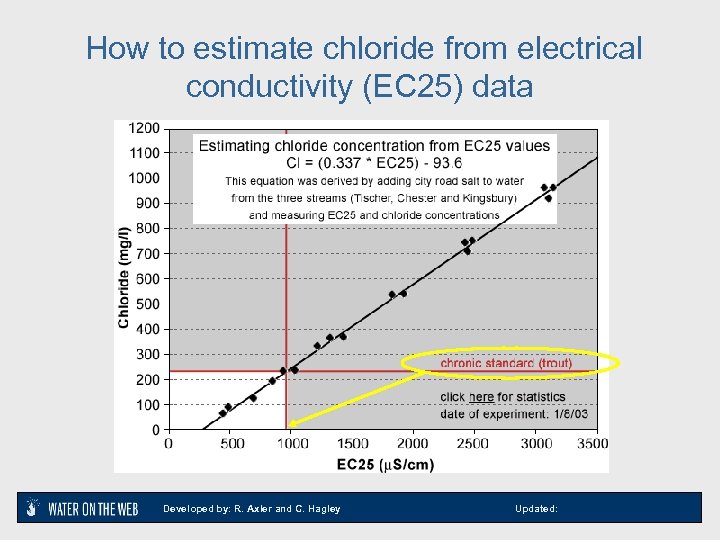
How to estimate chloride from electrical conductivity (EC 25) data Developed by: R. Axler and C. Hagley Updated:
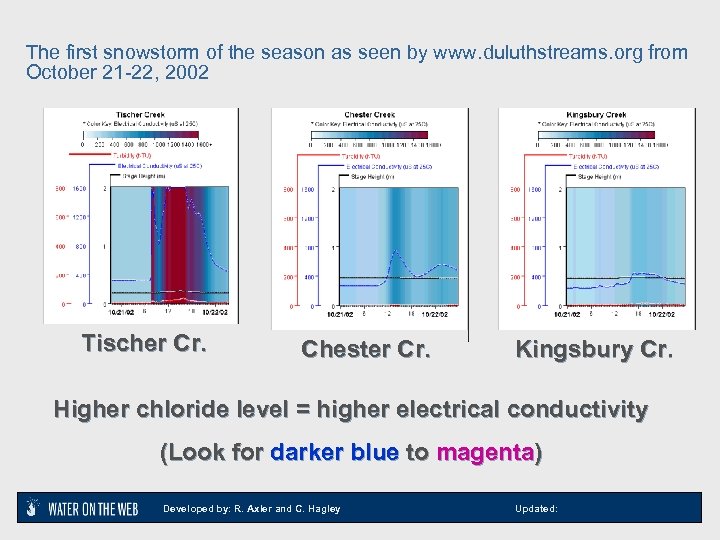
The first snowstorm of the season as seen by www. duluthstreams. org from October 21 -22, 2002 Tischer Cr. Chester Cr. Kingsbury Cr. Higher chloride level = higher electrical conductivity (Look for darker blue to magenta) Developed by: R. Axler and C. Hagley Updated:
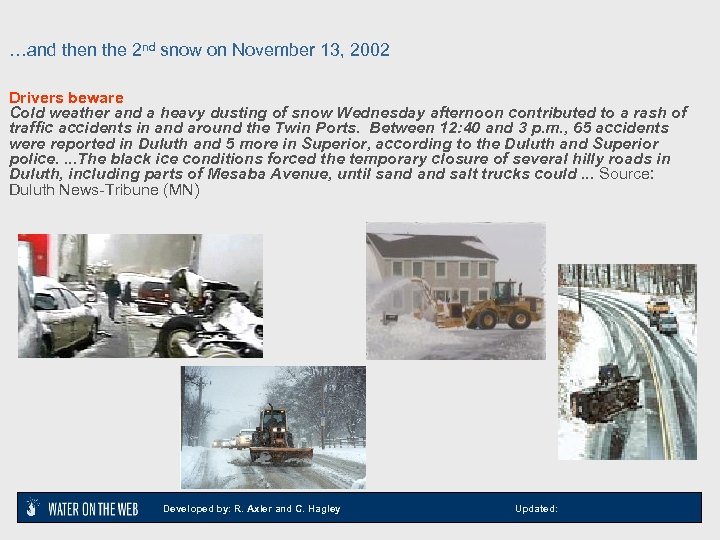
…and then the 2 nd snow on November 13, 2002 Drivers beware Cold weather and a heavy dusting of snow Wednesday afternoon contributed to a rash of traffic accidents in and around the Twin Ports. Between 12: 40 and 3 p. m. , 65 accidents were reported in Duluth and 5 more in Superior, according to the Duluth and Superior police. . The black ice conditions forced the temporary closure of several hilly roads in Duluth, including parts of Mesaba Avenue, until sand salt trucks could. . . Source: Duluth News-Tribune (MN) Developed by: R. Axler and C. Hagley Updated:
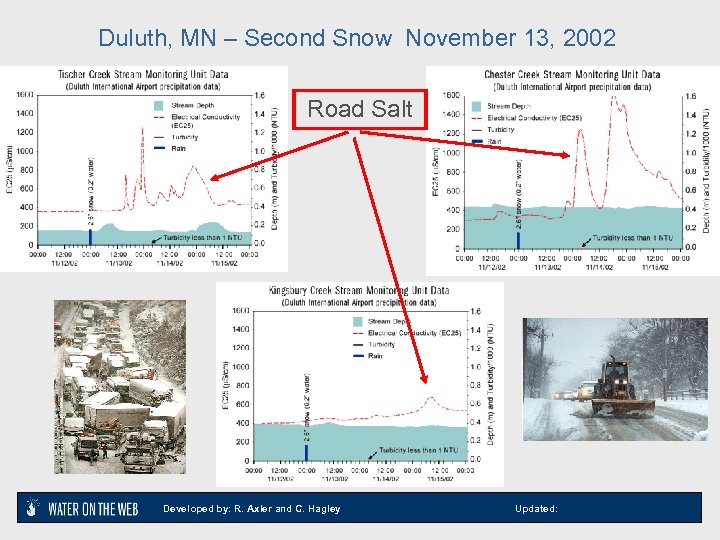
Duluth, MN – Second Snow November 13, 2002 Road Salt Developed by: R. Axler and C. Hagley Updated:
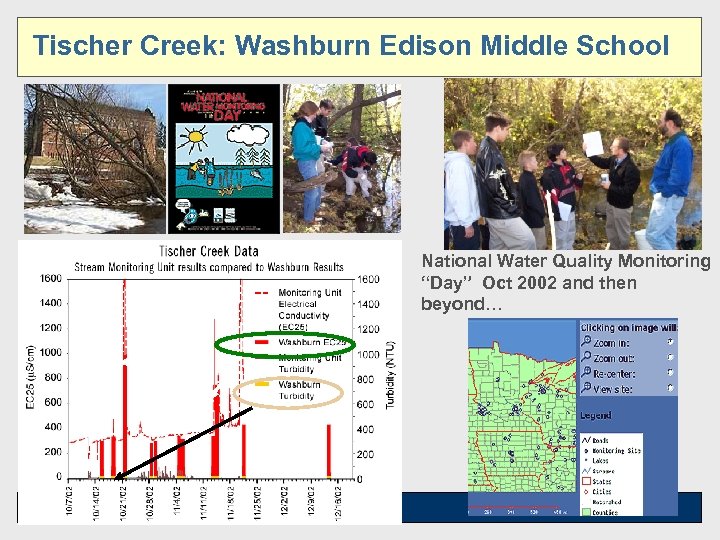
Tischer Creek: Washburn Edison Middle School National Water Quality Monitoring “Day” Oct 2002 and then beyond… Developed by: R. Axler and C. Hagley Updated:
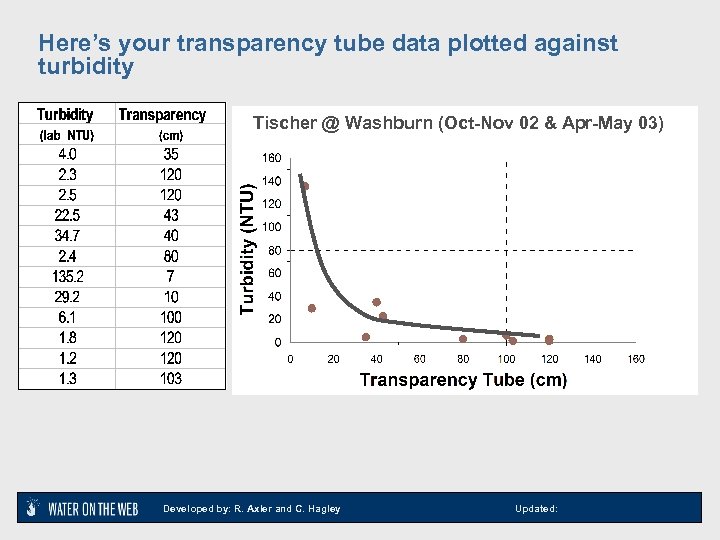
Here’s your transparency tube data plotted against turbidity Tischer @ Washburn (Oct-Nov 02 & Apr-May 03) Developed by: R. Axler and C. Hagley Updated:
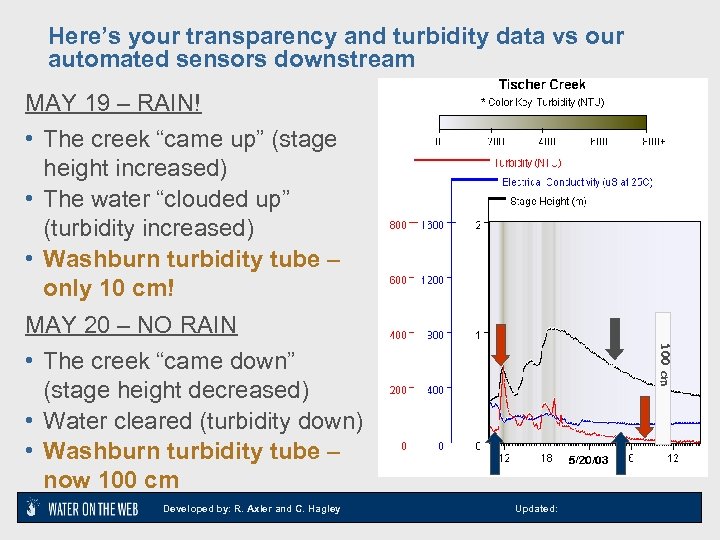
Here’s your transparency and turbidity data vs our automated sensors downstream Developed by: R. Axler and C. Hagley 100 cm MAY 20 – NO RAIN • The creek “came down” (stage height decreased) • Water cleared (turbidity down) • Washburn turbidity tube – now 100 cm 10 cm MAY 19 – RAIN! • The creek “came up” (stage height increased) • The water “clouded up” (turbidity increased) • Washburn turbidity tube – only 10 cm! Updated:
Invertebrate Stream Quality Indices • Varying degrees of sensitivity to water quality • Easy to collect and identify • A key resource to be protected (fish food) • Specific pollutants are expensive to measure • Which ones are you going to measure? • Chemical changes are “flashy” – you might miss the peak levels, but the bugs won’t Developed by: R. Axler and C. Hagley Updated:
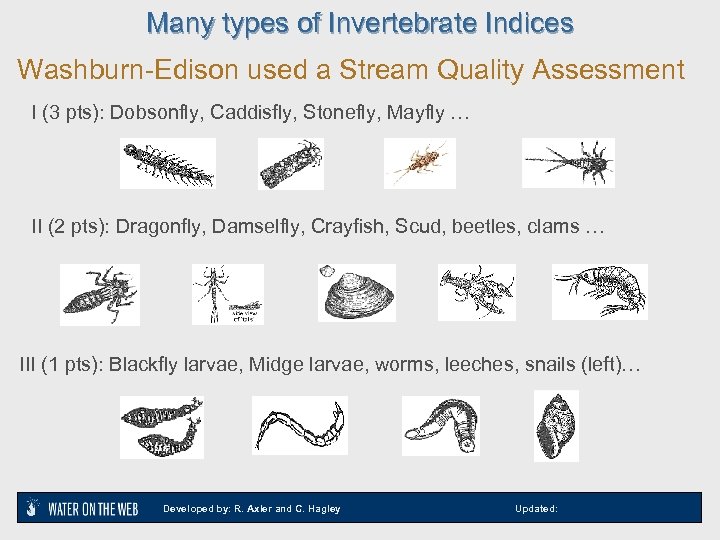
Many types of Invertebrate Indices Washburn-Edison used a Stream Quality Assessment I (3 pts): Dobsonfly, Caddisfly, Stonefly, Mayfly … II (2 pts): Dragonfly, Damselfly, Crayfish, Scud, beetles, clams … III (1 pts): Blackfly larvae, Midge larvae, worms, leeches, snails (left)… Developed by: R. Axler and C. Hagley Updated:
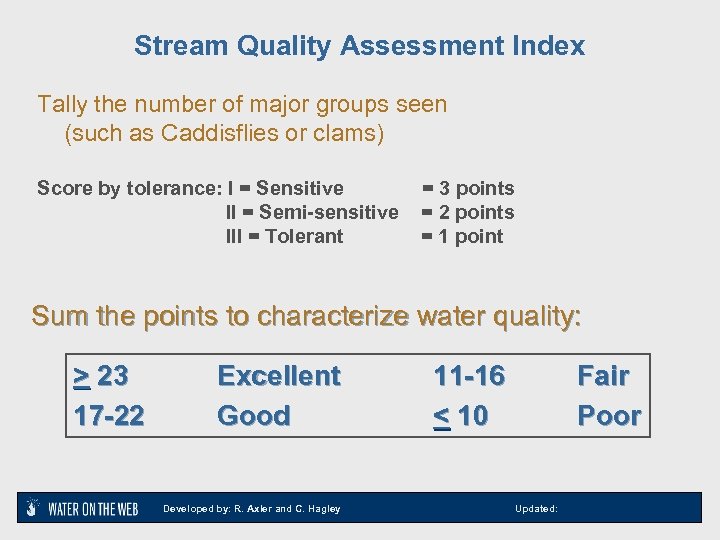
Stream Quality Assessment Index Tally the number of major groups seen (such as Caddisflies or clams) Score by tolerance: I = Sensitive II = Semi-sensitive III = Tolerant = 3 points = 2 points = 1 point Sum the points to characterize water quality: > 23 17 -22 Excellent Good Developed by: R. Axler and C. Hagley 11 -16 < 10 Fair Poor Updated:
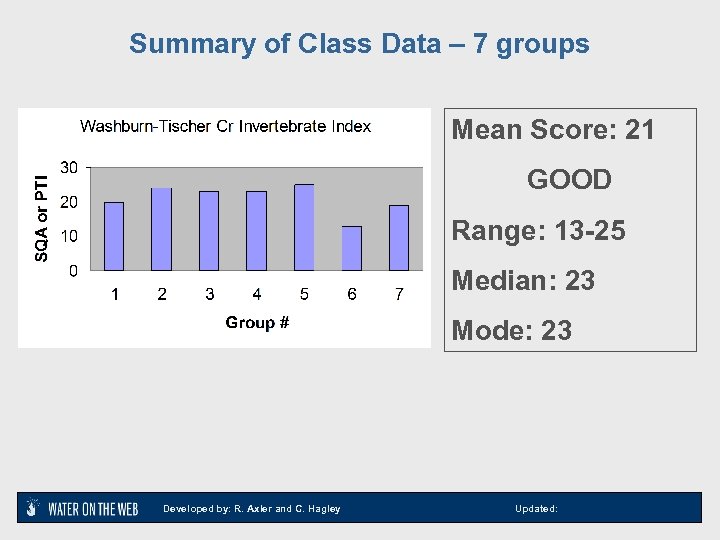
Summary of Class Data – 7 groups Mean Score: 21 GOOD Range: 13 -25 Median: 23 Mode: 23 Developed by: R. Axler and C. Hagley Updated:
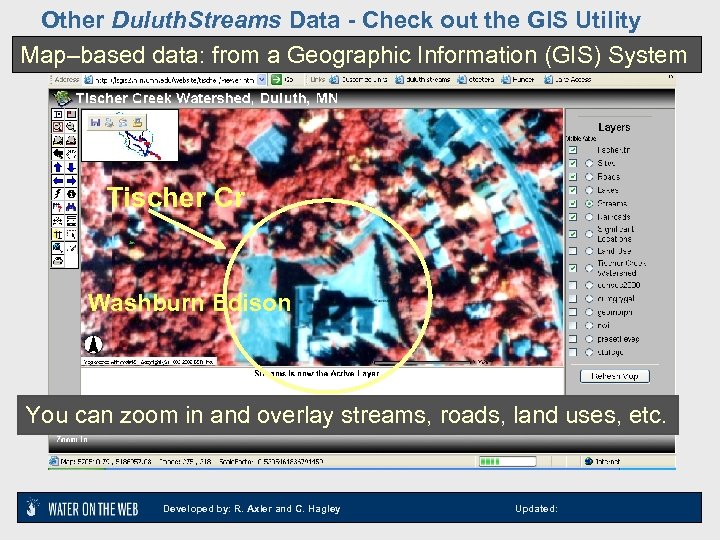
Other Duluth. Streams Data - Check out the GIS Utility Map–based data: from a Geographic Information (GIS) System Tischer Cr Washburn Edison You can zoom in and overlay streams, roads, land uses, etc. Developed by: R. Axler and C. Hagley Updated:

The rest of these slides are leftover from other talks and may be useful to teachers for introducing the website Developed by: R. Axler and C. Hagley Updated:
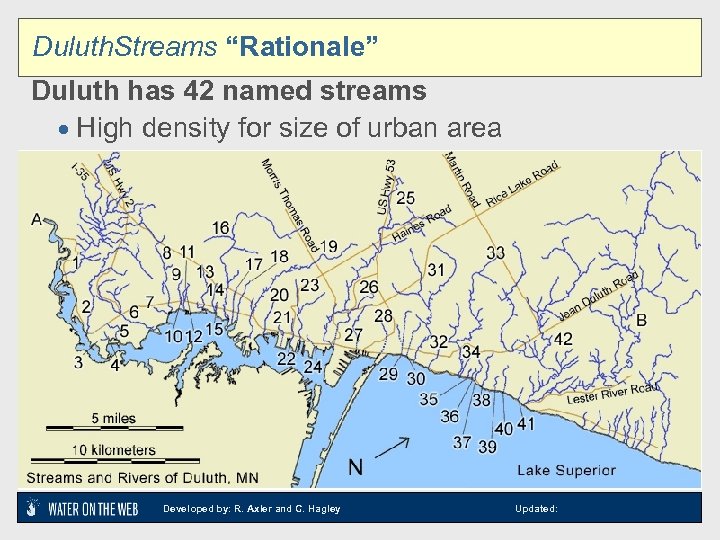
Duluth. Streams “Rationale” Duluth has 42 named streams · High density for size of urban area Developed by: R. Axler and C. Hagley Updated:
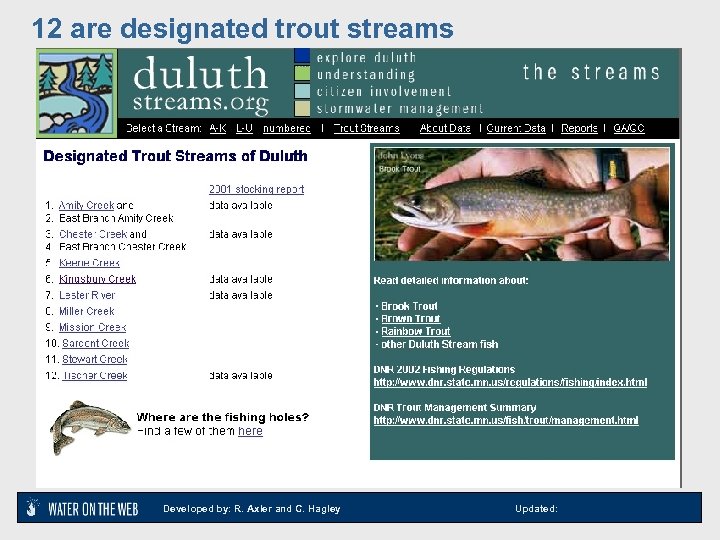
12 are designated trout streams Developed by: R. Axler and C. Hagley Updated:
Stormwater issues Like many urban streams across the country, Duluth streams face a number of environmental threats related to stormwater runoff Developed by: R. Axler and C. Hagley Updated:
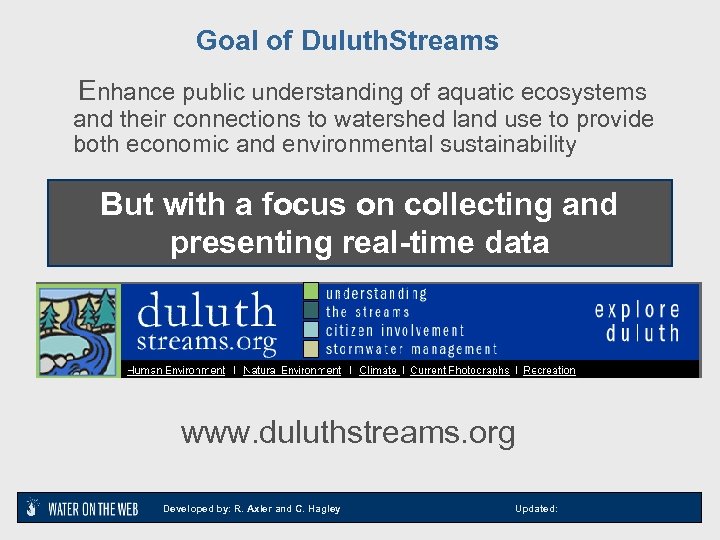
Goal of Duluth. Streams Enhance public understanding of aquatic ecosystems and their connections to watershed land use to provide both economic and environmental sustainability But with a focus on collecting and presenting real-time data www. duluthstreams. org Developed by: R. Axler and C. Hagley Updated:
Скачать презентацию Tischer Creek Washburn Edison Middle School This
a01bc35a0e2437389d34d0622fbd313b.ppt