


 Скачать презентацию Тип Mollusca Тип Mollusca Freshwater and
Phylum Mollusca.ppt
- Количество слайдов: 10
 Тип Mollusca
 Тип Mollusca • Freshwater and marine, rarely terrestrial • Originally bilaterally symmetrical, however lost the symmetry • Metamerism is exhibited only by primitive groups • Head, body and leg. Skin fold - mantle • Parenchyme between the organs • Excretory system – coelom ducts • Radula – “grater” • Open circulatory system • Respiratory system – ctenidium, secondary skin gills, lung • Scattered-node nervous system • Metamorphosis. Larva - veliger
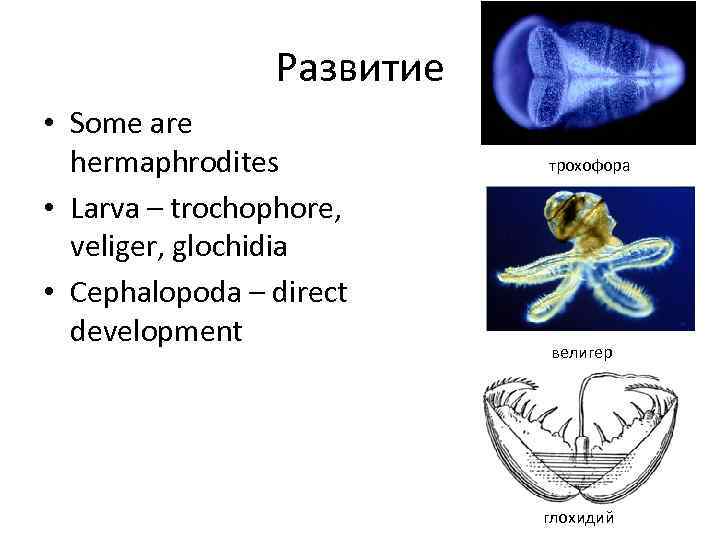 Развитие • Some are hermaphrodites • Larva – trochophore, veliger, glochidia • Cephalopoda – direct development трохофора велигер глохидий
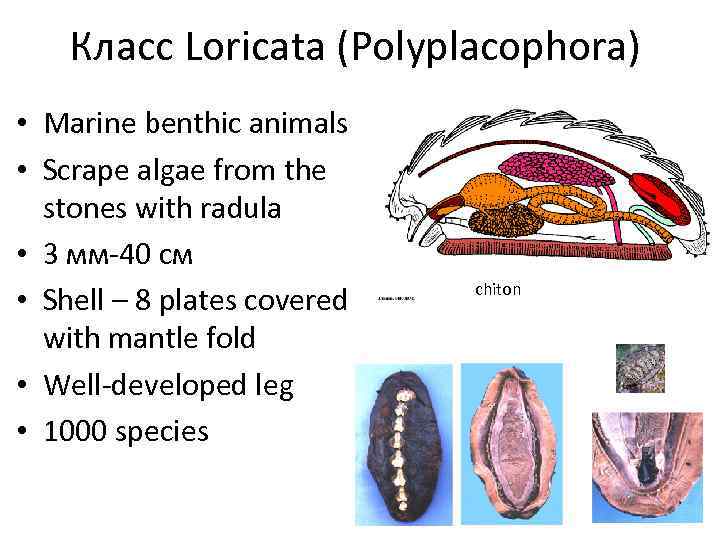 Класс Loricata (Polyplacophora) • Marine benthic animals • Scrape algae from the stones with radula • 3 мм-40 см • Shell – 8 plates covered with mantle fold • Well-developed leg • 1000 species chiton
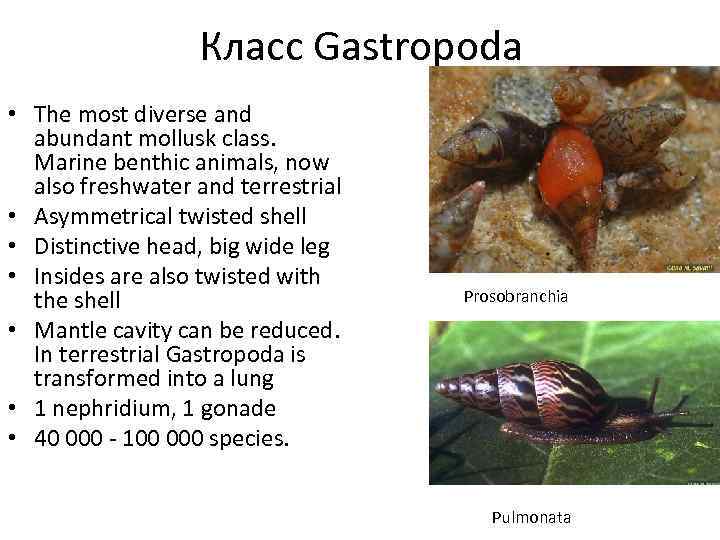 Класс Gastropoda • The most diverse and abundant mollusk class. Marine benthic animals, now also freshwater and terrestrial • Asymmetrical twisted shell • Distinctive head, big wide leg • Insides are also twisted with the shell • Mantle cavity can be reduced. In terrestrial Gastropoda is transformed into a lung • 1 nephridium, 1 gonade • 40 000 - 100 000 species. Prosobranchia Pulmonata
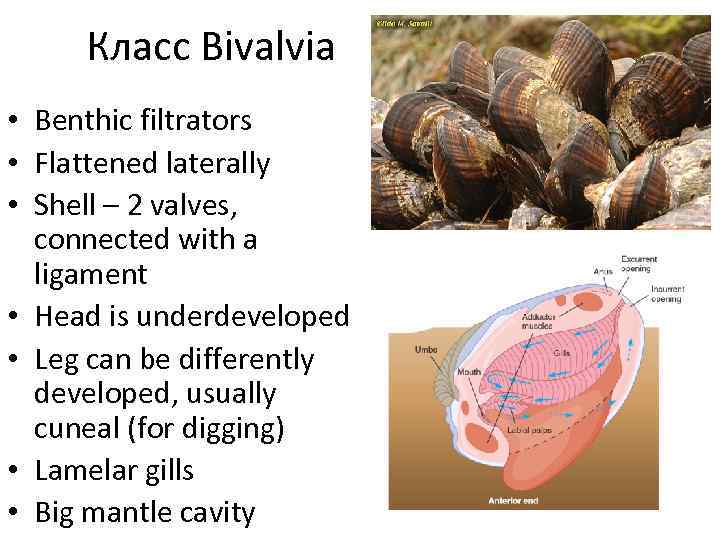 Класс Bivalvia • Benthic filtrators • Flattened laterally • Shell – 2 valves, connected with a ligament • Head is underdeveloped • Leg can be differently developed, usually cuneal (for digging) • Lamelar gills • Big mantle cavity
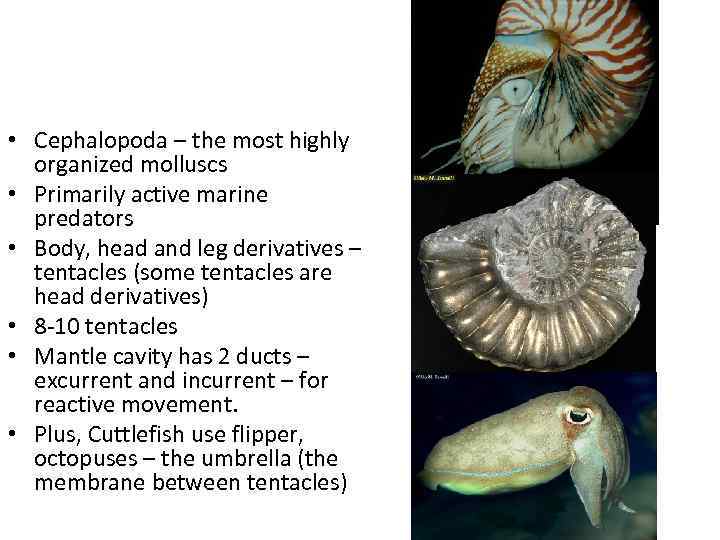 • Cephalopoda – the most highly organized molluscs • Primarily active marine predators • Body, head and leg derivatives – tentacles (some tentacles are head derivatives) • 8 -10 tentacles • Mantle cavity has 2 ducts – excurrent and incurrent – for reactive movement. • Plus, Cuttlefish use flipper, octopuses – the umbrella (the membrane between tentacles)
 • Shell is reduced or absent. Nautilus has a shell, divided into cells. A mollusc lives in the biggest cell (the last one). Other cells are hydrostatic apparatus • A very thin esophagus, restricted by nervous system • In the intestines – a pair of ink glands • Blue blood - hemocyanin
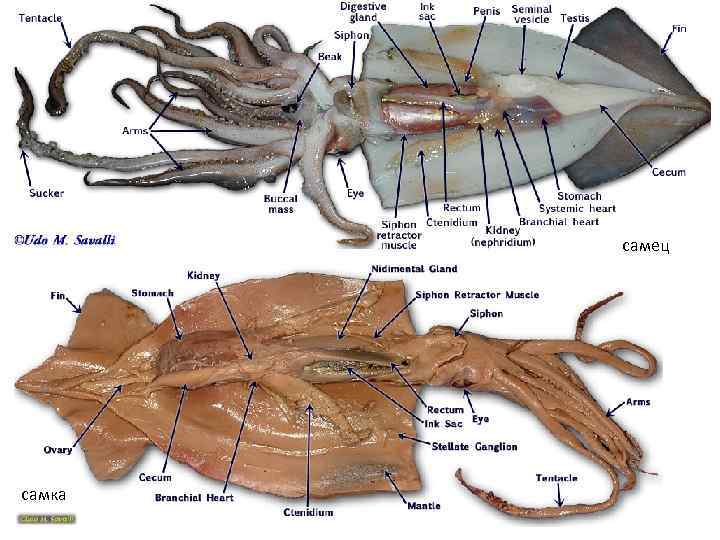 самец самка