 Скачать презентацию Time Management BE ORGANIZED Use time
Time management.pptx
- Количество слайдов: 10



Time Management
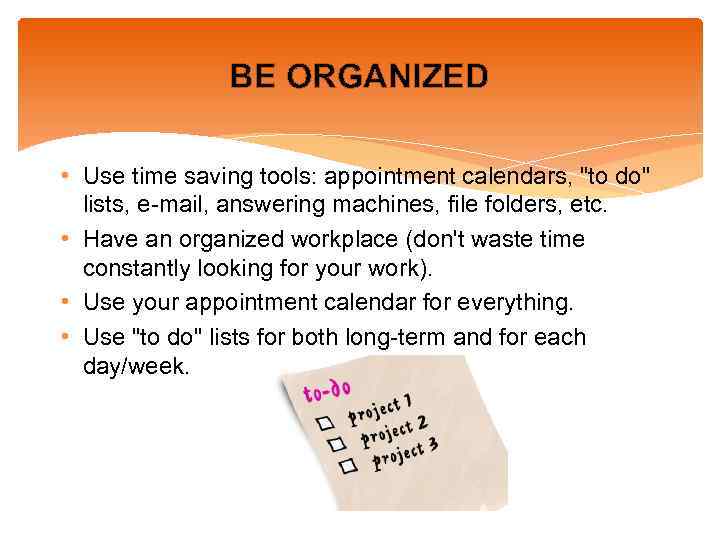
BE ORGANIZED • Use time saving tools: appointment calendars, "to do" lists, e-mail, answering machines, file folders, etc. • Have an organized workplace (don't waste time constantly looking for your work). • Use your appointment calendar for everything. • Use "to do" lists for both long-term and for each day/week.
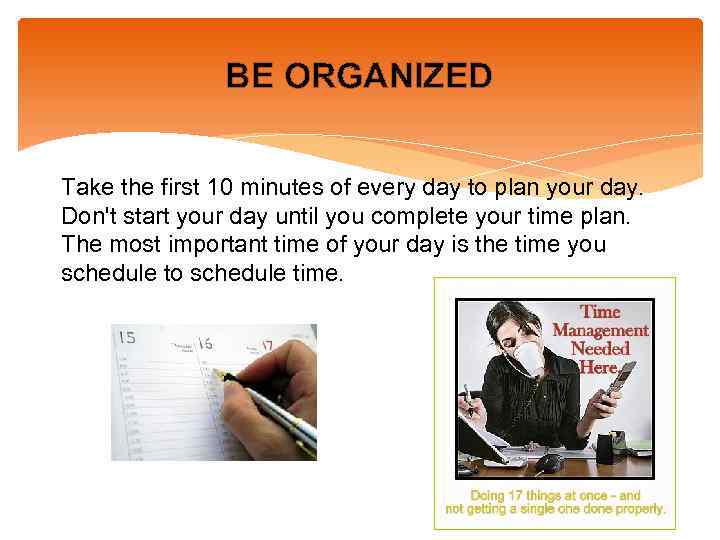
BE ORGANIZED Take the first 10 minutes of every day to plan your day. Don't start your day until you complete your time plan. The most important time of your day is the time you schedule to schedule time.
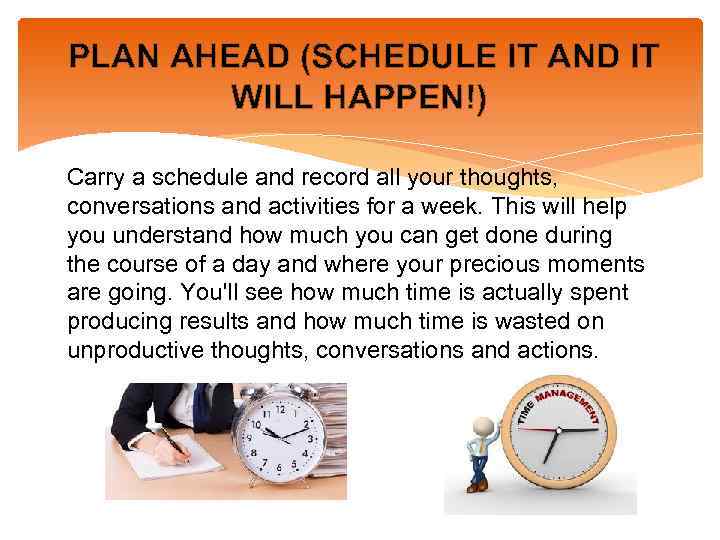
PLAN AHEAD (SCHEDULE IT AND IT WILL HAPPEN!) Carry a schedule and record all your thoughts, conversations and activities for a week. This will help you understand how much you can get done during the course of a day and where your precious moments are going. You'll see how much time is actually spent producing results and how much time is wasted on unproductive thoughts, conversations and actions.
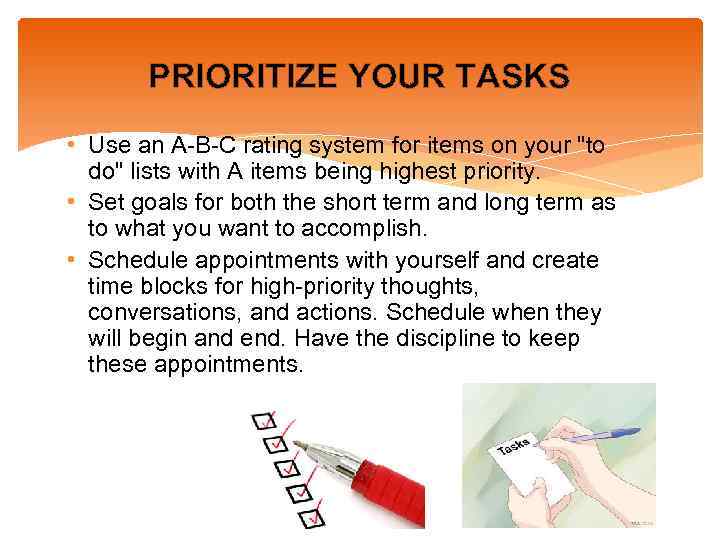
PRIORITIZE YOUR TASKS • Use an A-B-C rating system for items on your "to do" lists with A items being highest priority. • Set goals for both the short term and long term as to what you want to accomplish. • Schedule appointments with yourself and create time blocks for high-priority thoughts, conversations, and actions. Schedule when they will begin and end. Have the discipline to keep these appointments.
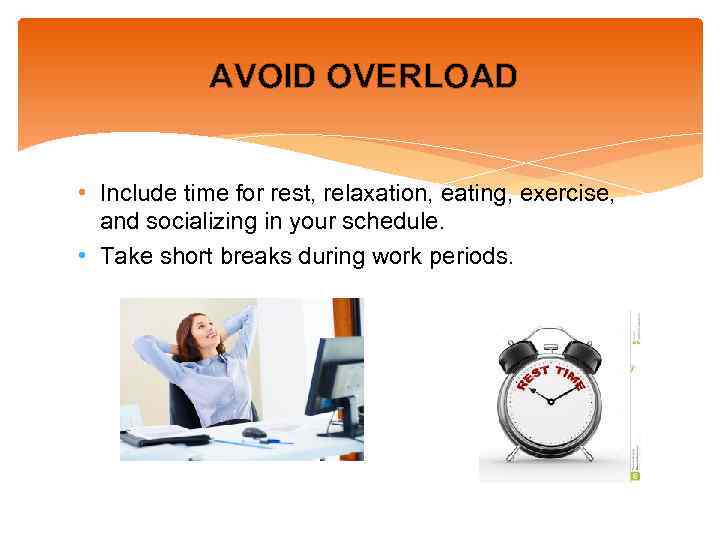
AVOID OVERLOAD • Include time for rest, relaxation, eating, exercise, and socializing in your schedule. • Take short breaks during work periods.
• Take five minutes before every call and task to decide what result you want to attain. This will help you know what success looks like before you start. And it will also slow time down. • Take five minutes after each call and activity to determine whether your desired result was achieved. If not, what was missing? How do you put what's missing in your next call or activity?
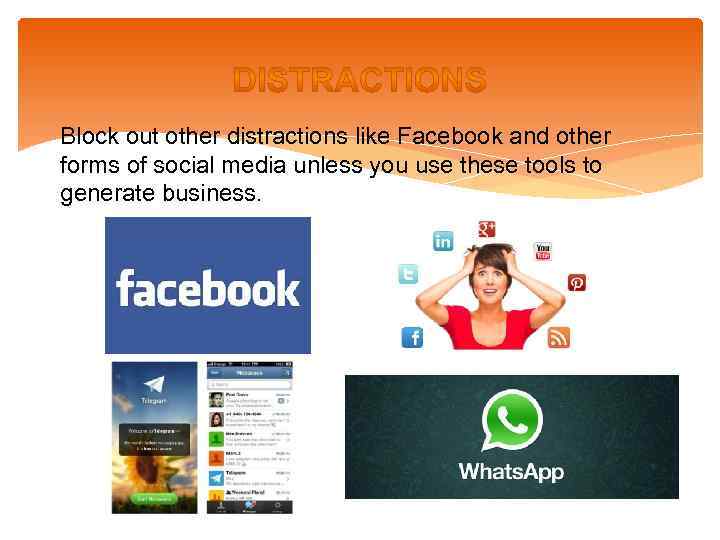
Block out other distractions like Facebook and other forms of social media unless you use these tools to generate business.
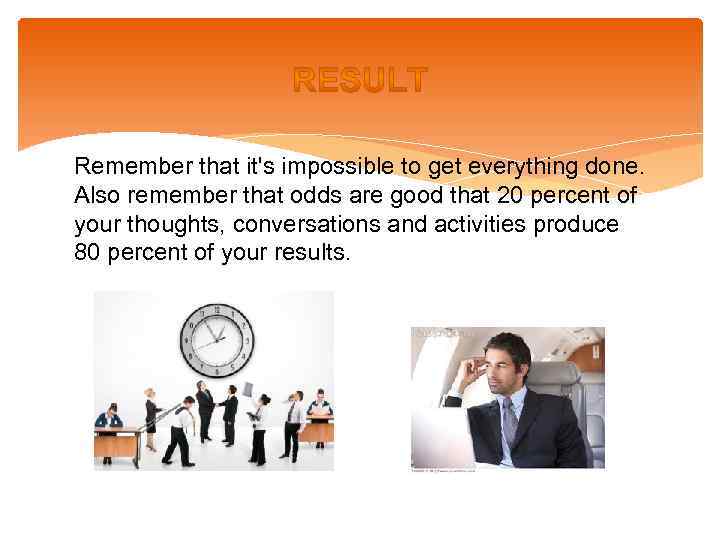
Remember that it's impossible to get everything done. Also remember that odds are good that 20 percent of your thoughts, conversations and activities produce 80 percent of your results.

The END!
Скачать презентацию Time Management BE ORGANIZED Use time
Time management.pptx