


 Скачать презентацию TIC DISORDERS Dr Volovik Galina Tourette s Disorder
Tic disorders.pptx
- Количество слайдов: 10
 TIC DISORDERS Dr. Volovik Galina
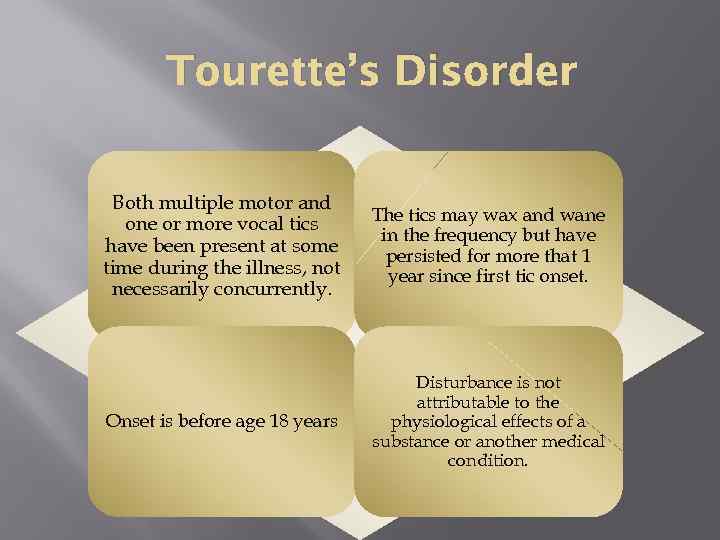 Tourette’s Disorder Both multiple motor and one or more vocal tics have been present at some time during the illness, not necessarily concurrently. The tics may wax and wane in the frequency but have persisted for more that 1 year since first tic onset. Onset is before age 18 years Disturbance is not attributable to the physiological effects of a substance or another medical condition.
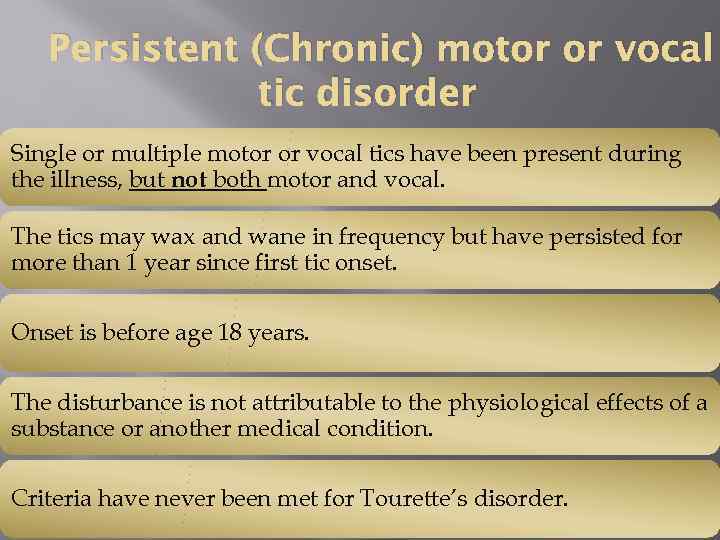 Persistent (Chronic) motor or vocal tic disorder Single or multiple motor or vocal tics have been present during the illness, but not both motor and vocal. The tics may wax and wane in frequency but have persisted for more than 1 year since first tic onset. Onset is before age 18 years. The disturbance is not attributable to the physiological effects of a substance or another medical condition. Criteria have never been met for Tourette’s disorder.
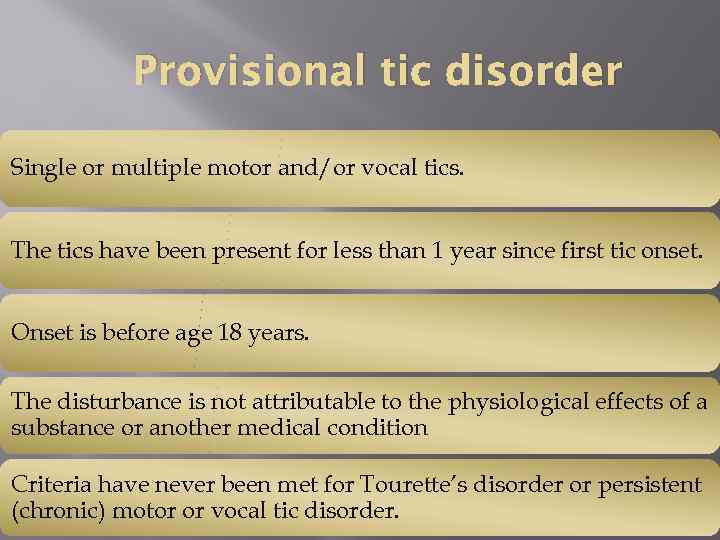 Provisional tic disorder Single or multiple motor and/or vocal tics. The tics have been present for less than 1 year since first tic onset. Onset is before age 18 years. The disturbance is not attributable to the physiological effects of a substance or another medical condition Criteria have never been met for Tourette’s disorder or persistent (chronic) motor or vocal tic disorder.
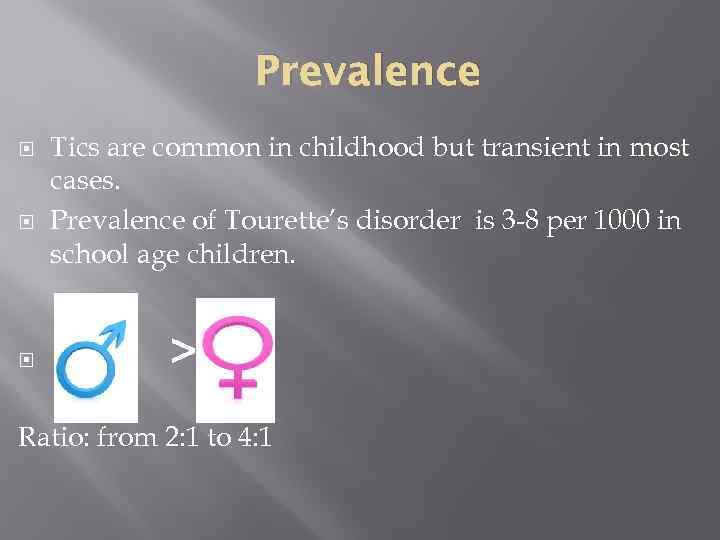 Prevalence Tics are common in childhood but transient in most cases. Prevalence of Tourette’s disorder is 3 -8 per 1000 in school age children. > Ratio: from 2: 1 to 4: 1
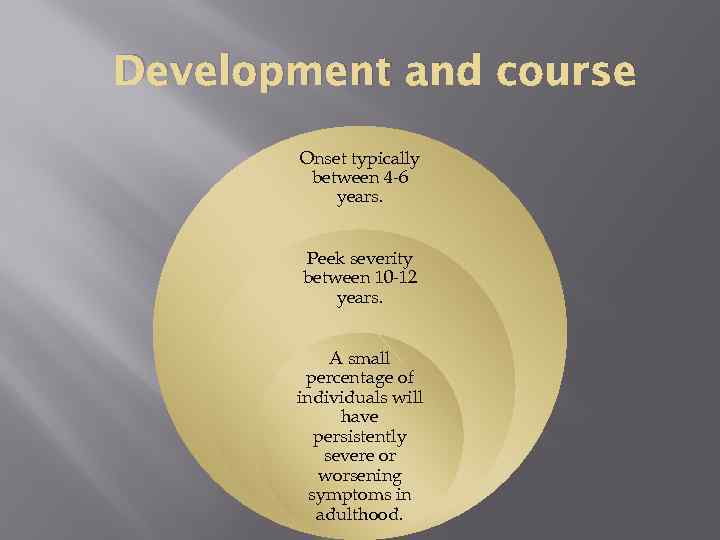 Development and course Onset typically between 4 -6 years. Peek severity between 10 -12 years. A small percentage of individuals will have persistently severe or worsening symptoms in adulthood.
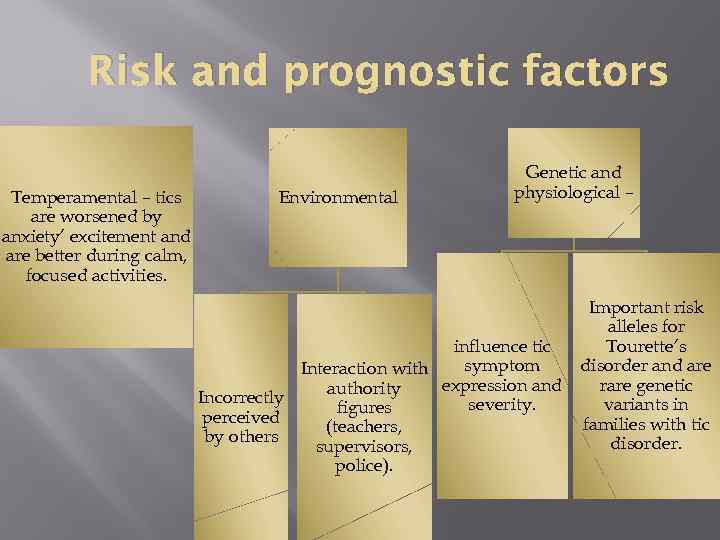 Risk and prognostic factors Temperamental – tics are worsened by anxiety’ excitement and are better during calm, focused activities. Environmental Genetic and physiological – influence tic symptom Interaction with expression and authority Incorrectly severity. figures perceived (teachers, by others supervisors, police). Important risk alleles for Tourette’s disorder and are rare genetic variants in families with tic disorder.
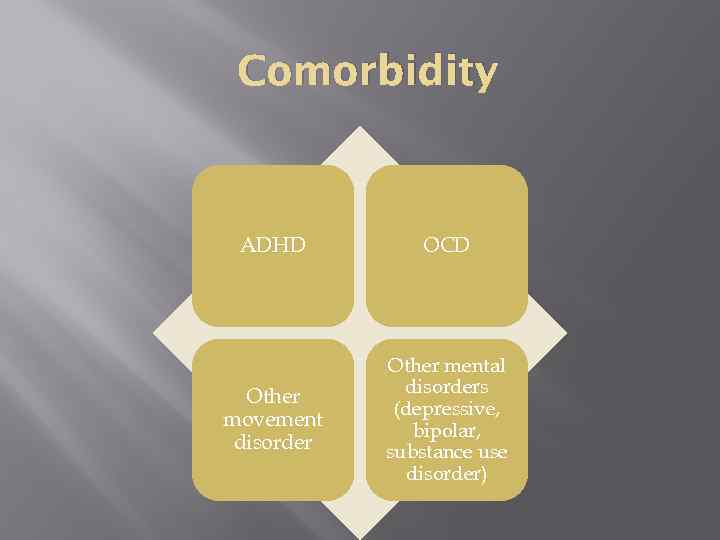 Comorbidity ADHD OCD Other movement disorder Other mental disorders (depressive, bipolar, substance use disorder)
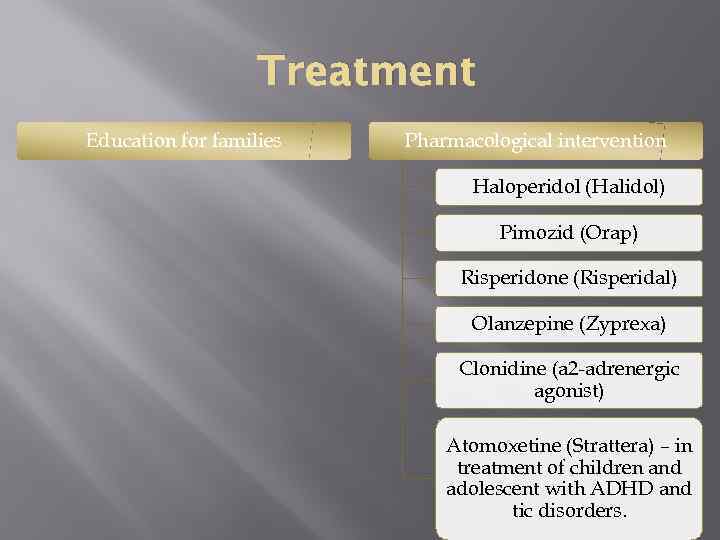 Treatment Education for families Pharmacological intervention Haloperidol (Halidol) Pimozid (Orap) Risperidone (Risperidal) Olanzepine (Zyprexa) Clonidine (a 2 -adrenergic agonist) Atomoxetine (Strattera) – in treatment of children and adolescent with ADHD and tic disorders.
 תודה על ההקשבה