 Скачать презентацию THREE BRANCHES OF GOVERNMENT THE NATIONAL LEGISLATURE
cb8531a6cf67b0ba3be5679103df358a.ppt
- Количество слайдов: 138




THREE BRANCHES OF GOVERNMENT
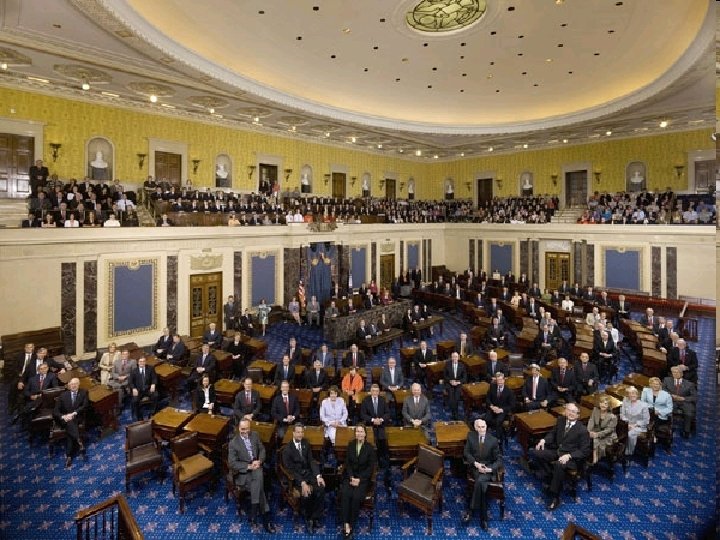
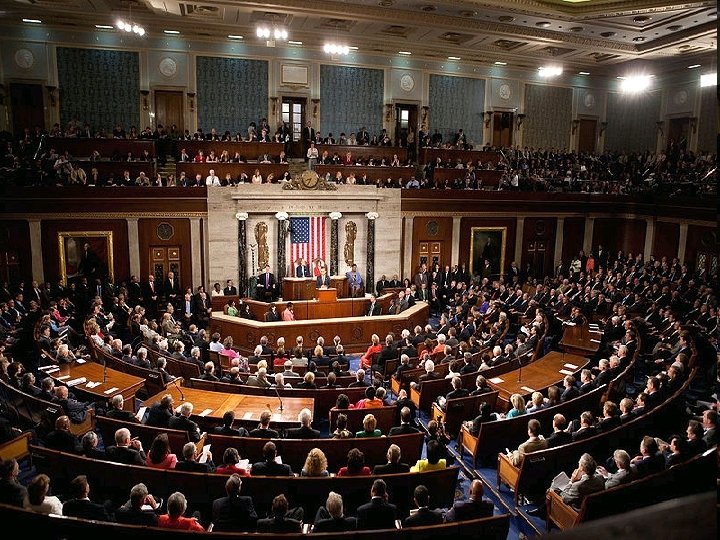
THE NATIONAL LEGISLATURE The Legislative Branch – or Congress – is made of two bodies: House This of Representatives and Senate. means that Congress is bicameral – “bi” means two, and “cameral” means chamber.
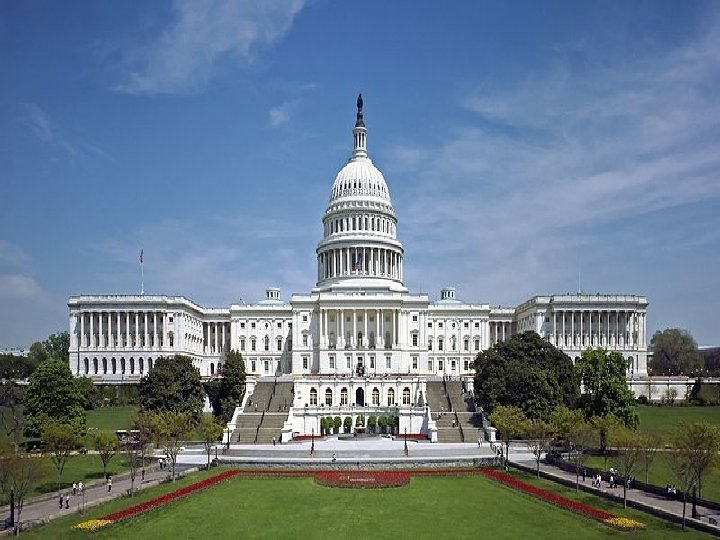
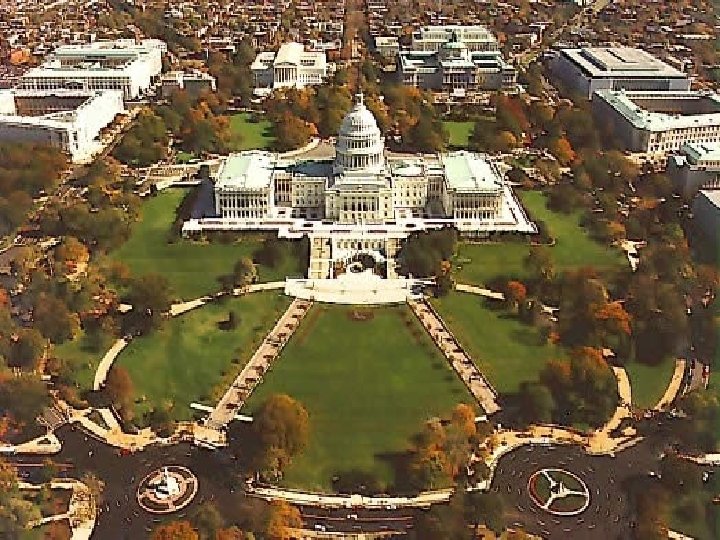
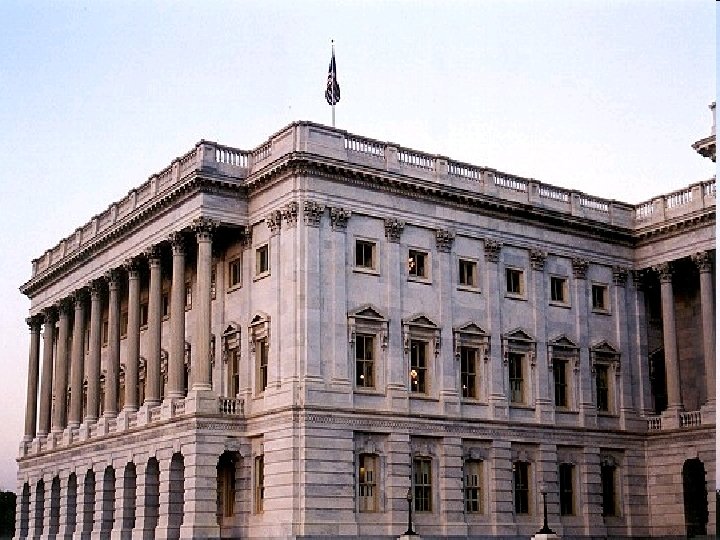
THE NATIONAL LEGISLATURE • Why did the founding fathers develop two houses? • The most important reason was because it served as a compromise during the Constitutional Convention. • Remember – there was an argument as to how the states should be represented as votes. • Big states said it should be based on population – little states said it should be equal.
THE NATIONAL LEGISLATURE The Great Compromise created two houses in Congress – HOR and Senate. House of Representatives gets reps based on state population. Senate gets two reps from each state regardless of population.
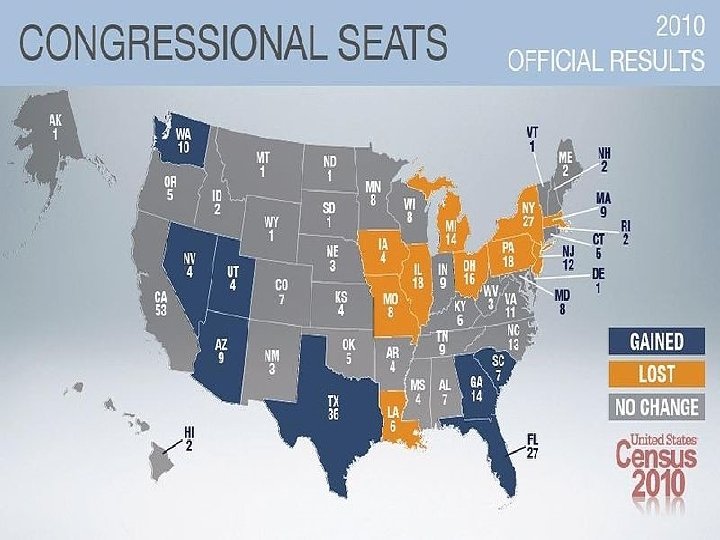
THE NATIONAL LEGISLATURE Total – there are 435 members of the House of Representatives. Total – there are 100 (50 states X 2 Senators from each state) members of the Senate. How many total members of Congress are there?
THE NATIONAL LEGISLATURE Congress meets for two-year terms – 1 st Congress met on March 4, 1789. The 113 th Congress began on January 3, 2013 and ended on January 3, 2015. The 114 th Congress will meet on January 3, 2015, and will end on January 3, 2017.
THE NATIONAL LEGISLATURE • In each two-year term there are two sessions – one session per year. • When Congress begins a session it is called “convenes”, and it is called “adjourn” when it ends. • There are numerous “recess” periods in a session as well.
THE NATIONAL LEGISLATURE • The President of the United States may call a special session during an emergency or a critical issue comes up. • This happened 27 times in our nations’ history. • In 1933 President Roosevelt called an emergency session to deal with Great Depression.
THE NATIONAL LEGISLATURE • President Roosevelt also called an emergency session in 1939. • The issue then was outbreak of war in Europe – the Nazis – and U. S. policy to sell weapons to England. • Many times the President “threatens” a special session to force Congress to compromise on an issue.
THE NATIONAL LEGISLATURE summary
HOUSE AND SENATE • Remember there are 435 members – with the state’s population determining how many members per state. • Every state must have at least one seat – or member. • Every 10 years, the HOR is reapportioned to recalculate how many members per state – never goes above 435 total though.
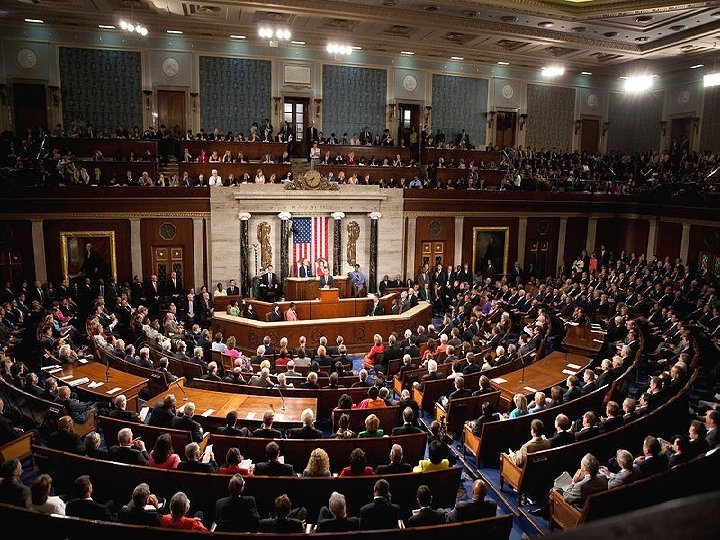
HOUSE AND SENATE • During the 1 st Congress in 1789 there were 65 members in the House. • Every member in the House serves two-year terms. • This makes each member highly accountable for their actions and votes – always an election year upcoming.
HOUSE AND SENATE • There are no limits on how many times a member can be elected. • The election is always held on the Tuesday following the first Monday in November on even numbered years. • Each member in the House represents their district from their state.
HOUSE AND SENATE Because there are 435 members in the House, that means there are 435 districts in the U. S. Districts are created very carefully – they have boundaries and borders. Districts have to be near equal in total population.
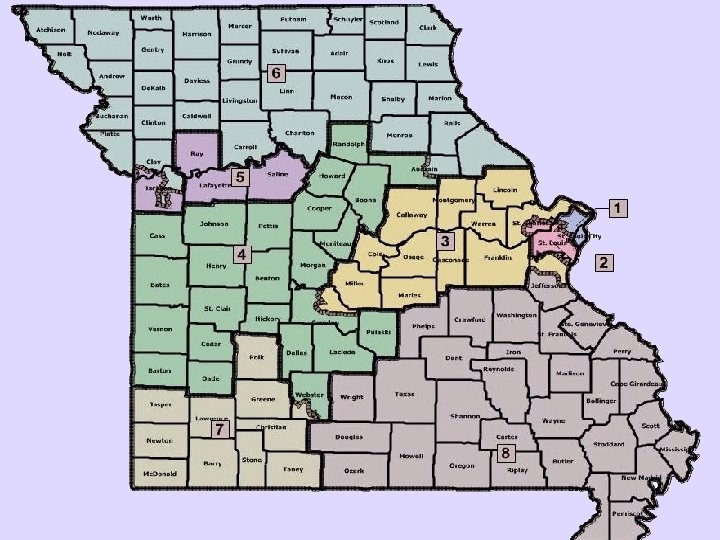
HOUSE AND SENATE Districts also have to be one piece – not bunches of pieces. Every 10 years districts boundaries are redrawn. These rules lead to all different types of district shapes and sizes.
HOUSE AND SENATE • Re-drawing districts also brings “gerrymandering” into play. • Gerrymandering is named after former Massachusetts Governor Elbridge Gerry in 1812. • Political parties in control of the state governments “gerrymander” district boundaries.
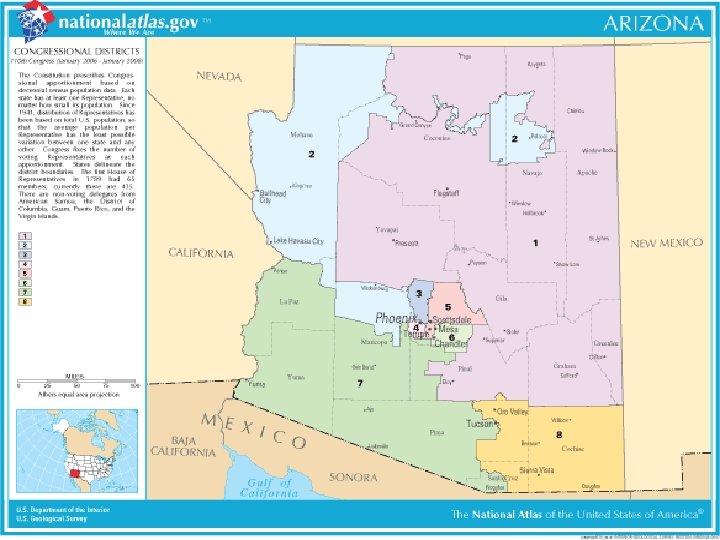
HOUSE AND SENATE They re-form the districts with a strategy in mind to try to keep their members in office. Gerrymandering is the reason why we see REALLY strange district shapes. Arizona’s 2 nd district is a great example of gerrymandering.
HOUSE AND SENATE • Anyone can become a House of Representatives member – you need to meet these simple requirements: Minimum age of 25 years. – Minimum 7 years as U. S. Citizen. – Live in the state in which you represent. – *However, other members of the House can reject you, punish you, or expel you based on a majority vote.
HOUSE AND SENATE It is extremely expensive to run a campaign in order to become a member of the House. The average cost of a campaign is $1 million. Also, once you are in, it is very hard to lose an election – 90% of the incumbents – or current members – lose an election.
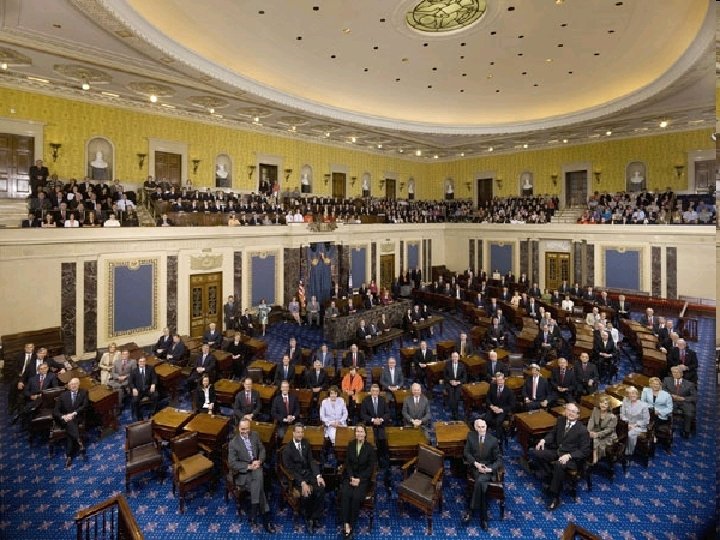
HOUSE AND SENATE There are 100 total members of the Senate – 50 states X 2 per state = 100. The Senate is viewed as more esteemed and more important than the House. Before 1913, Senators were chosen by the state governments – since 1913 they are voted in by the citizens.
HOUSE AND SENATE Senators are elected during the same elections as House members in November. Each state can have only one Senate seat up for election at a time. This means that only 1/3 of the Senate is up for election at once.
HOUSE AND SENATE Senators serve 6 -year terms and there is no limit on how many times they can be elected. The Senate was set up this way to counter the knee-jerk reactions of the House. Senators have a “cushion” of 6 years and are able to look at the “bigger picture” of an issue.
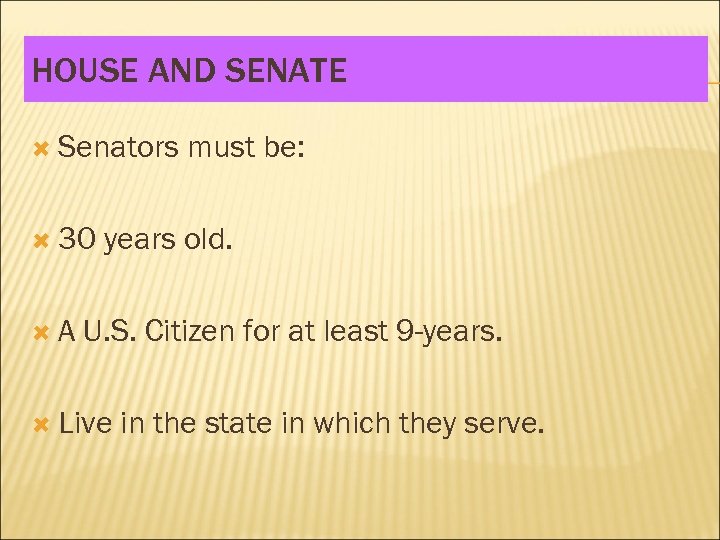
HOUSE AND SENATE Senators 30 A must be: years old. U. S. Citizen for at least 9 -years. Live in the state in which they serve.
HOUSE AND SENATE • Just like the House, it is very expensive to run a campaign to become a Senator – millions of dollars. • Incumbents win most elections – part of this is credited to name recognition. • Also, just like the House, an elected Senator can be rejected by 2/3 majority vote, or expelled.


HOUSE AND SENATE summary
MEMBERS OF CONGRESS Who are the members of Congress – where do they come from, and what are they like? The average members is male, white and in his 50 s. Of the 535 members, 95 are women, 42 African-American, 25 Spanish, 7 Asian.
MEMBERS OF CONGRESS 1/3 of the House members are lawyers, ½ of the Senate members are lawyers. Almost all 535 members have advanced degrees – meaning higher then a bachelors. Several members are millionaires, and 1/3 of Senators were once House members.
MEMBERS OF CONGRESS • In other words, the Legislative Branch (Congress) is not an accurate cross section of the American population. • Instead they represent the upper-middle class population. • Some people feel this makes Congress “out of touch” with “normal” Americans.
MEMBERS OF CONGRESS Senators and House members both receive $174, 000 salary per year. However, there also other fringe benefits they receive as well. They receive breaks on taxes because they are forced to own two homes.
MEMBERS OF CONGRESS • They also receive travel allowances – or money to travel with. • Congressional members also receive full medical benefits for themselves and their families at reduced prices. • When they retire, they also receive a pension – or yearly income until they die.
MEMBERS OF CONGRESS Other benefits include “operating costs” to hire workers to run their offices. They receive a franking privilege – allowed to use the postal service free of charge. They also receive free parking on Capitol Hill and free airport parking.
MEMBERS OF CONGRESS But, all of these benefits come with a heavy burden on representing thousands of people. Members are required to use their votes to make decisions for our country. In this role, members choose their vote in a variety of ways.
MEMBERS OF CONGRESS • Some members choose to vote as delegates – based on what they believe their people want. • Some members choose to vote as trustees – or base their decisions on their own morals and values. • Some members choose their vote as partisans – or base their choice on what the rest of their party does.
MEMBERS OF CONGRESS summary
HOW A BILL BECOMES A LAW • To become a law, a proposed bill usually starts in the House of Representatives. • A bill can be introduced in a variety of ways – citizens demands, President recommendation, Congressional idea. • Each proposed bill is turned into the clerk and given a title and a number.
HOW A BILL BECOMES A LAW For example, “H. R. 3, 410: A bill to provide…” After it is given a number and a title, the bill is entered into the House Journal and the Congressional Record. The Speaker of the House reads the bill and refers it to the correct standing committee.
HOW A BILL BECOMES A LAW • Every member in Congress serves in a committee – a small group that is responsible for certain functions of our country. • There are dozens of committees, such as transportation, natural resources, foreign policy, and oversight. • That committee researches the bill to determine its worth.
HOW A BILL BECOMES A LAW • After the committee is done researching the bill they report their information back to the House. • They could recommend that the bill be passed, recommend it be denied, or change the wording to make it better. • After the bill is reported the House Rules Committee schedules time for debate on the floor.
HOW A BILL BECOMES A LAW Each member is given 5 minutes to debate. The bill is then voted on– if it gets majority vote then it is approved by the House. Remember – once a bill passes in the House it still must receive majority approval in the Senate.
HOW A BILL BECOMES A LAW The rules for debating a bill in the Senate are much different than the House. Senators are allowed to debate a bill on the floor for as long as they want. Senators have used filibusters in the past – tactic to talk a bill to death.
HOW A BILL BECOMES A LAW • In 1935 Huey Long, Democrat from Louisiana talked for 15 hours to stall from being approved. • There is no regulation on what you talk about in the Senate either. • Long read the Washington D. C. phone book and his favorite recipes.
HOW A BILL BECOMES A LAW • Strom Thurmond, Republican from South Carolina talked for 24 hours trying to block a Civil Rights law. • Filibusters go on today – but usually they are team efforts. • There are some rules to help prevent filibusters.
HOW A BILL BECOMES A LAW Senators must stand the whole time they are speaking – no sitting, no leaning. The Senate must approve the identical version of the bill that the House apporved. If the Senate wants changes made the bill must be referred to a conference committee.
HOW A BILL BECOMES A LAW • Conference committee is made up of House and Senate members and their job is to create a compromised version of the bill. • The compromised version must be passed by both House and Senate. • If a bill survives and is approved by majority House and Senate then it is sent to President for signature.
HOW A BILL BECOMES A LAW • President can do four things with the bill: • 1. Signs it – bill officially becomes a law. 2. Vetoes the bill – rejects it and Congress can override with 2/3 vote in House and Senate. 3. Not sign it – after 10 days the bill becomes a law. 4. Pocket Veto – not sign it, and if Congress adjourns before 10 days is up then the bill dies. • • •
HOW A BILL BECOMES A LAW summary
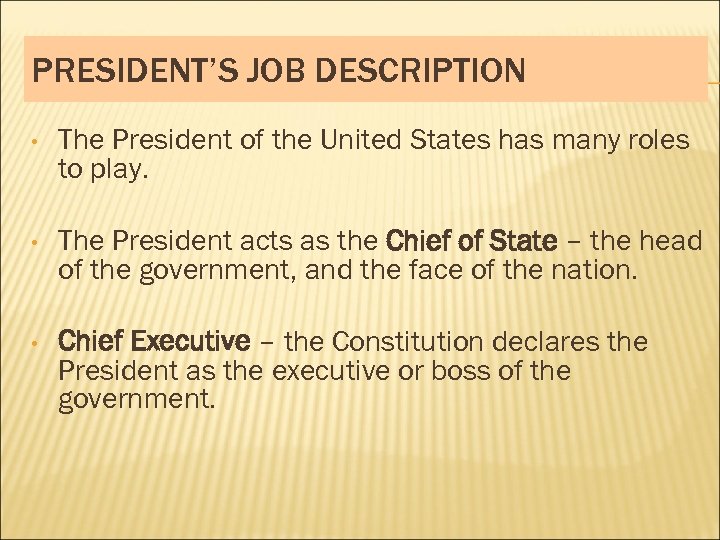
PRESIDENT’S JOB DESCRIPTION • The President of the United States has many roles to play. • The President acts as the Chief of State – the head of the government, and the face of the nation. • Chief Executive – the Constitution declares the President as the executive or boss of the government.
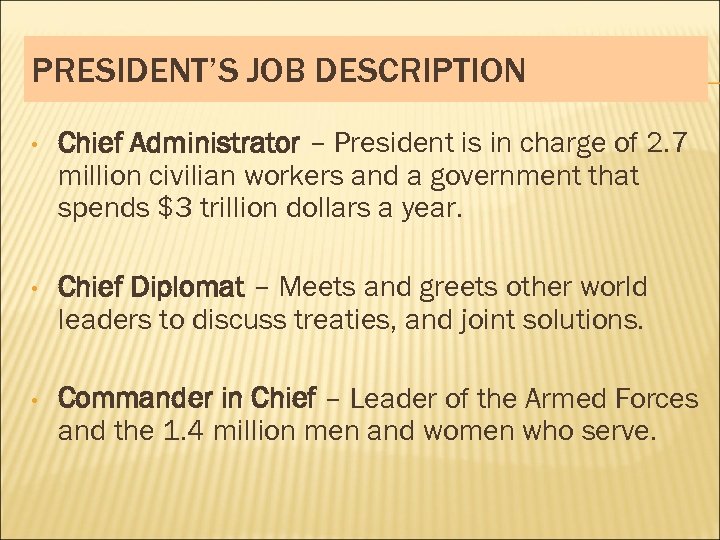
PRESIDENT’S JOB DESCRIPTION • Chief Administrator – President is in charge of 2. 7 million civilian workers and a government that spends $3 trillion dollars a year. • Chief Diplomat – Meets and greets other world leaders to discuss treaties, and joint solutions. • Commander in Chief – Leader of the Armed Forces and the 1. 4 million men and women who serve.
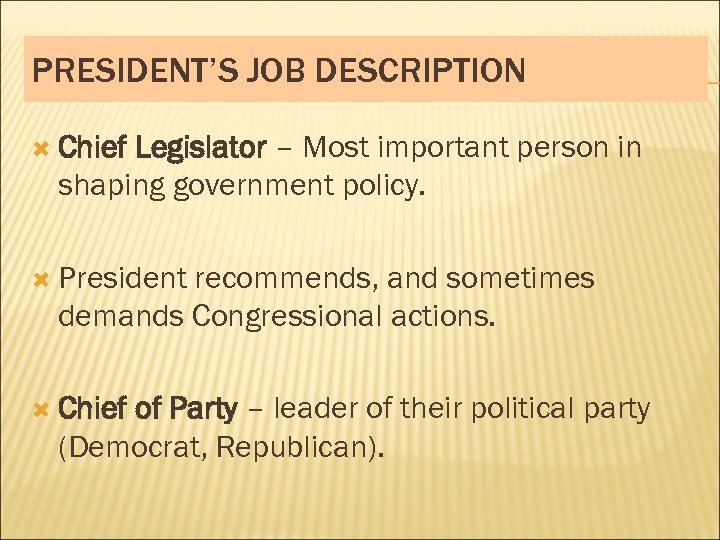
PRESIDENT’S JOB DESCRIPTION Chief Legislator – Most important person in shaping government policy. President recommends, and sometimes demands Congressional actions. Chief of Party – leader of their political party (Democrat, Republican).
PRESIDENT’S JOB DESCRIPTION • Chief Citizen – President must lead by example when it comes to behavior, attitude, and actions. • The formal qualifications to become President of the United States are clear: – – – 35 years of age. Natural born citizen of the U. S. Resident of the U. S. for at least 14 years.
PRESIDENT’S JOB DESCRIPTION However, there are informal qualifications to become President: President should have political experience. President should be likeable and intelligent.
PRESIDENT’S JOB DESCRIPTION • When elected, the President serves a four-year term. • Since 1951, with the adoption of the 22 nd Amendment, the terms are limited to two. • Some critics of the amendment claim it is unconstitutional by restricting citizens rights to chose the President they want.
PRESIDENT’S JOB DESCRIPTION Congress determines the salary for the President. Since 2001 Presidents earn $400, 000 per year. However, there are other benefits that go along with the yearly salary.
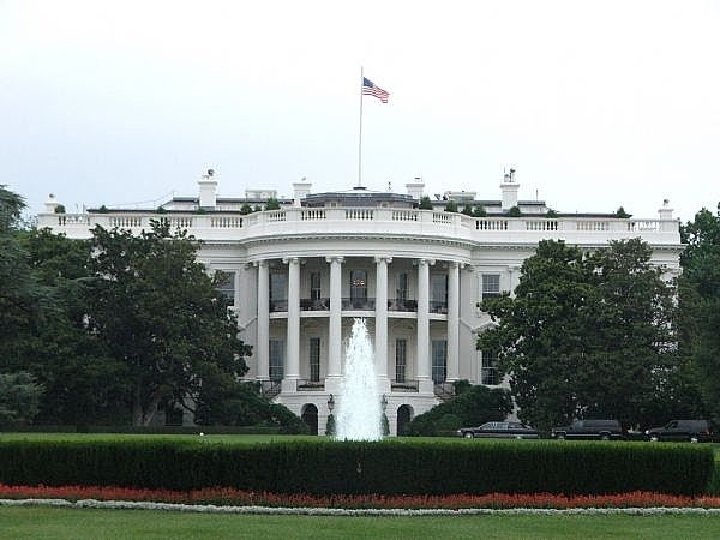
PRESIDENT’S JOB DESCRIPTION Presidents receive $50, 000 a year for personal expenses. Presidents and their families live in the 132 room White House in Washington D. C. 18 acre estate, full service staff and workers as well.
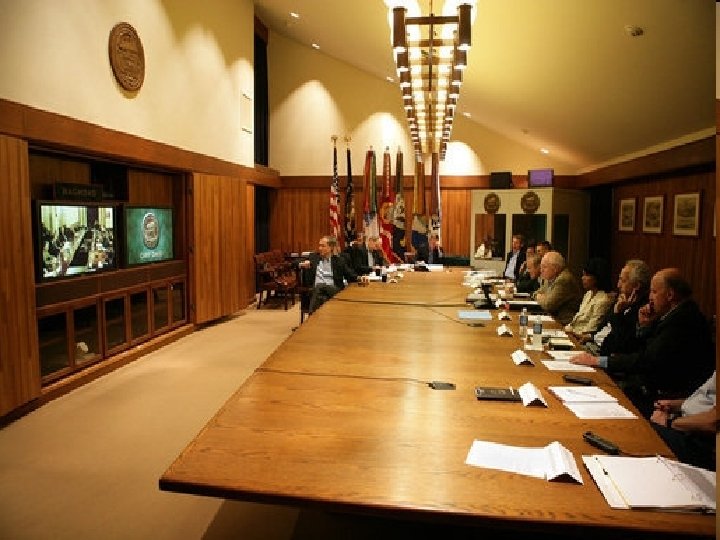
PRESIDENT’S JOB DESCRIPTION Presidents also receive full access to Air Force One. Camp David, a “get-away” complex in western Maryland. Best healthcare available, and additional entertainment funds as well.





PRESIDENT’S JOB DESCRIPTION summary
PRESIDENTIAL POWERS • Powers of the President are discussed in Article II of the Constitution. • The description is not very detailed and this has raised many questions. • Should the President be more powerful then Congress, or should Congress be more powerful then the President.
PRESIDENTIAL POWERS • Power has grown for the President over the past 200 years. • The power of the President depended on the personality of the President. • Some President have used “executive powers” to which is an undefined power in the Constitution to do almost anything.
PRESIDENTIAL POWERS • Presidents have the power to issue what is called executive orders. • These are rules and regulations that are similar to laws – but they don’t need Congressional approval. • This is sometimes worrisome because the President would not be acting for the people in this instance.
PRESIDENTIAL POWERS Presidents also have the power to appoint topranking officials in the government. The Senate must approve all presidential appointments by a 2/3 vote. President appoints. can also remove anyone that he
PRESIDENTIAL POWERS • Presidents also have the power of executive privilege. • Under executive privilege the President can refuse to disclose information to Congress or the courts. • However, executive privilege cannot be used in criminal hearings.
PRESIDENTIAL POWERS • There also informal powers that the President has as well. • For instance, the President can address the American public at any time through the media. • These are considered the media powers of the President.
PRESIDENTIAL POWERS • However, the checks and balances system allows Congress and the Supreme Court to limit the President’s power. • Congress can override vetoes – Congress controls the “power of the purse” – Congress can impeach the President. • Congress can impeach the President of the United States.
PRESIDENTIAL POWERS • The House impeaches – which means to bring charges against the President. • The House only needs a majority vote to impeach – and then it goes to the Senate for trial. • To convict the President and “kick him out” – the Senate needs a 2/3 vote.
PRESIDENTIAL POWERS No President has ever been convicted – but Andrew Johnson and Bill Clinton were impeached. Richard Nixon may have been convicted, but resigned before impeachment vote took place.
PRESIDENTIAL POWERS summary

CABINET DEPARTMENTS • Alexander Hamilton once said – “The true test of a good government is its aptitude and tendency to produce a good administration. ” • The President has many people help him do his job successfully. • However, none are more important than his Cabinet.
CABINET DEPARTMENTS • Much of the work done by the Federal Government is done by the 15 Cabinet Departments. • The Cabinet is also called the President’s Advisory Group. • Each Department is headed by a secretary – except for one – the Department of Justice.
CABINET DEPARTMENTS The Department of Justice is headed by the attorney general. Each department head is the link between presidential policy and their own department. They are responsible for making sure the will of the President is being carried out.
CABINET DEPARTMENTS Each department secretary is aided by an undersecretary or a deputy secretary. Each secretary, or deputy secretary appointment is made by the President and approved by the Senate. Each department is also made up of subunits.
CABINET DEPARTMENTS Example – The Department of Justice is a Presidential Cabinet. However, the Criminal Division is a subunit of the Department of Justice. And, the Counterterrorism Section and Narcotics Section are subunits even further.
CABINET DEPARTMENTS • The subunits of the Cabinet Departments are regionally placed to work throughout the entire country. • Take the Department of Veteran’s Affairs as an example. • There are over 150 Veteran Medical Centers around the nation, and 800 outpatient Veteran medical offices.
CABINET DEPARTMENTS In fact, 90 -percent of Cabinet employees work outside of Washington D. C. The Department of State is the oldest and most prestigious of the Cabinets. The current Secretary of State is Hillary Clinton.
CABINET DEPARTMENTS The Department of Defense is the largest with 700, 000 civilian and 1. 4 military members. Department of Health and Human Services has the largest budget of the Cabinets. It accounts for 25 -percent of the total federal spending.
CABINET DEPARTMENTS • The youngest Cabinet Department is the Department of Homeland Security – established in 2002. • Important to know – the President’s Cabinet serves as an advisory group to the President. • However, the President does not have to take their advice.
CABINET DEPARTMENTS summary
THE NATIONAL JUDICIARY • During the years the Articles of Confederation were in force there was no national court system. • The laws of the United States were left up to the courts of each state to interpret. • Often, decisions in one state were ignored by other states – or they were completely different altogether.
THE NATIONAL JUDICIARY • Article III, Section 1 of the Constitution says: – “The judicial power of the United States shall be vested in one supreme Court, and in such inferior Courts as the Congress may from time to time ordain and establish. ” – The idea was to establish a national court system that had the final say on the law.
THE NATIONAL JUDICIARY However – the problem was can one single national court – The Supreme Court – handle every single court case? The answer was no – so other courts – inferior courts (or lower courts) had to be created. It is the job of Congress to create other Federal Courts to help the Supreme Court.
THE NATIONAL JUDICIARY In addition to creating more Federal Courts to help, we also set up a system to allow each state to have their own court system as well. • What exists in the United States today is a dual-court system. • There are over 100 federal courts across the country, (basically 2 in every state) and each state has their own system of courts as well.
THE NATIONAL JUDICIARY • Before a case is goes to court – jurisdiction must be decided – that is which court (Federal or State) will the case be heard in. • Usually states have jurisdiction and that is why most cases are heard in state courts. • However, when the case involves certain subjects or certain people – then the court case goes to Federal Court.
THE NATIONAL JUDICIARY • In terms of subject matter the federal courts may hear a case if it involves a “federal question”. • Is the interpretation of the Constitution needed? • If yes, than the case may be heard in a federal court.
THE NATIONAL JUDICIARY • In terms of the parties involved – federal courts hold jurisdiction over a case if one of the parties is… • 1. The United States or one of its officers or agencies. • 2. An ambassador or other official representative of a foreign government.
THE NATIONAL JUDICIARY • 3. One of the states suing another state. • 4. A citizen of one state suing a citizen of another state – for more than $75, 000. • 5. An American citizen suing a foreign government or a subject of that government.
THE NATIONAL JUDICIARY 6. A citizen of one state suing a citizen of the same state where both claim title to land grants from different states. Besides these situations, state courts hold jurisdiction over all other legal matters.
THE NATIONAL JUDICIARY When you hear the outcome of your case you can appeal the court decision if you disagree with it. When you appeal a case it goes to a special court called Appellate Courts. Appellate courts do not retry cases – instead they determine whether a court acted in accord with the law.
THE NATIONAL JUDICIARY Appellate courts handle appeals – or protests to the original court’s outcome. If the appellate court decides that the original court did not act within the law a decision can be overruled.
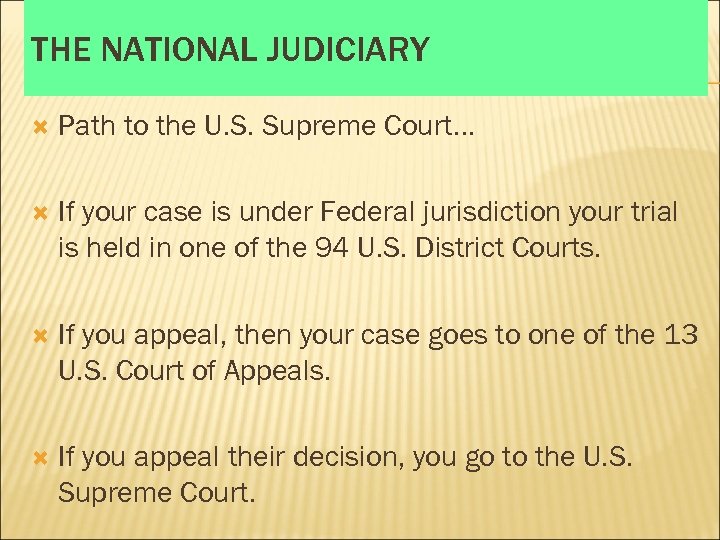
THE NATIONAL JUDICIARY Path to the U. S. Supreme Court… If your case is under Federal jurisdiction your trial is held in one of the 94 U. S. District Courts. If you appeal, then your case goes to one of the 13 U. S. Court of Appeals. If you appeal their decision, you go to the U. S. Supreme Court.
THE NATIONAL JUDICIARY summary
FEDERAL JUDGES AND OFFICERS The Constitution explains the manner in which federal judges are chosen, how long they serve, and how much they get paid. How The are federal judges selected? president selects the judge, the Senate confirms the judge with a majority vote (checks and balances).
FEDERAL JUDGES AND OFFICERS Usually the president is given recommendations from advisors, other politicians, and interest groups. There are no formal qualifications in the Constitution to be a federal judge. Most candidates have state judicial experience, most are lawyers, most are law school professors.
FEDERAL JUDGES AND OFFICERS When selected and confirmed, federal judges serve in federal courts. There are 109 federal courts across the U. S. – including the highest of them all The Supreme Court. There are 874 federal judges that have been selected and confirmed.
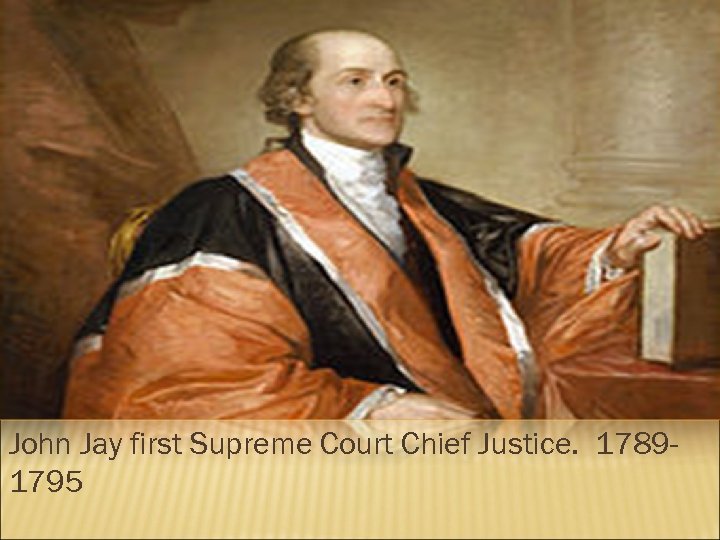
John Jay first Supreme Court Chief Justice. 17891795
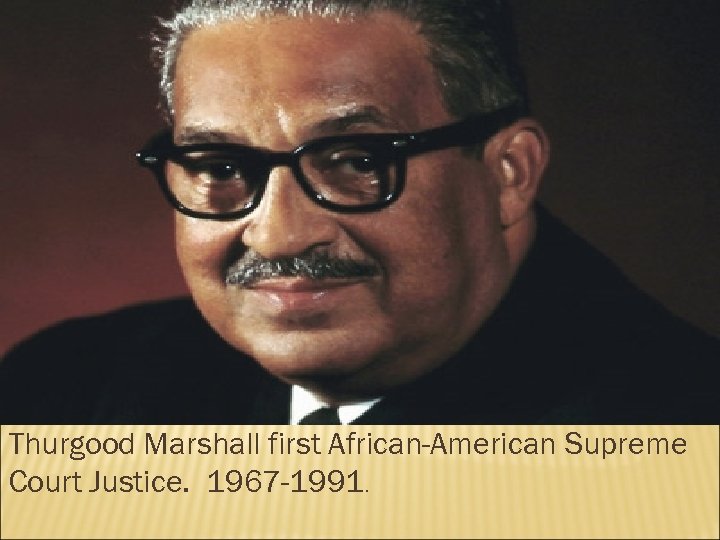
Thurgood Marshall first African-American Supreme Court Justice. 1967 -1991.

Sandra Day O’Connor first female Supreme Court Justice. 1981 -2006.
FEDERAL JUDGES AND OFFICERS How long do federal judges serve? The Constitution says “during good behavior” – which means there is no limit to their term. Serve until they retire, resign, die, or impeached. Designed this way to try to keep them out of politics and elections.
FEDERAL JUDGES AND OFFICERS A federal judge makes anywhere from $174, 000 per year to $223, 000. Some of the best lawyers in the U. S. make millions per year – causing some to claim we need to pay federal judges more. Federal judges may retire when they reach 65 with 15 years of service: age + service = 80. They retire will full pension.
FEDERAL JUDGES AND OFFICERS Federal judges have a great responsibility – they interpret the Constitution and their decisions shape what is allowed in society. How a judge makes their decisions varies from judge to judge depending on their philosophy. Some judges practice judicial restraint, some practice judicial activism.
FEDERAL JUDGES AND OFFICERS Judicial Restraint: Make decision based on original intent of Constitution. Make decision based on what other judges have ruled on in the past with similar cases. Do not believe in using their power to make major changes to society norms.
FEDERAL JUDGES AND OFFICERS Judicial Activism: Make decisions based on what is happening in current times. Belief that society has changed over time, therefore court decisions should reflect those changes. It is okay to rule differently on similar cases of the past – okay to change society with your rulings.
FEDERAL JUDGES AND OFFICERS Federal judges hear the cases and make decisions. Court officers handle all of the supportive work – clerks, bailiffs, reporters, officers. Magistrates court. are also considered officers of the
FEDERAL JUDGES AND OFFICERS U. S. magistrates are justices that help run federal district courts. They handle minor civil complaints and misdemeanor cases. They also issue warrants for arrest and set bail in federal criminal cases.
FEDERAL JUDGES AND OFFICERS U. S. Attorneys are also selected by the President and confirmed by the Senate to serve as the country’s prosecutors. U. S. Marshals are also appointed to serve as a “sheriff” for the country – make arrests, keep order in court, and hold suspects in custody.
FEDERAL JUDGES AND OFFICERS summary
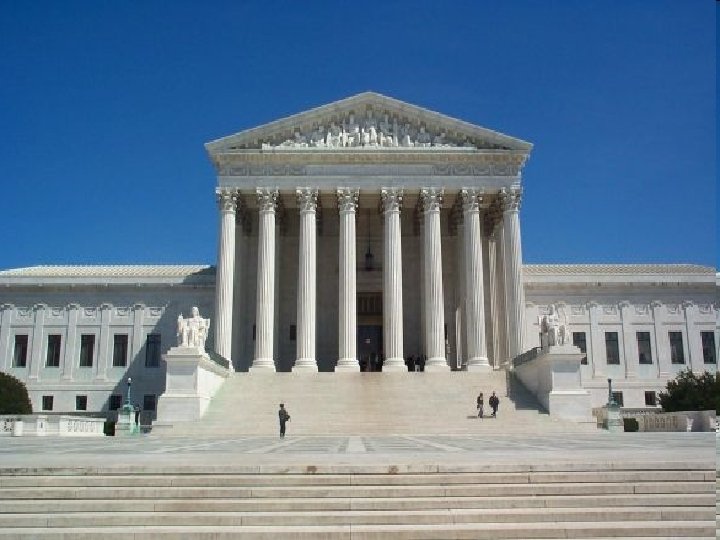
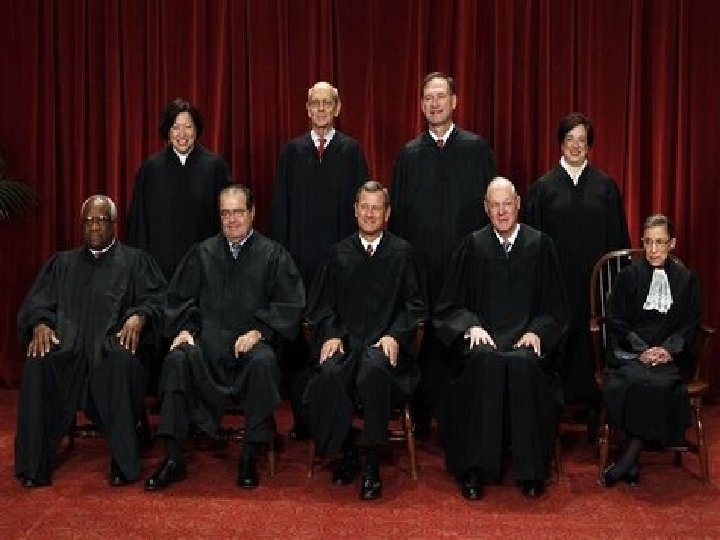
THE SUPREME COURT Supreme Court is located in Washington D. C. – on the building quote reads “Equal justice under the law. ” The Court consists of one Chief Justice – the head honcho – and eight associate judges. It is part of the three branches of government in the U. S. – Legislative, Executive, Judicial.
THE SUPREME COURT Framers of the Constitution gave all three branches power over each other – checks and balances. The It Supreme Court’s power is judicial review. has the final say on all matters relating to the interpretation of the Constitution.
THE SUPREME COURT Judicial review was established in 1803 as a result of Marbury v. Madison – a court case. Judicial Review is important – if two or more laws conflict each other – Supreme Court decides which law stands. And – the Supreme Court can rule any action taken by the President or Congress unconstitutional.
THE SUPREME COURT The Supreme Court is in session between October and July every year. Most cases they hear during a session are appeals cases. More then 8, 000 cases are appealed to the Supreme Court each year – only a few hundred are actually heard – most are denied.
THE SUPREME COURT How do they decide what cases will be scheduled and which ones will be denied? The “rule of four” is used to determine which cases will be heard. 9 judges – a minimum of 4 judges must agree that case is worthy of being heard.
THE SUPREME COURT The first step to request the Supreme Court to hear your case is to file the writ of certiorari. It is Latin for “to be made more certain”. This happens when either the prosecution, defendant or judge asks the Supreme Court to interpret the Constitution – based on the case they are involved in.
THE SUPREME COURT After you file the writ of certiorari and you are lucky to receive notice that your case will be heard (rule of 4) – they tell you the date of the hearing. Second step is to file a written brief before your hearing date. Briefs sometimes reach 100+ pages in length.
THE SUPREME COURT After brief is submitted, you get to appear before the judges in Court and present your argument verbally – called the oral argument. You have 30 minutes to speak – white light shines for 5 minute warning – red light shines you must end.
THE SUPREME COURT After the hearing, judges meet in private conference to make their decision. This is where judicial restraint or judicial activism is used. Majority is needed – so 5 out of 9 judges is minimum needed to make a ruling.
THE SUPREME COURT Once decision is made, the Chief Justice issues a written document called the “majority opinion”. It summarizes the view of the Court and explains the reasons for their decision. This helps to create precedent down the road for future cases.
THE SUPREME COURT In addition to the majority opinion – a “dissenting opinion” can be issued as well. This is submitted by the judges on the losing side and explains their position. This can also be used later in the future to help judges make decisions for cases later on.
THE SUPREME COURT summary
Скачать презентацию THREE BRANCHES OF GOVERNMENT THE NATIONAL LEGISLATURE
cb8531a6cf67b0ba3be5679103df358a.ppt