


 Скачать презентацию This work is licensed under a Creative Commons
0eaaa2c5b168ca347826eddb367246f8.ppt
- Количество слайдов: 37
 This work is licensed under a Creative Commons Attribution-Non. Commercial-Share. Alike License. Your use of this material constitutes acceptance of that license and the conditions of use of materials on this site. Copyright 2006, The Johns Hopkins University and William Brieger. All rights reserved. Use of these materials permitted only in accordance with license rights granted. Materials provided “AS IS”; no representations or warranties provided. User assumes all responsibility for use, and all liability related thereto, and must independently review all materials for accuracy and efficacy. May contain materials owned by others. User is responsible for obtaining permissions for use from third parties as needed.
 Health Belief Model, Social Learning Theory William R. Brieger, MPH, CHES, Dr. PH Johns Hopkins University 1
 Section A Theories in Practice 2
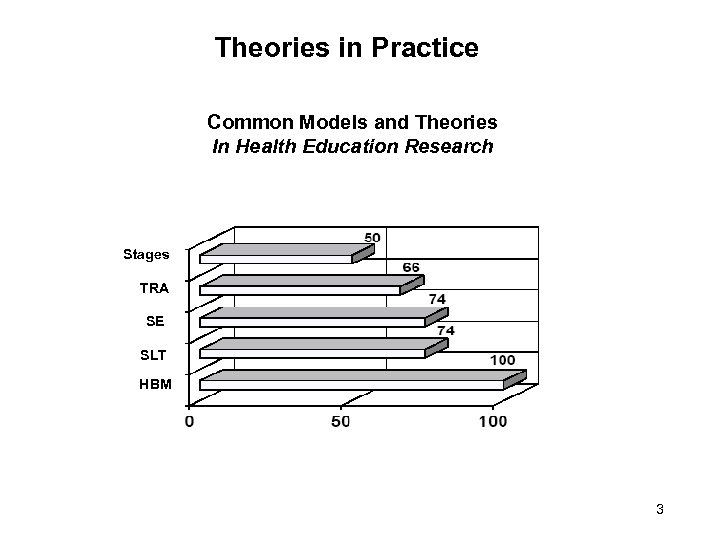 Theories in Practice Common Models and Theories In Health Education Research Stages TRA SE SLT HBM 3
 The Health Belief Model Basic components – A recommended (health) action – Perception of (disease) threat • Susceptibility • Seriousness Continued 4
 The Health Belief Model Basic components – Perceived benefits/constraints to that action • Perceived efficacy • Perceived costs – Social and structural modifiers – Cues to action Continued 5
 The Health Belief Model Background issues – Draws heavily on Lewin’s force field – Value expectancies inherent in benefit-constraint analysis – Decision making paradigm—Some element of rationality, but Continued 6
 The Health Belief Model Background issues – Key word is “perception” – Disease threat central concept • Need to add cultural aspect of disease perception: What is disease? What is illness? 7
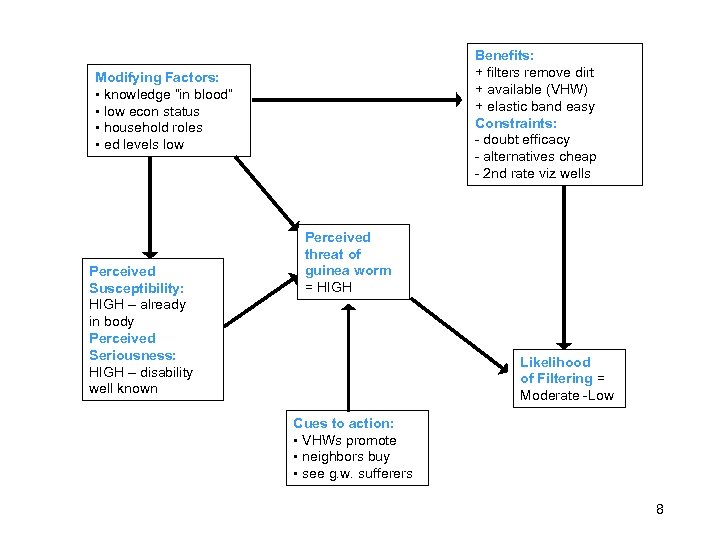 Benefits: + filters remove dirt + available (VHW) + elastic band easy Constraints: - doubt efficacy - alternatives cheap - 2 nd rate viz wells Modifying Factors: • knowledge “in blood” • low econ status • household roles • ed levels low Perceived Susceptibility: HIGH – already in body Perceived Seriousness: HIGH – disability well known Perceived threat of guinea worm = HIGH Likelihood of Filtering = Moderate -Low Cues to action: • VHWs promote • neighbors buy • see g. w. sufferers 8
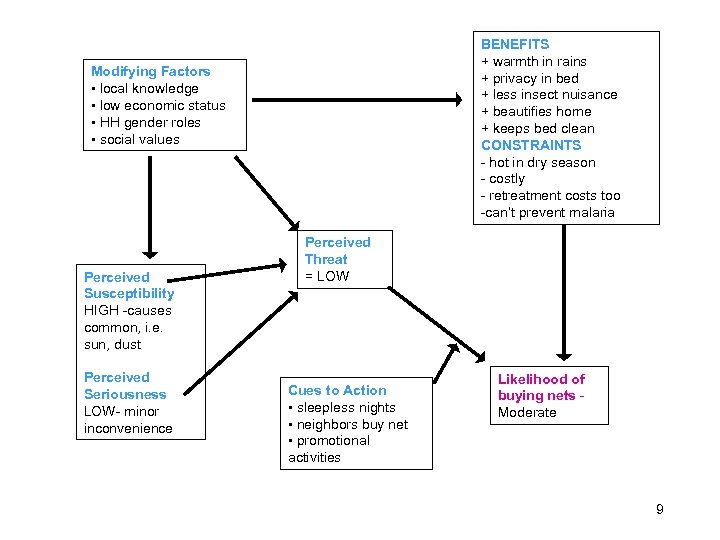 BENEFITS + warmth in rains + privacy in bed + less insect nuisance + beautifies home + keeps bed clean CONSTRAINTS - hot in dry season - costly - retreatment costs too -can’t prevent malaria Modifying Factors • local knowledge • low economic status • HH gender roles • social values Perceived Susceptibility HIGH -causes common, i. e. sun, dust Perceived Seriousness LOW- minor inconvenience Perceived Threat = LOW Cues to Action • sleepless nights • neighbors buy net • promotional activities Likelihood of buying nets Moderate 9
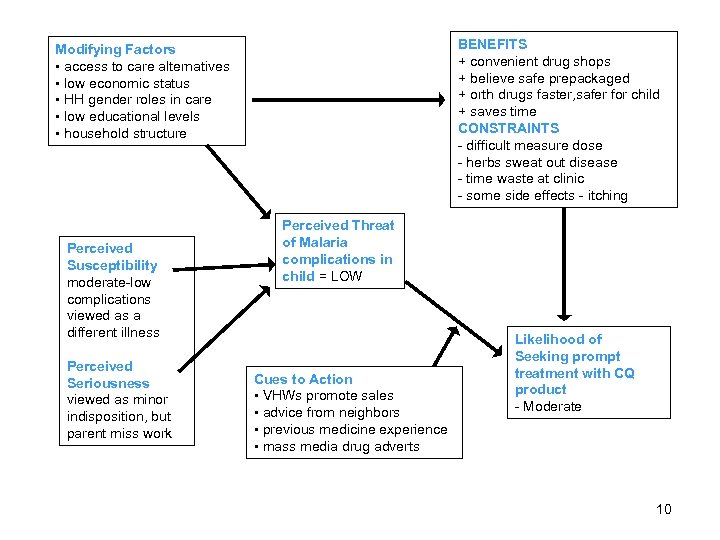 BENEFITS + convenient drug shops + believe safe prepackaged + orth drugs faster, safer for child + saves time CONSTRAINTS - difficult measure dose - herbs sweat out disease - time waste at clinic - some side effects - itching Modifying Factors • access to care alternatives • low economic status • HH gender roles in care • low educational levels • household structure Perceived Susceptibility moderate-low complications viewed as a different illness Perceived Seriousness viewed as minor indisposition, but parent miss work Perceived Threat of Malaria complications in child = LOW Cues to Action • VHWs promote sales • advice from neighbors • previous medicine experience • mass media drug adverts Likelihood of Seeking prompt treatment with CQ product - Moderate 10
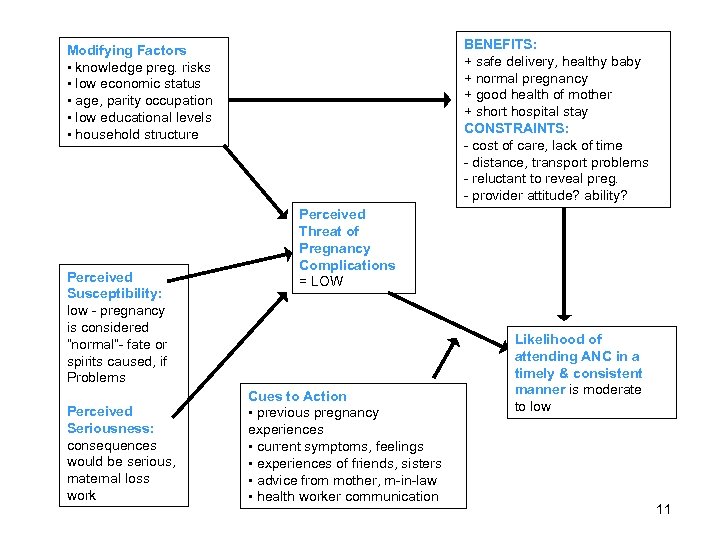 BENEFITS: + safe delivery, healthy baby + normal pregnancy + good health of mother + short hospital stay CONSTRAINTS: - cost of care, lack of time - distance, transport problems - reluctant to reveal preg. - provider attitude? ability? Modifying Factors • knowledge preg. risks • low economic status • age, parity occupation • low educational levels • household structure Perceived Susceptibility: low - pregnancy is considered “normal”- fate or spirits caused, if Problems Perceived Seriousness: consequences would be serious, maternal loss work Perceived Threat of Pregnancy Complications = LOW Cues to Action • previous pregnancy experiences • current symptoms, feelings • experiences of friends, sisters • advice from mother, m-in-law • health worker communication Likelihood of attending ANC in a timely & consistent manner is moderate to low 11
 Note Role of Explanatory in Constructing Theoretical Beliefs about pregnancy – Normal, keeps it hidden = Don’t register ANC early Beliefs about malaria – Caused by sun, heat = Nets won’t prevent Continued 12
 Note Role of Explanatory in Constructing Theoretical Beliefs about medicines – Good medicines make one sweat out the disease – Modern medicines cause no sweat and have side effects Beliefs about guinea worm – In the blood = Filters can’t prevent, remove 13
 HBM Lessons Threat of guinea worm high with both high susceptibility and seriousness – But people do not perceive efficacy of filtering – Therefore, likelihood of action low Continued 14
 HBM Lessons Threat of complications during pregnancy seen as low, as few believe they are susceptible – But benefits seen in attending ANC like immunizations, drugs, social – Therefore, likelihood of action moderate to high 15
 Section B Social Learning / Cognitive Theory 16
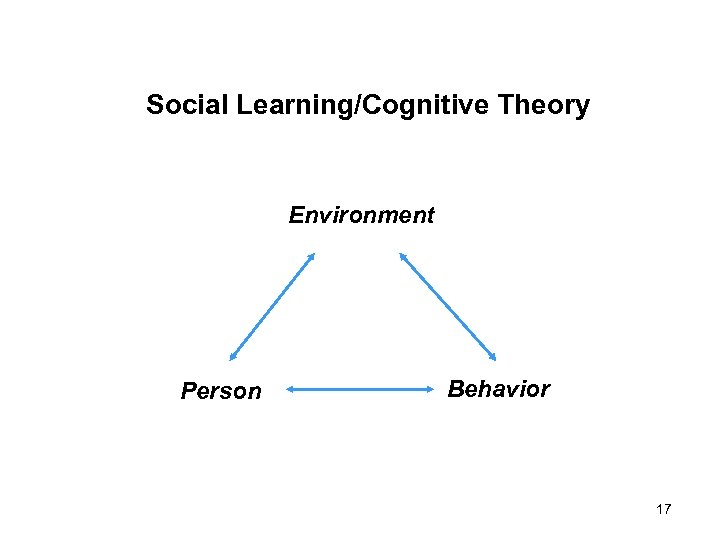 Social Learning/Cognitive Theory Environment Person Behavior 17
 Social Learning/Cognitive Theory: Basic Components Reciprocal determinism Environmental context – Social, economic, geographical, political The individual – Personal and cognitive characteristics Continued 18
 Social Learning/Cognitive Theory: Basic Components The behavior – Nature and dimensions Self-efficacy Value expectancies 19
 Details on Self-Efficacy The state of belief in one’s ability is a good predictor of motivation and behavior The person’s confidence in performing a particular behavior Implications – Approach behavior change in small steps – Seek specificity about the change sought 20
 Self-Efficacy Beliefs Self-efficacy beliefs can be enhanced through: – Performance mastery – Modeling – Reinterpretation of physiological symptoms, and – Social persuasion (information, encouragement) 21
 Self-Efficacy Enhanced self-efficacy leads to improved behaviors, motivation, thinking patterns, and emotional well being Not concerned with the skills one has but judgments of what one can do with skills one possesses Also enhances perceptions of well being as in cases of chronic illness 22
 The Component Processes Underlying Observational Learning Attention – Including modeled events (distinctiveness, effective valence, complexity, prevalence, and functional value) and observer characteristics (sensory capacities, arousal level, perceptual set, and past reinforcement) Continued 23
 The Component Processes Underlying Observational Learning Retention – Including symbolic coding, cognitive organization, symbolic rehearsal, and motor rehearsal Motor reproduction – Including physical capabilities, self-observation of reproduction, and accuracy of feedback Continued 24
 The Component Processes Underlying Observational Learning Motivation – Including external, vicarious, and self-reinforcement 25
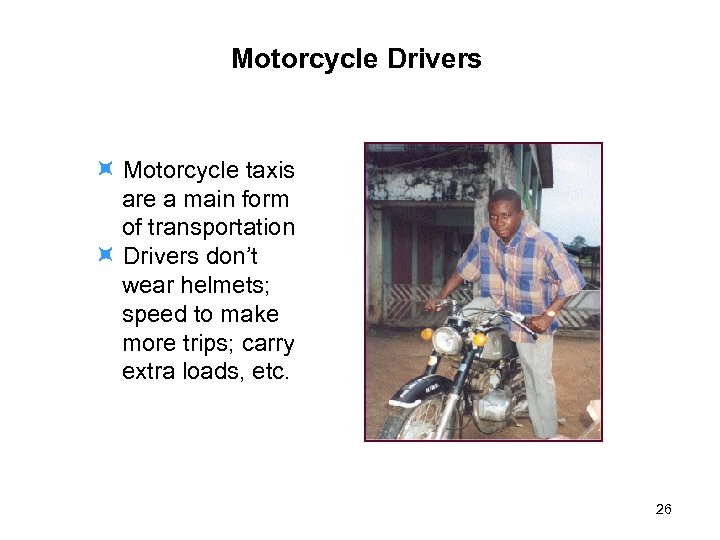 Motorcycle Drivers Motorcycle taxis are a main form of transportation Drivers don’t wear helmets; speed to make more trips; carry extra loads, etc. 26
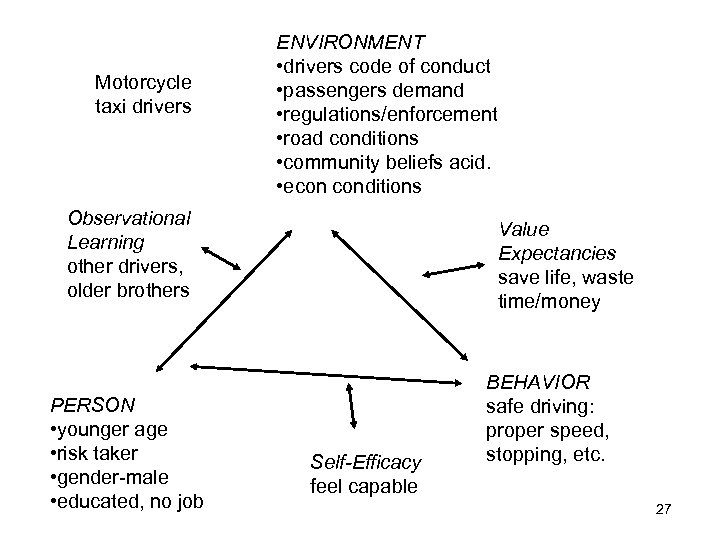 Motorcycle taxi drivers ENVIRONMENT • drivers code of conduct • passengers demand • regulations/enforcement • road conditions • community beliefs acid. • econ conditions Observational Learning other drivers, older brothers PERSON • younger age • risk taker • gender-male • educated, no job Value Expectancies save life, waste time/money Self-Efficacy feel capable BEHAVIOR safe driving: proper speed, stopping, etc. 27
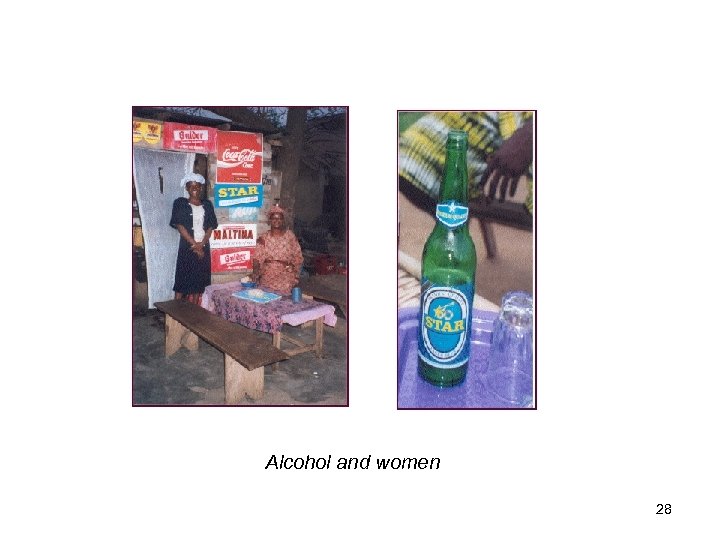 Alcohol and women 28
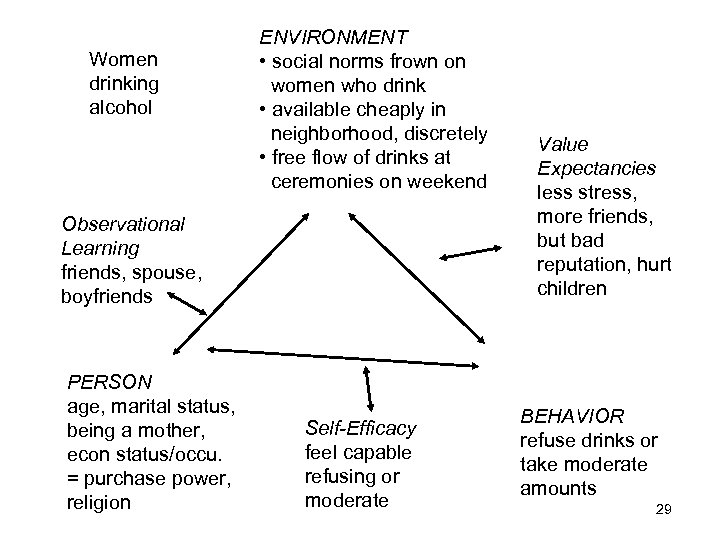 Women drinking alcohol ENVIRONMENT • social norms frown on women who drink • available cheaply in neighborhood, discretely • free flow of drinks at ceremonies on weekend Observational Learning friends, spouse, boyfriends PERSON age, marital status, being a mother, econ status/occu. = purchase power, religion Self-Efficacy feel capable refusing or moderate Value Expectancies less stress, more friends, but bad reputation, hurt children BEHAVIOR refuse drinks or take moderate amounts 29
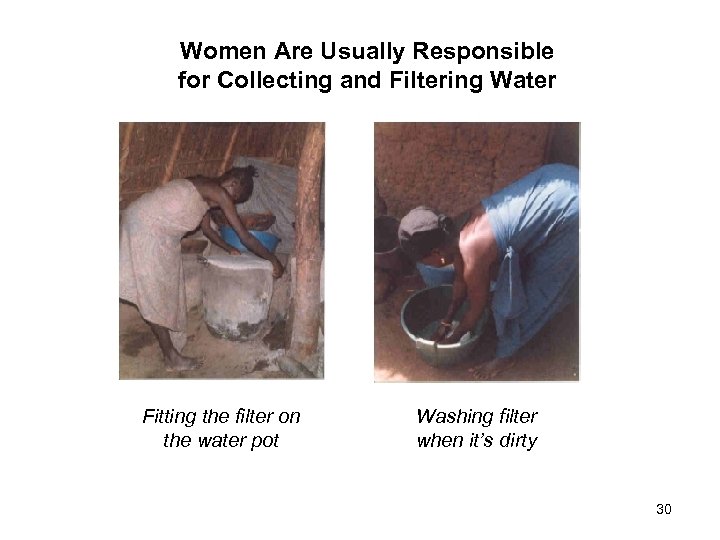 Women Are Usually Responsible for Collecting and Filtering Water Fitting the filter on the water pot Washing filter when it’s dirty 30
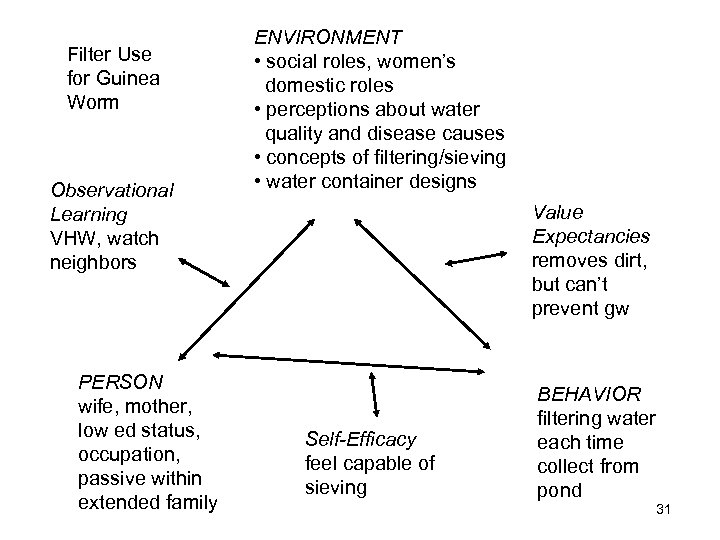 Filter Use for Guinea Worm Observational Learning VHW, watch neighbors PERSON wife, mother, low ed status, occupation, passive within extended family ENVIRONMENT • social roles, women’s domestic roles • perceptions about water quality and disease causes • concepts of filtering/sieving • water container designs Value Expectancies removes dirt, but can’t prevent gw Self-Efficacy feel capable of sieving BEHAVIOR filtering water each time collect from pond 31
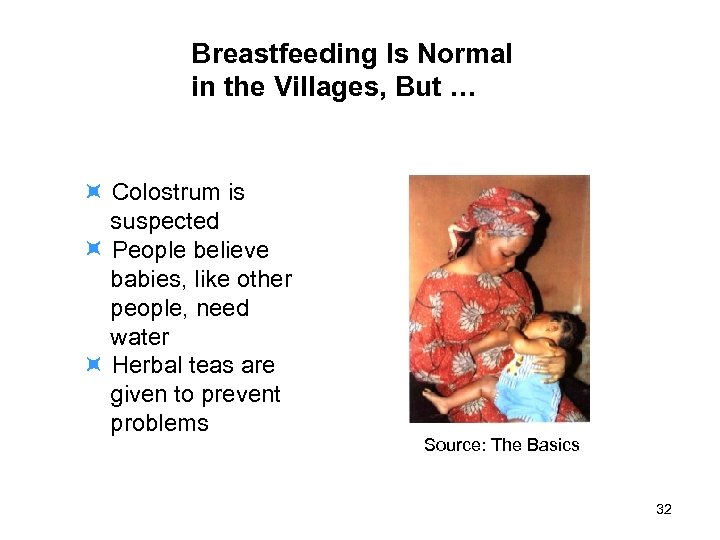 Breastfeeding Is Normal in the Villages, But … Colostrum is suspected People believe babies, like other people, need water Herbal teas are given to prevent problems Source: The Basics 32
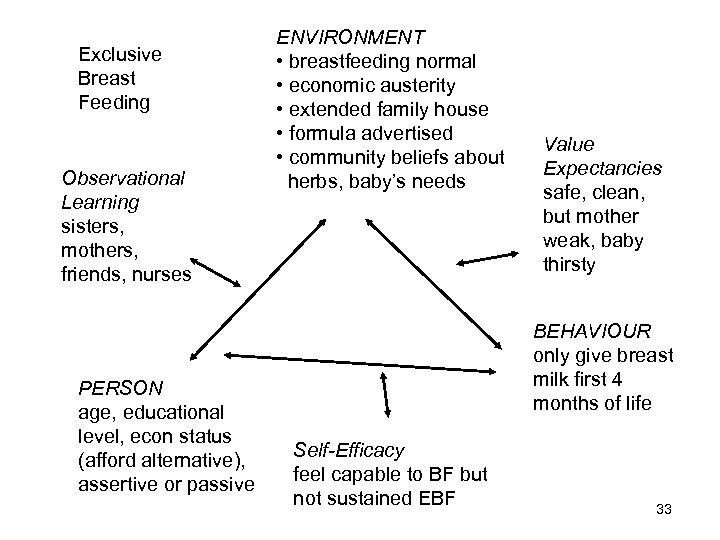 Exclusive Breast Feeding Observational Learning sisters, mothers, friends, nurses PERSON age, educational level, econ status (afford alternative), assertive or passive ENVIRONMENT • breastfeeding normal • economic austerity • extended family house • formula advertised • community beliefs about herbs, baby’s needs Value Expectancies safe, clean, but mother weak, baby thirsty BEHAVIOUR only give breast milk first 4 months of life Self-Efficacy feel capable to BF but not sustained EBF 33
 Lessons Different configuration of components for each situation – EBF—unlikely because • Doubt ability to sustain, not enough food for oneself • Doubt will satisfy baby • No role models Continued 34
 Lessons Different configuration of components for each situation – Motorcycle driver’s safety—Might try • Feel capable, but • Costs outweigh benefits • Observe: Safer drivers are older, already established Continued 35
 Lessons Different configuration of components for each situation – Filtering to prevent guinea worm— doubts outweigh confidence • Feel confident can filter • Doubt filtering will prevent, takes extra time 36