 Скачать презентацию THIS WILL BE ONLINE 8 -3 Slavery
040b96c66af027bb6a10ec2ff67f334a.ppt
- Количество слайдов: 14




THIS WILL BE ONLINE!!!!!!!
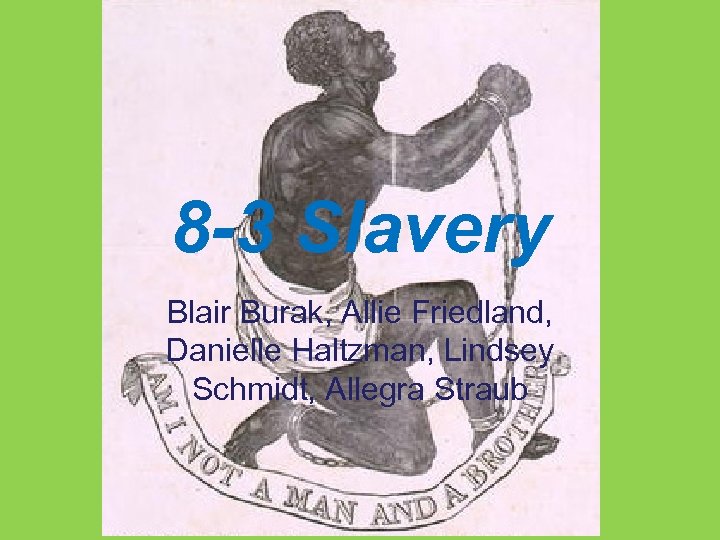
8 -3 Slavery Blair Burak, Allie Friedland, Danielle Haltzman, Lindsey Schmidt, Allegra Straub
“Kings Cotton” • From the book “Cotton Is King” by David Christy published 1855 • “Thus, the very tings necessary to the overthrow of American Slavery, were left undone, while those essential to its prosperity, were continued in the most active operation; so that, now, after nearly a ‘thirty years’ war’, we may say empathetically, COTTON IS KING, and his enemies are vanquished. ” -David Christy Cotton Is King 1855
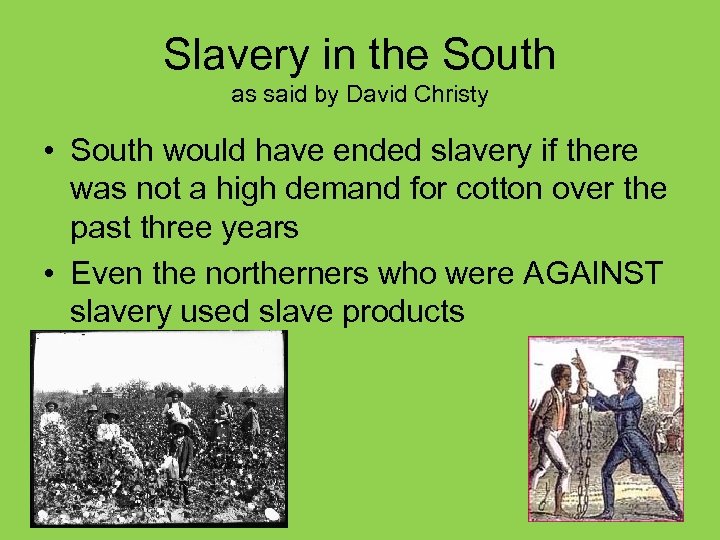
Slavery in the South as said by David Christy • South would have ended slavery if there was not a high demand for cotton over the past three years • Even the northerners who were AGAINST slavery used slave products
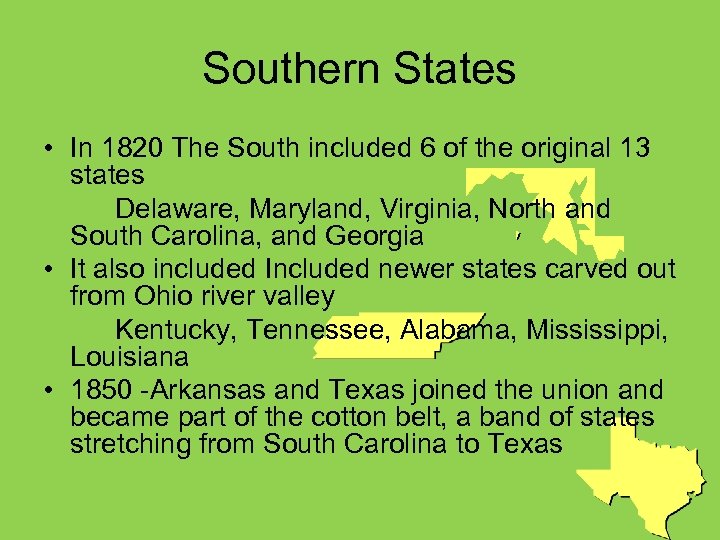
Southern States • In 1820 The South included 6 of the original 13 states Delaware, Maryland, Virginia, North and South Carolina, and Georgia • It also included Included newer states carved out from Ohio river valley Kentucky, Tennessee, Alabama, Mississippi, Louisiana • 1850 -Arkansas and Texas joined the union and became part of the cotton belt, a band of states stretching from South Carolina to Texas
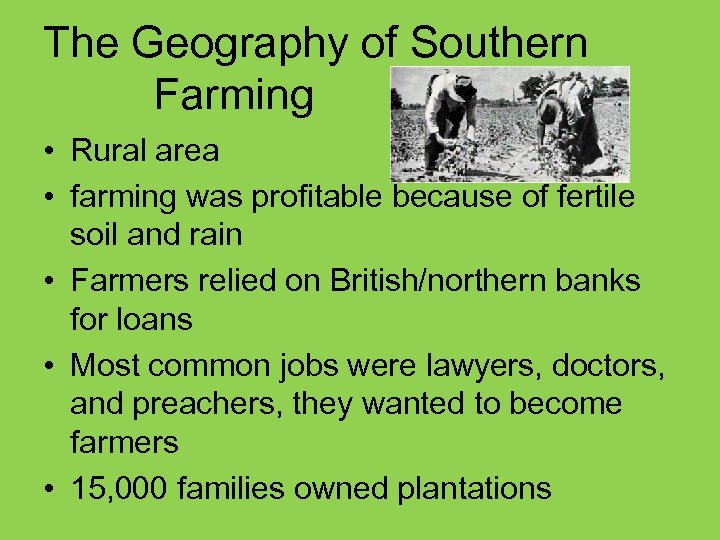
The Geography of Southern Farming • Rural area • farming was profitable because of fertile soil and rain • Farmers relied on British/northern banks for loans • Most common jobs were lawyers, doctors, and preachers, they wanted to become farmers • 15, 000 families owned plantations
• used enslaved workers to make cash crops • ¼ of all slaves lived on plantations • Plantations owners would buy land from their poorer neighbors to have large plots of land for cotton and sugar • Virginia & North Carolinia were tobacco stated as opposed to cotton states • Kentucky had a varried selection- including the breeding of horses
Slow Urban Growth • New Orleans, Charleston, and Richmond’s cities gradually developed • Problems were run down housing and poor sanitation • 8% of white southerners lived in towns with more than 4, 000 people • Only 12% of the 3. 7 million African Americans were free
The Slavery System • 1804 - all northern states eighter banned slavery or passed laws to end it • Couldn’t end slave trade before 1808 • 1820 - slave population numbered about 1. 5 million • 1850 - population doubled to over 3 million • 1860 - African Americans made up more than half of the population
Slavery on Small and Large Farms - most slaves lived on large cotton plantations - each slave community numbered about 20 - life was generally harsher on plantations - life was extremely difficult for women- taking care of children, household, cooking &serving food, cleaned and labored in their owners field Slaves as Property - as the demand for slaves increased, so did the prices that slave traders demanded - slaves cost about $500 - most farmers could not afford to have them
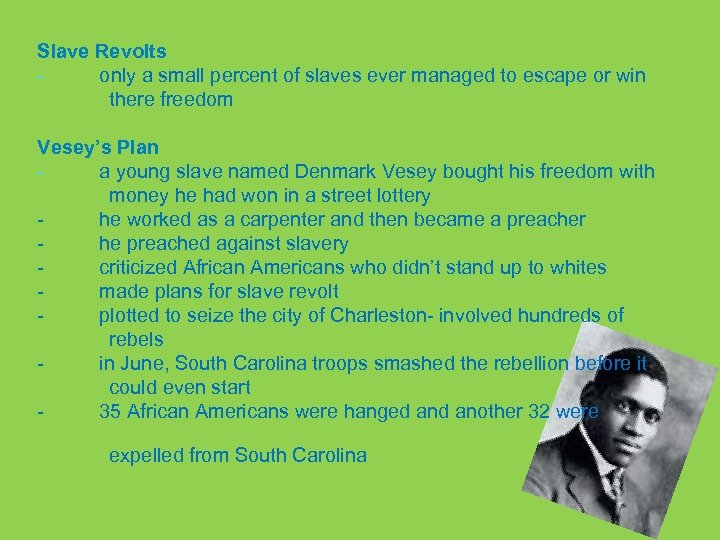
Slave Revolts - only a small percent of slaves ever managed to escape or win there freedom Vesey’s Plan - a young slave named Denmark Vesey bought his freedom with money he had won in a street lottery - he worked as a carpenter and then became a preacher - he preached against slavery - criticized African Americans who didn’t stand up to whites - made plans for slave revolt - plotted to seize the city of Charleston- involved hundreds of rebels - in June, South Carolina troops smashed the rebellion before it could even start - 35 African Americans were hanged another 32 were expelled from South Carolina
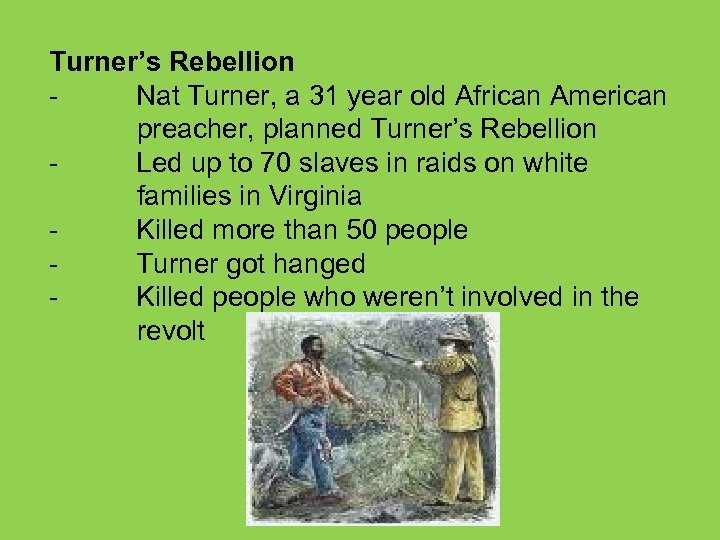
Turner’s Rebellion - Nat Turner, a 31 year old African American preacher, planned Turner’s Rebellion - Led up to 70 slaves in raids on white families in Virginia - Killed more than 50 people - Turner got hanged - Killed people who weren’t involved in the revolt
White Southerners Alarmed - African Americans out numbered the white population- they deeply feared slave revolts - Virginia considered ending slavery- but it joined other states in tightening restrictions on slaves - Virginia & North Carolina passed laws against teaching slaves to read
FUN FACT!!!!!!! • Corporations played an indispensable role in building America, and corporate growth has brought progress that benefits all with cheaper goods and better jobs.
Скачать презентацию THIS WILL BE ONLINE 8 -3 Slavery
040b96c66af027bb6a10ec2ff67f334a.ppt