 Скачать презентацию This week Your note book is ready in
e4c88066537b48498f4305938b5a96f4.ppt
- Количество слайдов: 39



This week (Your note book is ready in the I-J cabinets) n Tuesday – 1920’s n Wednesday - Library 1920’s projects n Thursday – 1920’s and some time to work on presentations (I’m hoping library) n Any projects that want to present for EC as well. Friday – Imperialism and WW 1 Quiz then Projects! n Monday – Projects n Tuesday – Projects / Review n
The Consumer Economy of the 1920’s
Journal 12/8 n What impact would ending a war with another country have on the US? (Think about the soldiers coming home from WW 1) n What do you define as culture? How is our culture shaped today? (Music, art, dress, ways we talk, work, etc) Give examples!
Impact of WW 1 n Economy in 1919: 2 million soldiers now home looking for jobs Businesses begin to raise prices that had been controlled during the war INFLATION Cost of living on the rise Workers laid off as demand from war now slows Factories closing Increased Unemployment National Income 1920 - $73 billion National Income 1922 - $68 billion
n Strikes Workers wanted pay increases to keep up with inflation (higher priced goods) Union membership had increased during WW 1 Organized workers began striking across the country as a result 4 million strikers across 3500 strikes nationwide
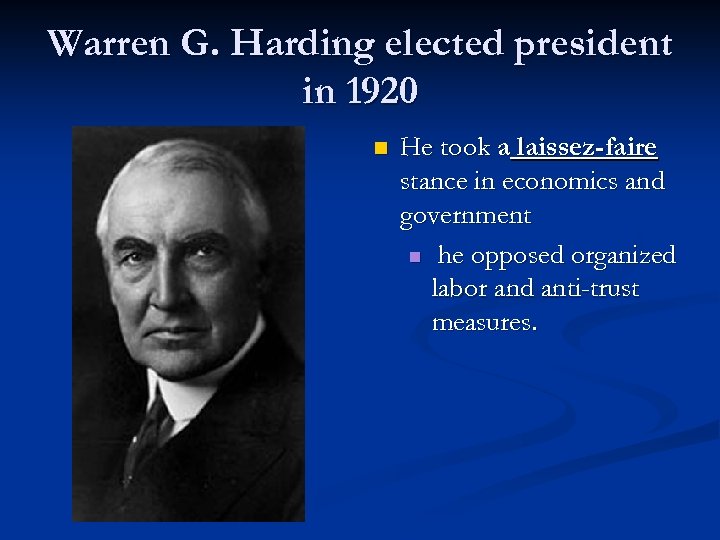
Warren G. Harding elected president in 1920 n He took a laissez-faire stance in economics and government n he opposed organized labor and anti-trust measures.
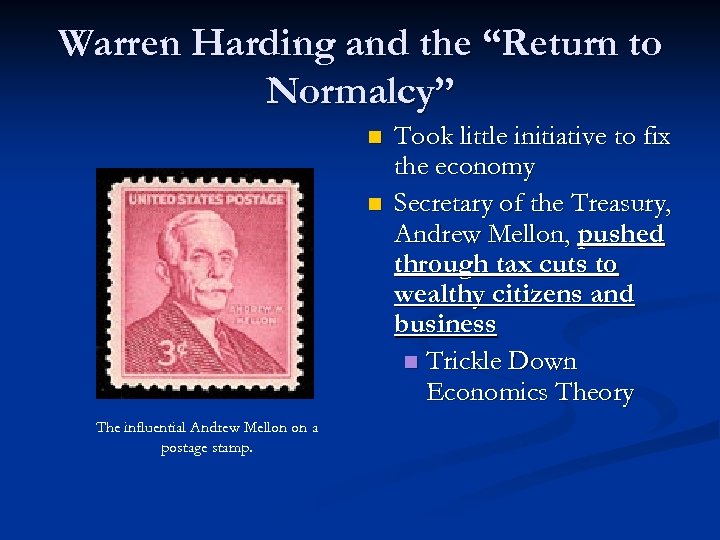
Warren Harding and the “Return to Normalcy” n n The influential Andrew Mellon on a postage stamp. Took little initiative to fix the economy Secretary of the Treasury, Andrew Mellon, pushed through tax cuts to wealthy citizens and business n Trickle Down Economics Theory
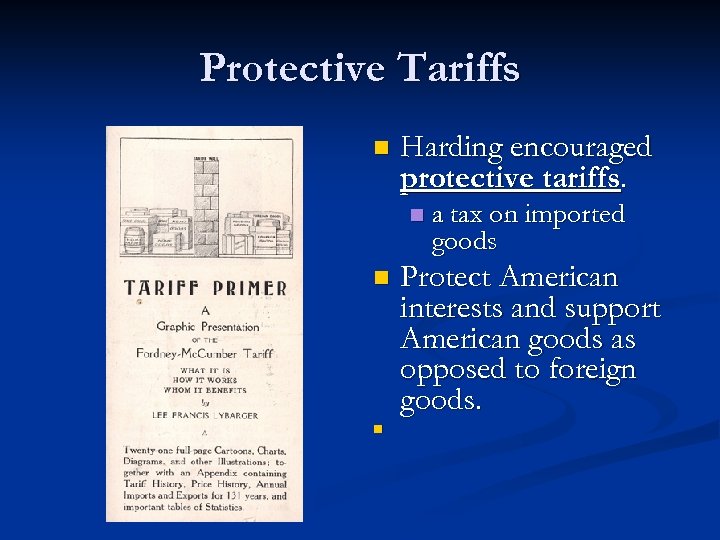
Protective Tariffs n Harding encouraged protective tariffs. n n n a tax on imported goods Protect American interests and support American goods as opposed to foreign goods.
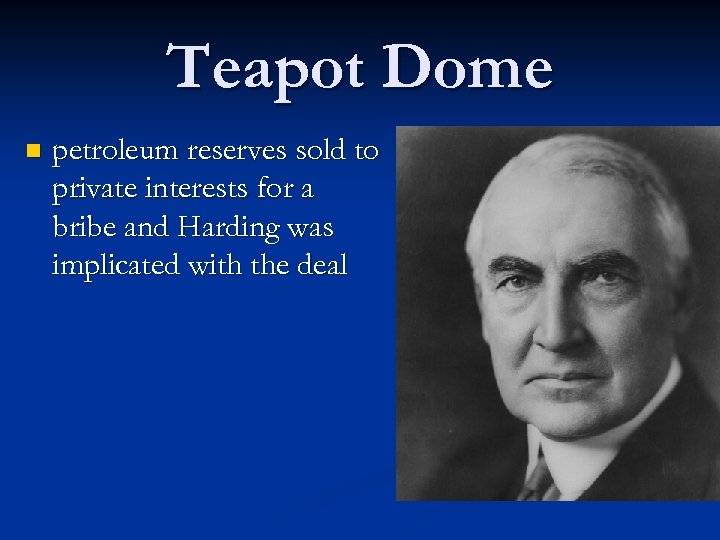
Teapot Dome n petroleum reserves sold to private interests for a bribe and Harding was implicated with the deal
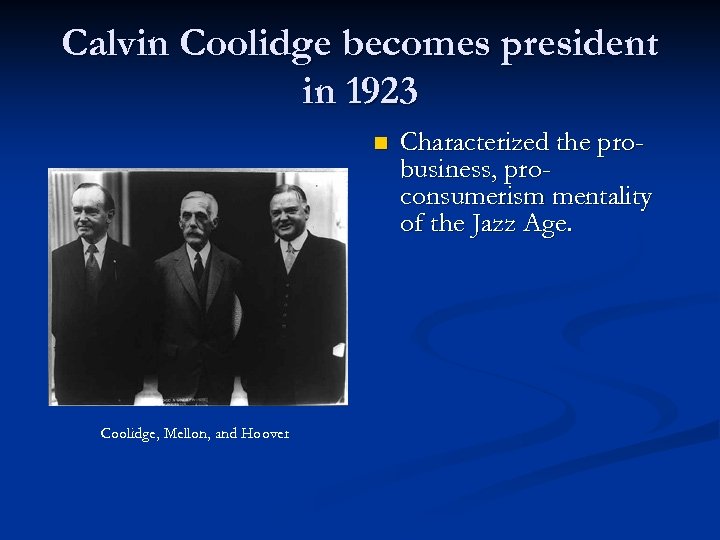
Calvin Coolidge becomes president in 1923 n Coolidge, Mellon, and Hoover Characterized the probusiness, proconsumerism mentality of the Jazz Age.
Inaugural Address of Calvin Coolidge (1925) n “… unless we wish to hamper the people in their right to earn a living, we must have tax reform. The method of raising revenue ought not to impede the transaction of business; it ought to encourage it. I am opposed to extremely high rates, because they produce little or no revenue, because they are bad for the country, and, finally, because they are wrong. … This country believes in prosperity. It is absurd to suppose that it is envious of those who are already prosperous. ”
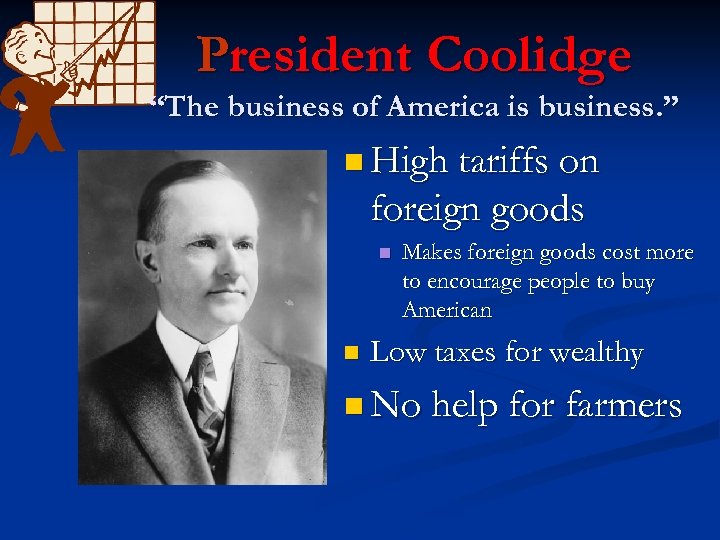
President Coolidge “The business of America is business. ” n High tariffs on foreign goods n n Makes foreign goods cost more to encourage people to buy American Low taxes for wealthy n No help for farmers

Discussion Question n How might new technology transform people’s lives?
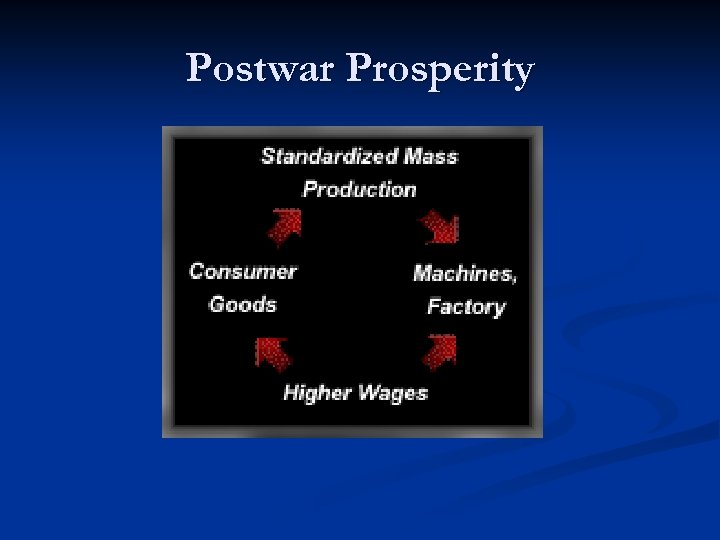
Postwar Prosperity
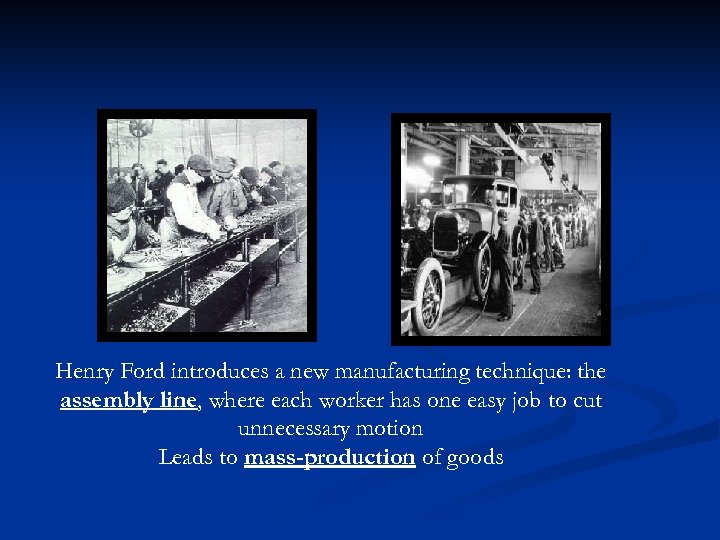
Henry Ford introduces a new manufacturing technique: the assembly line, where each worker has one easy job to cut unnecessary motion Leads to mass-production of goods
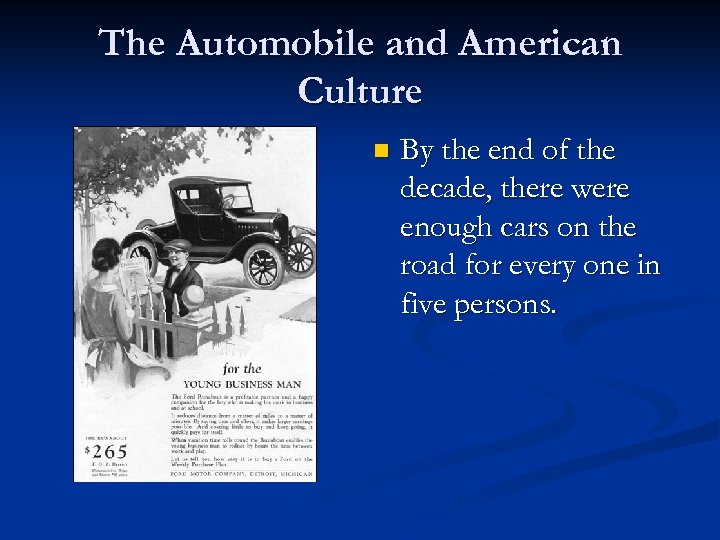
The Automobile and American Culture n By the end of the decade, there were enough cars on the road for every one in five persons.
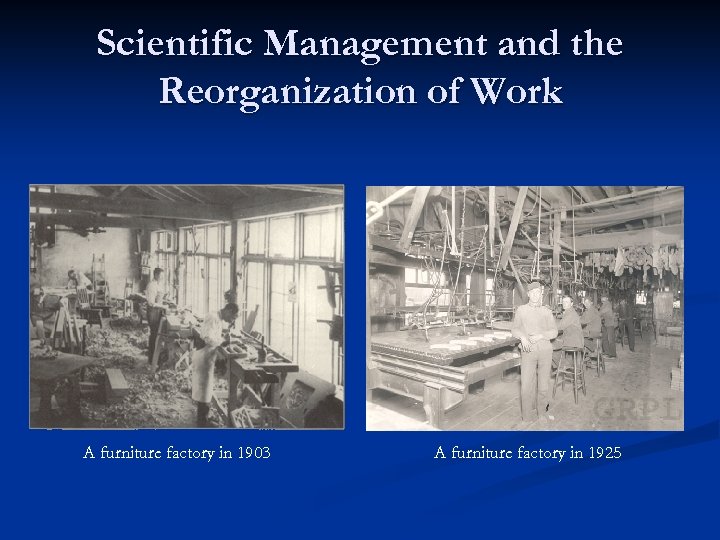
Scientific Management and the Reorganization of Work A furniture factory in 1903 A furniture factory in 1925
Discussion Questions 1. How might increased consumer spending help improve a nation’s economy?

And the Best part is, it won’t cost you anything…
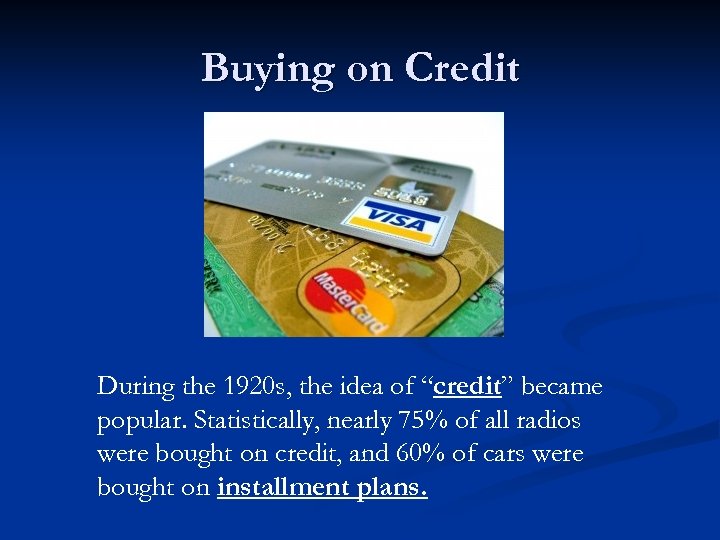
Buying on Credit During the 1920 s, the idea of “credit” became popular. Statistically, nearly 75% of all radios were bought on credit, and 60% of cars were bought on installment plans.
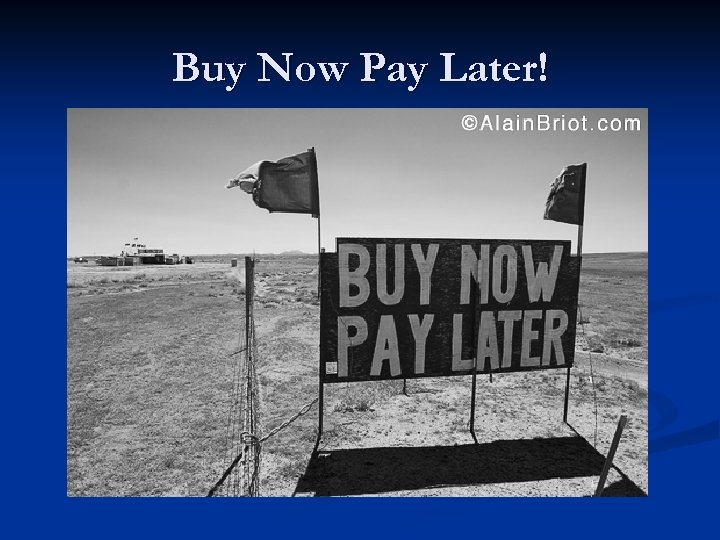
Buy Now Pay Later!
Discussion Question n What are the potential benefits and drawbacks to “buying on credit”?
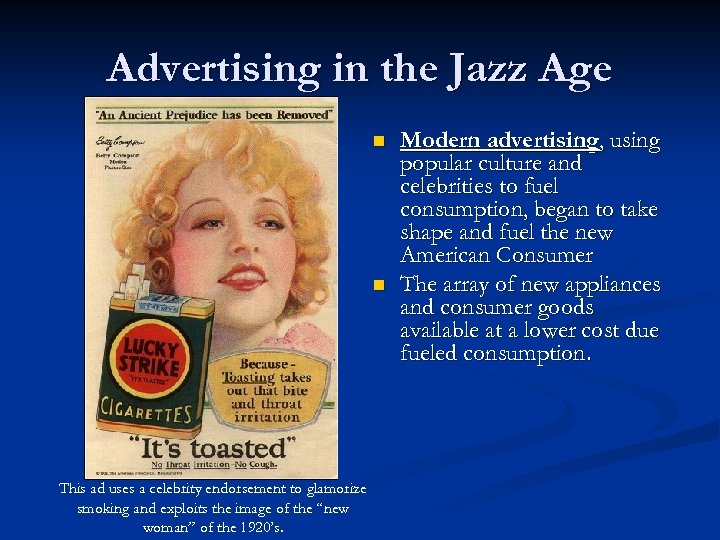
Advertising in the Jazz Age n n This ad uses a celebrity endorsement to glamorize smoking and exploits the image of the “new woman” of the 1920’s. Modern advertising, using popular culture and celebrities to fuel consumption, began to take shape and fuel the new American Consumer The array of new appliances and consumer goods available at a lower cost due fueled consumption.
Discussion Question n How does advertising affect the consumer public?

Racial Discrimination

The Ku Klux Klan Great increase In power Anti-black Anti-immigrant Anti-Semitic Anti-Catholic Anti-women’s suffrage Anti-bootleggers
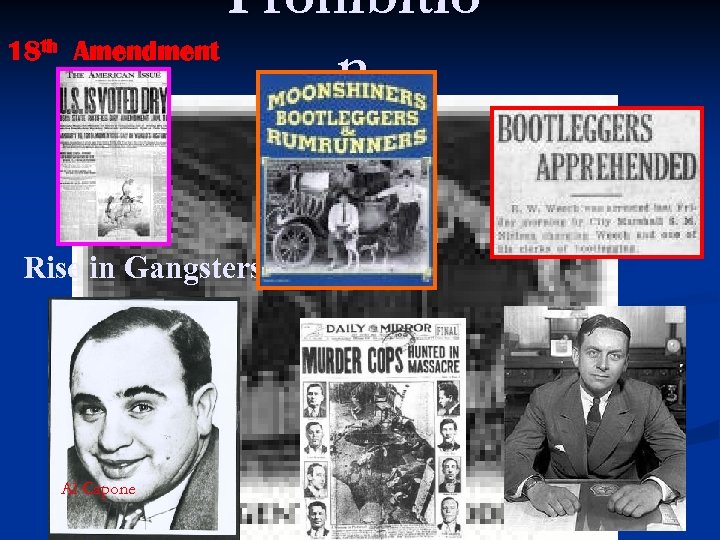
18 th Prohibitio Amendment n Rise in Gangsters Al Capone
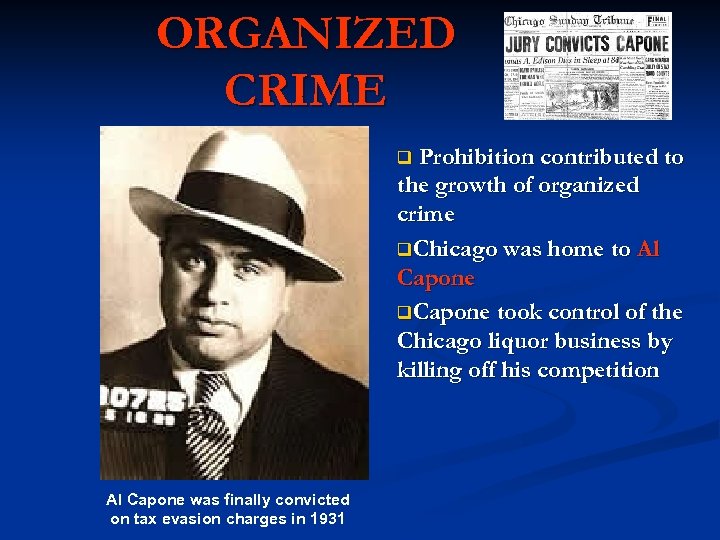
ORGANIZED CRIME Prohibition contributed to the growth of organized crime q. Chicago was home to Al Capone q. Capone took control of the Chicago liquor business by killing off his competition q Al Capone was finally convicted on tax evasion charges in 1931
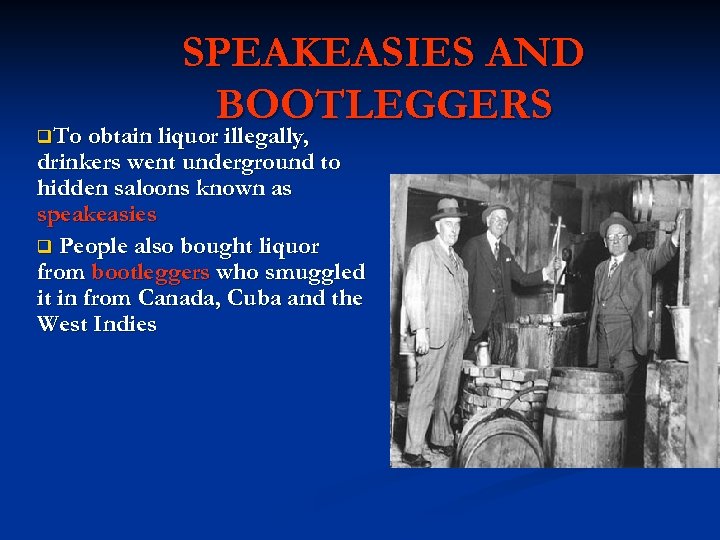
SPEAKEASIES AND BOOTLEGGERS q. To obtain liquor illegally, drinkers went underground to hidden saloons known as speakeasies q People also bought liquor from bootleggers who smuggled it in from Canada, Cuba and the West Indies
Anti-Communist
The Red Scare n n Following WW 1, the United States entered a period of fear of Communism. During the Red Scare, Americans feared that if a small radical group could seize power in Russia (Bolsheviks), the same could happen in the U. S. April 1919, the postal service intercepted nearly 40 bombs addressed to prominent citizens, and the fears turned to flames. Reflects fear that immigrants were “radicals” who would spread communism
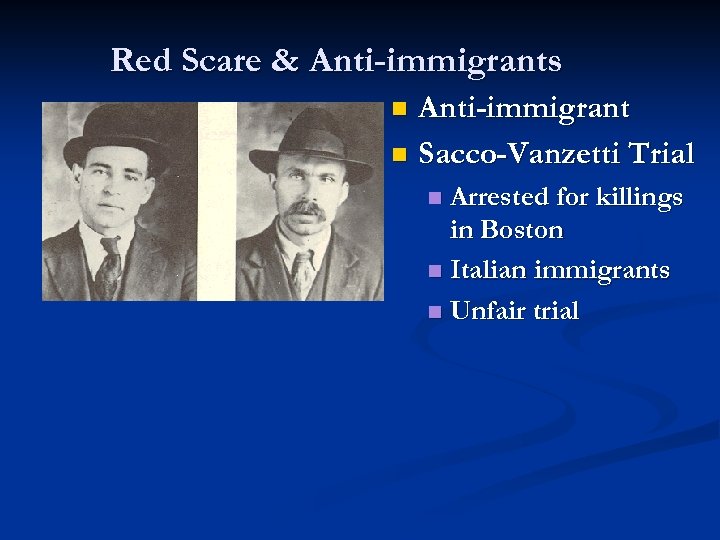
Red Scare & Anti-immigrants Anti-immigrant n Sacco-Vanzetti Trial n Arrested for killings in Boston n Italian immigrants n Unfair trial n
n Palmer Raids: Attorney General A. Mitchell Palmer detained some 6, 000 suspected Communists. There were no trials, but many deportations.
Communism Activity n n n You will receive a playing card. DO NOT SHOW ANYONE YOUR CARD. If your card is black in color, you are a proud American citizen who waves your American flag high and are very anti-communist. If your card is red in color, you are a radical who believes an overthrow of the government in favor of a communist revolution. You secretly are working to fulfill this.
Round 1 I will give you a card. Do not show your card. n The objective: Form the largest group of black cards without looking at each other’s cards. n You must use your speaking skills, listening, and trusting skills. n The largest group of black cards with NO RED CARDS wins 1 pt extra credit. n
n Any red card that joins the largest group of black cards will receive an extra credit point as well. n Again: Do not show your card. Do not tell people your card!!!
Round 2 We will redistribute cards. n Cards may or may not have changed. n Also, my name is Mitchell Palmer and I will provide some instructions. n

Round 3 n Let’s try again
Summary n Describe how the 1920’s were not all fun and games.
Скачать презентацию This week Your note book is ready in
e4c88066537b48498f4305938b5a96f4.ppt