


 Скачать презентацию This is not fear factor WELCOME TO RESEACH
26d065452de10bb563b062ec6ca21d2c.ppt
- Количество слайдов: 37
 This is not fear factor…. WELCOME TO RESEACH METHODS!!!! Lecture 1 – Chapter 1
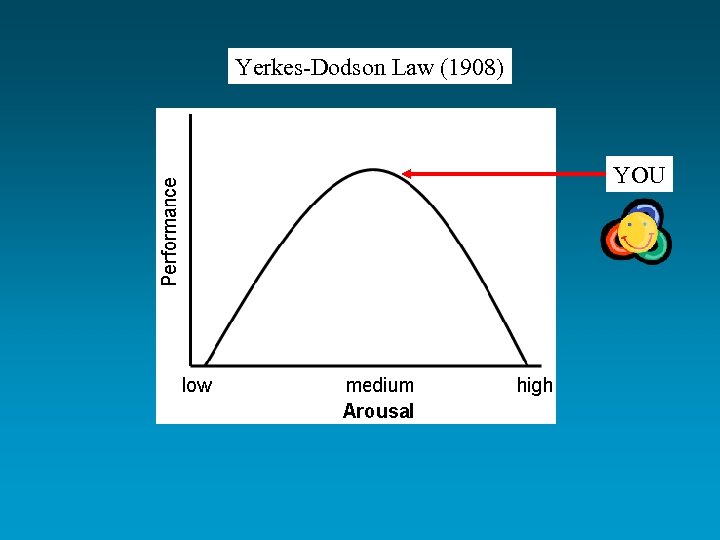 Yerkes-Dodson Law (1908) YOU
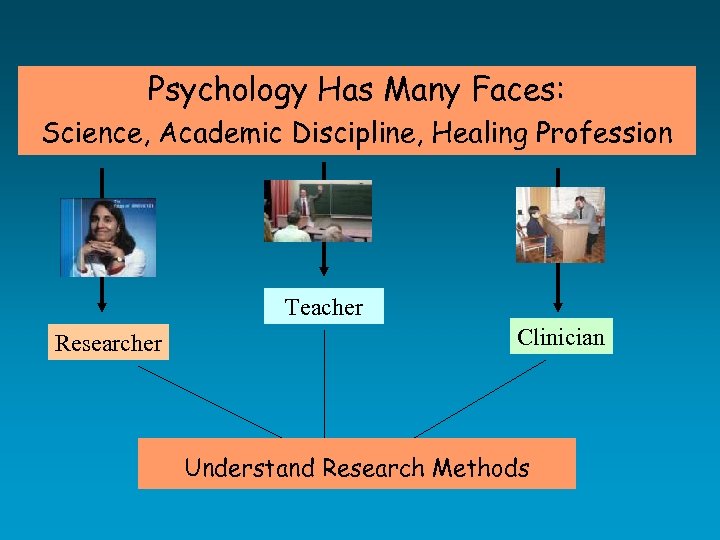 Psychology Has Many Faces: Science, Academic Discipline, Healing Profession Teacher Researcher Clinician Understand Research Methods
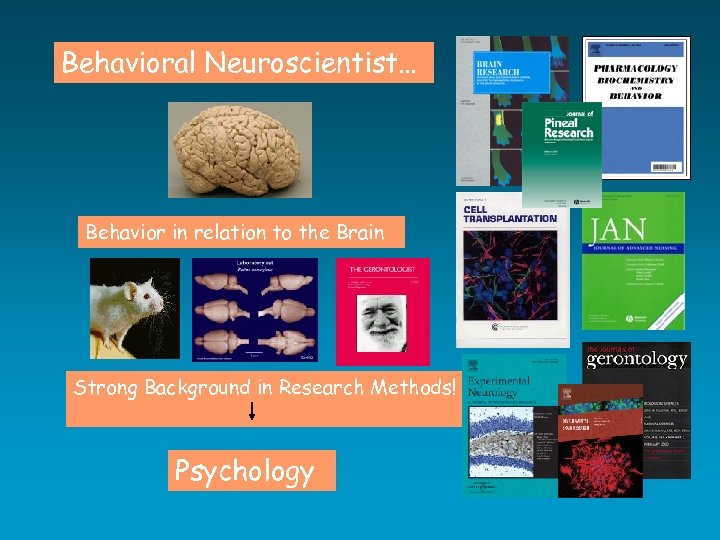 Behavioral Neuroscientist… Behavior in relation to the Brain Strong Background in Research Methods! Psychology
 Understanding Psych Research Understanding Science Research = Science
 What is science? "the observation, identification, description, experimental investigation, and theoretical explanation of natural phenomena. " Is that it? Is this what science is? …what’s missing? ?
 Who Does It? • intellectual activity done by humans • satisfies a human desire • stems from need to overcome ignorance & fear Groups of humans Passion
 A scientist: Finds intellectual excitement in creating questions and seeking answers Research brings out the child curiosity in me. . .
 Science: a process of inquiry The process of formulating specific questions and then finding answers …better understanding… Basic Curiosity “We Ask Questions of Nature And Get Answers” D. E. Moss
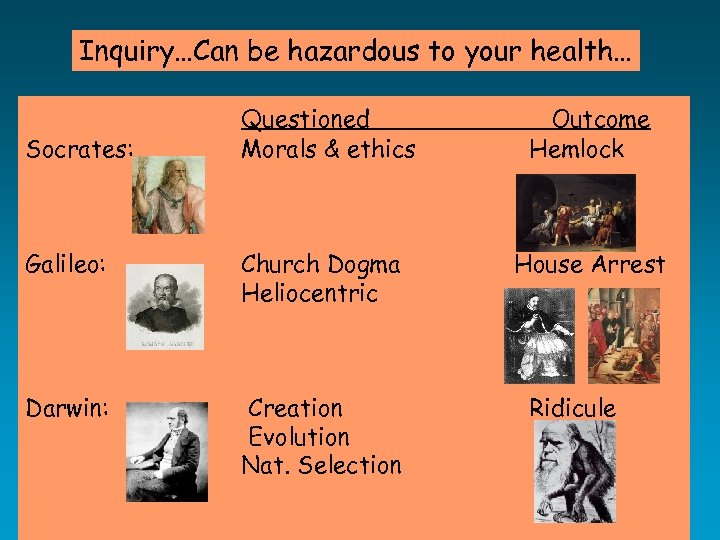 Inquiry…Can be hazardous to your health… Socrates: Questioned Morals & ethics Galileo: Church Dogma Heliocentric Darwin: Creation Evolution Nat. Selection Outcome Hemlock House Arrest Ridicule
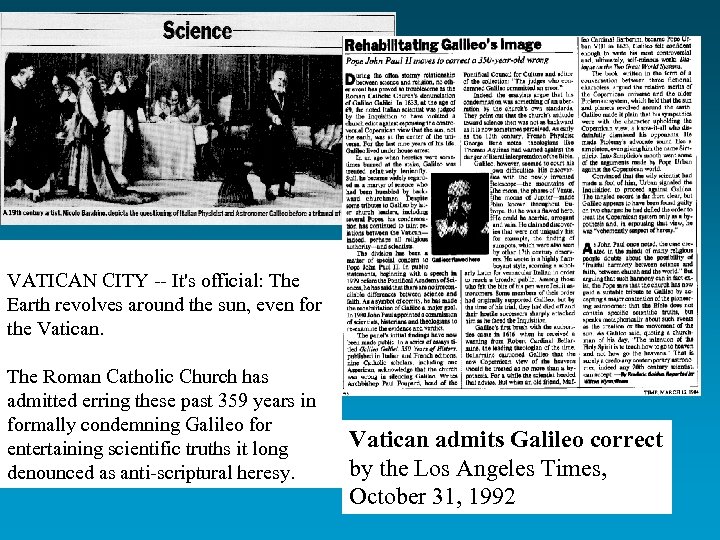 VATICAN CITY -- It's official: The Earth revolves around the sun, even for the Vatican. The Roman Catholic Church has admitted erring these past 359 years in formally condemning Galileo for entertaining scientific truths it long denounced as anti-scriptural heresy. Vatican admits Galileo correct by the Los Angeles Times, October 31, 1992
 Psychology: the science of human & animal behavior Goal: gather an organized body of knowledge Psychological research seeks scientific explanation for behavior
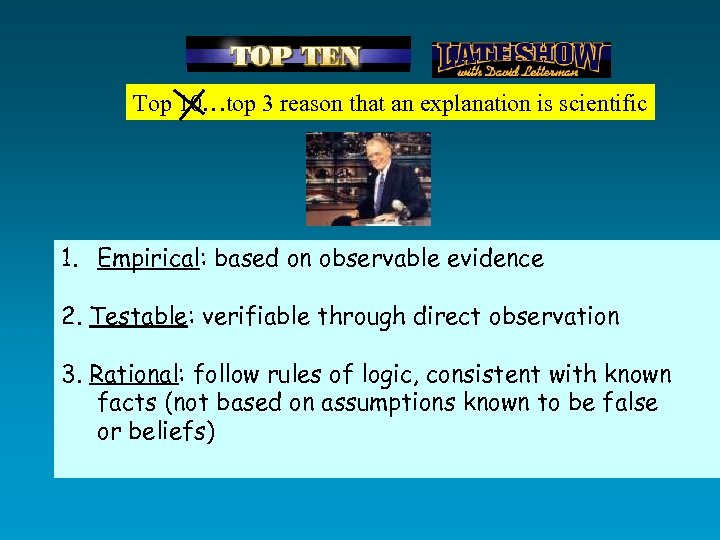 Top 10…top 3 reason that an explanation is scientific 1. Empirical: based on observable evidence 2. Testable: verifiable through direct observation 3. Rational: follow rules of logic, consistent with known facts (not based on assumptions known to be false or beliefs)
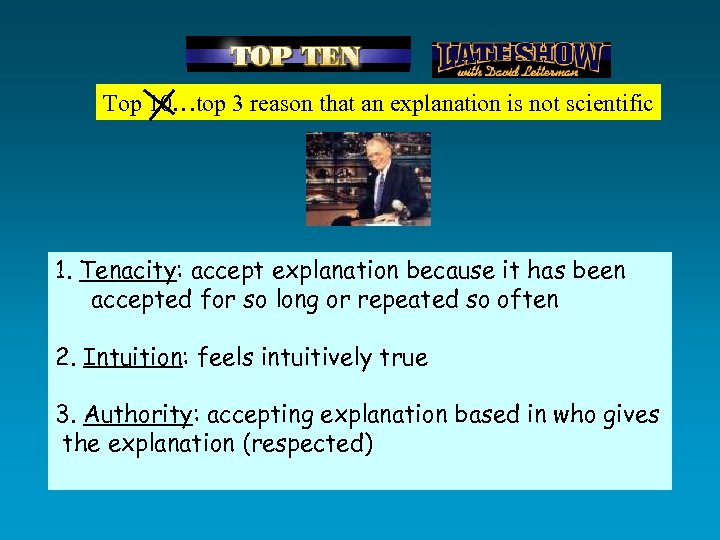 Top 10…top 3 reason that an explanation is not scientific 1. Tenacity: accept explanation because it has been accepted for so long or repeated so often 2. Intuition: feels intuitively true 3. Authority: accepting explanation based in who gives the explanation (respected)
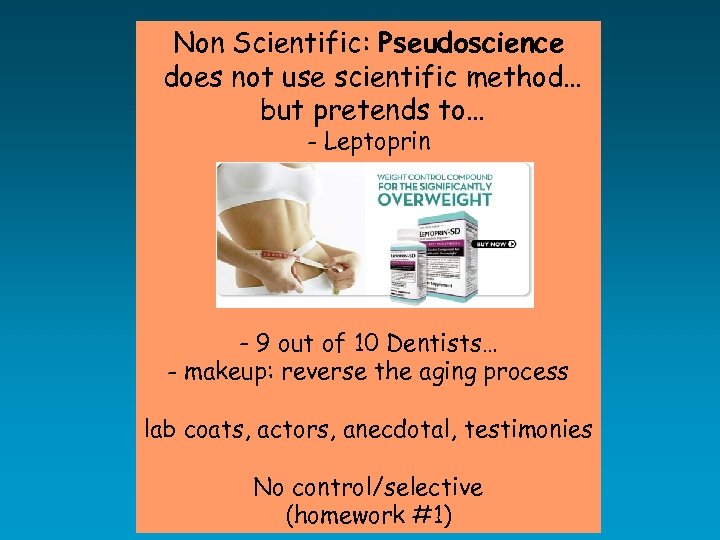 Non Scientific: Pseudoscience does not use scientific method… but pretends to… - Leptoprin - 9 out of 10 Dentists… - makeup: reverse the aging process lab coats, actors, anecdotal, testimonies No control/selective (homework #1)
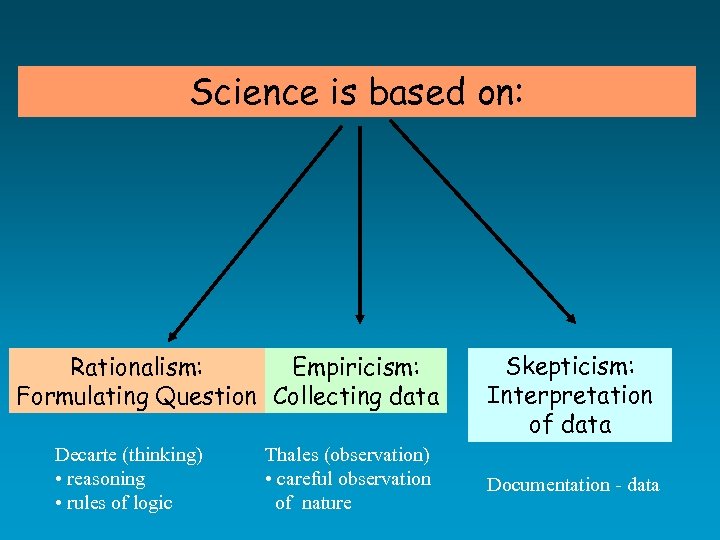 Science is based on: Rationalism: Empiricism: Formulating Question Collecting data Decarte (thinking) • reasoning • rules of logic Thales (observation) • careful observation of nature Skepticism: Interpretation of data Documentation - data
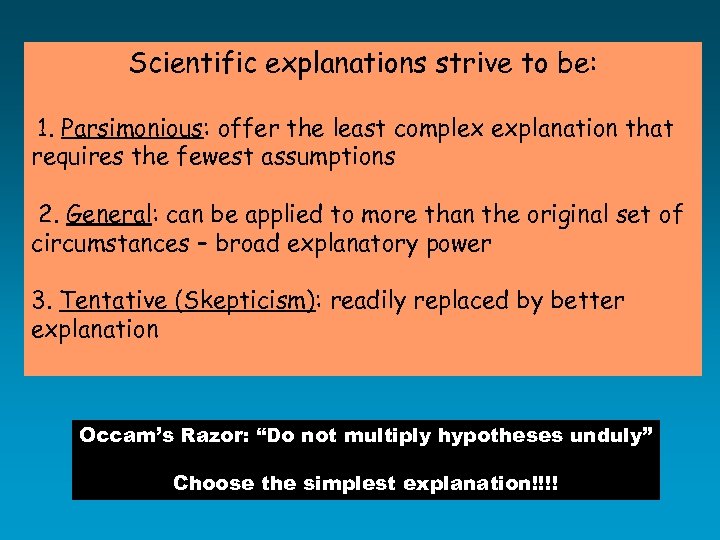 Scientific explanations strive to be: 1. Parsimonious: offer the least complex explanation that requires the fewest assumptions 2. General: can be applied to more than the original set of circumstances – broad explanatory power 3. Tentative (Skepticism): readily replaced by better explanation Occam’s Razor: “Do not multiply hypotheses unduly” Choose the simplest explanation!!!!
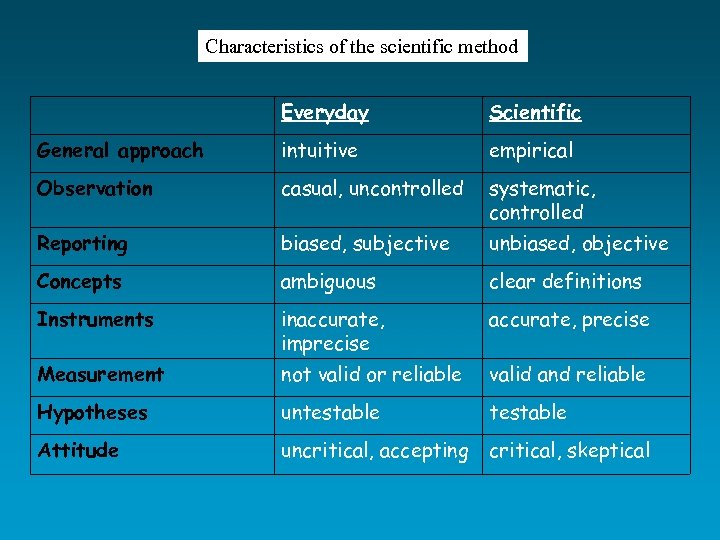 Characteristics of the scientific method Everyday Scientific General approach intuitive empirical Observation casual, uncontrolled systematic, controlled Reporting biased, subjective unbiased, objective Concepts ambiguous clear definitions Instruments inaccurate, imprecise accurate, precise Measurement not valid or reliable valid and reliable untestable uncritical, accepting critical, skeptical Hypotheses Attitude
 What is Science? 1. Immediate solution to practical problem? 2. Objective search for the truth? 3. Collection of facts? 4. Technology? 5. Finished Product? 6. Grows continuously?
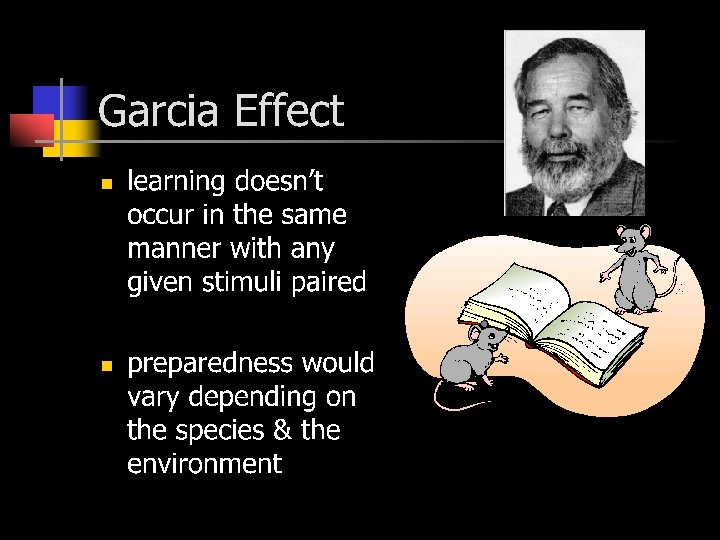
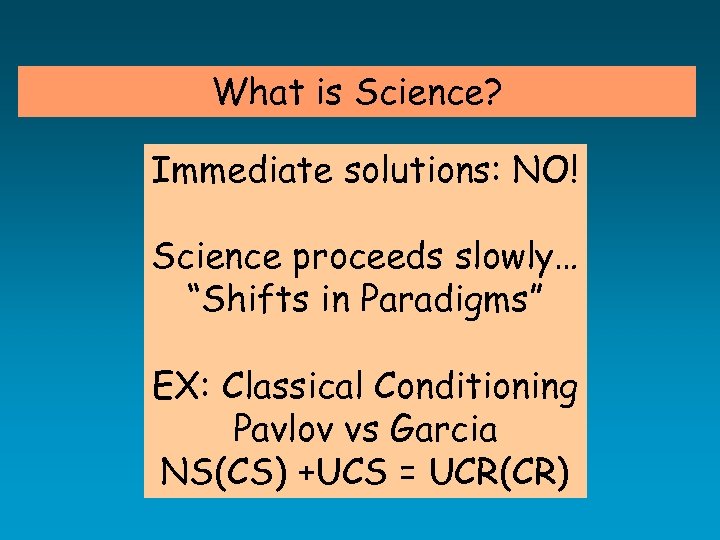 What is Science? Immediate solutions: NO! Science proceeds slowly… “Shifts in Paradigms” EX: Classical Conditioning Pavlov vs Garcia NS(CS) +UCS = UCR(CR)
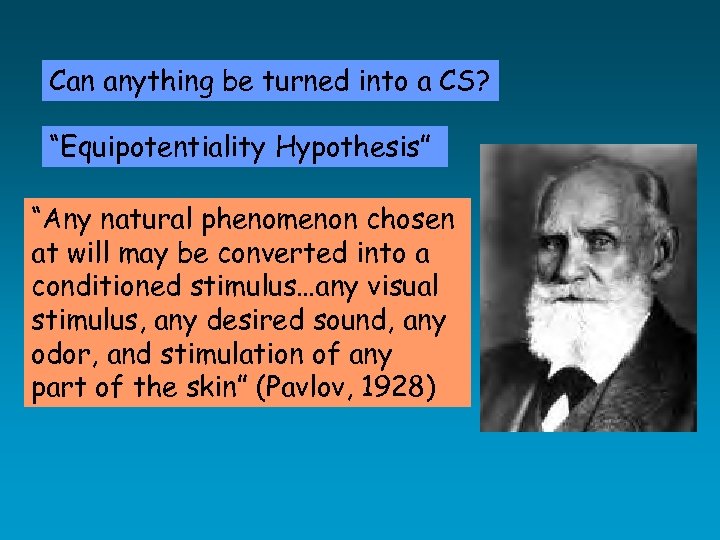 Can anything be turned into a CS? “Equipotentiality Hypothesis” “Any natural phenomenon chosen at will may be converted into a conditioned stimulus…any visual stimulus, any desired sound, any odor, and stimulation of any part of the skin” (Pavlov, 1928)
 What is Science? Search for the Truth: NO! Implies there is one right answer every phenomena …tentative. . .
 What is Science? Just a Collection of Facts: NO! Integration of data but also theory driven – relating data to principles (theories)
 What is Science? Technology: NO! Immediate contribution to human welfare Ex: The Genome Project
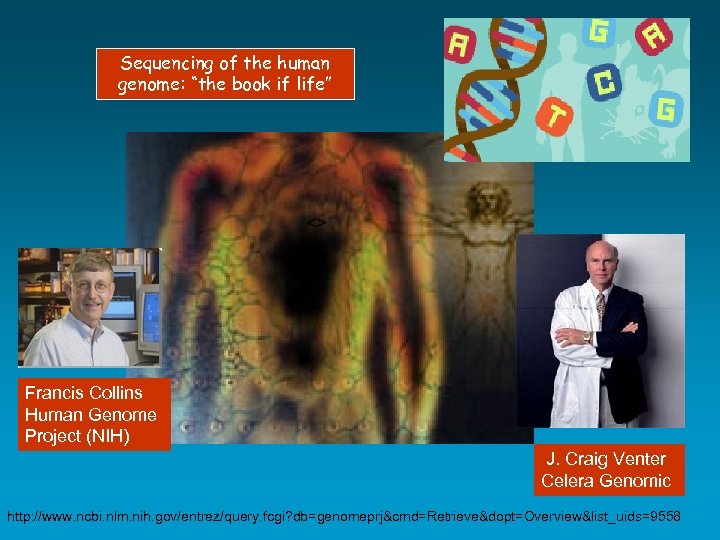 Sequencing of the human genome: “the book if life” <> Francis Collins Human Genome Project (NIH) J. Craig Venter Celera Genomic http: //www. ncbi. nlm. nih. gov/entrez/query. fcgi? db=genomeprj&cmd=Retrieve&dopt=Overview&list_uids=9558
 What is Science? Finished Product: NO! One experiment inevitably leads to other questions…serendipity!
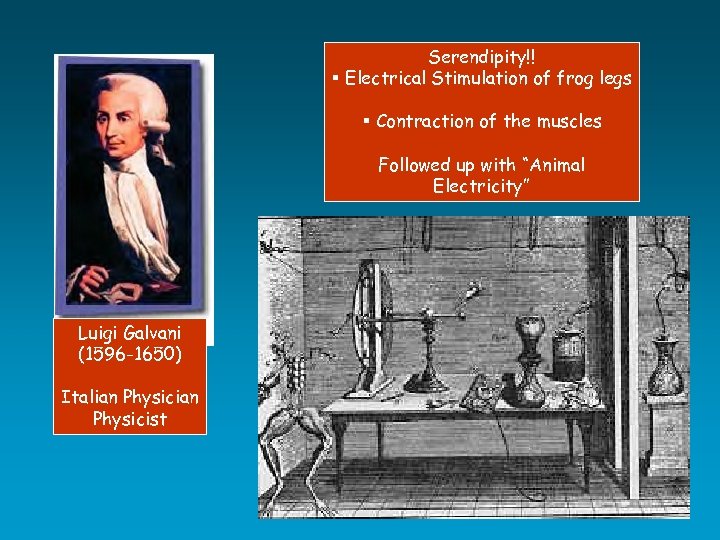 Serendipity!! § Electrical Stimulation of frog legs § Contraction of the muscles Followed up with “Animal Electricity” Luigi Galvani (1596 -1650) Italian Physicist
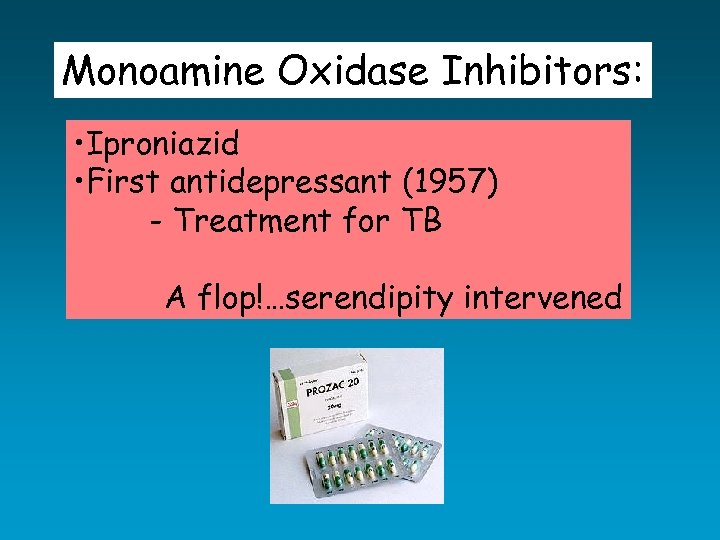 Monoamine Oxidase Inhibitors: • Iproniazid • First antidepressant (1957) - Treatment for TB A flop!…serendipity intervened
 What is Science? Science Grows Continuously: NO! Science grows awkwardly One direction then another direction. . Science has a history of fads (style that interests many people for a short time) Ex: Schools of Psychology
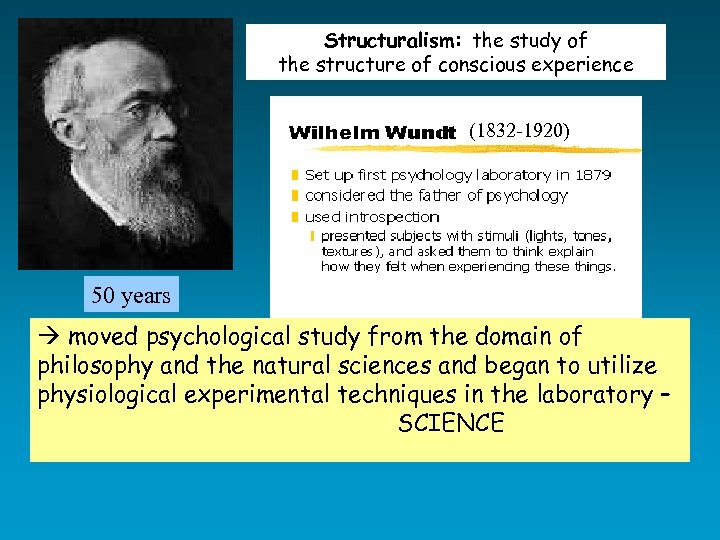 Structuralism: the study of the structure of conscious experience (1832 -1920) 50 years à moved psychological study from the domain of philosophy and the natural sciences and began to utilize physiological experimental techniques in the laboratory – SCIENCE
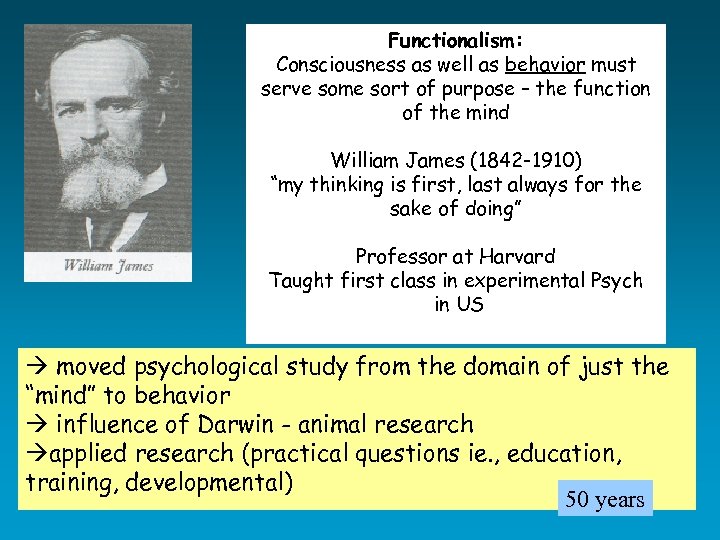 Functionalism: Consciousness as well as behavior must serve some sort of purpose – the function of the mind William James (1842 -1910) “my thinking is first, last always for the sake of doing” Professor at Harvard Taught first class in experimental Psych in US à moved psychological study from the domain of just the “mind” to behavior à influence of Darwin - animal research àapplied research (practical questions ie. , education, training, developmental) 50 years
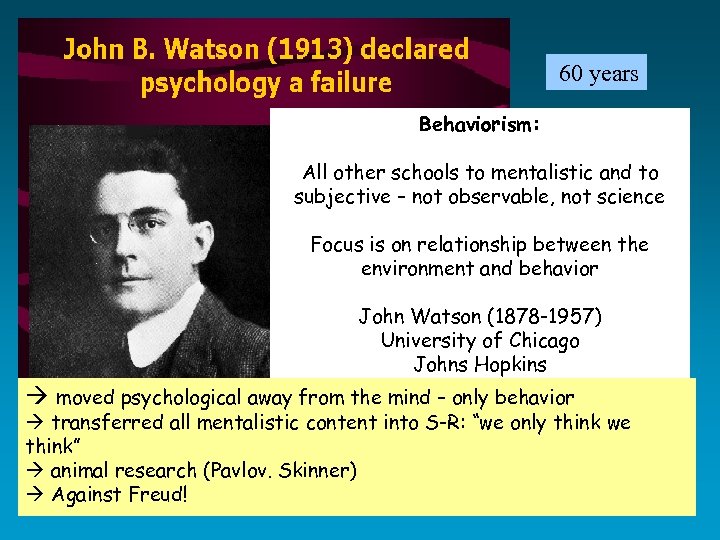 60 years Behaviorism: All other schools to mentalistic and to subjective – not observable, not science Focus is on relationship between the environment and behavior John Watson (1878 -1957) University of Chicago Johns Hopkins à moved psychological away from the mind – only behavior à transferred all mentalistic content into S-R: “we only think we think” à animal research (Pavlov. Skinner) à Against Freud!
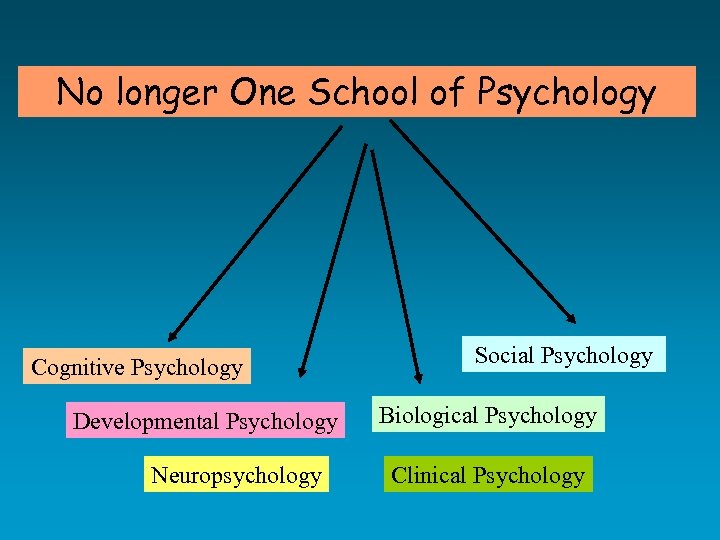 No longer One School of Psychology Cognitive Psychology Developmental Psychology Neuropsychology Social Psychology Biological Psychology Clinical Psychology
 Group Discussion #1: Read Goodstein Article “How Science Works” -take notes -answer question via group discussion -present answers as a group in class If you did not read, you will be asked to leave during discussion time