 Скачать презентацию Thinking differently about design The OU Learning Design
a315c9ab23c5f9e3d5c9ef4be1b4fe08.ppt
- Количество слайдов: 67



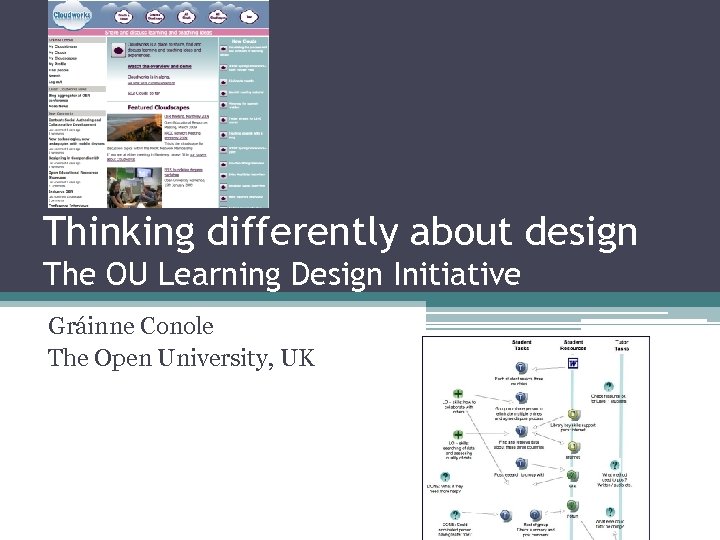
Thinking differently about design The OU Learning Design Initiative Gráinne Conole The Open University, UK
Focus for today • Learning design - OULDI ▫ ▫ An evidence base – understanding, reflecting Compendium - creating, designing, reflecting Cloudworks - finding, communicating, reflecting Pedagogy schema - designing, reflecting • Open Educational Resources – OLnet ▫ An evidence base for OER - finding, creating, designing, communicating, reflecting ▫ Fellowship schema ▫ Research projects ▫ Events and activities
Discussion • What do you want out of this workshop? ▫ To learn about Compendiumld – how can we use it in the classroom ▫ Ideas ▫ How to use Compendiumld and better ways of designing activities ▫ How to integrate learning designing with training in general without frightening the teachers! ▫ Some of the difficulties and how go about addressing them!!!
Outcomes • Overview of OU Learning Design Initiative (OULDI) and Olnet • Some hands-on exploration of tools and ideas • A better understanding of the issues and challenges of learning design • Discussion of and refection on relevance to your context
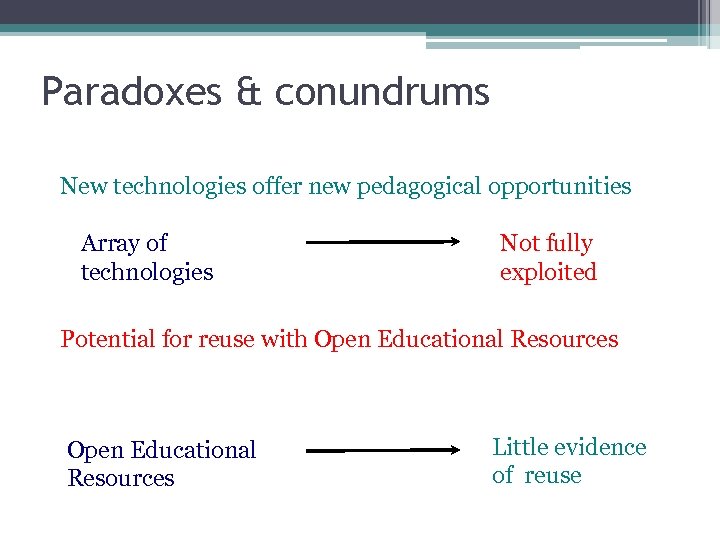
Paradoxes & conundrums New technologies offer new pedagogical opportunities Array of technologies Not fully exploited Potential for reuse with Open Educational Resources Little evidence of reuse
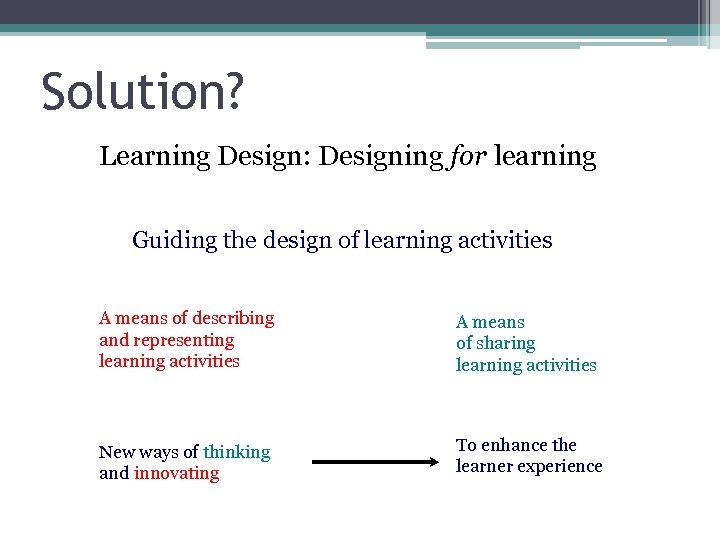
Solution? Learning Design: Designing for learning Guiding the design of learning activities A means of describing and representing learning activities A means of sharing learning activities New ways of thinking and innovating To enhance the learner experience
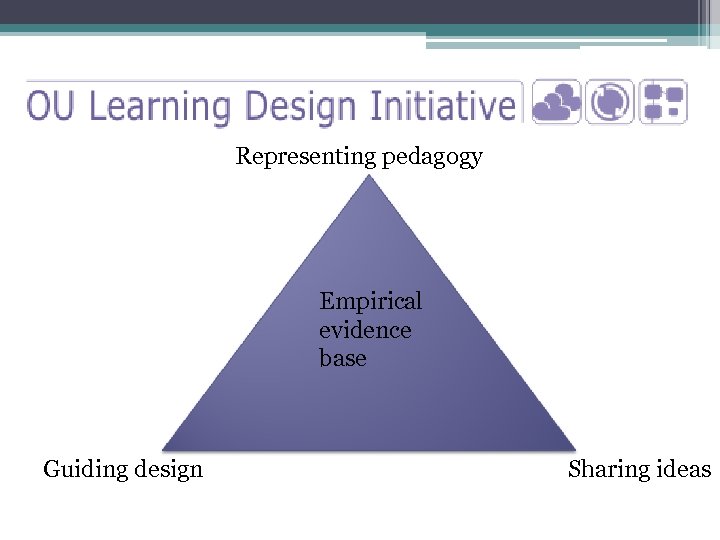
Representing pedagogy Empirical evidence base Guiding design Sharing ideas
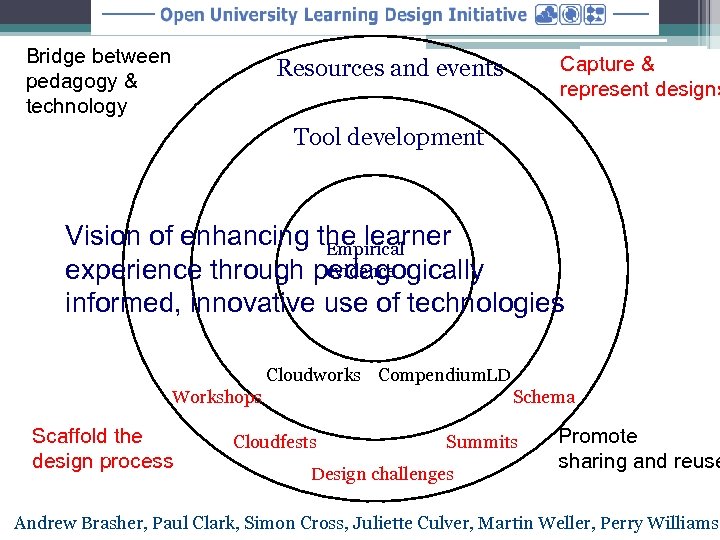
Bridge between pedagogy & technology Capture & represent designs Resources and events Tool development Vision of enhancing the learner Empirical evidence experience through pedagogically informed, innovative use of technologies Cloudworks Compendium. LD Workshops Scaffold the design process Schema Cloudfests Summits Design challenges Promote sharing and reuse Andrew Brasher, Paul Clark, Simon Cross, Juliette Culver, Martin Weller, Perry Williams
Facets of OULDI work • Evidence base: Understanding the design process • Collaboration: Structured events for fostering shared meaning and collaboration • Representation: Tools to support different forms of representation • Connection: Harnessing web 2. 0 practices to foster debate and sharing • Reification: Abstraction and guidance through schema for thinking differently
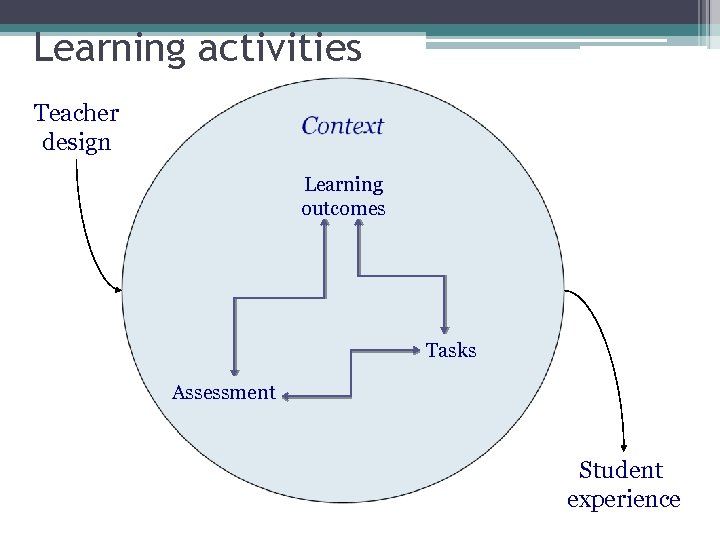
Learning activities Teacher design Learning outcomes Tasks Assessment Student experience
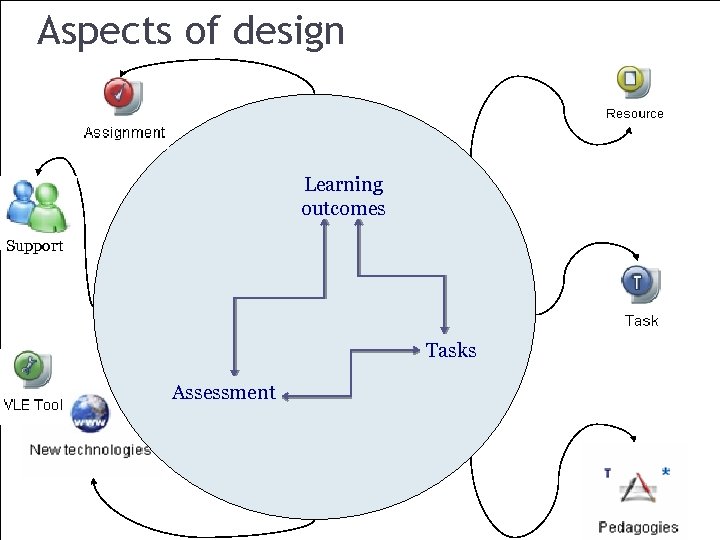
Aspects of design Learning outcomes Support Tasks Assessment
Facets of OULDI work • Evidence base: Understanding the design process • Collaboration: Structured events for fostering shared meaning and collaboration • Representation: Tools to support different forms of representation • Connection: Harnessing web 2. 0 practices to foster debate and sharing • Reification: Abstraction and guidance through schema for thinking differently
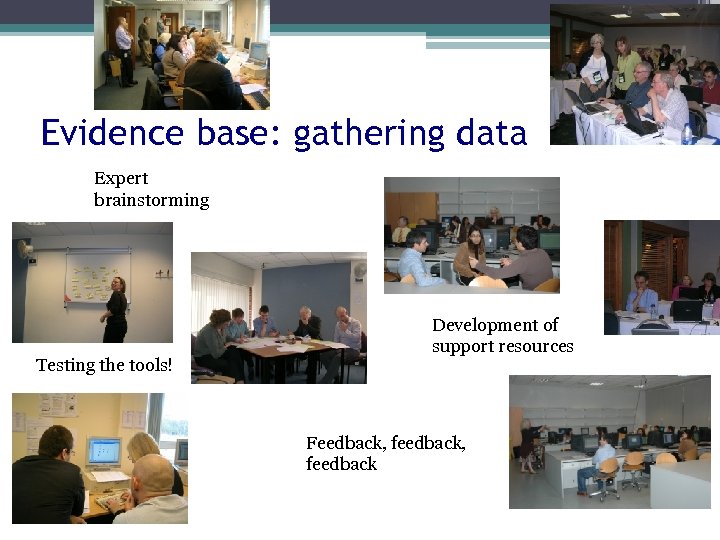
Evidence base: gathering data Expert brainstorming Testing the tools! Development of support resources Feedback, feedback, feedback
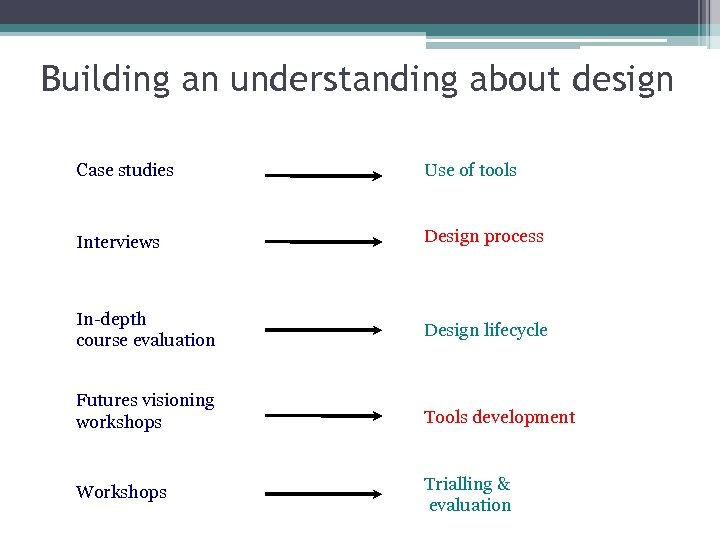
Building an understanding about design Case studies Use of tools Interviews Design process In-depth course evaluation Design lifecycle Futures visioning workshops Tools development Workshops Trialling & evaluation
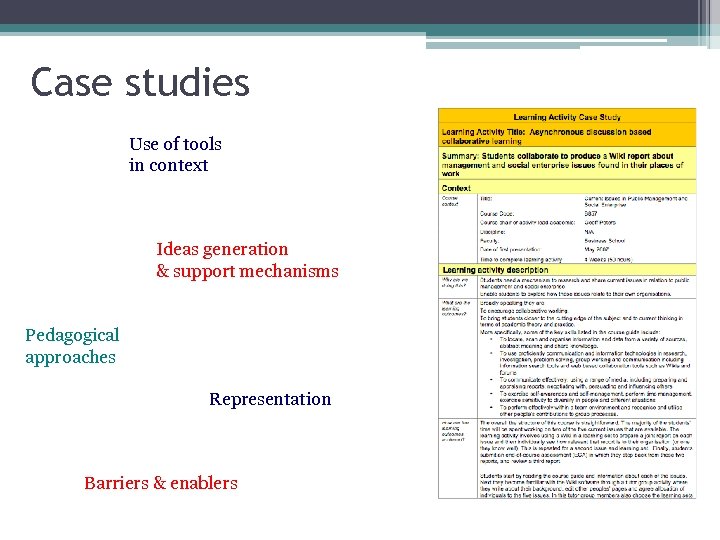
Case studies Use of tools in context Ideas generation & support mechanisms Pedagogical approaches Representation Barriers & enablers
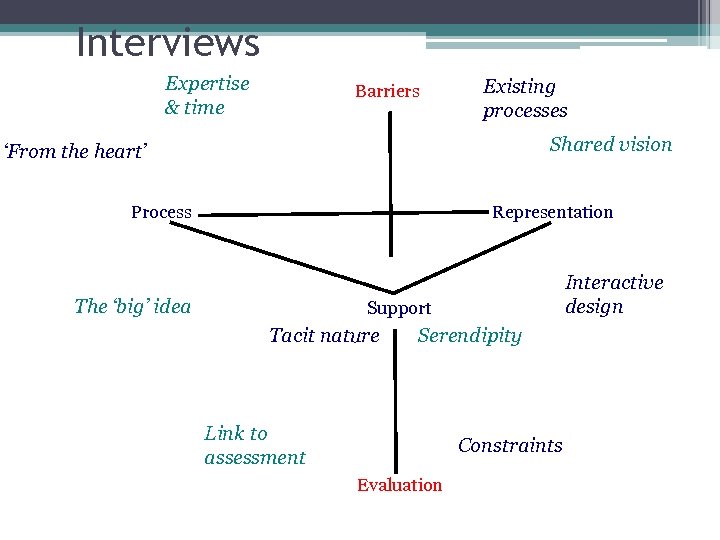
Interviews Expertise & time Barriers Existing processes Shared vision ‘From the heart’ Process Representation The ‘big’ idea Interactive design Support Tacit nature Serendipity Link to assessment Constraints Evaluation
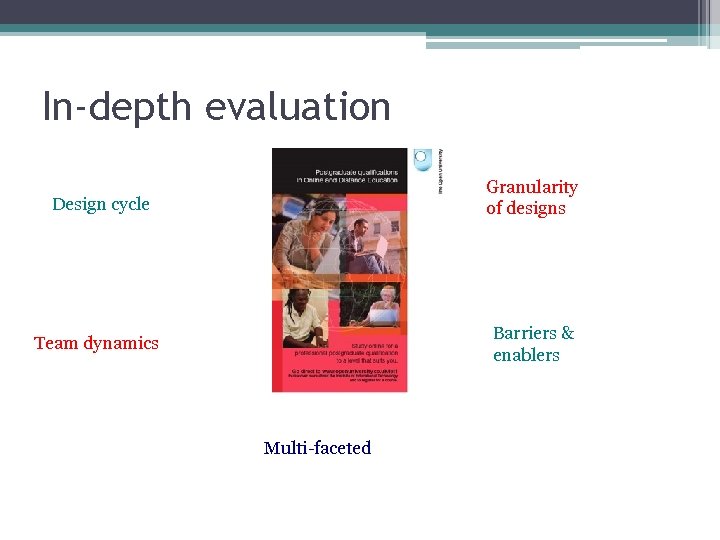
In-depth evaluation Design cycle Granularity of designs Team dynamics Barriers & enablers Multi-faceted
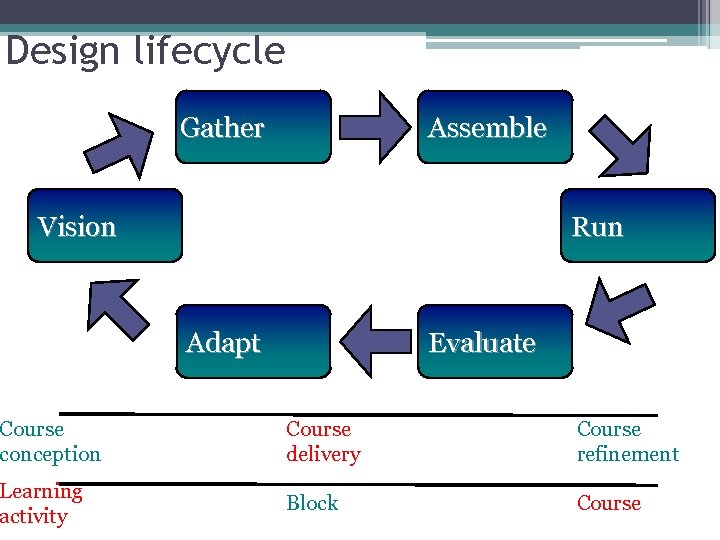
Design lifecycle Assemble Gather Vision Run Evaluate Adapt Course conception Course delivery Course refinement Learning activity Block Course
![Interview snapshots [Scrapbook] It’s in words, not diagrams a dumping ground for thoughts –](https://present5.com/presentation/a315c9ab23c5f9e3d5c9ef4be1b4fe08/image-19.jpg "Interview snapshots [Scrapbook] It’s in words, not diagrams a dumping ground for thoughts –")
Interview snapshots [Scrapbook] It’s in words, not diagrams a dumping ground for thoughts – [to] capture thoughts Scrapbooks & doodle maps I was building a sense of what the new course might be … we must remember to do x, or a url of relevance Holistic & atomistic One of the difficulties is mapping the whole process I have tried to approach course design using a holistic approach I tend to sit and doodle a map will draw the logic and flow of the course on paper and then go to compendium. Then the problem is sharing it Start from assessment strategies and learning outcomes and get an alignment Mapping & connections List of words clustered into blocks, arrows. . . can you have clusters link to TMAs [Assignments]
Facets of OULDI work • Evidence base: Understanding the design process • Collaboration: Structured events for fostering shared meaning and collaboration • Representation: Tools to support different forms of representation • Connection: Harnessing web 2. 0 practices to foster debate and sharing • Reification: Abstraction and guidance through schema for thinking differently
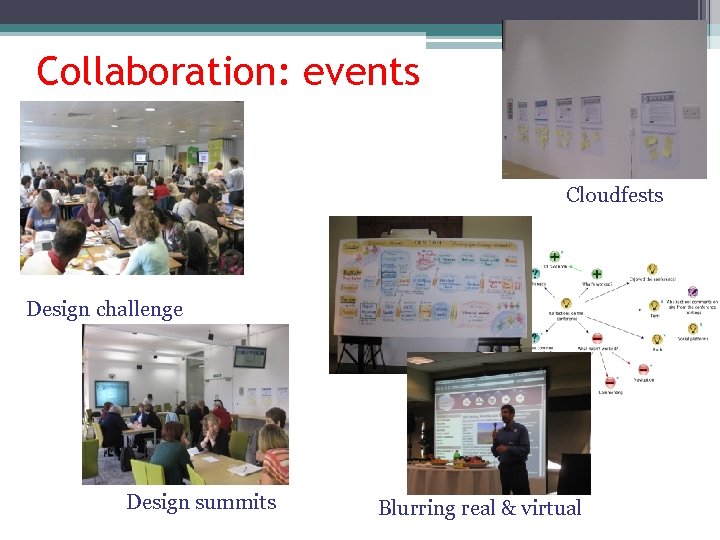
Collaboration: events Cloudfests Design challenge Design summits Blurring real & virtual
Strategies for design • • • How do you go about designing courses? Where do you get inspiration from? What tools, support, etc do you use? How do you represent your designs? How (or do) you share your ideas with others? How do you evaluate yours designs/know they are any good?
Strategies for design • Think about learning objectives • Jot down ideas, extract info create an outline and then attached activities, put all together • First go through the content we want to teach, then after set the goals we want to achieve, then think what learning objects we want to use or what tools we want to use, then try it in the class, but also important to assess and get feedback and reflect and improve
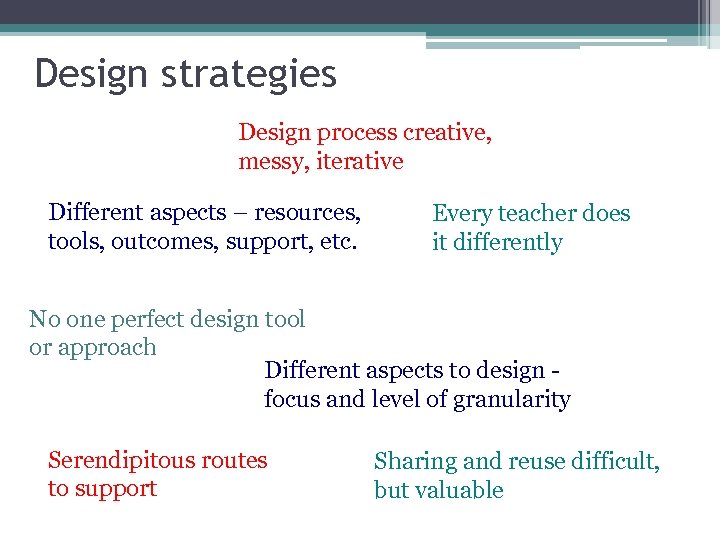
Design strategies Design process creative, messy, iterative Different aspects – resources, tools, outcomes, support, etc. Every teacher does it differently No one perfect design tool or approach Different aspects to design - focus and level of granularity Serendipitous routes to support Sharing and reuse difficult, but valuable
Facets of OULDI work • Evidence base: Understanding the design process • Collaboration: Structured events for fostering shared meaning and collaboration • Representation: Tools to support different forms of representation • Connection: Harnessing web 2. 0 practices to foster debate and sharing • Reification: Abstraction and guidance through schema for thinking differently
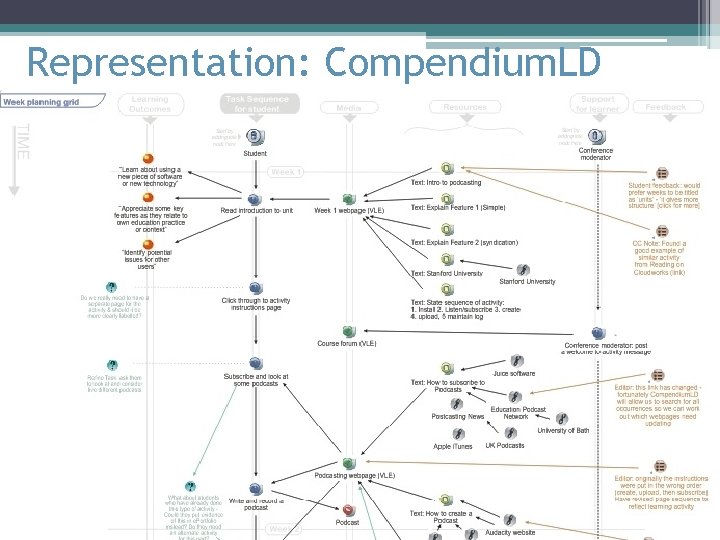
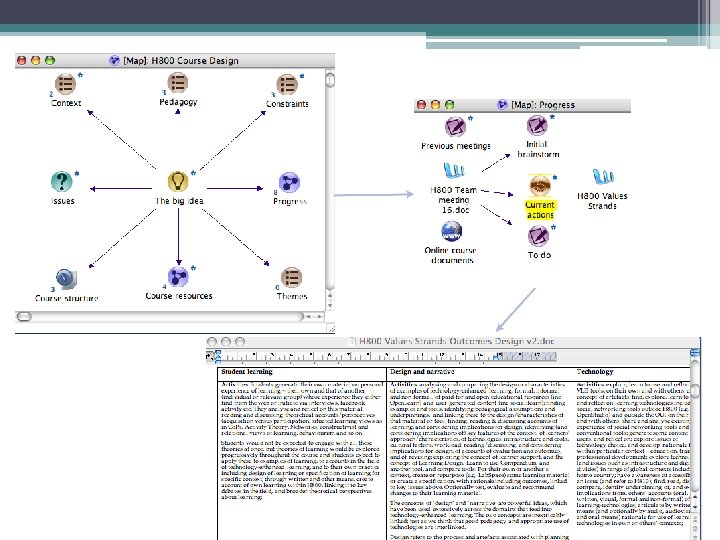
Representation: Compendium. LD
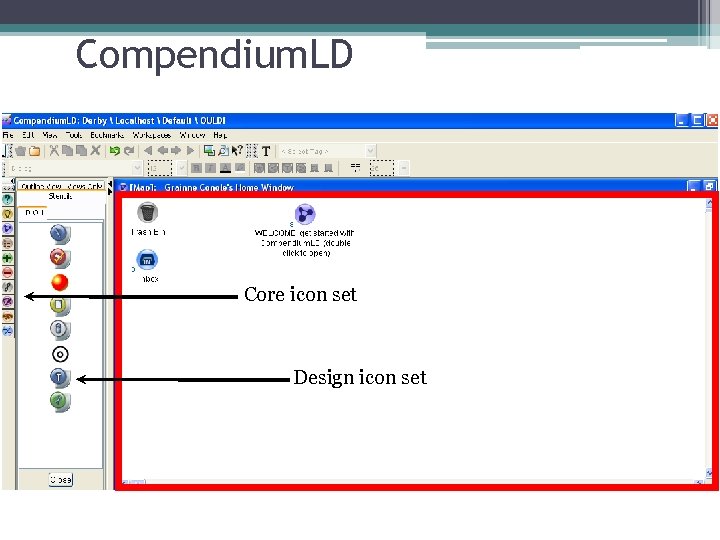
Compendium. LD Core icon set Design icon set
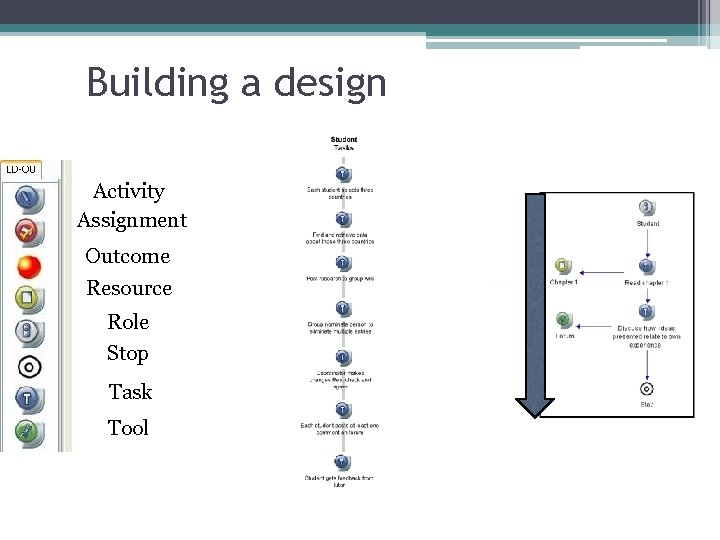
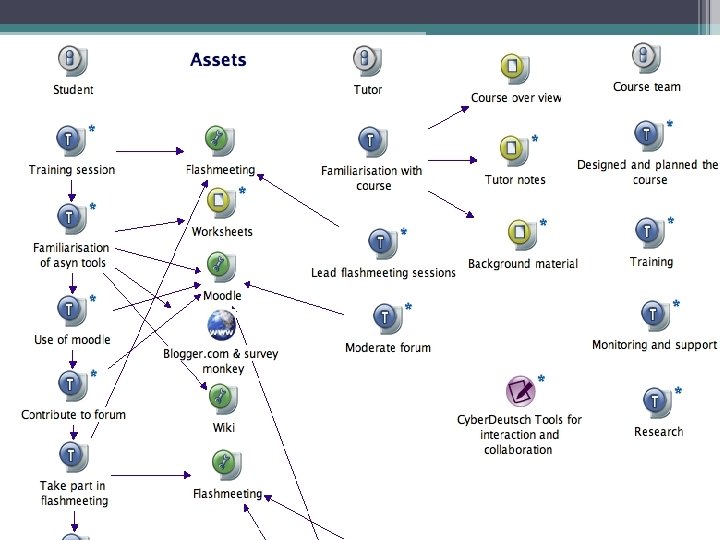
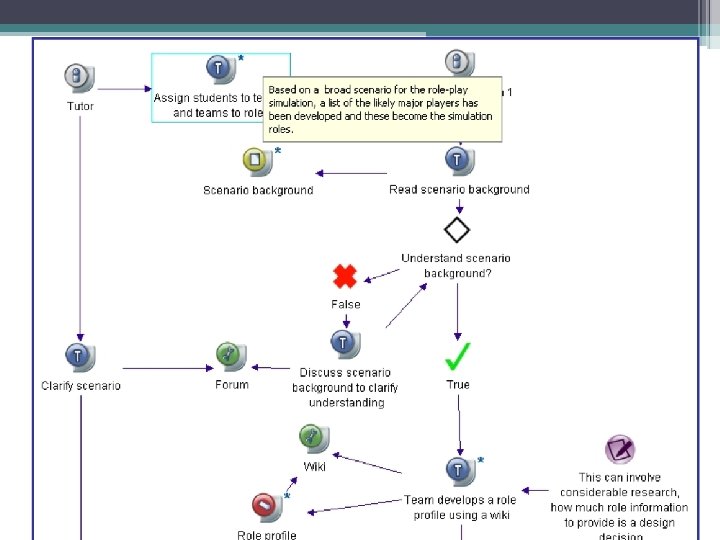
Building a design Activity Assignment Outcome Resource Role Stop Task Tool
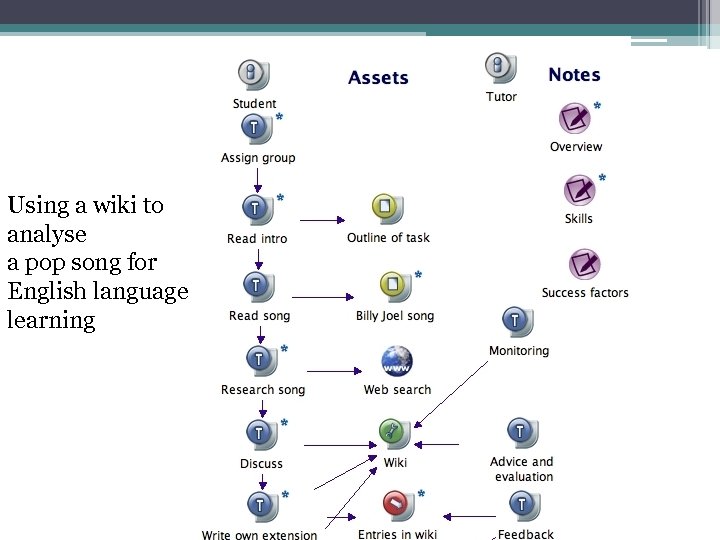
Using a wiki to analyse a pop song for English language learning
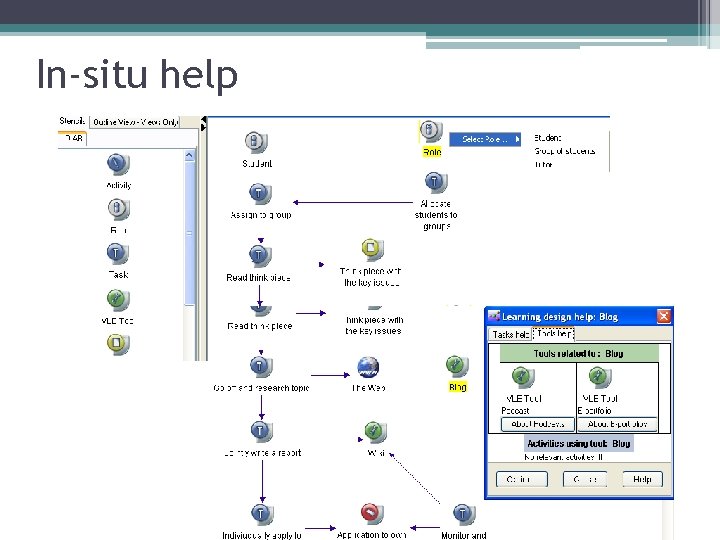
In-situ help
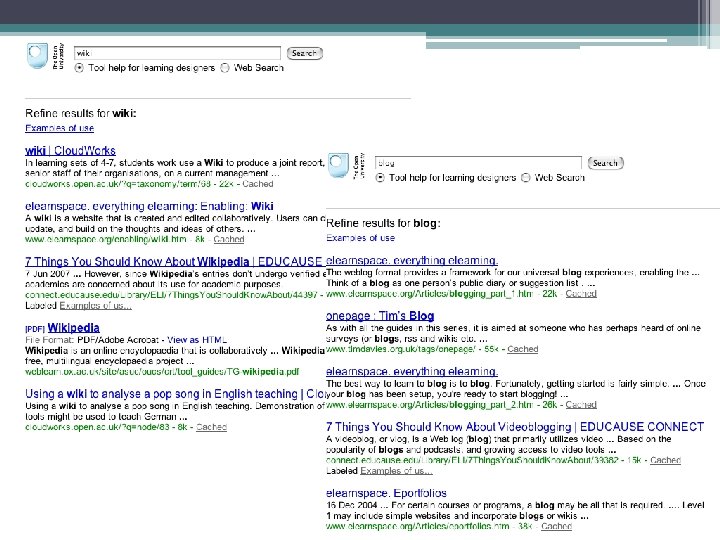
Customised search
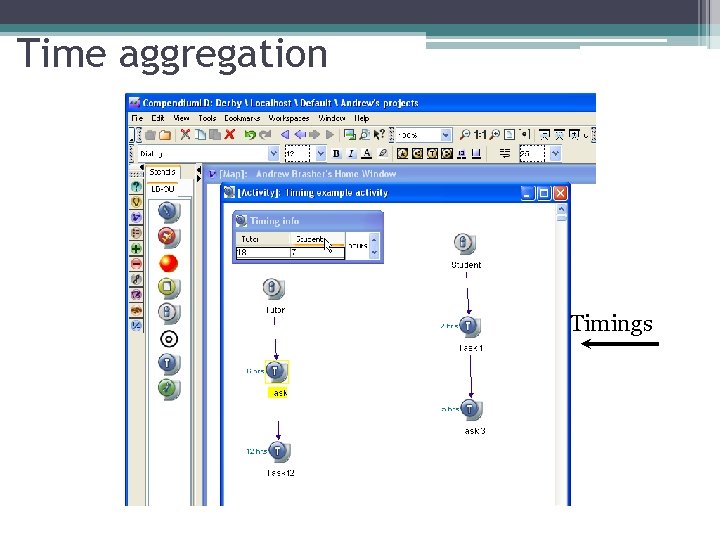
Time aggregation Timings
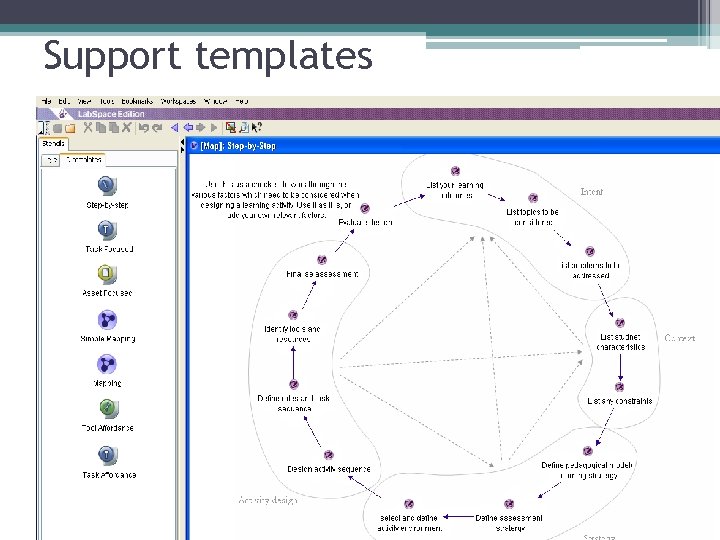
Support templates
Activity • Create a design in Compendium. LD • Either choose a new activity you are planning or map an existing activity • Work in pairs and discuss your designs as you are working
Facets of OULDI work • Evidence base: Understanding the design process • Collaboration: Structured events for fostering shared meaning and collaboration • Representation: Tools to support different forms of representation • Connection: Harnessing web 2. 0 practices to foster debate and sharing • Reification: Abstraction and guidance through schema for thinking differently
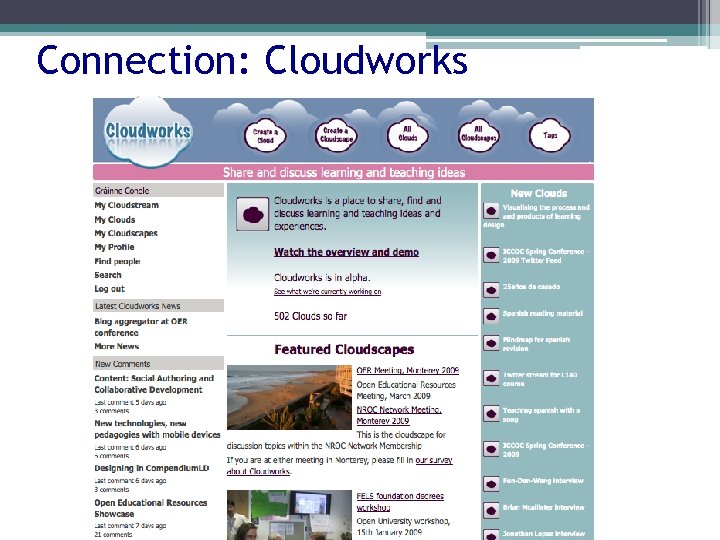
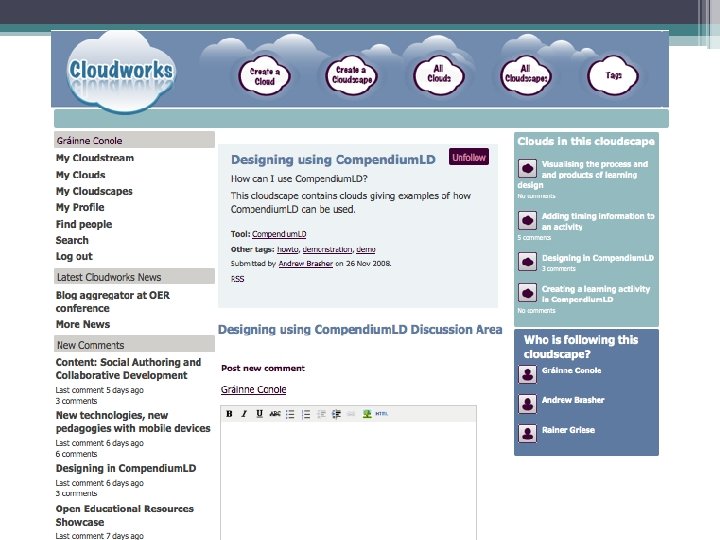
Connection: Cloudworks
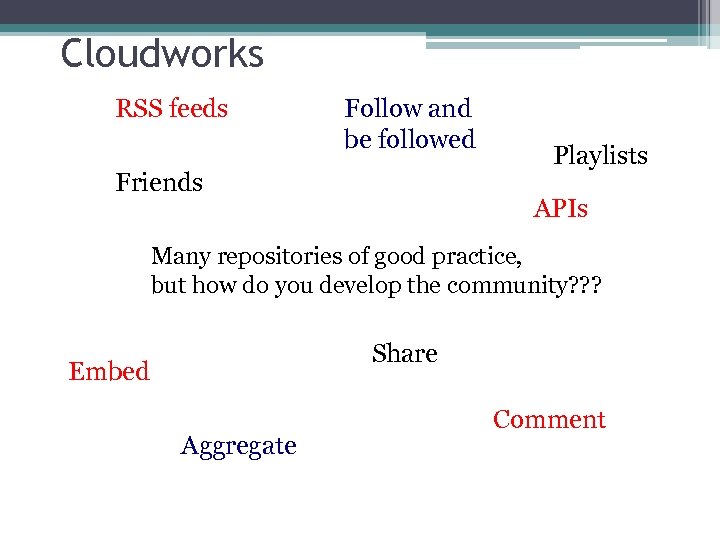
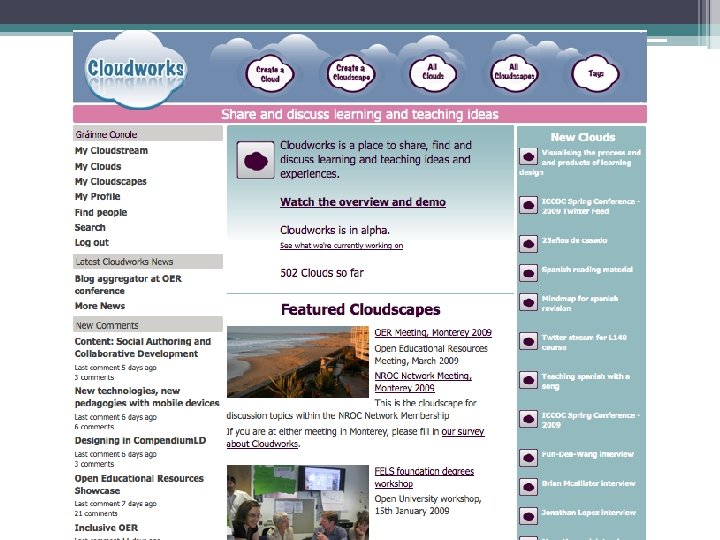
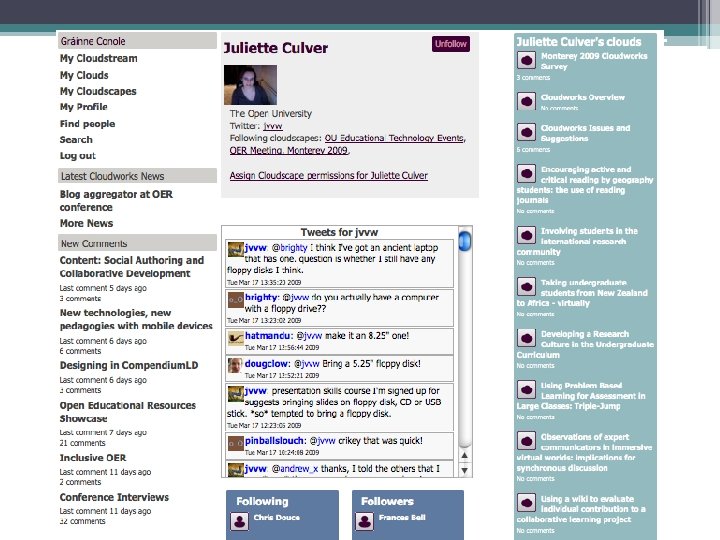
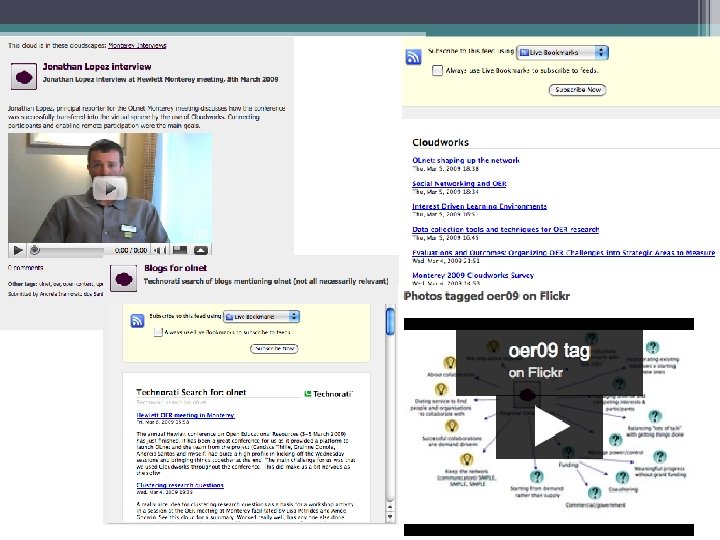
Cloudworks RSS feeds Follow and be followed Friends Playlists APIs Many repositories of good practice, but how do you develop the community? ? ? Share Embed Aggregate Comment
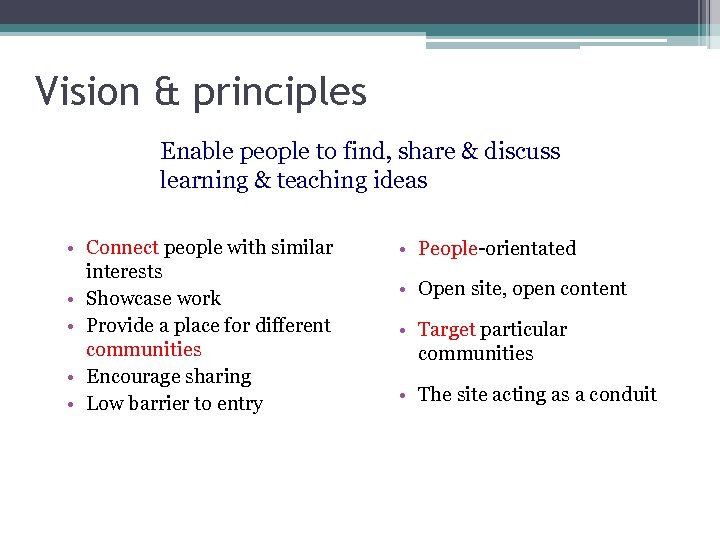
Vision & principles Enable people to find, share & discuss learning & teaching ideas • Connect people with similar interests • Showcase work • Provide a place for different communities • Encourage sharing • Low barrier to entry • People-orientated • Open site, open content • Target particular communities • The site acting as a conduit
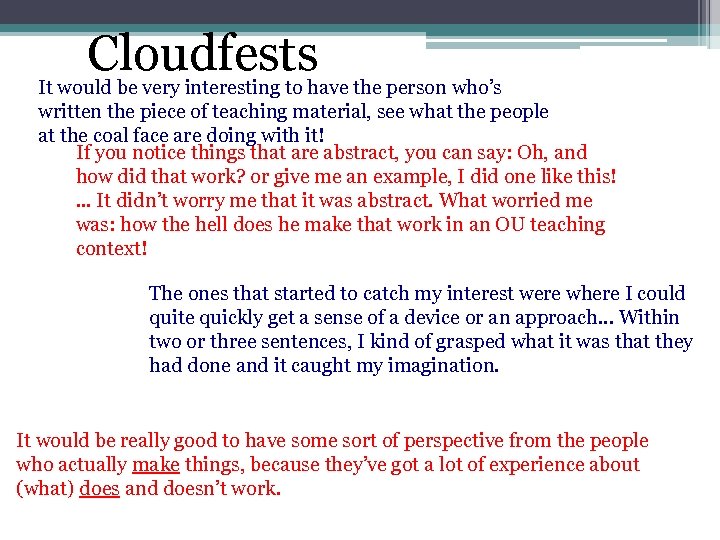
Cloudfests It would be very interesting to have the person who’s written the piece of teaching material, see what the people at the coal face are doing with it! If you notice things that are abstract, you can say: Oh, and how did that work? or give me an example, I did one like this! . . . It didn’t worry me that it was abstract. What worried me was: how the hell does he make that work in an OU teaching context! The ones that started to catch my interest were where I could quite quickly get a sense of a device or an approach. . . Within two or three sentences, I kind of grasped what it was that they had done and it caught my imagination. It would be really good to have some sort of perspective from the people who actually make things, because they’ve got a lot of experience about (what) does and doesn’t work.
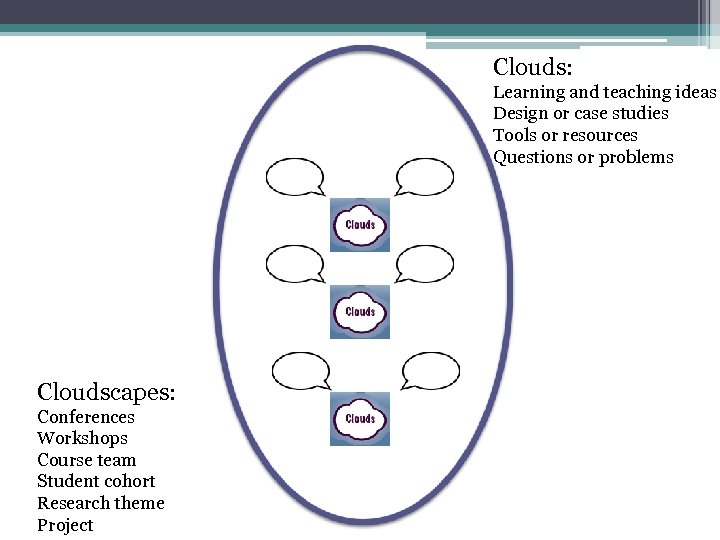
Clouds: Learning and teaching ideas Design or case studies Tools or resources Questions or problems Cloudscapes: Conferences Workshops Course team Student cohort Research theme Project
Facets of OULDI work • Evidence base: Understanding the design process • Collaboration: Structured events for fostering shared meaning and collaboration • Representation: Tools to support different forms of representation • Connection: Harnessing web 2. 0 practices to foster debate and sharing • Reification: Abstraction and guidance through schema for thinking differently
Experience & activity Conversation & interaction Evidence & demonstration Experience & activity LIST of LEARNING PRINCIPLES Conversation & interaction Thinking & reflection Reification: Schema
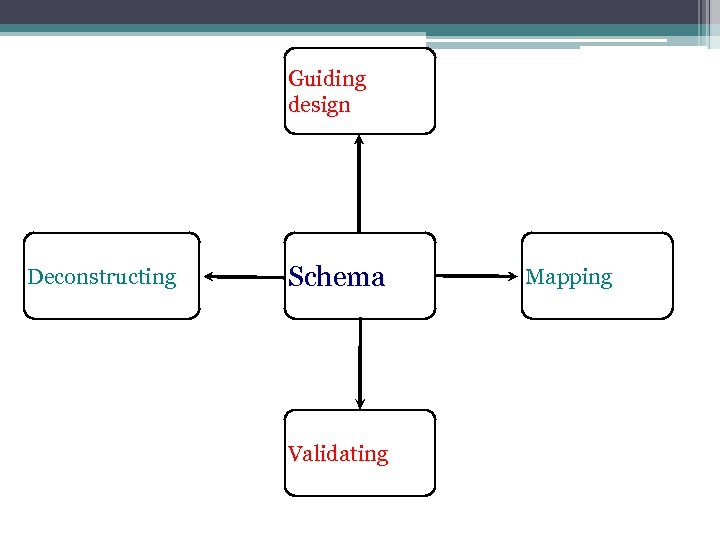
Guiding design Deconstructing Schema Validating Mapping
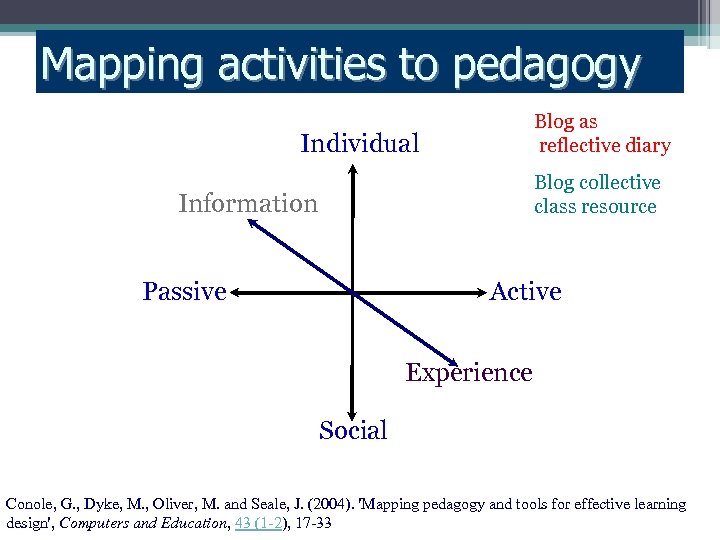
Mapping activities to pedagogy Blog as reflective diary Individual Blog collective class resource Information Passive Active Experience Social Conole, G. , Dyke, M. , Oliver, M. and Seale, J. (2004). 'Mapping pedagogy and tools for effective learning design', Computers and Education, 43 (1 -2), 17 -33
Activity • Locate the following on the framework ▫ Web search: students search the web and collate resources against a given set of criteria ▫ Drill and practice: students work through a set of resource and then complete a formative selfassessment ▫ Debate: for and against debate, students choose a side, post their views and read other postings ▫ Portfolio: students gather evidence against learning outcomes into a portfolio
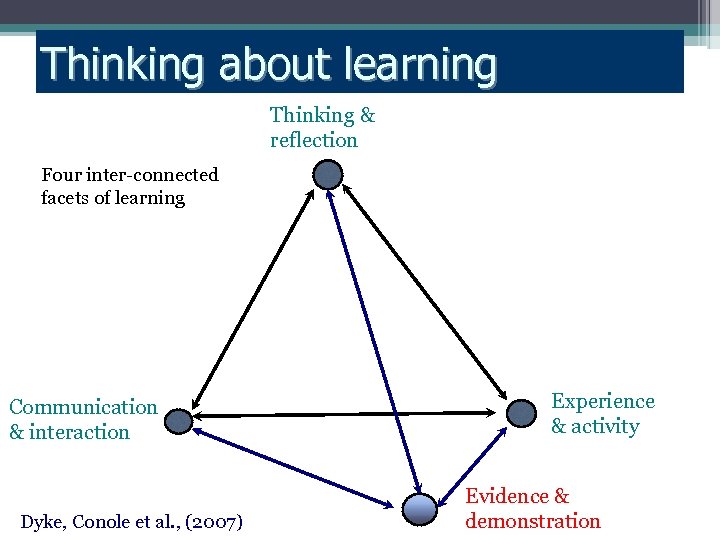
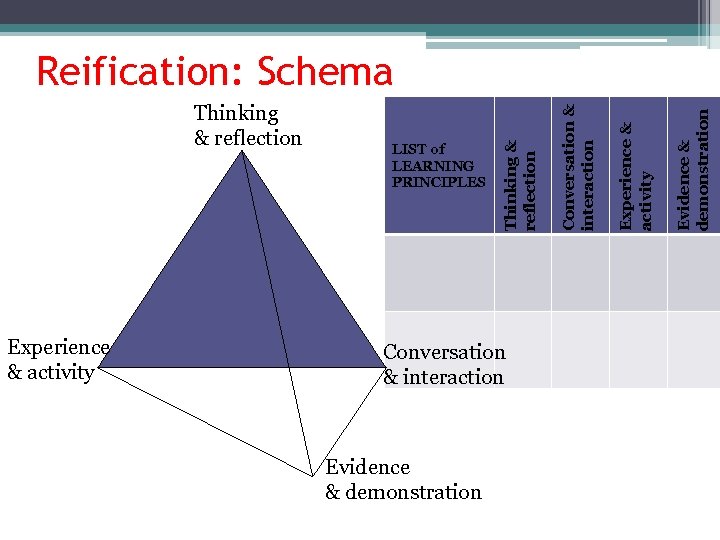
Thinking about learning Thinking & reflection Four inter-connected facets of learning Communication & interaction Dyke, Conole et al. , (2007) Experience & activity Evidence & demonstration
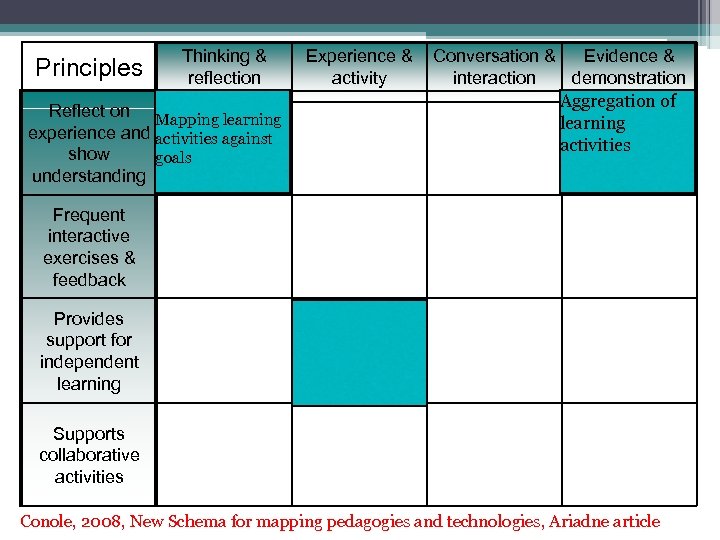
Principles Thinking & reflection Reflect on Mapping learning experience and activities against show goals understanding Experience & activity Conversation & Evidence & interaction demonstration Aggregation of learning activities Frequent interactive exercises & feedback Provides support for independent learning Supports collaborative activities Conole, 2008, New Schema for mapping pedagogies and technologies, Ariadne article
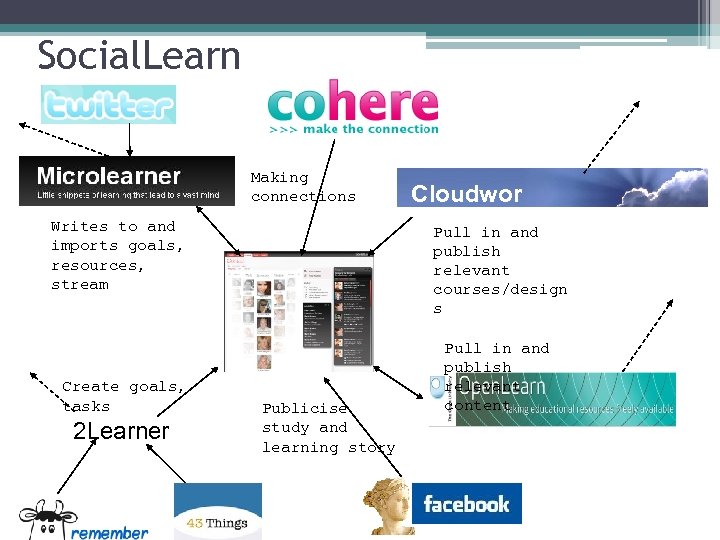
Social. Learn Microlearn er Making connections Writes to and imports goals, resources, stream Profile Create goals, tasks 2 Learner Publicise study and learning story Cloudwor ks. Pull in and publish relevant courses/design s Pull in and publish relevant content
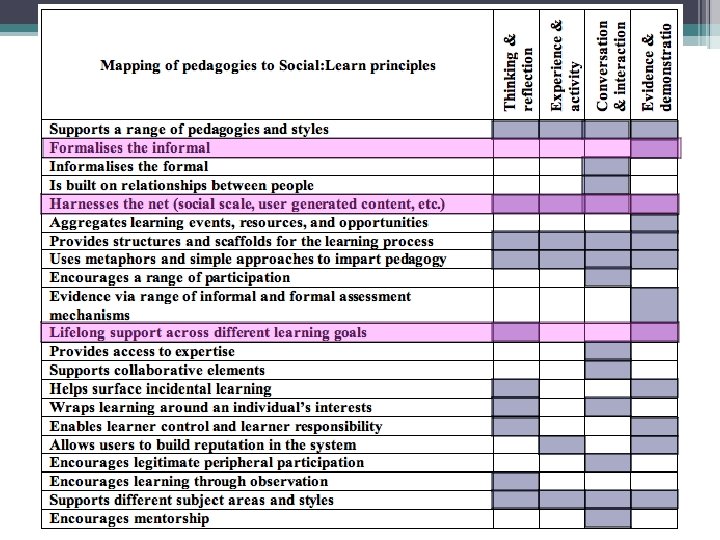
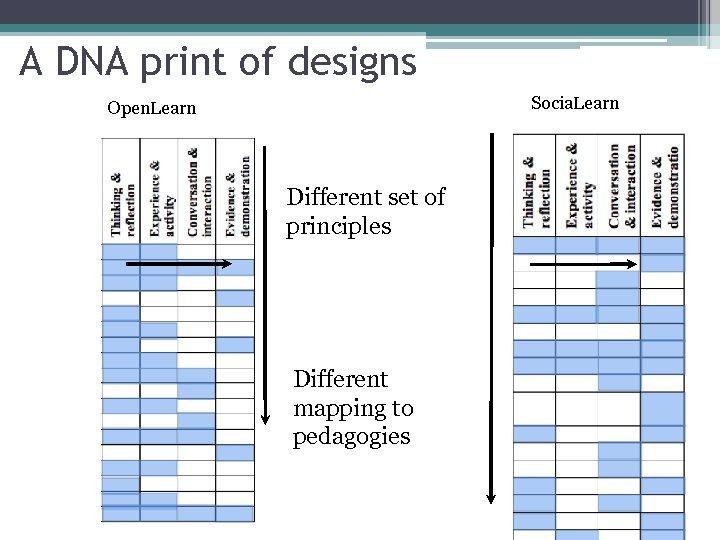
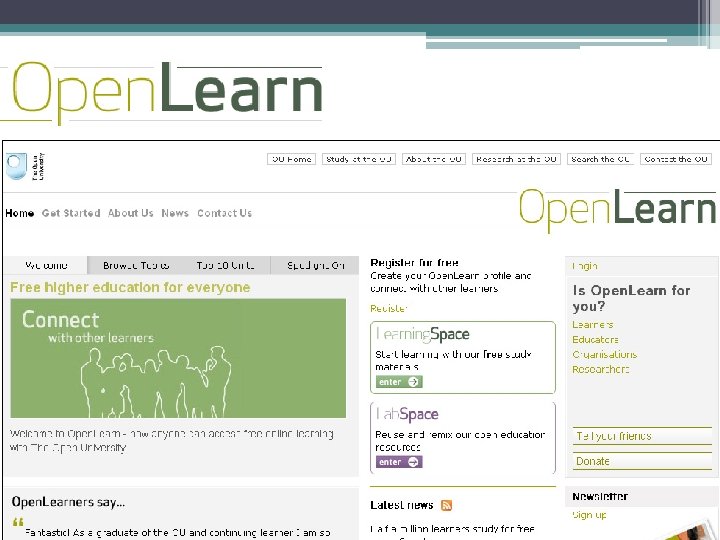
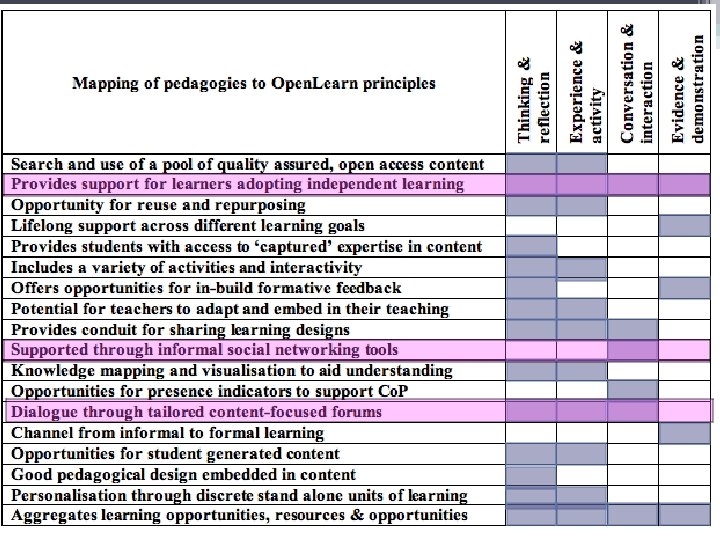
A DNA print of designs Socia. Learn Open. Learn Different set of principles Different mapping to pedagogies
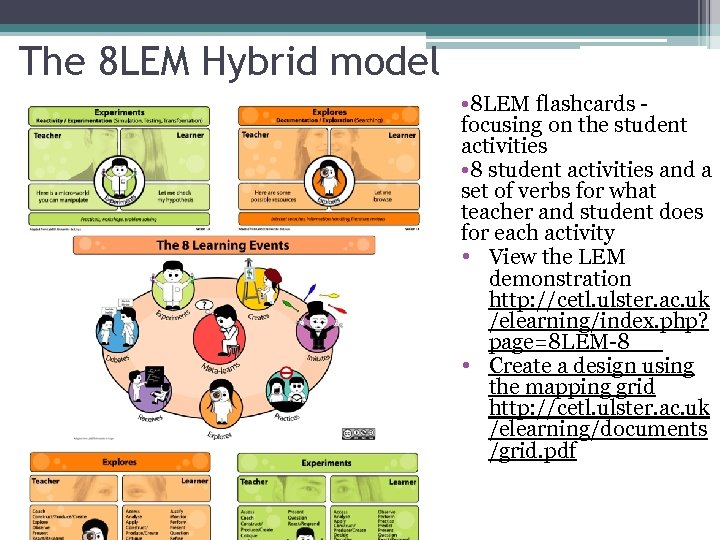
The 8 LEM Hybrid model • 8 LEM flashcards - focusing on the student activities • 8 student activities and a set of verbs for what teacher and student does for each activity • View the LEM demonstration http: //cetl. ulster. ac. uk /elearning/index. php? page=8 LEM-8 • Create a design using the mapping grid http: //cetl. ulster. ac. uk /elearning/documents /grid. pdf
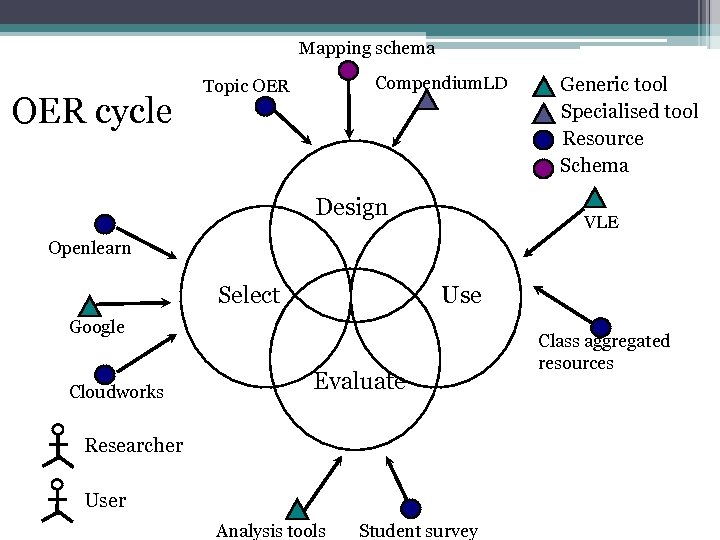
Mapping schema OER cycle Compendium. LD Topic OER Design Generic tool Specialised tool Resource Schema VLE Openlearn Select Use Google Cloudworks Evaluate Researcher User Analysis tools Student survey Class aggregated resources
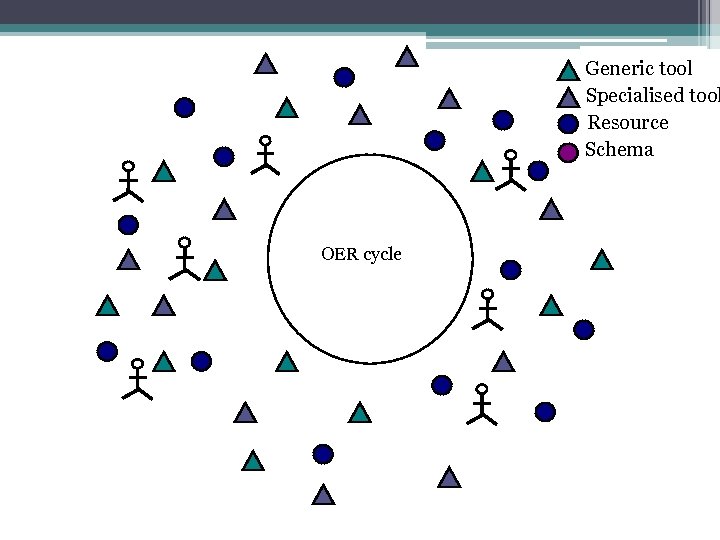
Generic tool Specialised tool Resource Schema OER cycle
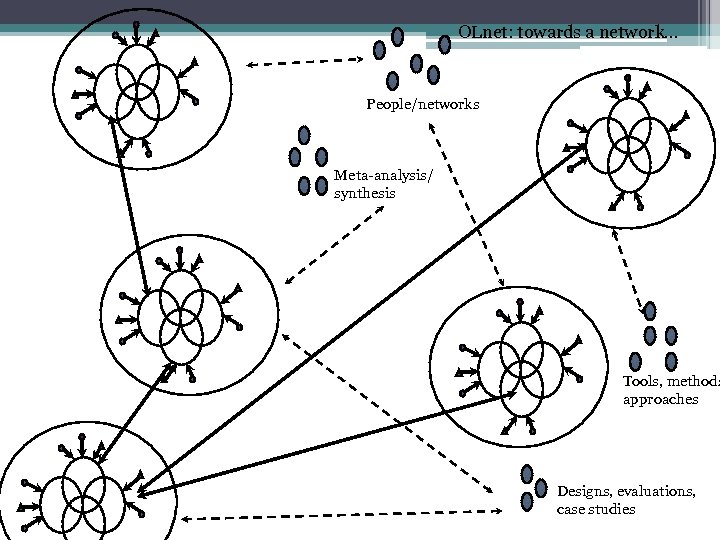
OLnet: towards a network. . . People/networks Meta-analysis/ synthesis Tools, methods approaches Designs, evaluations, case studies
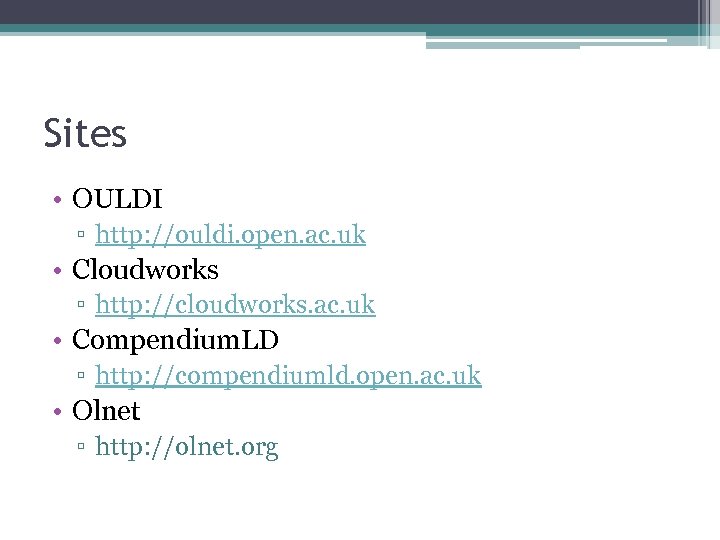
Sites • OULDI ▫ http: //ouldi. open. ac. uk • Cloudworks ▫ http: //cloudworks. ac. uk • Compendium. LD ▫ http: //compendiumld. open. ac. uk • Olnet ▫ http: //olnet. org
References • Conole, G. , De Laat, M. , Dillon, T. and Darby, J. (2008), ‘Disruptive technologies’, ‘pedagogical innovation’: What’s new? Findings from an in-depth study of students’ use and perception of technology’, Computers and Education, Volume 50, Issue 2, February 2008, Pages 511 -524. • Conole, G. (in press), Stepping over the edge: the implications of new technologies for education in M. Lee and C. Mc. Louglin (forthcoming), Web 2. 0 -based e-learning: applying social informatics for tertiary teaching, ICI Global: Hersey, PA • Conole, G. , Culver, J. , Well, M. , Williams, P. , Cross, S. , Clark, P. and Brasher, A. (2008), Cloudworks: social networking for learning design, Ascilite Conference, 30 th Nov – 3 rd Dec 2008, Melbourne.
References • Conole, G. and Mc. Andrew, P. (accepted), A new approach to supporting the design and use of OER: Harnessing the power of web 2. 0, M. Edner and M. Schiefner (eds), Looking toward the future of technology enhanced education: ubiquitous learning and the digital nature. • Conole, G. , Brasher, A. , Cross, S. , Weller, M. , Clark, P. and White, J. (2008), Visualising learning design to foster and support good practice and creativity, Educational Media International, Volume 54, Issue 3, 177 -194. • Conole, G. (2008), New schema for mapping pedagogies and technologies, http: //www. ariadne. ac. uk/issue 56/conole/ • Conole, G. (in press), Research methodological issues with researching the learner voice, in Handbook of Research on New Media Literacy at the K-12 Level: issues and challenges, L. T. W. Hin and R. Subramaniam (Eds), IGI Global: Hershey, PA
Скачать презентацию Thinking differently about design The OU Learning Design
a315c9ab23c5f9e3d5c9ef4be1b4fe08.ppt