


 Скачать презентацию Thermal Methods Theory Instrumentation Thermal
bc1cb8a73c34122a0d01ec62355e60e5.ppt
- Количество слайдов: 14
 Thermal Methods • Theory • Instrumentation • Thermal methods § Physical properties of a substance are evaluated as a function of temperature à May include reaction products à Temperature is controlled § Methods à Thermogravimetry à Differential thermal analysis à Differential scanning calorimetry 20 -1
 Thermogravimetric (TGA) • Thermogravimetry is one of the oldest thermal analytical procedures § has been used extensively in the study of polymeric systems • involves monitoring the weight loss of the sample in a given atmosphere as a function of temperature § N 2, O 2, air, He § Ambient to 1000 °C § Can record the first derivative of the mass loss 20 -2
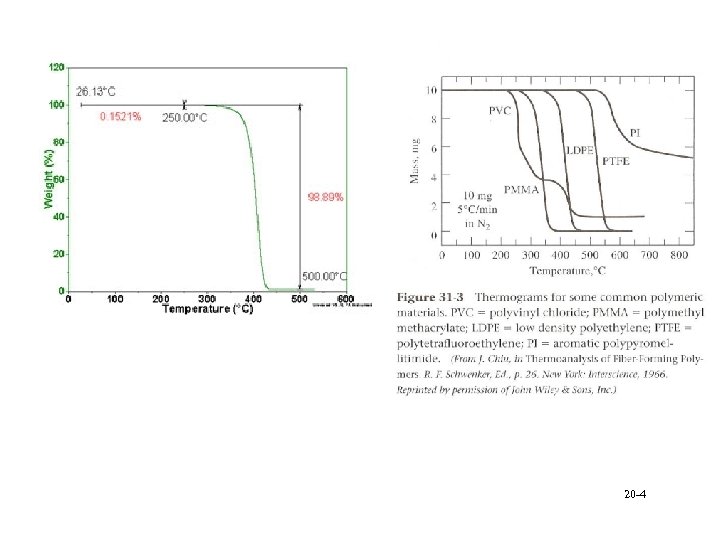
 Thermogravimetric • • • MS can be coupled to TGA § On line analysis § Evolution of gas evaluation of thermal decomposition kinetics of materials § Polymers § Resins § rubbers à provides information on thermal stability provide information on the bulk composition of compounds § Oxidation § heat resistance § the amount of water § compositional analysis § measurement of ash content in a sample 20 -3
 20 -4
20 -4
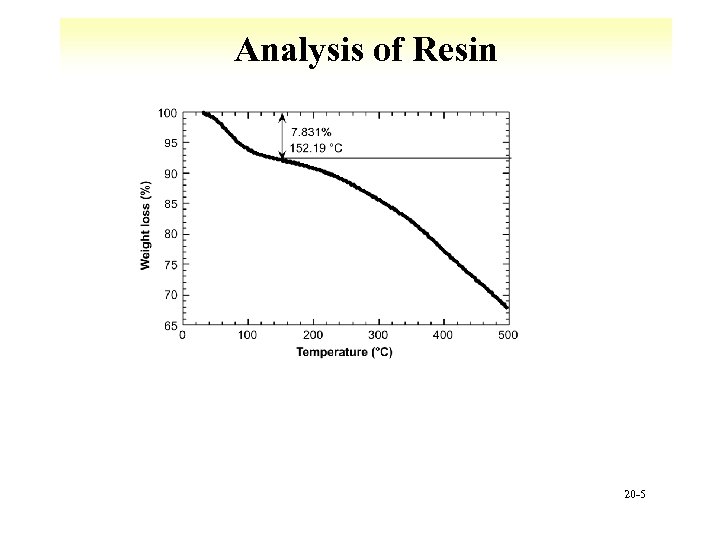 Analysis of Resin 20 -5
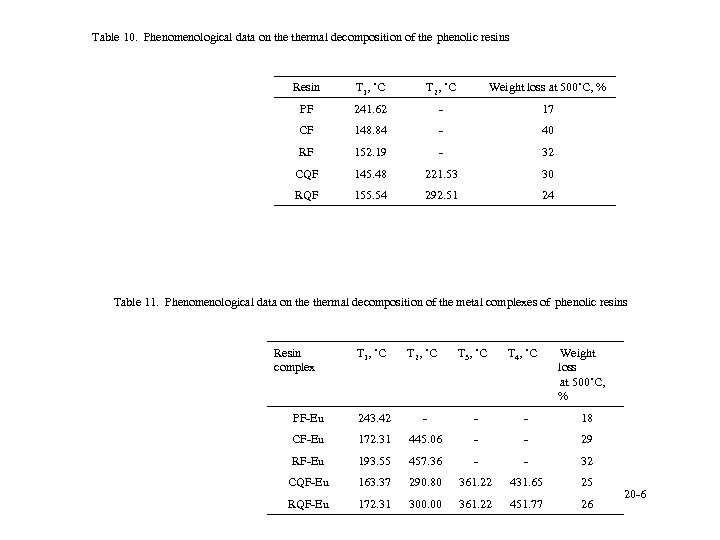 Table 10. Phenomenological data on thermal decomposition of the phenolic resins Resin T 1, ˚C T 2, ˚C Weight loss at 500˚C, % PF 241. 62 - 17 CF 148. 84 - 40 RF 152. 19 - 32 CQF 145. 48 221. 53 30 RQF 155. 54 292. 51 24 Table 11. Phenomenological data on thermal decomposition of the metal complexes of phenolic resins Resin complex T 1, ˚C T 2, ˚C T 3, ˚C T 4, ˚C Weight loss at 500˚C, % PF-Eu 243. 42 - - - 18 CF-Eu 172. 31 445. 06 - - 29 RF-Eu 193. 55 457. 36 - - 32 CQF-Eu 163. 37 290. 80 361. 22 431. 65 25 RQF-Eu 172. 31 300. 00 361. 22 451. 77 26 20 -6
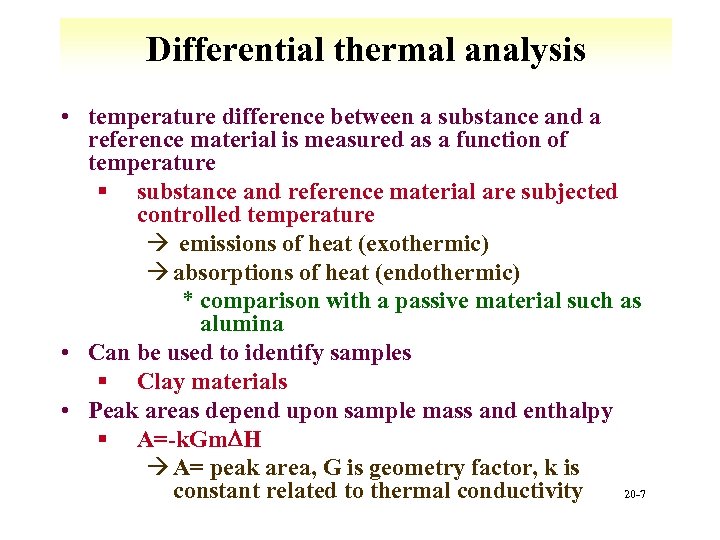 Differential thermal analysis • temperature difference between a substance and a reference material is measured as a function of temperature § substance and reference material are subjected controlled temperature à emissions of heat (exothermic) à absorptions of heat (endothermic) * comparison with a passive material such as alumina • Can be used to identify samples § Clay materials • Peak areas depend upon sample mass and enthalpy § A=-k. Gm. DH à A= peak area, G is geometry factor, k is 20 -7 constant related to thermal conductivity
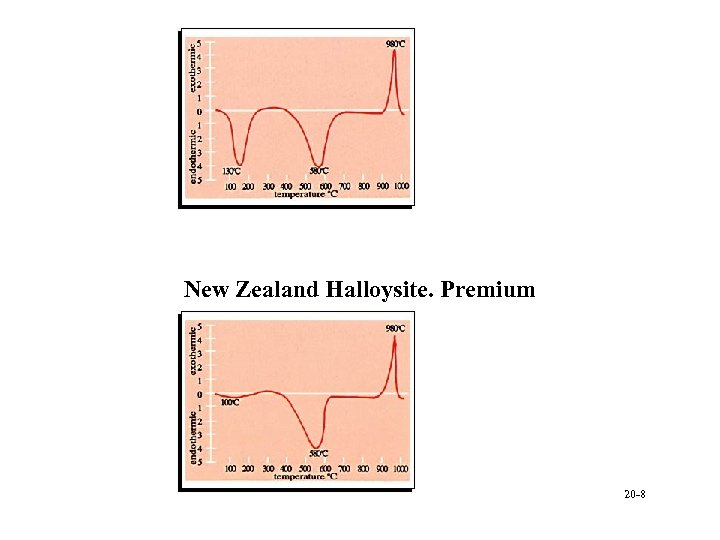 New Zealand Halloysite. Premium 20 -8
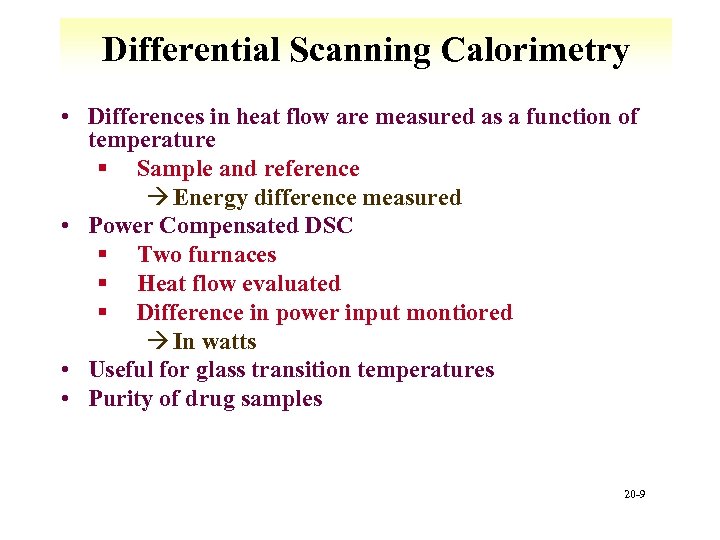 Differential Scanning Calorimetry • Differences in heat flow are measured as a function of temperature § Sample and reference à Energy difference measured • Power Compensated DSC § Two furnaces § Heat flow evaluated § Difference in power input montiored à In watts • Useful for glass transition temperatures • Purity of drug samples 20 -9
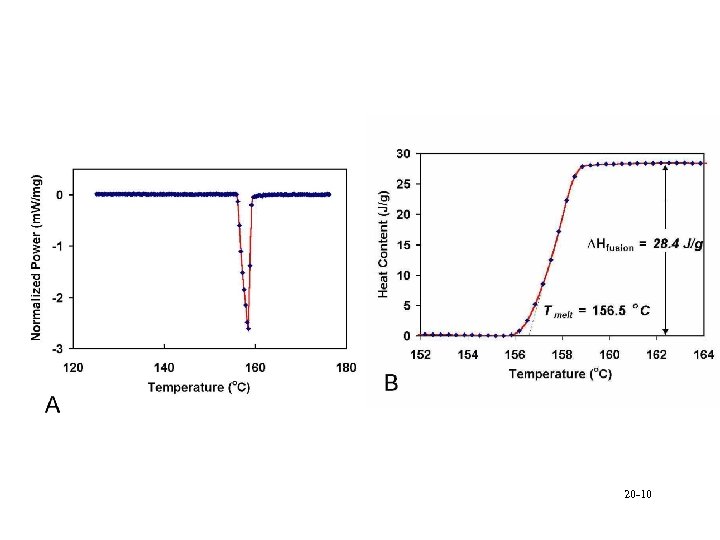 20 -10
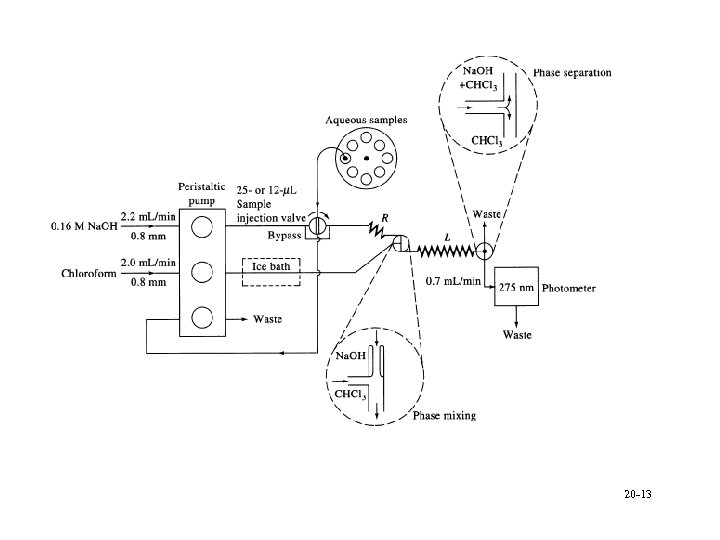
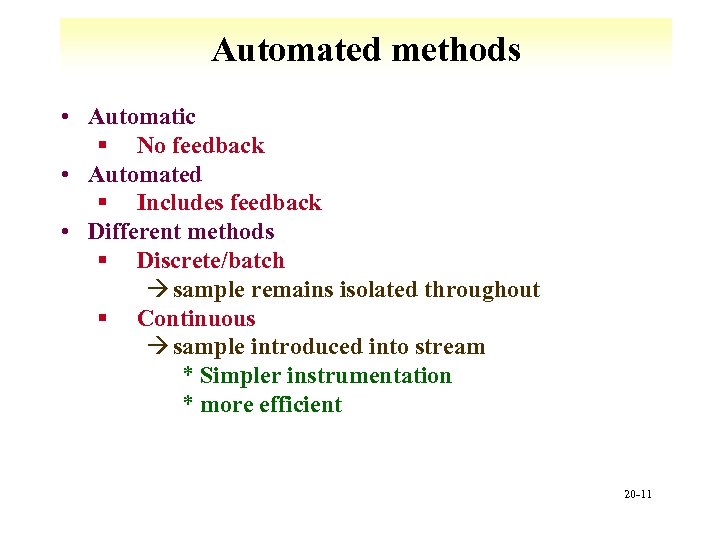 Automated methods • Automatic § No feedback • Automated § Includes feedback • Different methods § Discrete/batch à sample remains isolated throughout § Continuous à sample introduced into stream * Simpler instrumentation * more efficient 20 -11
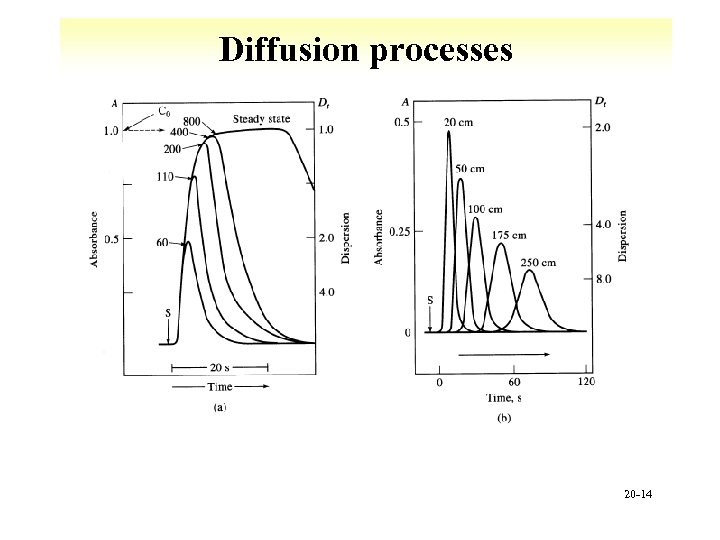
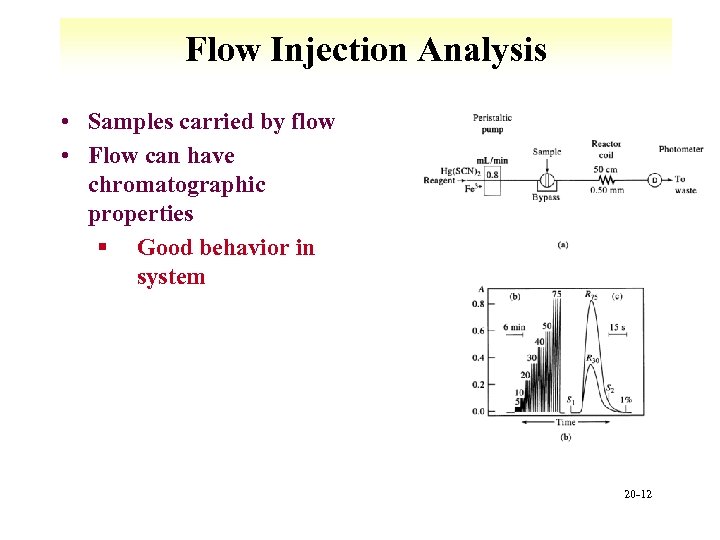 Flow Injection Analysis • Samples carried by flow • Flow can have chromatographic properties § Good behavior in system 20 -12
 20 -13
 Diffusion processes 20 -14