


 Скачать презентацию Thermal Aspects of Photovoltaic Thermal Solar Collectors Tim Anderson
9af74d423d917012161b290d7afbe3ad.ppt
- Количество слайдов: 20
 Thermal Aspects of Photovoltaic/Thermal Solar Collectors Tim Anderson Deparment of Engineering University of Waikato
 Solar Energy and NZ Ø New Zealand mass conservatively collects 1. 4 x 10²¹ J per year Ø An average house rooftop of 150 m 2 collects 2. 2 x 10⁸ Wh per year ie. 20 to 30 times the house’s total requirements. Ø Hamilton receives ~5000 MJ/m 2/year
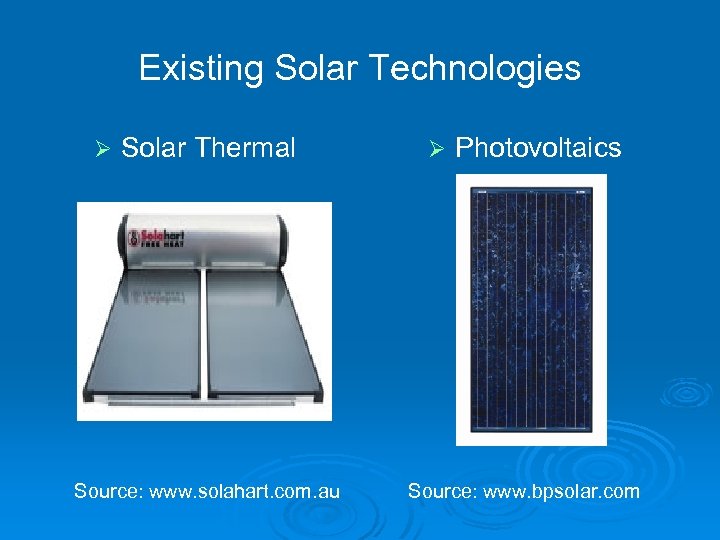 Existing Solar Technologies Ø Solar Thermal Source: www. solahart. com. au Ø Photovoltaics Source: www. bpsolar. com
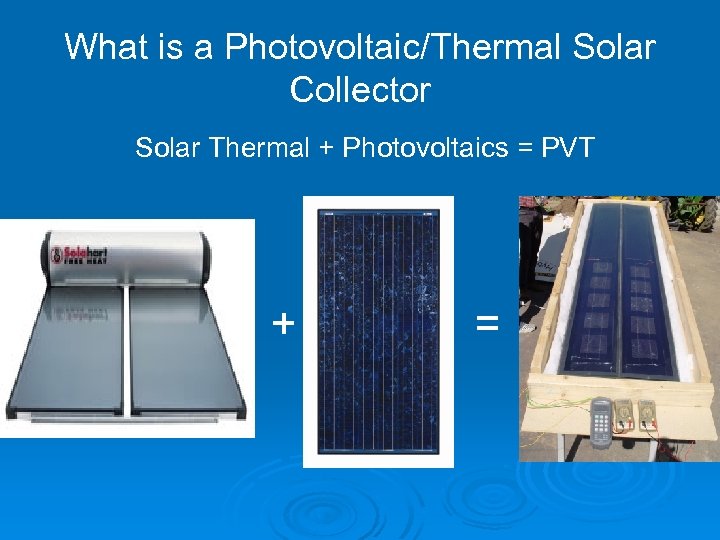 What is a Photovoltaic/Thermal Solar Collector Solar Thermal + Photovoltaics = PVT + =
 PVT Collectors Ø Photovoltaic and solar thermal in a single device: Cogeneration of heat and power Ø PV-cell efficiency decreases with increasing temperature Ø Efficiency of PV cells increased by active cooling Ø Area dedicated to solar energy devices can be reduced
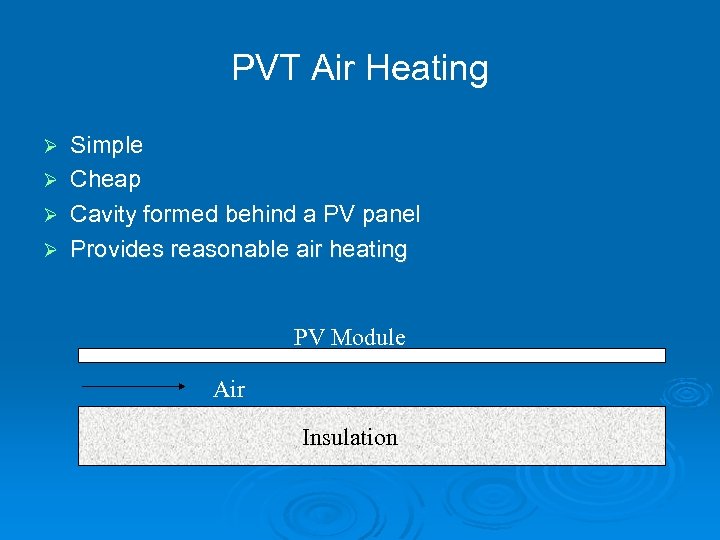 PVT Air Heating Simple Ø Cheap Ø Cavity formed behind a PV panel Ø Provides reasonable air heating Ø PV Module Air Insulation
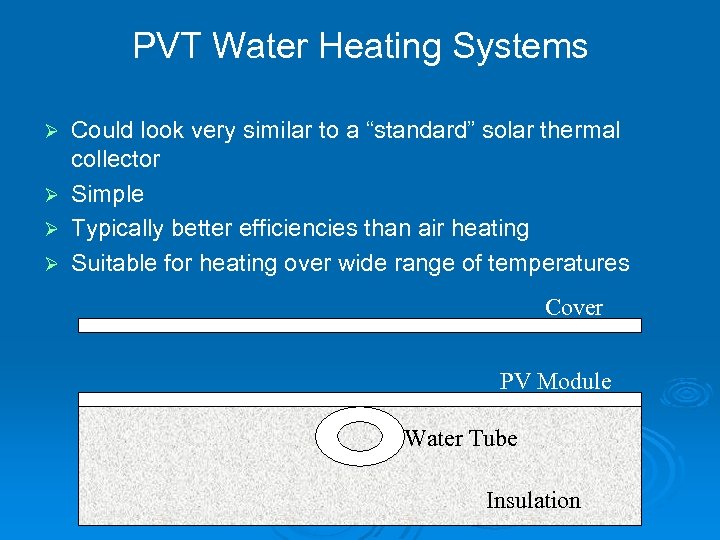 PVT Water Heating Systems Could look very similar to a “standard” solar thermal collector Ø Simple Ø Typically better efficiencies than air heating Ø Suitable for heating over wide range of temperatures Ø Cover PV Module Water Tube Insulation
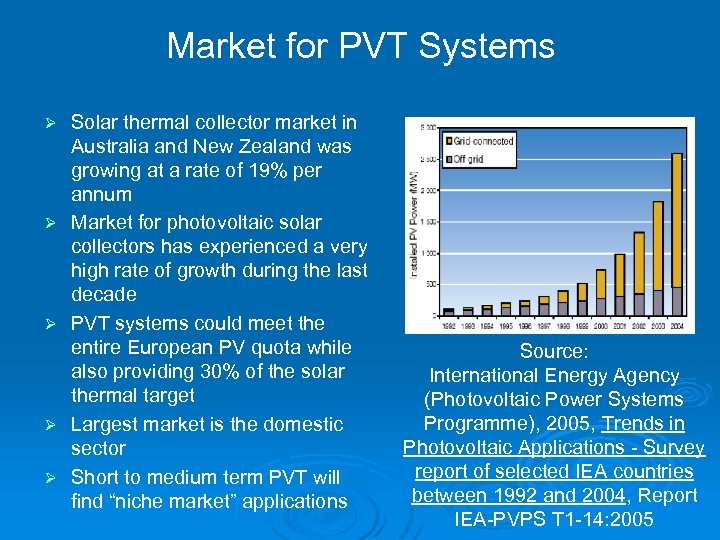 Market for PVT Systems Ø Ø Ø Solar thermal collector market in Australia and New Zealand was growing at a rate of 19% per annum Market for photovoltaic solar collectors has experienced a very high rate of growth during the last decade PVT systems could meet the entire European PV quota while also providing 30% of the solar thermal target Largest market is the domestic sector Short to medium term PVT will find “niche market” applications Source: International Energy Agency (Photovoltaic Power Systems Programme), 2005, Trends in Photovoltaic Applications - Survey report of selected IEA countries between 1992 and 2004, Report IEA-PVPS T 1 -14: 2005
 University of Waikato PVT Research University of Waikato is conducting research into Building Integrated Photovoltaic/Thermal (BIPVT) collectors Ø BIPVT is the use of PVT as building elements such as roofing or façade Ø Compromise between thermal, electrical and building needs Ø Thermal and electrical performance of a typical BIPVT collector has been modelled, using a modified Hottel-Whillier method (i. e. as a standard flat plate solar collector) Ø
 BIPVT Implementation Ø Unglazed BIPVT Ø Glazed BIPVT Ø Standard roofing profile Ø Standard roofing materials
 BIPVT Unglazed
 BIPVT Cooling Passage Width
 BIPVT Flowrate
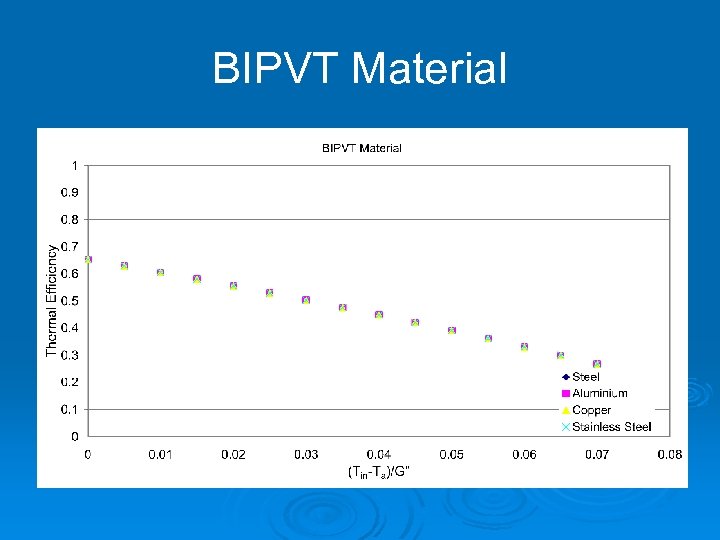 BIPVT Material
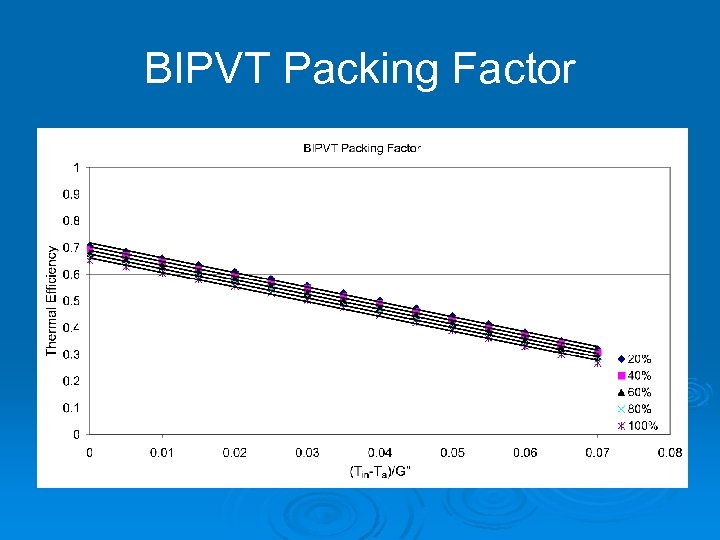 BIPVT Packing Factor
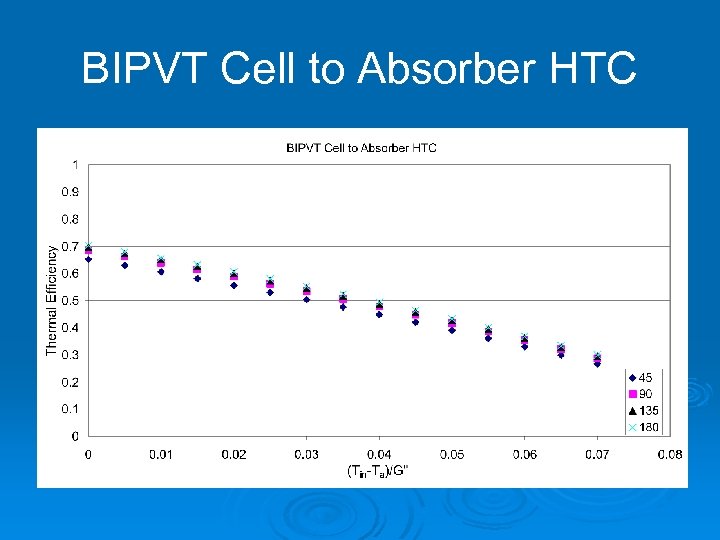 BIPVT Cell to Absorber HTC
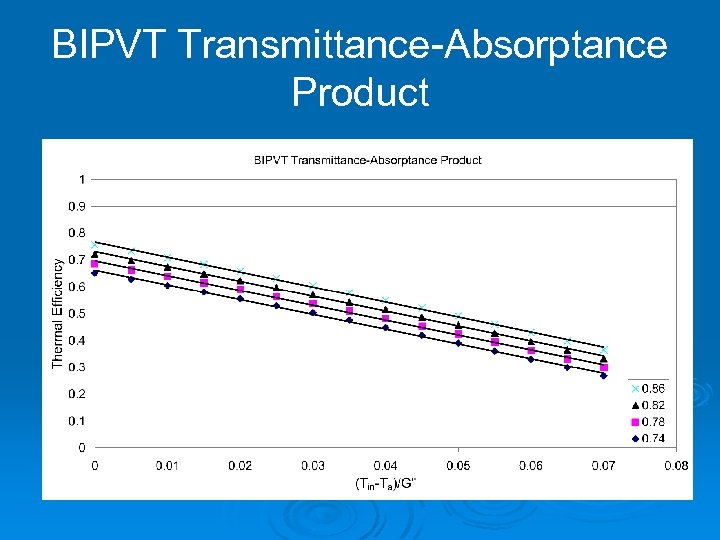 BIPVT Transmittance-Absorptance Product
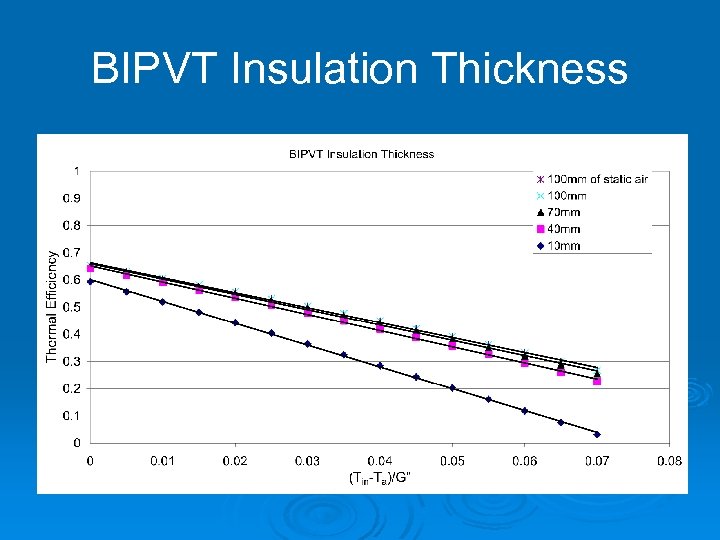 BIPVT Insulation Thickness
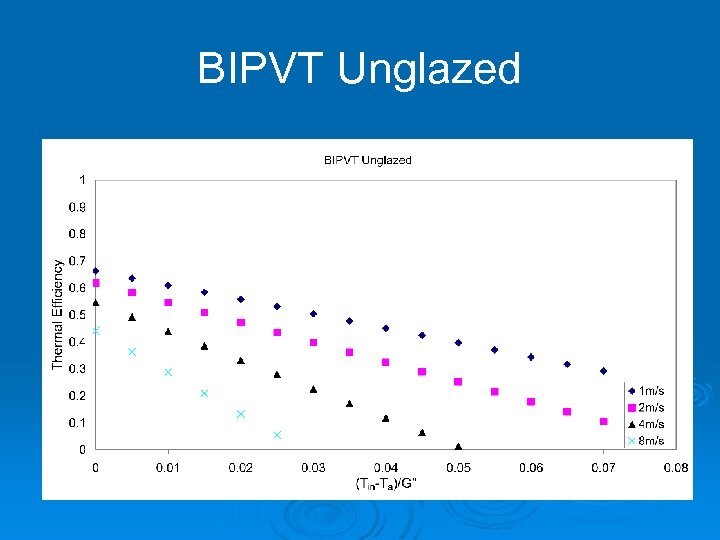
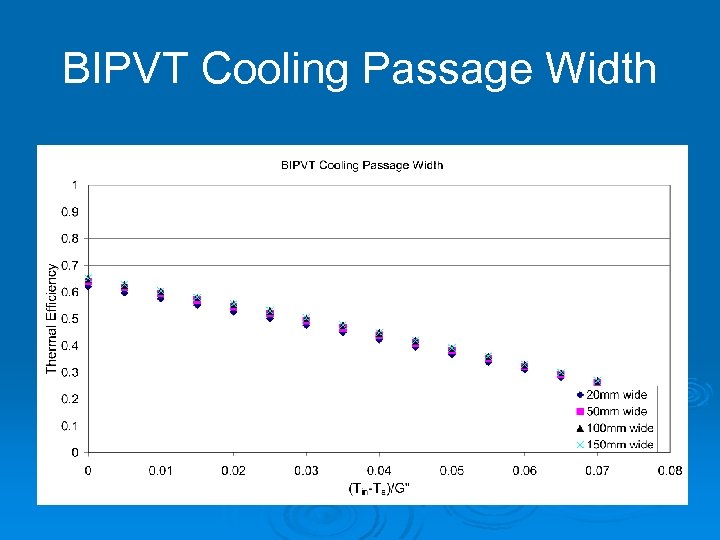
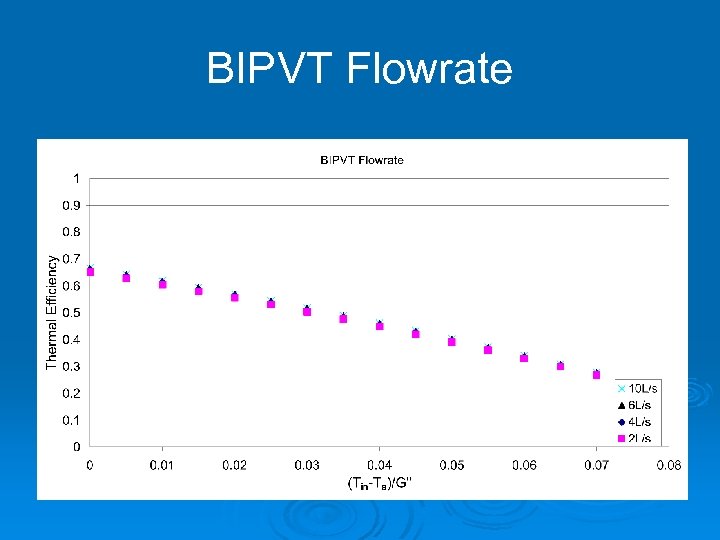
 What does it all mean? Ø TMY can be used for long term simulation of solar energy devices such as PVT Ø PVT modelling used for design modifications – empirical validation in progress Ø Modelling shows that to improve the BIPVT collector we could: use less PV cells, try to improve PV cell optical efficiency, reduce insulation
 Where to from here? Ø Long term modelling of BIPVT Ø Empirical validation of design model Ø Develop correlation to predict heat loss from BIPVT due to natural convection in attic space behind collector (Experimental and CFD)