 Скачать презентацию There and it Zamenice there i it Brojive
7c07475bf90fb658781add457d5ffe9b.ppt
- Количество слайдов: 24



There… and it… Zamenice there i it Brojive i nebrojive imenice Izrazi za količinu
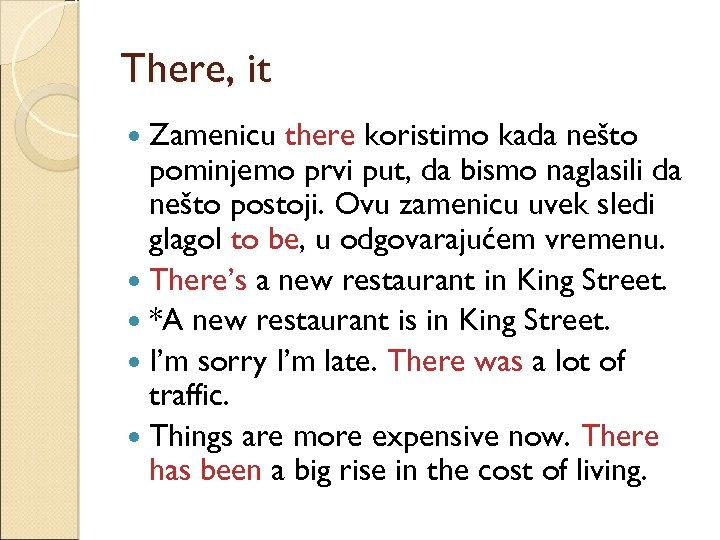
There, it Zamenicu there koristimo kada nešto pominjemo prvi put, da bismo naglasili da nešto postoji. Ovu zamenicu uvek sledi glagol to be, u odgovarajućem vremenu. There’s a new restaurant in King Street. *A new restaurant is in King Street. I’m sorry I’m late. There was a lot of traffic. Things are more expensive now. There has been a big rise in the cost of living.
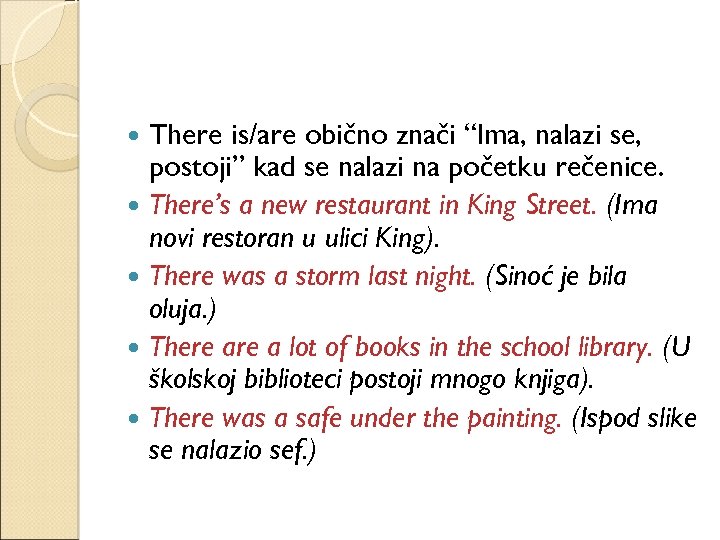
There is/are obično znači “Ima, nalazi se, postoji” kad se nalazi na početku rečenice. There’s a new restaurant in King Street. (Ima novi restoran u ulici King). There was a storm last night. (Sinoć je bila oluja. ) There a lot of books in the school library. (U školskoj biblioteci postoji mnogo knjiga). There was a safe under the painting. (Ispod slike se nalazio sef. )
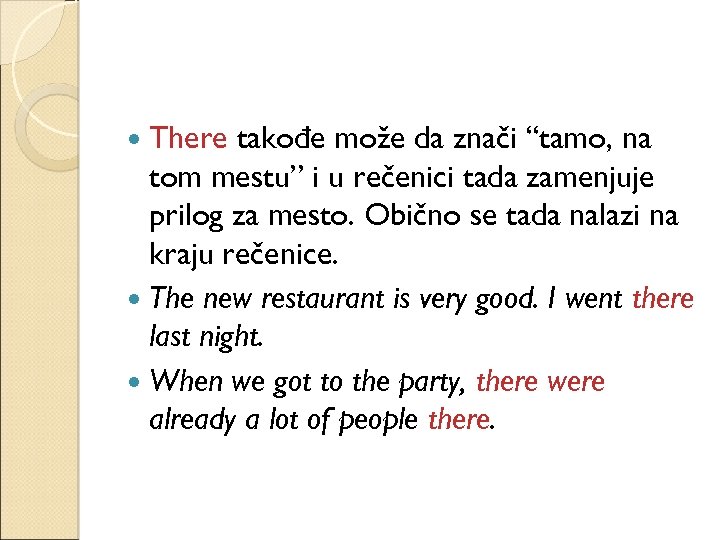
There takođe može da znači “tamo, na tom mestu” i u rečenici tada zamenjuje prilog za mesto. Obično se tada nalazi na kraju rečenice. The new restaurant is very good. I went there last night. When we got to the party, there were already a lot of people there.
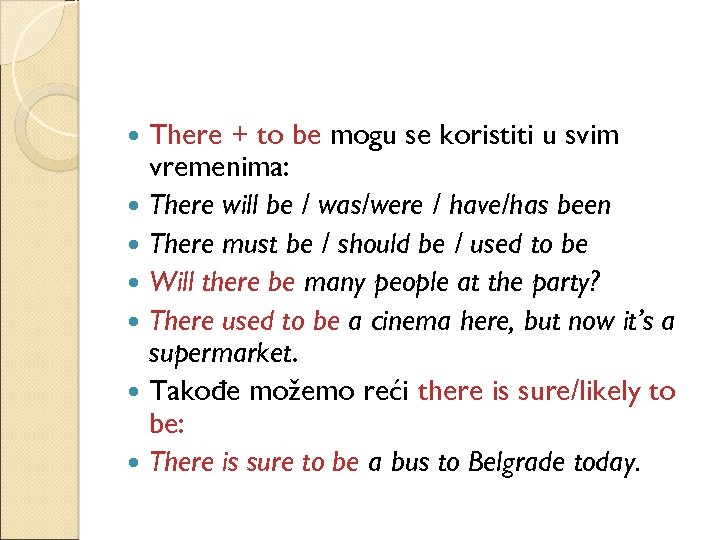
There + to be mogu se koristiti u svim vremenima: There will be / was/were / have/has been There must be / should be / used to be Will there be many people at the party? There used to be a cinema here, but now it’s a supermarket. Takođe možemo reći there is sure/likely to be: There is sure to be a bus to Belgrade today.
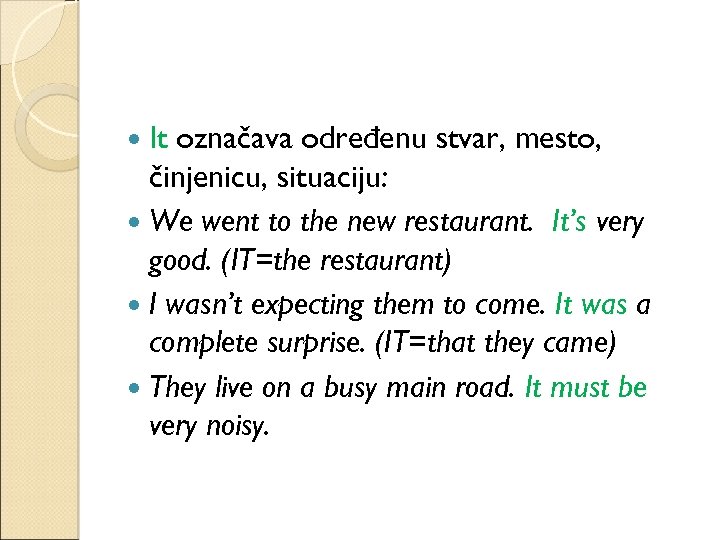
It označava određenu stvar, mesto, činjenicu, situaciju: We went to the new restaurant. It’s very good. (IT=the restaurant) I wasn’t expecting them to come. It was a complete surprise. (IT=that they came) They live on a busy main road. It must be very noisy.
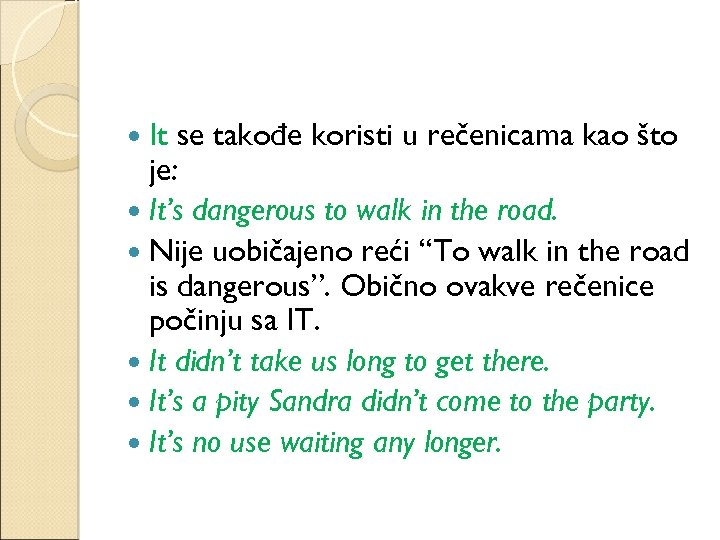
It se takođe koristi u rečenicama kao što je: It’s dangerous to walk in the road. Nije uobičajeno reći “To walk in the road is dangerous”. Obično ovakve rečenice počinju sa IT. It didn’t take us long to get there. It’s a pity Sandra didn’t come to the party. It’s no use waiting any longer.
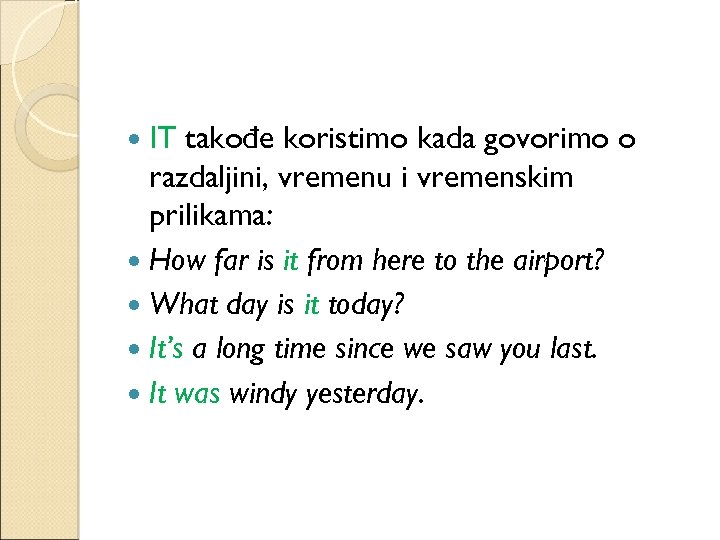
IT takođe koristimo kada govorimo o razdaljini, vremenu i vremenskim prilikama: How far is it from here to the airport? What day is it today? It’s a long time since we saw you last. It was windy yesterday.
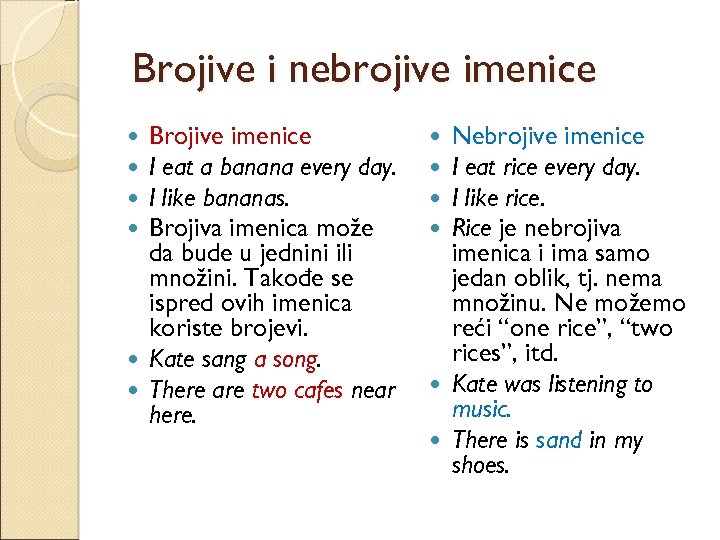
Brojive i nebrojive imenice Brojive imenice I eat a banana every day. I like bananas. Brojiva imenica može da bude u jednini ili množini. Takođe se ispred ovih imenica koriste brojevi. Kate sang a song. There are two cafes near here. Nebrojive imenice I eat rice every day. I like rice. Rice je nebrojiva imenica i ima samo jedan oblik, tj. nema množinu. Ne možemo reći “one rice”, “two rices”, itd. Kate was listening to music. There is sand in my shoes.
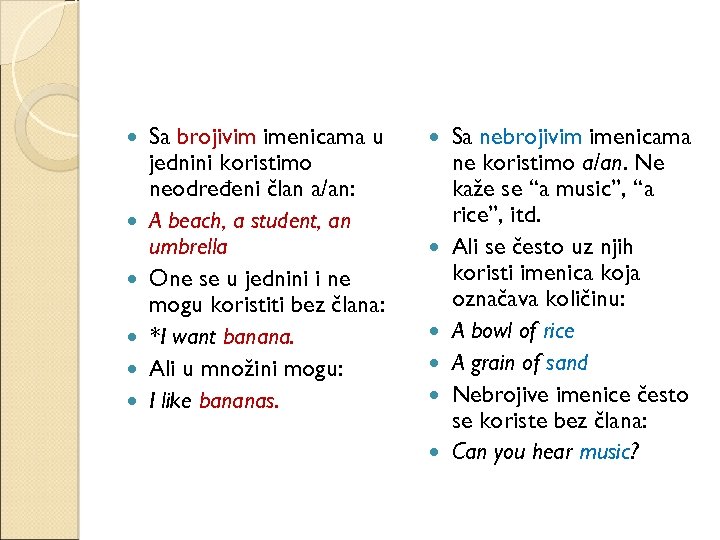
Sa brojivim imenicama u jednini koristimo neodređeni član a/an: A beach, a student, an umbrella One se u jednini i ne mogu koristiti bez člana: *I want banana. Ali u množini mogu: I like bananas. Sa nebrojivim imenicama ne koristimo a/an. Ne kaže se “a music”, “a rice”, itd. Ali se često uz njih koristi imenica koja označava količinu: A bowl of rice A grain of sand Nebrojive imenice često se koriste bez člana: Can you hear music?
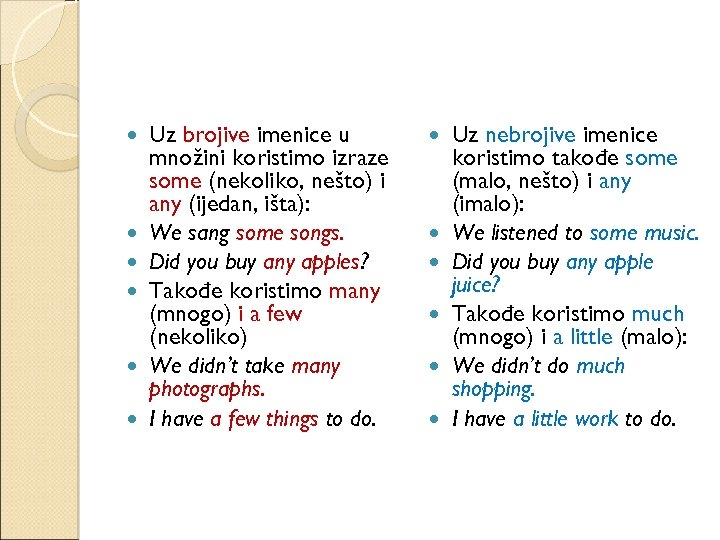
Uz brojive imenice u množini koristimo izraze some (nekoliko, nešto) i any (ijedan, išta): We sang some songs. Did you buy any apples? Takođe koristimo many (mnogo) i a few (nekoliko) We didn’t take many photographs. I have a few things to do. Uz nebrojive imenice koristimo takođe some (malo, nešto) i any (imalo): We listened to some music. Did you buy any apple juice? Takođe koristimo much (mnogo) i a little (malo): We didn’t do much shopping. I have a little work to do.
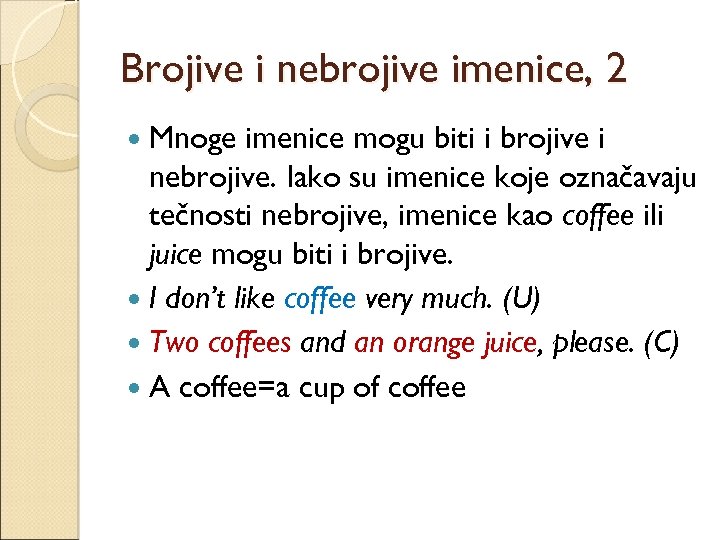
Brojive i nebrojive imenice, 2 Mnoge imenice mogu biti i brojive i nebrojive. Iako su imenice koje označavaju tečnosti nebrojive, imenice kao coffee ili juice mogu biti i brojive. I don’t like coffee very much. (U) Two coffees and an orange juice, please. (C) A coffee=a cup of coffee
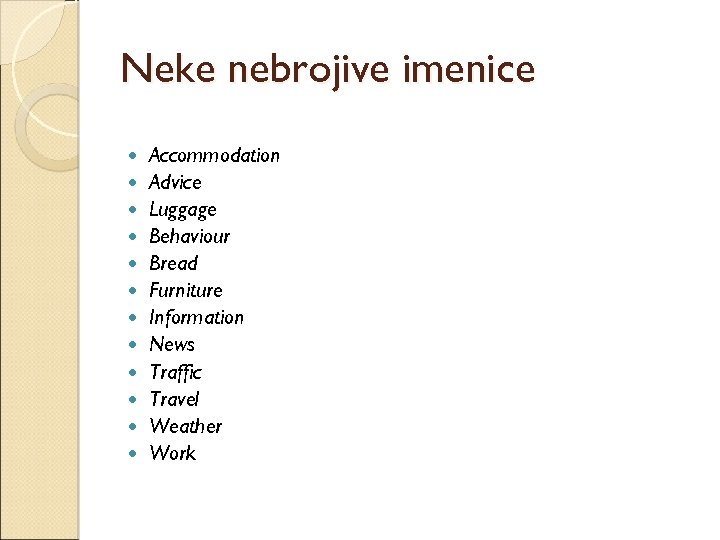
Neke nebrojive imenice Accommodation Advice Luggage Behaviour Bread Furniture Information News Traffic Travel Weather Work
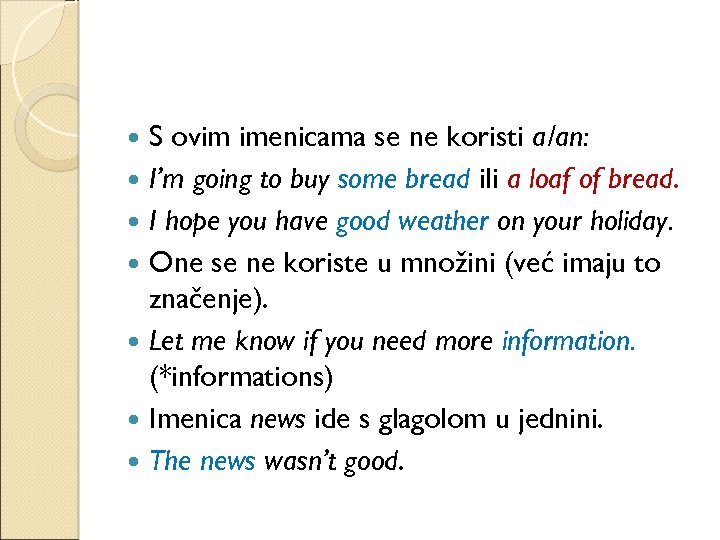
S ovim imenicama se ne koristi a/an: I’m going to buy some bread ili a loaf of bread. I hope you have good weather on your holiday. One se ne koriste u množini (već imaju to značenje). Let me know if you need more information. (*informations) Imenica news ide s glagolom u jednini. The news wasn’t good.
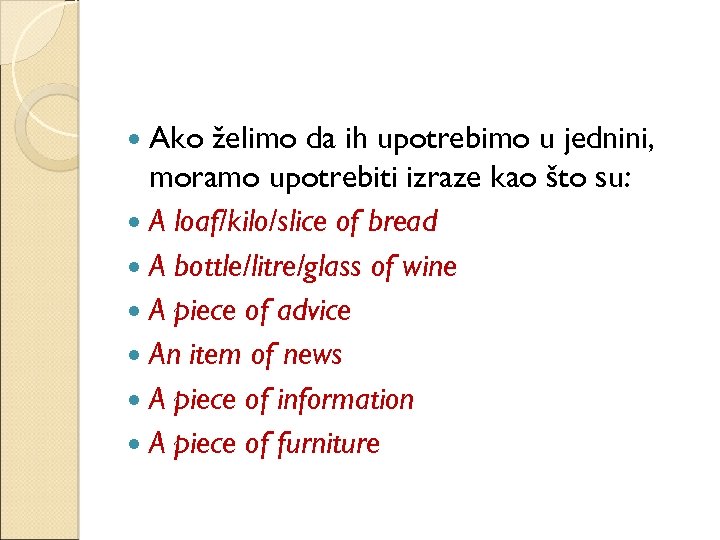
Ako želimo da ih upotrebimo u jednini, moramo upotrebiti izraze kao što su: A loaf/kilo/slice of bread A bottle/litre/glass of wine A piece of advice An item of news A piece of information A piece of furniture
Some and Any Some i any spadaju u izraze za količinu (expressions of quantity). U najvećem broju slučajeva some se koristi u potvrdnim, a any u upitnim i odričnim rečenicama.
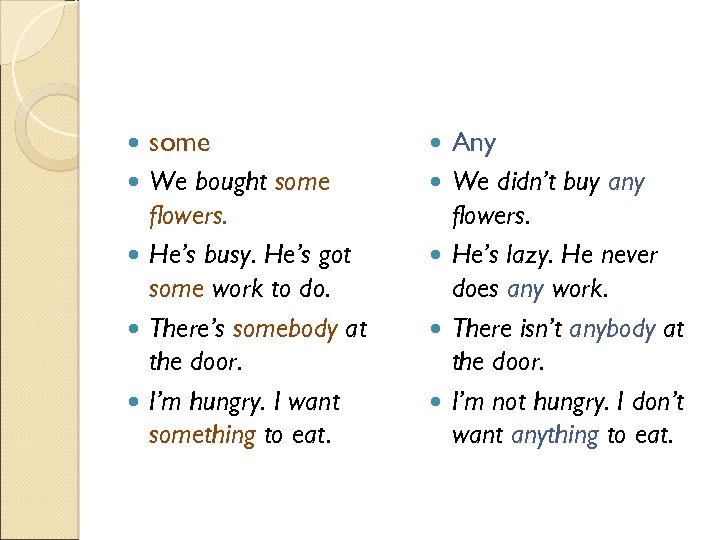
some We bought some flowers. He’s busy. He’s got some work to do. There’s somebody at the door. I’m hungry. I want something to eat. Any We didn’t buy any flowers. He’s lazy. He never does any work. There isn’t anybody at the door. I’m not hungry. I don’t want anything to eat.
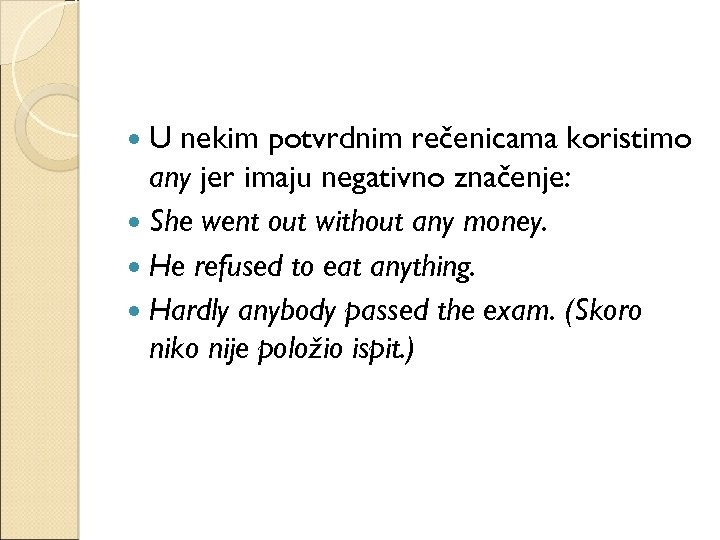
U nekim potvrdnim rečenicama koristimo any jer imaju negativno značenje: She went out without any money. He refused to eat anything. Hardly anybody passed the exam. (Skoro niko nije položio ispit. )
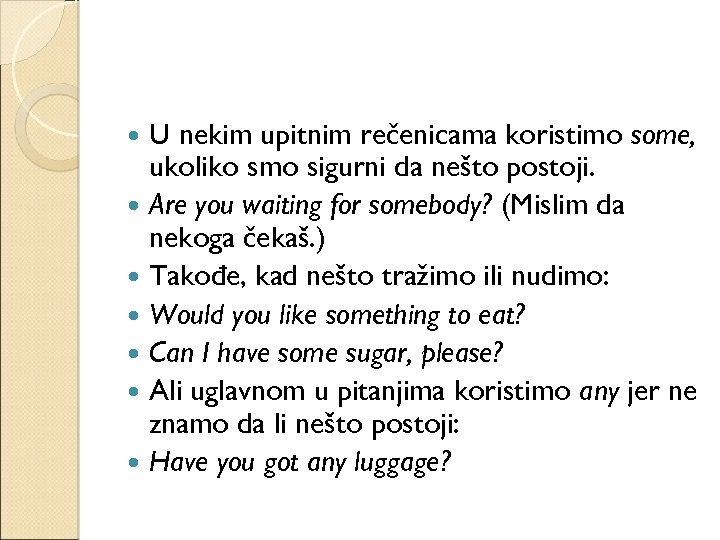
U nekim upitnim rečenicama koristimo some, ukoliko smo sigurni da nešto postoji. Are you waiting for somebody? (Mislim da nekoga čekaš. ) Takođe, kad nešto tražimo ili nudimo: Would you like something to eat? Can I have some sugar, please? Ali uglavnom u pitanjima koristimo any jer ne znamo da li nešto postoji: Have you got any luggage?
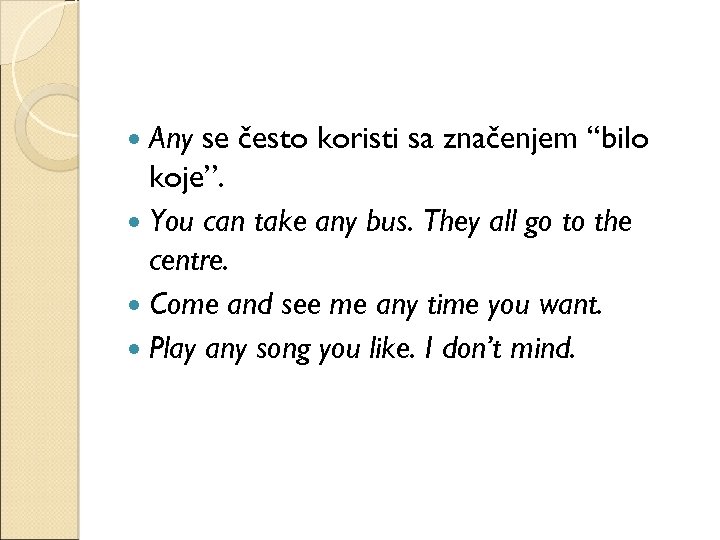
Any se često koristi sa značenjem “bilo koje”. You can take any bus. They all go to the centre. Come and see me any time you want. Play any song you like. I don’t mind.
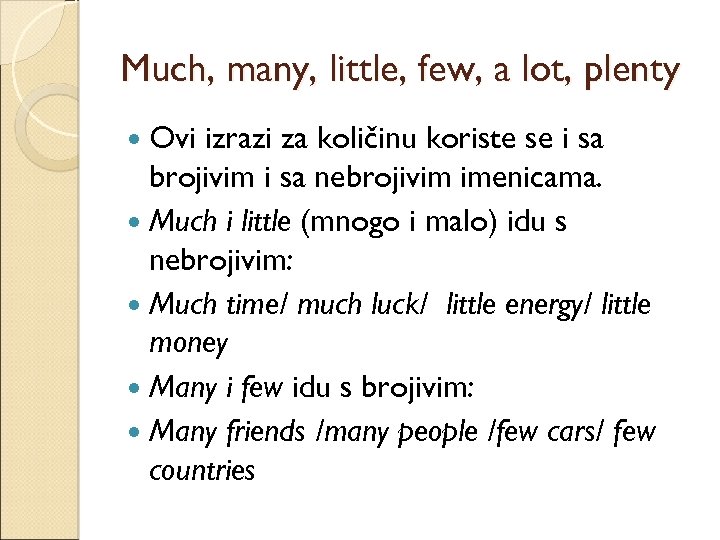
Much, many, little, few, a lot, plenty Ovi izrazi za količinu koriste se i sa brojivim i sa nebrojivim imenicama. Much i little (mnogo i malo) idu s nebrojivim: Much time/ much luck/ little energy/ little money Many i few idu s brojivim: Many friends /many people /few cars/ few countries
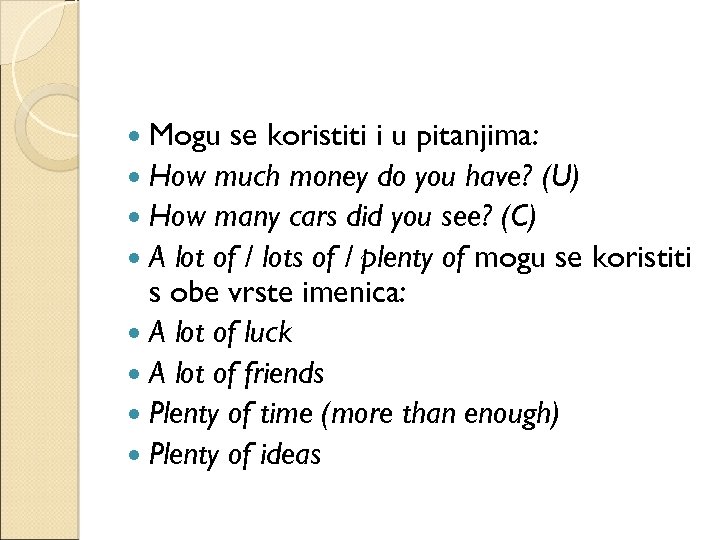
Mogu se koristiti i u pitanjima: How much money do you have? (U) How many cars did you see? (C) A lot of / lots of / plenty of mogu se koristiti s obe vrste imenica: A lot of luck A lot of friends Plenty of time (more than enough) Plenty of ideas
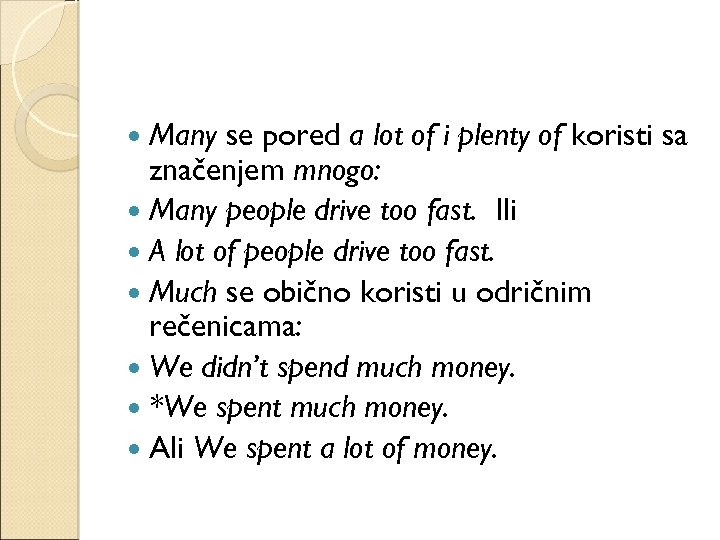
Many se pored a lot of i plenty of koristi sa značenjem mnogo: Many people drive too fast. Ili A lot of people drive too fast. Much se obično koristi u odričnim rečenicama: We didn’t spend much money. *We spent much money. Ali We spent a lot of money.
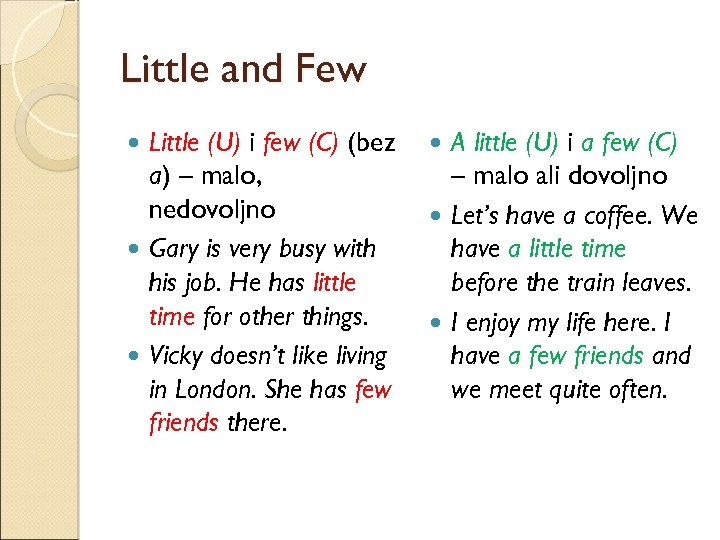
Little and Few Little (U) i few (C) (bez a) – malo, nedovoljno Gary is very busy with his job. He has little time for other things. Vicky doesn’t like living in London. She has few friends there. A little (U) i a few (C) – malo ali dovoljno Let’s have a coffee. We have a little time before the train leaves. I enjoy my life here. I have a few friends and we meet quite often.
Скачать презентацию There and it Zamenice there i it Brojive
7c07475bf90fb658781add457d5ffe9b.ppt