



 Theory of cases
 Theory of cases is based in theory of the behavior. The behavior of the head is constructed differently in each situation
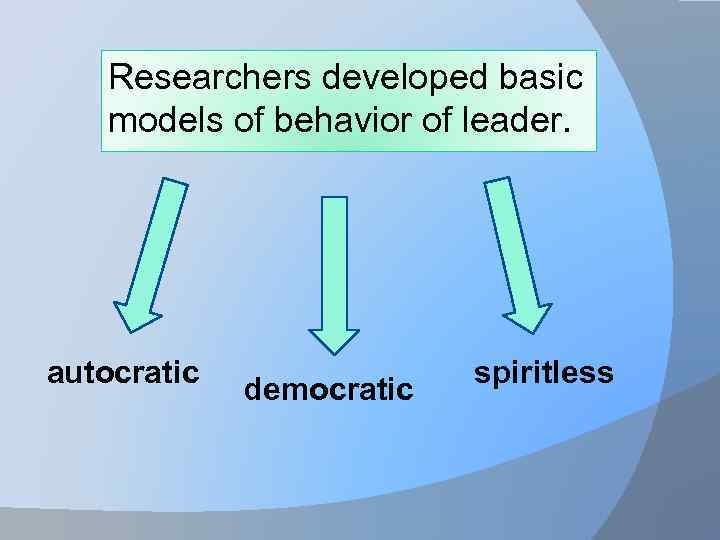 Researchers developed basic models of behavior of leader. autocratic democratic spiritless
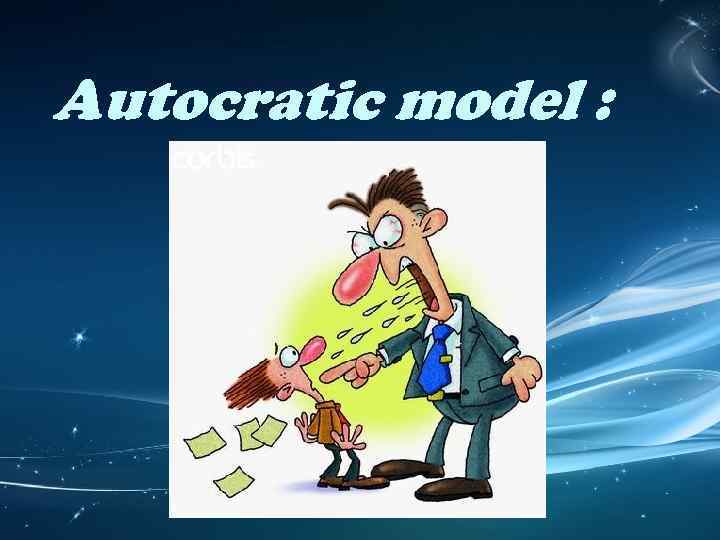 Autocratic model :
 Subordinates: - depend on his head - unable to express an opinion - virtually have no independence - have low skill (not always)
 The situation in the workplace: - dominates strict discipline, support by using strict controls - the level of income - not very high - control the volume of production costs
 Possible consequences of the abuse of this style: - reduce the adaptation of workers to various transformations - routine nature of the activities - Excluded creative growth
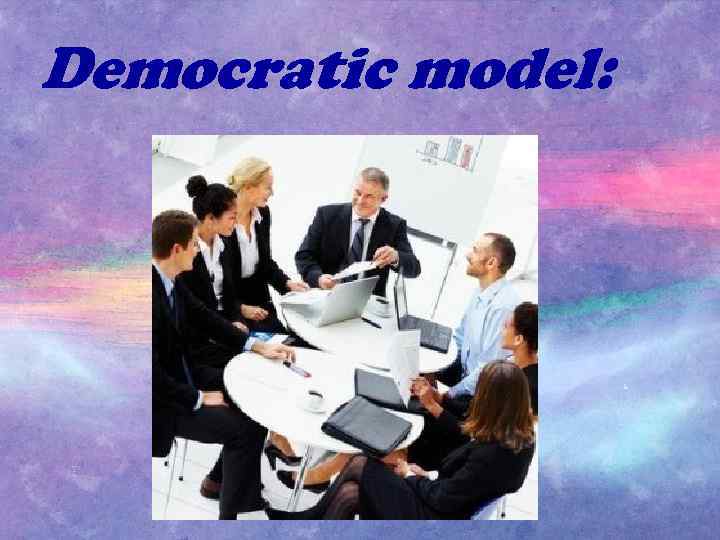 Democratic model:
 Democratic model - is when the leader: - has limited power, he can set the limits of its application or accepts the terms; - group can remove him from position and replace team members on his place;
 Subordinates: - exercise control over the methods of control; - often have such professions as scientists, engineers, managers and others. ; - have high professional skills; - like a strict order;
 Possible consequences of the abuse of this style lead to the fact that people adapt to depending on the team, often lose the ability to think independently.
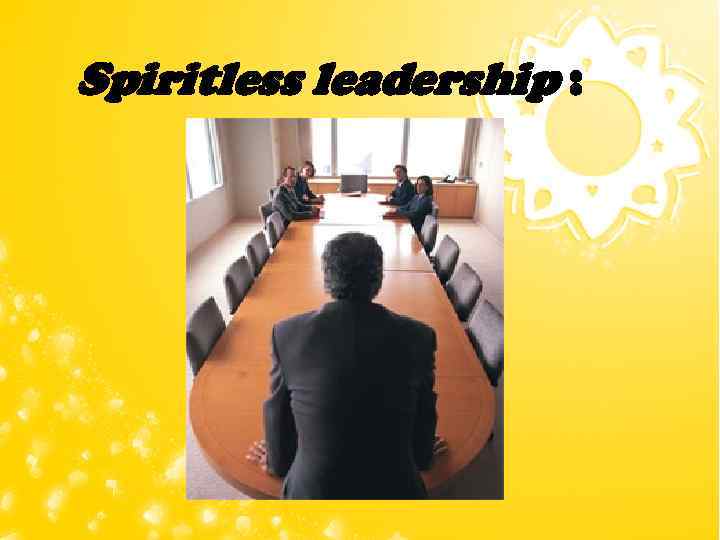 Spiritless leadership :
 Spiritless leadership - is when the leader / manager: - has no real power; - not limited temporary borders; - indispensable in office because of this situation suits; - can not apply any sanctions;
 Subordinates: - have more power than the head; - do not take the order; - easily rise to the rebellion, strike; - poorly organized; - as a rule, scientists and other workers with rare knowledge, aware of their need.
 Possible consequences of the abuse of this style of management. The use of this style of work can cause fragmentation of the collective, individual isolation, confusion, chaos, anarchy. This can lead to what efforts directly in the profession will be addressed on a useless struggle, planting their rights, advocacy and views.