


 Скачать презентацию Theme 14 The main directions of economic policy
Theme 14.ppt
- Количество слайдов: 24
 Theme 14. The main directions of economic policy
 1. Concept and types of monetary systems
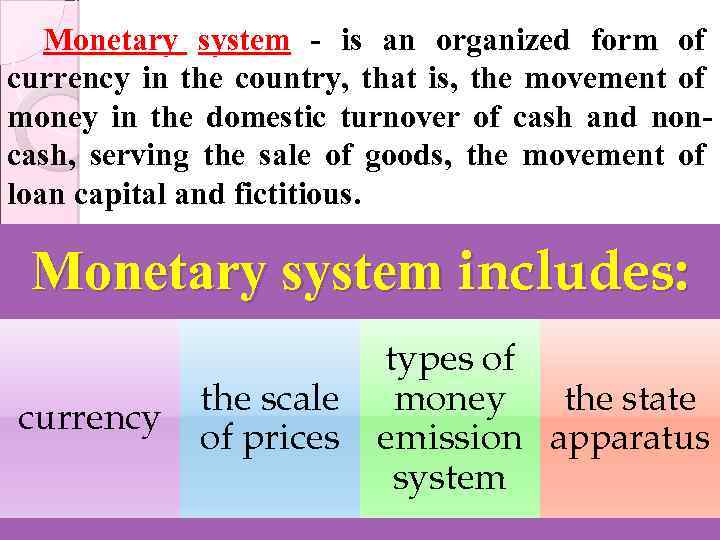 Monetary system - is an organized form of currency in the country, that is, the movement of money in the domestic turnover of cash and noncash, serving the sale of goods, the movement of loan capital and fictitious. Monetary system includes: currency the scale of prices types of money the state emission apparatus system
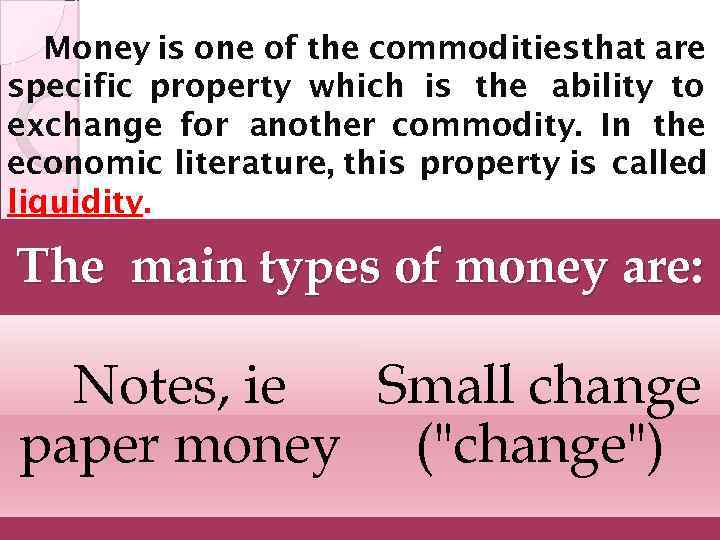 Money is one of the commoditiesthat are specific property which is the ability to exchange for another commodity. In the economic literature, this property is called liquidity. The main types of money are: Notes, ie Small change paper money ("change")
 Banknotes - bank notes issued by issuing banks. Promissory notes - debt (1 - 3 months), which gives the holder the right to demand payment of this amount by the deadline. Cheque deposits, checks - a means of transferring ownership of the deposits in banks or other financial institutions. Money is not the write checks, and any demand deposits (deposits) in the bank. In developed market economies deposits are more important than the paper money - up to 90% of trading is payable by check or by credit card. The use of credit cards ("e-money") requires a high level of computerization of banks, trade, service. National monetary system - a form of organization of monetary circulation in the country, has developed historically and fixed by law.
 2. The demand for money and the money supply
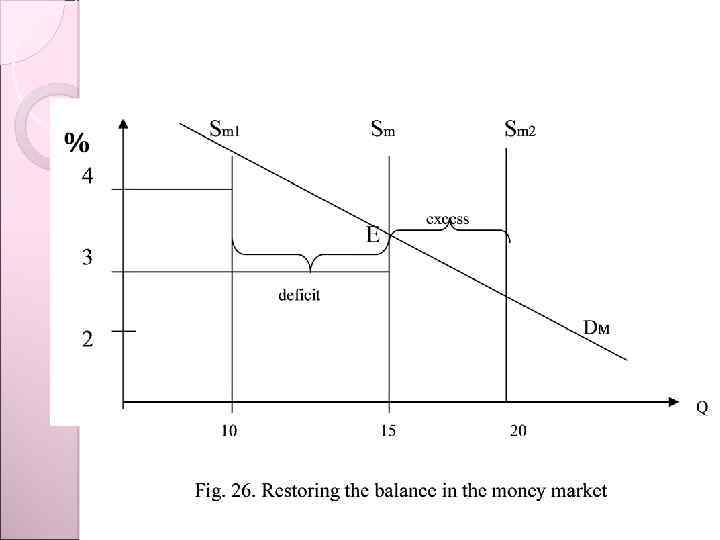
 Based on the nature of money - their ability to communicate to all other commodities, they are formed by supply and demand. Demand for money (total) consists of two components: A) the demand for money for transactions; B) the demand for money by assets
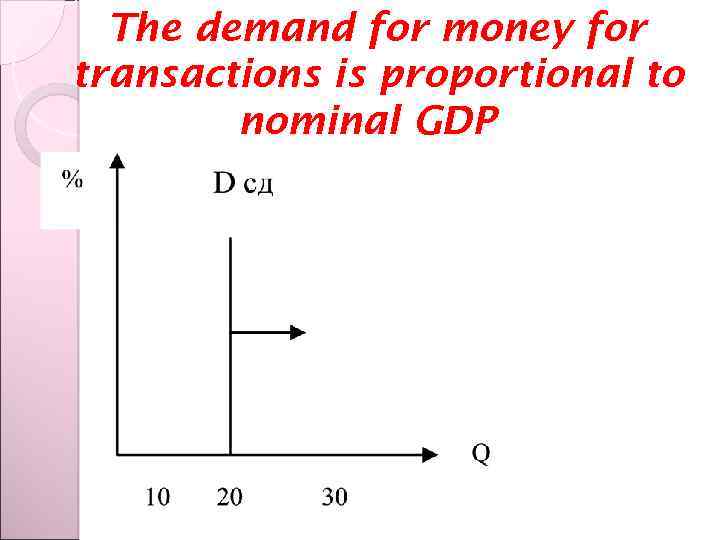 The demand for money for transactions is proportional to nominal GDP
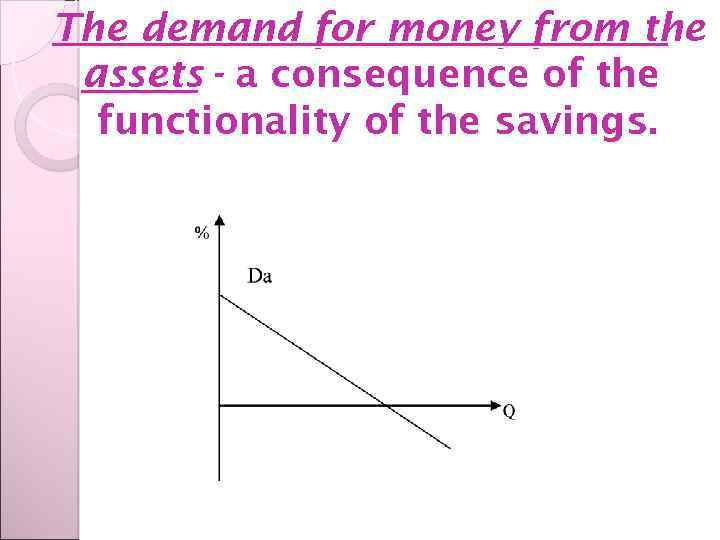 The demand for money from the assets - a consequence of the functionality of the savings.
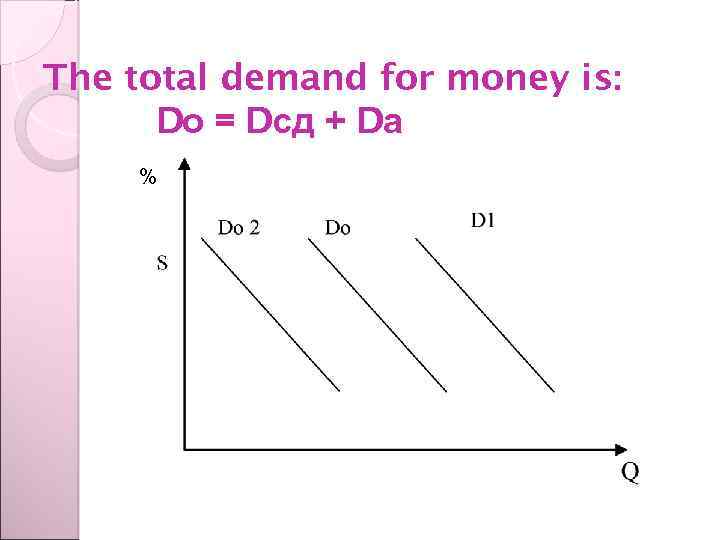 The total demand for money is: Dо = Dсд + Dа %
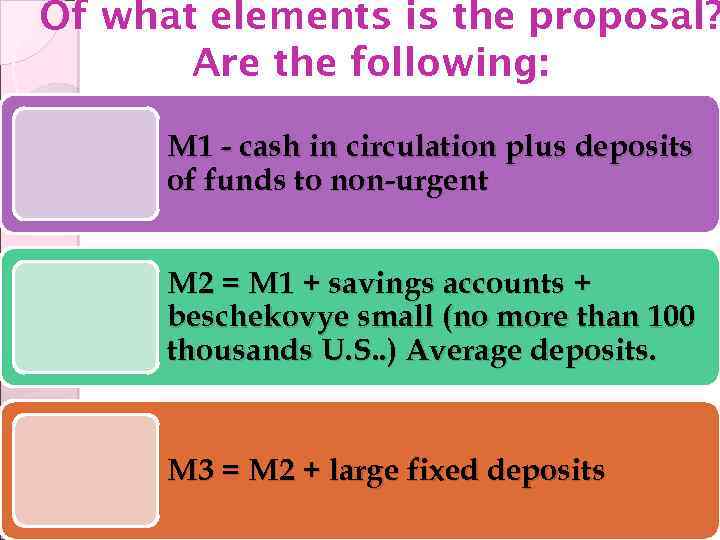 Of what elements is the proposal? Are the following: M 1 - cash in circulation plus deposits of funds to non-urgent M 2 = M 1 + savings accounts + beschekovye small (no more than 100 thousands U. S. . ) Average deposits. М 3 = М 2 + large fixed deposits
 3. The essence of financial system
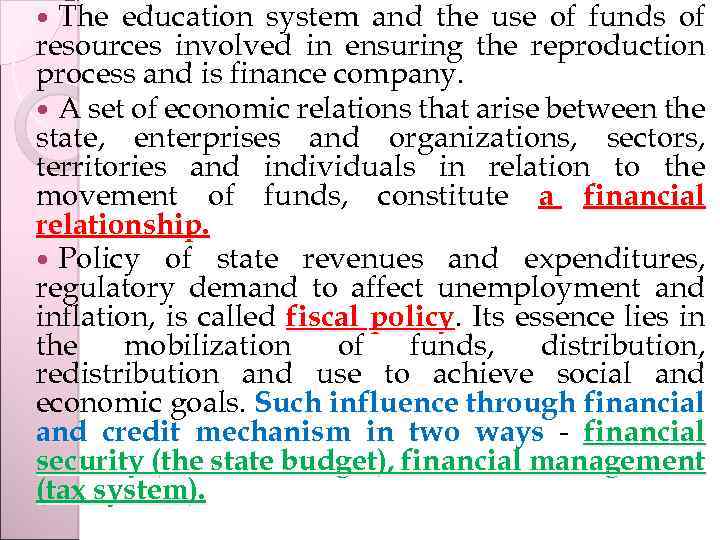 The education system and the use of funds of resources involved in ensuring the reproduction process and is finance company. A set of economic relations that arise between the state, enterprises and organizations, sectors, territories and individuals in relation to the movement of funds, constitute a financial relationship. Policy of state revenues and expenditures, regulatory demand to affect unemployment and inflation, is called fiscal policy. Its essence lies in policy the mobilization of funds, distribution, redistribution and use to achieve social and economic goals. Such influence through financial and credit mechanism in two ways - financial security (the state budget), financial management (tax system).
 4. State budget and public debt.
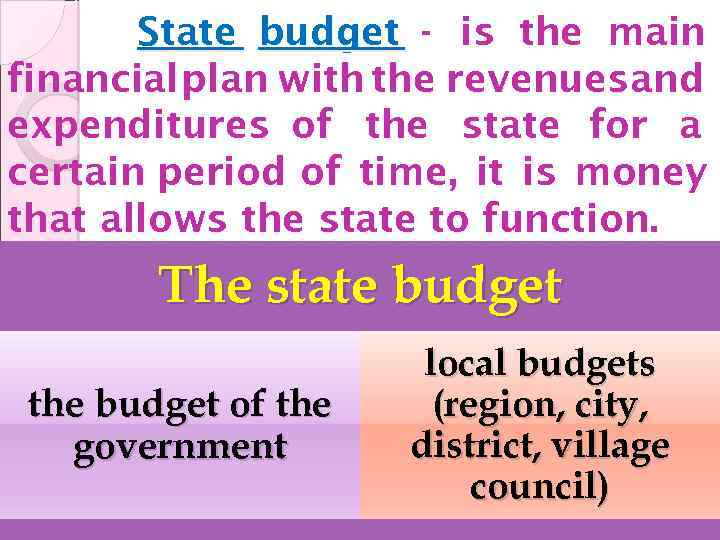 State budget - is the main financial plan with the revenues and expenditures of the state for a certain period of time, it is money that allows the state to function. The state budget the budget of the government local budgets (region, city, district, village council)
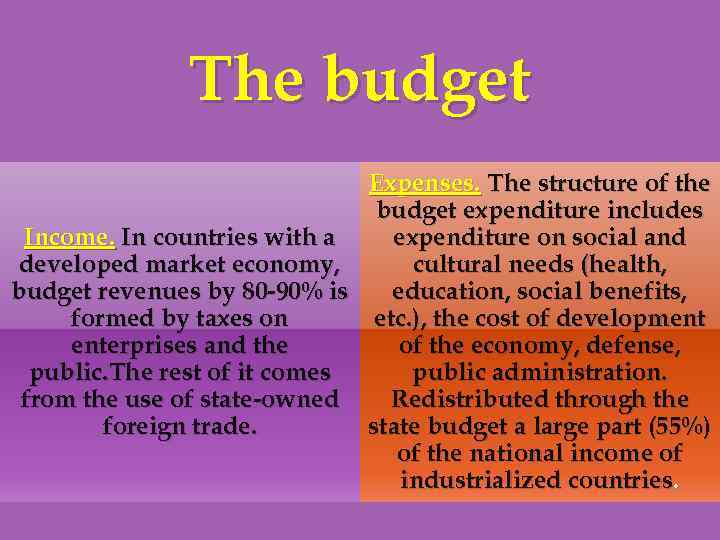 The budget Expenses. The structure of the budget expenditure includes Income. In countries with a expenditure on social and developed market economy, cultural needs (health, budget revenues by 80 -90% is education, social benefits, formed by taxes on etc. ), the cost of development enterprises and the of the economy, defense, public. The rest of it comes public administration. from the use of state-owned Redistributed through the foreign trade. state budget a large part (55%) of the national income of industrialized countries.
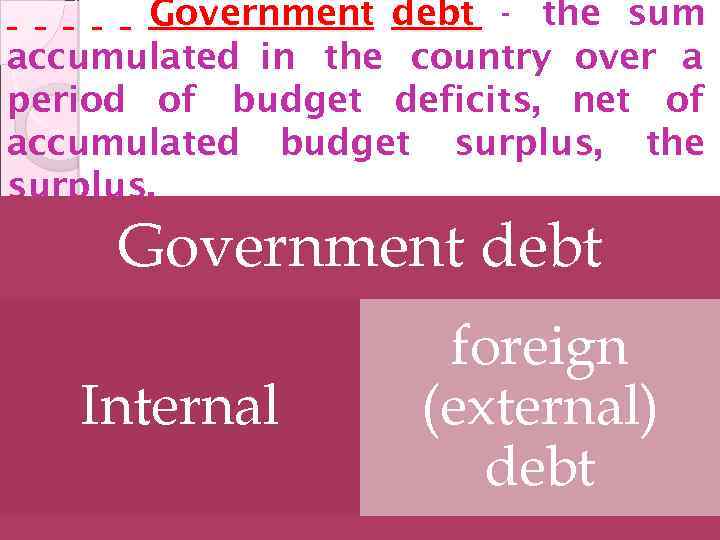 Government debt - the sum accumulated in the country over a period of budget deficits, net of accumulated budget surplus, the surplus. Government debt Internal foreign (external) debt
 5. The principles and forms of taxation
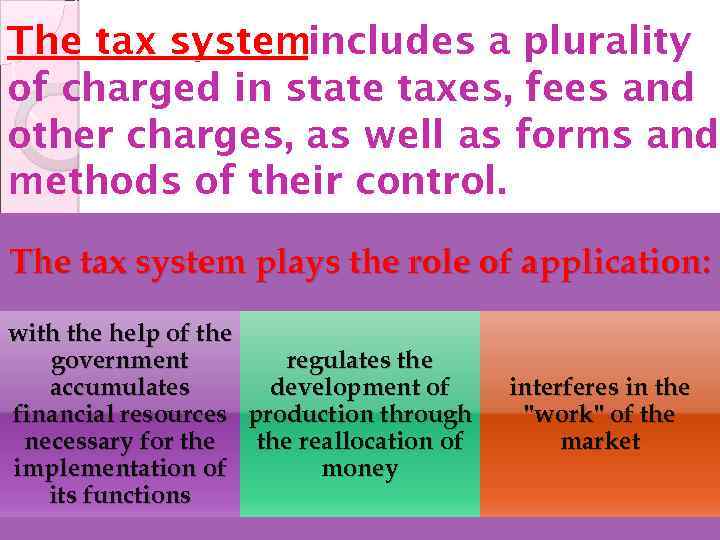 The tax systemincludes a plurality of charged in state taxes, fees and other charges, as well as forms and methods of their control. The tax system plays the role of application: with the help of the government regulates the accumulates development of financial resources production through necessary for the reallocation of implementation of money its functions interferes in the "work" of the market
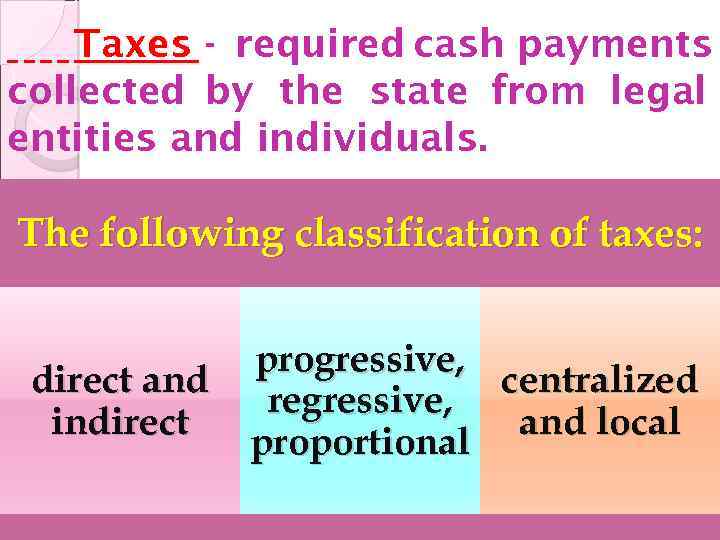 Taxes - required cash payments collected by the state from legal entities and individuals. The following classification of taxes: direct and indirect progressive, centralized regressive, and local proportional
 6. International relationships: the nature, forms
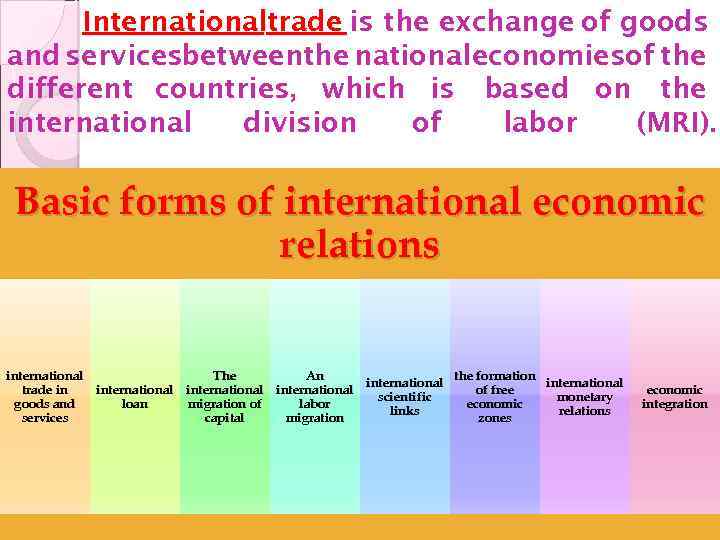 Internationaltrade is the exchange of goods and servicesbetweenthe nationaleconomiesof the different countries, which is based on the international division of labor (MRI). Basic forms of international economic relations international The An the formation international trade in international of free scientific monetary goods and loan migration of labor economic links relations services capital migration zones economic integration
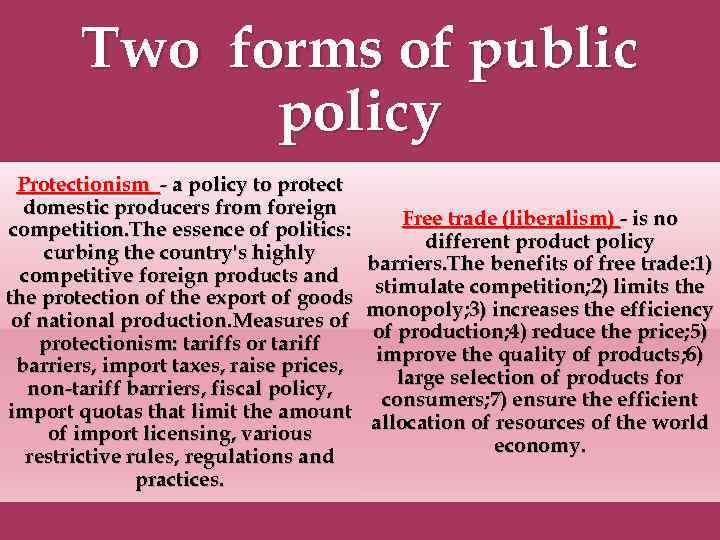 Two forms of public policy Protectionism - a policy to protect domestic producers from foreign competition. The essence of politics: curbing the country's highly competitive foreign products and the protection of the export of goods of national production. Measures of protectionism: tariffs or tariff barriers, import taxes, raise prices, non-tariff barriers, fiscal policy, import quotas that limit the amount of import licensing, various restrictive rules, regulations and practices. Free trade (liberalism) - is no different product policy barriers. The benefits of free trade: 1) stimulate competition; 2) limits the monopoly; 3) increases the efficiency of production; 4) reduce the price; 5) improve the quality of products; 6) large selection of products for consumers; 7) ensure the efficient allocation of resources of the world economy.