 Скачать презентацию The World of William Unit Objectives This
3b6d6cb68ac460cf5d2fd456f0f5ce06.ppt
- Количество слайдов: 47



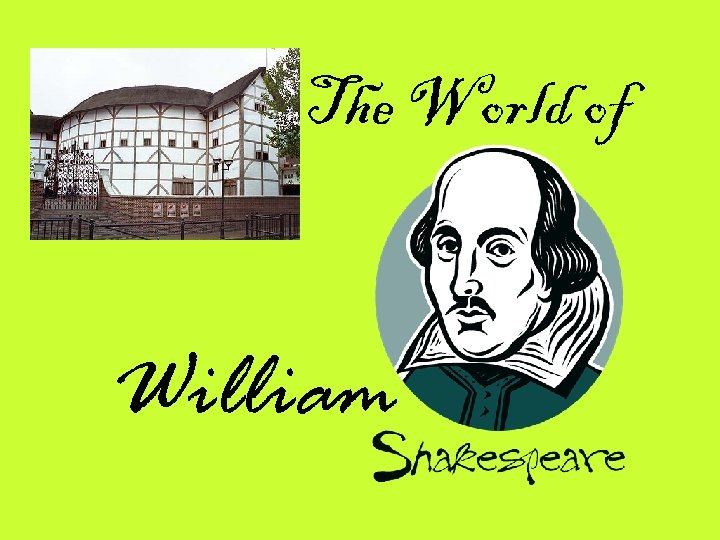
The World of William
Unit Objectives This unit will help you to: • Distinguish facts from opinions and theories • Interpret illustrations • Imagine what others are experiencing • Become more aware of changes in language over time • Combine information from a range of sources
Unit 11: Investigating Shakespeare’s World Learning Outcome By the end of the lesson I will be able to: 1. distinguish facts from opinions and theories 2. Improve my note taking skills Key words fact, opinion, theory
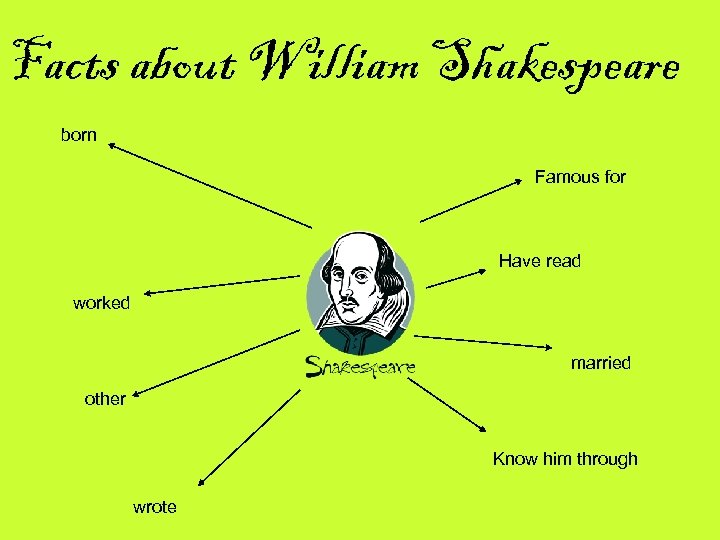
Facts about William Shakespeare born Famous for Have read worked married other Know him through wrote
Investigating Shakespeare’s World. Finding the Facts What is fact? What is an opinion? Why are fact and opinion different? Why is it important that we know the difference and use the right one in different situations?
Definitions FACTS: Can be proven to be true. OPINION : A point of view. THEORY : A suggestion using evidence to show their point of view could be correct. Copy this into your yellow book
Turn to Page 115 What is an abbreviation? When researching, it would take too much time to write down everything you read. An effective way of just gathering the bits you will need is to use abbreviations. An abbreviation is a shortened version of a word or phrase, for example, _______________.
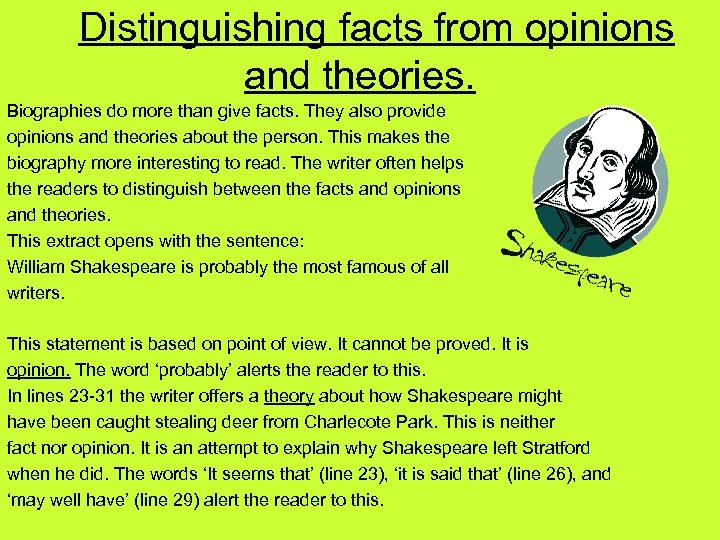
Distinguishing facts from opinions and theories. Biographies do more than give facts. They also provide opinions and theories about the person. This makes the biography more interesting to read. The writer often helps the readers to distinguish between the facts and opinions and theories. This extract opens with the sentence: William Shakespeare is probably the most famous of all writers. This statement is based on point of view. It cannot be proved. It is opinion. The word ‘probably’ alerts the reader to this. In lines 23 31 the writer offers a theory about how Shakespeare might have been caught stealing deer from Charlecote Park. This is neither fact nor opinion. It is an attempt to explain why Shakespeare left Stratford when he did. The words ‘It seems that’ (line 23), ‘it is said that’ (line 26), and ‘may well have’ (line 29) alert the reader to this.
Task: Turn to p 117 Complete Activity 2, Your chart will need to look like this: FACT OPINION THEORY
Biographical writing The main purpose of a biography is to re tell the events of a persons life. A biography usually contains: A lot of factual detail Opinions and stories about the person A theory or two about how / why they did the things they did.
Shakespeare’s Life Learning Outcome To create a time line which is set out in chronological order and that shows factual details. Key words Time line Chronological order Facts
Starter – Your class is going to create a ‘living’ timeline of Shakespeare’s life! With your partner look at the card that you have been given. Each card shows a different event in Shakespeare’s life. How could you perform the information on your card? • Could you make a freeze frame with no action? • Would you prefer to include movement and action? • You may decide to include a line or two of speech.
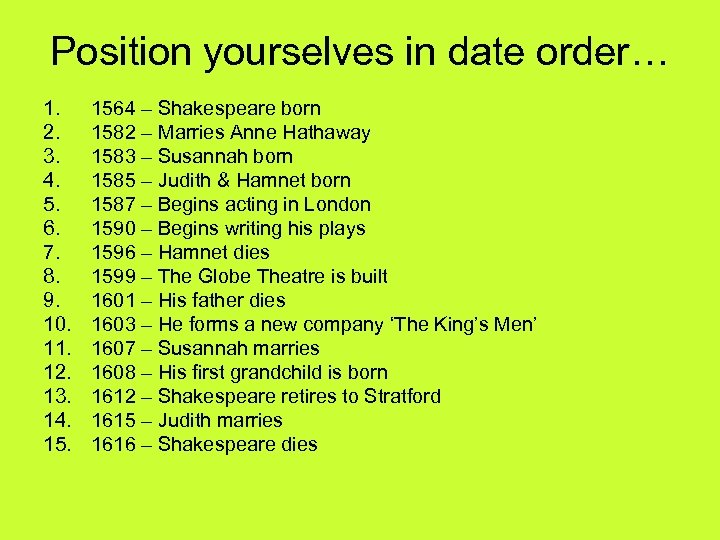
Position yourselves in date order… 1. 2. 3. 4. 5. 6. 7. 8. 9. 10. 11. 12. 13. 14. 15. 1564 – Shakespeare born 1582 – Marries Anne Hathaway 1583 – Susannah born 1585 – Judith & Hamnet born 1587 – Begins acting in London 1590 – Begins writing his plays 1596 – Hamnet dies 1599 – The Globe Theatre is built 1601 – His father dies 1603 – He forms a new company ‘The King’s Men’ 1607 – Susannah marries 1608 – His first grandchild is born 1612 – Shakespeare retires to Stratford 1615 – Judith marries 1616 – Shakespeare dies
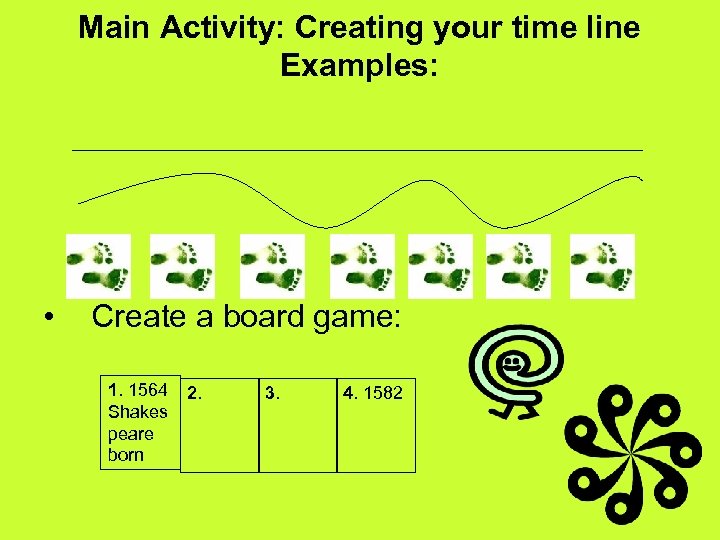
Main Activity: Creating your time line Examples: • Create a board game: 1. 1564 Shakes peare born 2. 3. 4. 1582
Plenary • Make up a question that you could ask your class mates about Shakespeare. Use information from your time line or from the spider diagram in your exercise books.
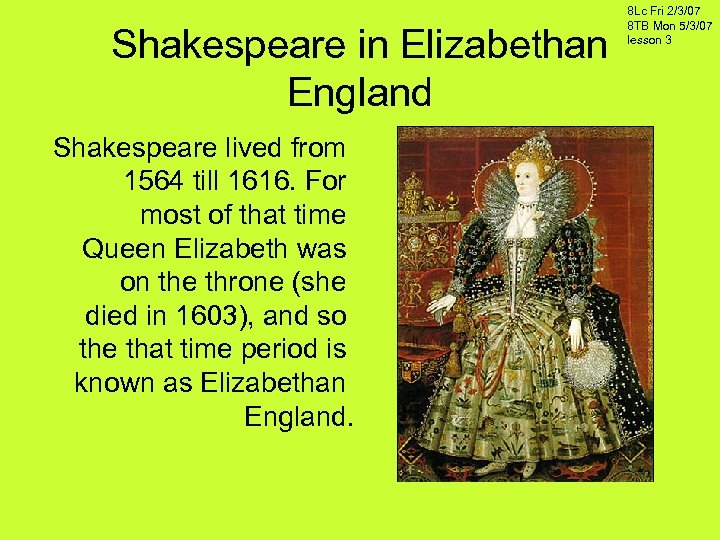
Shakespeare in Elizabethan England Shakespeare lived from 1564 till 1616. For most of that time Queen Elizabeth was on the throne (she died in 1603), and so the that time period is known as Elizabethan England. 8 Lc Fri 2/3/07 8 TB Mon 5/3/07 lesson 3
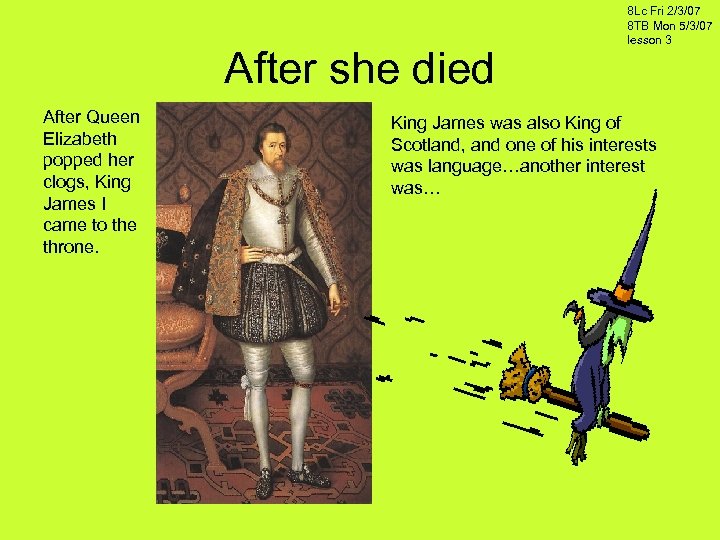
After she died After Queen Elizabeth popped her clogs, King James I came to the throne. 8 Lc Fri 2/3/07 8 TB Mon 5/3/07 lesson 3 King James was also King of Scotland, and one of his interests was language…another interest was…
Witchcraft and magic 8 Lc Fri 2/3/07 8 TB Mon 5/3/07 lesson 3 In Elizabethan England EVERYONE believed in witchcraft. That is, everyone believed that witchcraft was real, that witches cast spells to make a cow sick, or to cause a woman to be ugly, or to make a man’s hair fall out. They believed that most witches were women, that they had supernatural powers, and that they could do things like see into the future, predict the weather, or kill without being caught.
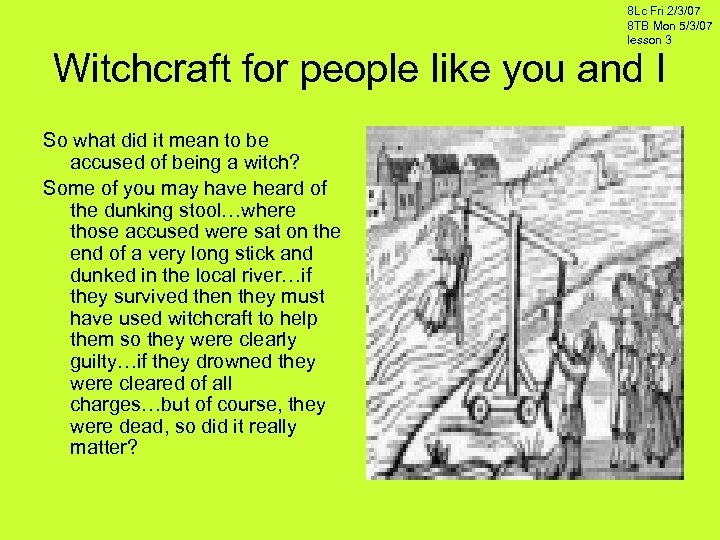
8 Lc Fri 2/3/07 8 TB Mon 5/3/07 lesson 3 Witchcraft for people like you and I So what did it mean to be accused of being a witch? Some of you may have heard of the dunking stool…where those accused were sat on the end of a very long stick and dunked in the local river…if they survived then they must have used witchcraft to help them so they were clearly guilty…if they drowned they were cleared of all charges…but of course, they were dead, so did it really matter?
8 Lc Fri 2/3/07 8 TB Mon 5/3/07 lesson 3 Witchcraft, King James, and a play called ‘The Tempest’. FACT: King James was on the throne when Shakespeare wrote The Tempest. OPINION : We know The Tempest is a very good play because people still go and see it be performed 400 years after it was written. THEORY : Shakespeare included lots of magic and some witchcraft in ‘The Tempest’, because he wanted to please King James and he knew King James would enjoy seeing the magic of Prospero and Ariel, and the witchcraft of Sycorax in the play.
TASK… Using the worksheet, complete the CLOZE activities in your best handwriting. a) The Life of William Shakespeare, (Page 1) b) Shakespeare Cultural background, Witchcraft. (Page 2)
Elizabethan Theatres Learning Outcome By the end of the lesson I will have interpreted illustrations and be able to say how they help me understand Elizabethan theatre. Key words Elizabethan theatres
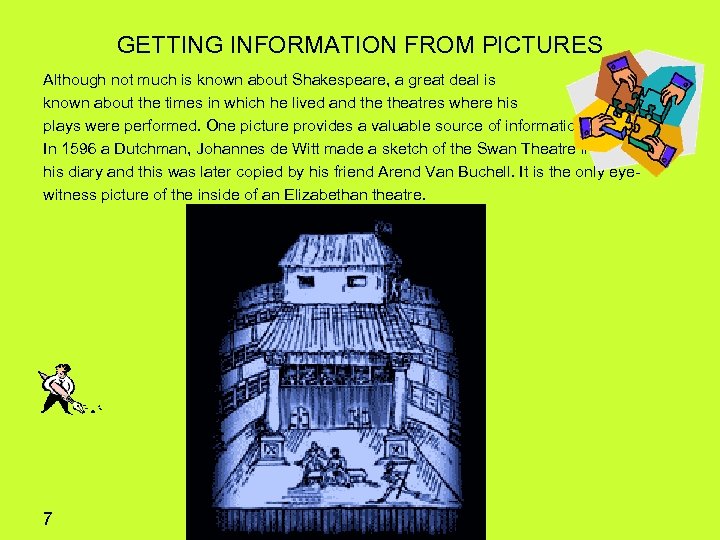
GETTING INFORMATION FROM PICTURES Although not much is known about Shakespeare, a great deal is known about the times in which he lived and theatres where his plays were performed. One picture provides a valuable source of information. In 1596 a Dutchman, Johannes de Witt made a sketch of the Swan Theatre in his diary and this was later copied by his friend Arend Van Buchell. It is the only eye witness picture of the inside of an Elizabethan theatre. 7
Activity 1. On plain paper draw the picture of the Elizabethan theatre on pg 119 2. Complete Activity 3, pg 118 and label your drawing. Use one colour for the Latin labels and a different colour for the English meanings. 3. Write on the back of your drawing the true statements in activity 3. 2.
Thurs 8/3/07 lesson 4 Task: Activity 4 Turn to p 120 Using the A 4 worksheet, 1) label each part of theatre, neatly. Make sure your writing stays level. 2) On the back of the worksheet, answer part 2 in full sentences.
Fri 5/3/07 Elizabethan Theatres Lesson Outcomes By the end of the lesson I will have an understanding of the Elizabethan theatre experience. lesson 5
Thurs 8/3/07 lesson 4 Starter 1) On lined paper put your name on the left and today’s date on the right. 2) Put the title William Shakespeare: A biography 3) Put the sub heading Shakespeare’s Personal Life 4) Write a paragraph using the research you have gathered for homework.
Homework Remember that you are going to write an Introduction to Shakespeare. You have already written details about various aspects of his life. Your next task is to write: 1) a paragraph about Elizabethan theatre 2) a paragraph about one (or more) of Shakespeare’s plays. The following websites are useful: http: //www. bardweb. net/words. html http: //www. pegasus 51. org/awtew/language. htm Also, there is information in the library. Aim to write at least 100 words for each subheading. The following may help you: üTitle of the play üCharacters in the play üThemes in the play, for example, love, hate, war, power. üPlot üType of play (comedy, tragedy, history for example) ØStage design Øtheatre location Øtheatre name Øwhy male actors Øcost of going to see the play Øwho went to see the play Øthe Elizabethan experience of going to theatre Fri 5/3/07 lesson 5
Cinema or theatre? which would you choose? Thurs 8/3/07 lesson 4 Have you been to theatre or the cinema? Think about the experience. Why is the cinema different to theatre? Who hasn’t been to theatre? Why not? Not cool? No opportunity? Too expensive? Not interested?
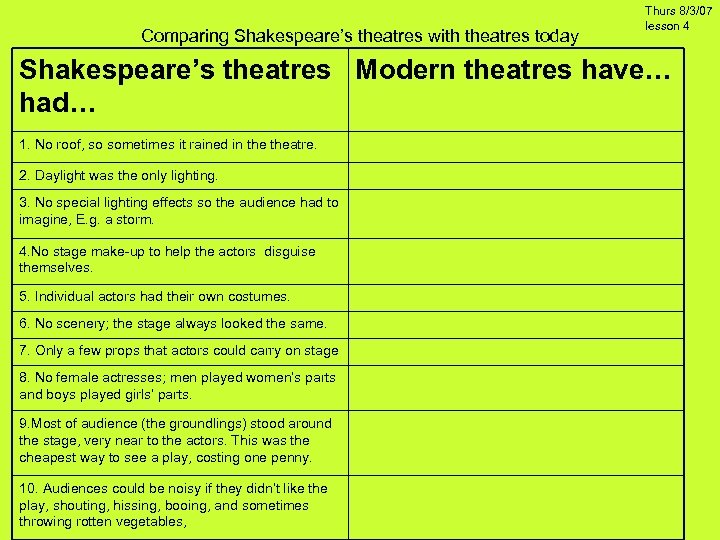
Comparing Shakespeare’s theatres with theatres today Thurs 8/3/07 lesson 4 Shakespeare’s theatres Modern theatres have… had… 1. No roof, so sometimes it rained in theatre. 2. Daylight was the only lighting. 3. No special lighting effects so the audience had to imagine, E. g. a storm. 4. No stage make up to help the actors disguise themselves. 5. Individual actors had their own costumes. 6. No scenery; the stage always looked the same. 7. Only a few props that actors could carry on stage 8. No female actresses; men played women’s parts and boys played girls’ parts. 9. Most of audience (the groundlings) stood around the stage, very near to the actors. This was the cheapest way to see a play, costing one penny. 10. Audiences could be noisy if they didn’t like the play, shouting, hissing, booing, and sometimes throwing rotten vegetables,
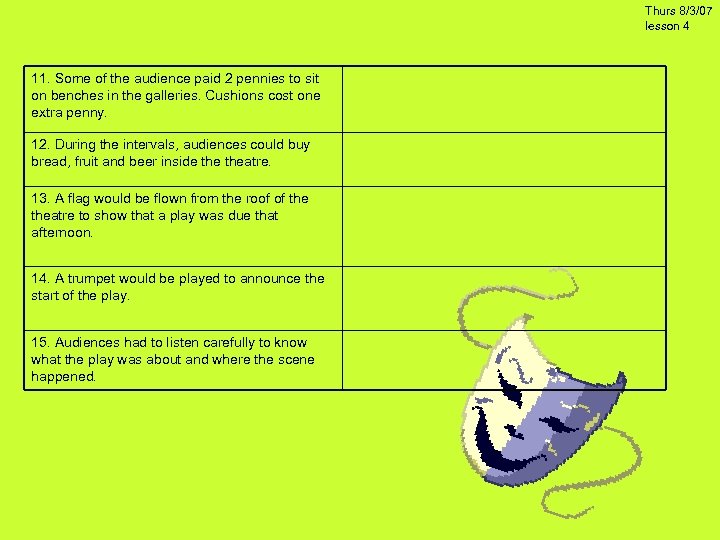
Thurs 8/3/07 lesson 4 11. Some of the audience paid 2 pennies to sit on benches in the galleries. Cushions cost one extra penny. 12. During the intervals, audiences could buy bread, fruit and beer inside theatre. 13. A flag would be flown from the roof of theatre to show that a play was due that afternoon. 14. A trumpet would be played to announce the start of the play. 15. Audiences had to listen carefully to know what the play was about and where the scene happened.
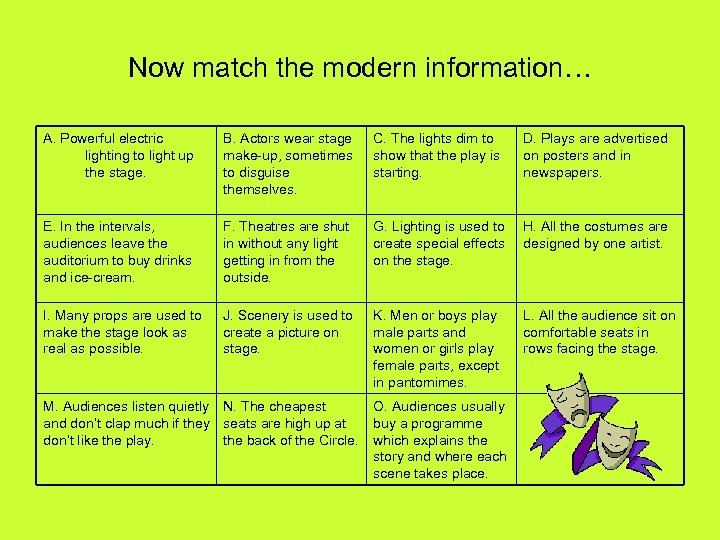
Now match the modern information… A. Powerful electric lighting to light up the stage. B. Actors wear stage make up, sometimes to disguise themselves. C. The lights dim to show that the play is starting. D. Plays are advertised on posters and in newspapers. E. In the intervals, audiences leave the auditorium to buy drinks and ice cream. F. Theatres are shut in without any light getting in from the outside. G. Lighting is used to create special effects on the stage. H. All the costumes are designed by one artist. I. Many props are used to make the stage look as real as possible. J. Scenery is used to create a picture on stage. K. Men or boys play male parts and women or girls play female parts, except in pantomimes. L. All the audience sit on comfortable seats in rows facing the stage. M. Audiences listen quietly N. The cheapest and don’t clap much if they seats are high up at don’t like the play. the back of the Circle. O. Audiences usually buy a programme which explains the story and where each scene takes place.
A World of Marvels and Romance Lesson Outcomes By the end of the lesson I will have gathered information about theatre experience in Shakespeare’s world. Key words Empathy Context
Reading with Empathy Lesson Outcomes By the end of the lesson I will have imagined what it feels like to be someone else and to see things from their point of view. Key words Empathy groundling
You are a groundling in the World of William Shakespeare 1. What is your name? 2. How old are you? 3. How do you earn a living? 4. Do you have friends? Family?
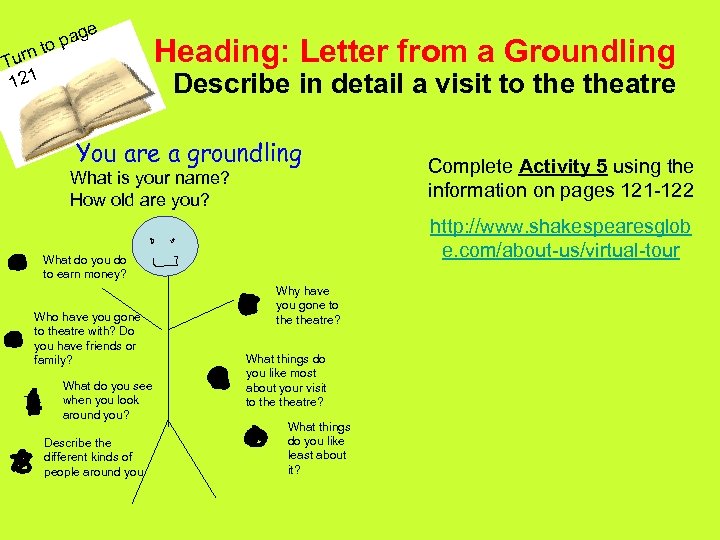
n Tur 121 e pag to Heading: Letter from a Groundling Describe in detail a visit to theatre You are a groundling What is your name? How old are you? http: //www. shakespearesglob e. com/about us/virtual tour What do you do to earn money? Who have you gone to theatre with? Do you have friends or family? What do you see when you look around you? Describe the different kinds of people around you Complete Activity 5 using the information on pages 121 122 Why have you gone to theatre? What things do you like most about your visit to theatre? What things do you like least about it?
Describe in detail a visit to theatre Write a letter to a friend or relative describing your visit to theatre
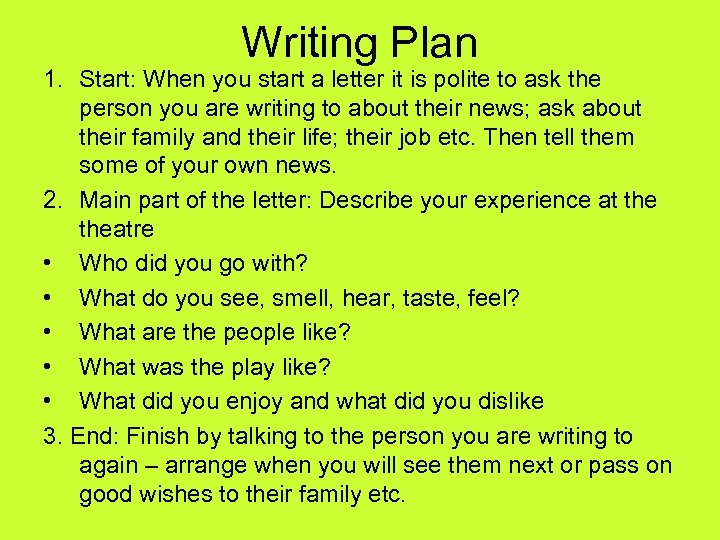
Writing Plan 1. Start: When you start a letter it is polite to ask the person you are writing to about their news; ask about their family and their life; their job etc. Then tell them some of your own news. 2. Main part of the letter: Describe your experience at theatre • Who did you go with? • What do you see, smell, hear, taste, feel? • What are the people like? • What was the play like? • What did you enjoy and what did you dislike 3. End: Finish by talking to the person you are writing to again – arrange when you will see them next or pass on good wishes to their family etc.
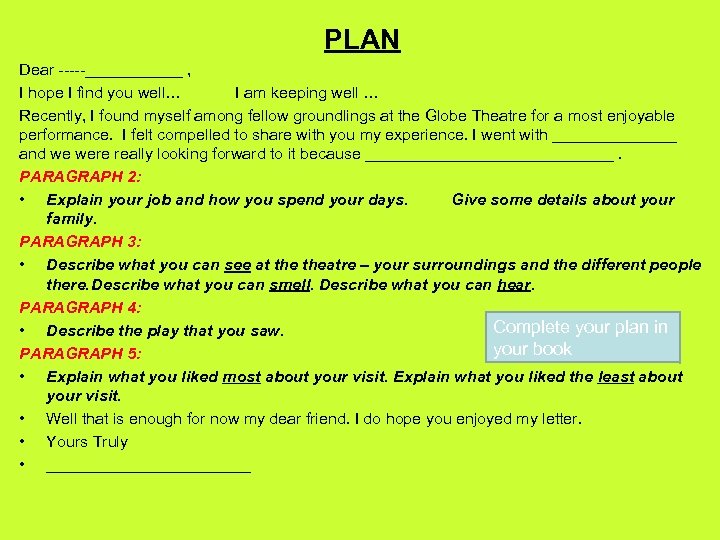
PLAN Dear ______ , I hope I find you well… I am keeping well … Recently, I found myself among fellow groundlings at the Globe Theatre for a most enjoyable performance. I felt compelled to share with you my experience. I went with _______ and we were really looking forward to it because ______________. PARAGRAPH 2: • Explain your job and how you spend your days. Give some details about your family. PARAGRAPH 3: • Describe what you can see at theatre – your surroundings and the different people there. Describe what you can smell. Describe what you can hear. PARAGRAPH 4: Complete your plan in • Describe the play that you saw. your book PARAGRAPH 5: • Explain what you liked most about your visit. Explain what you liked the least about your visit. • Well that is enough for now my dear friend. I do hope you enjoyed my letter. • Yours Truly • ____________
Task: • You are going to imagine that you have visited the Globe Theatre in Elizabethan England. • Following your visit you are going to write a letter to a friend telling them about the visit. In this assessment my target is to _____________________________________________ ________________
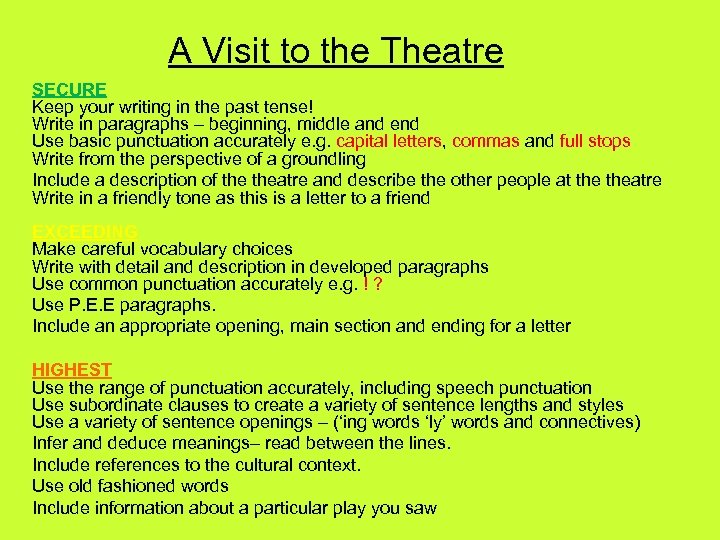
A Visit to the Theatre SECURE Keep your writing in the past tense! Write in paragraphs – beginning, middle and end Use basic punctuation accurately e. g. capital letters, commas and full stops Write from the perspective of a groundling Include a description of theatre and describe the other people at theatre Write in a friendly tone as this is a letter to a friend EXCEEDING Make careful vocabulary choices Write with detail and description in developed paragraphs Use common punctuation accurately e. g. ! ? Use P. E. E paragraphs. Include an appropriate opening, main section and ending for a letter HIGHEST Use the range of punctuation accurately, including speech punctuation Use subordinate clauses to create a variety of sentence lengths and styles Use a variety of sentence openings – (‘ing words ‘ly’ words and connectives) Infer and deduce meanings– read between the lines. Include references to the cultural context. Use old fashioned words Include information about a particular play you saw
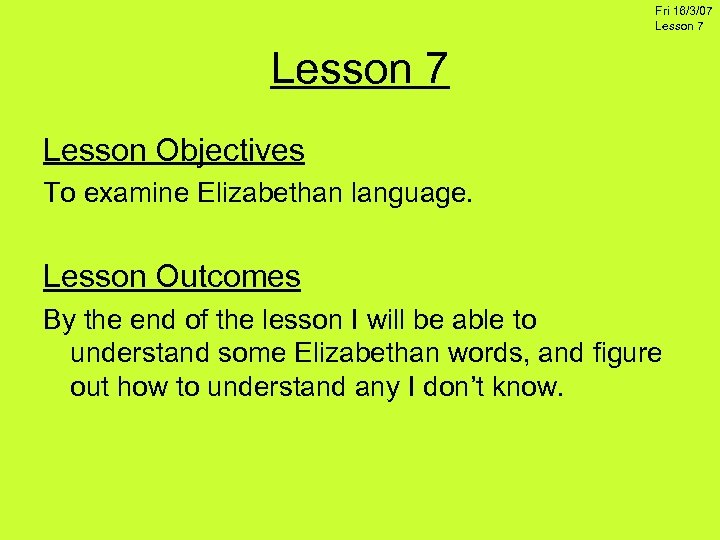
Fri 16/3/07 Lesson Objectives To examine Elizabethan language. Lesson Outcomes By the end of the lesson I will be able to understand some Elizabethan words, and figure out how to understand any I don’t know.
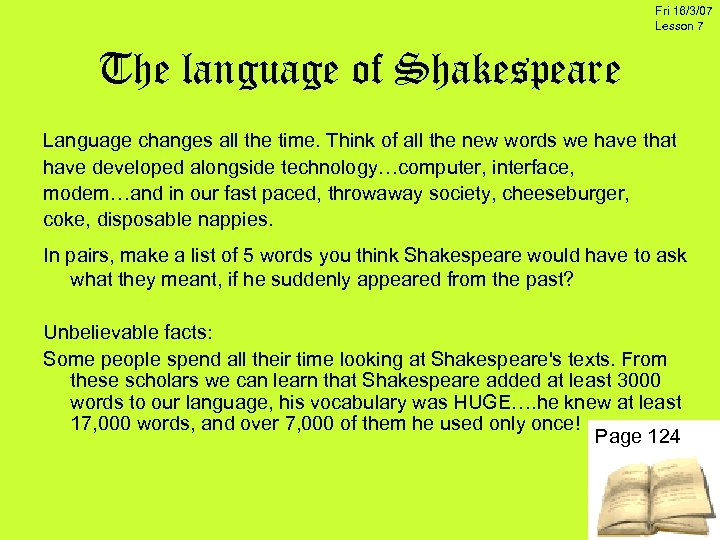
Fri 16/3/07 Lesson 7 The language of Shakespeare Language changes all the time. Think of all the new words we have that have developed alongside technology…computer, interface, modem…and in our fast paced, throwaway society, cheeseburger, coke, disposable nappies. In pairs, make a list of 5 words you think Shakespeare would have to ask what they meant, if he suddenly appeared from the past? Unbelievable facts: Some people spend all their time looking at Shakespeare's texts. From these scholars we can learn that Shakespeare added at least 3000 words to our language, his vocabulary was HUGE…. he knew at least 17, 000 words, and over 7, 000 of them he used only once! Page 124
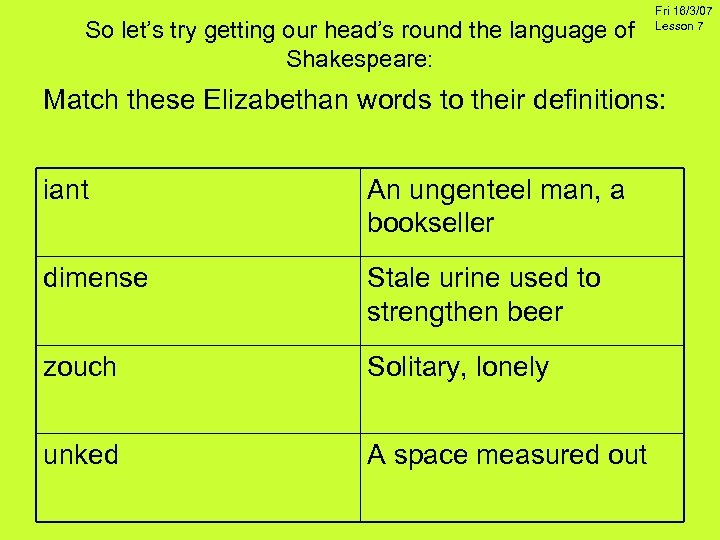
So let’s try getting our head’s round the language of Shakespeare: Fri 16/3/07 Lesson 7 Match these Elizabethan words to their definitions: iant An ungenteel man, a bookseller dimense Stale urine used to strengthen beer zouch Solitary, lonely unked A space measured out
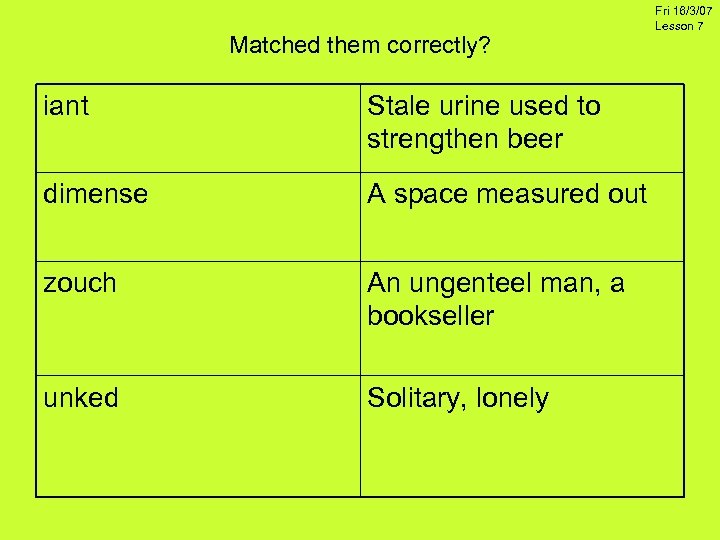
Matched them correctly? iant Stale urine used to strengthen beer dimense A space measured out zouch An ungenteel man, a bookseller unked Solitary, lonely Fri 16/3/07 Lesson 7
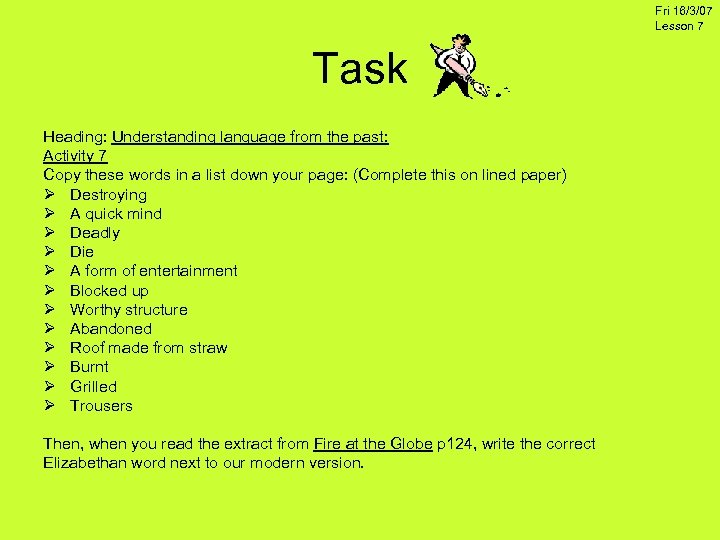
Fri 16/3/07 Lesson 7 Task Heading: Understanding language from the past: Activity 7 Copy these words in a list down your page: (Complete this on lined paper) Ø Destroying Ø A quick mind Ø Deadly Ø Die Ø A form of entertainment Ø Blocked up Ø Worthy structure Ø Abandoned Ø Roof made from straw Ø Burnt Ø Grilled Ø Trousers Then, when you read the extract from Fire at the Globe p 124, write the correct Elizabethan word next to our modern version.
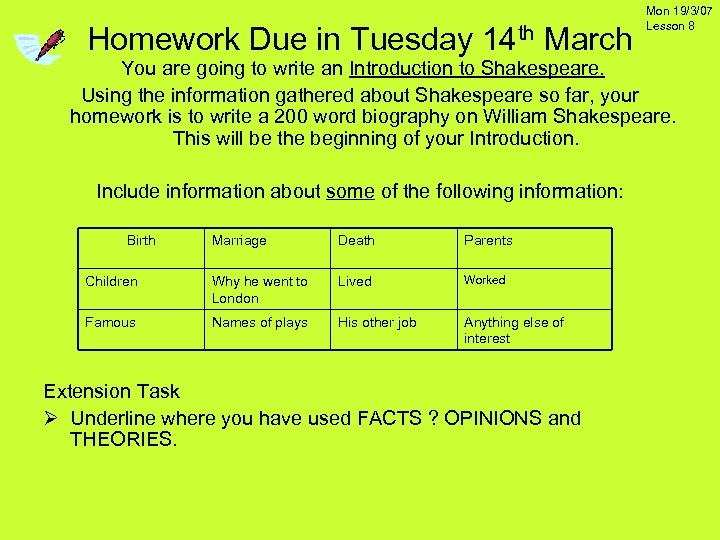
Homework Due in Tuesday 14 th March Mon 19/3/07 Lesson 8 You are going to write an Introduction to Shakespeare. Using the information gathered about Shakespeare so far, your homework is to write a 200 word biography on William Shakespeare. This will be the beginning of your Introduction. Include information about some of the following information: Birth Marriage Death Parents Children Why he went to London Lived Worked Famous Names of plays His other job Anything else of interest Extension Task Ø Underline where you have used FACTS ? OPINIONS and THEORIES.
Скачать презентацию The World of William Unit Objectives This
3b6d6cb68ac460cf5d2fd456f0f5ce06.ppt