



 The Water - (Land-) Energy – Ecosystem Nexus in the Blue Nile / Ethiopia Holger Hoff Stockholm Environment Institute (SEI) Potsdam Institute for Climate Impact Research (PIK) Lucia de Strasser Royal Institute of Technology (KTH) Bahir Dar, 27 March 2013
 Nexus Background Paper www. water-energy food. org/documents/ understanding_the_nexus. pdf SEI, KTH, FAO, IAEA, UNDESA…
 What is „the nexus“ ? an integrated approach promoting “systemic thinking” e. g. externalities, tradeoffs, synergies Why do we need it ? increasing demand for natural resources, for food, energy and other human securities, threatens environmental sustainability , ecosystem services -> need for sustainable intensification -> need for coherent policies across scales -> to be supported by multi-scale, cross-sectoral analyses How to implement it? mostly through case studies: Burkina Faso (food-biofuel) , Mauritius (sugarcane for biofuel), MENA (climate adaptation – mitigation), California, Blue Nile
 Tool box for nexus tradeoff analysis, integrated scenarios, policy and investment support WEAP / LEAP (AEZ) • simulating long-term resource allocations, • integrated network-based demand supply analysis, • transparent, flexible, user-friendly, low initial data requirements, • similar user interfaces and terminologies, • widely used in ministries, authorities, bureaus, NGOs, universities etc: 100 s of users worldwide. • for free to non-profit developing country institutions • frequent trainings in Sweden, but also in various regions (plus online tutorials and handbooks) to be developed jointly with stakeholders and scientists
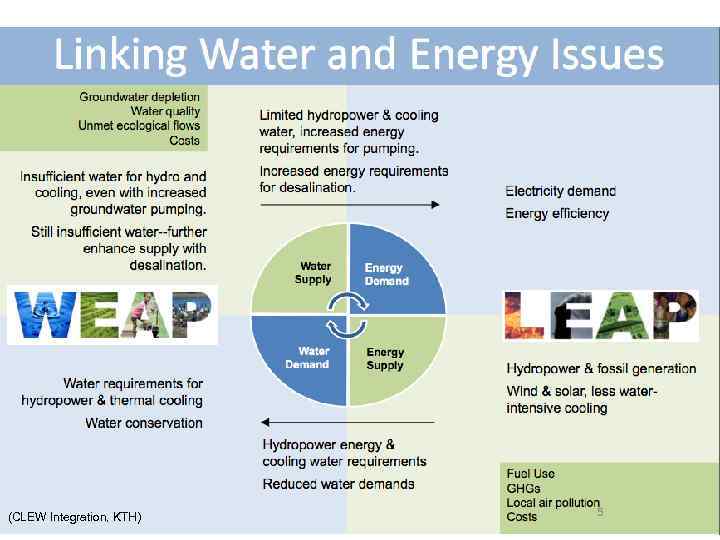 (CLEW Integration, KTH) 5
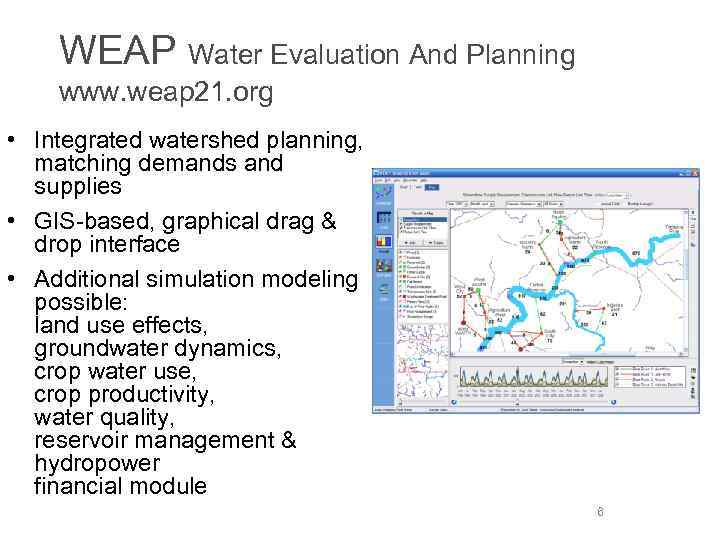 WEAP Water Evaluation And Planning www. weap 21. org • Integrated watershed planning, matching demands and supplies • GIS-based, graphical drag & drop interface • Additional simulation modeling possible: land use effects, groundwater dynamics, crop water use, crop productivity, water quality, reservoir management & hydropower financial module 6
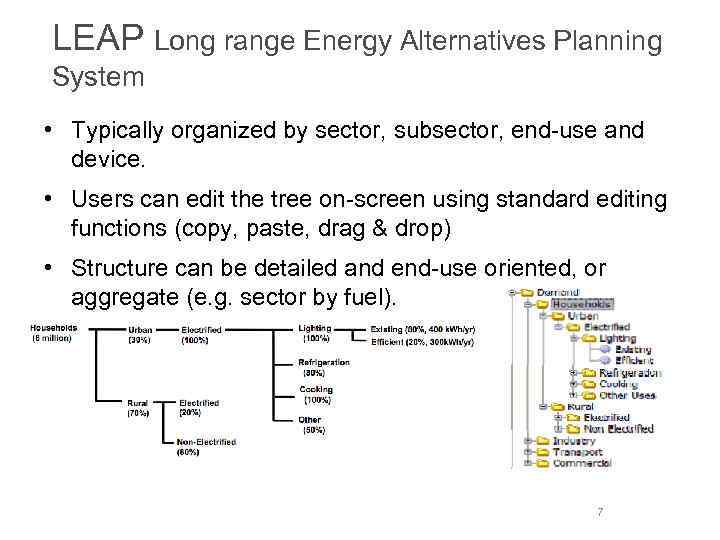 LEAP Long range Energy Alternatives Planning System • Typically organized by sector, subsector, end-use and device. • Users can edit the tree on-screen using standard editing functions (copy, paste, drag & drop) • Structure can be detailed and end-use oriented, or aggregate (e. g. sector by fuel). 7
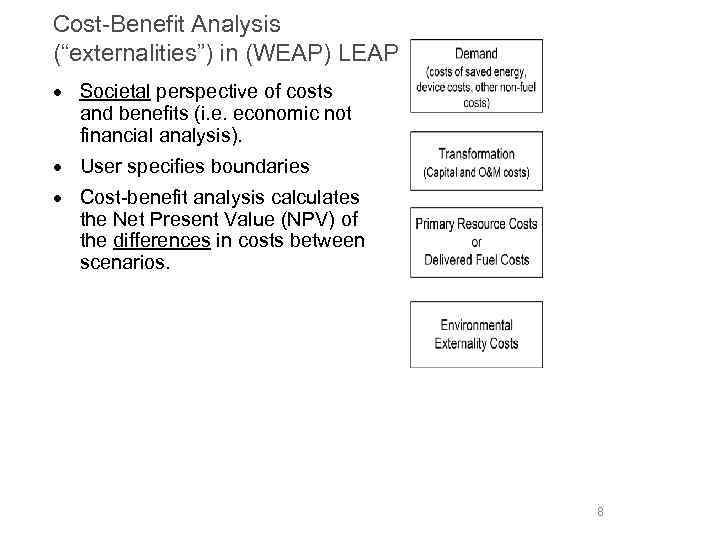 Cost-Benefit Analysis (“externalities”) in (WEAP) LEAP · Societal perspective of costs and benefits (i. e. economic not financial analysis). · User specifies boundaries · Cost-benefit analysis calculates the Net Present Value (NPV) of the differences in costs between scenarios. 8
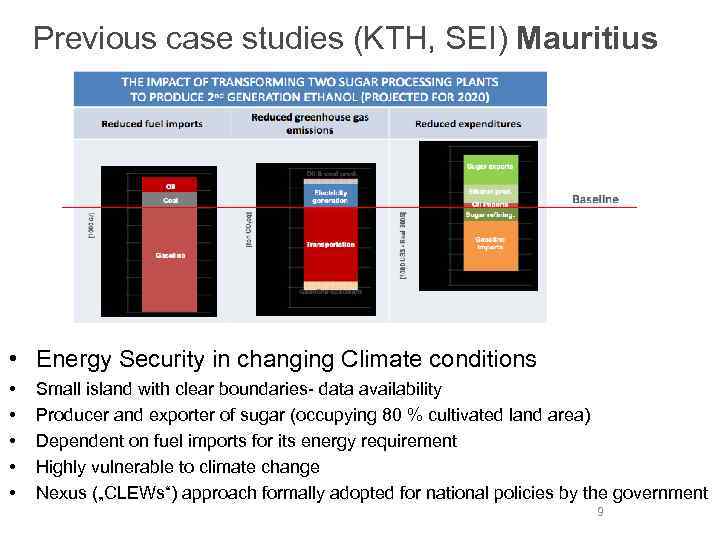 Previous case studies (KTH, SEI) Mauritius • Energy Security in changing Climate conditions • • • Small island with clear boundaries- data availability Producer and exporter of sugar (occupying 80 % cultivated land area) Dependent on fuel imports for its energy requirement Highly vulnerable to climate change Nexus („CLEWs“) approach formally adopted for national policies by the government 9
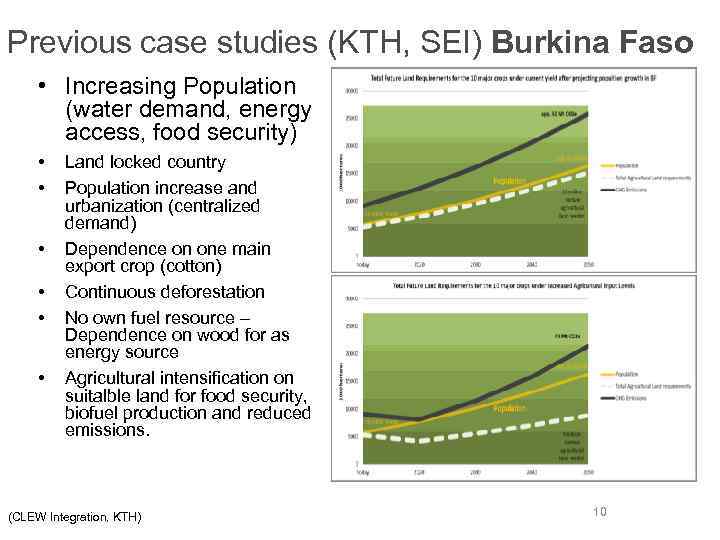 Previous case studies (KTH, SEI) Burkina Faso • Increasing Population (water demand, energy access, food security) • • • Land locked country Population increase and urbanization (centralized demand) Dependence on one main export crop (cotton) Continuous deforestation No own fuel resource – Dependence on wood for as energy source Agricultural intensification on suitalble land for food security, biofuel production and reduced emissions. (CLEW Integration, KTH) 10
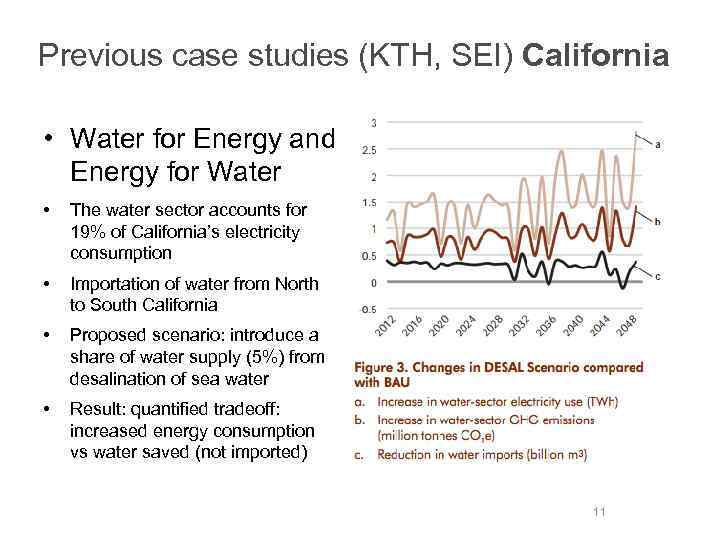 Previous case studies (KTH, SEI) California • Water for Energy and Energy for Water • The water sector accounts for 19% of California’s electricity consumption • Importation of water from North to South California • Proposed scenario: introduce a share of water supply (5%) from desalination of sea water • Result: quantified tradeoff: increased energy consumption vs water saved (not imported) 11
 Application of the nexus concept to the Ethiopian Blue Nile Supporting ongoing activities, plans and strategies e. g. GTP & CRGE: agricultural intensification / commercialization / irrigation, renewables / hydropower / bioenergy crops Identifying pathway to achieve goals such as: • improved water use efficiency (GTP) • avoiding further cropland expansion (CRGE) For discussion: how are the national goals broken down into Blue Nile planning and management?
 Application of the nexus concept to the Ethiopian Blue Nile proposed focus on biomass production, tradeoff analyses / testing different strategies, e. g. small- vs. large-scale storage water for hydropower vs. water for agriculture water for biofuels vs. water food production energy for agricultural intensification goal: „improved landscape configurations“ for resilience
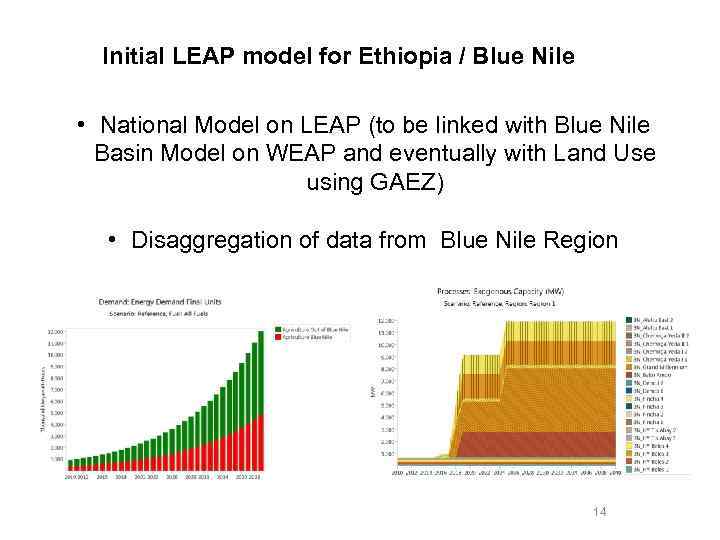 Initial LEAP model for Ethiopia / Blue Nile • National Model on LEAP (to be linked with Blue Nile Basin Model on WEAP and eventually with Land Use using GAEZ) • Disaggregation of data from Blue Nile Region 14
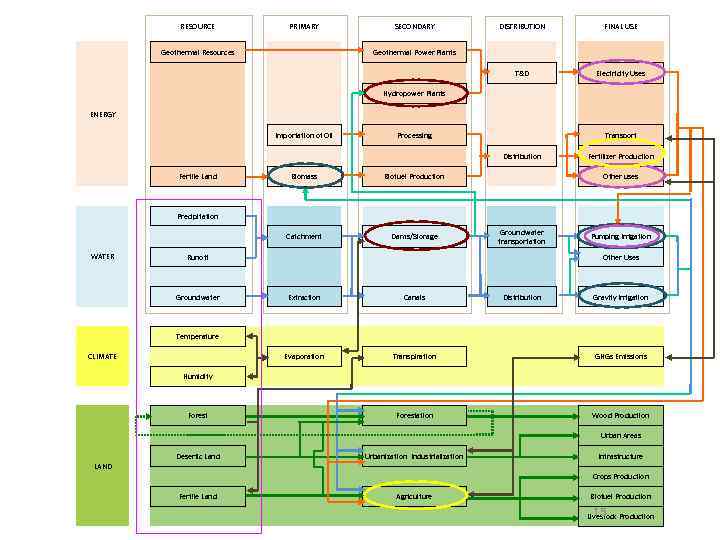 RESOURCE Geothermal Resources PRIMARY Geothermal Power Plants ENERGY SECONDARY DISTRIBUTION Hydropower Plants T&D FINAL USE Electricity Uses Processing Transport Distribution Fertilizer Production Fertile Land Biomass Biofuel Production Other uses Precipitation Catchment Dams/Storage Groundwater transportation Pumping Irrigation Runoff Other Uses Groundwater Extraction Canals Distribution Gravity Irrigation Temperature Evaporation Transpiration GHGs Emissions Humidity Forest CLIMATE Importation of Oil WATER Forestation Wood Production Urban Areas Infrastructure Crops Production Desertic Land Urbanization Industrialization LAND Fertile Land Agriculture Biofuel Production 15 Livestock Production
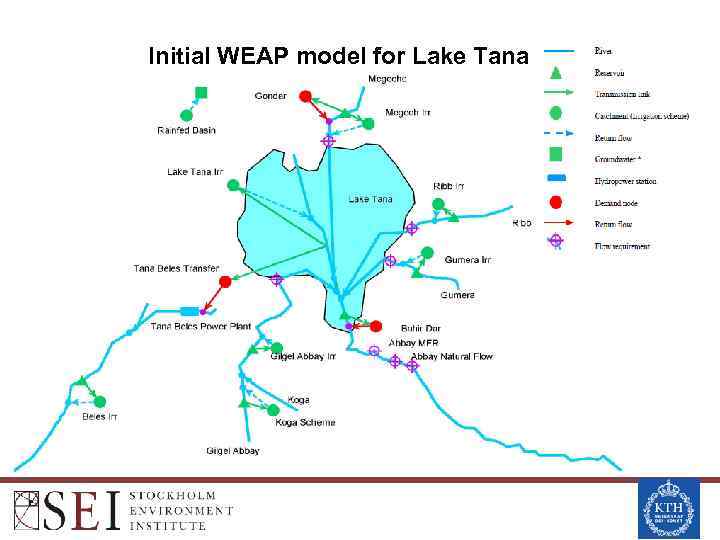 Initial WEAP model for Lake Tana
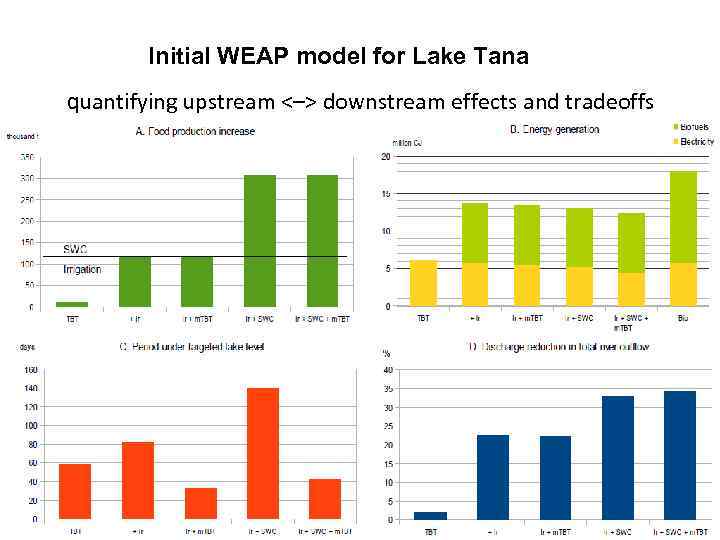 Initial WEAP model for Lake Tana quantifying upstream <–> downstream effects and tradeoffs
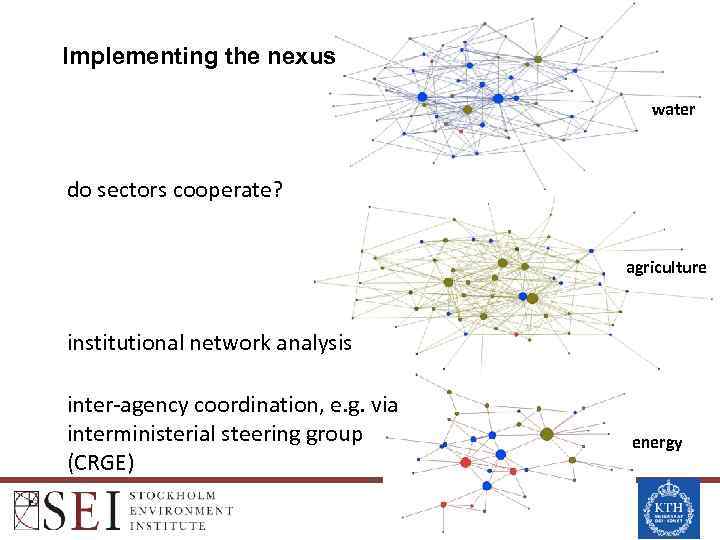 Implementing the nexus water do sectors cooperate? agriculture institutional network analysis inter-agency coordination, e. g. via interministerial steering group (CRGE) energy
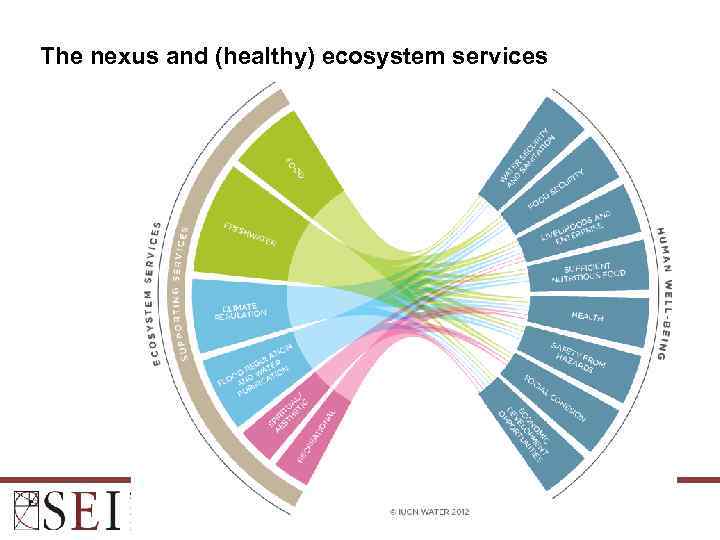 The nexus and (healthy) ecosystem services
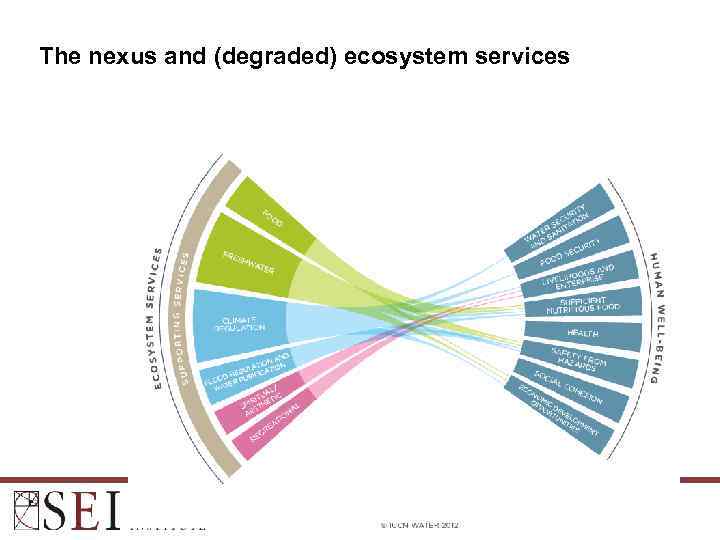 The nexus and (degraded) ecosystem services