


 Скачать презентацию The Water Cycle Made Zaganov A Nikitin A
the water cycle.pptx
- Количество слайдов: 7
 The Water Cycle Made: Zaganov A. Nikitin A. Group BSch-12
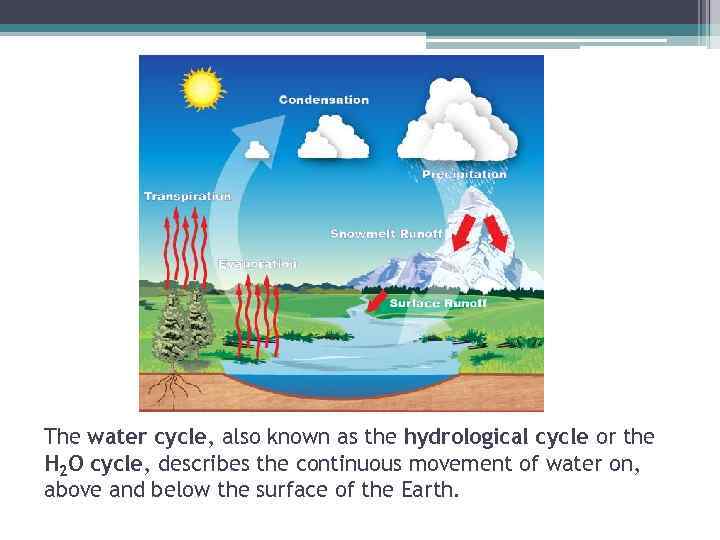 The water cycle, also known as the hydrological cycle or the H 2 O cycle, describes the continuous movement of water on, above and below the surface of the Earth.
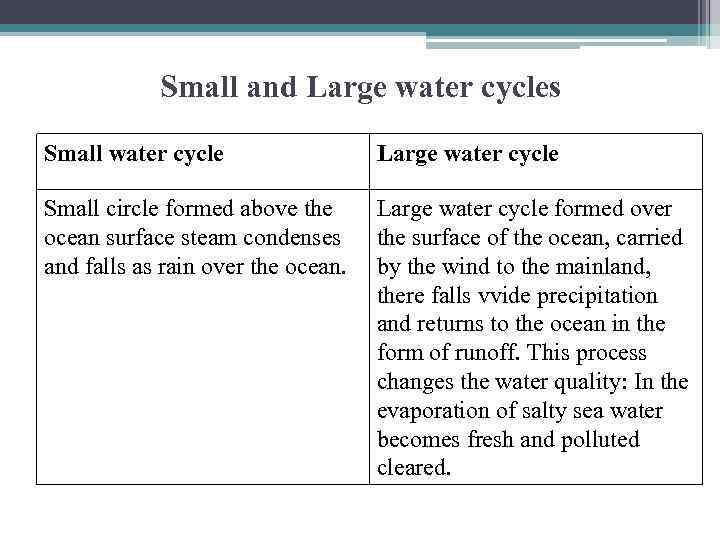 Small and Large water cycles Small water cycle Large water cycle Small circle formed above the ocean surface steam condenses and falls as rain over the ocean. Large water cycle formed over the surface of the ocean, carried by the wind to the mainland, there falls vvide precipitation and returns to the ocean in the form of runoff. This process changes the water quality: In the evaporation of salty sea water becomes fresh and polluted cleared.
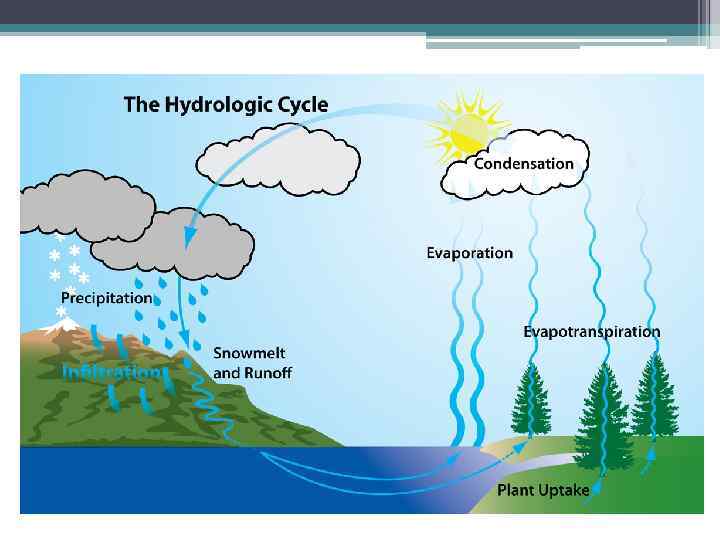
 Description • The sun, which drives the water cycle, heats water in oceans and seas. Water evaporates as water vapor into the air. Ice, rain and snow can sublimate directly into water vapor. Evapotranspiration is water transpired from plants and evaporated from the soil. Water vapor molecule H 2 O, has less density compared to the major components of the atmosphere, nitrogen and oxygen, N 2 and O 2. Due to the significant difference in molecular mass, water vapor in gas form gain height in open air as a result of buoyancy.
 Interesting facts about water cycle: • The sun is the driving force of the water cycle. • Water is constantly being recycled so the water you drink today could be the same water dinosaurs drank millions of years ago. • When the clouds get too heavy from collecting water, they release it through a process called precipitation. • Only about 3% of the water on Earth is freshwater or water that we can drink.
 https: //www. youtube. com/watch? v=VSQk. OTb. Eh. WM https: //www. youtube. com/watch? v=P 55 M 5 s. Sj. Ao. M