


 Скачать презентацию the wars of the roses 1455 -1485
the war of the roses.pptx
- Количество слайдов: 13
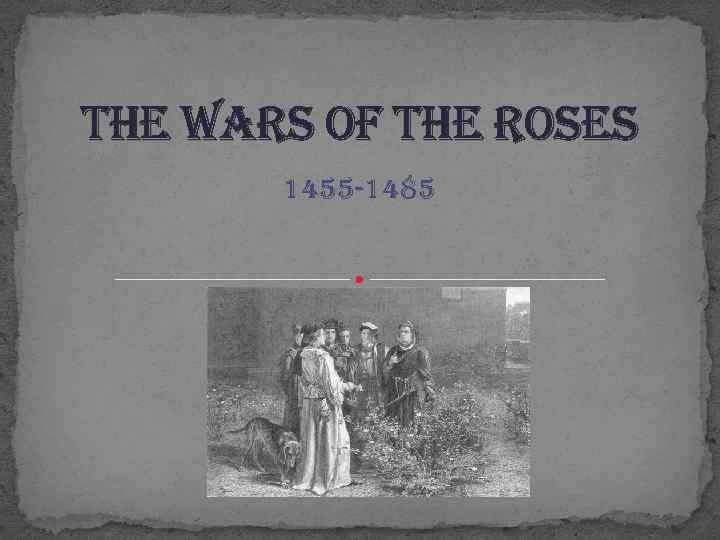 the wars of the roses 1455 -1485
 the house of lancaster The House of Lancaster was a cadet branch of the royal House of Plantagenet. It was one of the opposing factions involved in the Wars of the Roses, an intermittent dynastic struggle which affected England Wales during the 15 th century. The family provided England with three kings: Henry IV of England, who ruled 1399– 1413; Henry V of England, who ruled 1413 – 1422; and Henry VI of England (II of) France, who ruled 1422– 1461 and 1470 – 1471. The term "Lancastrian" refers to members of the family as well as their supporters.
 the house of york The House of York was a cadet branch of the English royal House of Plantagenet. Three of its members became Kings of England in the late 15 th century. The House of York was descended in the male line from Edmund of Langley, 1 st Duke of York, the fourth surviving son of Edward III, but also represented Edward's senior line, being cognatic descendants of Lionel, Duke of Clarence, Edward III's second surviving son. It is based on these descents that they claimed the English crown. Compared with the House of Lancaster, it had a senior claim to the throne of England according to cognatic primogeniture but junior claim according to the agnatic primogeniture.
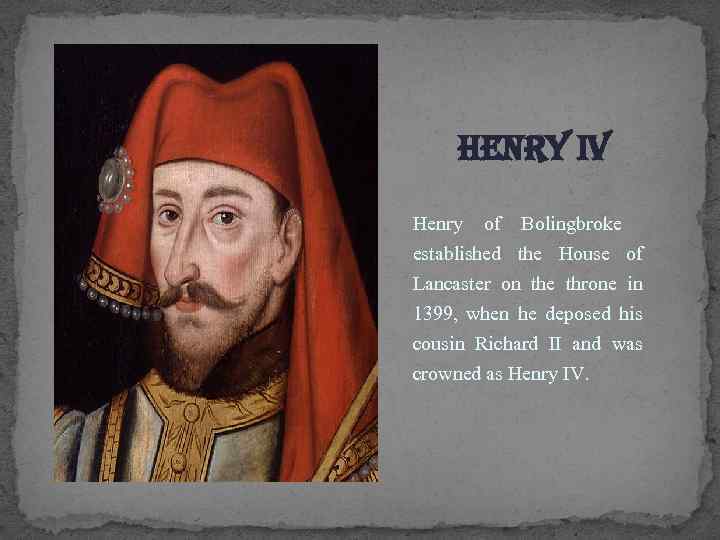 Henry i. V Henry of Bolingbroke established the House of Lancaster on the throne in 1399, when he deposed his cousin Richard II and was crowned as Henry IV.
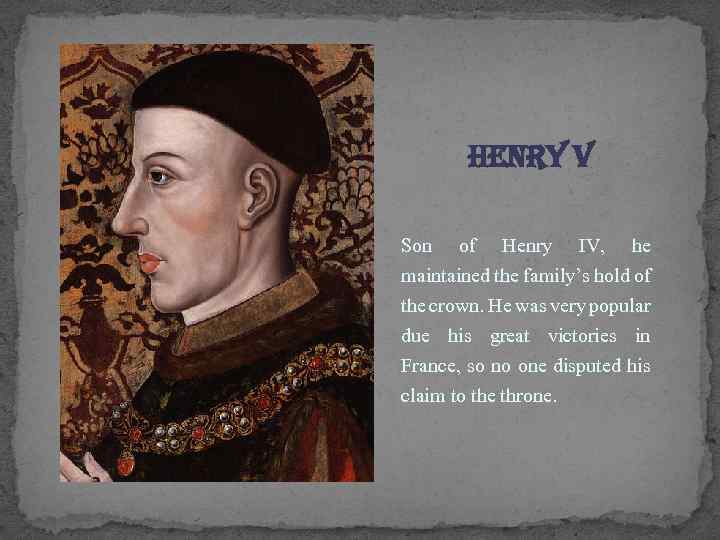 Henry V Son of Henry IV, he maintained the family’s hold of the crown. He was very popular due his great victories in France, so no one disputed his claim to the throne.
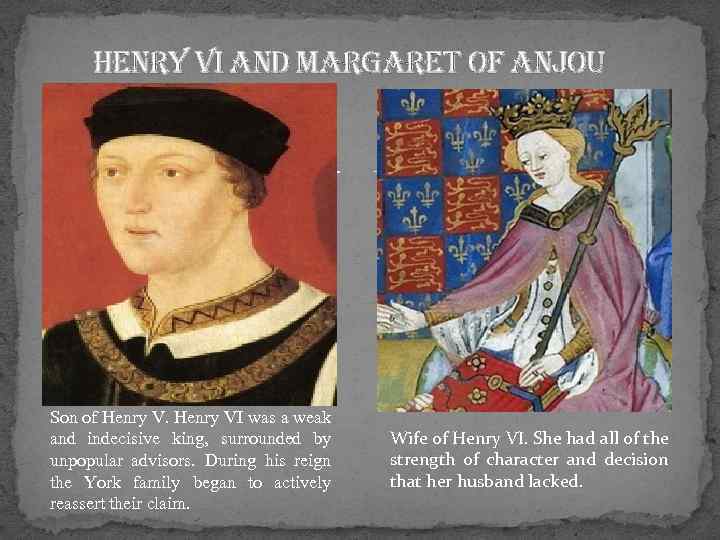 henry Vi and Margaret of anjou Son of Henry VI was a weak and indecisive king, surrounded by unpopular advisors. During his reign the York family began to actively reassert their claim. Wife of Henry VI. She had all of the strength of character and decision that her husband lacked.
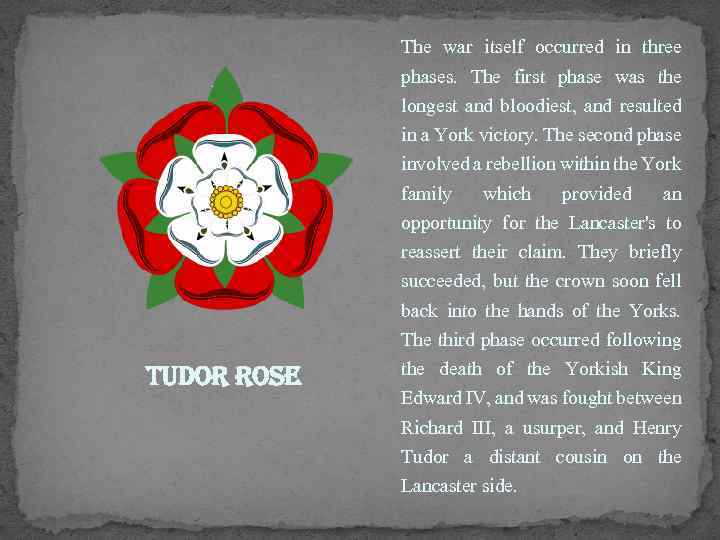 The war itself occurred in three phases. The first phase was the longest and bloodiest, and resulted in a York victory. The second phase tudor rose involved a rebellion within the York family which provided an opportunity for the Lancaster's to reassert their claim. They briefly succeeded, but the crown soon fell back into the hands of the Yorks. The third phase occurred following the death of the Yorkish King Edward IV, and was fought between Richard III, a usurper, and Henry Tudor a distant cousin on the Lancaster side.
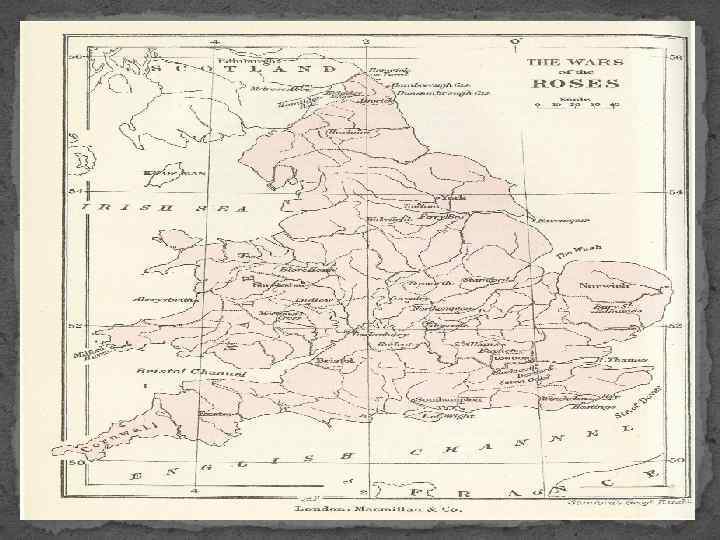
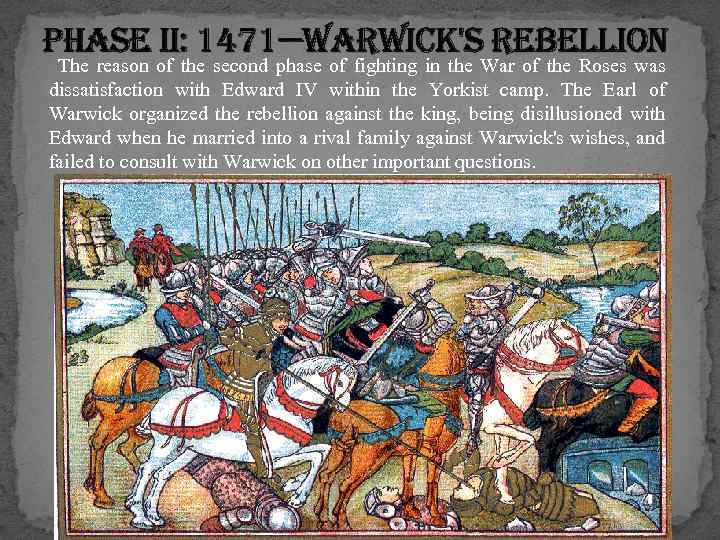 Phase ii: 1471—warwick's rebellion The reason of the second phase of fighting in the War of the Roses was dissatisfaction with Edward IV within the Yorkist camp. The Earl of Warwick organized the rebellion against the king, being disillusioned with Edward when he married into a rival family against Warwick's wishes, and failed to consult with Warwick on other important questions.
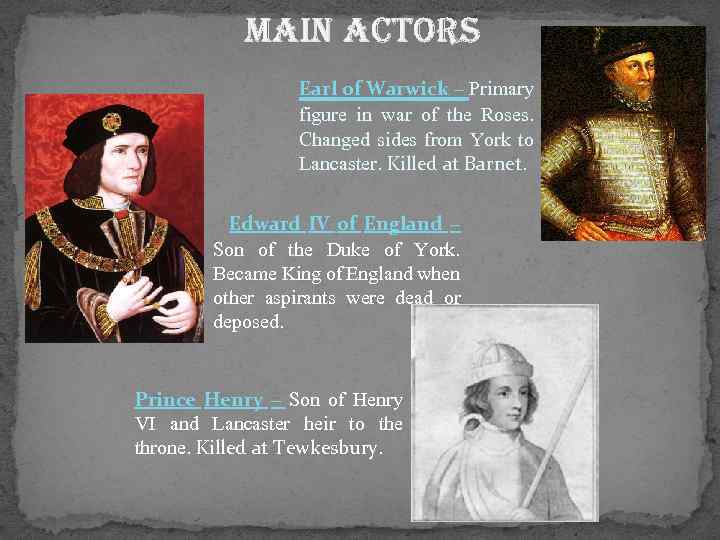 Main actors Earl of Warwick – Primary figure in war of the Roses. Changed sides from York to Lancaster. Killed at Barnet. Edward IV of England – Son of the Duke of York. Became King of England when other aspirants were dead or deposed. Prince Henry – Son of Henry VI and Lancaster heir to the throne. Killed at Tewkesbury.
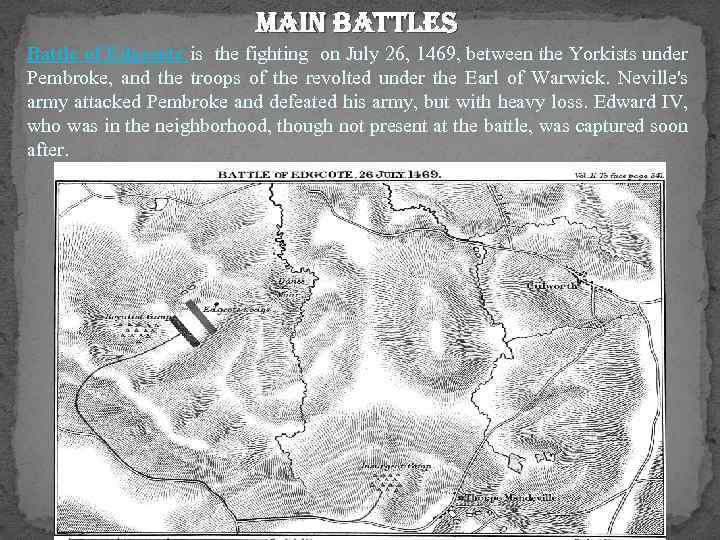 Main battles Battle of Edgecote is the fighting on July 26, 1469, between the Yorkists under Pembroke, and the troops of the revolted under the Earl of Warwick. Neville's army attacked Pembroke and defeated his army, but with heavy loss. Edward IV, who was in the neighborhood, though not present at the battle, was captured soon after.
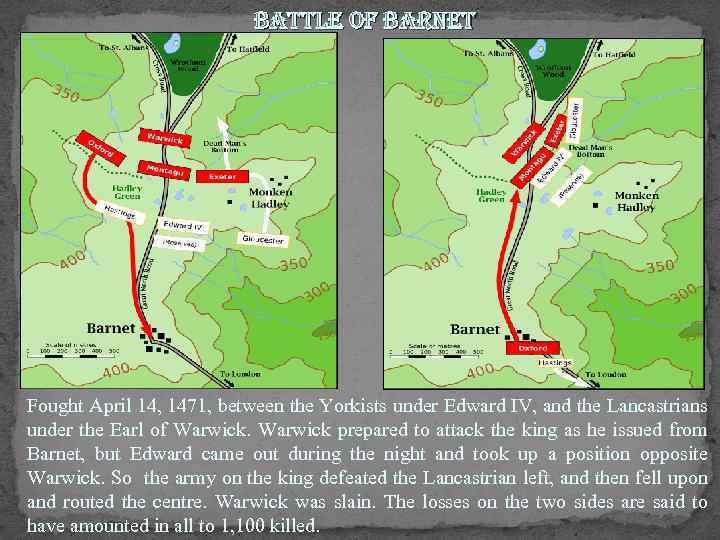 battle of barnet Fought April 14, 1471, between the Yorkists under Edward IV, and the Lancastrians under the Earl of Warwick prepared to attack the king as he issued from Barnet, but Edward came out during the night and took up a position opposite Warwick. So the army on the king defeated the Lancastrian left, and then fell upon and routed the centre. Warwick was slain. The losses on the two sides are said to have amounted in all to 1, 100 killed.
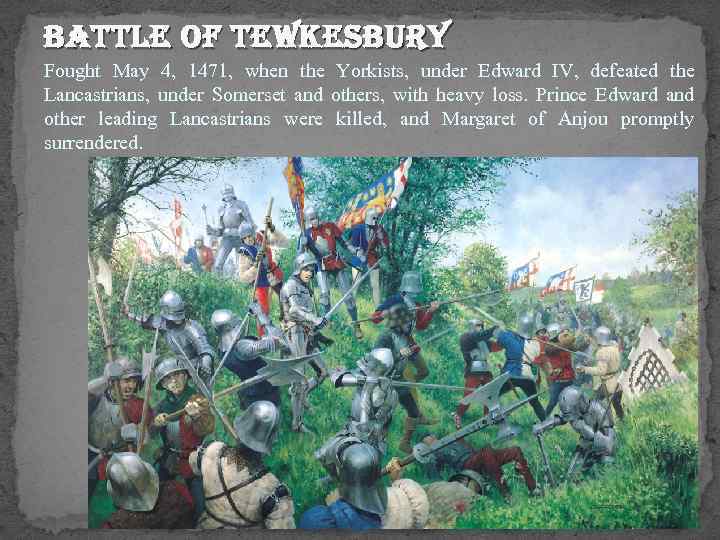 battle of tewkesbury Fought May 4, 1471, when the Yorkists, under Edward IV, defeated the Lancastrians, under Somerset and others, with heavy loss. Prince Edward and other leading Lancastrians were killed, and Margaret of Anjou promptly surrendered.