


 Скачать презентацию The Victorian Period 1837 -1901 n Grand
lecture 7.1- 2016.ppt
- Количество слайдов: 57
 The Victorian Period 1837 -1901
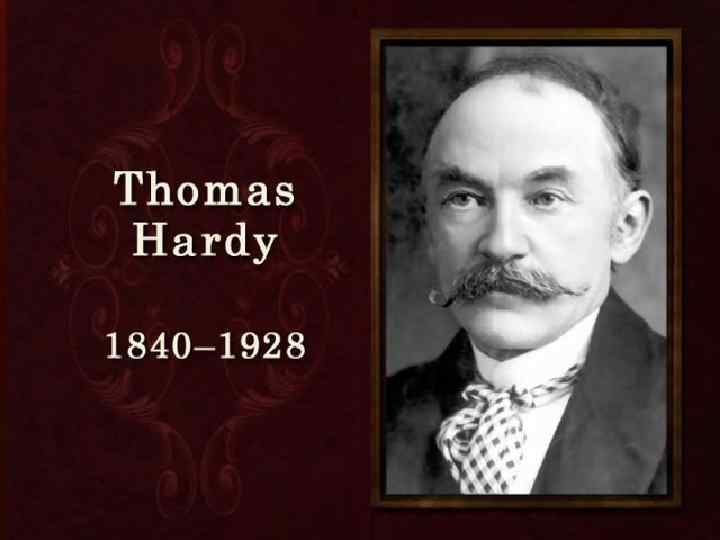
 n “Grand Old Man of English literature, towering over his fellow writers” n n a great novelist and a great poet 1860 s - late 1890 s – fiction (quintessentially of the 19 th century, not Victorian though, not in pursuit of the standards of morality) The Return of the Native Tess of the d’Urbervilles Jude the Obscure n n From the turn of the century until his death, he was principally a poet (poetry properly belongs in the Modern period )
 Thomas Hardy n Ah, are you digging on my grave My loved one? --planting rue? " --"No; yesterday he went to wed One of the brightest wealth has bred. 'It cannot hurt her now, ' he said, That I 'should not be true. '"
 n Then who is digging on my grave? My nearest dearest kin? " --"Ah, no; they sit and think, 'What use! What good will planting flowers produce? No tendance of her mound can loose Her spirit from Death's gin. '"
 n But someone digs upon my grave? My enemy? --prodding sly? " --"Nay; when she heard you had passed the Gate That shuts on all flesh soon or late, She thought you no more worth her hate, And cares not where you lie. "
 n Then, who is digging on my grave? Say--since I have not guessed!" --"0 it is I, my mistress dear, Your little dog, who still lives near, And much I hope my movements here Have not disturbed your rest? "
 n Ah, yes! You dig upon my grave. . . Why flashed it not on me That one true heart was left behind! What feeling do we ever find To equal among humankind A dog's fidelity!"
 n Mistress, I dug upon your grave To bury a bone, in case I should be hungry near this spot When passing on my daily trot. I am sorry, but I quite forgot It was your resting-place. "
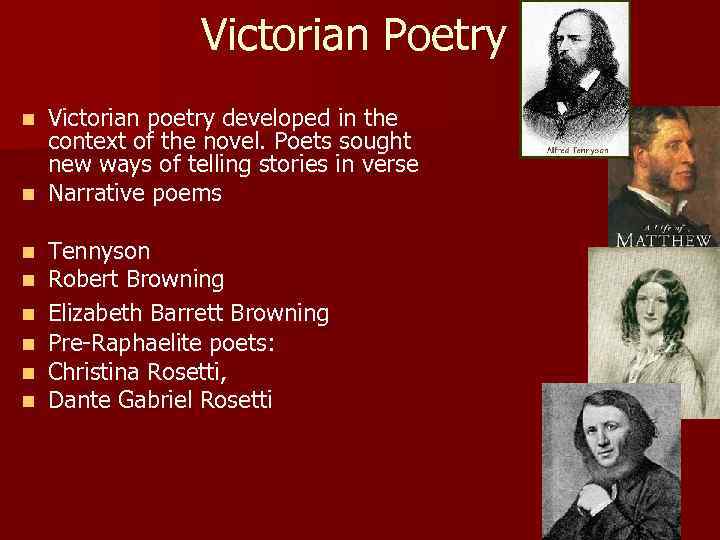 Victorian Poetry Victorian poetry developed in the context of the novel. Poets sought new ways of telling stories in verse n Narrative poems n n n n Tennyson Robert Browning Elizabeth Barrett Browning Pre-Raphaelite poets: Christina Rosetti, Dante Gabriel Rosetti
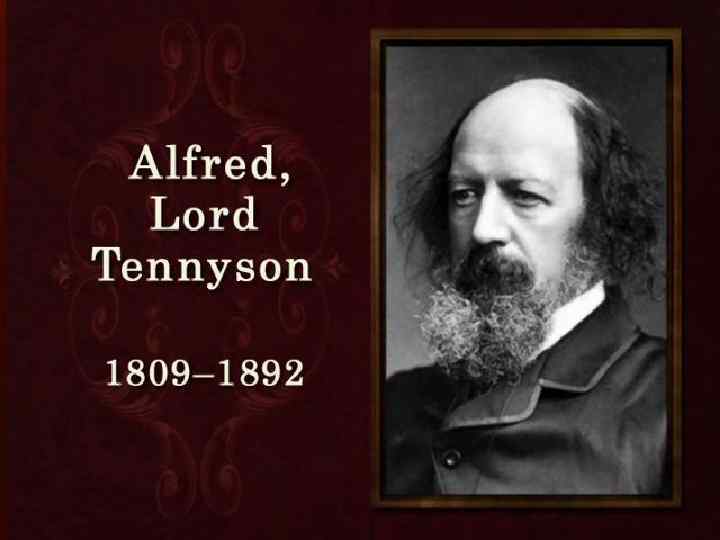
 Lord Alfred Tennison n n n a rector's son and fourth of 12 children studied in Trinity College, Cambridge, met Arthur Hallam 1 st book of poetry – Poems, Chiefly Lyrical (1830) – later second volume fascination with mythology + isolation - important things for Tennyson 1833 - Poems ('The Lady of Shalott, ' The Lotos-Eaters'). 1842 - two more volumes that are both called Poems ( 'Ulysses' - a key example of dramatic monologue poetry, one of Tennyson's most famous works. )
 1847 - 'The Princess, ' which is about women's education but also gender roles in society in general. n married his longtime love interest Emily Sellwood. n n published the landmark poem 'In Memoriam A. H. H. ‘ on the death of his friend Arthur Hallam - 131 sections - what place religious conceptions of life, death and the afterlife have in a culture that's getting more and more scientifically dominated. Tis better to have loved and lost Than never to have loved at all'.
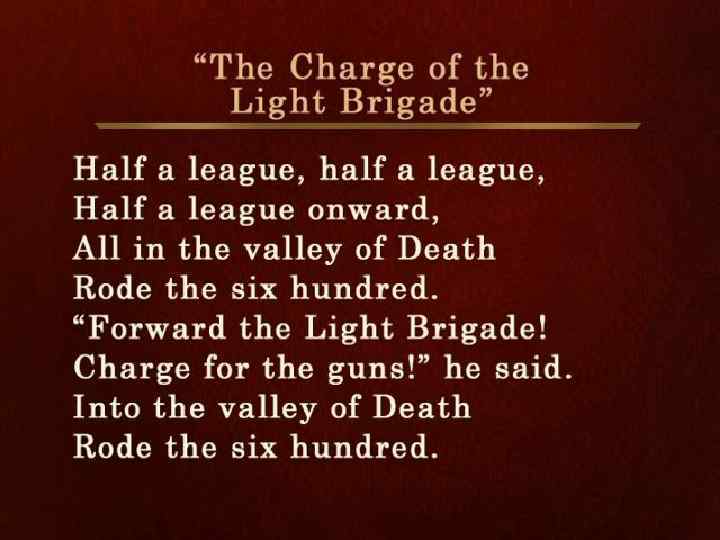
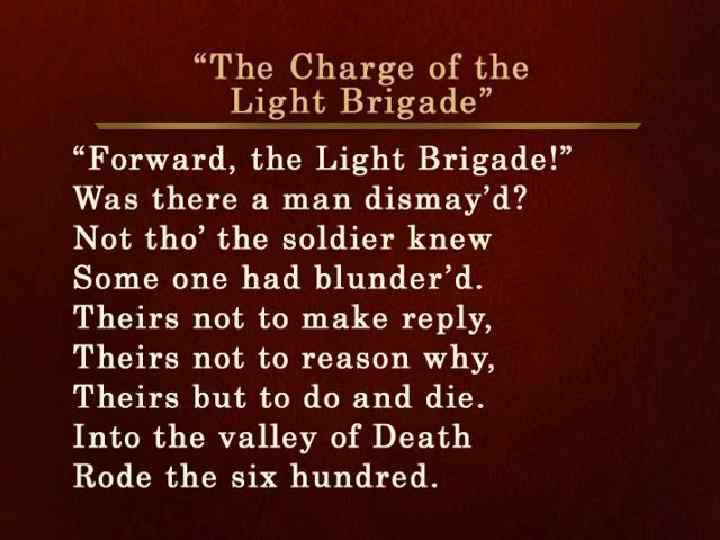
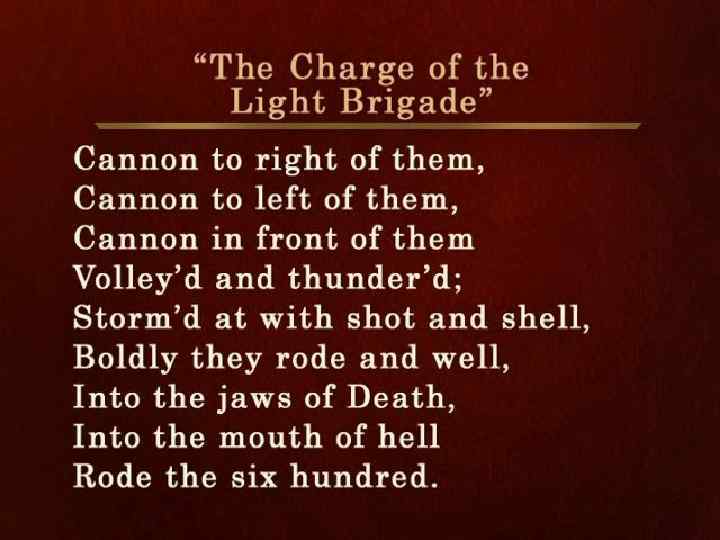
 n n n became Poet Laureate (after the death of Wordsworth in 1850) 'The Charge of the Light Brigade, (1854) Maud (1855) cycle Idylls of the King – deals with Arthurian legends technical mastery of descriptive verse – considered unequalled: “the finest ear of any English poet since Milton” (T. S. Eliot)
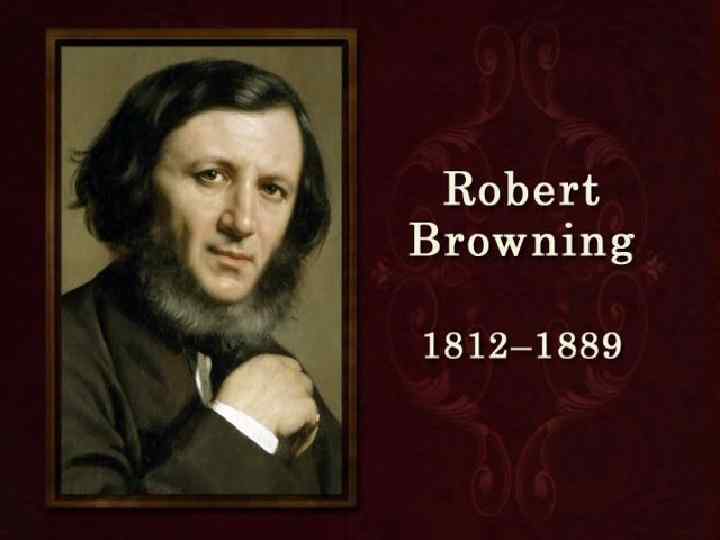
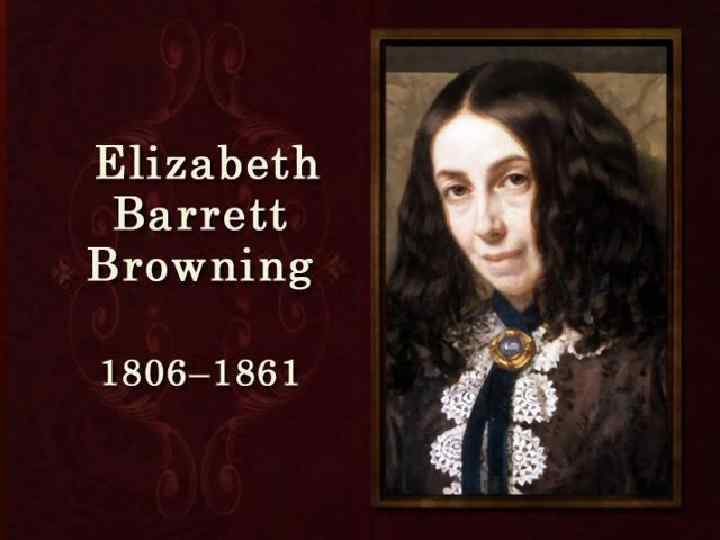
 Robert Browning n n Born in a suburb of London Studied several languages, developed deep interest in religion & music First poetical influences – Romantic poets, Byron, Shelley & Keats Gave up studies at the University of London (disliked the intellectual atmosphere)
 n Early poems: Pauline (1833), Paracelsus (1835), Sordello (1840) – philosophical & spiritual topics (only God and Browning knew what it meant, and the poet had forgotten ) n 1845 - married the much more popular poet Elizabeth Barrett n Dramatic Lyrics, Dramatic Romances, Men & Women n spent 10 years writing plays – unsuccessful n 1868 - The Ring and the Book - novel in verse, looks at a 17 -century murder in Italy from 12 different viewpoints
 dramatic monologue, a voice-driven poetic form n a speech given by a character so you hear their inner thoughts and feelings. n
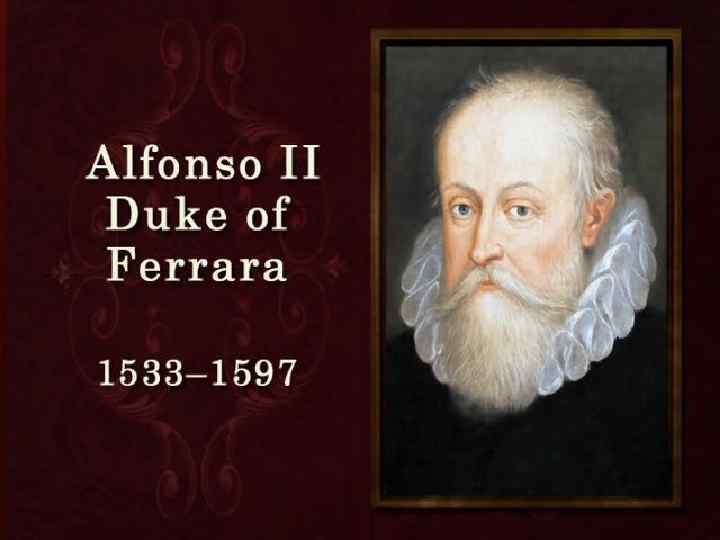
 two really big standout works: dramatic monologues 'Porphyria's Lover' 'My Last Duchess. ' n fascination with abnormal psychology purposefully weird and challenging, presenting you a puzzle to solve
 Tennyson looks back to Shelley and Keats n From Browning we can trace lines of connection forward to Ezra Pound, W. B. Yeats, and T. S. Eliot n Introduced thoughtfulness into his poetry, induced thoughtfulness in his reader n
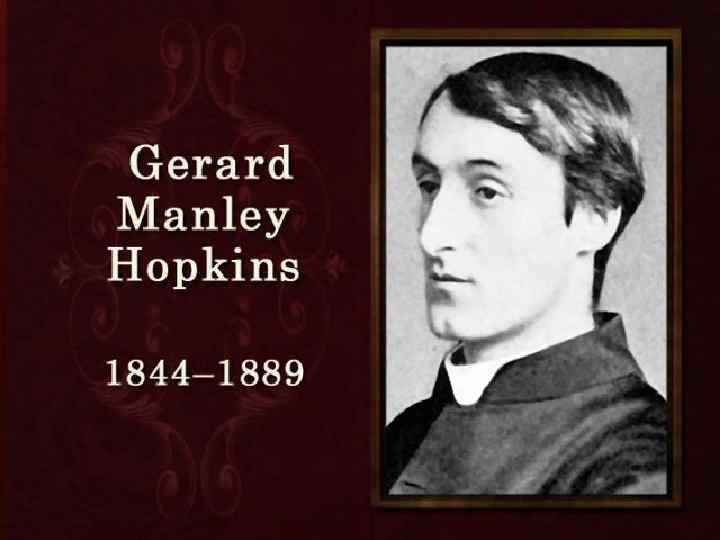
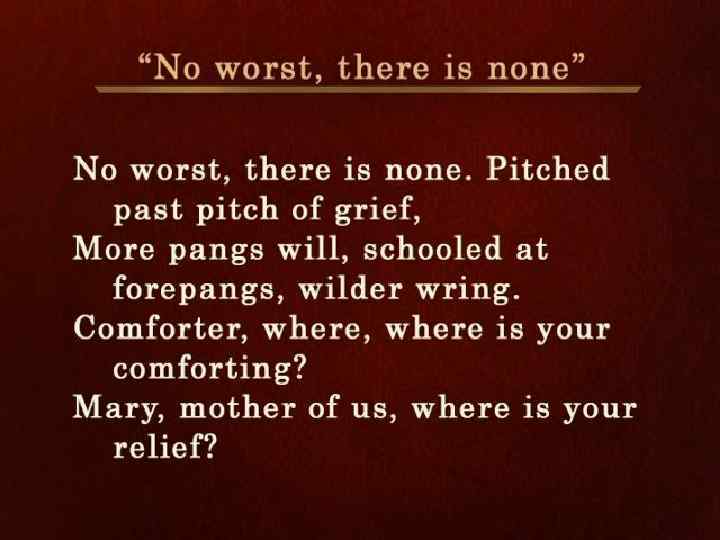
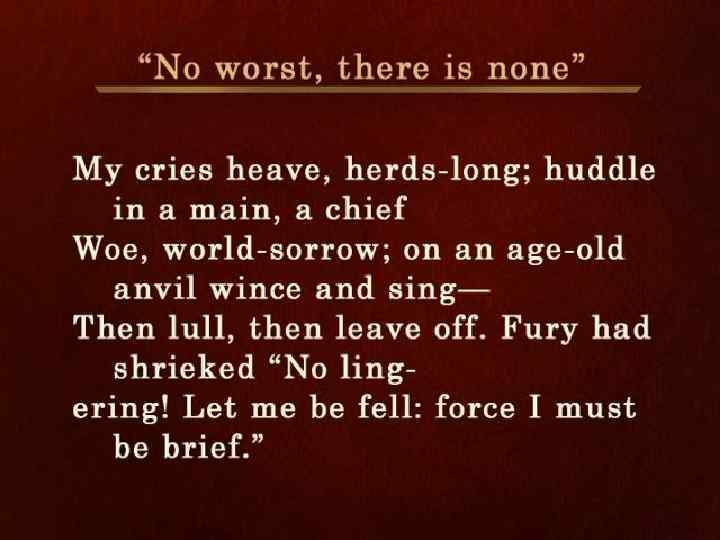
 broke through Victorianism into Modernism a Jesuit priest his poetry is mainly religious in nature super-weird, it's got homoeroticism and it's avant-garde n didn't publish during his lifetime n unknown to the public as a poet until 20 years after his death n n
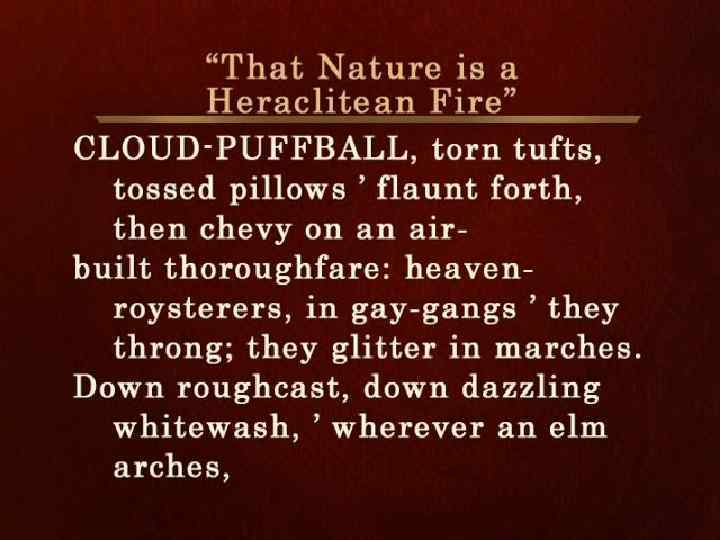
 1918 - his first collection gets published n He's seen as a forerunner of Modernist poetry, and as someone who was ahead of his time in terms of the poetry he wrote. n realized that the form of the future would be the short lyric, which allowed for interesting effects in the English language n
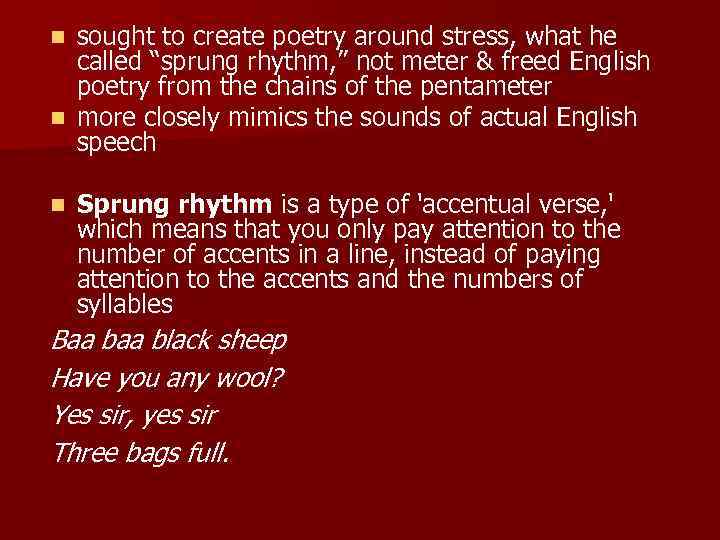 sought to create poetry around stress, what he called “sprung rhythm, ” not meter & freed English poetry from the chains of the pentameter n more closely mimics the sounds of actual English speech n n Sprung rhythm is a type of 'accentual verse, ' which means that you only pay attention to the number of accents in a line, instead of paying attention to the accents and the numbers of syllables Baa black sheep Have you any wool? Yes sir, yes sir Three bags full.
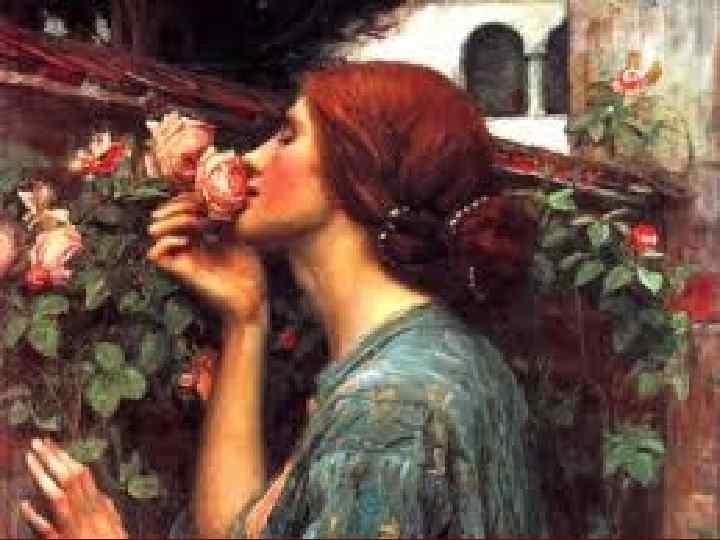
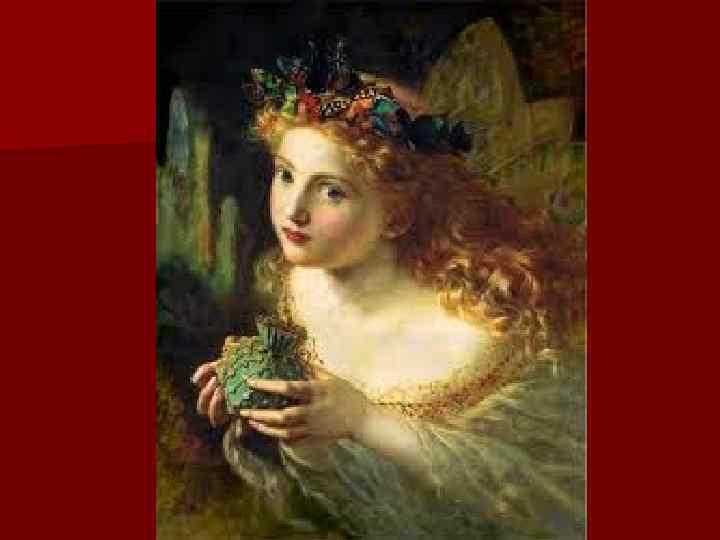
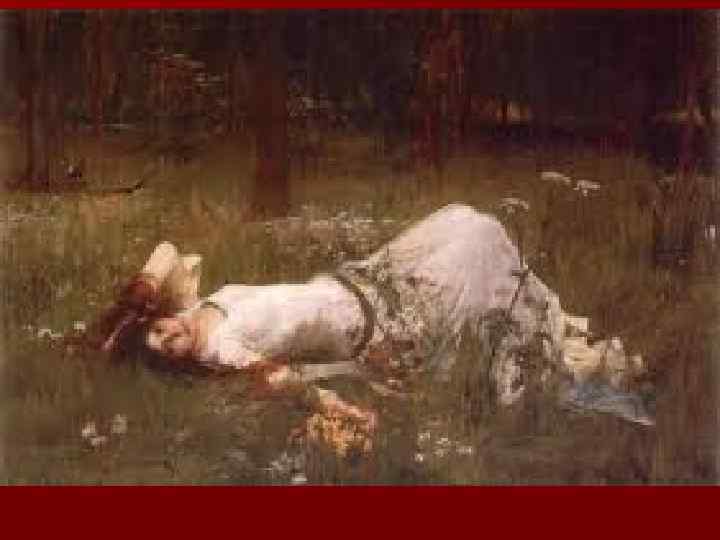
 THE PRE-RAPHAELITE BROTHERHOOD
 a group of English painters, poets, and critics, founded in 1848 by William Hunt, John Millais and Dante Gabriel Rossetti. n The group's intention was to reform art by rejecting what it considered the mechanistic approach n Its members believed the Classical poses and elegant compositions of Raphael in particular had been a corrupting influence on the academic teaching of art n
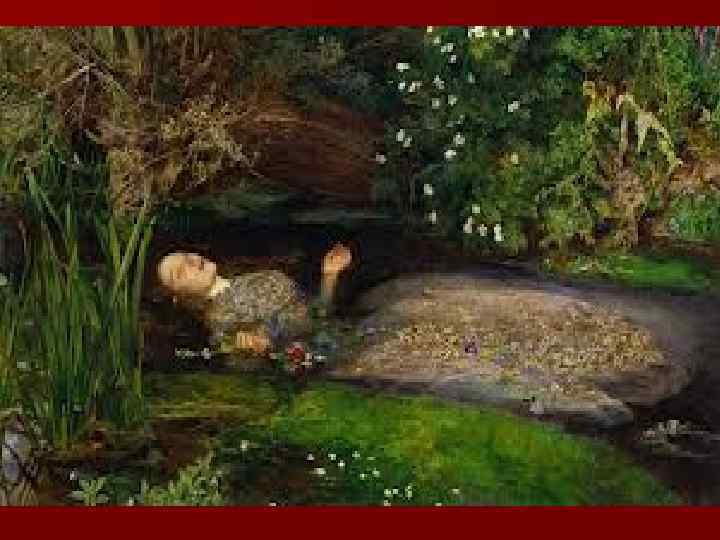
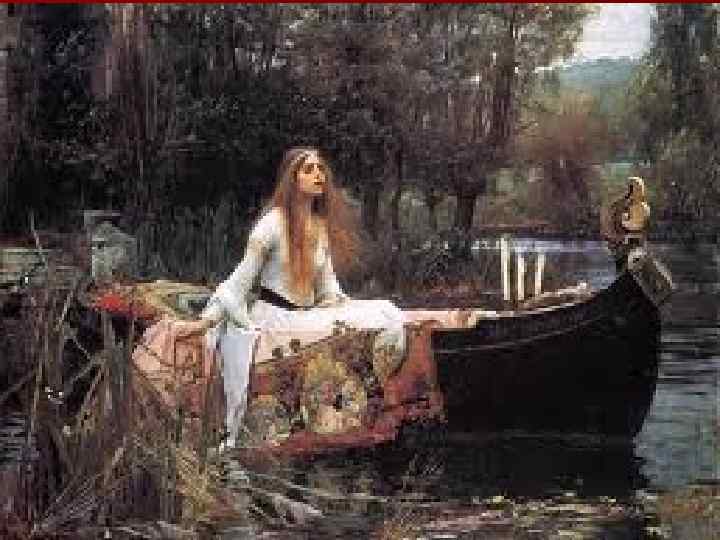
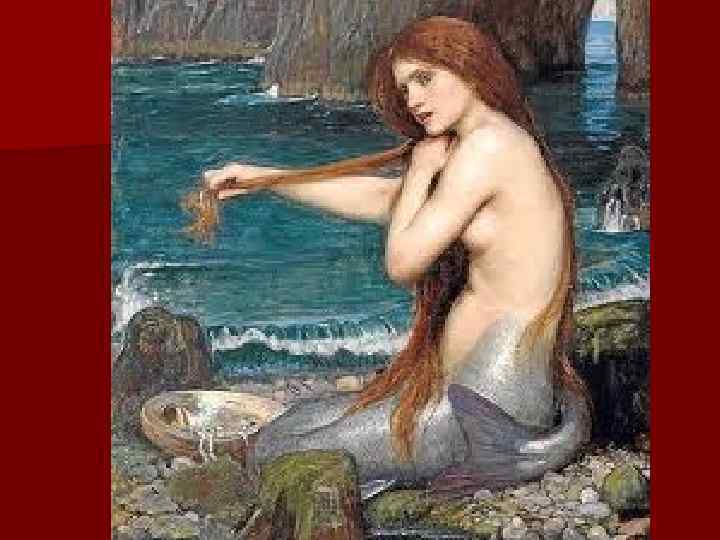
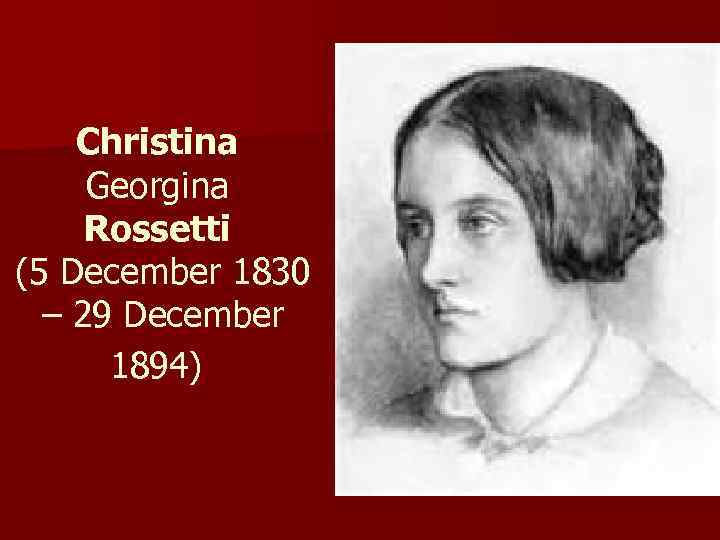 Christina Georgina Rossetti (5 December 1830 – 29 December 1894)
 n Clouds White sheep, white sheep, On a blue hill, When the wind stops, You all stand still. When the wind blows, You walk away slow. White sheep, white sheep, Where do you go? -
 A Birthday My heart is like a singing bird Whose nest is in a water'd shoot; My heart is like an apple-tree Whose boughs are bent with thick-set fruit; My heart is like a rainbow shell That paddles in a halcyon sea; My heart is gladder than all these, Because my love is come to me.
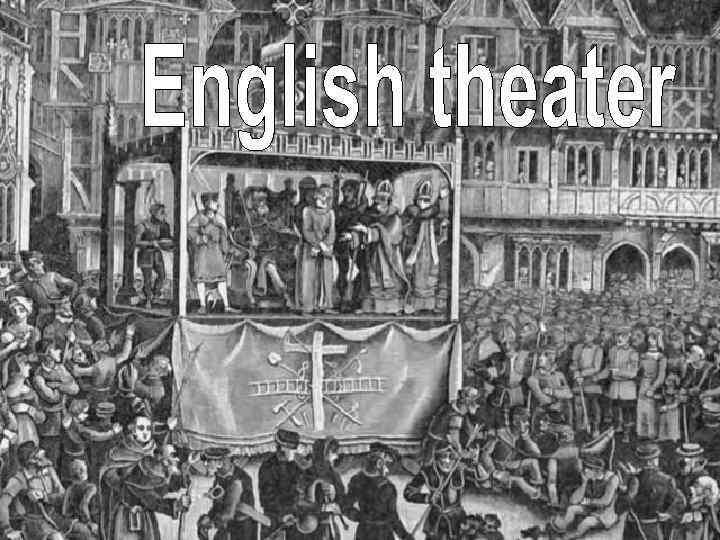
 English theater n n n began with the miracle and mystery plays, dramatized stories from the Bible 1590 - 1610 reached sublime heights with Marlowe, Shakespeare, and Jonson later - fell under the iron rule of Puritanism and middle-class moralism drama withered no drama until the 1 st half of the 20 th century a few comic dramatists
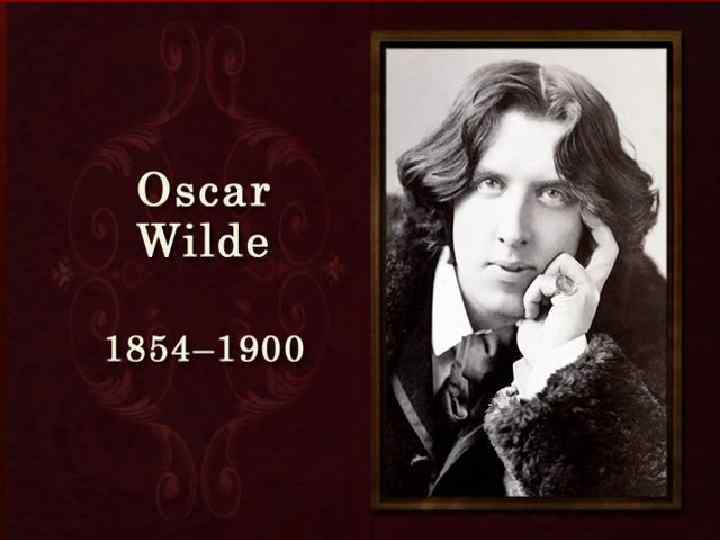
 Oscar Wilde A celebrity author is one whose public image is better known than his or her works n Wilde himself liked to assert that his major work of art was himself. n was born in 1854 in Dublin n still in school – helped popularize aestheticism - art for art's sake; it doesn't have a greater purpose. It's not trying to do anything socially, politically. It's beautiful, and it's art. ”The beauty of objects might improve the quality of life” n n I find it harder every day to live up to my blue china…
 n primarily wrote poetry n He also tried lecturing & journalism n short stories n the only novel he ever published - The Picture of Dorian Gray in 1891
 n Vera or The Nihilists (1880) - set in Russia, full of n An Ideal Husband (1895) - comedy about blackmail, revolutionaries, assassinations, tsars and other things that are very Russian. n The Duchess of Padua (1883) n Lady Windermere's Fan (1892) - a comedy. It's a satire of Victorian society n dark comedy A Woman of No Importance (1893) - a play about the secrets of the Victorian upper class n the tragedy Salome (1893) politics and all sorts of great upper class type things, also about relationships and marriage n The Importance of Being Earnest - satire on Victorian seriousness, moral orthodoxy, and earnestness
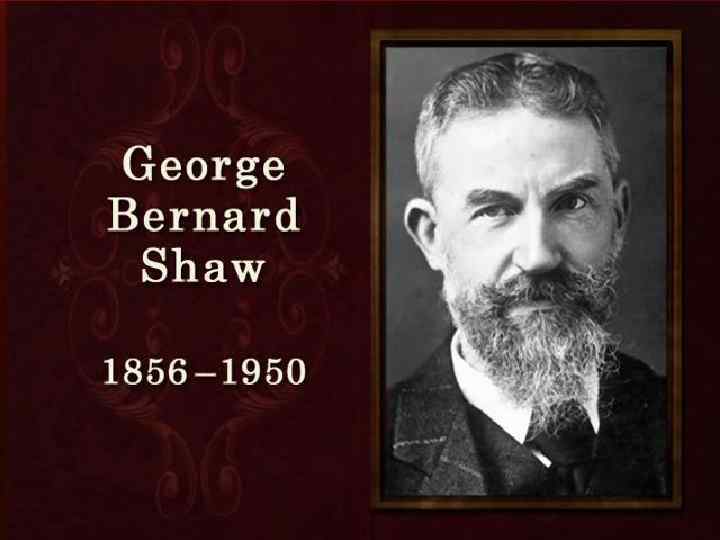
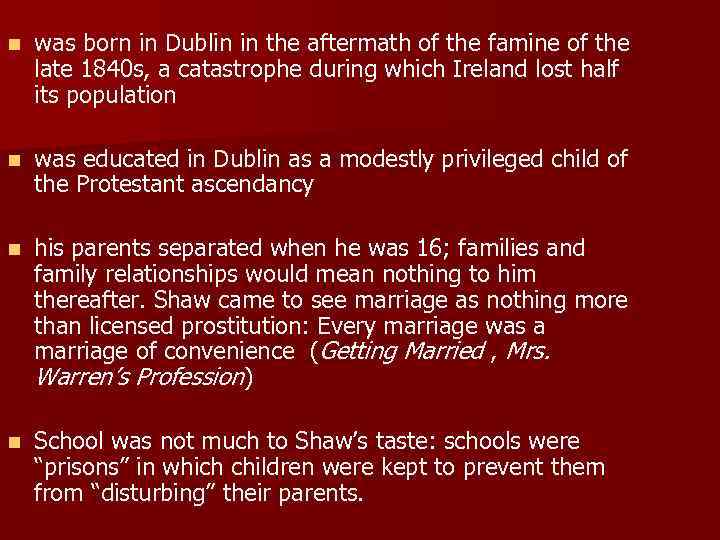 n was born in Dublin in the aftermath of the famine of the late 1840 s, a catastrophe during which Ireland lost half its population n was educated in Dublin as a modestly privileged child of the Protestant ascendancy n his parents separated when he was 16; families and family relationships would mean nothing to him thereafter. Shaw came to see marriage as nothing more than licensed prostitution: Every marriage was a marriage of convenience (Getting Married , Mrs. Warren’s Profession) n School was not much to Shaw’s taste: schools were “prisons” in which children were kept to prevent them from “disturbing” their parents.
 n n n n moved to London in his early 20 s educated himself in the British Museum Library wrote mediocre novels wrote brilliant criticism of music and drama turned his hand from drama criticism to plays first play - Widowers’ Houses (1892) In total, he wrote over 60 stage productions, many of which achieved substantial financial and popular success.
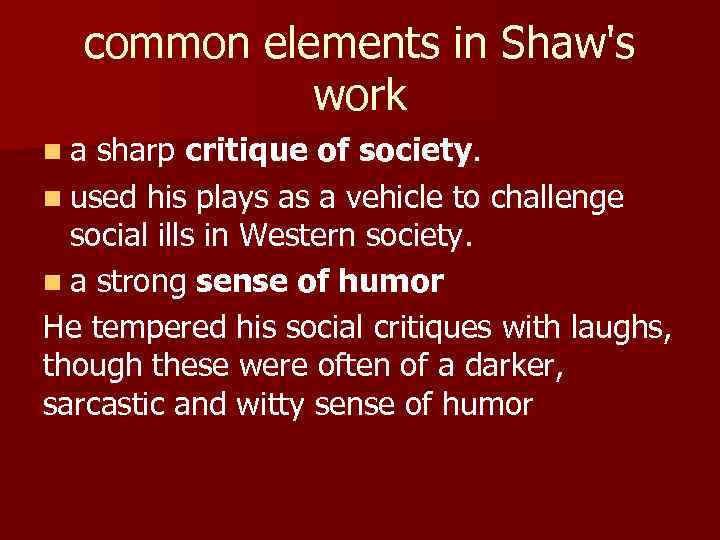 common elements in Shaw's work n a sharp critique of society. n used his plays as a vehicle to challenge social ills in Western society. n a strong sense of humor He tempered his social critiques with laughs, though these were often of a darker, sarcastic and witty sense of humor