


The Verb “to be”
1. Употребление: to be – быть, являться, находиться а) глагол to be может являться полнозначным глаголом: I am in the room. - Я нахожусь в комнате. The book is on the table. - Книга лежит на столе. б) глагол to be может быть глаголом-связкой в именном сказуемом ( в значении "есть" ): The weather is bad. - Погода плохая. They are from Paris. - Они из Парижа.
Remember В отличие от русского языка, в английском языке глагол-связка никогда не опускается , поскольку английское предложение имеет строго фиксированный порядок слов: подлежащее (subject) + сказуемое (verb) + дополнение (object). I am a doctor. Я врач. (Я есть врач. )
2. Формы: 1) Утвердительная форма В настоящем времени глагол to be имеет следующие формы: I am a student. You are a student. He is a student. She is a student. It is a book. We are students. They are students.
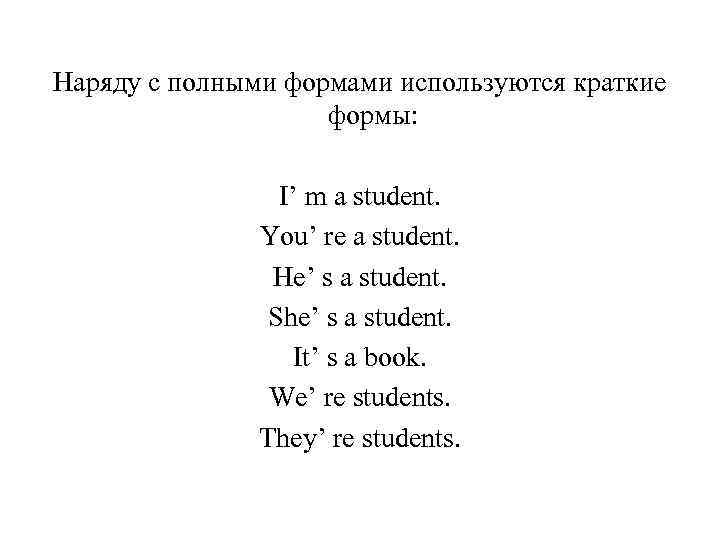
Наряду с полными формами используются краткие формы: I’ m a student. You’ re a student. He’ s a student. She’ s a student. It’ s a book. We’ re students. They’ re students.
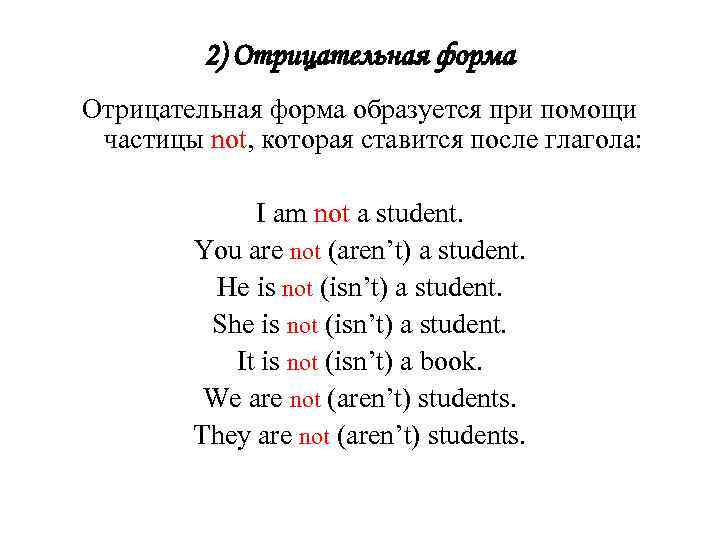
2) Отрицательная форма образуется при помощи частицы not, которая ставится после глагола: I am not a student. You are not (aren’t) a student. He is not (isn’t) a student. She is not (isn’t) a student. It is not (isn’t) a book. We are not (aren’t) students. They are not (aren’t) students.
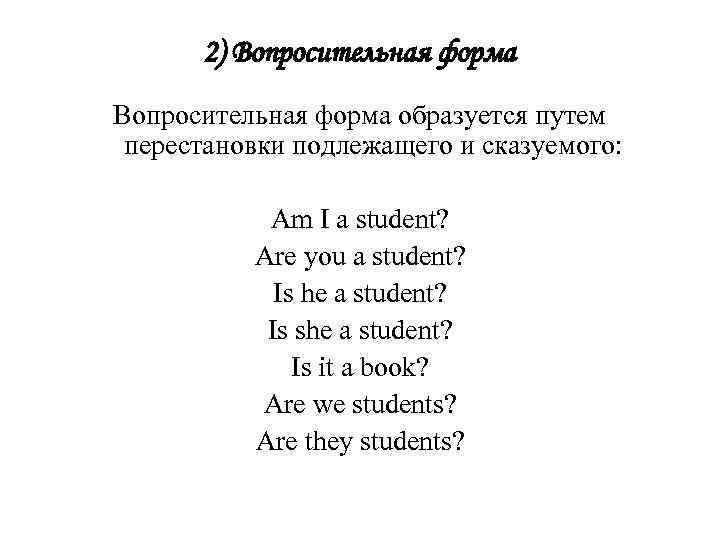
2) Вопросительная форма образуется путем перестановки подлежащего и сказуемого: Am I a student? Are you a student? Is he a student? Is she a student? Is it a book? Are we students? Are they students?
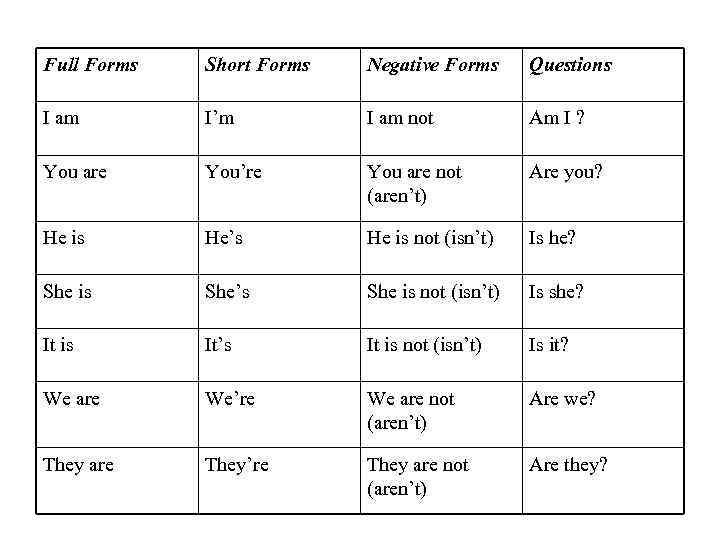
Full Forms Short Forms Negative Forms Questions I am I’m I am not Am I ? You are You’re You are not (aren’t) Are you? He is He’s He is not (isn’t) Is he? She is She’s She is not (isn’t) Is she? It is It’s It is not (isn’t) Is it? We are We’re We are not (aren’t) Are we? They are They’re They are not (aren’t) Are they?
