


 Скачать презентацию The use of time series analysis for the
2bc5e56366f9718a21f571d6f14daaba.ppt
- Количество слайдов: 46
 The use of time series analysis for the analysis of airlines D. E. Pitfield Transport Studies Group Department of Civil and Building Engineering Loughborough University Loughborough Leicestershire LE 11 3 TU UK Paper presented at Fifth Israeli/British & Irish Regional Science Workshop, Ramat. Gan, Tel-Aviv, Israel, 29 April - 1 May 2007.
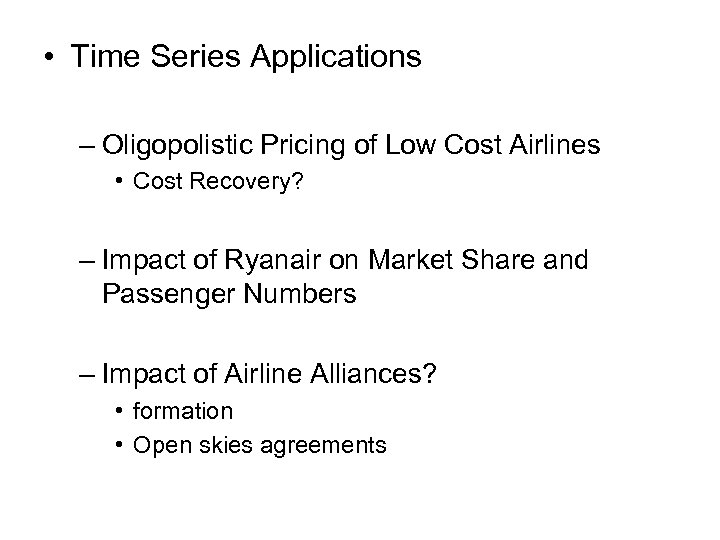 • Time Series Applications – Oligopolistic Pricing of Low Cost Airlines • Cost Recovery? – Impact of Ryanair on Market Share and Passenger Numbers – Impact of Airline Alliances? • formation • Open skies agreements
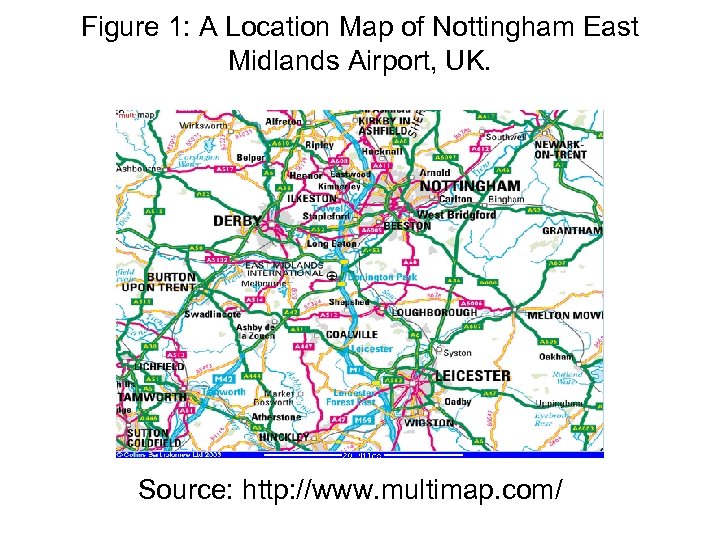 Figure 1: A Location Map of Nottingham East Midlands Airport, UK. Source: http: //www. multimap. com/
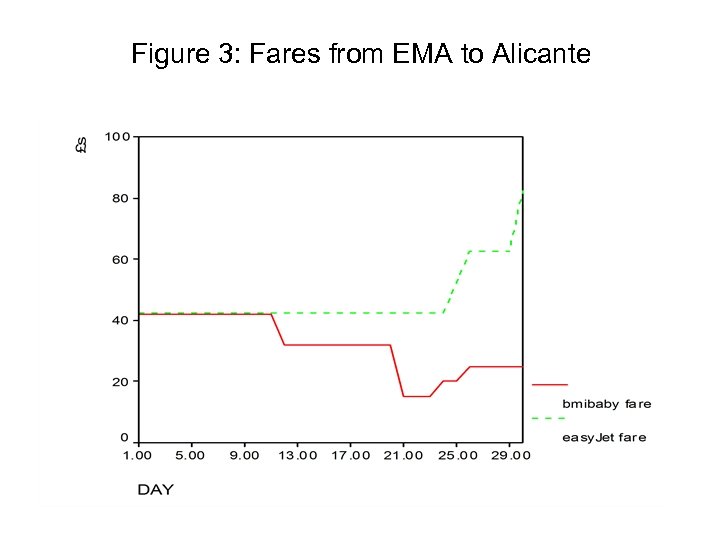 Figure 3: Fares from EMA to Alicante
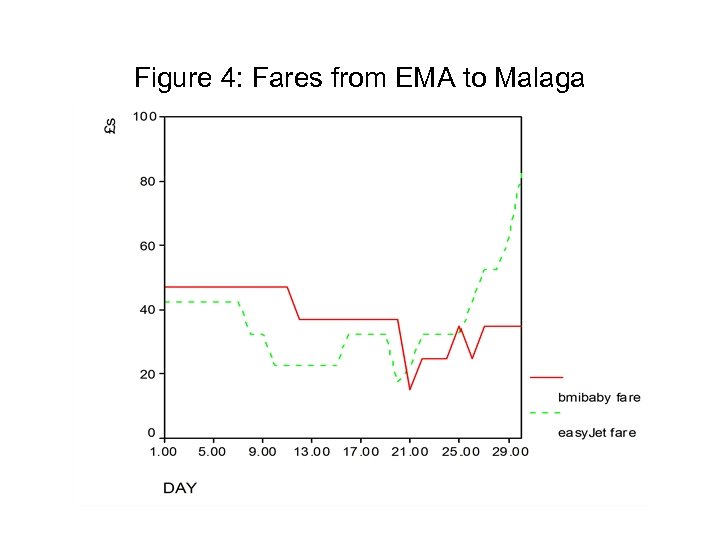 Figure 4: Fares from EMA to Malaga
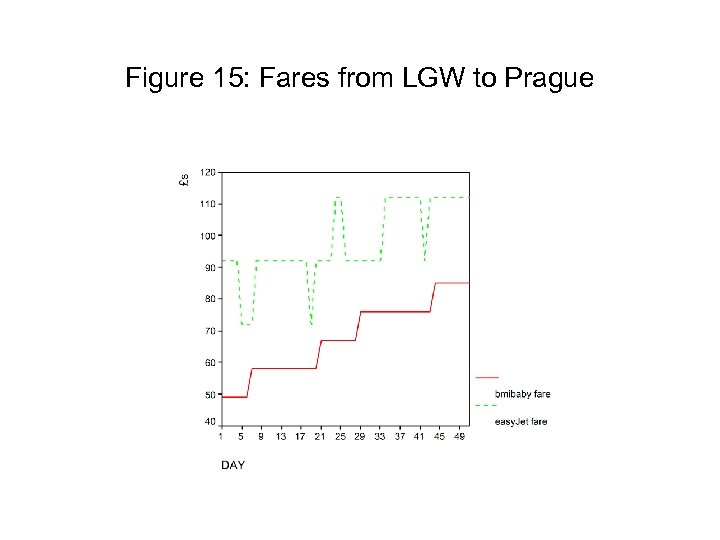 Figure 15: Fares from LGW to Prague
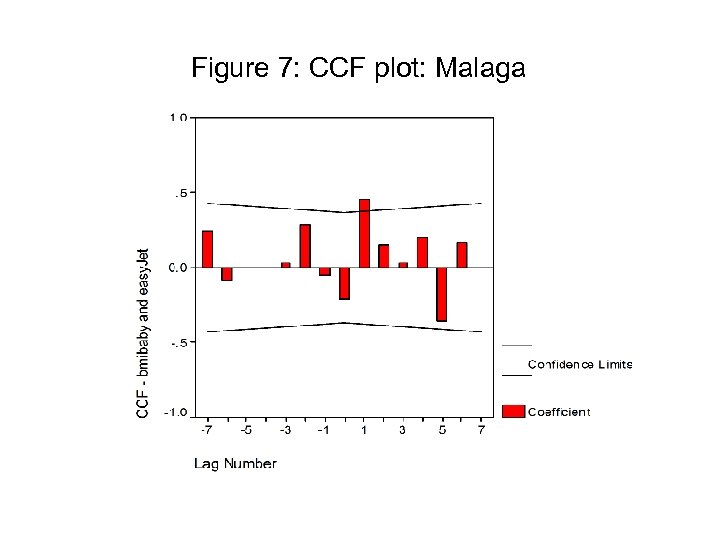 Figure 7: CCF plot: Malaga
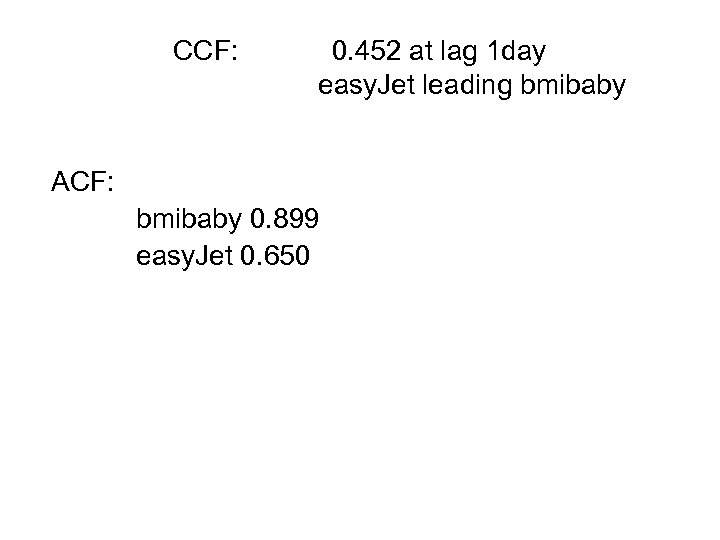 CCF: 0. 452 at lag 1 day easy. Jet leading bmibaby ACF: bmibaby 0. 899 easy. Jet 0. 650
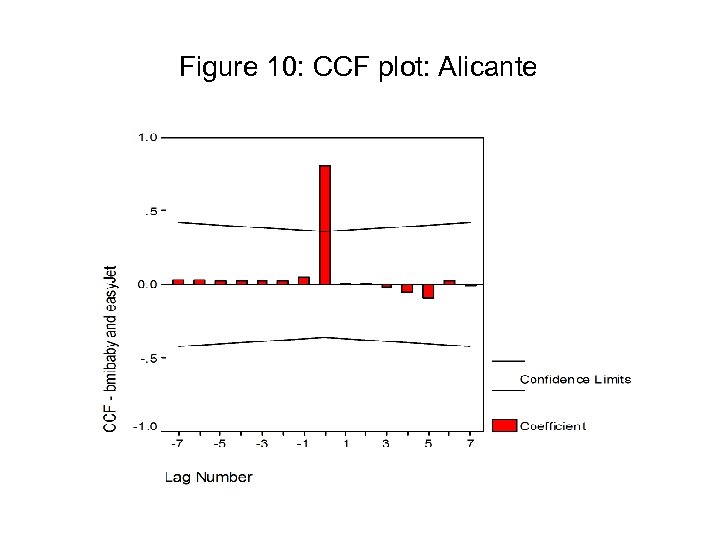 Figure 10: CCF plot: Alicante
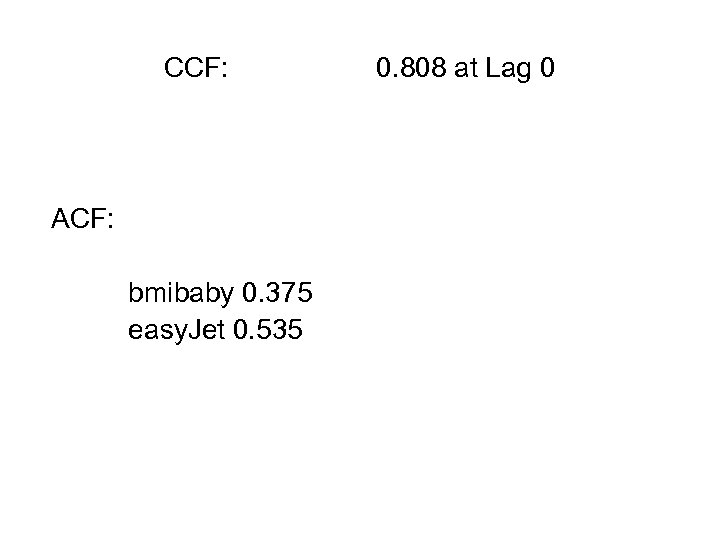 CCF: 0. 808 at Lag 0 ACF: bmibaby 0. 375 easy. Jet 0. 535
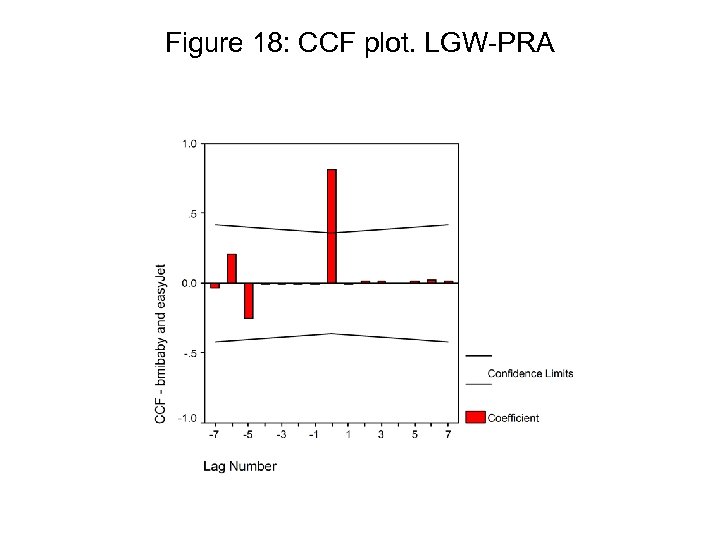 Figure 18: CCF plot. LGW-PRA
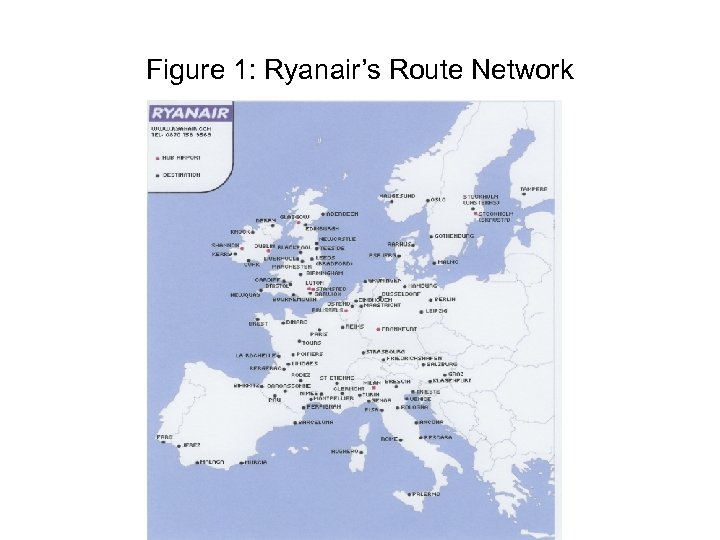 Figure 1: Ryanair’s Route Network
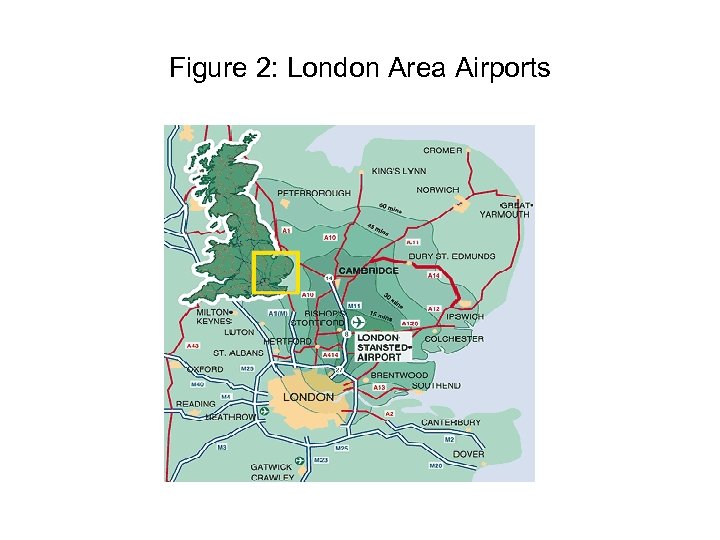 Figure 2: London Area Airports
 Selected Airports • • • Genoa Hamburg Pisa Stockholm Venice
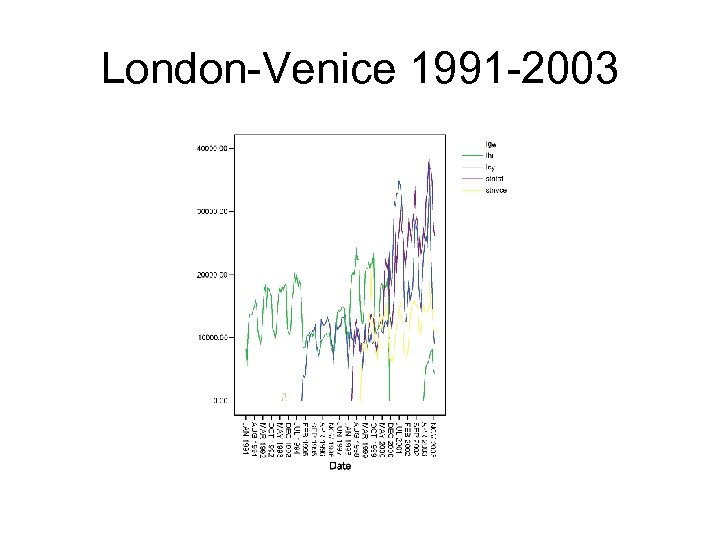 London-Venice 1991 -2003
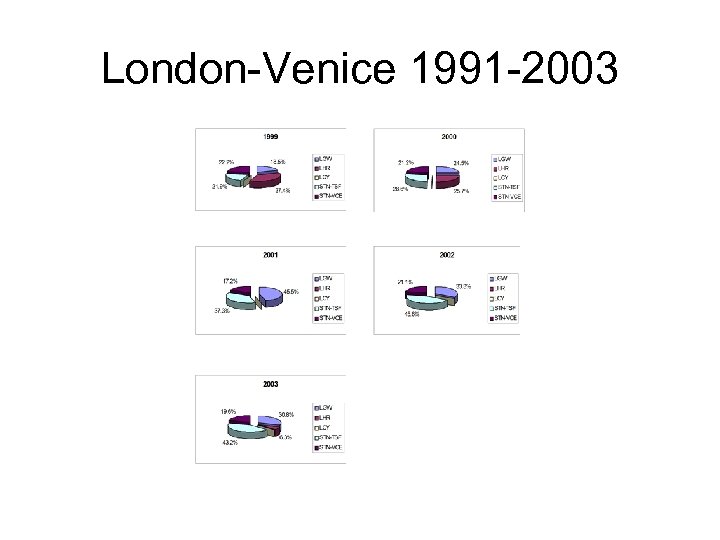 London-Venice 1991 -2003
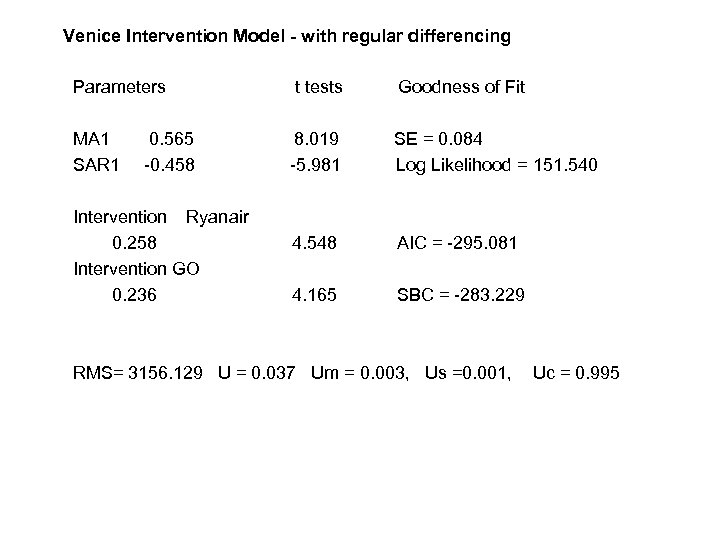 Venice Intervention Model - with regular differencing Parameters t tests Goodness of Fit MA 1 0. 565 8. 019 SE = 0. 084 SAR 1 -0. 458 -5. 981 Log Likelihood = 151. 540 Intervention Ryanair 0. 258 4. 548 AIC = -295. 081 Intervention GO 0. 236 4. 165 SBC = -283. 229 RMS= 3156. 129 U = 0. 037 Um = 0. 003, Us =0. 001, Uc = 0. 995
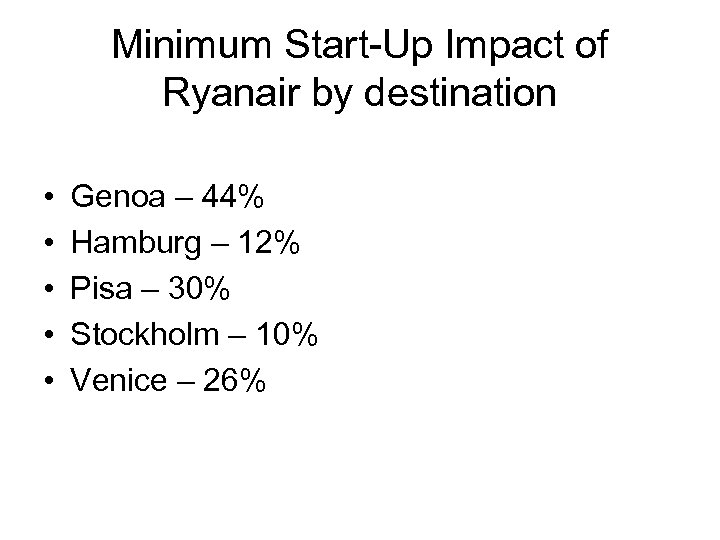 Minimum Start-Up Impact of Ryanair by destination • • • Genoa – 44% Hamburg – 12% Pisa – 30% Stockholm – 10% Venice – 26%
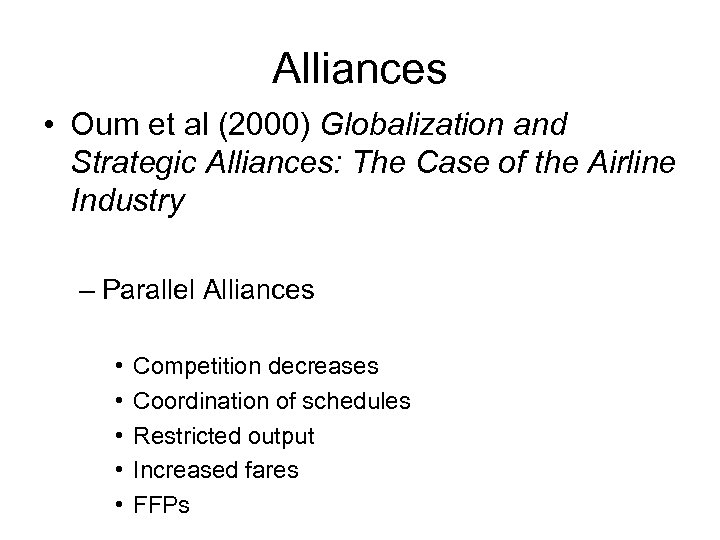 Alliances • Oum et al (2000) Globalization and Strategic Alliances: The Case of the Airline Industry – Parallel Alliances • • • Competition decreases Coordination of schedules Restricted output Increased fares FFPs
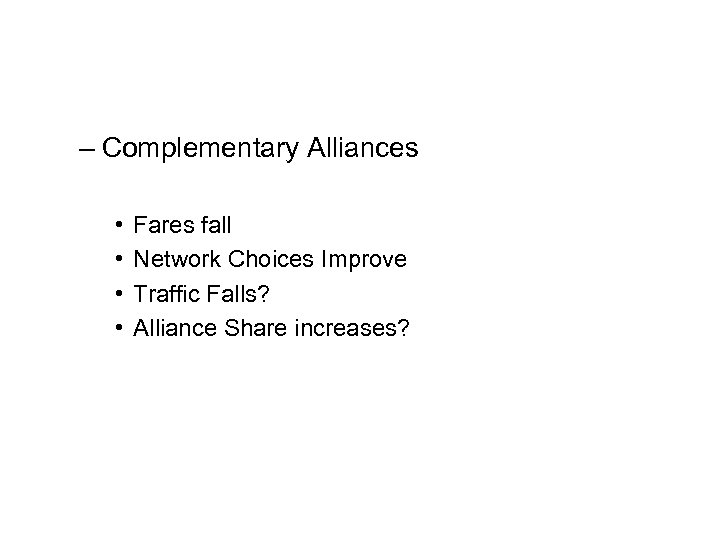 – Complementary Alliances • • Fares fall Network Choices Improve Traffic Falls? Alliance Share increases?
 Expectations and Perceptions • Iatrou, K & Alamdari, F. (2005), The Empirical Analysis of the Impact of Alliances on Airline Operations, Journal of Air Transport Management • Impact on traffic and shares is positive – hubs at O and D? – 1 -2 years – Open skies has biggest impact
 Data • North Atlantic – scale and role of alliances • BTS T-100 International Market Data – monthly, January 1990 - December 2003 • Hubs – Choice? • European – LHR, CDG, FRA, AMS – not LHR or AMS • USA – JFK, ORD, LAX
 • Parallel – CDG – JFK (Skyteam – AF and DL) – FRA – ORD ( Star Alliance – LH and UA) • Complementary – FRA – JFK ( Star Alliance – LH) – FRA – LAX (Star Alliance – LH/NZ) – CDG/ORY – BOS (Skyteam – AF)
 ARIMA and Intervention Analysis • Model traffic before Intervention(s) – Using parsimonious models • Specify Intervention term and model whole data series – Abrupt impact – Gradual impact, over one or two years • Exponential or stepped – Lagged Abrupt impact
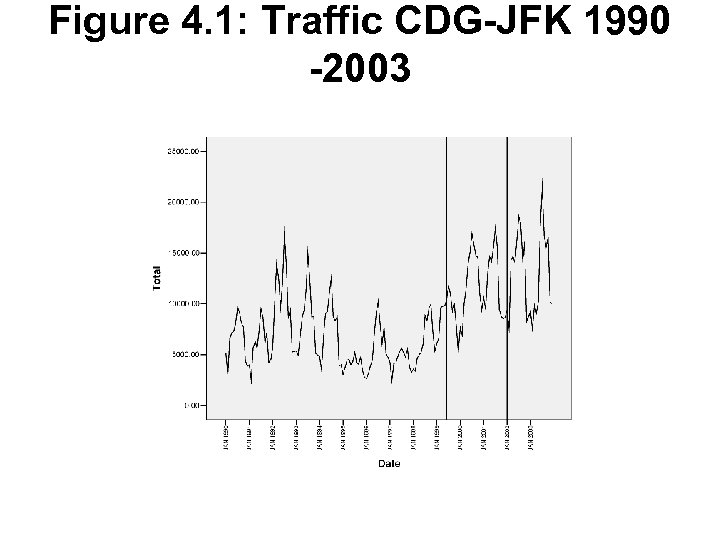 Figure 4. 1: Traffic CDG-JFK 1990 -2003
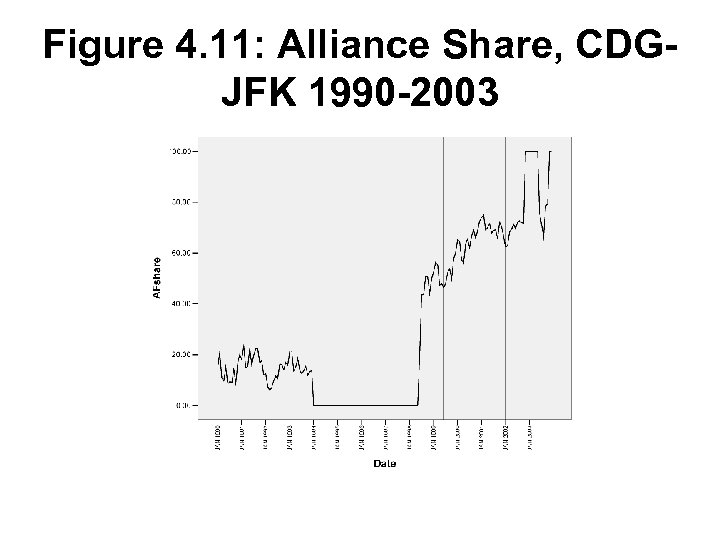 Figure 4. 11: Alliance Share, CDGJFK 1990 -2003
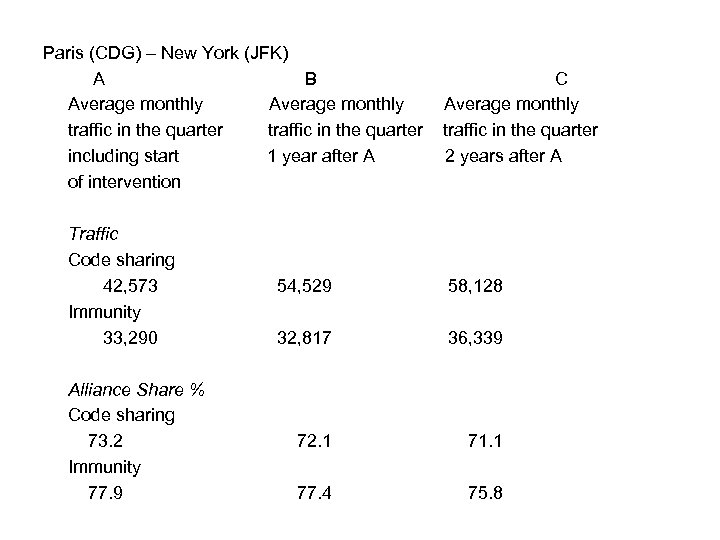 Paris (CDG) – New York (JFK) A B C Average monthly traffic in the quarter including start 1 year after A 2 years after A of intervention Traffic Code sharing 42, 573 54, 529 58, 128 Immunity 33, 290 32, 817 36, 339 Alliance Share % Code sharing 73. 2 72. 1 Immunity 77. 9 77. 4 71. 1 75. 8
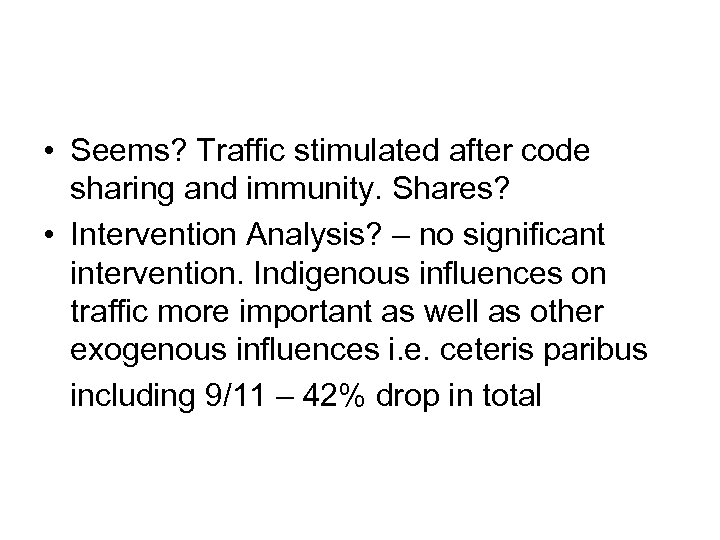 • Seems? Traffic stimulated after code sharing and immunity. Shares? • Intervention Analysis? – no significant intervention. Indigenous influences on traffic more important as well as other exogenous influences i. e. ceteris paribus including 9/11 – 42% drop in total
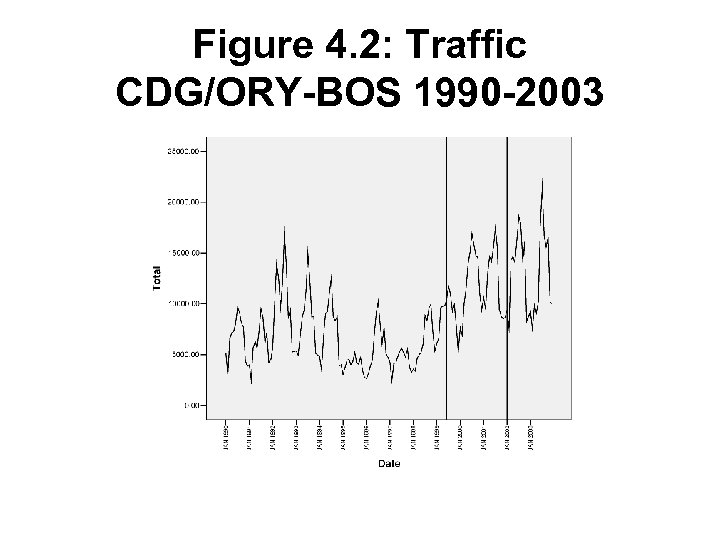 Figure 4. 2: Traffic CDG/ORY-BOS 1990 -2003
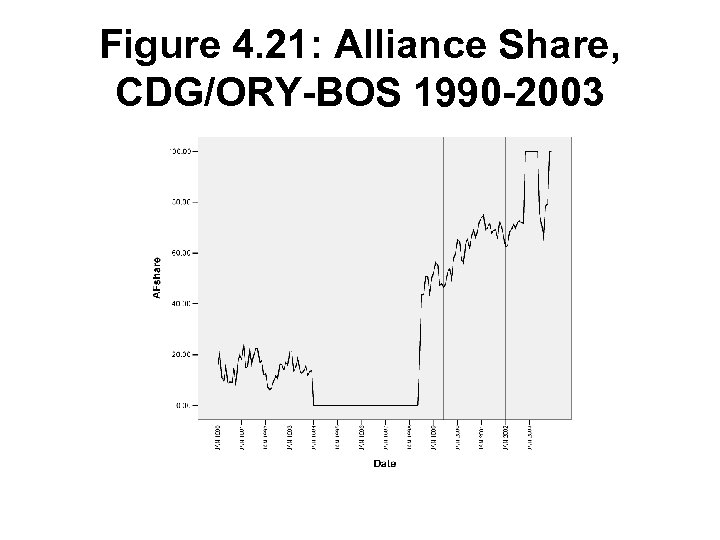 Figure 4. 21: Alliance Share, CDG/ORY-BOS 1990 -2003
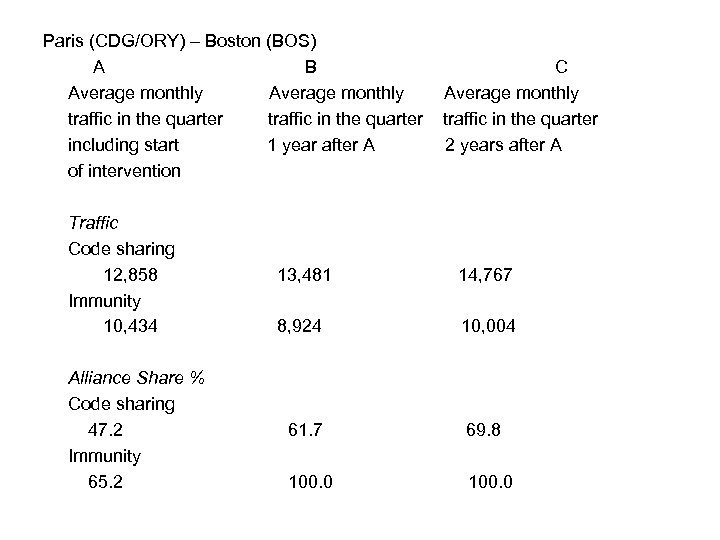 Paris (CDG/ORY) – Boston (BOS) A B C Average monthly traffic in the quarter including start 1 year after A 2 years after A of intervention Traffic Code sharing 12, 858 13, 481 14, 767 Immunity 10, 434 8, 924 10, 004 Alliance Share % Code sharing 47. 2 61. 7 69. 8 Immunity 65. 2 100. 0
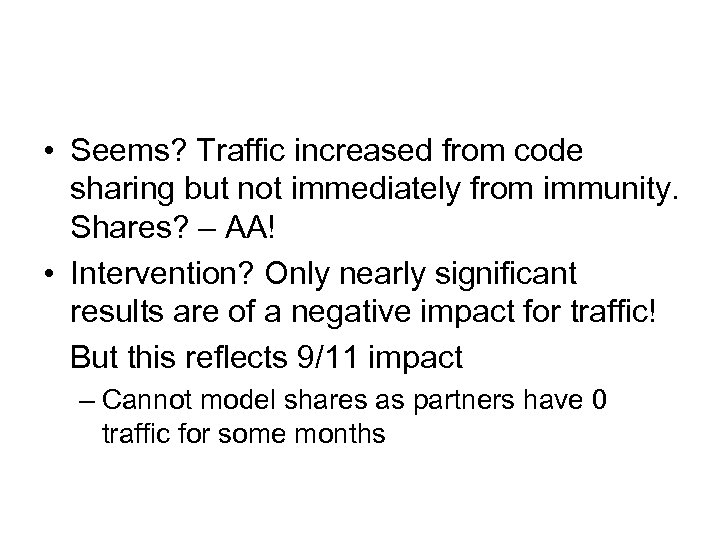 • Seems? Traffic increased from code sharing but not immediately from immunity. Shares? – AA! • Intervention? Only nearly significant results are of a negative impact for traffic! But this reflects 9/11 impact – Cannot model shares as partners have 0 traffic for some months
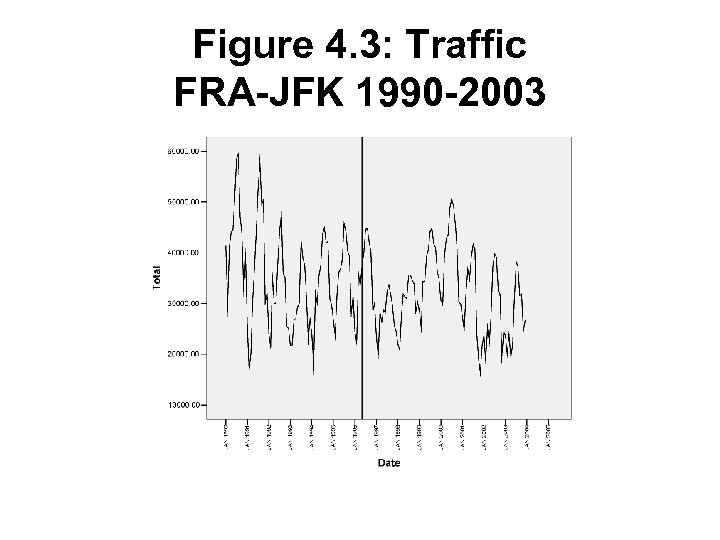 Figure 4. 3: Traffic FRA-JFK 1990 -2003
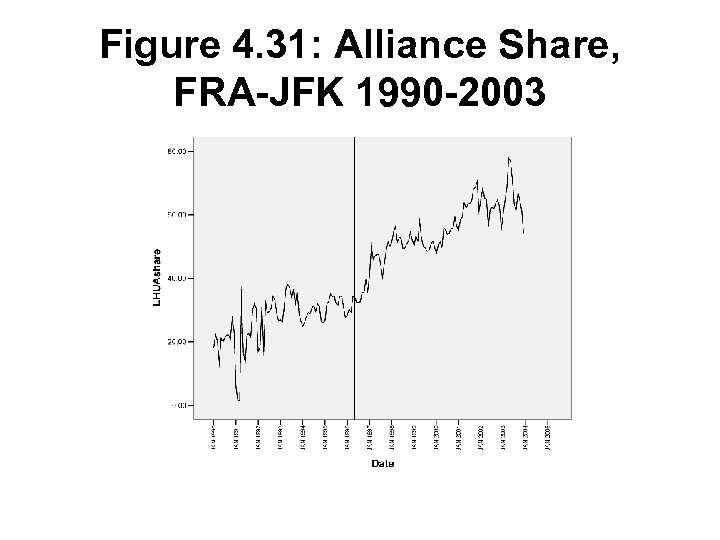 Figure 4. 31: Alliance Share, FRA-JFK 1990 -2003
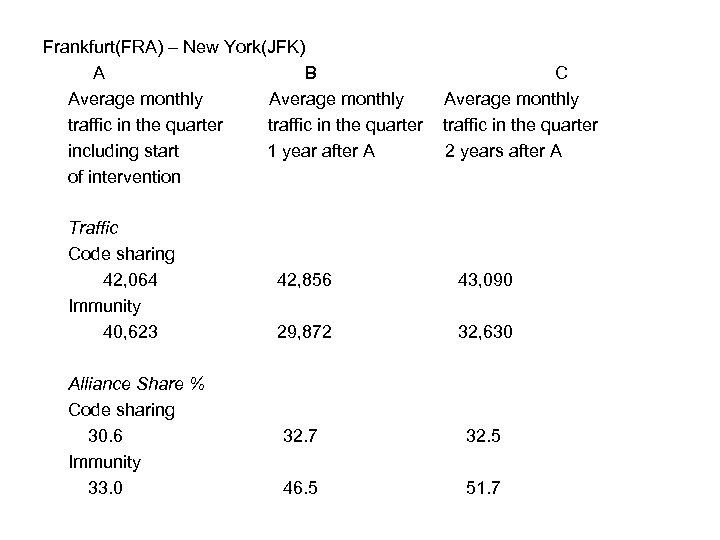 Frankfurt(FRA) – New York(JFK) A B C Average monthly traffic in the quarter including start 1 year after A 2 years after A of intervention Traffic Code sharing 42, 064 42, 856 43, 090 Immunity 40, 623 29, 872 32, 630 Alliance Share % Code sharing 30. 6 32. 7 32. 5 Immunity 33. 0 46. 5 51. 7
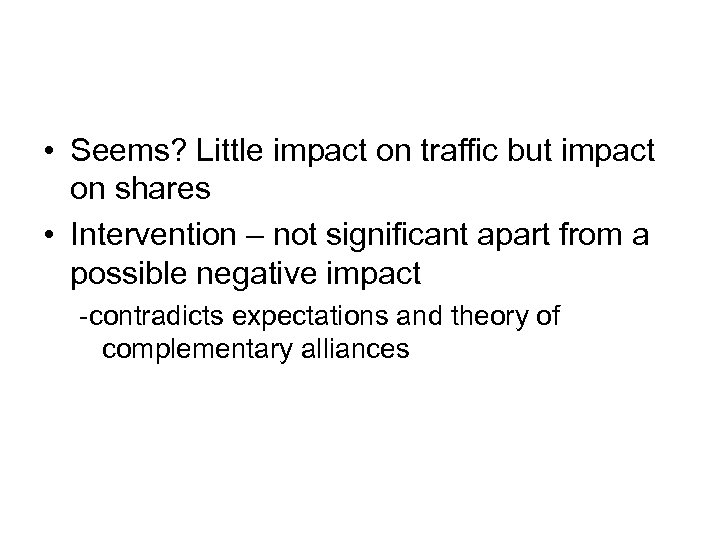 • Seems? Little impact on traffic but impact on shares • Intervention – not significant apart from a possible negative impact -contradicts expectations and theory of complementary alliances
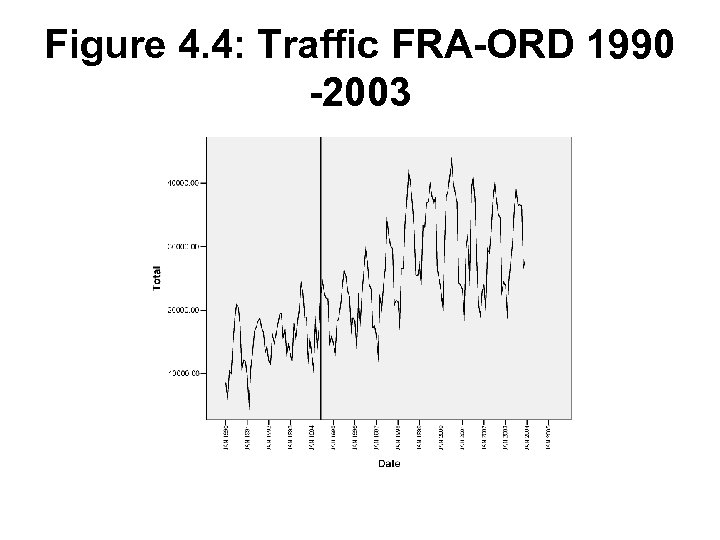 Figure 4. 4: Traffic FRA-ORD 1990 -2003
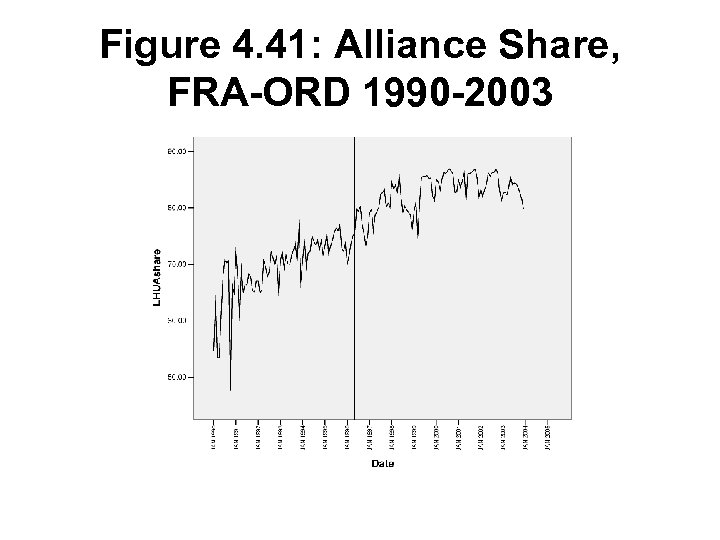 Figure 4. 41: Alliance Share, FRA-ORD 1990 -2003
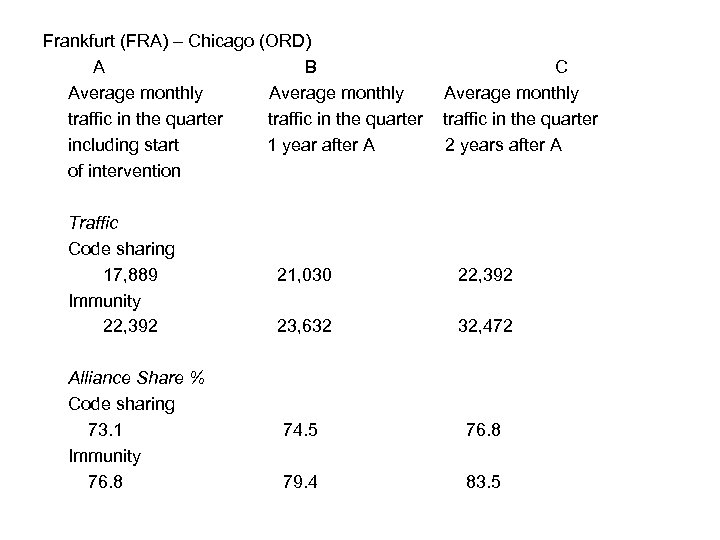 Frankfurt (FRA) – Chicago (ORD) A B C Average monthly traffic in the quarter including start 1 year after A 2 years after A of intervention Traffic Code sharing 17, 889 21, 030 22, 392 Immunity 22, 392 23, 632 32, 472 Alliance Share % Code sharing 73. 1 74. 5 76. 8 Immunity 76. 8 79. 4 83. 5
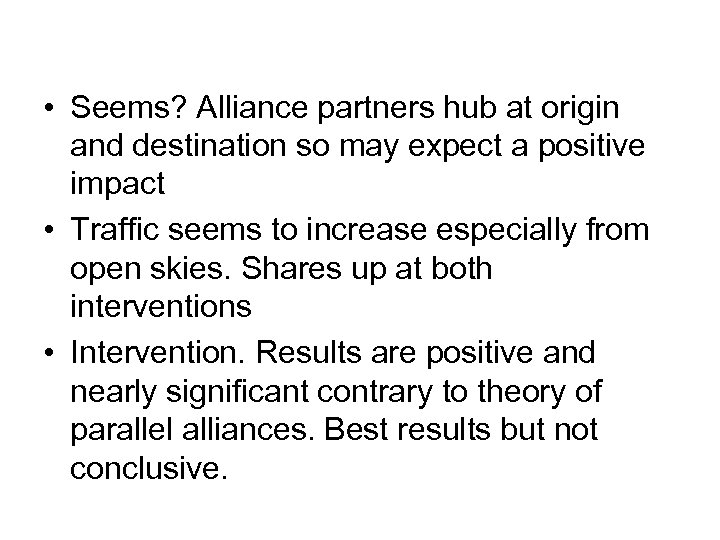 • Seems? Alliance partners hub at origin and destination so may expect a positive impact • Traffic seems to increase especially from open skies. Shares up at both interventions • Intervention. Results are positive and nearly significant contrary to theory of parallel alliances. Best results but not conclusive.
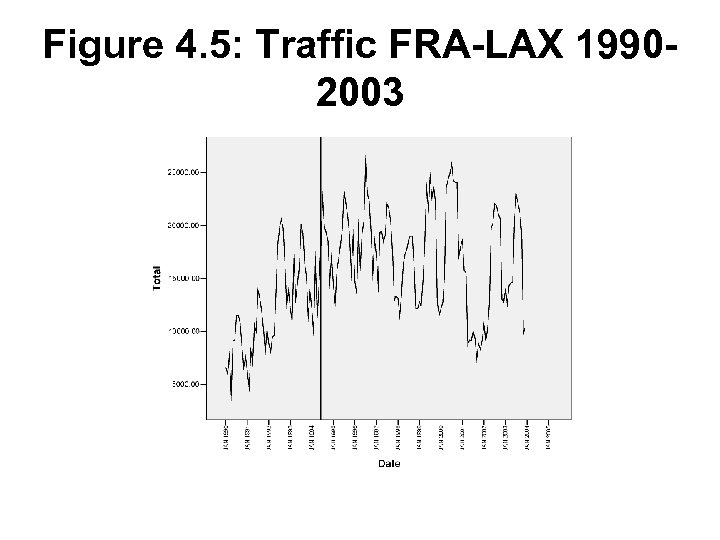 Figure 4. 5: Traffic FRA-LAX 19902003
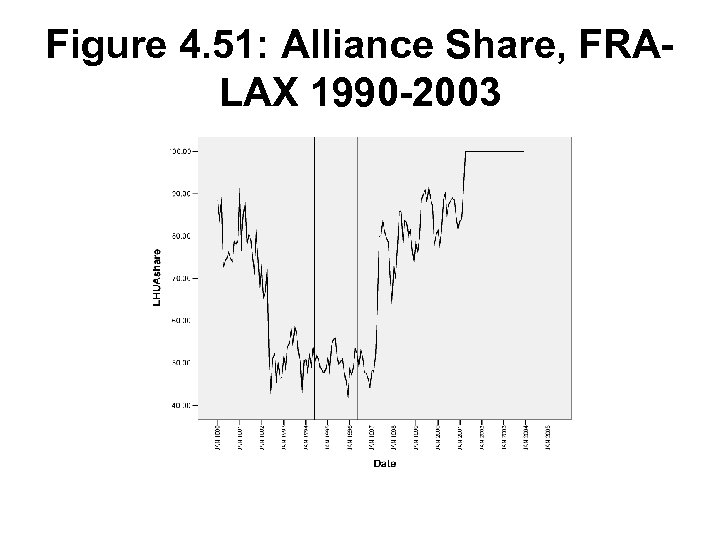 Figure 4. 51: Alliance Share, FRALAX 1990 -2003
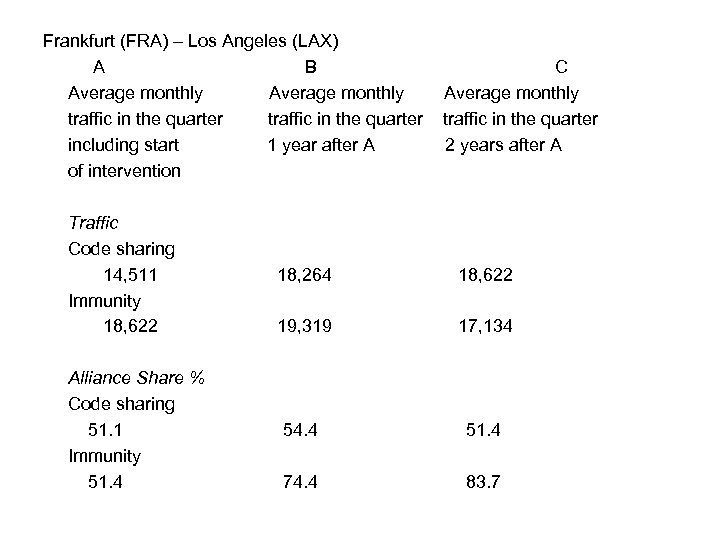 Frankfurt (FRA) – Los Angeles (LAX) A B C Average monthly traffic in the quarter including start 1 year after A 2 years after A of intervention Traffic Code sharing 14, 511 18, 264 18, 622 Immunity 18, 622 19, 319 17, 134 Alliance Share % Code sharing 51. 1 54. 4 51. 4 Immunity 51. 4 74. 4 83. 7
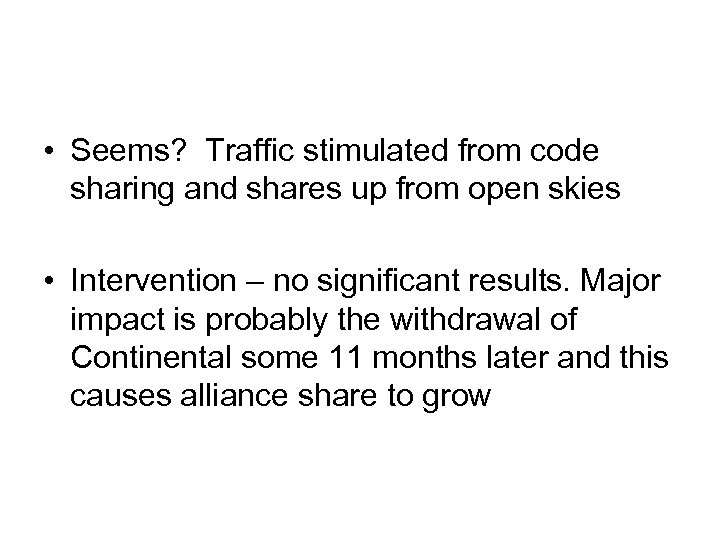 • Seems? Traffic stimulated from code sharing and shares up from open skies • Intervention – no significant results. Major impact is probably the withdrawal of Continental some 11 months later and this causes alliance share to grow
 Conclusion • Weak evidence suggests that impact of complementary alliances is to reduce traffic and shares. Contrary to all theory. • Some evidence that positive impact from parallel alliances when participants hub, but this is contrary to theory cf. expectations. Generally, other things matter.
 • Open Skies agreements appear to cause a decrease in traffic and competition; true for alliance types – transatlantic traffic may not grow as these agreements spread. • Alliance strength may be barrier to entry