


 Скачать презентацию The Use of Physician Assistants in Health Care
3258f5052e7dcbbfef508549b3a14555.ppt
- Количество слайдов: 32
 The Use of Physician Assistants in Health Care Delivery Trish Kelly, Ph. D, MMSc, PA-C UAMS Dept. of PA Studies AMDPA Conference 2013
 What is a Physician Assistant? Medical providers who are nationally certified and state- licensed to practice medicine with the supervision of a physician Trained in the medical model at nationally accredited educational programs. Not independent clinicians. Work as a team with physician. PAs are trained and educated similarly to physicians Share similar diagnostic and therapeutic reasoning.
 What is a Physician Assistant? PAs and Physicians work together as a team Supervision does not mean, that a supervising physician must always be present with the PA or direct every aspect of PA-provided care. Have the ability for autonomous decision making and patient management Can practice at site 60 miles from supervising physician in Arkansas This team model is an efficient way to provide high-quality medical care.
 What is a Physician Assistant? l Must complete 100 hours of continuing medical education (CME) every two years. l Complete re-certification every 10 years l PAs can practice in any discipline of medicine and change disciplines without additional training ¡ Makes PAs more versatile ¡ Decreases attrition rate with profession
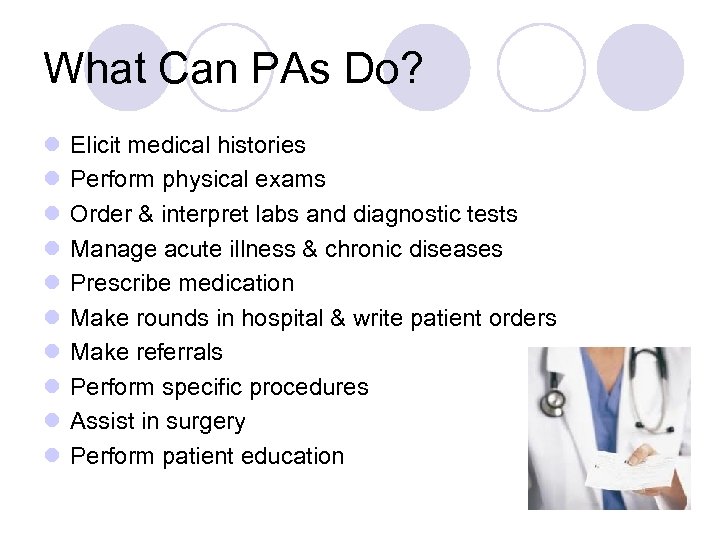 What Can PAs Do? l l l l l Elicit medical histories Perform physical exams Order & interpret labs and diagnostic tests Manage acute illness & chronic diseases Prescribe medication Make rounds in hospital & write patient orders Make referrals Perform specific procedures Assist in surgery Perform patient education
 Types of Procedures Venipuncture IV Access Arterial Puncture Intradermal, Subcutaneous, Intramuscular injections Suturing & Stapling Shave & Punch Biopsy Incision & Drainage Lumbar Puncture Nasogastric Tube Placement Splinting Casting Urinalysis & Microscopy Wet Prep Analysis Urinary Catheter Placement Surgical Drain Placement & Removal Bursal & Joint Injections Central Line Placement Chest Tube Insertion Thoracentesis
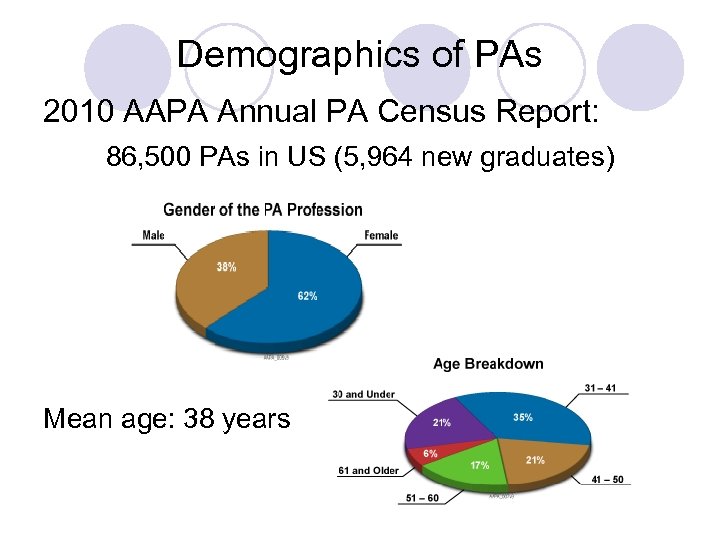 Demographics of PAs 2010 AAPA Annual PA Census Report: 86, 500 PAs in US (5, 964 new graduates) Mean age: 38 years
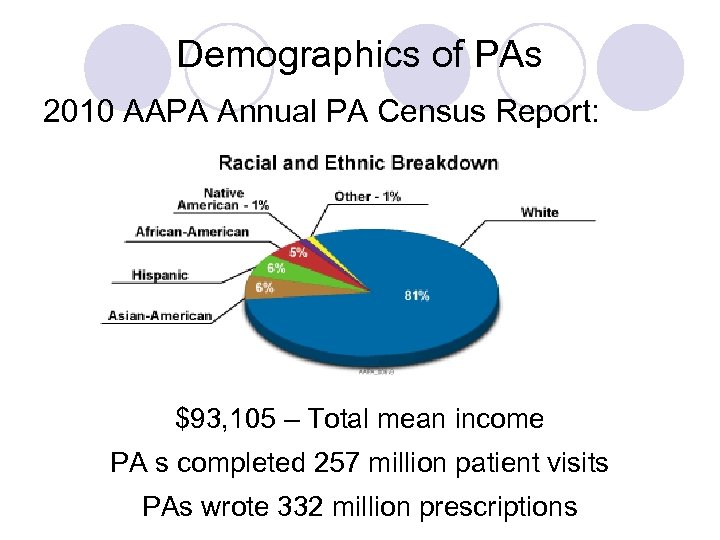 Demographics of PAs 2010 AAPA Annual PA Census Report: $93, 105 – Total mean income PA s completed 257 million patient visits PAs wrote 332 million prescriptions
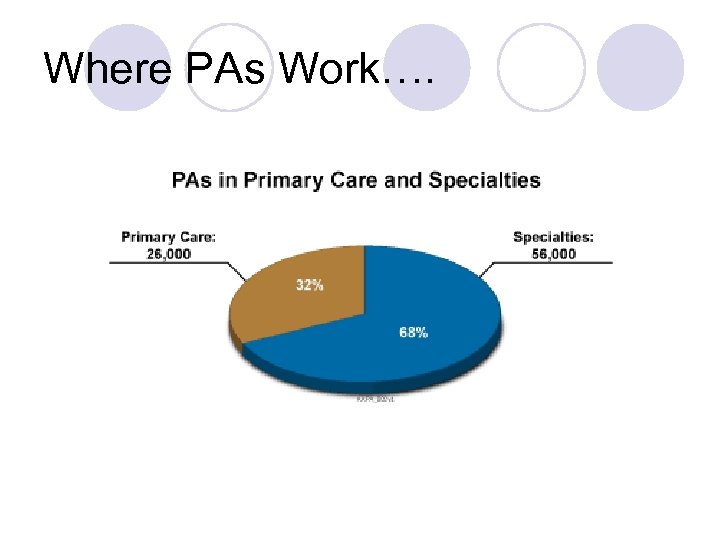 Where PAs Work….
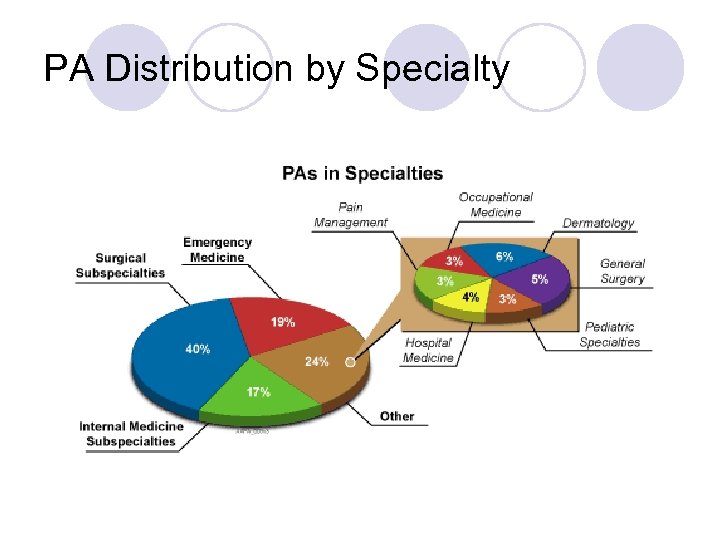 PA Distribution by Specialty
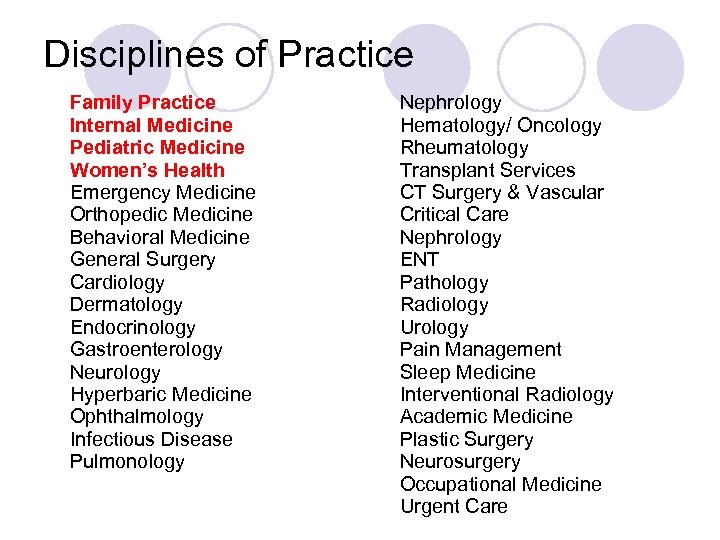 Disciplines of Practice Family Practice Internal Medicine Pediatric Medicine Women’s Health Emergency Medicine Orthopedic Medicine Behavioral Medicine General Surgery Cardiology Dermatology Endocrinology Gastroenterology Neurology Hyperbaric Medicine Ophthalmology Infectious Disease Pulmonology Nephrology Hematology/ Oncology Rheumatology Transplant Services CT Surgery & Vascular Critical Care Nephrology ENT Pathology Radiology Urology Pain Management Sleep Medicine Interventional Radiology Academic Medicine Plastic Surgery Neurosurgery Occupational Medicine Urgent Care
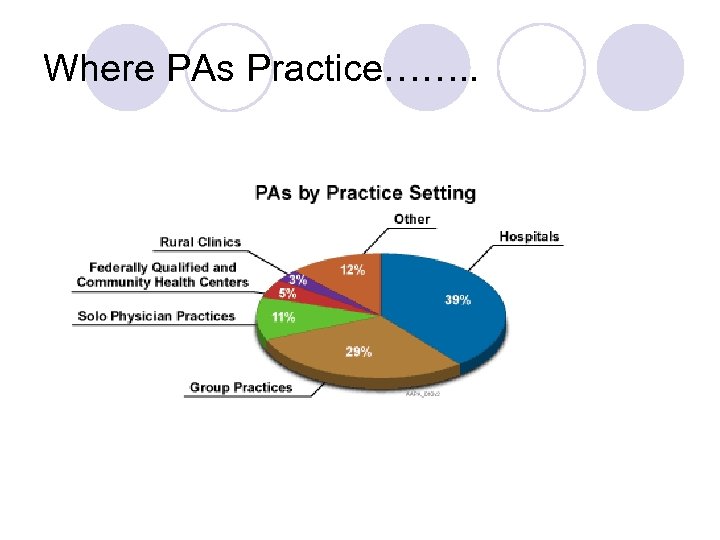 Where PAs Practice……. .
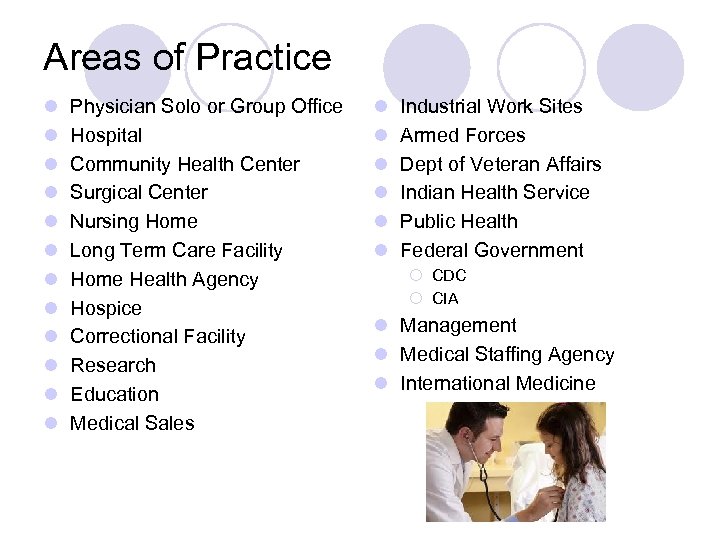 Areas of Practice l l l Physician Solo or Group Office Hospital Community Health Center Surgical Center Nursing Home Long Term Care Facility Home Health Agency Hospice Correctional Facility Research Education Medical Sales l l l Industrial Work Sites Armed Forces Dept of Veteran Affairs Indian Health Service Public Health Federal Government ¡ CDC ¡ CIA l Management l Medical Staffing Agency l International Medicine
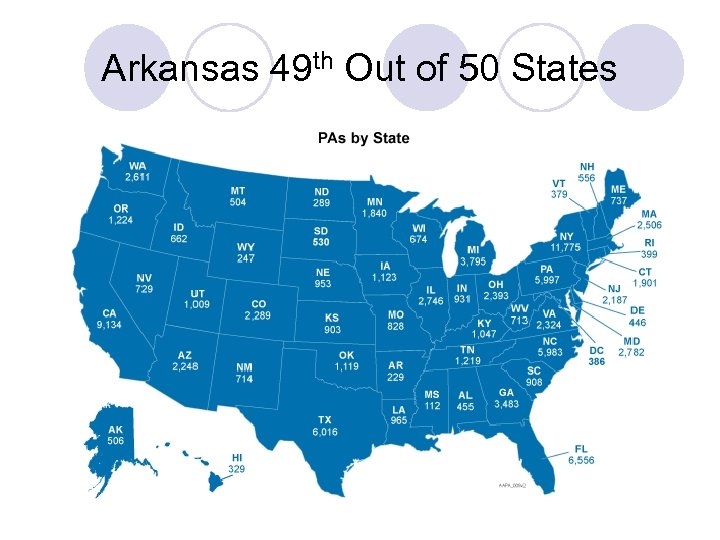 Arkansas 49 th Out of 50 States
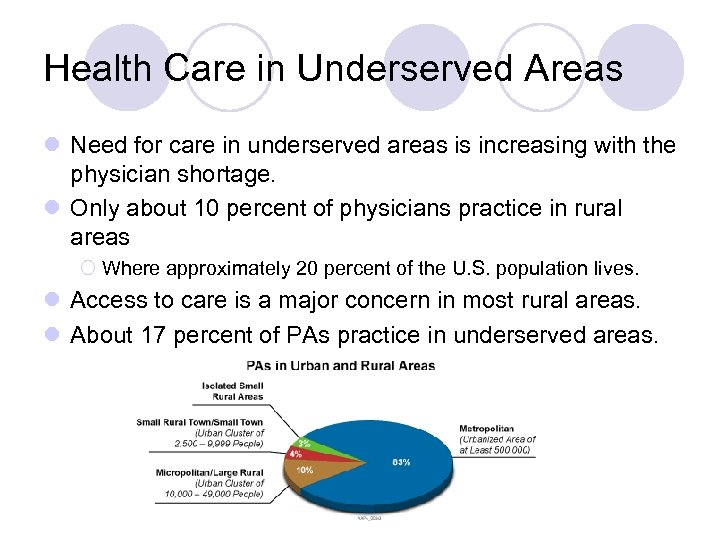 Health Care in Underserved Areas l Need for care in underserved areas is increasing with the physician shortage. l Only about 10 percent of physicians practice in rural areas ¡ Where approximately 20 percent of the U. S. population lives. l Access to care is a major concern in most rural areas. l About 17 percent of PAs practice in underserved areas.
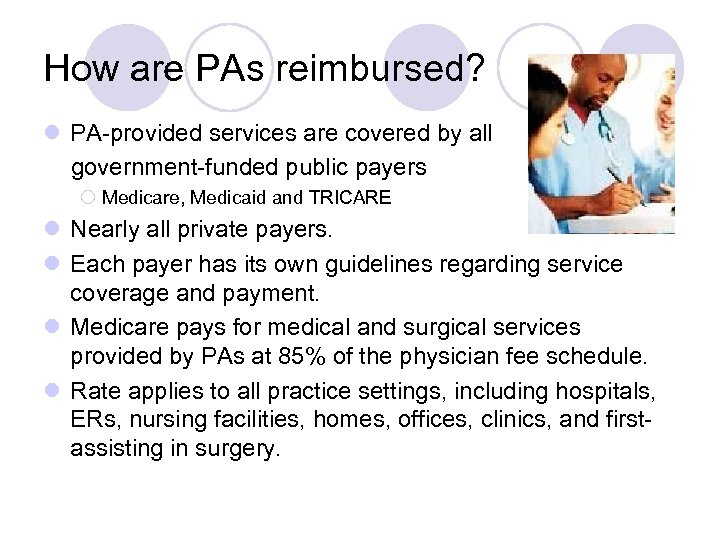 How are PAs reimbursed? l PA-provided services are covered by all government-funded public payers ¡ Medicare, Medicaid and TRICARE l Nearly all private payers. l Each payer has its own guidelines regarding service coverage and payment. l Medicare pays for medical and surgical services provided by PAs at 85% of the physician fee schedule. l Rate applies to all practice settings, including hospitals, ERs, nursing facilities, homes, offices, clinics, and firstassisting in surgery.
 How are PAs reimbursed? l "Incident-to” ¡ Medicare provision ¡ Allows for certain services provided by a PA in the office to be billed under the physician’s provider number and reimbursed at 100 percent. l Shared visit billing ¡ Medicare provision that allows for services provided by both the PA and the physician in a hospital to be billed under the physician’s provider number with reimbursement at 100 percent. l Nearly all private payers cover medical and surgical services provided by PAs. ¡ Some payers will separately credential or enroll PAs. ¡ Others require that PA services be billed under the supervising physician’s name.
 Interesting PA Facts U. S. News & World Report: Report Identified the Physician Assistant Profession as one of the “best careers” in the nation CNN: Ranked Physician Assistant # 2 in its “Best Jobs in America” listing
 Physician Assistant Program
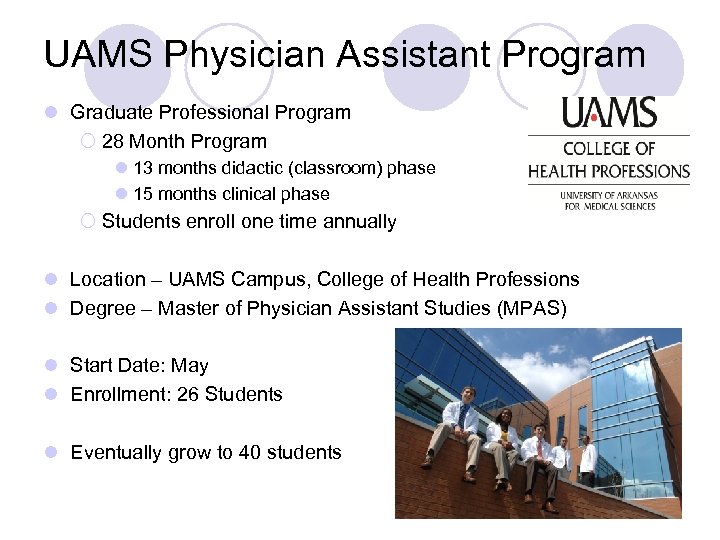 UAMS Physician Assistant Program l Graduate Professional Program ¡ 28 Month Program l 13 months didactic (classroom) phase l 15 months clinical phase ¡ Students enroll one time annually l Location – UAMS Campus, College of Health Professions l Degree – Master of Physician Assistant Studies (MPAS) l Start Date: May l Enrollment: 26 Students l Eventually grow to 40 students
 Mission of UAMS PA Program The mission of the UAMS Physician Assistant Program is to educate students who will practice patient-centered medicine while embracing cultural diversity, ethical integrity, professionalism and collaboration with other members of the health care team. The program fosters lifelong learning through emphasis on critical thinking, clinical application of knowledge and evidence-based medicine. Through innovative educational practices, the students will be prepared to enter into any discipline of medicine with the ability to serve any community and contribute to the profession through leadership, education, and service.
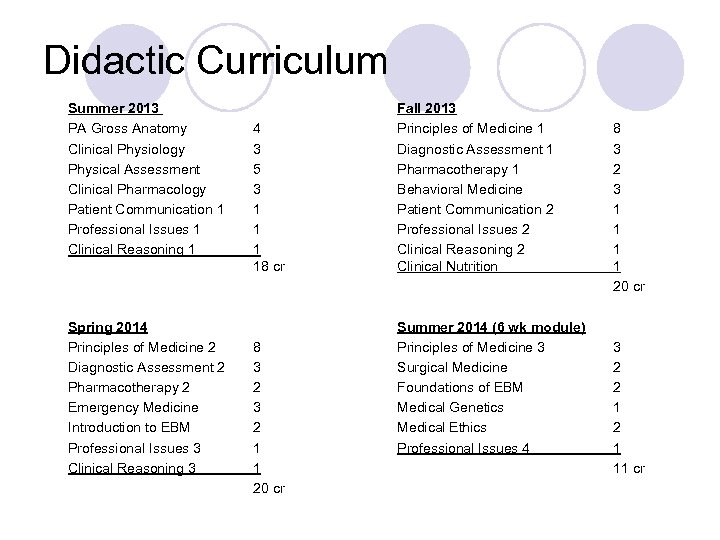 Didactic Curriculum Summer 2013 PA Gross Anatomy Clinical Physiology Physical Assessment Clinical Pharmacology Patient Communication 1 Professional Issues 1 Clinical Reasoning 1 Spring 2014 Principles of Medicine 2 Diagnostic Assessment 2 Pharmacotherapy 2 Emergency Medicine Introduction to EBM Professional Issues 3 Clinical Reasoning 3 4 3 5 3 1 18 cr 8 3 2 1 1 20 cr Fall 2013 Principles of Medicine 1 Diagnostic Assessment 1 Pharmacotherapy 1 Behavioral Medicine Patient Communication 2 Professional Issues 2 Clinical Reasoning 2 Clinical Nutrition Summer 2014 (6 wk module) Principles of Medicine 3 Surgical Medicine Foundations of EBM Medical Genetics Medical Ethics Professional Issues 4 8 3 2 3 1 1 20 cr 3 2 2 1 11 cr
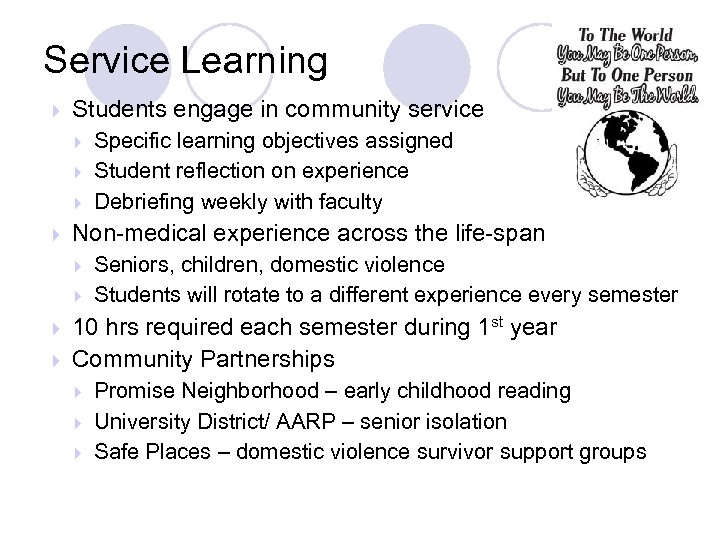 Service Learning Students engage in community service Non-medical experience across the life-span Specific learning objectives assigned Student reflection on experience Debriefing weekly with faculty Seniors, children, domestic violence Students will rotate to a different experience every semester 10 hrs required each semester during 1 st year Community Partnerships Promise Neighborhood – early childhood reading University District/ AARP – senior isolation Safe Places – domestic violence survivor support groups
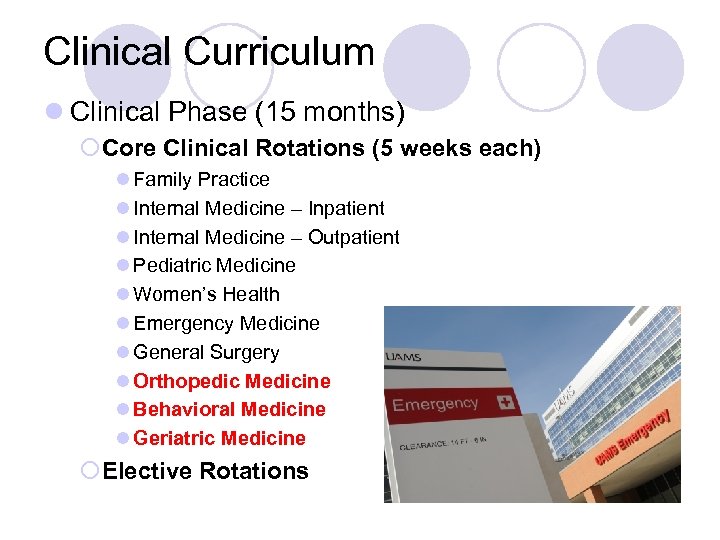 Clinical Curriculum l Clinical Phase (15 months) ¡Core Clinical Rotations (5 weeks each) l Family Practice l Internal Medicine – Inpatient l Internal Medicine – Outpatient l Pediatric Medicine l Women’s Health l Emergency Medicine l General Surgery l Orthopedic Medicine l Behavioral Medicine l Geriatric Medicine ¡Elective Rotations
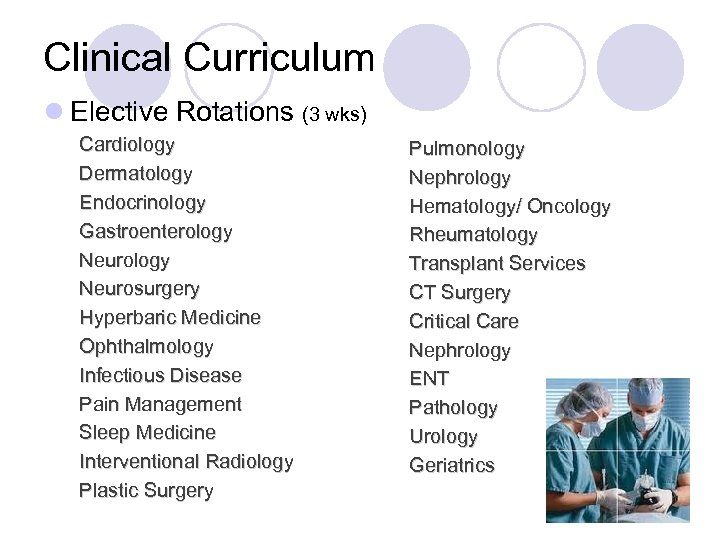 Clinical Curriculum l Elective Rotations (3 wks) Cardiology Dermatology Endocrinology Gastroenterology Neurology Neurosurgery Hyperbaric Medicine Ophthalmology Infectious Disease Pain Management Sleep Medicine Interventional Radiology Plastic Surgery Pulmonology Nephrology Hematology/ Oncology Rheumatology Transplant Services CT Surgery Critical Care Nephrology ENT Pathology Urology Geriatrics
 Admissions Requirements • Cumulative undergraduate GPA 3. 0 on a 4. 0 scale strongly recommended. • Natural Science GPA of 3. 0 on a 4. 0 scale strongly recommended. • Bachelor’s of Science/ Arts degree required • Graduate Record Examination (GRE) • Pre-requisite courses • 500 hours of direct patient care • Application with narratives, letters of recommendation • On-Campus Interview
 Prerequisite Courses Natural Science Requirements General Biology 1&2 with Labs Microbiology with Lab Human Anatomy with Lab Human Physiology with Lab General Chemistry 1& 2 with Labs Organic Chemistry with Lab Medical Genetics/ Genetics 8 cr 4 cr 8 cr 4 cr 3 cr Additional Course Requirements Intro or General Psychology Abnormal Psychology Statistics or Biostatistics 3 cr
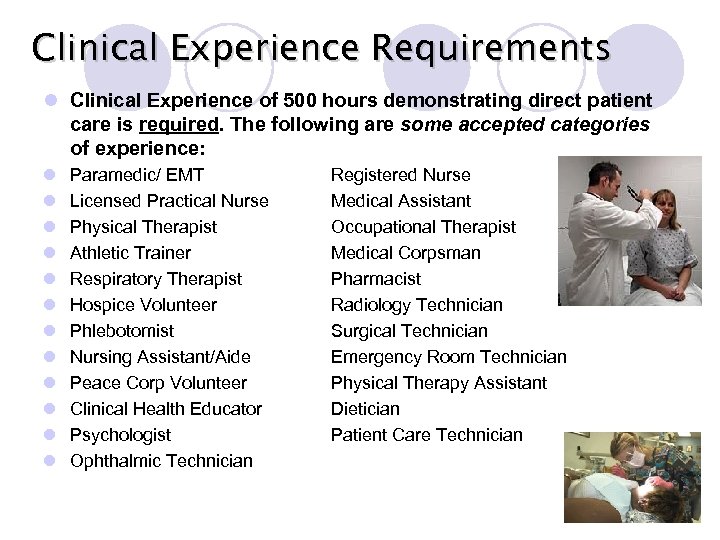 Clinical Experience Requirements l Clinical Experience of 500 hours demonstrating direct patient care is required. The following are some accepted categories of experience: l l l Paramedic/ EMT Licensed Practical Nurse Physical Therapist Athletic Trainer Respiratory Therapist Hospice Volunteer Phlebotomist Nursing Assistant/Aide Peace Corp Volunteer Clinical Health Educator Psychologist Ophthalmic Technician Registered Nurse Medical Assistant Occupational Therapist Medical Corpsman Pharmacist Radiology Technician Surgical Technician Emergency Room Technician Physical Therapy Assistant Dietician Patient Care Technician
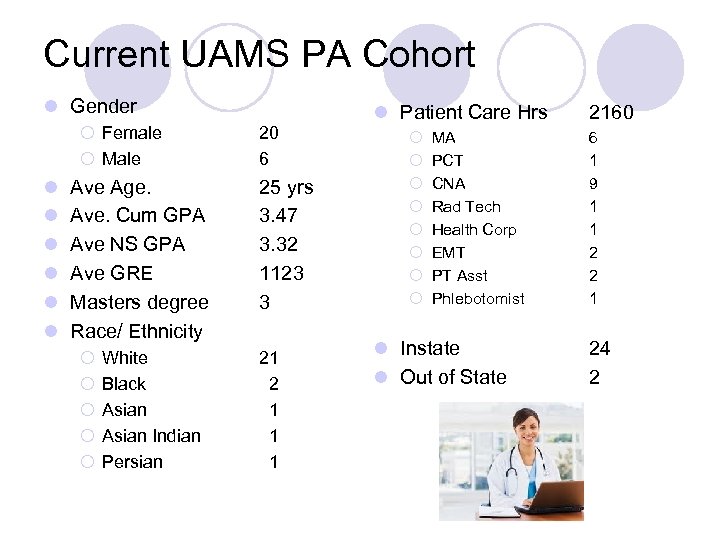 Current UAMS PA Cohort l Gender ¡ Female ¡ Male l l l Ave Age. Ave. Cum GPA Ave NS GPA Ave GRE Masters degree Race/ Ethnicity ¡ ¡ ¡ White Black Asian Indian Persian 20 6 25 yrs 3. 47 3. 32 1123 3 21 2 1 1 1 l Patient Care Hrs ¡ ¡ ¡ ¡ MA PCT CNA Rad Tech Health Corp EMT PT Asst Phlebotomist l Instate l Out of State 2160 6 1 9 1 1 2 2 1 24 2
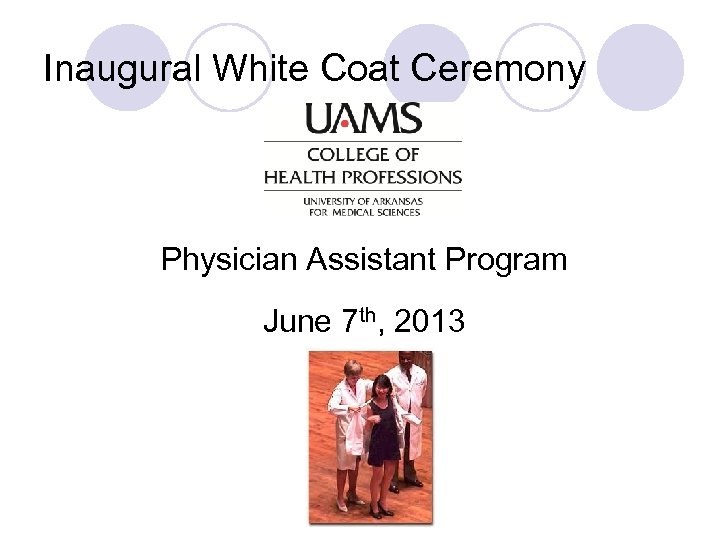 Inaugural White Coat Ceremony Physician Assistant Program June 7 th, 2013
 Contact Information l UAMS Physician Assistant Program Website ¡www. uams. edu/chrp/pa/ l PA Program Contact Information: ¡paprogram@uams. edu ¡ 501 -686 -7211
 Questions? ? ? “ Where Medicine Lives“