


 Скачать презентацию The University of Texas at Austin Fall 2017
eee3f0ad0adef5cf2cefe17d1fd40883.ppt
- Количество слайдов: 44
 The University of Texas at Austin Fall 2017 CAEE Department, Architectural Engineering Program Course: Energy Simulation in Building Design Instructor: Dr. Atila Novoselac ECJ, 5. 430 Office (512) 475 -8175 e-mail: atila@mail. utexas. edu http: //www. ce. utexas. edu/prof/Novoselac Office Hours: Tuesday and Thursday 11: 00 a. m. – 12: 00 p. m.
 Lecture Objectives: • • • Discuss syllabus Describe course scope Introduce course themes Address your concerns Heat transfer review
 Motivation for learning about Energy Simulation in Building Design Buildings: • Responsible for ~40% of total energy consumption in U. S. • Affect the CO 2 emission • Building energy systems with the building envelope affect: • Energy consumption – operation cost • First cost – capital cost • Thermal comfort and IAQ Energy analysis for - Optimum balance between operational and capital cost
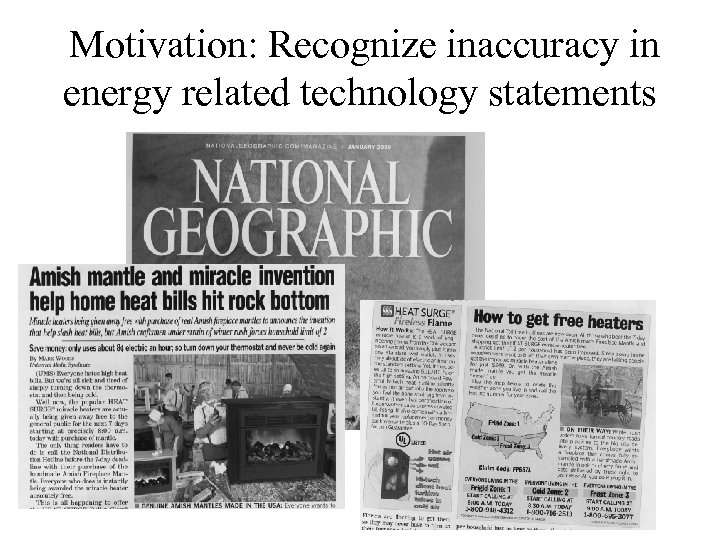 Motivation: Recognize inaccuracy in energy related technology statements
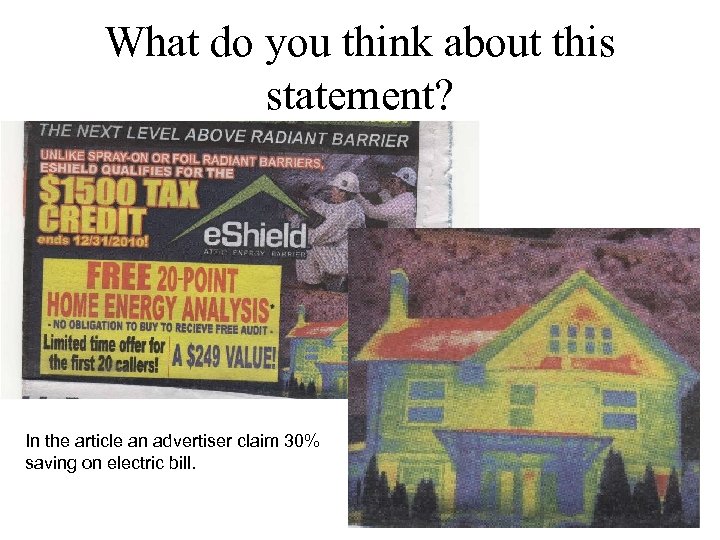 What do you think about this statement? In the article an advertiser claim 30% saving on electric bill.
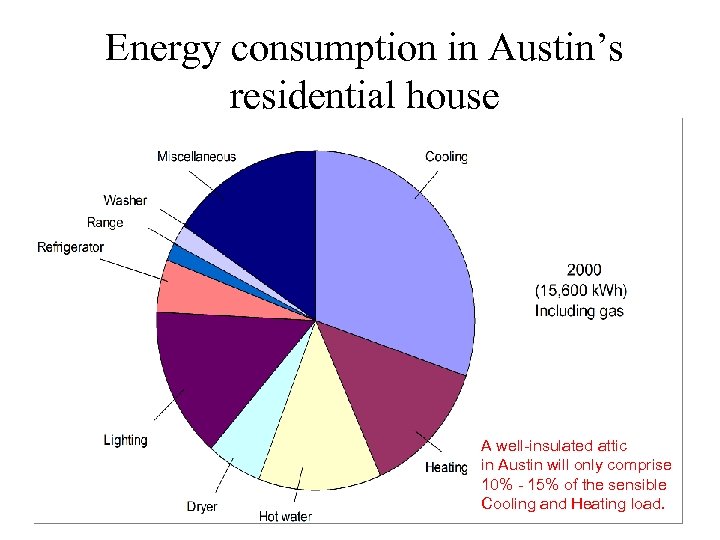 Energy consumption in Austin’s residential house A well-insulated attic in Austin will only comprise 10% - 15% of the sensible Cooling and Heating load.
 Energy target value for a new house in Austin New single family 2262 sf, 2 -story home
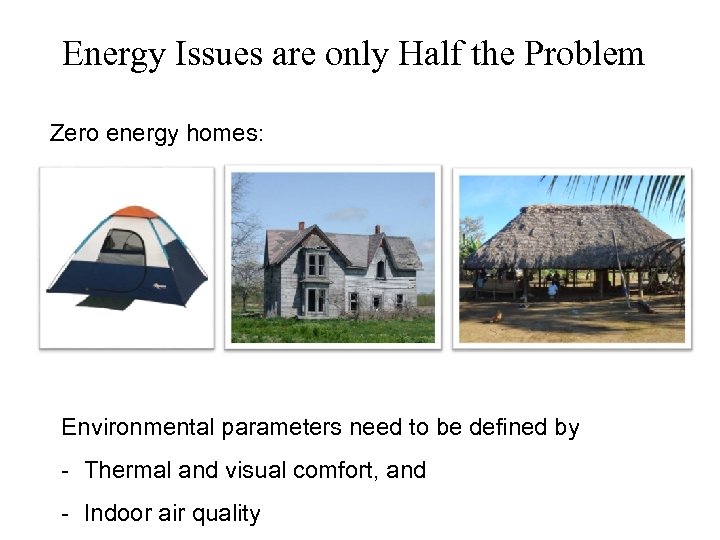 Energy Issues are only Half the Problem Zero energy homes: Environmental parameters need to be defined by - Thermal and visual comfort, and - Indoor air quality
 Student interested in Sustainable Design LEED - Leadership in Energy and Environmental Design 1) LEED Certification require that building has analysis related to energy performance 2) All government buildings require energy analysis - all new UT buildings require energy analysis
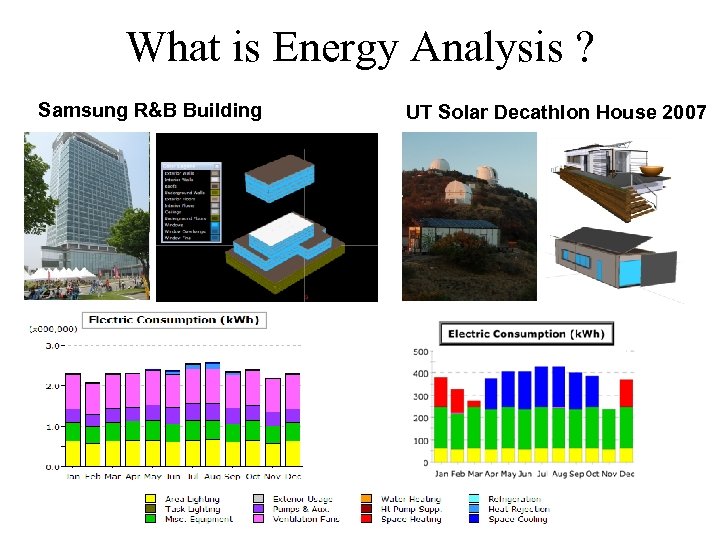 What is Energy Analysis ? Samsung R&B Building UT Solar Decathlon House 2007
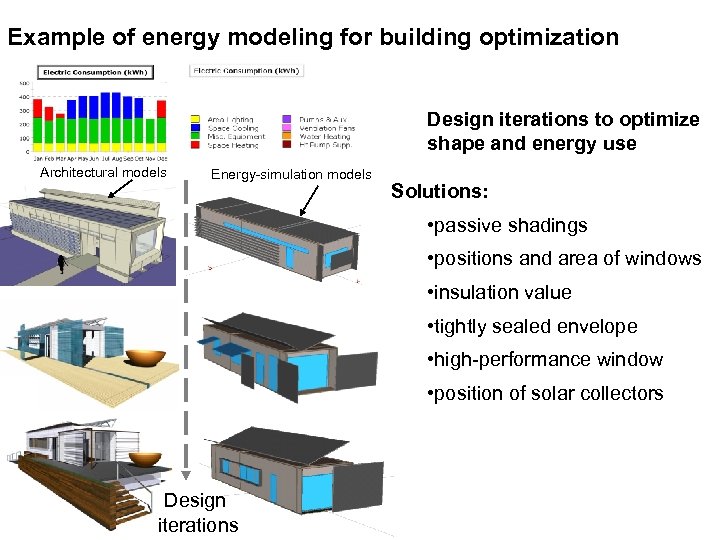 Example of energy modeling for building optimization Design iterations to optimize shape and energy use Architectural models Energy-simulation models Solutions: • passive shadings • positions and area of windows • insulation value • tightly sealed envelope • high-performance window • position of solar collectors Design iterations
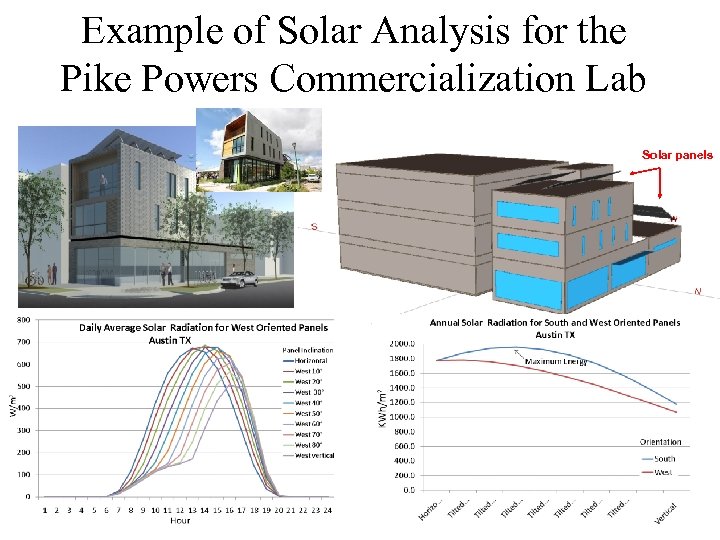 Example of Solar Analysis for the Pike Powers Commercialization Lab Solar panels
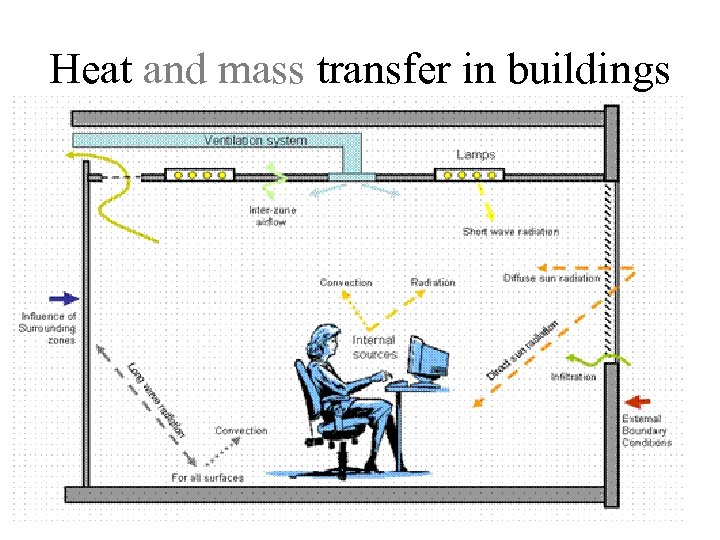 Heat and mass transfer in buildings
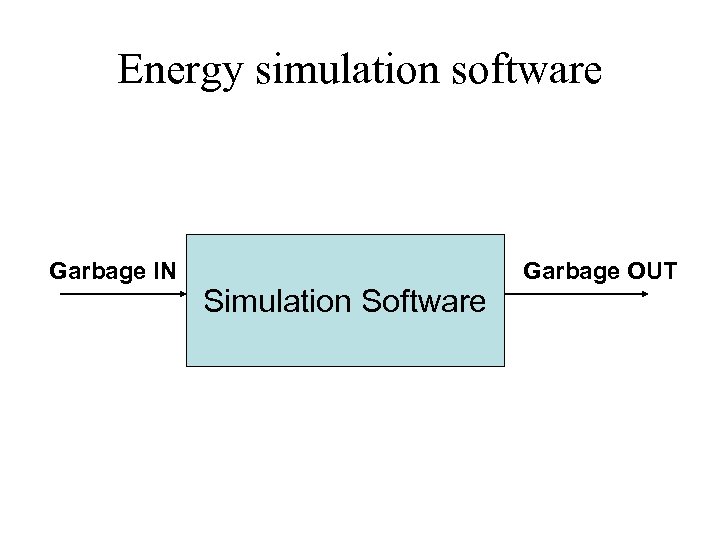 Energy simulation software Garbage IN Simulation Software Garbage OUT
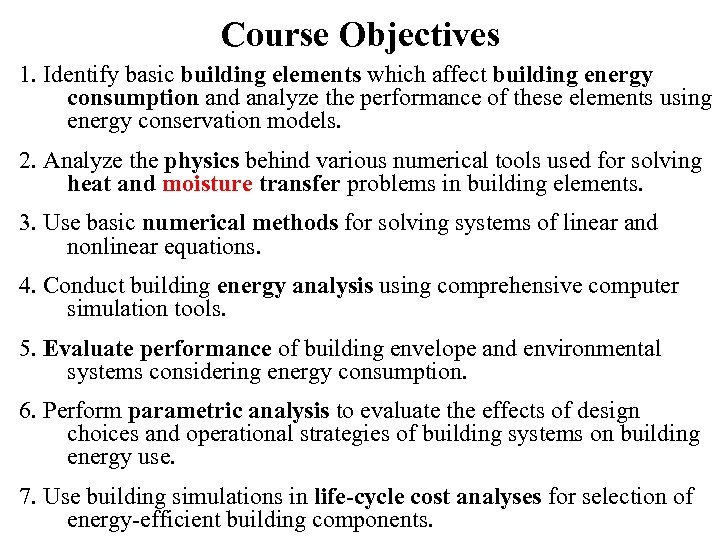 Course Objectives 1. Identify basic building elements which affect building energy consumption and analyze the performance of these elements using energy conservation models. 2. Analyze the physics behind various numerical tools used for solving heat and moisture transfer problems in building elements. 3. Use basic numerical methods for solving systems of linear and nonlinear equations. 4. Conduct building energy analysis using comprehensive computer simulation tools. 5. Evaluate performance of building envelope and environmental systems considering energy consumption. 6. Perform parametric analysis to evaluate the effects of design choices and operational strategies of building systems on building energy use. 7. Use building simulations in life-cycle cost analyses for selection of energy-efficient building components.
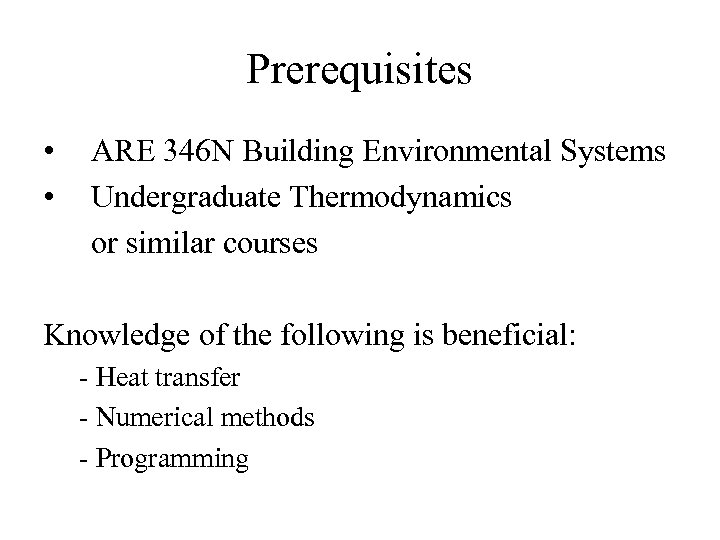 Prerequisites • • ARE 346 N Building Environmental Systems Undergraduate Thermodynamics or similar courses Knowledge of the following is beneficial: - Heat transfer - Numerical methods - Programming
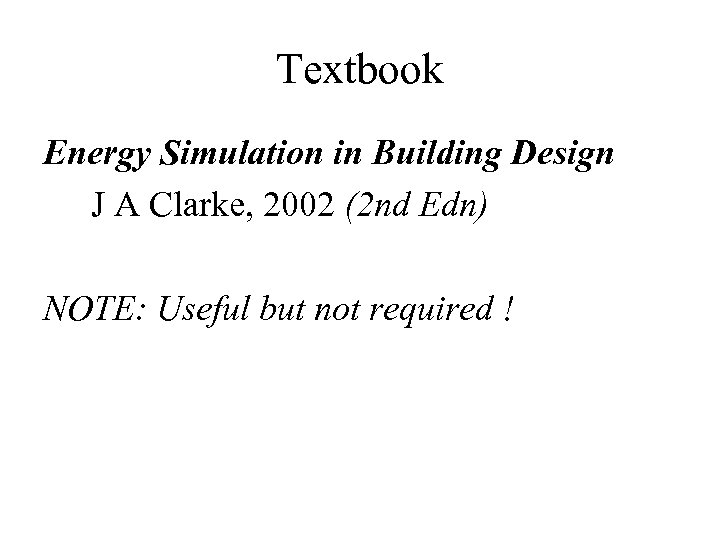 Textbook Energy Simulation in Building Design J A Clarke, 2002 (2 nd Edn) NOTE: Useful but not required !
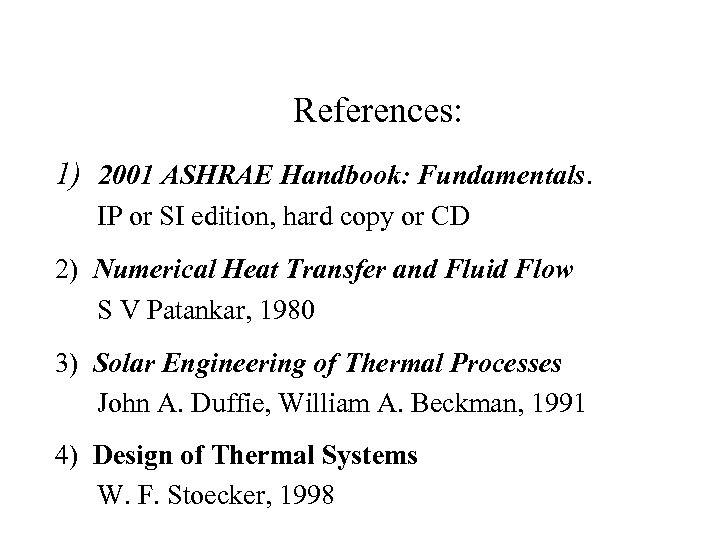 References: 1) 2001 ASHRAE Handbook: Fundamentals. IP or SI edition, hard copy or CD 2) Numerical Heat Transfer and Fluid Flow S V Patankar, 1980 3) Solar Engineering of Thermal Processes John A. Duffie, William A. Beckman, 1991 4) Design of Thermal Systems W. F. Stoecker, 1998
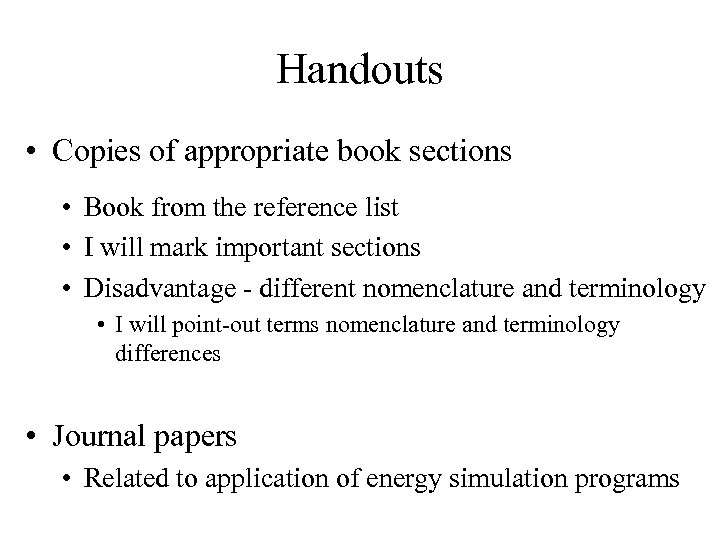 Handouts • Copies of appropriate book sections • Book from the reference list • I will mark important sections • Disadvantage - different nomenclature and terminology • I will point-out terms nomenclature and terminology differences • Journal papers • Related to application of energy simulation programs
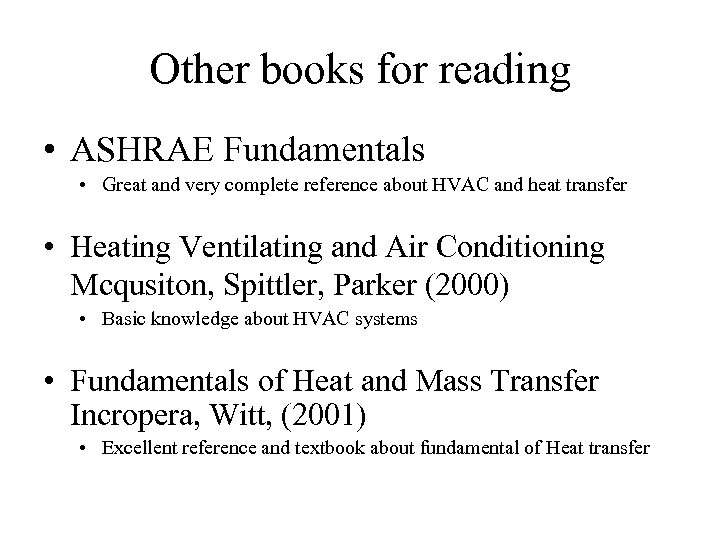 Other books for reading • ASHRAE Fundamentals • Great and very complete reference about HVAC and heat transfer • Heating Ventilating and Air Conditioning Mcqusiton, Spittler, Parker (2000) • Basic knowledge about HVAC systems • Fundamentals of Heat and Mass Transfer Incropera, Witt, (2001) • Excellent reference and textbook about fundamental of Heat transfer
 Energy simulation (ES) software • We are going to learn to evaluate: • importance of input data • effects of simplification and assumptions • accuracy of results for each ES program • We are going to talk about several most commonly used ES programs • Concentrate on e. QUEST and Energy. Plus – for projects and homework's http: //www. doe 2. com/equest/ , http: //apps 1. eere. energy. gov/buildings/energyplus/
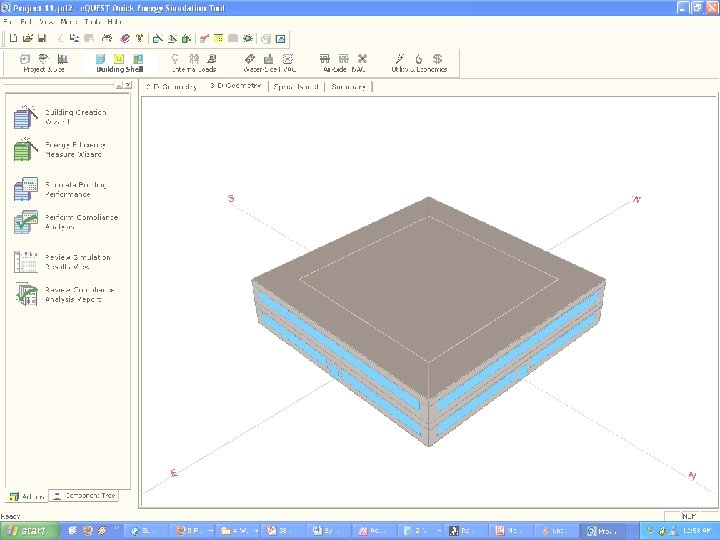
 Why e. QUEST software • It is free - you can take it to your future company • It has user-friendly interface • It has built in functions for economic analyses • It is based on well tested DOE 2 ES program There are certain limitations limited number of HVAC system
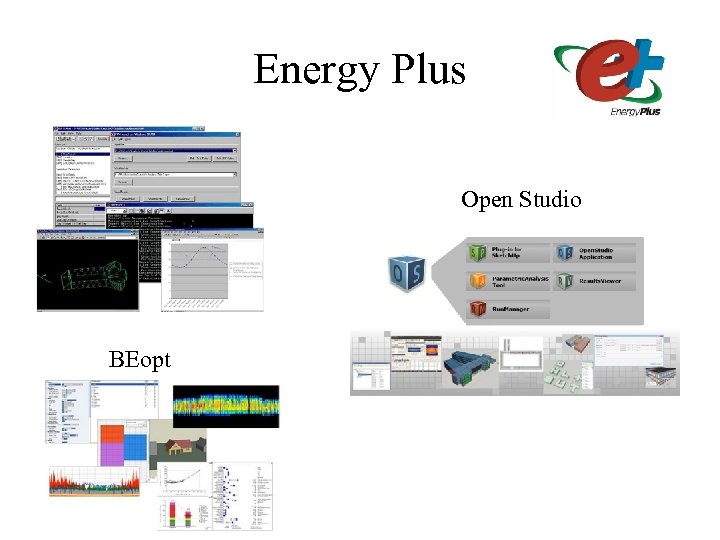 Energy Plus Open Studio BEopt
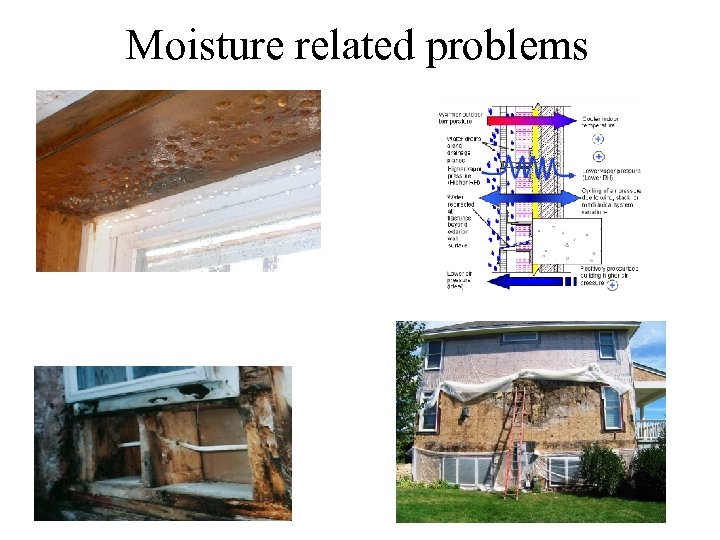 Moisture related problems
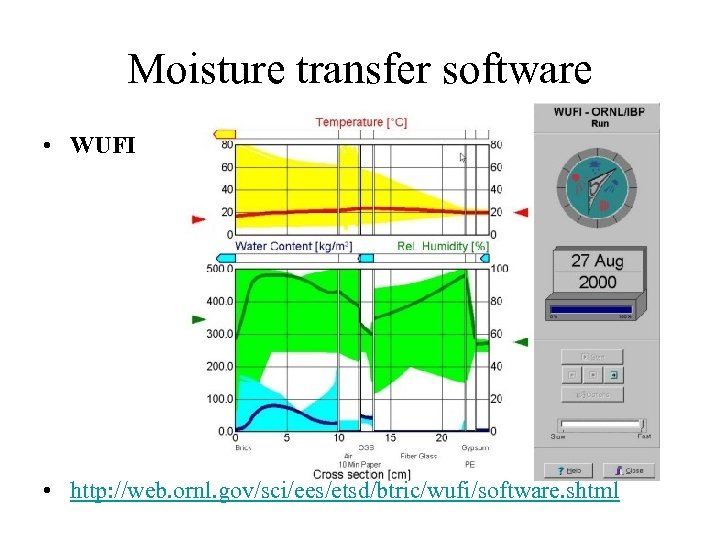 Moisture transfer software • WUFI • http: //web. ornl. gov/sci/ees/etsd/btric/wufi/software. shtml
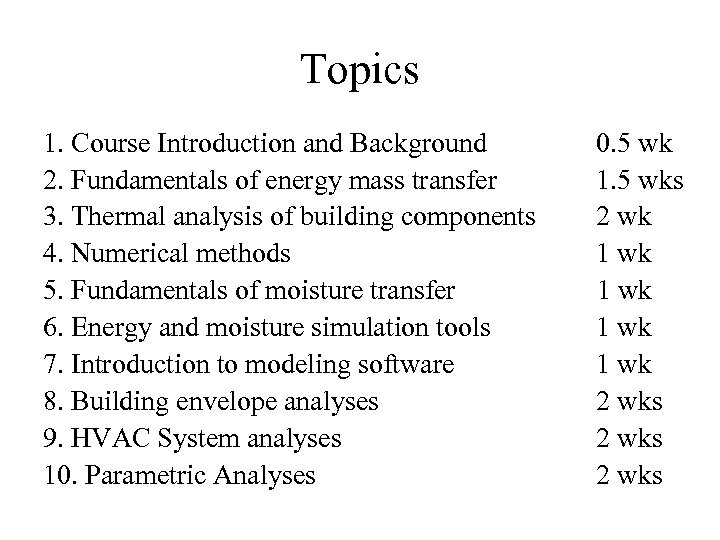 Topics 1. Course Introduction and Background 2. Fundamentals of energy mass transfer 3. Thermal analysis of building components 4. Numerical methods 5. Fundamentals of moisture transfer 6. Energy and moisture simulation tools 7. Introduction to modeling software 8. Building envelope analyses 9. HVAC System analyses 10. Parametric Analyses 0. 5 wk 1. 5 wks 2 wk 1 wk 2 wks
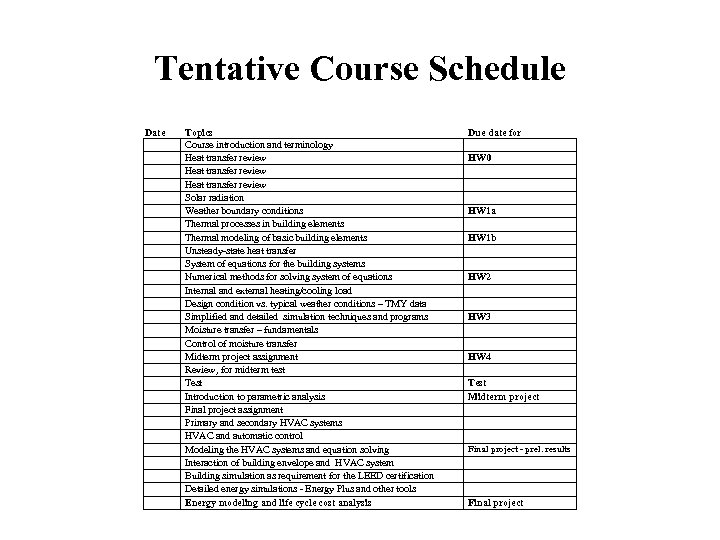 Tentative Course Schedule Date Topics Course introduction and terminology Heat transfer review Solar radiation Weather boundary conditions Thermal processes in building elements Thermal modeling of basic building elements Unsteady-state heat transfer System of equations for the building systems Numerical methods for solving system of equations Internal and external heating/cooling load Design condition vs. typical weather conditions – TMY data Simplified and detailed simulation techniques and programs Moisture transfer – fundamentals Control of moisture transfer Midterm project assignment Review, for midterm test Test Introduction to parametric analysis Final project assignment Primary and secondary HVAC systems HVAC and automatic control Modeling the HVAC systems and equation solving Interaction of building envelope and HVAC system Building simulation as requirement for the LEED certification Detailed energy simulations - Energy Plus and other tools Energy modeling and life cycle cost analysis Due date for HW 0 HW 1 a HW 1 b HW 2 HW 3 HW 4 Test Midterm project Final project - prel. results Final project
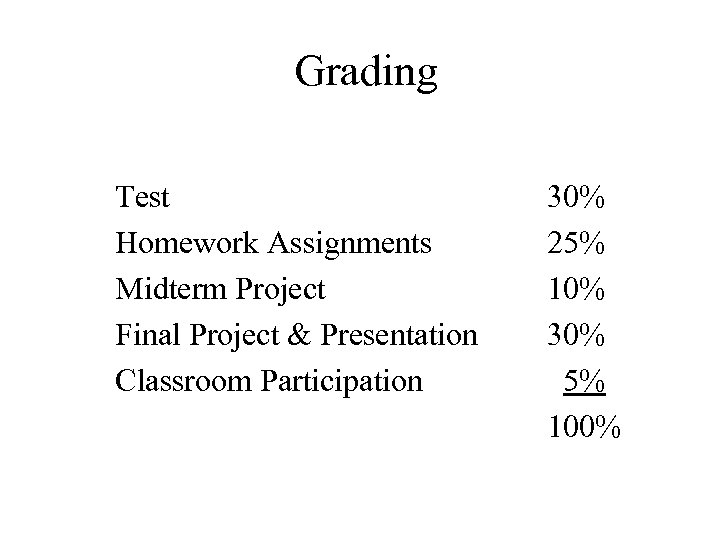 Grading Test Homework Assignments Midterm Project Final Project & Presentation Classroom Participation 30% 25% 10% 30% 5% 100%
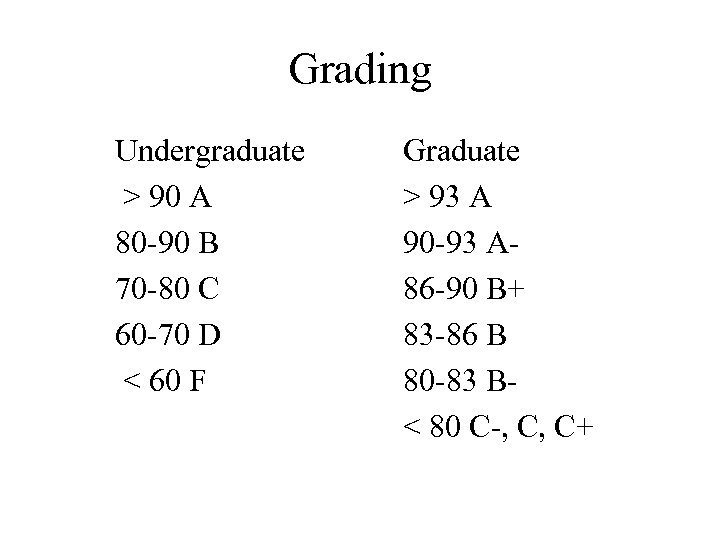 Grading Undergraduate > 90 A 80 -90 B 70 -80 C 60 -70 D < 60 F Graduate > 93 A 90 -93 A 86 -90 B+ 83 -86 B 80 -83 B< 80 C-, C, C+
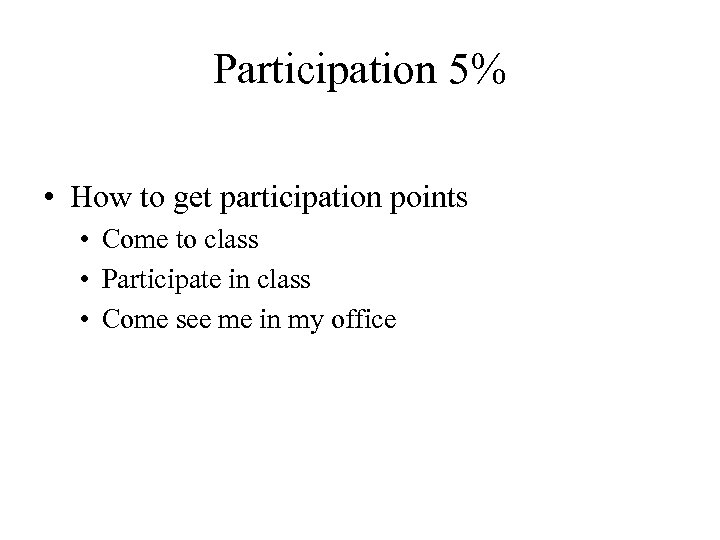 Participation 5% • How to get participation points • Come to class • Participate in class • Come see me in my office
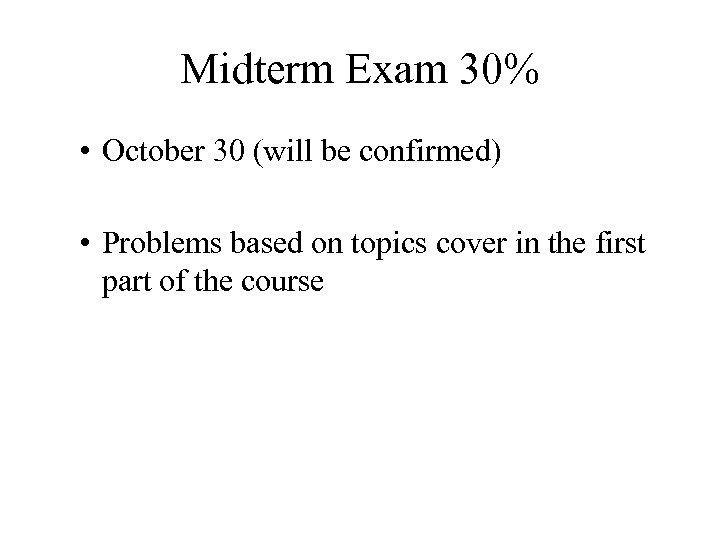 Midterm Exam 30% • October 30 (will be confirmed) • Problems based on topics cover in the first part of the course
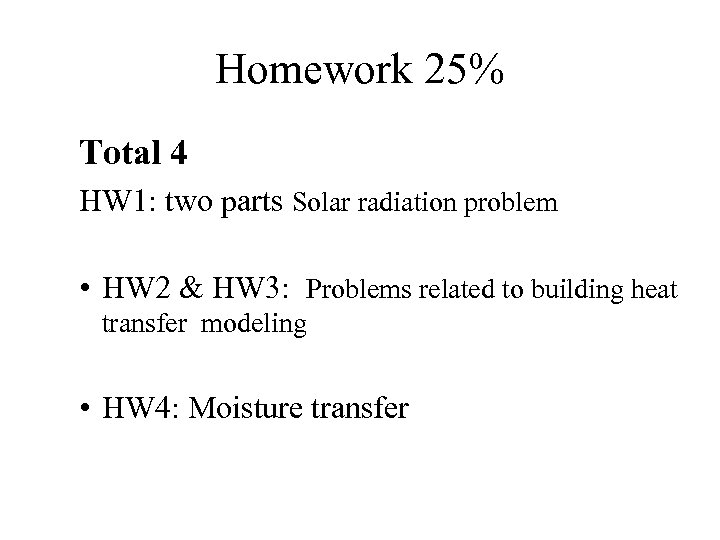 Homework 25% Total 4 HW 1: two parts Solar radiation problem • HW 2 & HW 3: Problems related to building heat transfer modeling • HW 4: Moisture transfer
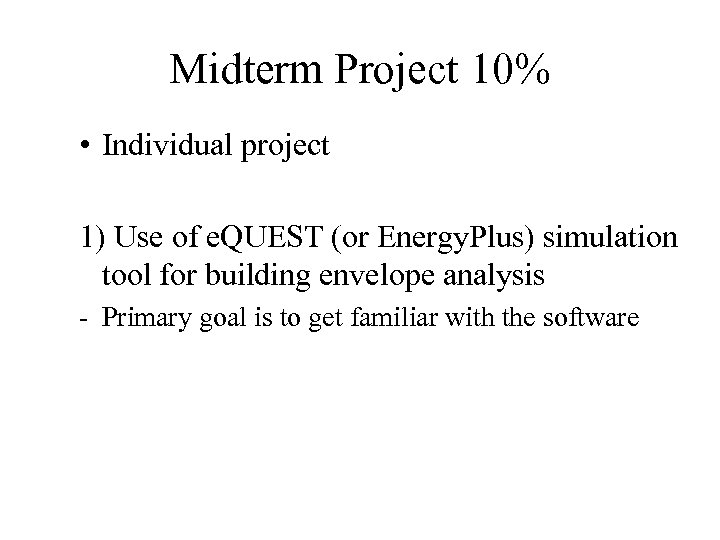 Midterm Project 10% • Individual project 1) Use of e. QUEST (or Energy. Plus) simulation tool for building envelope analysis - Primary goal is to get familiar with the software
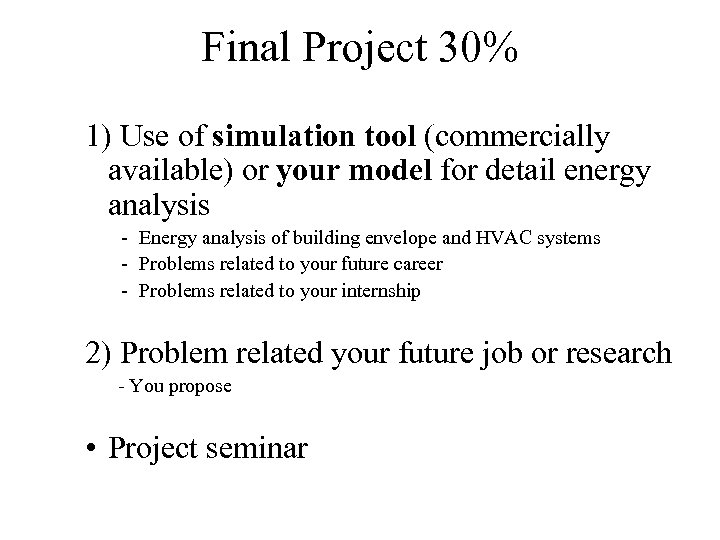 Final Project 30% 1) Use of simulation tool (commercially available) or your model for detail energy analysis - Energy analysis of building envelope and HVAC systems - Problems related to your future career - Problems related to your internship 2) Problem related your future job or research - You propose • Project seminar
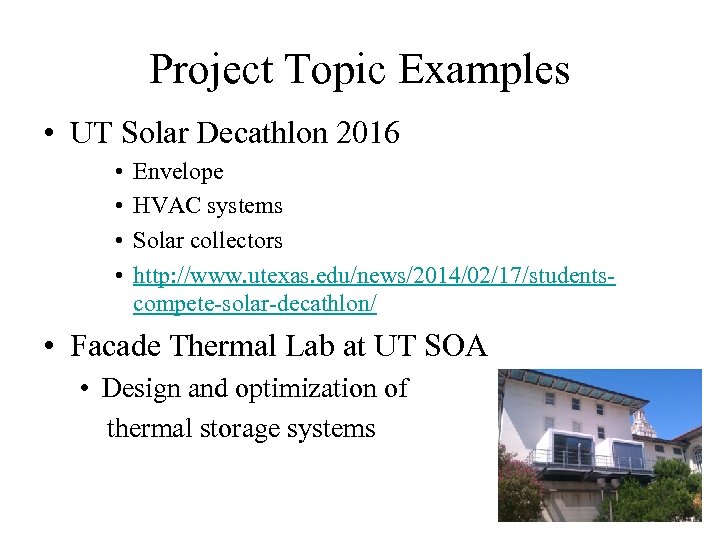 Project Topic Examples • UT Solar Decathlon 2016 • • Envelope HVAC systems Solar collectors http: //www. utexas. edu/news/2014/02/17/studentscompete-solar-decathlon/ • Facade Thermal Lab at UT SOA • Design and optimization of thermal storage systems
 Course Website All course information: http: //www. ce. utexas. edu/prof/Novoselac/classes/ARE 383/ • Your grades and progress on Canvas • Look at assignments and handout sections • Class notes posted in the morning before the class • PLEASE LET ME KNOW ABOUT ERRORS
 Units System We will use both SI and IP unit system • Research: SI • HVAC industry including architectural and consulting companies IP First part of the course Second part of the course more SI IP and SI
 My Issues • Please try to use office hours for questions problems and other reasons for visit • Please don’t use e-mail to ask me questions which require long explanations • Call me or come to see me • I accept suggestions • The more specific the better
 Questions ?
 We are part of the PLUS program • This course got PLUS accreditation • Peer-Led Undergraduate Studying (PLUS) • assists students enrolled in historically difficult courses by offering class-specific, weekly study groups. • students can attend any study group at any point in the semester to review for an exam, discuss confusing concepts, or work through practice problems. • http: //www. utexas. edu/ugs/slc/support/plus
 Assignment 0 • Your motivation and expectation • Due on Tuesday
 Review - Heat transfer • Convection • Conduction • Radiation
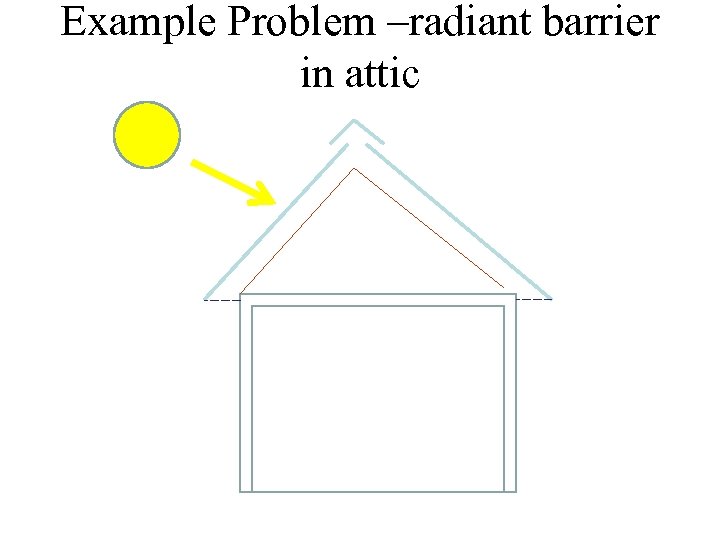 Example Problem –radiant barrier in attic