


 Скачать презентацию The United States in World War II Chapter
b73291a3a521a7a0609c33ca3f8e9a39.ppt
- Количество слайдов: 74
 The United States in World War II Chapter Seventeen
 World War II Objective To understand the military campaign, political decisions, and efforts on the home front that won World War II
 Chapter Overview Soldiers abroad and Americans at home join in the effort to win World War II, which ends with victory for the allies. But American society is transformed in the process.
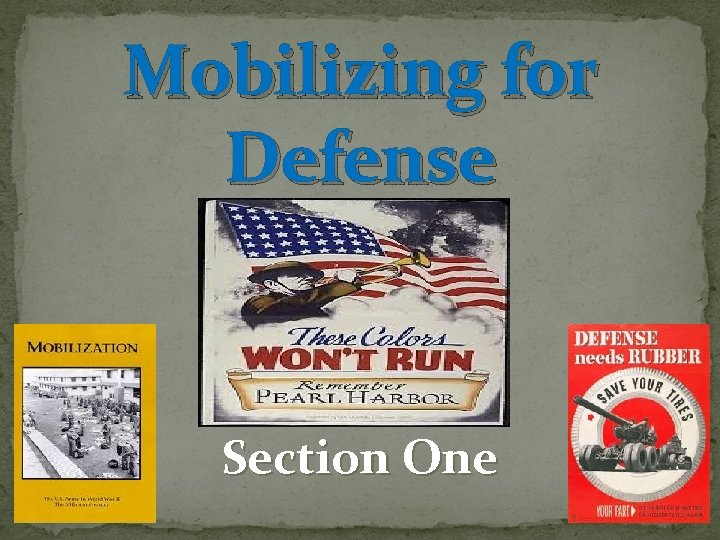 Mobilizing for Defense Section One
 Chapter in Brief Fighting a war on two fronts required large numbers of soldiers. About 5 million volunteered to enter the armed forces; another 10 million were drafted. After eight weeks of basic training, former civilians became soldiers. Among them were about 300, 000 Mexican Americans, a million African Americans, and many thousand Asian and Native Americans. To free more men for combat, the army created the Women’s Auxiliary Army Corps (WAAC). About 200, 000 women served in the military even though they did not receive the same pay or benefits as male soldiers.
 Chapter in Brief The nation’s factories converted from peacetime to wartime production. Automakers made planes, tanks, and other vehicles; shipyards built warships. About 18 million workers – one third of them women – kept these war industries productive. African Americans pushed for – and won – equal access to jobs in war industries. Through the Office of Scientific Research and Development (OSRD) the government recruited scientists to develop new weapons and medicines. This effort produced radar, sonar, penicillin and other “miracle” drugs. The most significant result of OSRD research was the secret development of the atomic bomb.
 Chapter in Brief The government also created the Office of Price Administration (OPA). The OPA froze the prices of consumer goods and issued ratio books, restricting access to scarce goods such as gasoline and meat. Most Americans cooperated with rationing. They also bought war bonds and collected scrap paper or metal to help the soldiers fighting overseas
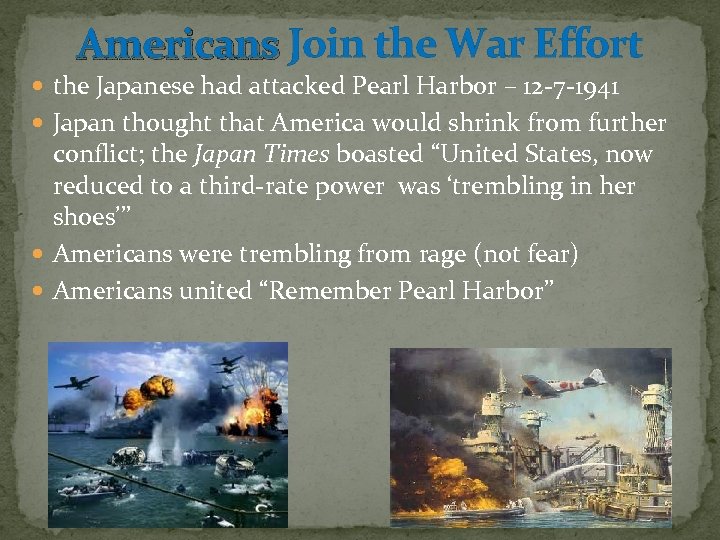 Americans Join the War Effort the Japanese had attacked Pearl Harbor – 12 -7 -1941 Japan thought that America would shrink from further conflict; the Japan Times boasted “United States, now reduced to a third-rate power was ‘trembling in her shoes’” Americans were trembling from rage (not fear) Americans united “Remember Pearl Harbor”
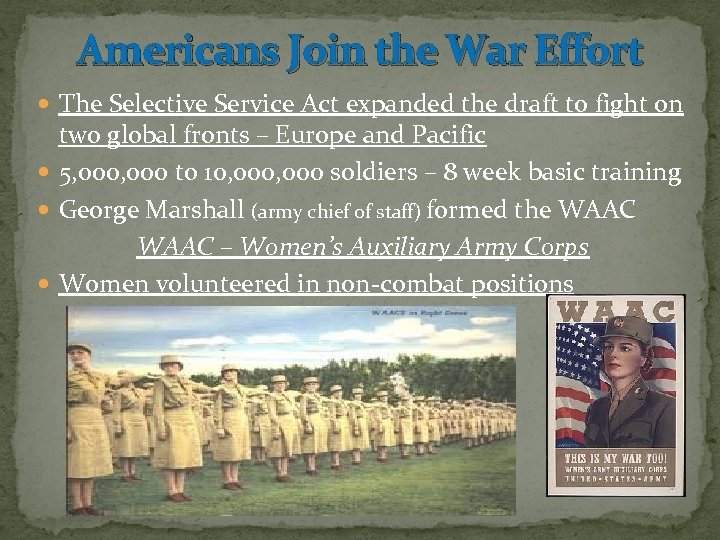 Americans Join the War Effort The Selective Service Act expanded the draft to fight on two global fronts – Europe and Pacific 5, 000 to 10, 000 soldiers – 8 week basic training George Marshall (army chief of staff) formed the WAAC – Women’s Auxiliary Army Corps Women volunteered in non-combat positions
 Recruiting and Discrimination Minority Groups – African Americans, Native Americans, Mexican Americans, Asian Americans – questioned whether this war was their war to fight “Why die for democracy for some foreign country when we don’t even have it here? ” Mexican Americans = 300, 000 soldiers African Americans = 1, 000 soldiers Asian Americans = 13, 000 Chinese Americans 33, 000 Japanese Americans Native Americans = 25, 000 soldiers / 800 women
 A Production Miracle February 1942 – end of automobile production for private use – shutdown in production automobile plants produced: 1. tanks 2. planes 3. boats 4. command cars across the nation, factories converted to war production 1. mechanical pencils plant – made bomb parts 2. bedspread manufacturer – made mosquito netting 3. soft drink company – filled bottles with industrial employment increased by three times since 1941 women and minorities took the majority of these jobs
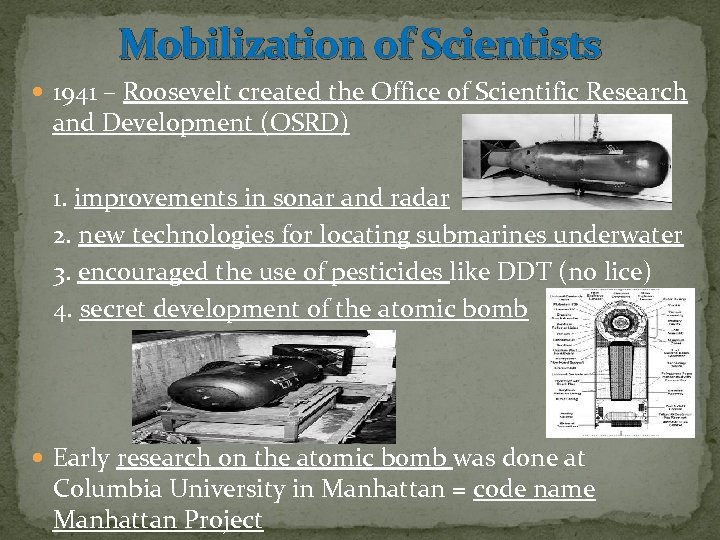 Mobilization of Scientists 1941 – Roosevelt created the Office of Scientific Research and Development (OSRD) 1. improvements in sonar and radar 2. new technologies for locating submarines underwater 3. encouraged the use of pesticides like DDT (no lice) 4. secret development of the atomic bomb Early research on the atomic bomb was done at Columbia University in Manhattan = code name Manhattan Project
 The Federal Government Takes Control A. Economic Controls B. Rationing A. Economic Controls fewer consumer goods produced = prices increase Roosevelt created the Office of Price Administration (OPA) 1. fought inflation by freezing prices on most goods 2. raised income tax rates 3. extended the tax to millions who had never paid it – higher taxes reduced spending; workers had less to spend 4. encouraged to buy war bonds
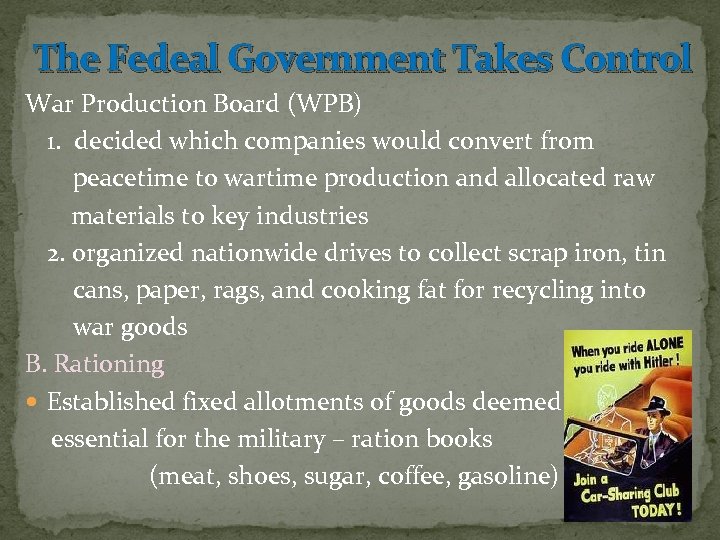 The Fedeal Government Takes Control War Production Board (WPB) 1. decided which companies would convert from peacetime to wartime production and allocated raw materials to key industries 2. organized nationwide drives to collect scrap iron, tin cans, paper, rags, and cooking fat for recycling into war goods B. Rationing Established fixed allotments of goods deemed essential for the military – ration books (meat, shoes, sugar, coffee, gasoline)
 Essential Question Explain how women, minorities, and scientists help the war effort. Answer the question in three complete sentences in your summary section
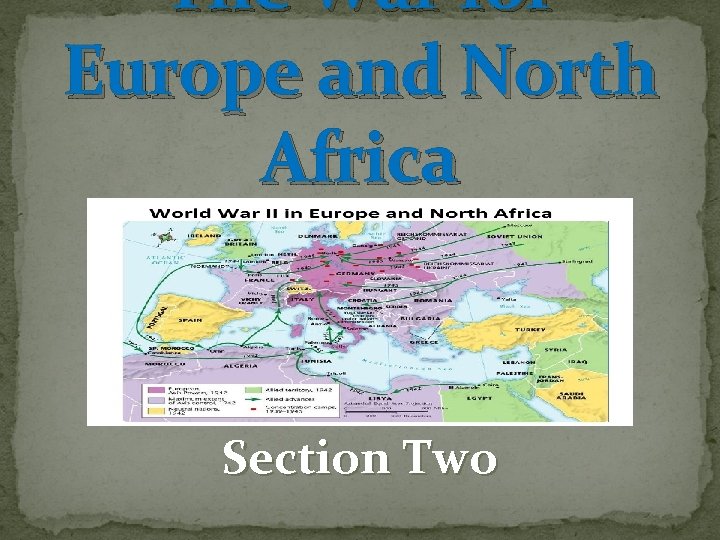 The War for Europe and North Africa Section Two
 Chapter in Brief President Franklin Roosevelt met with British Prime Minister Winston Churchill in late 1941. They agreed to concentrate their efforts first on defeating Hitler’s Germany. They also began a close alliance between the two nations. At first, many U. S. ships were destroyed by German submarines. Eventually, the Allies won the battle of the Atlantic by using convoys and radar to sink submarines and by relying on tremendous output of American shipyards. The German attack on the Soviet Union, begun in 1941, stalled in early 1942. They moved to take Stalingrad and oil fields in the south, but the Soviet army trapped a large German force in the city. In February 1943, the army’s remnants surrendered. Just months later, the Americans and British pushed the Germans out of North Africa. The Allies were on the move.
 Chapter in Brief The Americans and British next capture Sicily, leading the warweary Italian king to overthrow dictator Benito Mussolini. Hitler seized Italy, however, and dug in to fight. The Allie’s advance through Italy was slow and bloody. Meanwhile, the Americans and British launched a massive invasion to liberate western Europe. Landing on June 6, 1944, in northern France, the Allies forced the Germans off the coast and began to advance eastward. By August, they had liberated Paris, and by the fall they had entered Germany. The Germans began a counterattack in December. They cut deeply into Allied lines at first, but the Allies responded quickly. This battle-called the Battle of the Bulge-was Germany’s last gasp. At the same time, the Soviet’s entered Germany from the east.
 Chapter in Brief As the Allied armies advanced, they began to find the death camps that the Nazis had built to kill millions of Jews and others. The Soviets reached Berlin in April 1945. Hitler committed suicide, and a week later Germany surrendered.
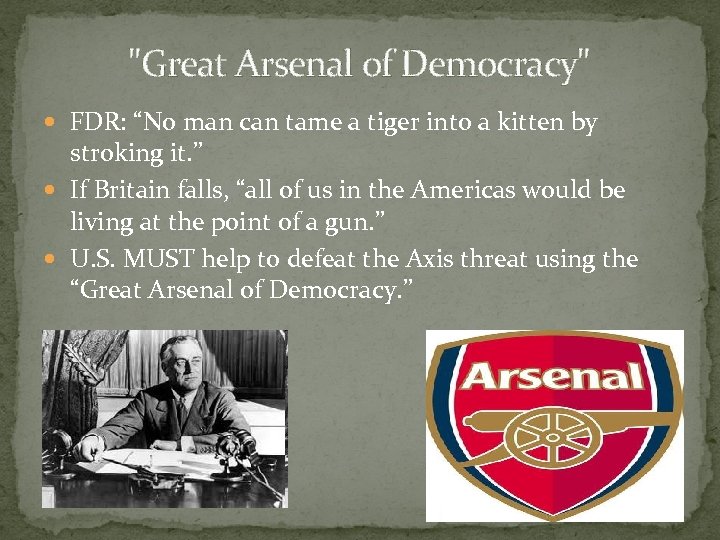 "Great Arsenal of Democracy" FDR: “No man can tame a tiger into a kitten by stroking it. ” If Britain falls, “all of us in the Americas would be living at the point of a gun. ” U. S. MUST help to defeat the Axis threat using the “Great Arsenal of Democracy. ”
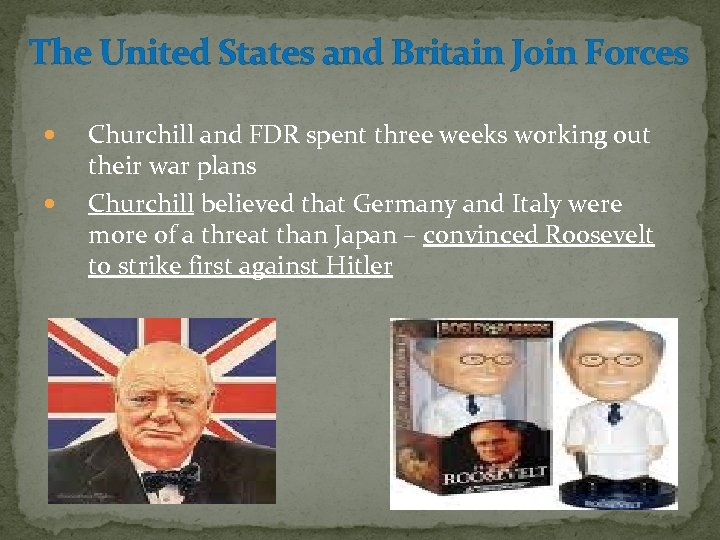 The United States and Britain Join Forces Churchill and FDR spent three weeks working out their war plans Churchill believed that Germany and Italy were more of a threat than Japan – convinced Roosevelt to strike first against Hitler
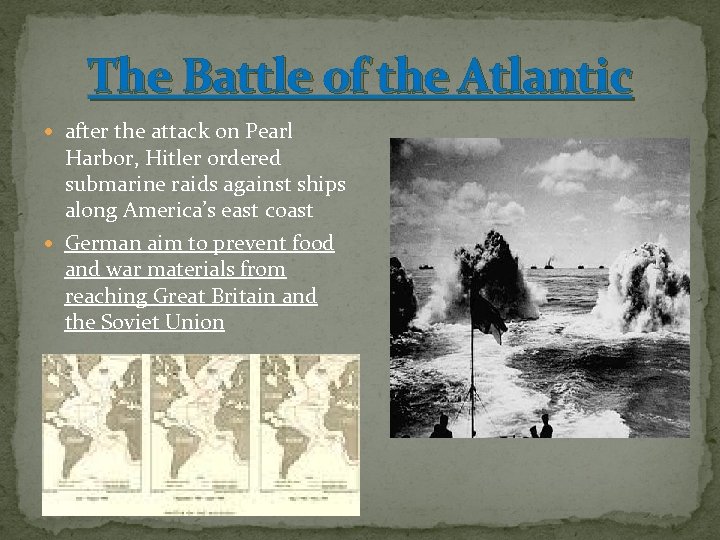 The Battle of the Atlantic after the attack on Pearl Harbor, Hitler ordered submarine raids against ships along America’s east coast German aim to prevent food and war materials from reaching Great Britain and the Soviet Union
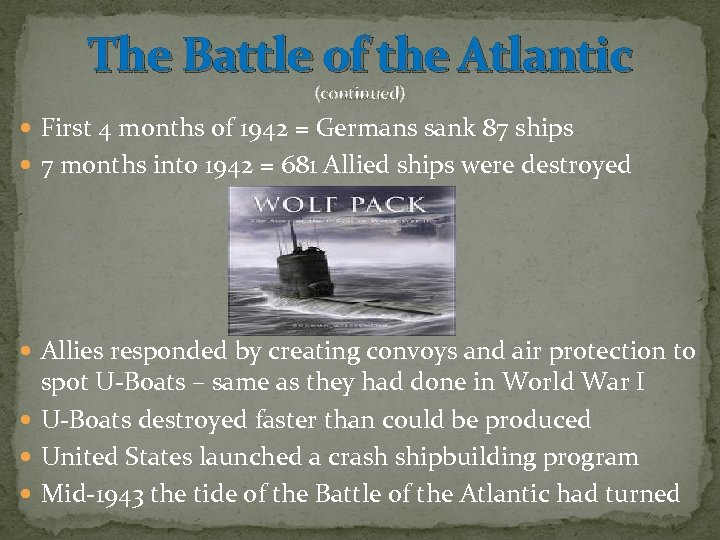 The Battle of the Atlantic (continued) First 4 months of 1942 = Germans sank 87 ships 7 months into 1942 = 681 Allied ships were destroyed Allies responded by creating convoys and air protection to spot U-Boats – same as they had done in World War I U-Boats destroyed faster than could be produced United States launched a crash shipbuilding program Mid-1943 the tide of the Battle of the Atlantic had turned
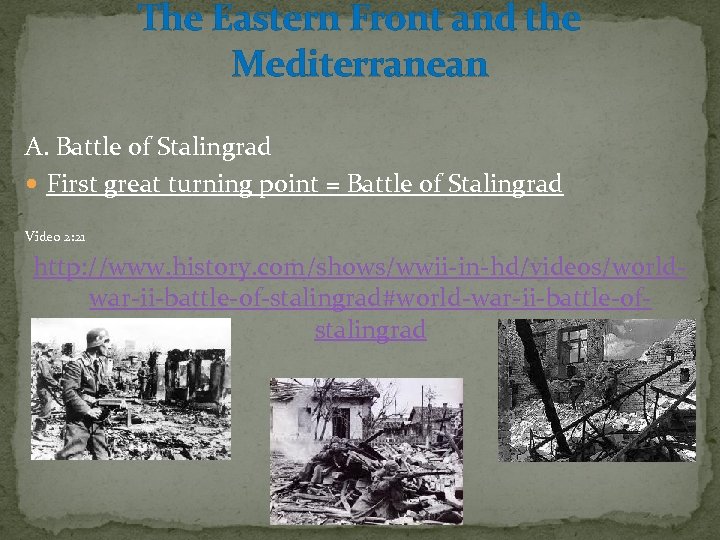 The Eastern Front and the Mediterranean A. Battle of Stalingrad First great turning point = Battle of Stalingrad Video 2: 21 http: //www. history. com/shows/wwii-in-hd/videos/worldwar-ii-battle-of-stalingrad#world-war-ii-battle-ofstalingrad
 Battle of Stalingrad Timeline 1. June 1941 – fighting in the Soviet Union 2. November 1941 – bitter cold stopped Germans in their tracks outside Moscow and Leningrad 3. Summer 1942 – Germans took the offensive in the southern Soviet Union 4. August 1942 – German army confidently approached Stalingrad; looked desperate for the Soviets and many wanted to blow up city factories and abandon the city – Stalin REFUSED and ordered them to defend his namesake city no matter what cost 5. September 1942 – Germans controlled nine-tenths (9/10) of the city 6. Winter 1942 – used cold to counterattack 7. January 31, 1943 – German commander surrendered
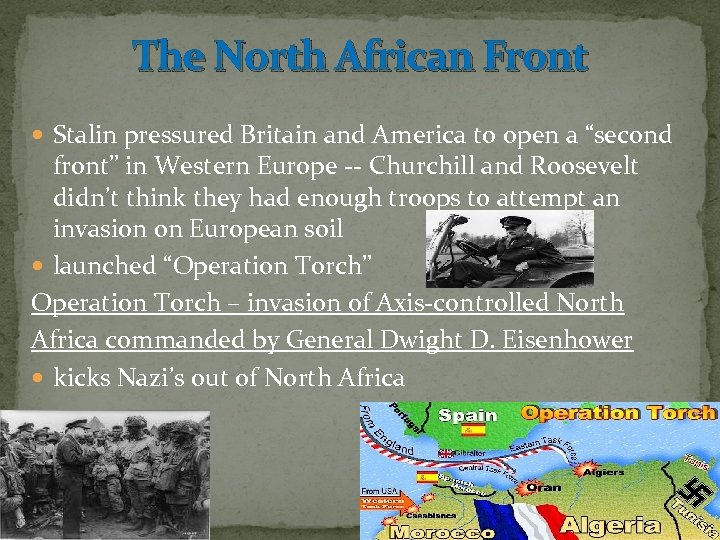 The North African Front Stalin pressured Britain and America to open a “second front” in Western Europe -- Churchill and Roosevelt didn’t think they had enough troops to attempt an invasion on European soil launched “Operation Torch” Operation Torch – invasion of Axis-controlled North Africa commanded by General Dwight D. Eisenhower kicks Nazi’s out of North Africa
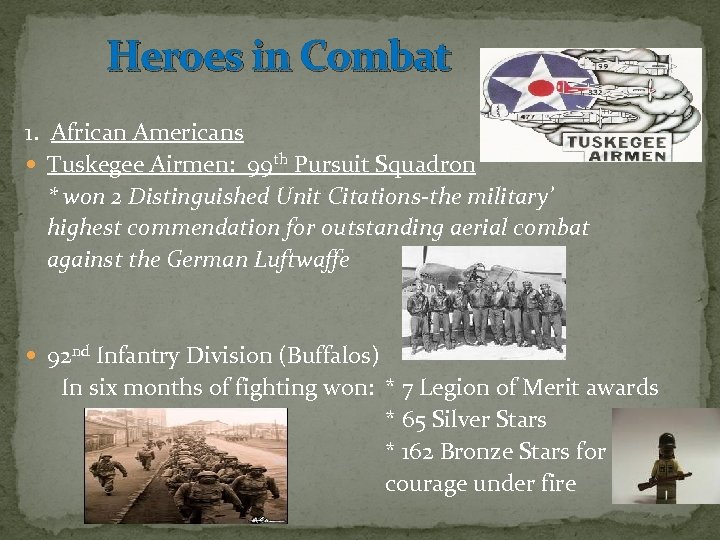 Heroes in Combat 1. African Americans Tuskegee Airmen: 99 th Pursuit Squadron * won 2 Distinguished Unit Citations-the military’ highest commendation for outstanding aerial combat against the German Luftwaffe 92 nd Infantry Division (Buffalos) In six months of fighting won: * 7 Legion of Merit awards * 65 Silver Stars * 162 Bronze Stars for courage under fire
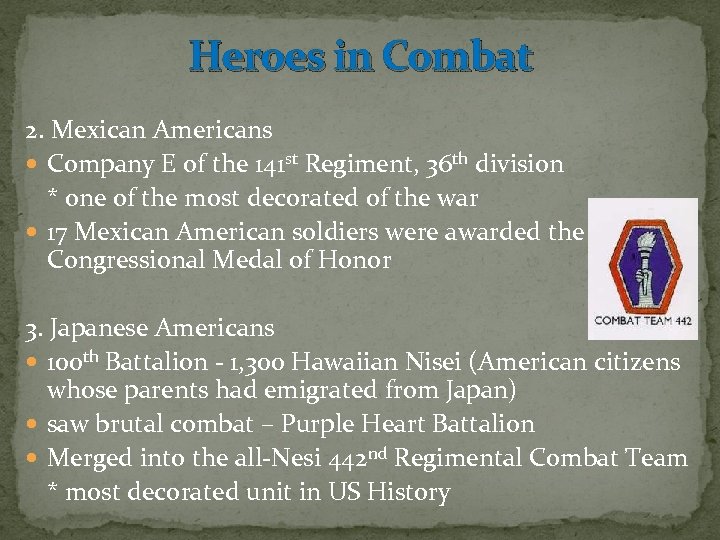 Heroes in Combat 2. Mexican Americans Company E of the 141 st Regiment, 36 th division * one of the most decorated of the war 17 Mexican American soldiers were awarded the Congressional Medal of Honor 3. Japanese Americans 100 th Battalion - 1, 300 Hawaiian Nisei (American citizens whose parents had emigrated from Japan) saw brutal combat – Purple Heart Battalion Merged into the all-Nesi 442 nd Regimental Combat Team * most decorated unit in US History
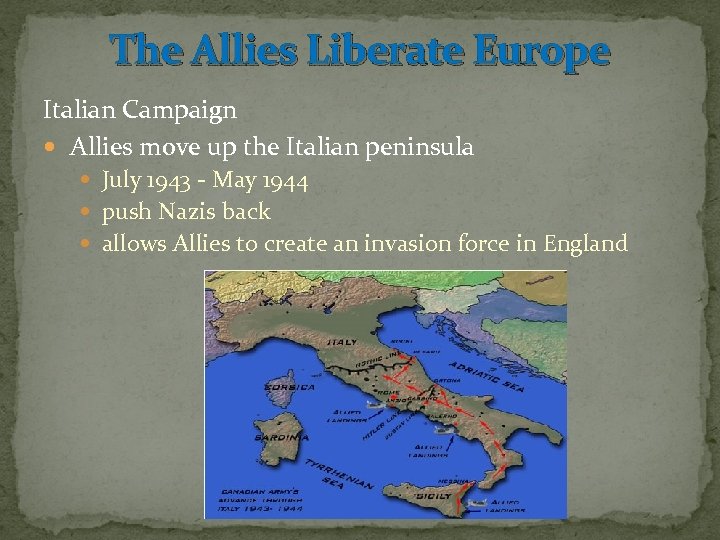 The Allies Liberate Europe Italian Campaign Allies move up the Italian peninsula July 1943 - May 1944 push Nazis back allows Allies to create an invasion force in England
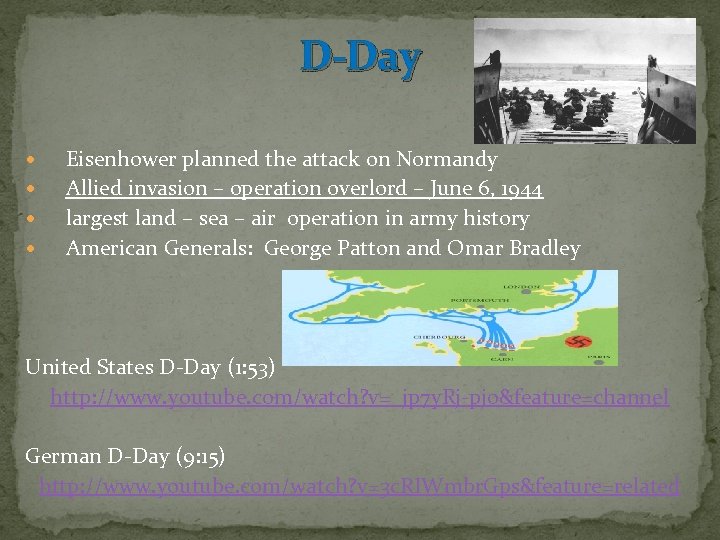 D-Day Eisenhower planned the attack on Normandy Allied invasion – operation overlord – June 6, 1944 largest land – sea – air operation in army history American Generals: George Patton and Omar Bradley United States D-Day (1: 53) http: //www. youtube. com/watch? v=_jp 7 y. Rj-pjo&feature=channel German D-Day (9: 15) http: //www. youtube. com/watch? v=3 c. RIWmbr. Gps&feature=related
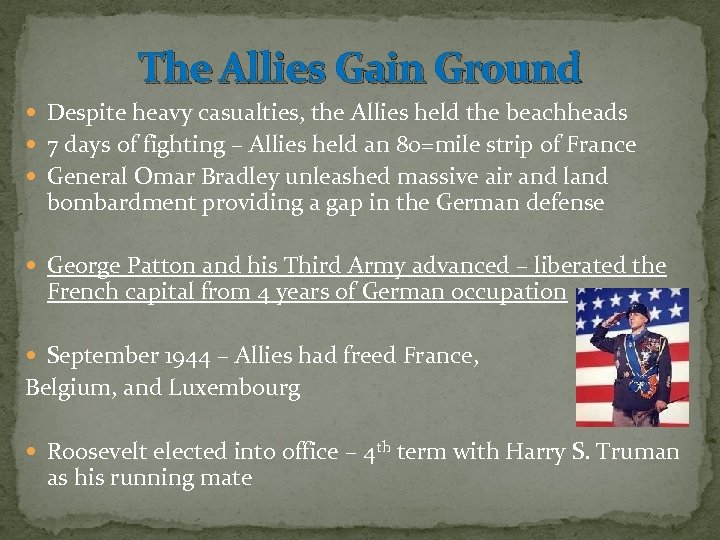 The Allies Gain Ground Despite heavy casualties, the Allies held the beachheads 7 days of fighting – Allies held an 80=mile strip of France General Omar Bradley unleashed massive air and land bombardment providing a gap in the German defense George Patton and his Third Army advanced – liberated the French capital from 4 years of German occupation September 1944 – Allies had freed France, Belgium, and Luxembourg Roosevelt elected into office – 4 th term with Harry S. Truman as his running mate
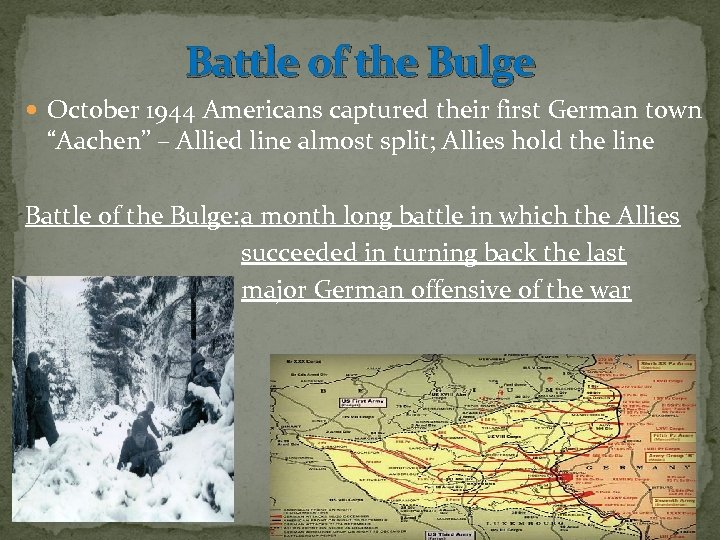 Battle of the Bulge October 1944 Americans captured their first German town “Aachen” – Allied line almost split; Allies hold the line Battle of the Bulge: a month long battle in which the Allies succeeded in turning back the last major German offensive of the war
 Battle of the Bulge The Battle of the Bulge is important because the Germans lost men and equipment that could not be replaced the battle weakened their offensive
 Liberation of the Death Camps Soviet Union was the first to find one of the death camps Hitchcock Video Reel (10: 50): http: //www. youtube. com/watch? v=jo. WT 9 RGKYo 4 Robert T. Johnson: “We started smelling a terrible odor and suddenly we were at the concentration camp. Forced the gate and faced hundreds of starving prisoners…We saw emaciated men whose thighs were small than wrists, many had bones sticking out through their skin…Also we saw hundreds of burned and naked bodies. ”
 Unconditional Surrender April 25, 1945 – Soviet army had stormed Berlin April 29, 1945 – Hitler married Eva Braun April 29, 1945 – Hitler wrote his last address to the German people – he blamed the Jews for starting the war and his generals for losing it “I die with a happy heart aware of the immeasurable deeds of our soldiers at the front. I myself and my wife choose to die in order to escape the disgrace of… capitulation. ” April 30, 1945 – Hitler shot himself while his new wife swallowed poison Hitler’s Death (3: 42): http: //www. youtube. com/watch? v=6 p 92 h. Z 1 ye 8 A
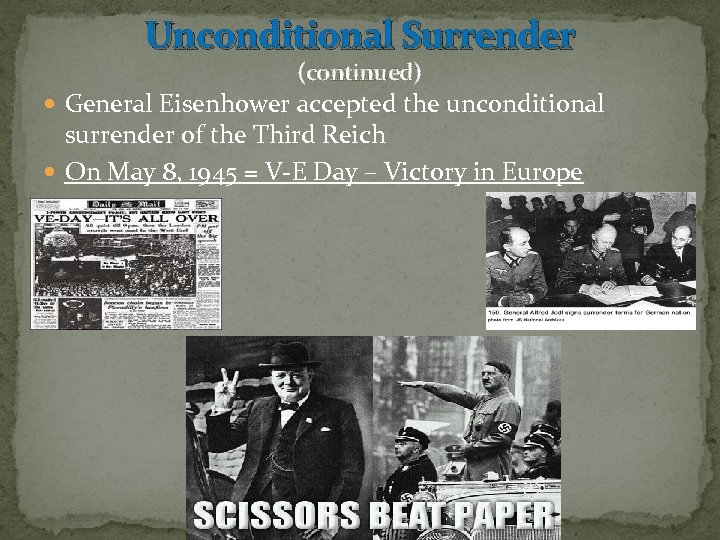 Unconditional Surrender (continued) General Eisenhower accepted the unconditional surrender of the Third Reich On May 8, 1945 = V-E Day – Victory in Europe
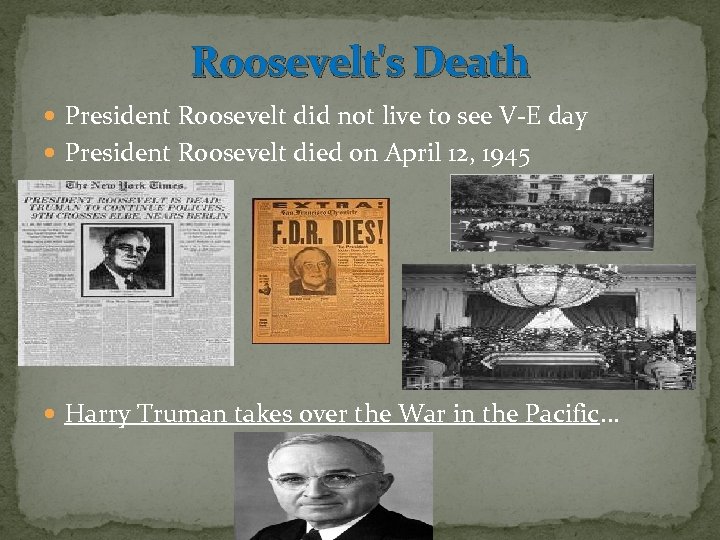 Roosevelt's Death President Roosevelt did not live to see V-E day President Roosevelt died on April 12, 1945 Harry Truman takes over the War in the Pacific. . .
 Essential Question Describe D-Day and its importance in the Allied invasion. Answer the question in three complete sentences in your summary section
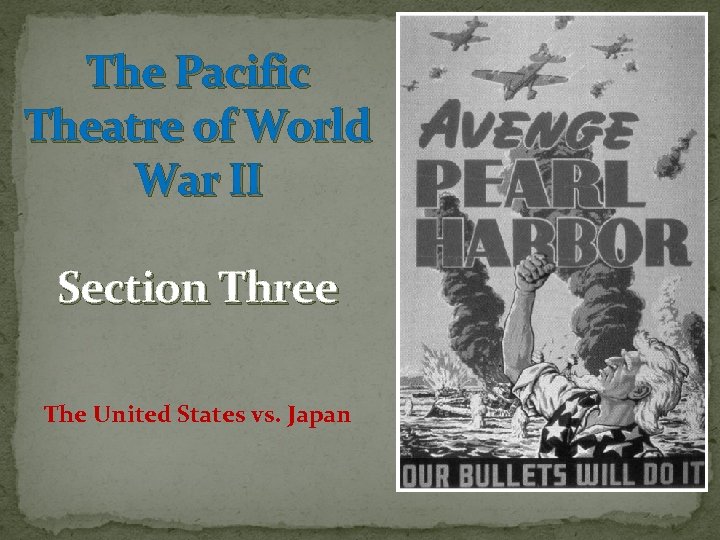 The Pacific Theatre of World War II Section Three The United States vs. Japan
 Chapter in Brief After Pearl Harbor, Japan captured large parts of Asia and the Pacific. The United States struck back. First there was a token air raid on Tokyo that lifted American spirits. Then there were major victories in the battles of Coral Sea and Midway, stopping planned Japanese invasions. The enemy lost valuable aircraft carriers and planes. U. S. strategy called for leapfrogging, island by island, across the Pacific toward Japan. The Allies took Guadalcanal in 1943 and gradually moved northwest, recapturing the Philippines in 1944. As Americans neared Japan, President Roosevelt died. Vice President Harry S. Truman took over while the Allies won a costly battle in Okinawa. U. S. leaders feared similar high casualties if Japan itself had to be invaded.
 Chapter in Brief In February 1945, while war with Japan was still raging, Roosevelt met with Churchill and Stalin at the Soviet resort city of Yalta. The Allied leaders’ major agreements were to: > divide Germany into 4 zones > get Soviet help against Japan > create the United Nations President Truman learned of the secret effort to develop an atomic bomb. Scientists were split over whether or not to use the bomb on Japan, but Truman decided to authorize using the weapon. On August 6, 1945, the United States dropped an atomic bomb on Hiroshima, leveling the city. When the Japanese did not surrender, another bomb was dropped on Nagasaki. Finally, the Japanese agreed to end the war.
 Chapter in Brief The Allies took steps to punish the Nazi and Japanese leaders that they held responsible for the war and for cruel treatment of prisoners and civilians. The United States occupied Japan, helping create a democratic government.
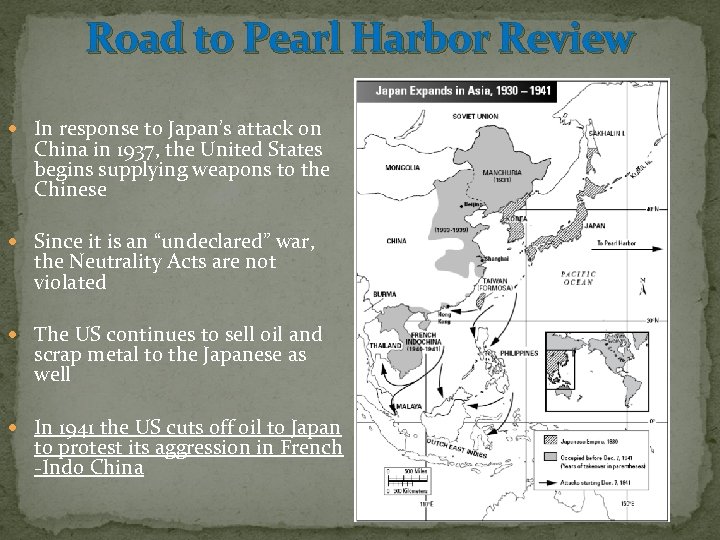 Road to Pearl Harbor Review In response to Japan’s attack on China in 1937, the United States begins supplying weapons to the Chinese Since it is an “undeclared” war, the Neutrality Acts are not violated The US continues to sell oil and scrap metal to the Japanese as well In 1941 the US cuts off oil to Japan to protest its aggression in French -Indo China
 Japan Needs Oil The Japanese leadership decides to invade the Dutch East Indies to gain its Oil This means that the US will most likely declare war on Japan since Holland Britain are allies. If war against the US is inevitable, then Japan will strike the first blow! This is another reason why Japan attacks Pearl Harbor on December 7 th 1941
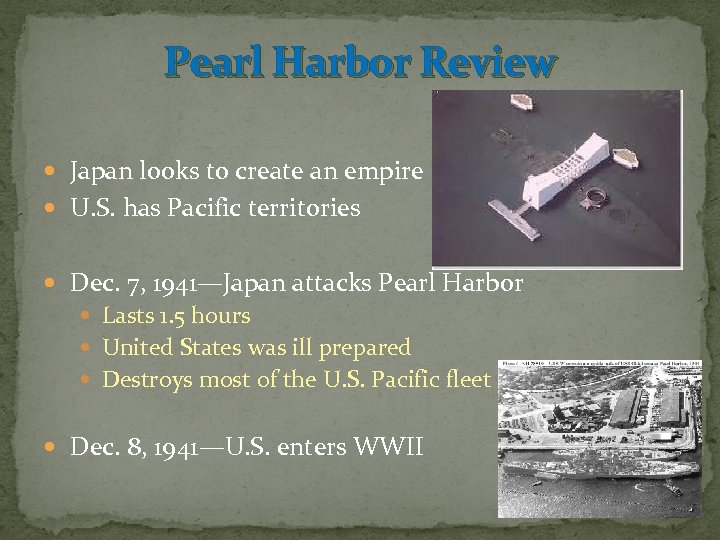 Pearl Harbor Review Japan looks to create an empire U. S. has Pacific territories Dec. 7, 1941—Japan attacks Pearl Harbor Lasts 1. 5 hours United States was ill prepared Destroys most of the U. S. Pacific fleet Dec. 8, 1941—U. S. enters WWII
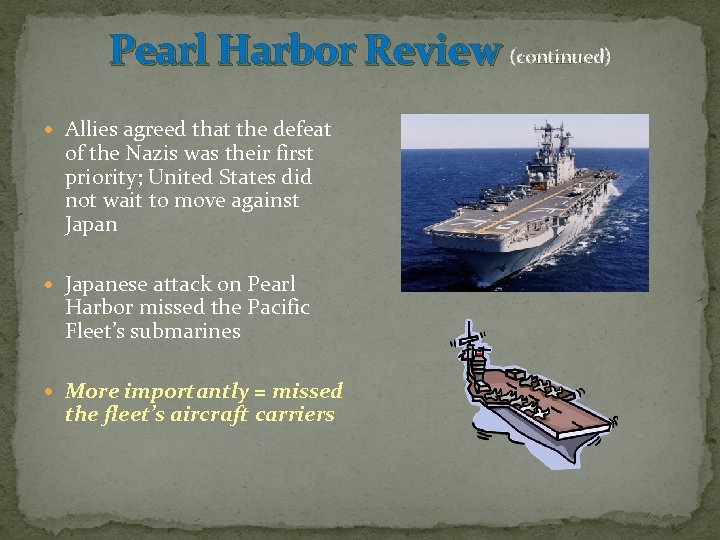 Pearl Harbor Review (continued) Allies agreed that the defeat of the Nazis was their first priority; United States did not wait to move against Japanese attack on Pearl Harbor missed the Pacific Fleet’s submarines More importantly = missed the fleet’s aircraft carriers
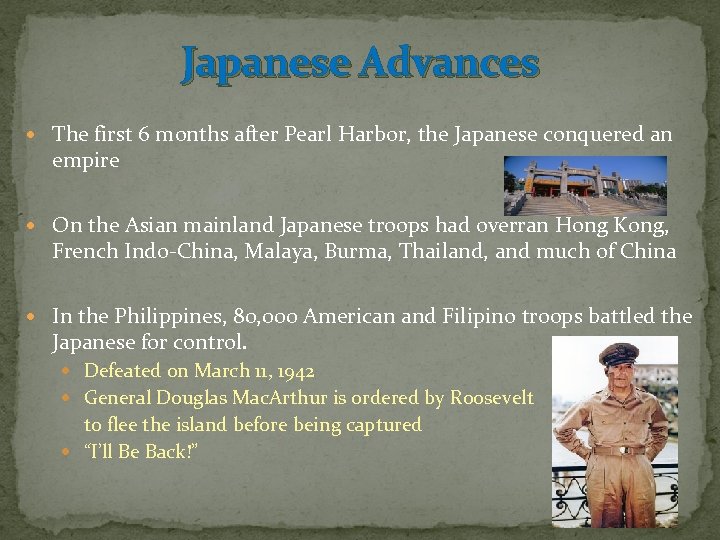 Japanese Advances The first 6 months after Pearl Harbor, the Japanese conquered an empire On the Asian mainland Japanese troops had overran Hong Kong, French Indo-China, Malaya, Burma, Thailand, and much of China In the Philippines, 80, 000 American and Filipino troops battled the Japanese for control. Defeated on March 11, 1942 General Douglas Mac. Arthur is ordered by Roosevelt to flee the island before being captured “I’ll Be Back!”
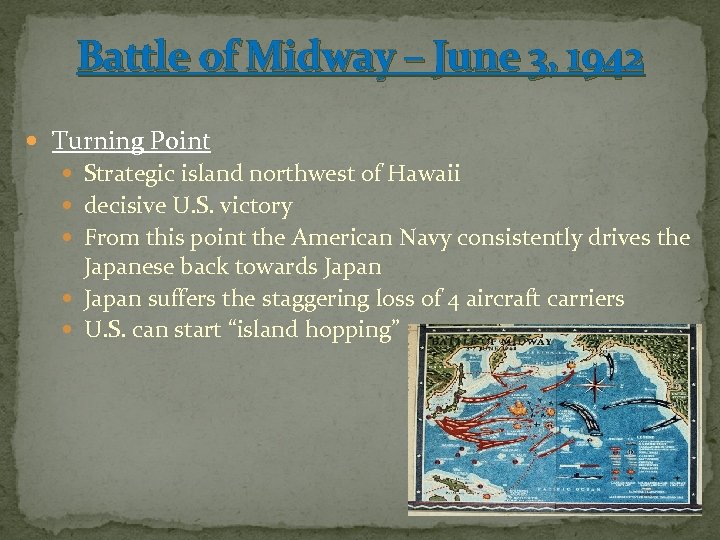 Battle of Midway – June 3, 1942 Turning Point Strategic island northwest of Hawaii decisive U. S. victory From this point the American Navy consistently drives the Japanese back towards Japan suffers the staggering loss of 4 aircraft carriers U. S. can start “island hopping”
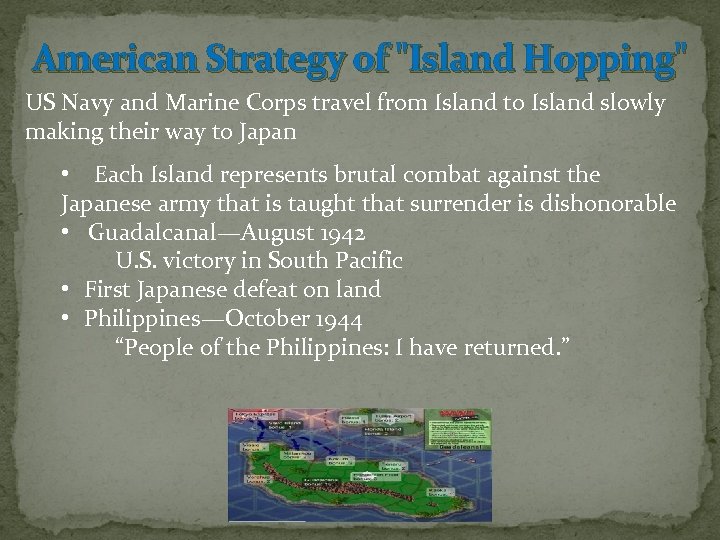 American Strategy of "Island Hopping" US Navy and Marine Corps travel from Island to Island slowly making their way to Japan • Each Island represents brutal combat against the Japanese army that is taught that surrender is dishonorable • Guadalcanal—August 1942 U. S. victory in South Pacific • First Japanese defeat on land • Philippines—October 1944 “People of the Philippines: I have returned. ”
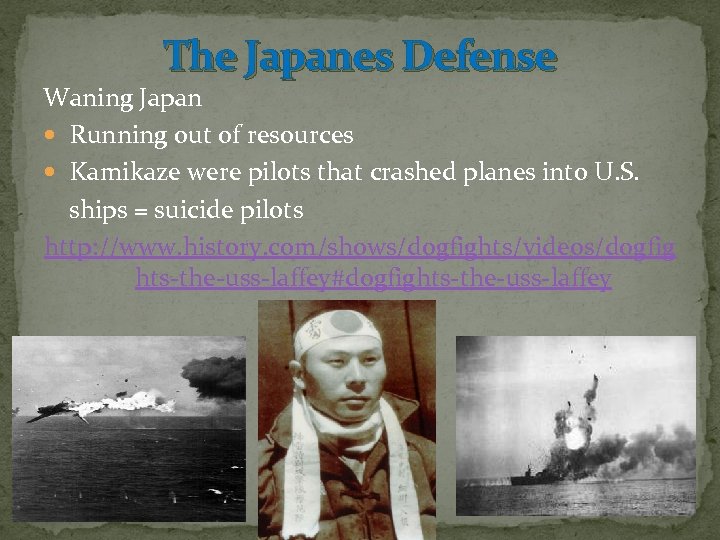 The Japanes Defense Waning Japan Running out of resources Kamikaze were pilots that crashed planes into U. S. ships = suicide pilots http: //www. history. com/shows/dogfights/videos/dogfig hts-the-uss-laffey#dogfights-the-uss-laffey
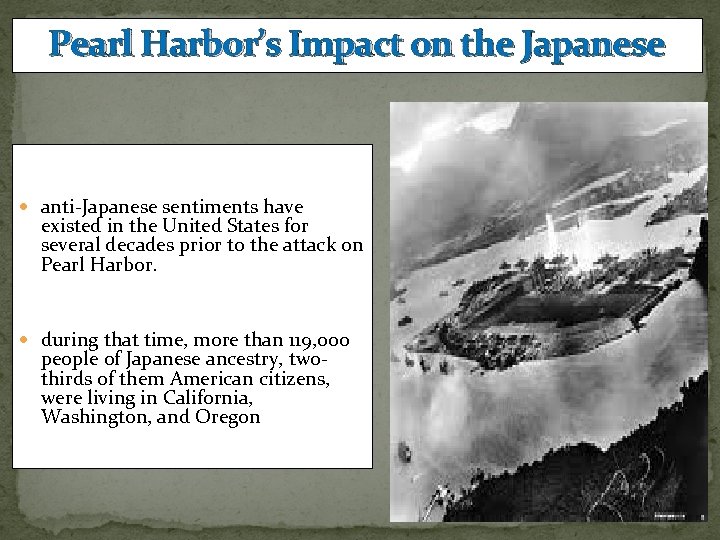 Pearl Harbor’s Impact on the Japanese anti-Japanese sentiments have existed in the United States for several decades prior to the attack on Pearl Harbor. during that time, more than 119, 000 people of Japanese ancestry, twothirds of them American citizens, were living in California, Washington, and Oregon
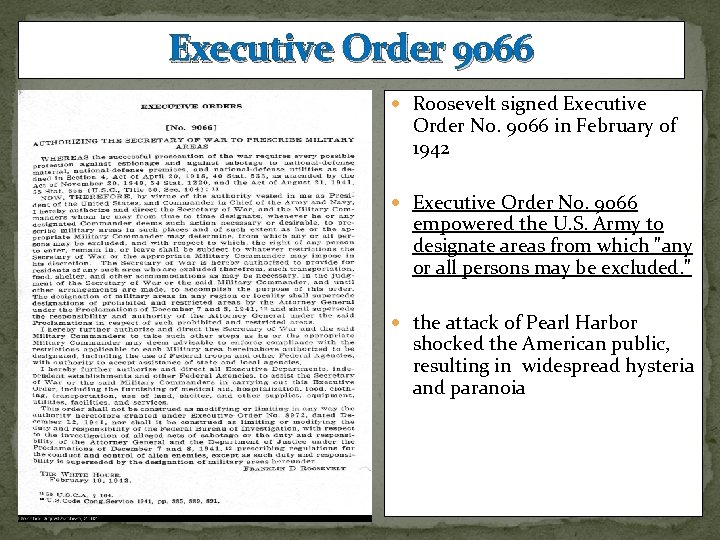 Executive Order 9066 Roosevelt signed Executive Order No. 9066 in February of 1942 Executive Order No. 9066 empowered the U. S. Army to designate areas from which "any or all persons may be excluded. " the attack of Pearl Harbor shocked the American public, resulting in widespread hysteria and paranoia
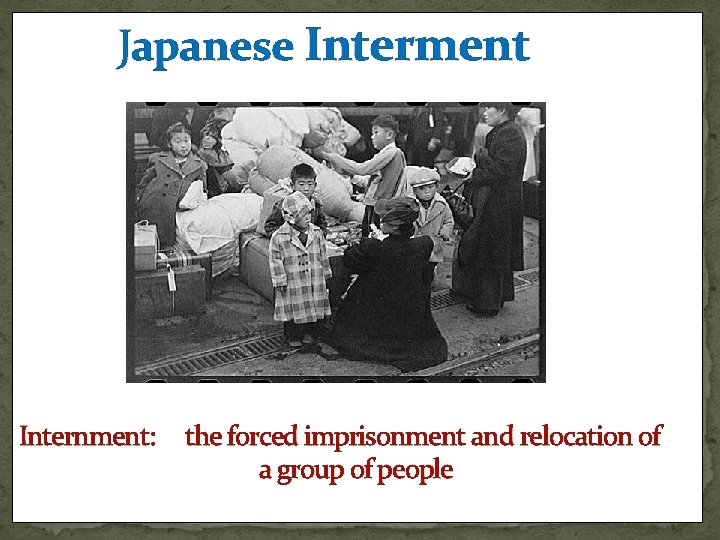 Japanese Interment Internment: the forced imprisonment and relocation of a group of people
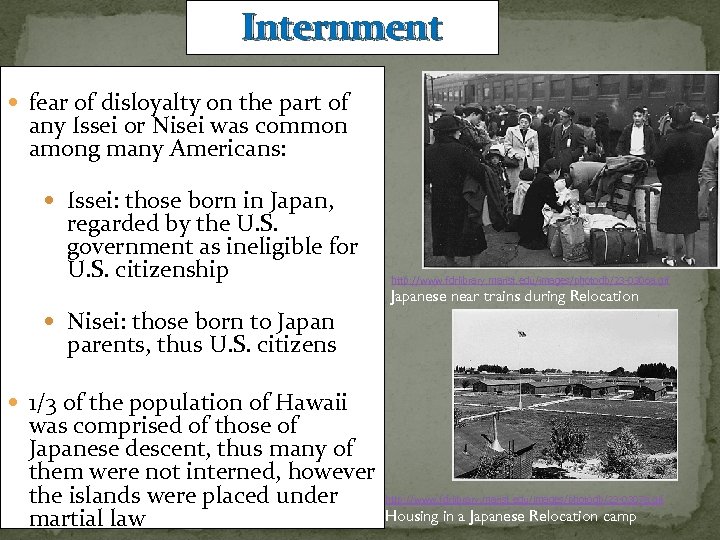 Internment fear of disloyalty on the part of any Issei or Nisei was common among many Americans: Issei: those born in Japan, regarded by the U. S. government as ineligible for U. S. citizenship http: //www. fdrlibrary. marist. edu/images/photodb/23 -0306 a. gif Japanese near trains during Relocation Nisei: those born to Japan parents, thus U. S. citizens 1/3 of the population of Hawaii was comprised of those of Japanese descent, thus many of them were not interned, however the islands were placed under martial law http: //www. fdrlibrary. marist. edu/images/photodb/23 -0307 a. gif Housing in a Japanese Relocation camp
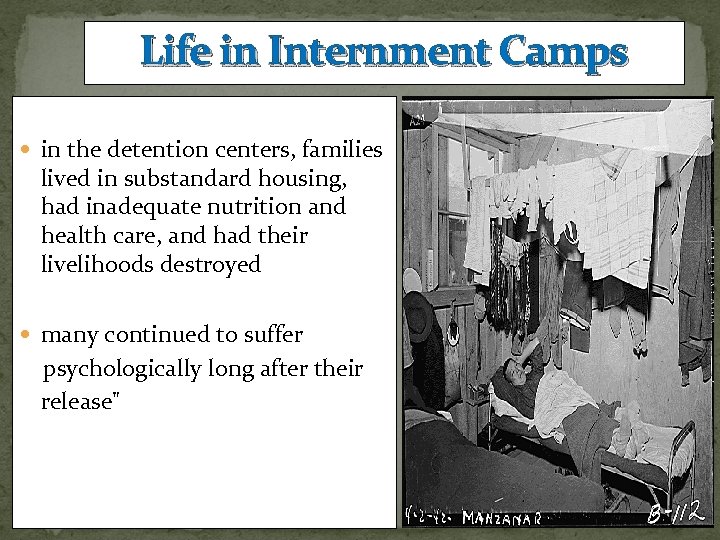 Life in Internment Camps in the detention centers, families lived in substandard housing, had inadequate nutrition and health care, and had their livelihoods destroyed many continued to suffer psychologically long after their release"
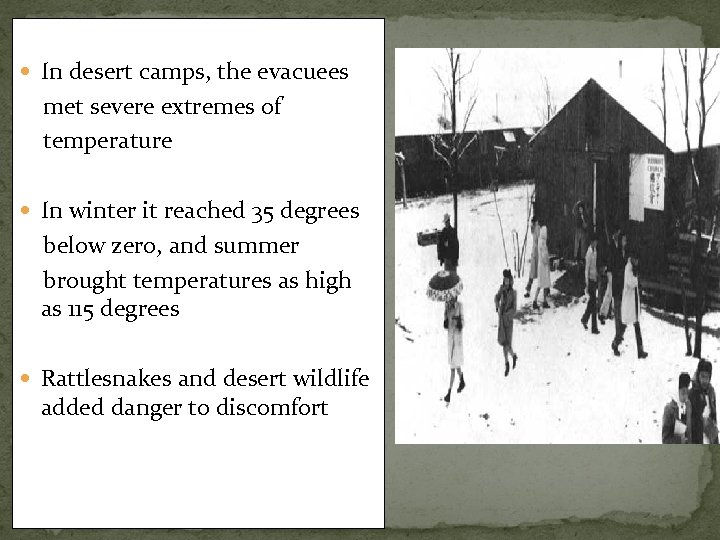 In desert camps, the evacuees met severe extremes of temperature In winter it reached 35 degrees below zero, and summer brought temperatures as high as 115 degrees Rattlesnakes and desert wildlife added danger to discomfort
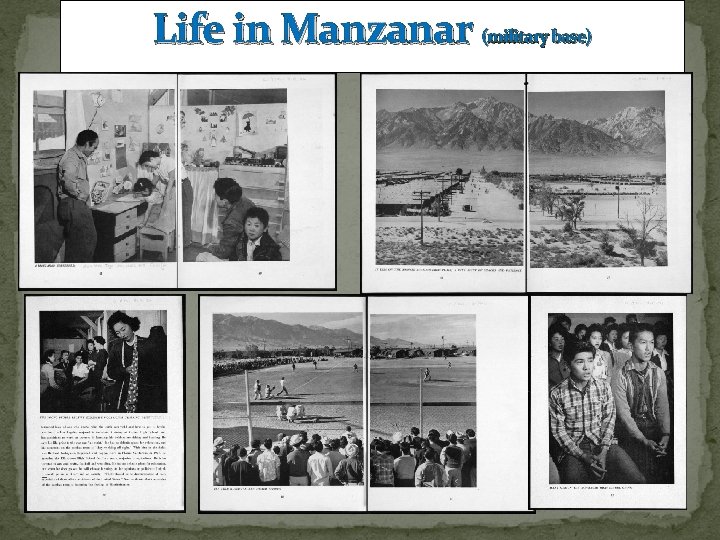 Life in Manzanar (military base)
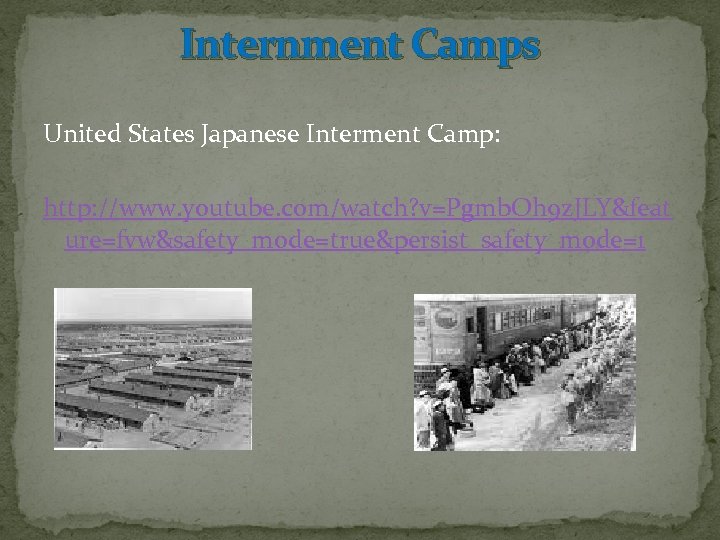 Internment Camps United States Japanese Interment Camp: http: //www. youtube. com/watch? v=Pgmb. Oh 9 z. JLY&feat ure=fvw&safety_mode=true&persist_safety_mode=1
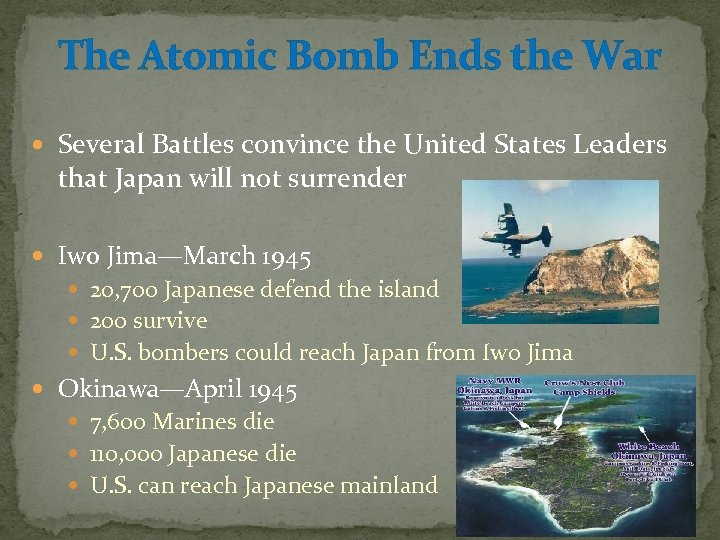 The Atomic Bomb Ends the War Several Battles convince the United States Leaders that Japan will not surrender Iwo Jima—March 1945 20, 700 Japanese defend the island 200 survive U. S. bombers could reach Japan from Iwo Jima Okinawa—April 1945 7, 600 Marines die 110, 000 Japanese die U. S. can reach Japanese mainland
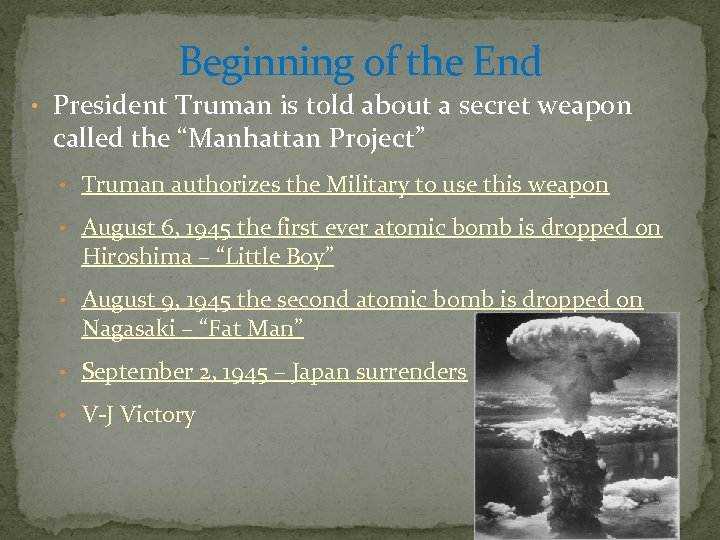 Beginning of the End • President Truman is told about a secret weapon called the “Manhattan Project” • Truman authorizes the Military to use this weapon • August 6, 1945 the first ever atomic bomb is dropped on Hiroshima – “Little Boy” • August 9, 1945 the second atomic bomb is dropped on Nagasaki – “Fat Man” • September 2, 1945 – Japan surrenders • V-J Victory
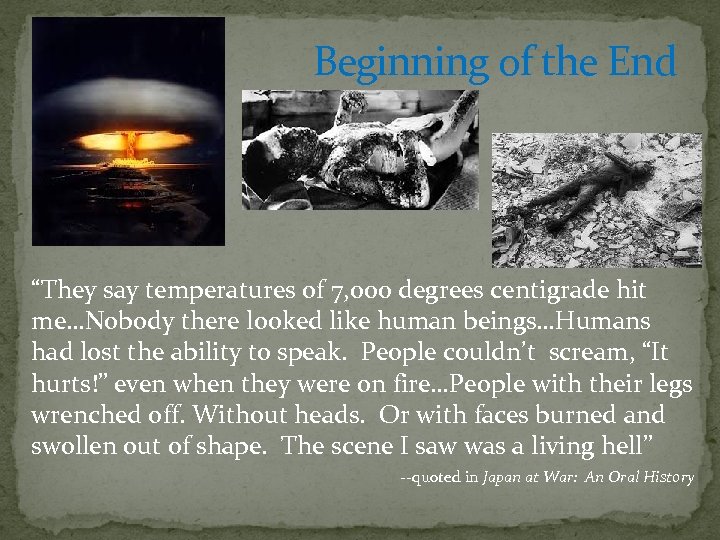 Beginning of the End “They say temperatures of 7, 000 degrees centigrade hit me…Nobody there looked like human beings…Humans had lost the ability to speak. People couldn’t scream, “It hurts!” even when they were on fire…People with their legs wrenched off. Without heads. Or with faces burned and swollen out of shape. The scene I saw was a living hell” --quoted in Japan at War: An Oral History
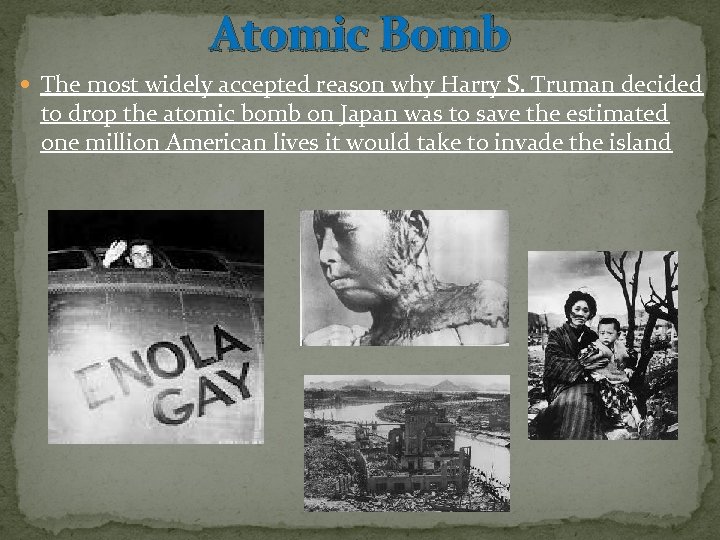 Atomic Bomb The most widely accepted reason why Harry S. Truman decided to drop the atomic bomb on Japan was to save the estimated one million American lives it would take to invade the island
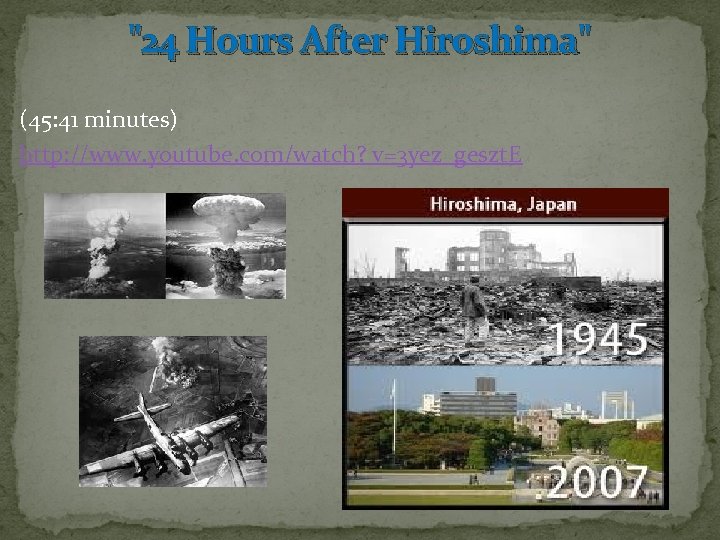 "24 Hours After Hiroshima" (45: 41 minutes) http: //www. youtube. com/watch? v=3 yez_geszt. E
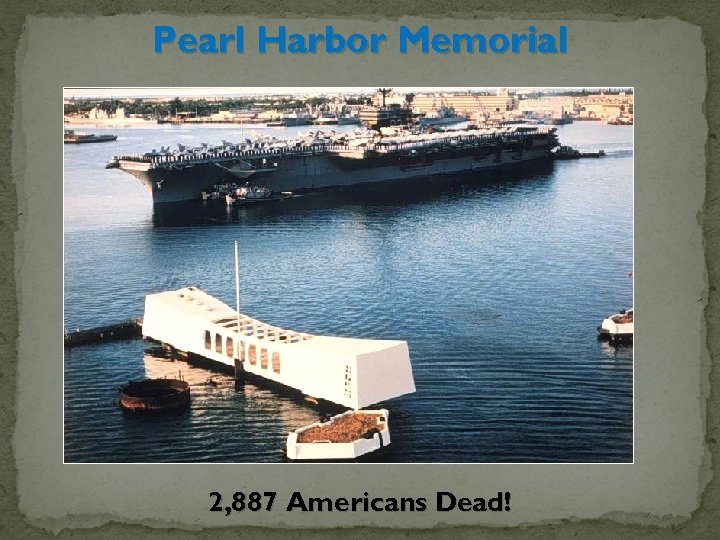 Pearl Harbor Memorial 2, 887 Americans Dead!
 Essential Question Do you think that the government’s policy of evacuating Japanese Americans to camps was justified on the basis of “military necessity”? Explain. Answer the question in three complete sentences in your summary section
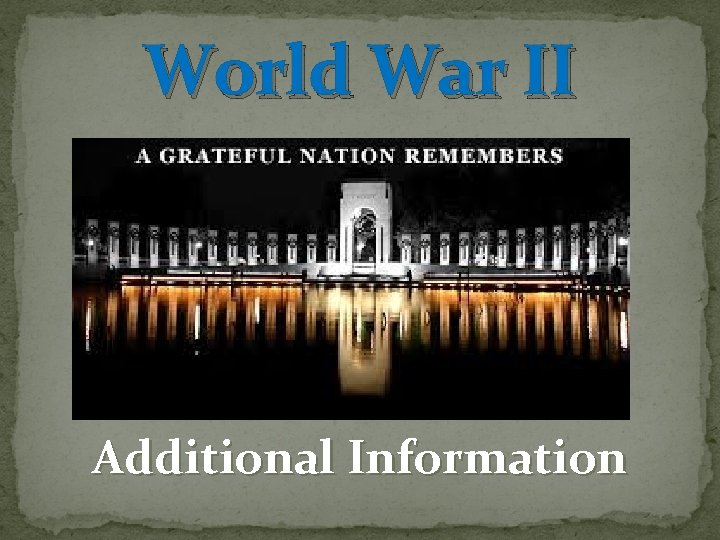 World War II Additional Information
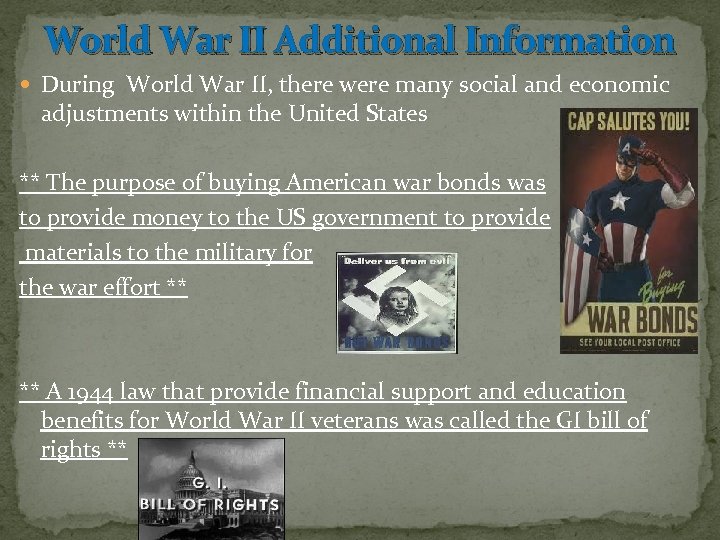 World War II Additional Information During World War II, there were many social and economic adjustments within the United States ** The purpose of buying American war bonds was to provide money to the US government to provide materials to the military for the war effort ** ** A 1944 law that provide financial support and education benefits for World War II veterans was called the GI bill of rights **
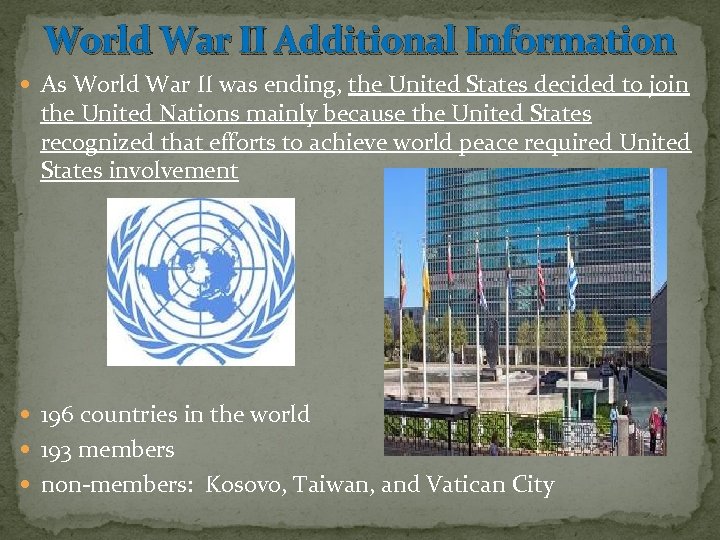 World War II Additional Information As World War II was ending, the United States decided to join the United Nations mainly because the United States recognized that efforts to achieve world peace required United States involvement 196 countries in the world 193 members non-members: Kosovo, Taiwan, and Vatican City
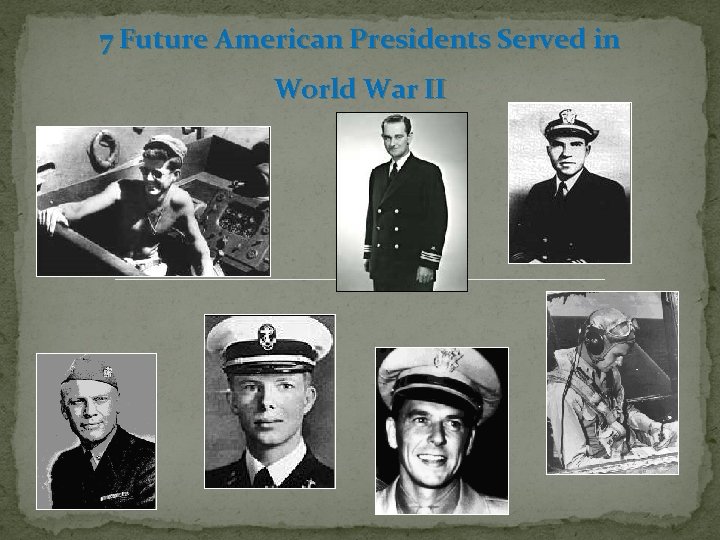 7 Future American Presidents Served in World War II
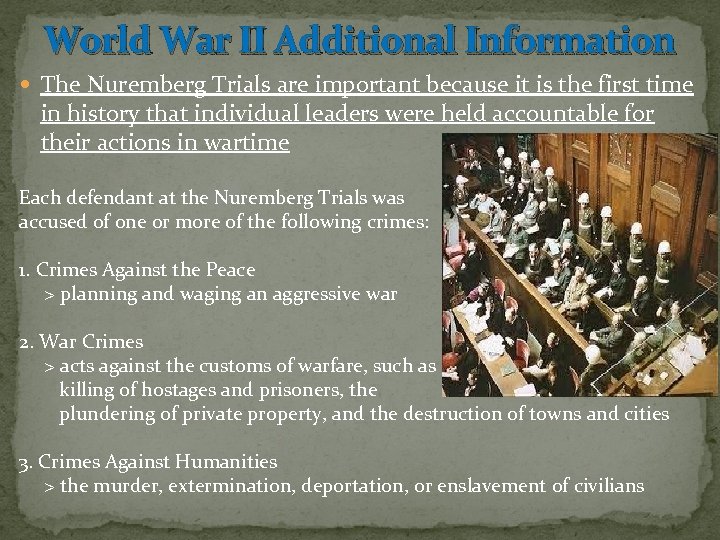 World War II Additional Information The Nuremberg Trials are important because it is the first time in history that individual leaders were held accountable for their actions in wartime Each defendant at the Nuremberg Trials was accused of one or more of the following crimes: 1. Crimes Against the Peace > planning and waging an aggressive war 2. War Crimes > acts against the customs of warfare, such as killing of hostages and prisoners, the plundering of private property, and the destruction of towns and cities 3. Crimes Against Humanities > the murder, extermination, deportation, or enslavement of civilians
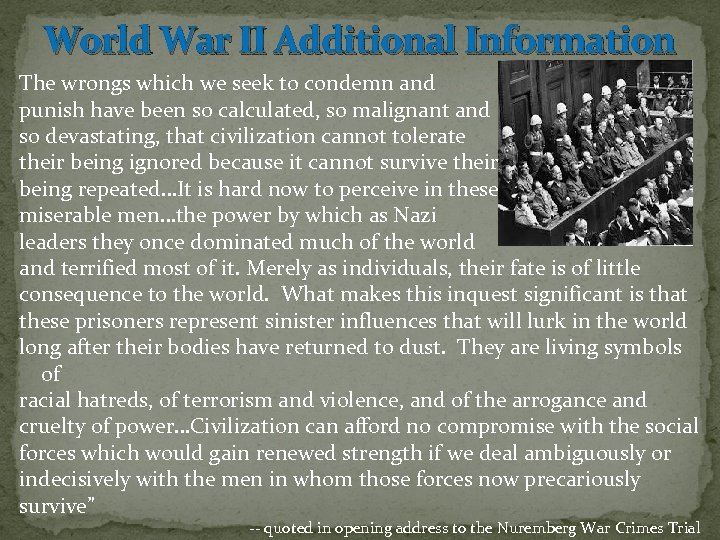 World War II Additional Information The wrongs which we seek to condemn and punish have been so calculated, so malignant and so devastating, that civilization cannot tolerate their being ignored because it cannot survive their being repeated…It is hard now to perceive in these miserable men…the power by which as Nazi leaders they once dominated much of the world and terrified most of it. Merely as individuals, their fate is of little consequence to the world. What makes this inquest significant is that these prisoners represent sinister influences that will lurk in the world long after their bodies have returned to dust. They are living symbols of racial hatreds, of terrorism and violence, and of the arrogance and cruelty of power…Civilization can afford no compromise with the social forces which would gain renewed strength if we deal ambiguously or indecisively with the men in whom those forces now precariously survive” -- quoted in opening address to the Nuremberg War Crimes Trial
 EVALUATING DECISIONS Answer the following question in a 5 – 8 sentence paragraph. Be sure to start your paragraph with a thesis. Use your outside knowledge and information that has been taught in your paragraph to support your opinion. You may use “I”. Is it appropriate to hold people accountable for crimes committed during wartime? Why or Why not? Example Thesis: It is / is not appropriate to hold people accountable for crimes committed during wartime.
 Essential Question Explain how women, minorities, and scientists help the war effort. Answer the question in three complete sentences in your summary section
 World War II Objective To understand the military campaign, political decisions, and efforts on the home front that won World War II