


 Скачать презентацию The United States Congress Suppose you were an
b8832e8a2199007b19680795f6a0d858.ppt
- Количество слайдов: 44
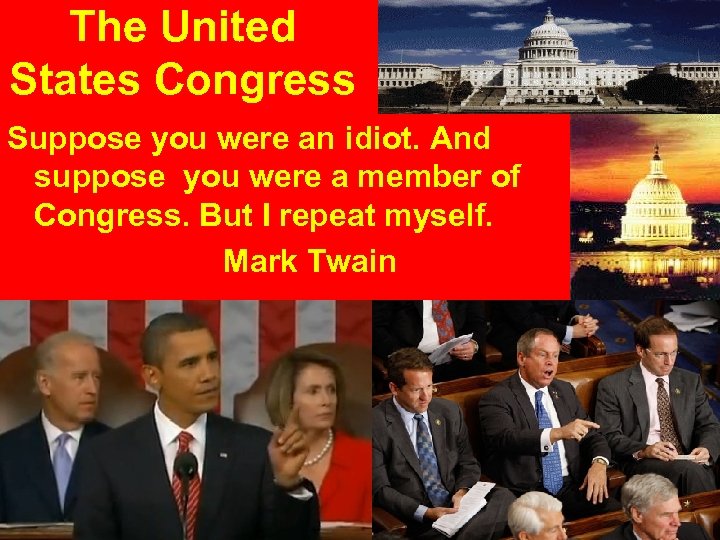 The United States Congress Suppose you were an idiot. And suppose you were a member of Congress. But I repeat myself. Mark Twain
 The House of Representatives More partisan and unified More loyalty to party More structured and organized Majority rules always Limited debate and amendments
 The Senators more powerful individually Less party-oriented and partydependent Looser rules of debate and amendments Minority can block the majority (the “filibuster”)
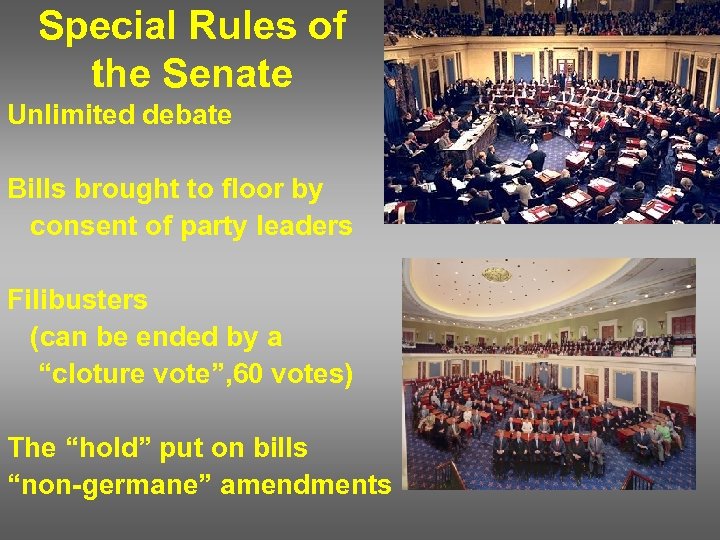 Special Rules of the Senate Unlimited debate Bills brought to floor by consent of party leaders Filibusters (can be ended by a “cloture vote”, 60 votes) The “hold” put on bills “non-germane” amendments
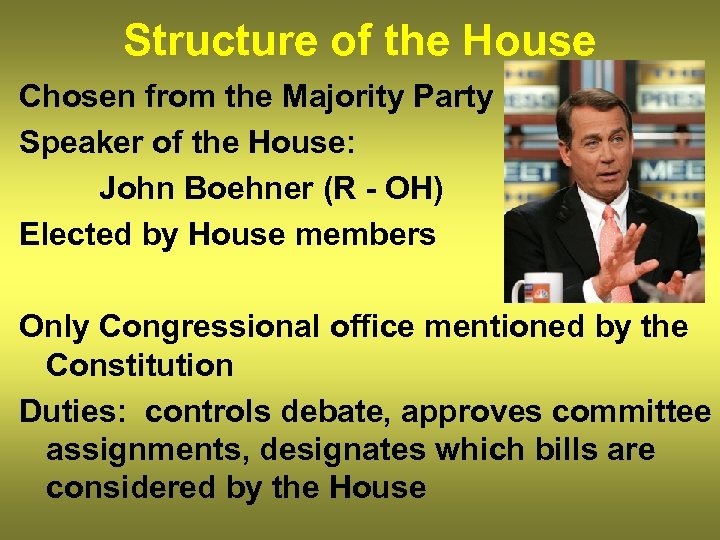 Structure of the House Chosen from the Majority Party Speaker of the House: John Boehner (R - OH) Elected by House members Only Congressional office mentioned by the Constitution Duties: controls debate, approves committee assignments, designates which bills are considered by the House
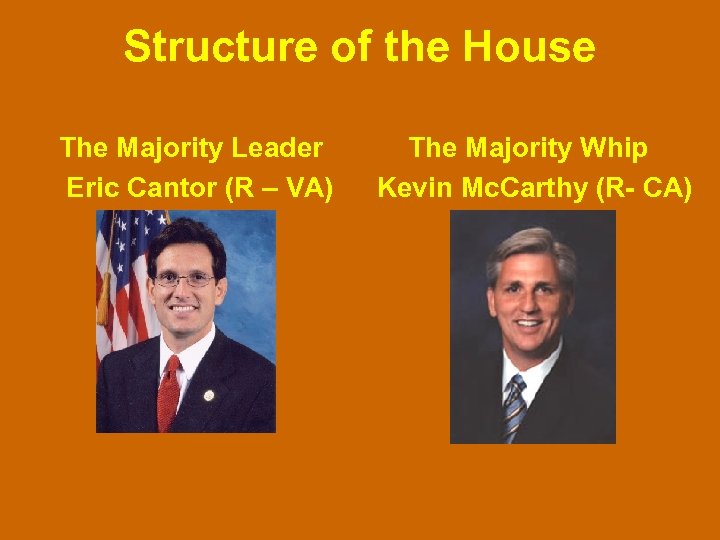 Structure of the House The Majority Leader Eric Cantor (R – VA) The Majority Whip Kevin Mc. Carthy (R- CA)
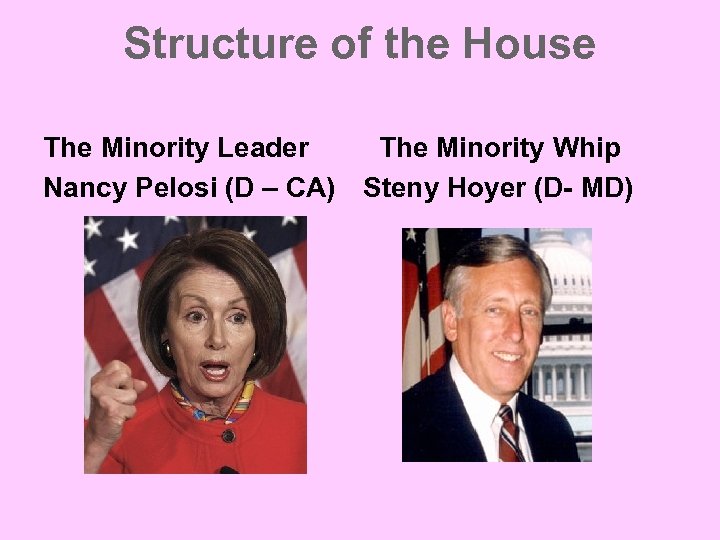 Structure of the House The Minority Leader The Minority Whip Nancy Pelosi (D – CA) Steny Hoyer (D- MD)
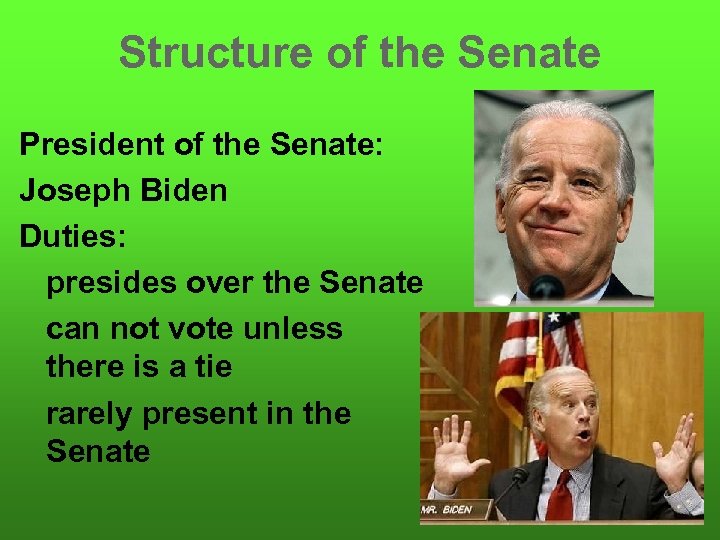 Structure of the Senate President of the Senate: Joseph Biden Duties: presides over the Senate can not vote unless there is a tie rarely present in the Senate
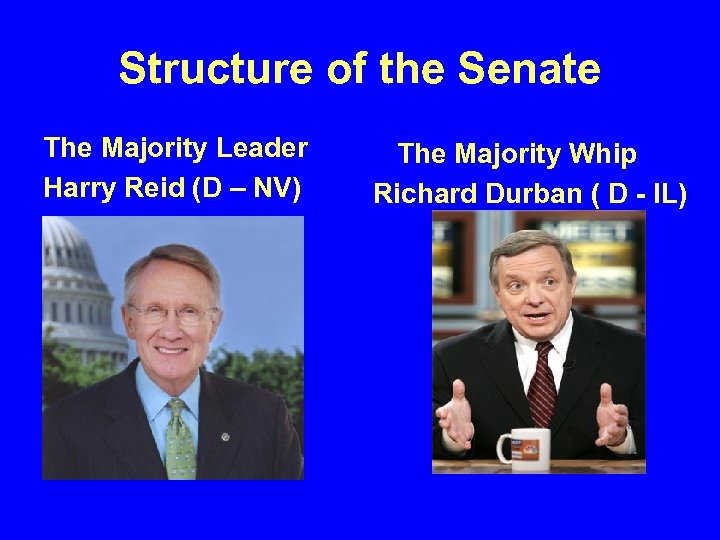 Structure of the Senate The Majority Leader Harry Reid (D – NV) The Majority Whip Richard Durban ( D - IL)
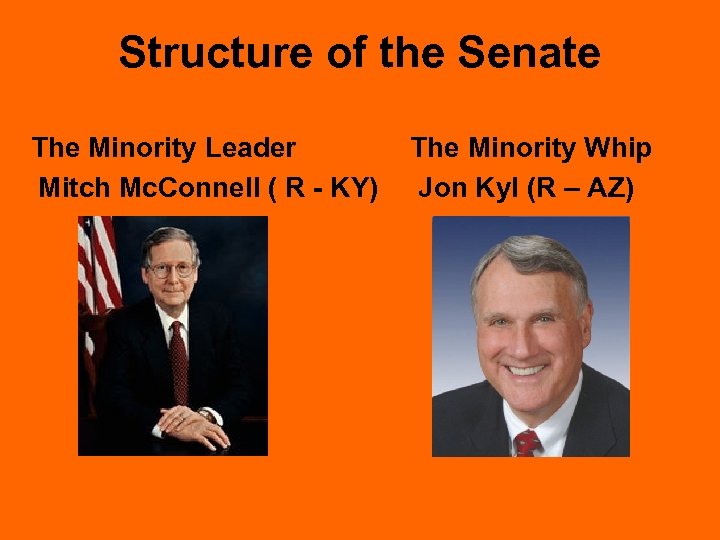 Structure of the Senate The Minority Leader Mitch Mc. Connell ( R - KY) The Minority Whip Jon Kyl (R – AZ)
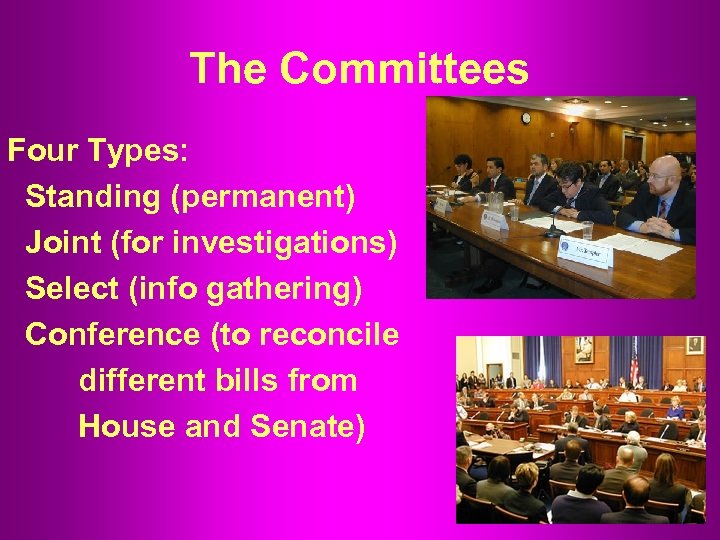 The Committees Four Types: Standing (permanent) Joint (for investigations) Select (info gathering) Conference (to reconcile different bills from House and Senate)
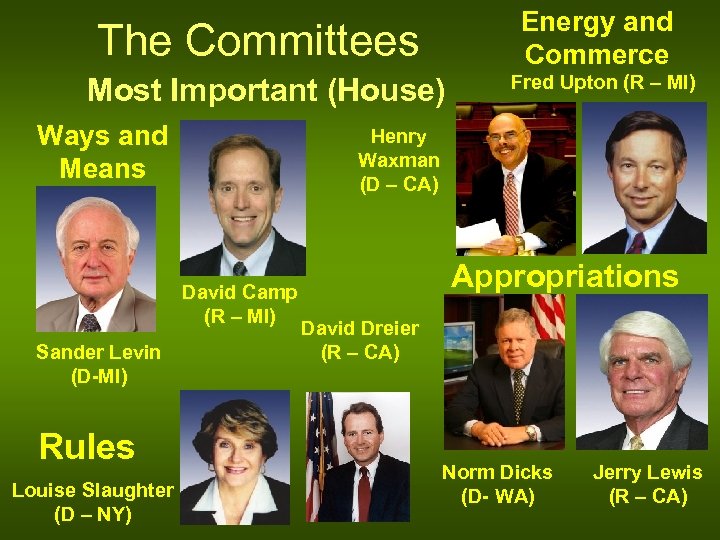 Energy and Commerce The Committees Most Important (House) Ways and Means Henry Waxman (D – CA) David Camp (R – MI) Sander Levin (D-MI) Rules Louise Slaughter (D – NY) Fred Upton (R – MI) Appropriations David Dreier (R – CA) Norm Dicks (D- WA) Jerry Lewis (R – CA)
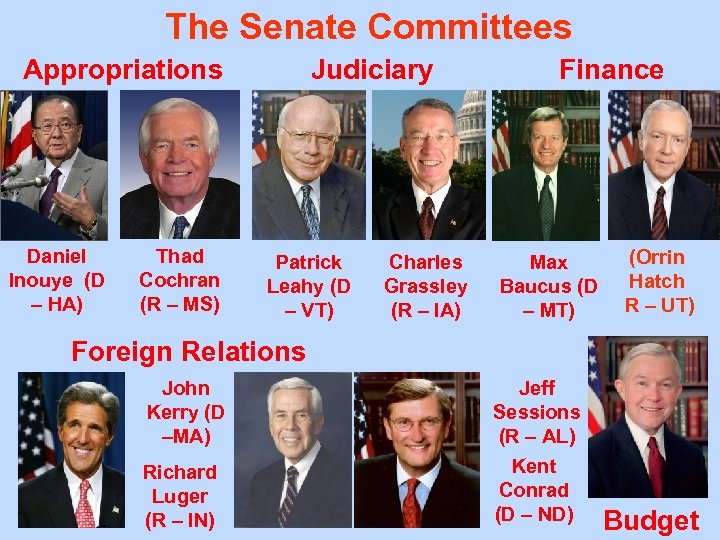 The Senate Committees Appropriations Daniel Inouye (D – HA) Thad Cochran (R – MS) Judiciary Patrick Leahy (D – VT) Charles Grassley (R – IA) Finance Max Baucus (D – MT) (Orrin Hatch R – UT) Foreign Relations John Kerry (D –MA) Richard Luger (R – IN) Jeff Sessions (R – AL) Kent Conrad (D – ND) Budget
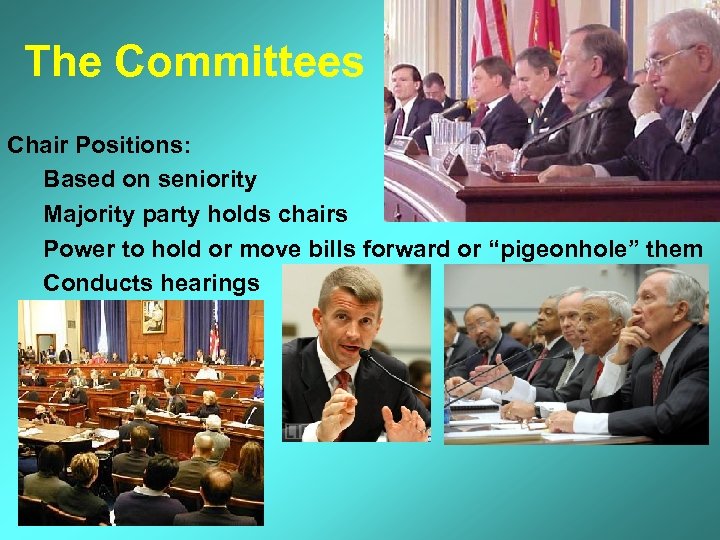 The Committees Chair Positions: Based on seniority Majority party holds chairs Power to hold or move bills forward or “pigeonhole” them Conducts hearings
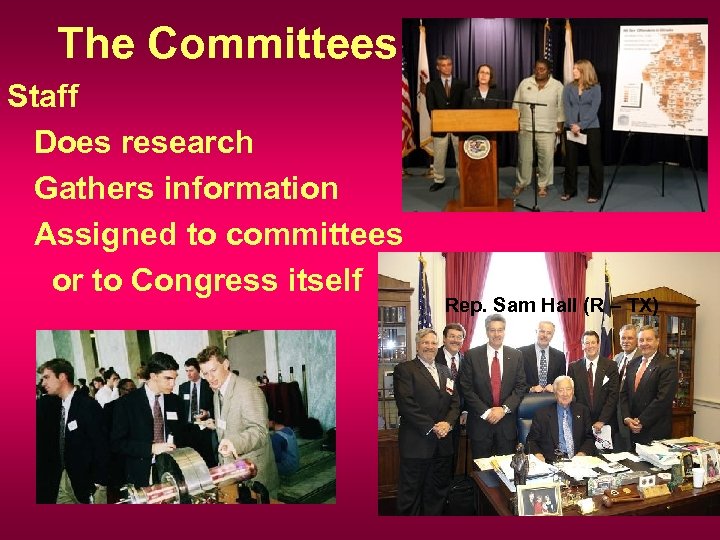 The Committees Staff Does research Gathers information Assigned to committees or to Congress itself Rep. Sam Hall (R – TX)
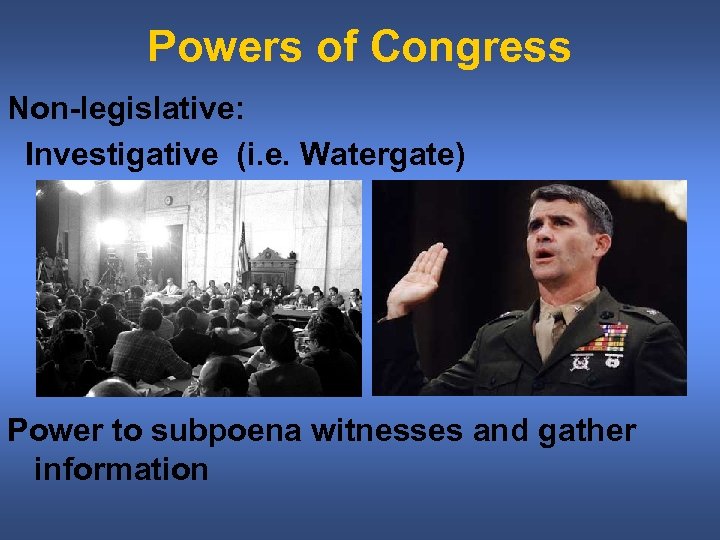 Powers of Congress Non-legislative: Investigative (i. e. Watergate) Power to subpoena witnesses and gather information
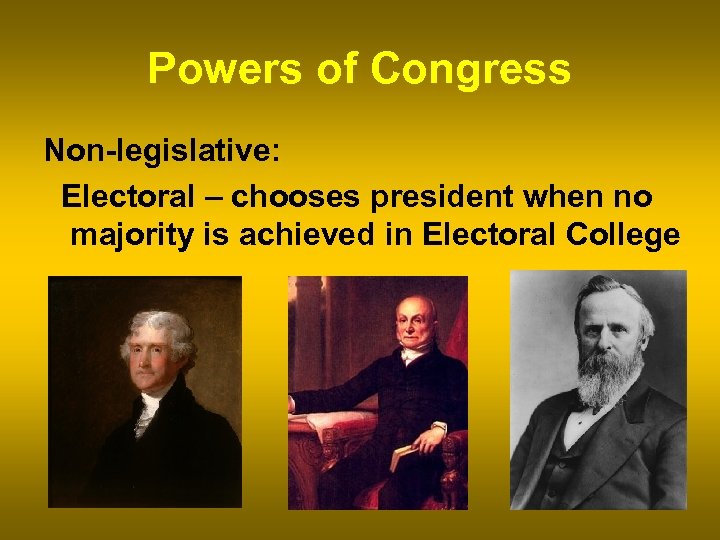 Powers of Congress Non-legislative: Electoral – chooses president when no majority is achieved in Electoral College
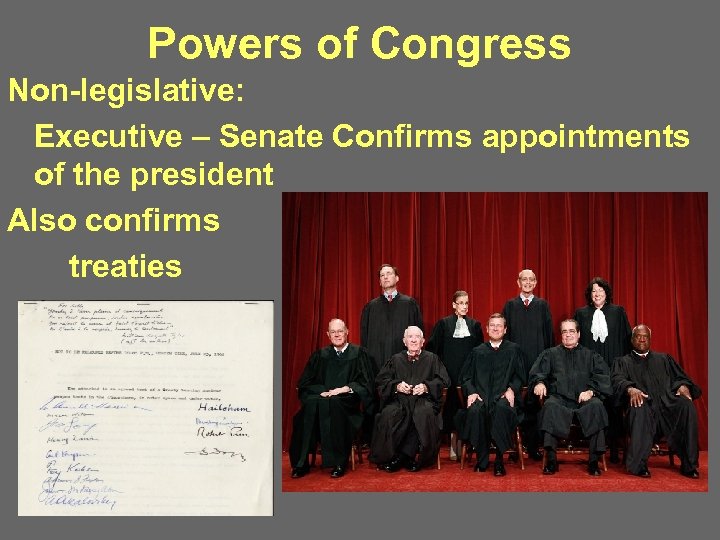 Powers of Congress Non-legislative: Executive – Senate Confirms appointments of the president Also confirms treaties
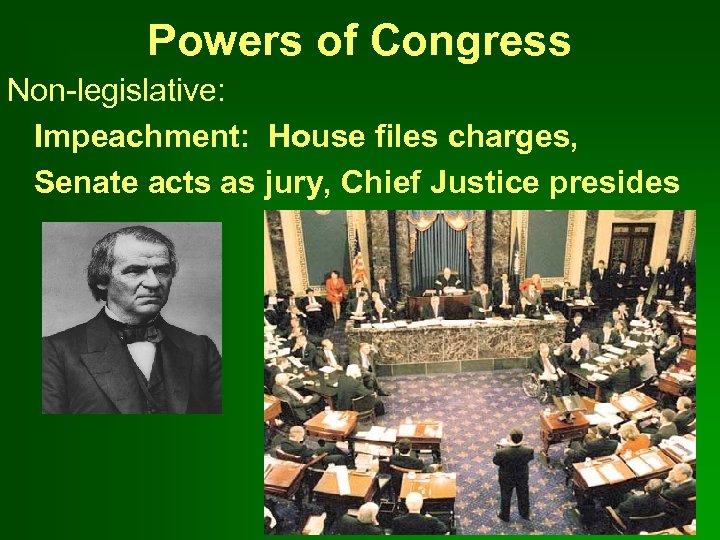 Powers of Congress Non-legislative: Impeachment: House files charges, Senate acts as jury, Chief Justice presides
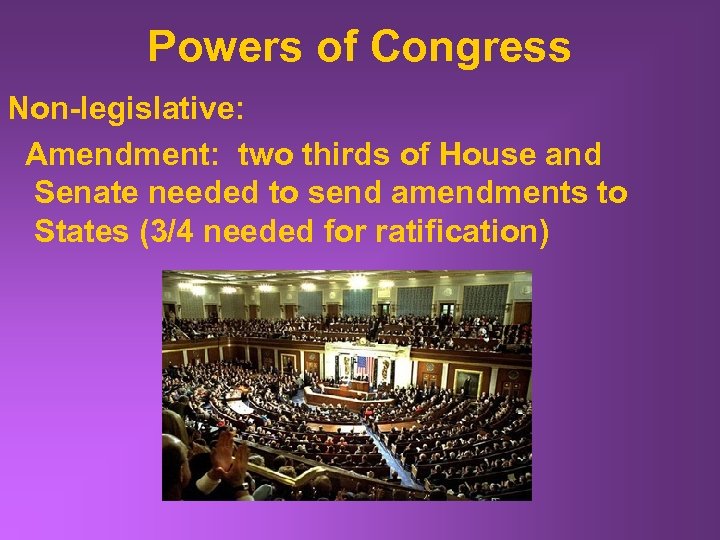 Powers of Congress Non-legislative: Amendment: two thirds of House and Senate needed to send amendments to States (3/4 needed for ratification)
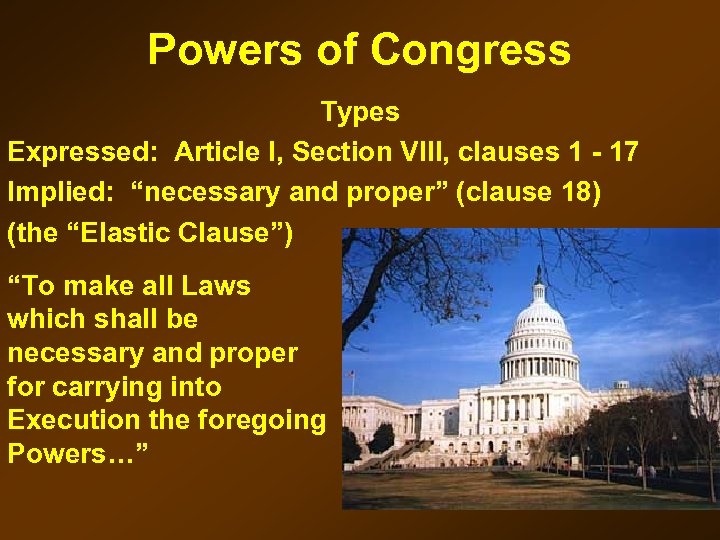 Powers of Congress Types Expressed: Article I, Section VIII, clauses 1 - 17 Implied: “necessary and proper” (clause 18) (the “Elastic Clause”) “To make all Laws which shall be necessary and proper for carrying into Execution the foregoing Powers…”
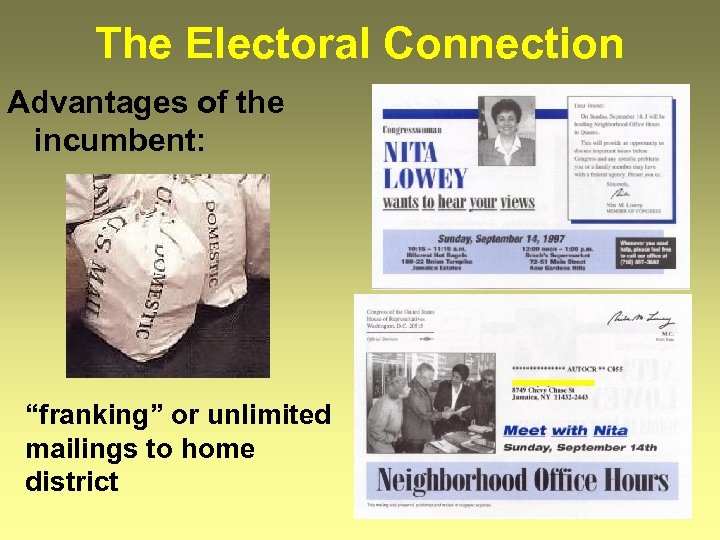 The Electoral Connection Advantages of the incumbent: “franking” or unlimited mailings to home district
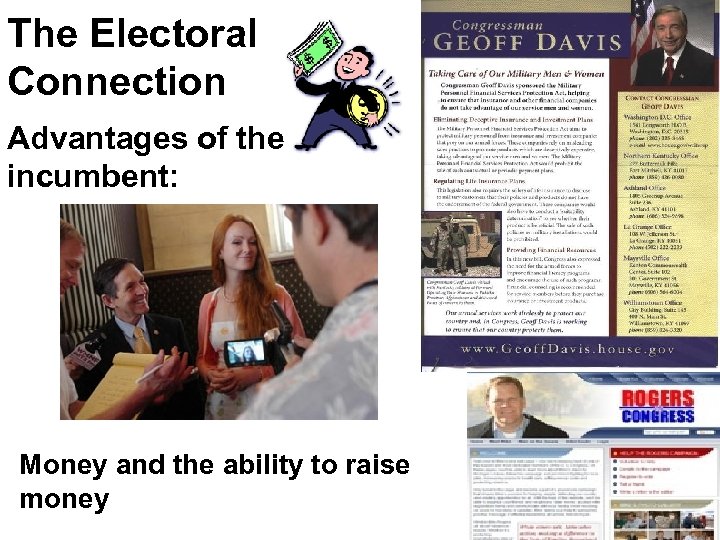 The Electoral Connection Advantages of the incumbent: Money and the ability to raise money
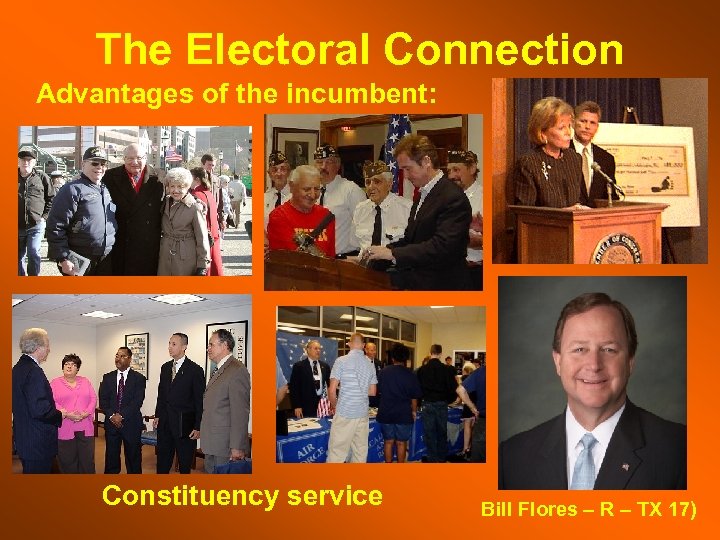 The Electoral Connection Advantages of the incumbent: Constituency service Bill Flores – R – TX 17)
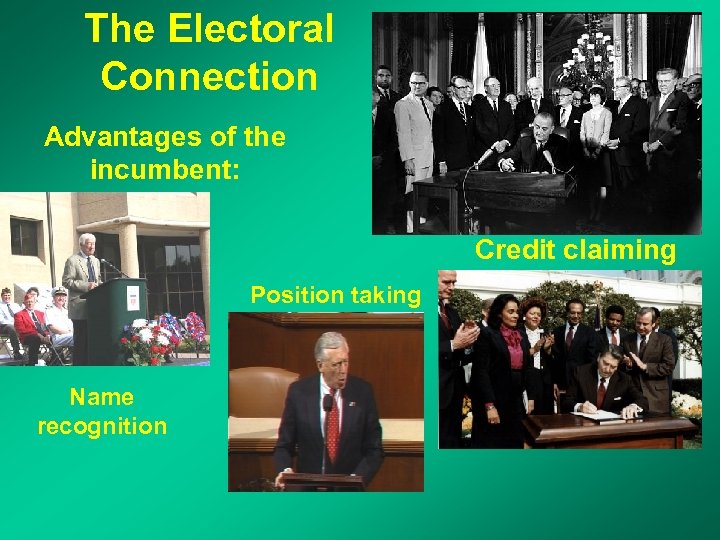 The Electoral Connection Advantages of the incumbent: Credit claiming Position taking Name recognition
 The Electoral Connection Advantages of the incumbent: Lack of quality opponents Ignorant voters
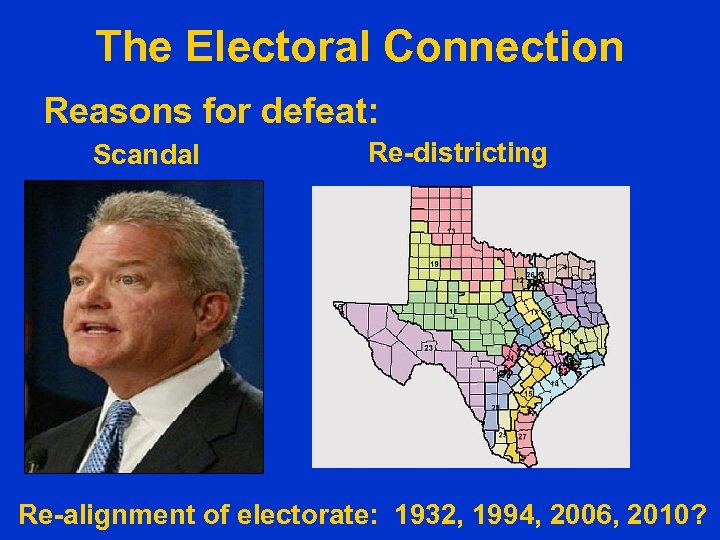 The Electoral Connection Reasons for defeat: Scandal Re-districting Re-alignment of electorate: 1932, 1994, 2006, 2010?
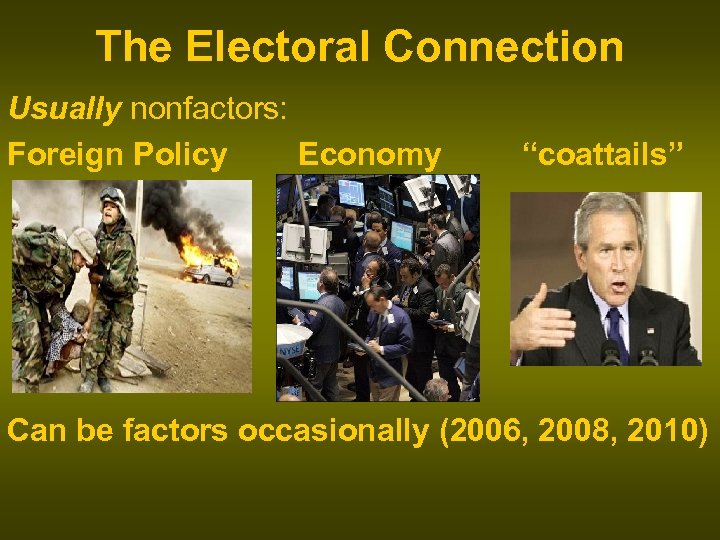 The Electoral Connection Usually nonfactors: Foreign Policy Economy “coattails” Can be factors occasionally (2006, 2008, 2010)
 How a Bill Becomes A Law!
 How a Bill Becomes A Law! Bill is introduced by a member in House Hello, Bill! You. Tube - I'm Just a Bill
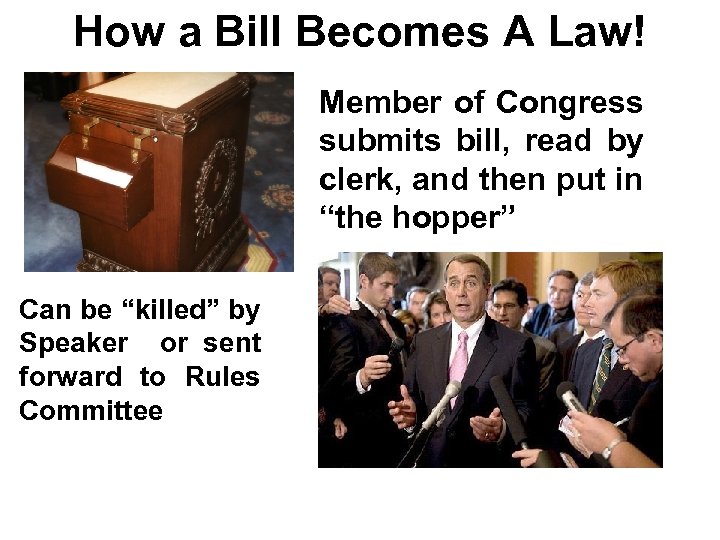 How a Bill Becomes A Law! Member of Congress submits bill, read by clerk, and then put in “the hopper” Can be “killed” by Speaker or sent forward to Rules Committee
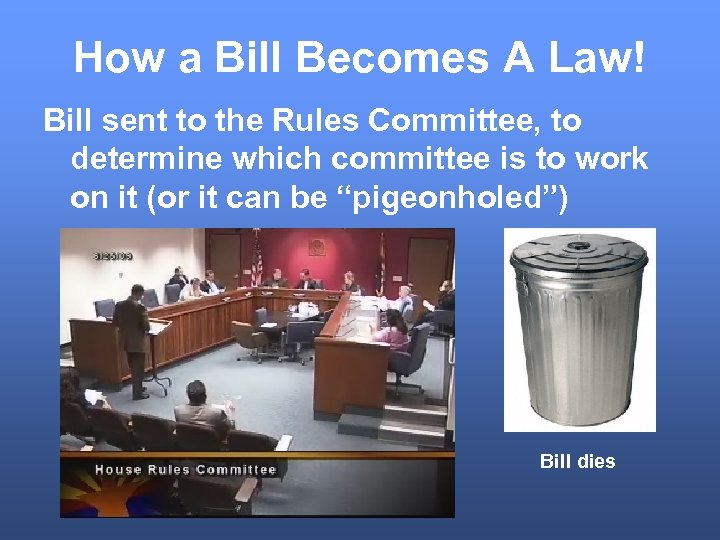 How a Bill Becomes A Law! Bill sent to the Rules Committee, to determine which committee is to work on it (or it can be “pigeonholed”) Bill dies
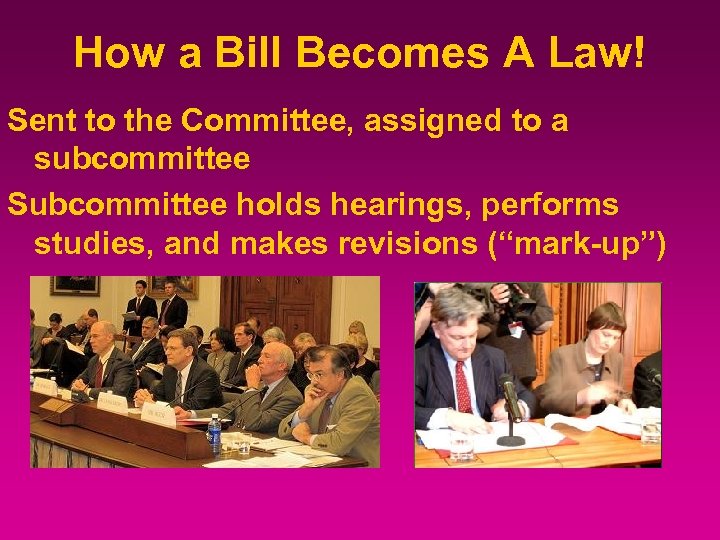 How a Bill Becomes A Law! Sent to the Committee, assigned to a subcommittee Subcommittee holds hearings, performs studies, and makes revisions (“mark-up”)
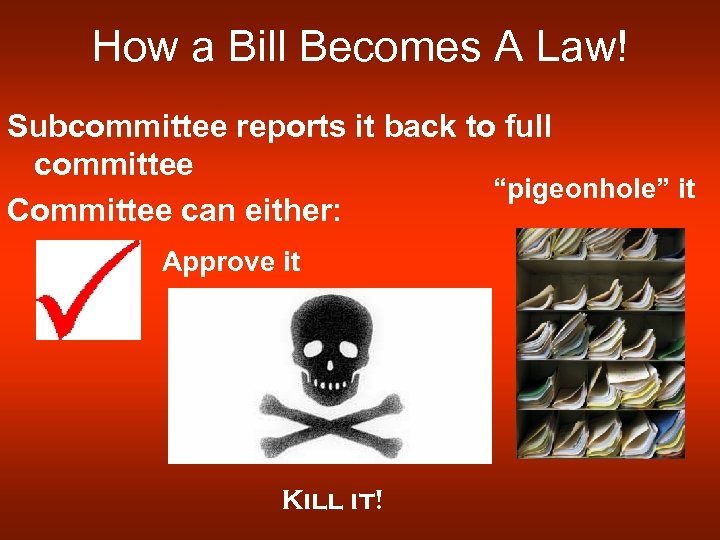 How a Bill Becomes A Law! Subcommittee reports it back to full committee “pigeonhole” it Committee can either: Approve it Kill it!
 How a Bill Becomes A Law! Back to the Rules Committee Sets guidelines on: length of debate amendments, yes/no type of vote put on the calendar
 How a Bill Becomes A Law! Full House Debate YES – on to the Senate NO – bummer! Bill is killed!
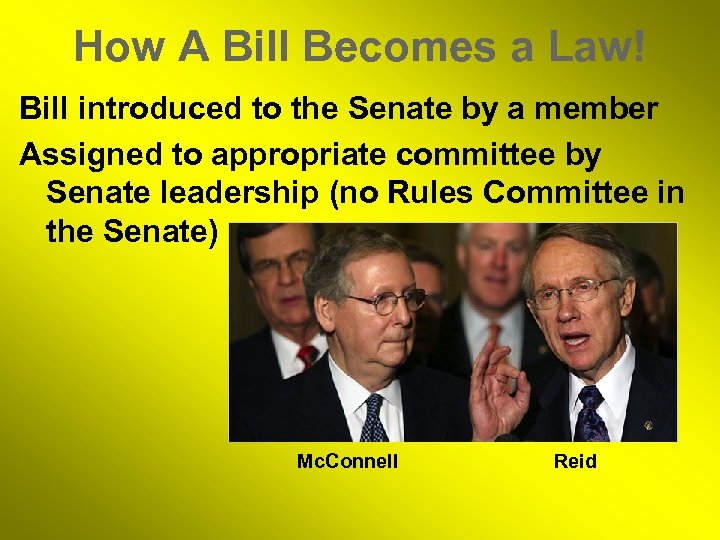 How A Bill Becomes a Law! Bill introduced to the Senate by a member Assigned to appropriate committee by Senate leadership (no Rules Committee in the Senate) Mc. Connell Reid
 How A Bill Becomes a Law! Subcommittee hearings, mark-ups, etc. Report to the full committee
 How A Bill Becomes a Law! Committee can kill it or pass it Sends it to the Senate leadership to be put on the calendar
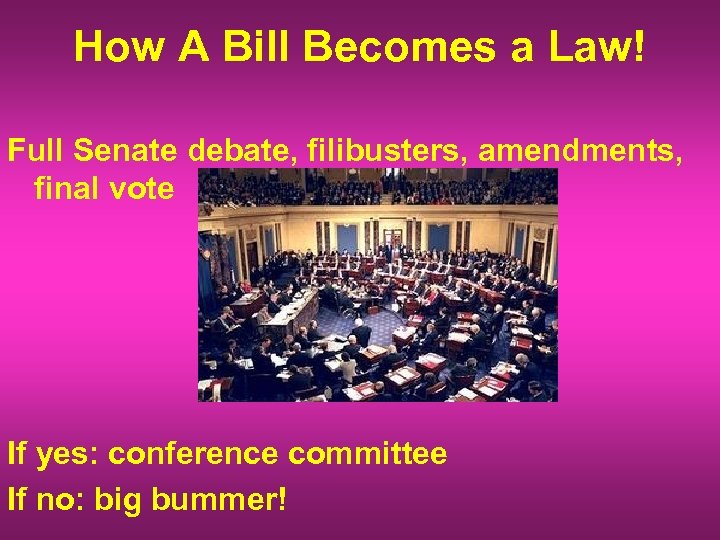 How A Bill Becomes a Law! Full Senate debate, filibusters, amendments, final vote If yes: conference committee If no: big bummer!
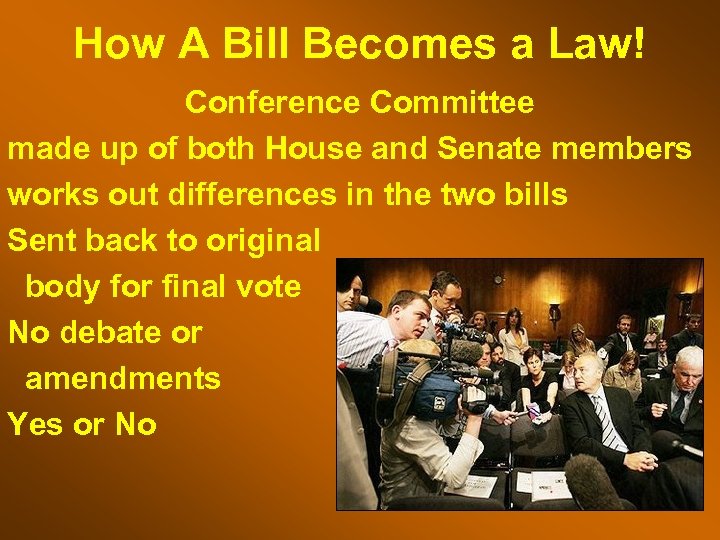 How A Bill Becomes a Law! Conference Committee made up of both House and Senate members works out differences in the two bills Sent back to original body for final vote No debate or amendments Yes or No
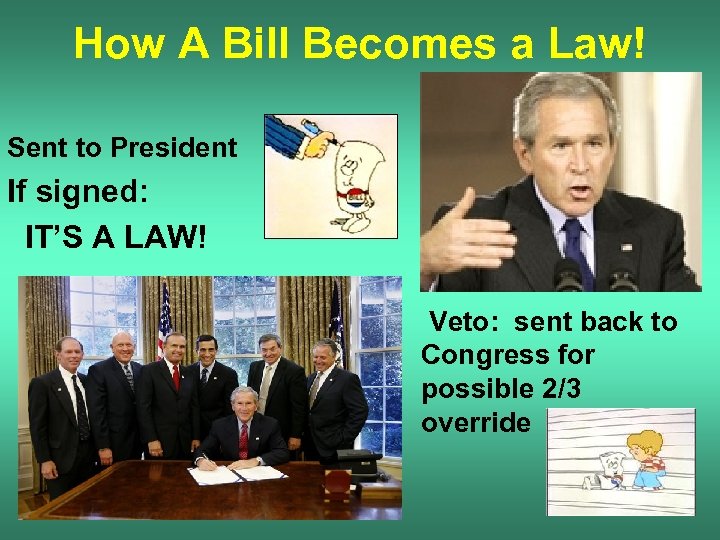 How A Bill Becomes a Law! Sent to President If signed: IT’S A LAW! Veto: sent back to Congress for possible 2/3 override
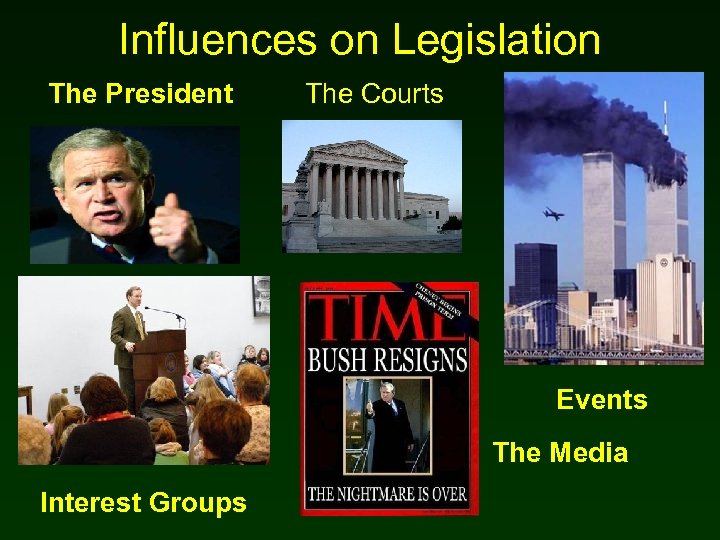 Influences on Legislation The President The Courts Events The Media Interest Groups
 Influences on Legislation The Party Constituent demands Crazy , Right Wing, God-fearin’ Conservatives AP Government Classes