


 Скачать презентацию The United States China More than Two
40b1fe76e6dc6ebfe63e00a54804be83.ppt
- Количество слайдов: 76
 The United States & China: More than Two Centuries of History Roderick Wilson UW-Whitewater
 Warm-up Q&A n n n What time is it in Beijing right now? What was the Forbidden City? What city in China was the first trading headquarters for Westerners? For which three exports was China known in the 18 th and 19 th centuries? During the late 19 th century, what U. S. city became the center of trade between China and the U. S. ? What commodity did the British smuggle into China in the 19 th century?
 Which is the longest? n n n Yangzi River Yellow River Great Wall
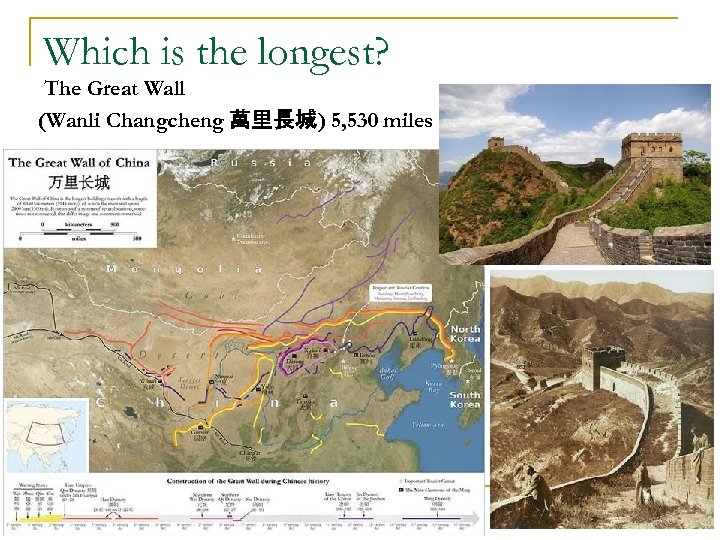 Which is the longest? The Great Wall (Wanli Changcheng 萬里長城) 5, 530 miles
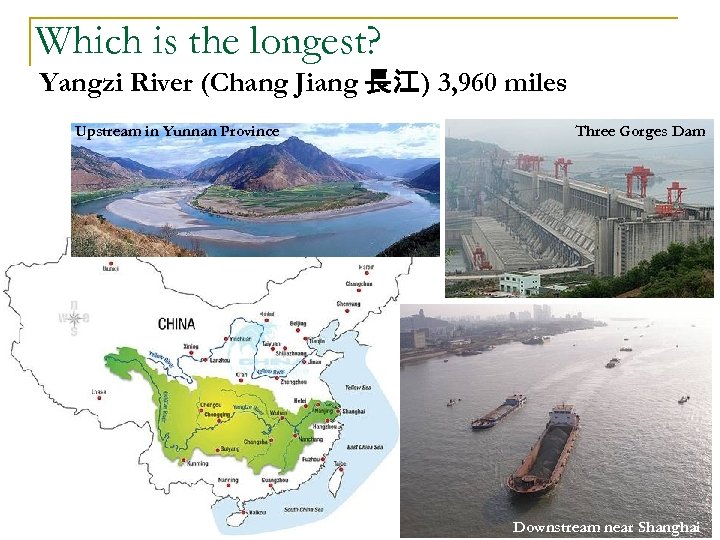 Which is the longest? Yangzi River (Chang Jiang 長江) 3, 960 miles Upstream in Yunnan Province Three Gorges Dam Downstream near Shanghai
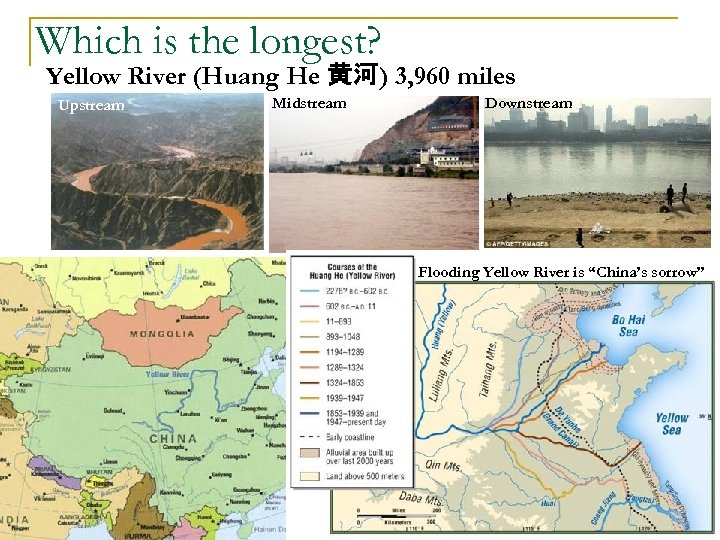 Which is the longest? Yellow River (Huang He 黄河) 3, 960 miles Upstream Midstream Downstream Flooding Yellow River is “China’s sorrow”
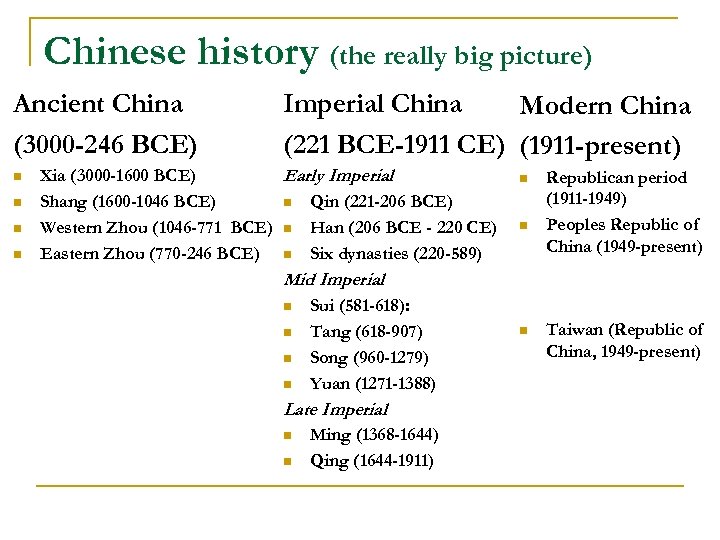 Chinese history (the really big picture) Ancient China (3000 -246 BCE) n n Imperial China Modern China (221 BCE-1911 CE) (1911 -present) Xia (3000 -1600 BCE) Early Imperial Shang (1600 -1046 BCE) n Qin (221 -206 BCE) Western Zhou (1046 -771 BCE) n Han (206 BCE - 220 CE) Eastern Zhou (770 -246 BCE) n Six dynasties (220 -589) n n Republican period (1911 -1949) Peoples Republic of China (1949 -present) Mid Imperial n n Sui (581 -618): Tang (618 -907) Song (960 -1279) Yuan (1271 -1388) Late Imperial n n Ming (1368 -1644) Qing (1644 -1911) n Taiwan (Republic of China, 1949 -present)
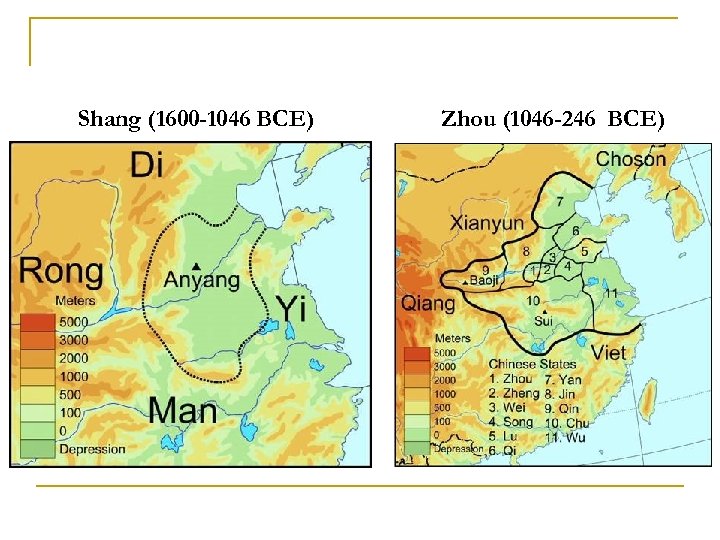 Shang (1600 -1046 BCE) Zhou (1046 -246 BCE)
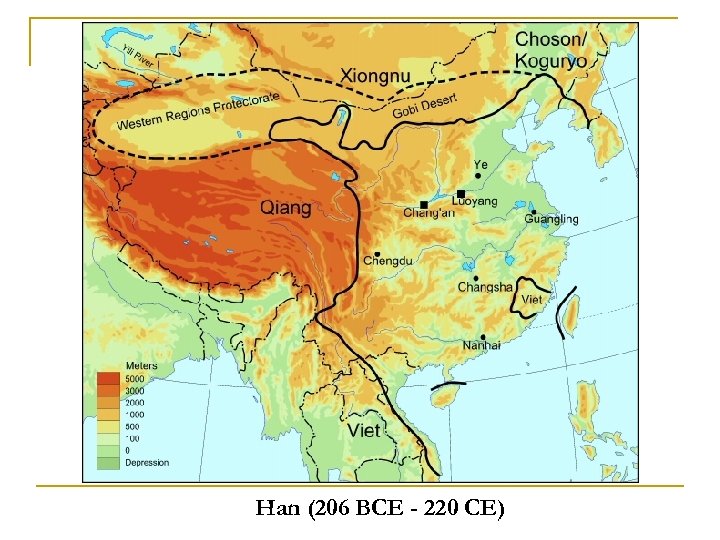 Han (206 BCE - 220 CE)
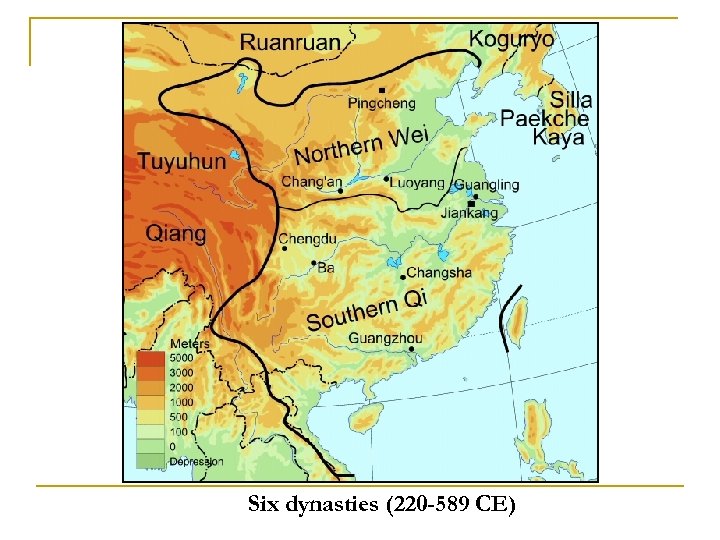 Six dynasties (220 -589 CE)
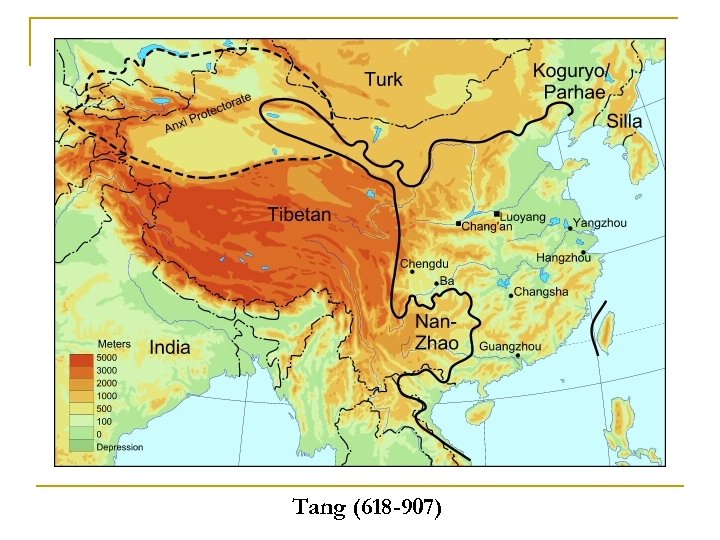 Tang (618 -907)
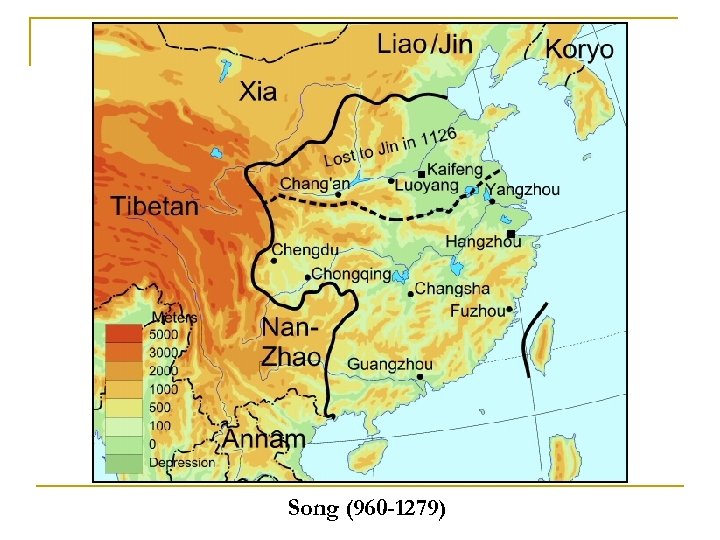 Song (960 -1279)
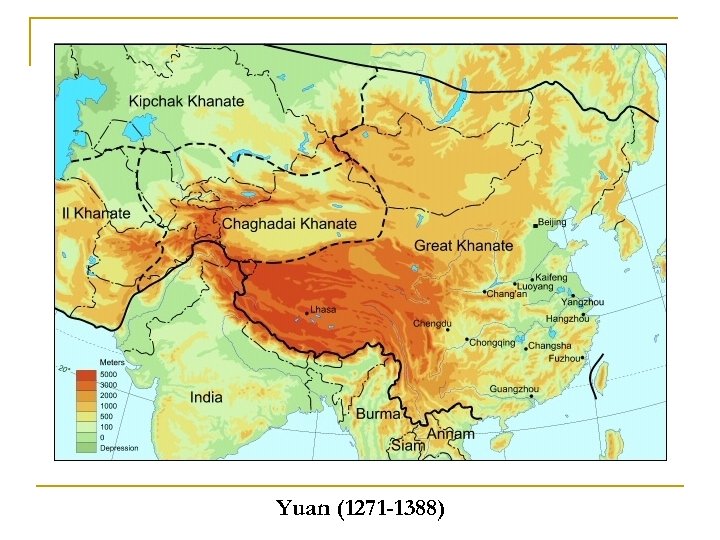 Yuan (1271 -1388)
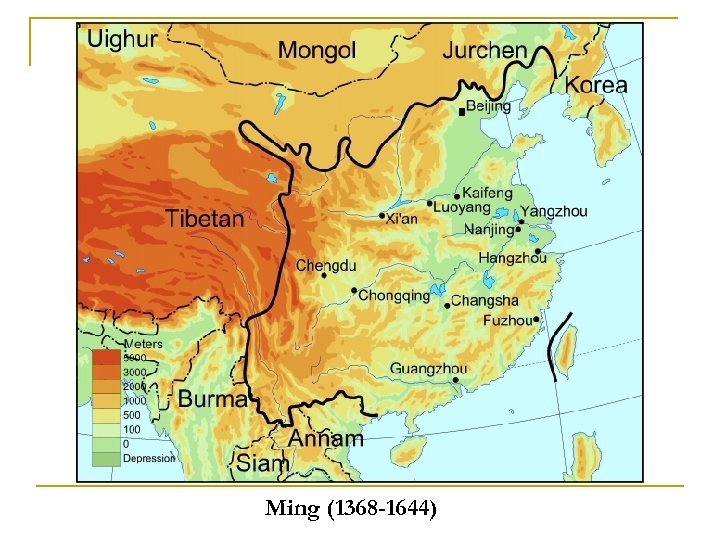 Ming (1368 -1644)
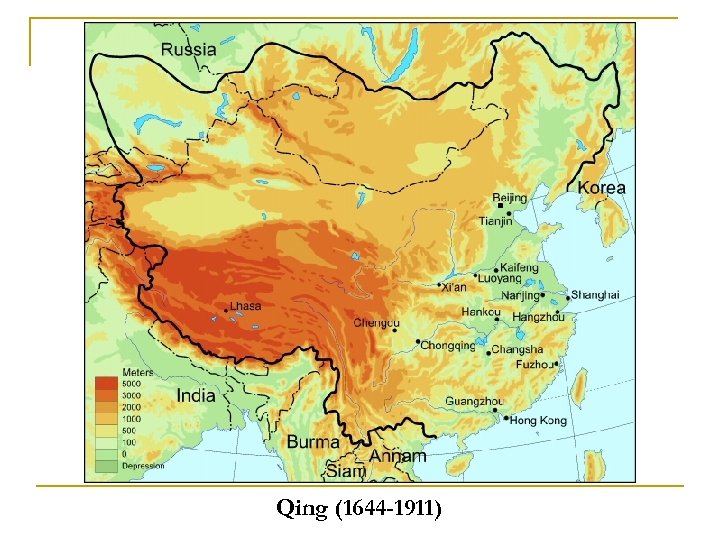 Qing (1644 -1911)
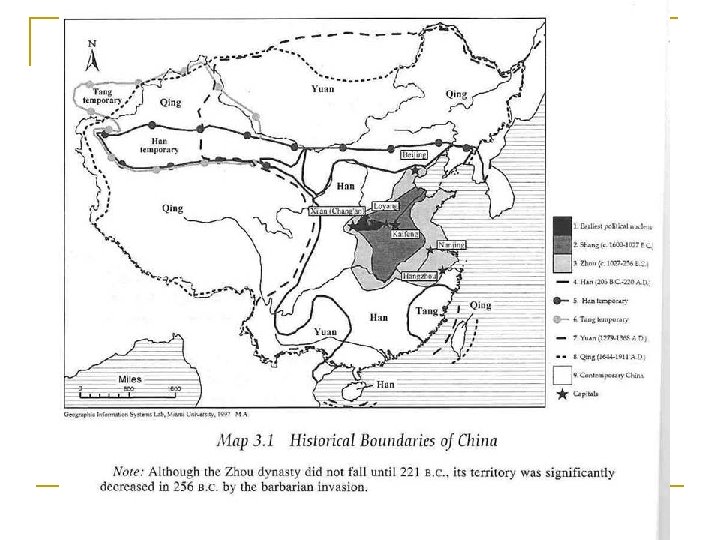
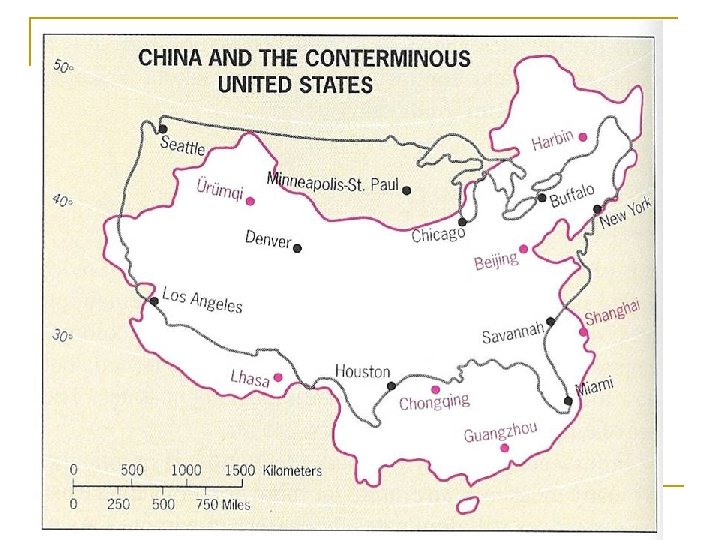
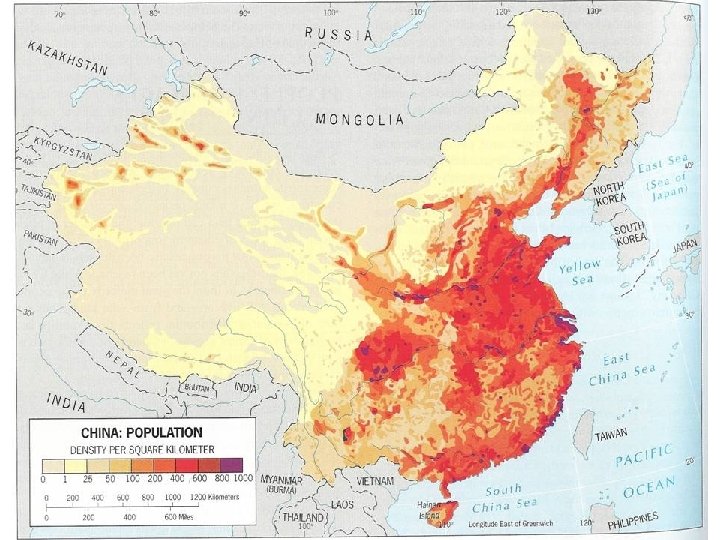
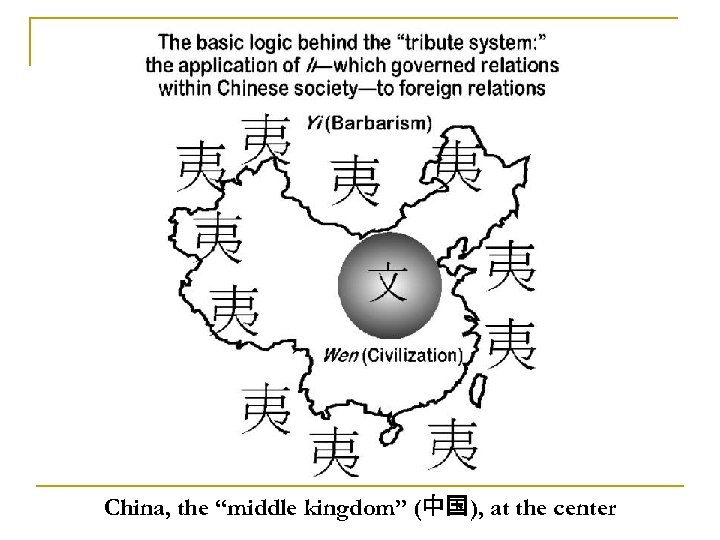 China, the “middle kingdom” (中国), at the center
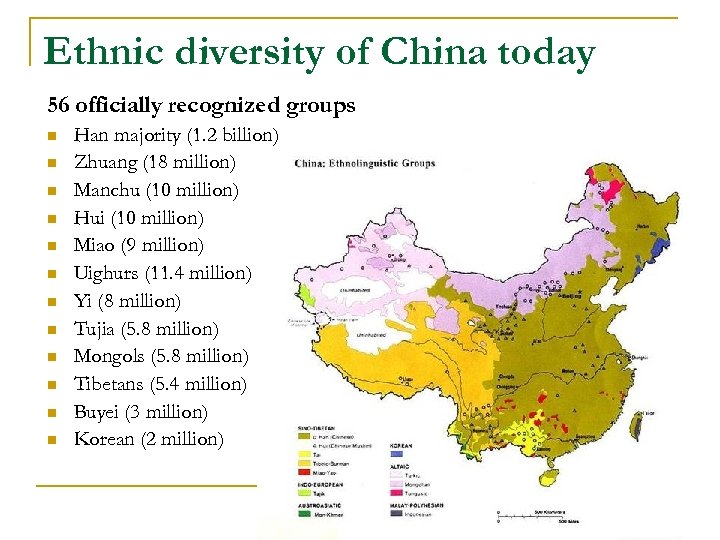 Ethnic diversity of China today 56 officially recognized groups n n n Han majority (1. 2 billion) Zhuang (18 million) Manchu (10 million) Hui (10 million) Miao (9 million) Uighurs (11. 4 million) Yi (8 million) Tujia (5. 8 million) Mongols (5. 8 million) Tibetans (5. 4 million) Buyei (3 million) Korean (2 million)
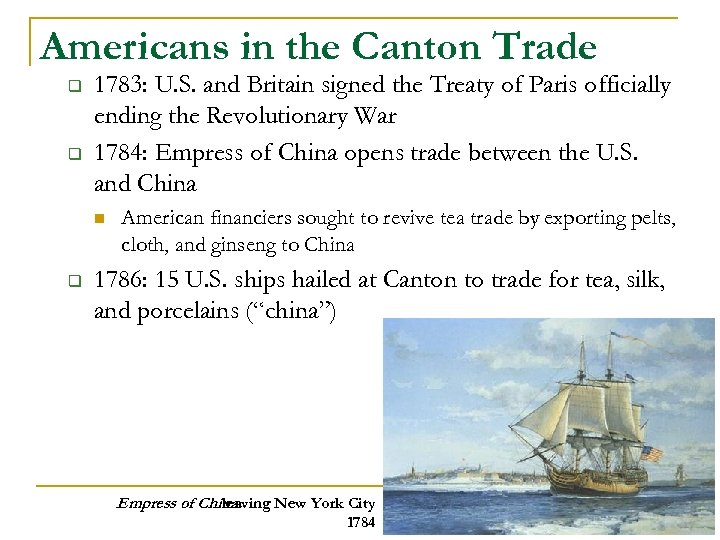 Americans in the Canton Trade q q 1783: U. S. and Britain signed the Treaty of Paris officially ending the Revolutionary War 1784: Empress of China opens trade between the U. S. and China n q American financiers sought to revive tea trade by exporting pelts, cloth, and ginseng to China 1786: 15 U. S. ships hailed at Canton to trade for tea, silk, and porcelains (“china”) Empress of China leaving New York City 1784
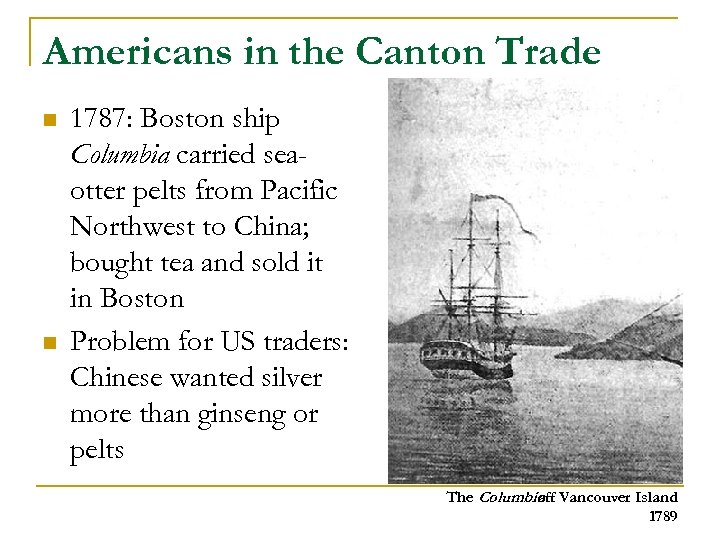 Americans in the Canton Trade n n 1787: Boston ship Columbia carried seaotter pelts from Pacific Northwest to China; bought tea and sold it in Boston Problem for US traders: Chinese wanted silver more than ginseng or pelts The Columbia Vancouver Island off 1789
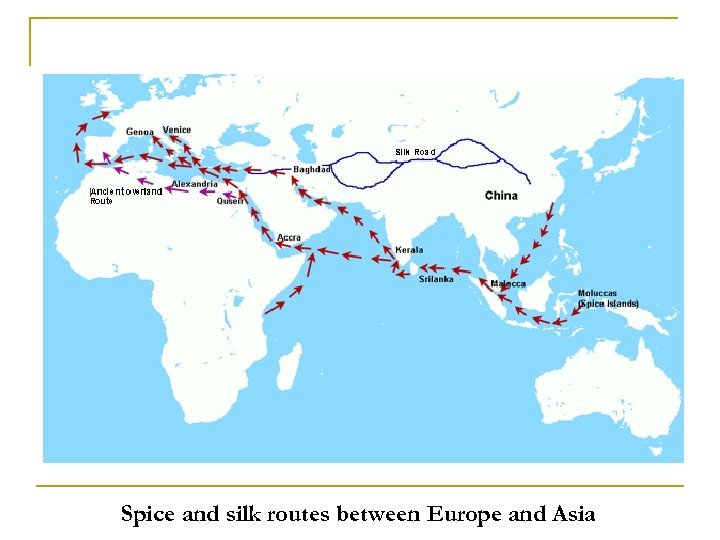 Spice and silk routes between Europe and Asia
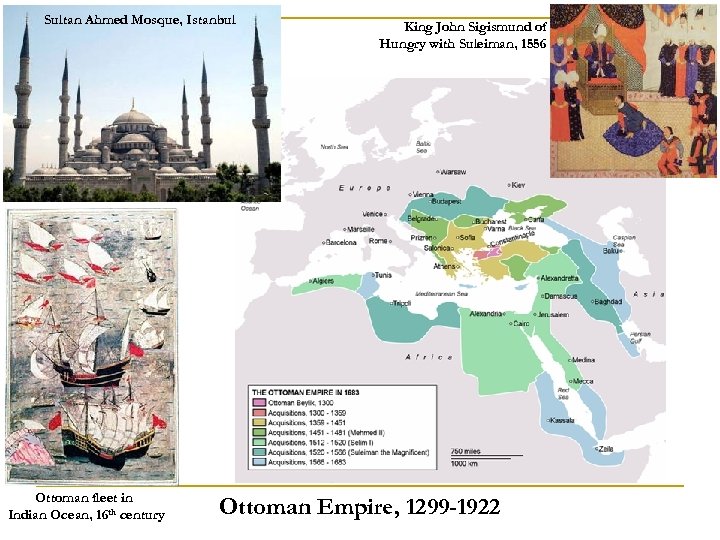 Sultan Ahmed Mosque, Istanbul Ottoman fleet in Indian Ocean, 16 th century King John Sigismund of Hungry with Suleiman, 1556 Ottoman Empire, 1299 -1922
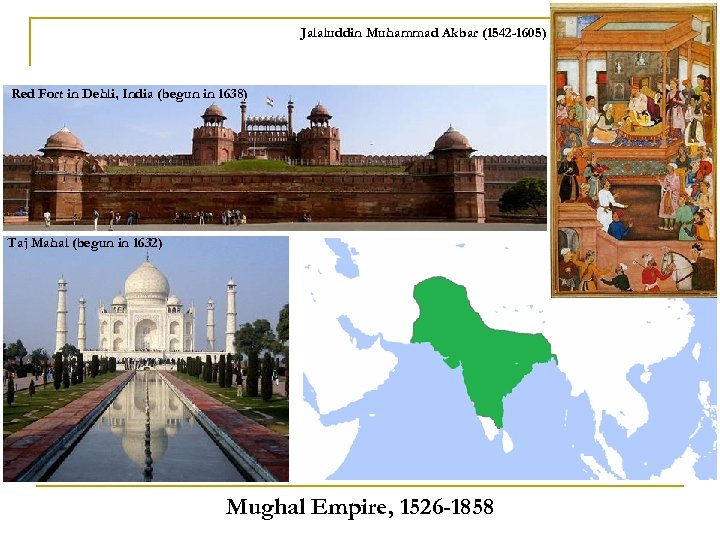 Jalaluddin Muhammad Akbar (1542 -1605) Red Fort in Dehli, India (begun in 1638) Taj Mahal (begun in 1632) Mughal Empire, 1526 -1858
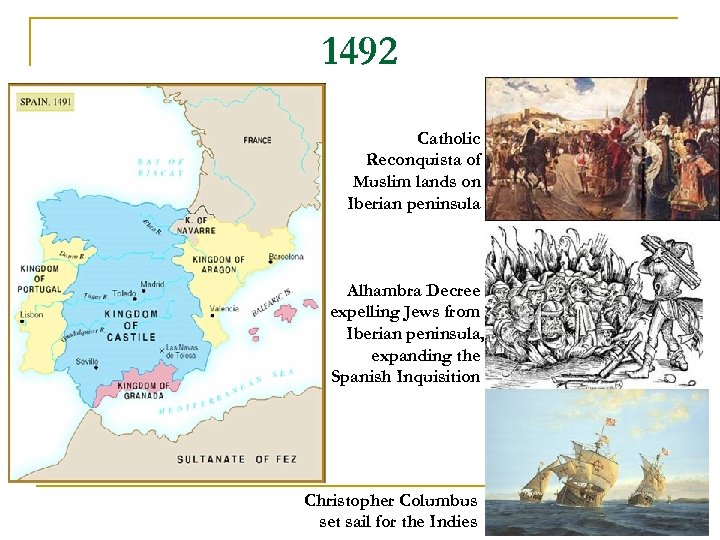 1492 Catholic Reconquista of Muslim lands on Iberian peninsula Alhambra Decree expelling Jews from Iberian peninsula, expanding the Spanish Inquisition Christopher Columbus set sail for the Indies
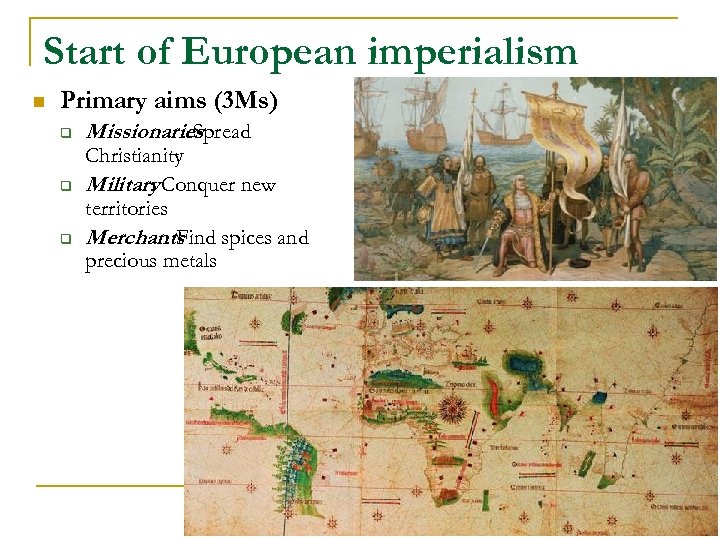 Start of European imperialism n Primary aims (3 Ms) q q q Missionaries : Spread Christianity Military Conquer new : territories Merchants : Find spices and precious metals
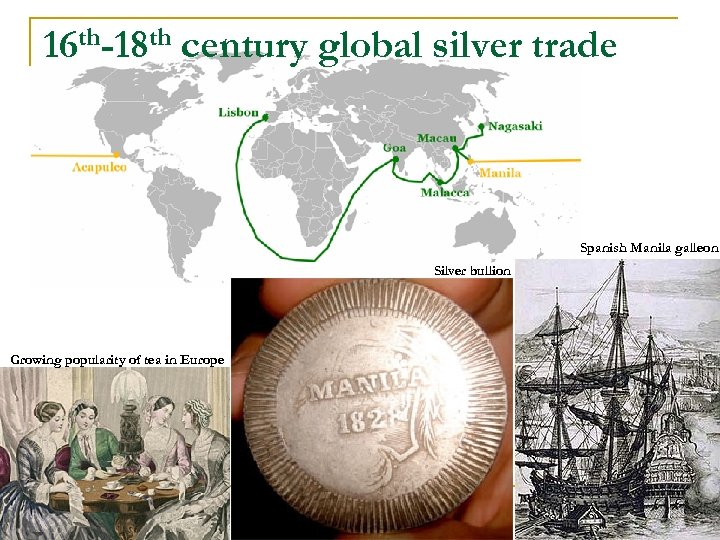 16 th-18 th century global silver trade Spanish Manila galleon Silver bullion Growing popularity of tea in Europe
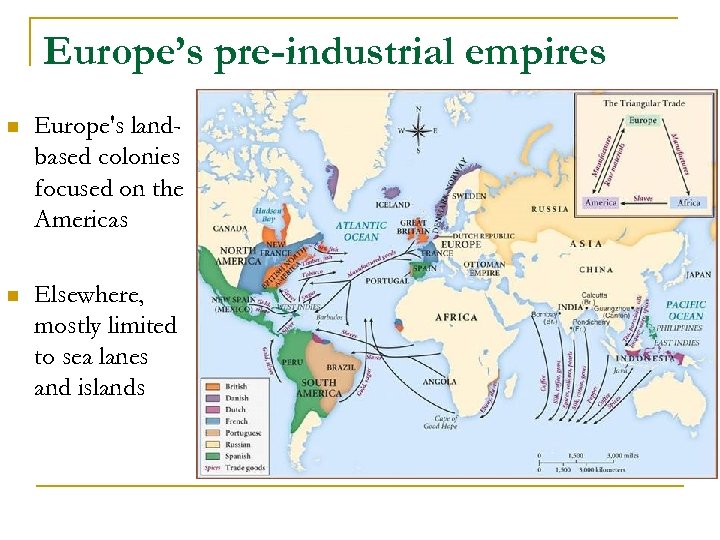 Europe’s pre-industrial empires n Europe's landbased colonies focused on the Americas n Elsewhere, mostly limited to sea lanes and islands
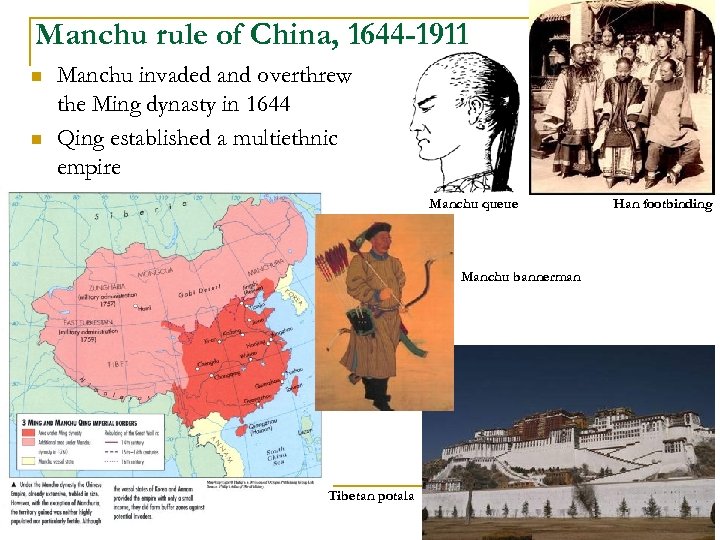 Manchu rule of China, 1644 -1911 n n Manchu invaded and overthrew the Ming dynasty in 1644 Qing established a multiethnic empire Manchu queue Manchu bannerman Tibetan potala Han footbinding
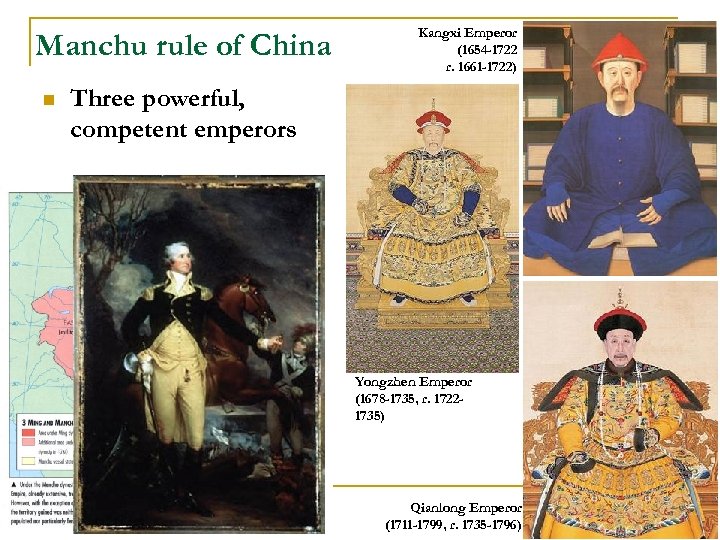 Manchu rule of China n Kangxi Emperor (1654 -1722 r. 1661 -1722) Three powerful, competent emperors Yongzhen Emperor (1678 -1735, r. 17221735) Qianlong Emperor (1711 -1799, r. 1735 -1796)
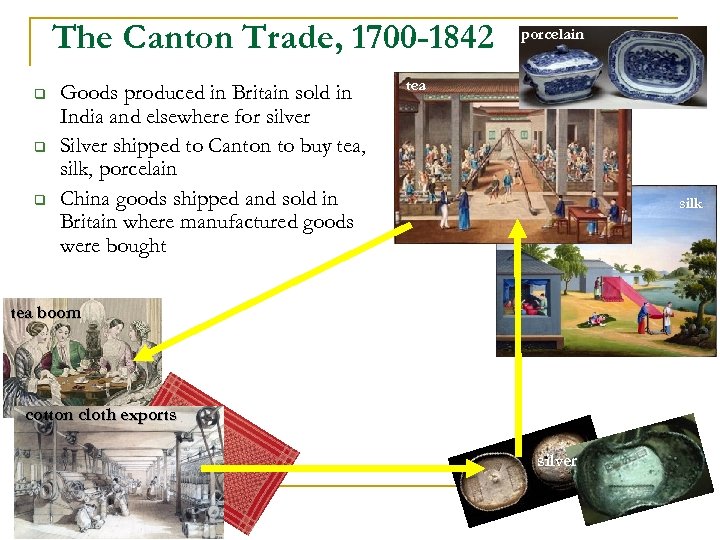 The Canton Trade, 1700 -1842 q q q Goods produced in Britain sold in India and elsewhere for silver Silver shipped to Canton to buy tea, silk, porcelain China goods shipped and sold in Britain where manufactured goods were bought porcelain tea silk tea boom cotton cloth exports silver
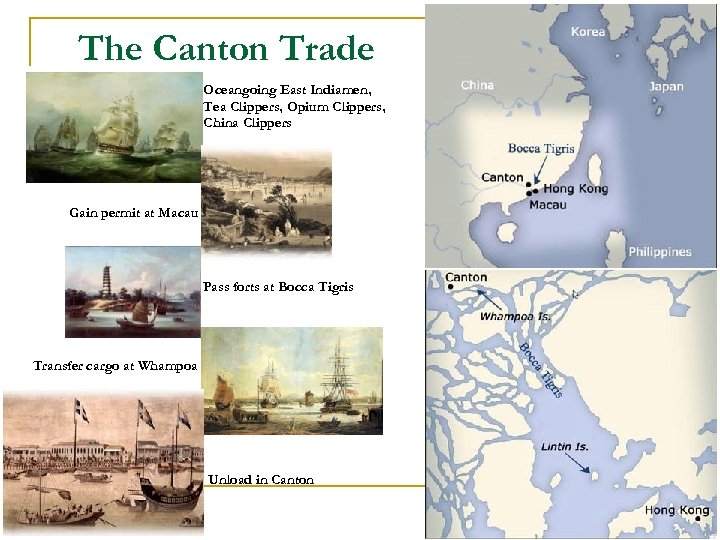 The Canton Trade Oceangoing East Indiamen, Tea Clippers, Opium Clippers, China Clippers Gain permit at Macau Pass forts at Bocca Tigris Transfer cargo at Whampoa Unload in Canton
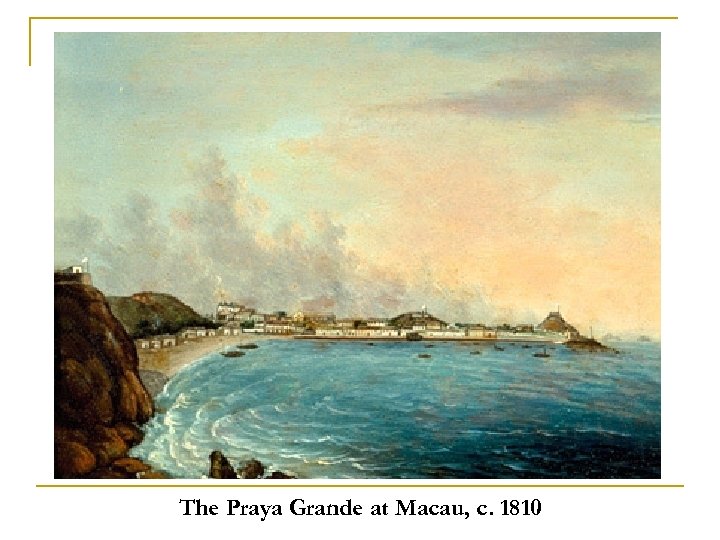 The Praya Grande at Macau, c. 1810
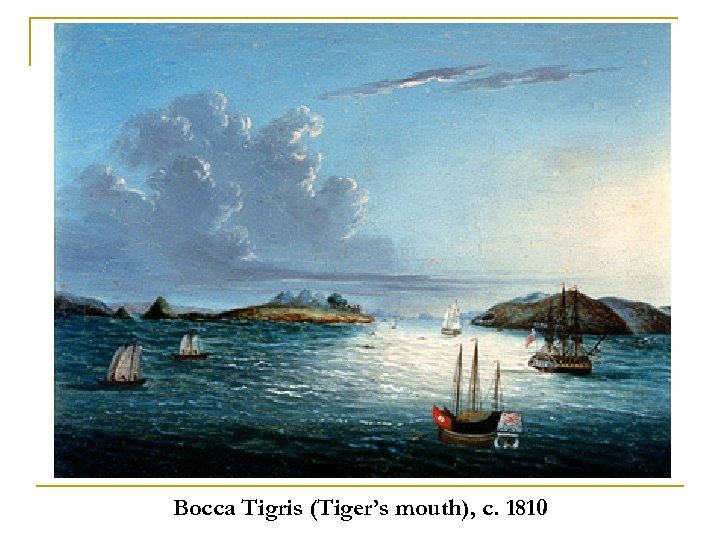 Bocca Tigris (Tiger’s mouth), c. 1810
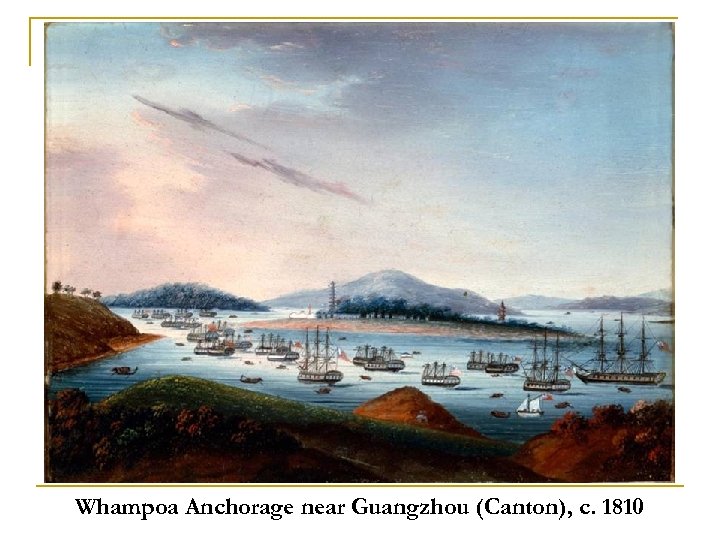 Whampoa Anchorage near Guangzhou (Canton), c. 1810
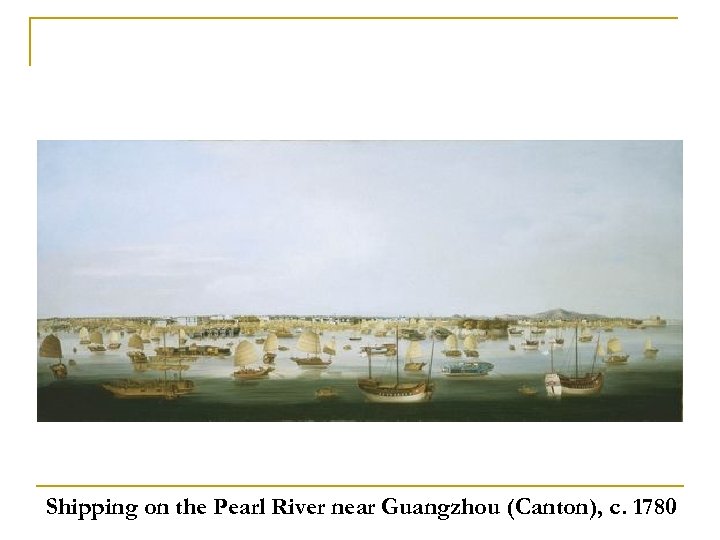 Shipping on the Pearl River near Guangzhou (Canton), c. 1780
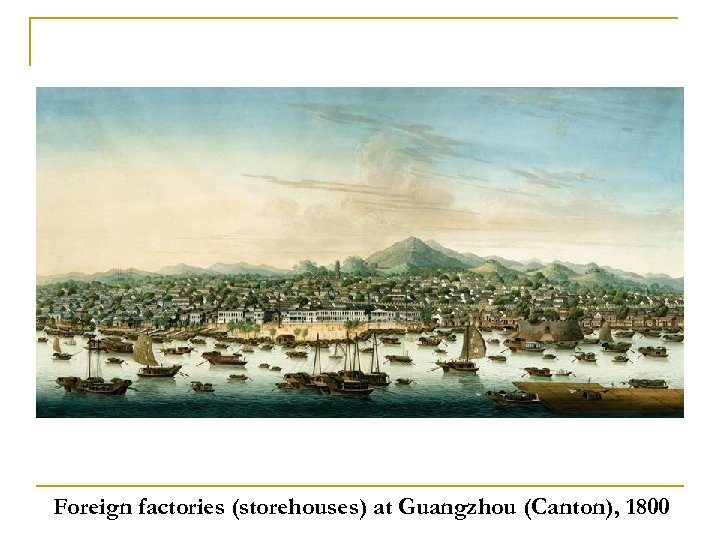 Foreign factories (storehouses) at Guangzhou (Canton), 1800
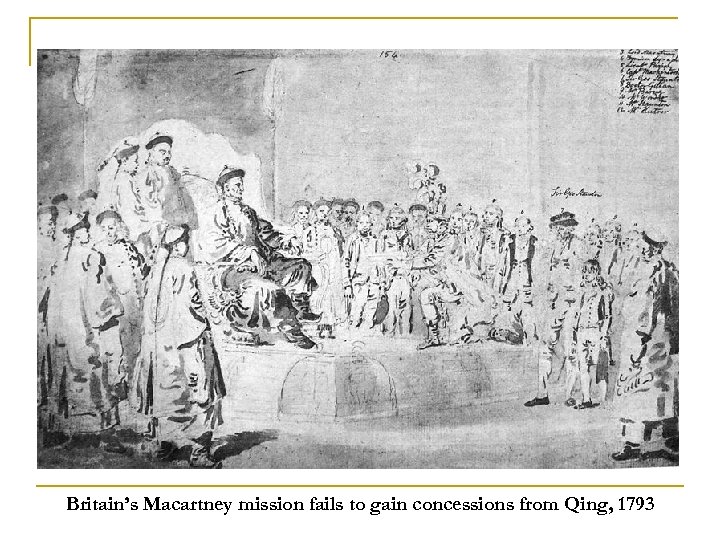 Britain’s Macartney mission fails to gain concessions from Qing, 1793
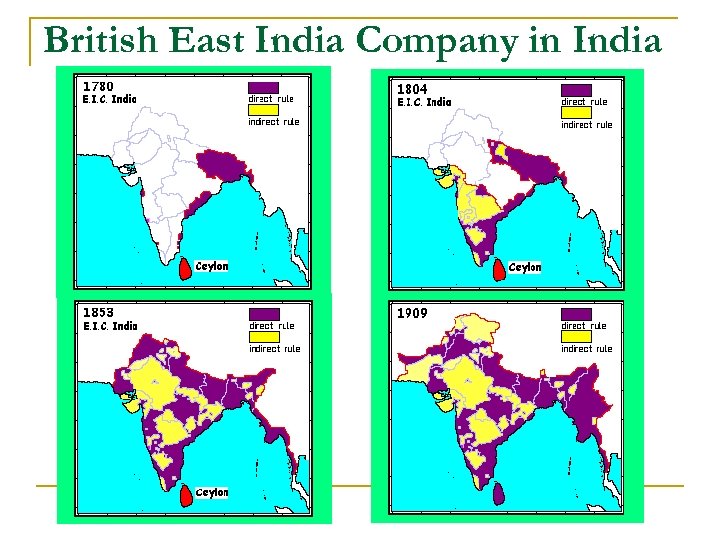 British East India Company in India
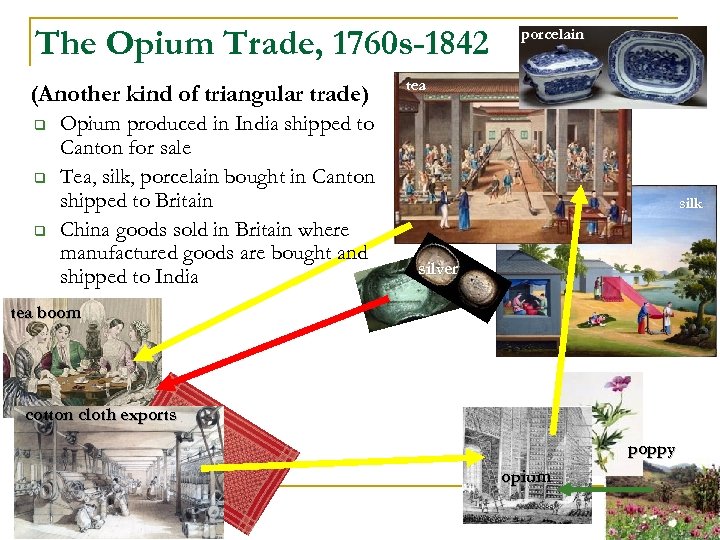 The Opium Trade, 1760 s-1842 (Another kind of triangular trade) q q q Opium produced in India shipped to Canton for sale Tea, silk, porcelain bought in Canton shipped to Britain China goods sold in Britain where manufactured goods are bought and shipped to India porcelain tea silk silver tea boom cotton cloth exports poppy opium
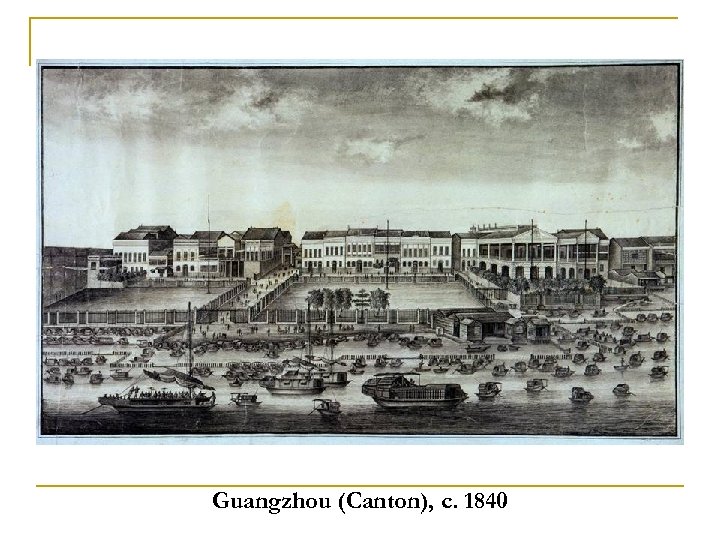 Guangzhou (Canton), c. 1840
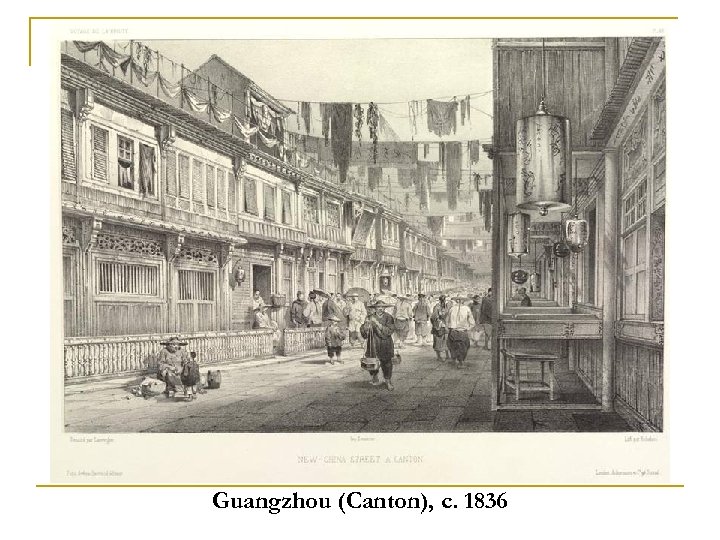 Guangzhou (Canton), c. 1836
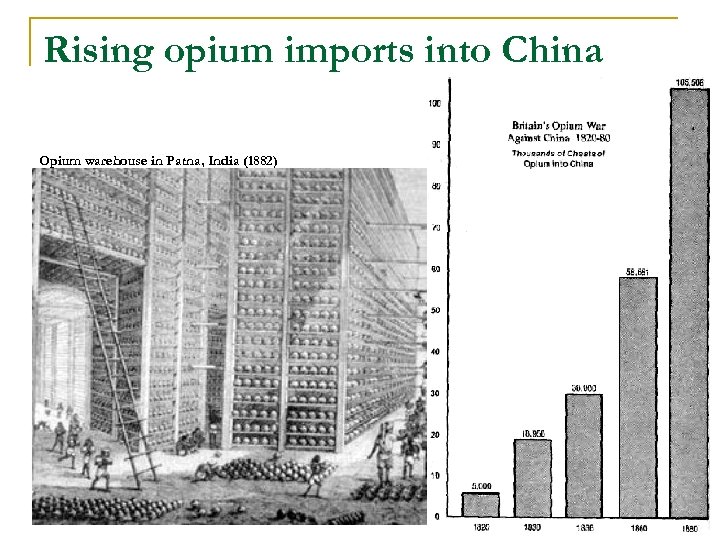 Rising opium imports into China Opium warehouse in Patna, India (1882)
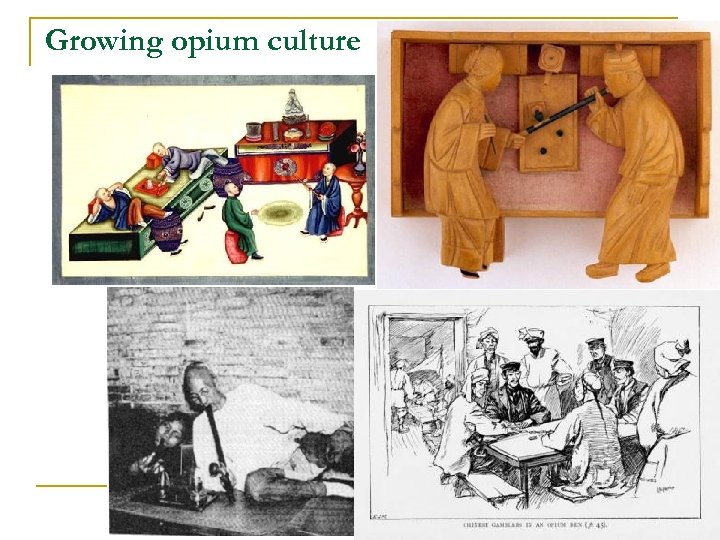 Growing opium culture
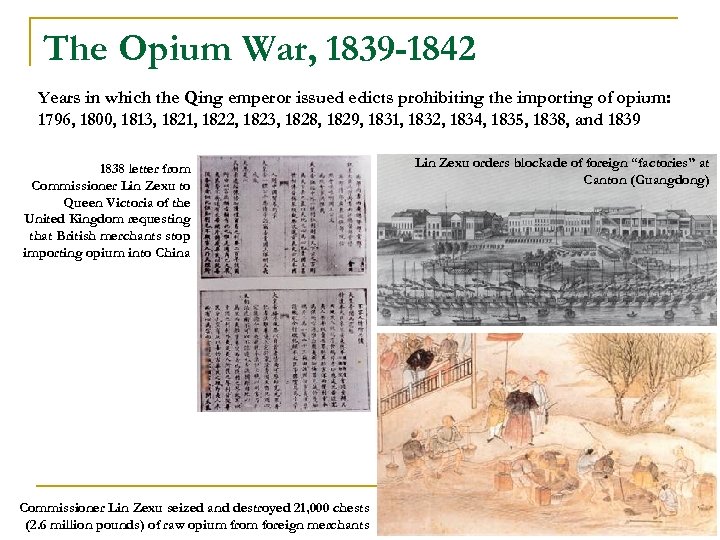 The Opium War, 1839 -1842 Years in which the Qing emperor issued edicts prohibiting the importing of opium: 1796, 1800, 1813, 1821, 1822, 1823, 1828, 1829, 1831, 1832, 1834, 1835, 1838, and 1839 1838 letter from Commissioner Lin Zexu to Queen Victoria of the United Kingdom requesting that British merchants stop importing opium into China Commissioner Lin Zexu seized and destroyed 21, 000 chests (2. 6 million pounds) of raw opium from foreign merchants Lin Zexu orders blockade of foreign “factories” at Canton (Guangdong)
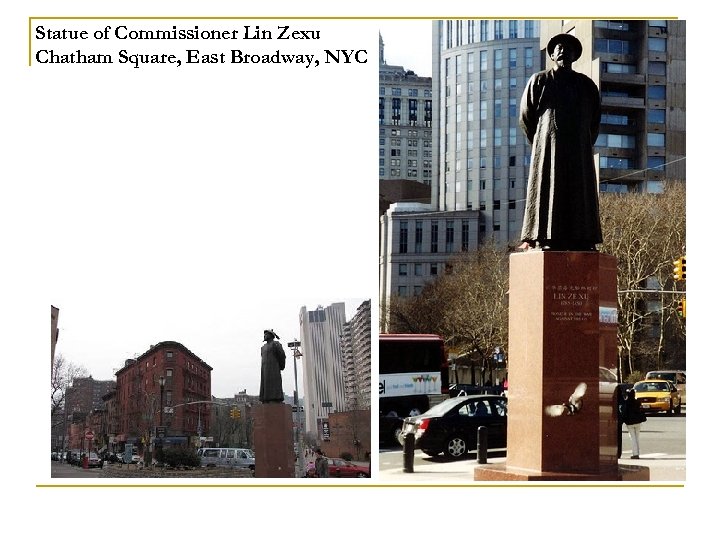 Statue of Commissioner Lin Zexu Chatham Square, East Broadway, NYC
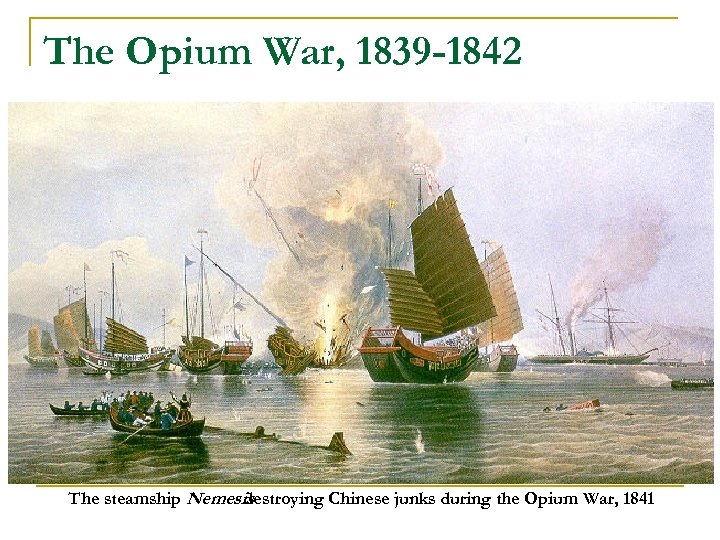 The Opium War, 1839 -1842 The steamship Nemesis destroying Chinese junks during the Opium War, 1841
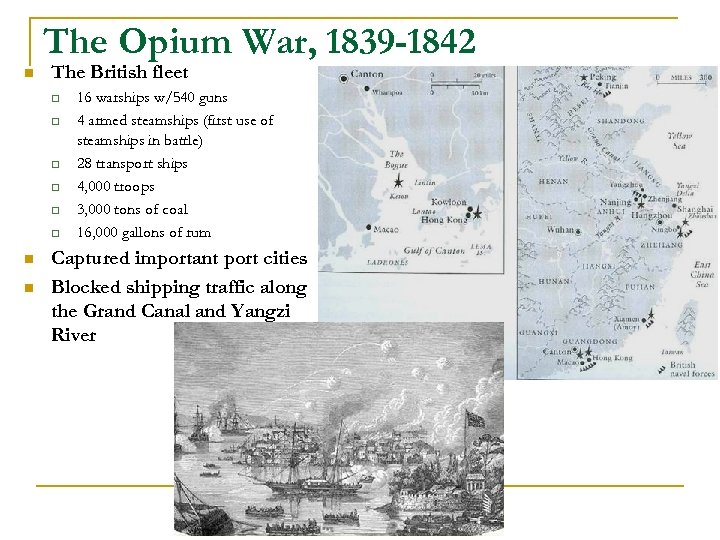 The Opium War, 1839 -1842 n The British fleet q q q n n 16 warships w/540 guns 4 armed steamships (first use of steamships in battle) 28 transport ships 4, 000 troops 3, 000 tons of coal 16, 000 gallons of rum Captured important port cities Blocked shipping traffic along the Grand Canal and Yangzi River
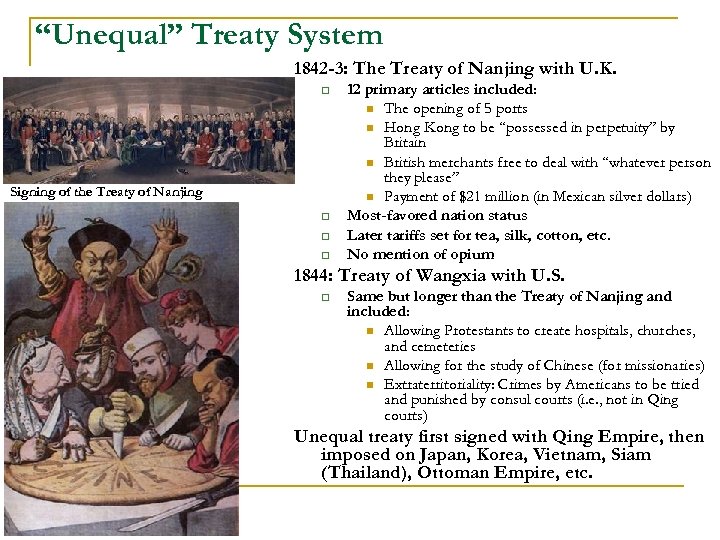 “Unequal” Treaty System 1842 -3: The Treaty of Nanjing with U. K. q Signing of the Treaty of Nanjing q q q 12 primary articles included: n The opening of 5 ports n Hong Kong to be “possessed in perpetuity” by Britain n British merchants free to deal with “whatever person they please” n Payment of $21 million (in Mexican silver dollars) Most-favored nation status Later tariffs set for tea, silk, cotton, etc. No mention of opium 1844: Treaty of Wangxia with U. S. q Same but longer than the Treaty of Nanjing and included: n Allowing Protestants to create hospitals, churches, and cemeteries n Allowing for the study of Chinese (for missionaries) n Extraterritoriality: Crimes by Americans to be tried and punished by consul courts (i. e. , not in Qing courts) Unequal treaty first signed with Qing Empire, then imposed on Japan, Korea, Vietnam, Siam (Thailand), Ottoman Empire, etc.
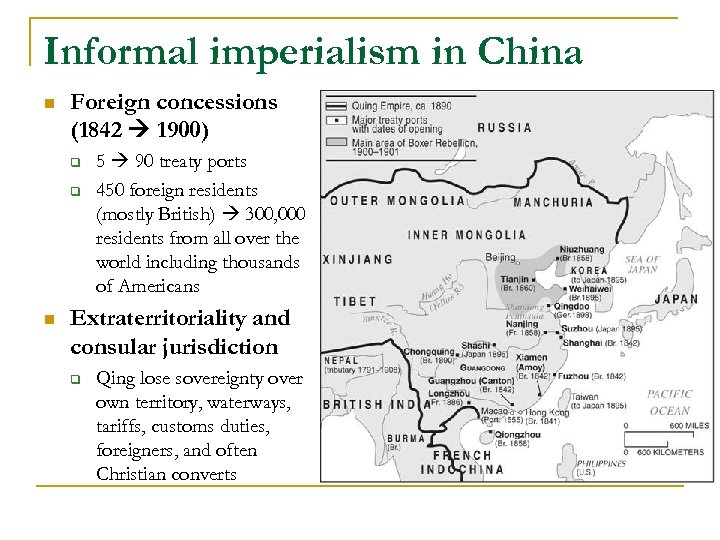 Informal imperialism in China n Foreign concessions (1842 1900) q q n 5 90 treaty ports 450 foreign residents (mostly British) 300, 000 residents from all over the world including thousands of Americans Extraterritoriality and consular jurisdiction q Qing lose sovereignty over own territory, waterways, tariffs, customs duties, foreigners, and often Christian converts
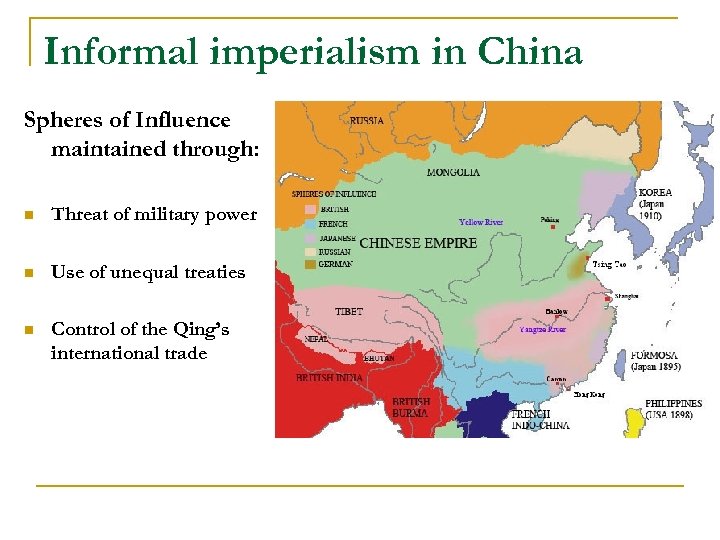 Informal imperialism in China Spheres of Influence maintained through: n Threat of military power n Use of unequal treaties n Control of the Qing’s international trade
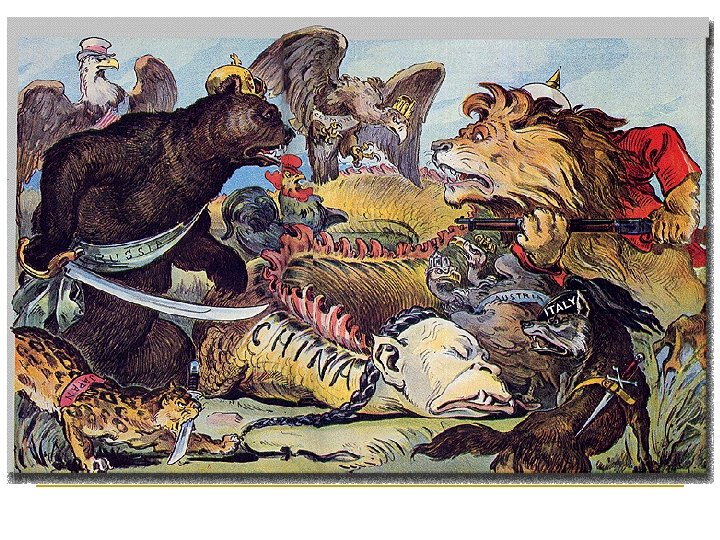
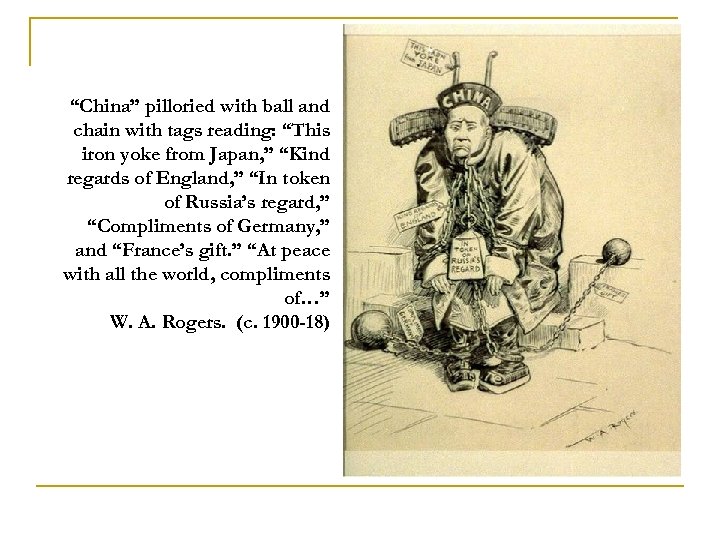 “China” pilloried with ball and chain with tags reading: “This iron yoke from Japan, ” “Kind regards of England, ” “In token of Russia’s regard, ” “Compliments of Germany, ” and “France’s gift. ” “At peace with all the world, compliments of…” W. A. Rogers. (c. 1900 -18)
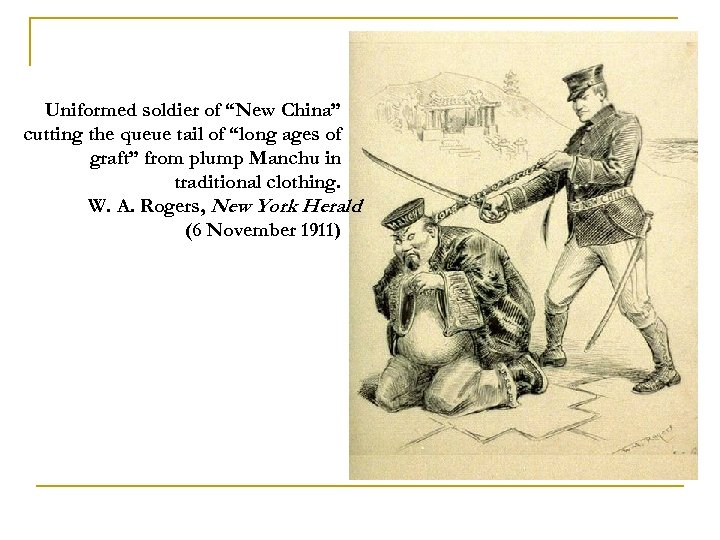 Uniformed soldier of “New China” cutting the queue tail of “long ages of graft” from plump Manchu in traditional clothing. W. A. Rogers, New York Herald (6 November 1911)
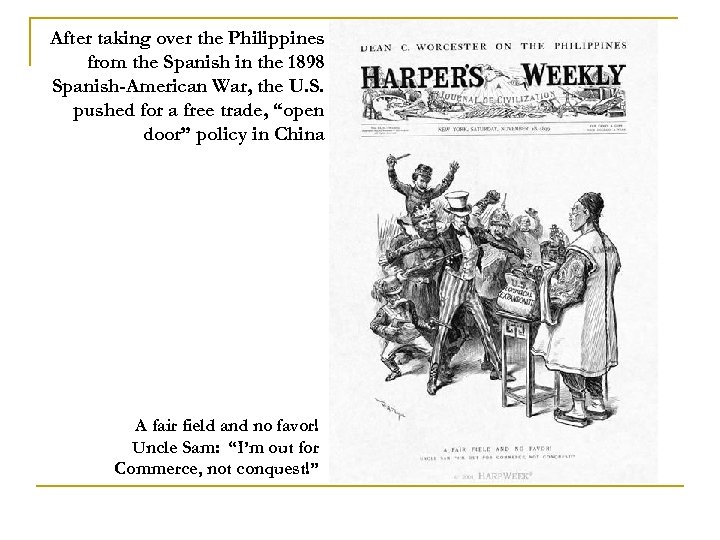 After taking over the Philippines from the Spanish in the 1898 Spanish-American War, the U. S. pushed for a free trade, “open door” policy in China A fair field and no favor! Uncle Sam: “I’m out for Commerce, not conquest!”
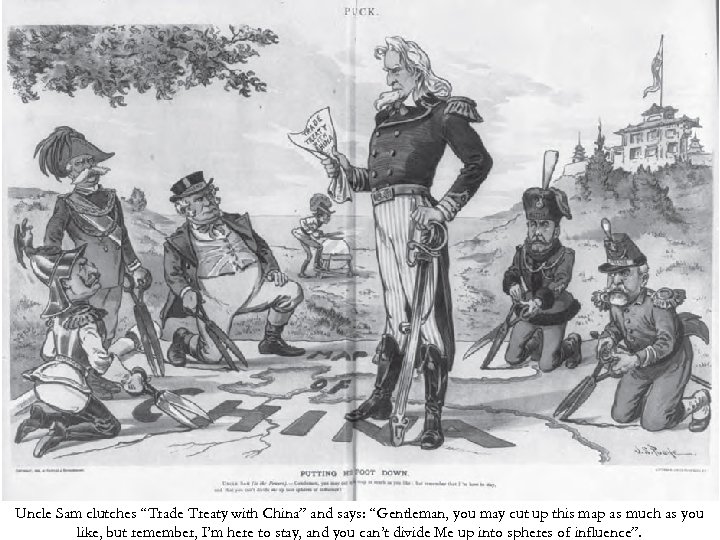 Uncle Sam clutches “Trade Treaty with China” and says: “Gentleman, you may cut up this map as much as you like, but remember, I’m here to stay, and you can’t divide Me up into spheres of influence”.
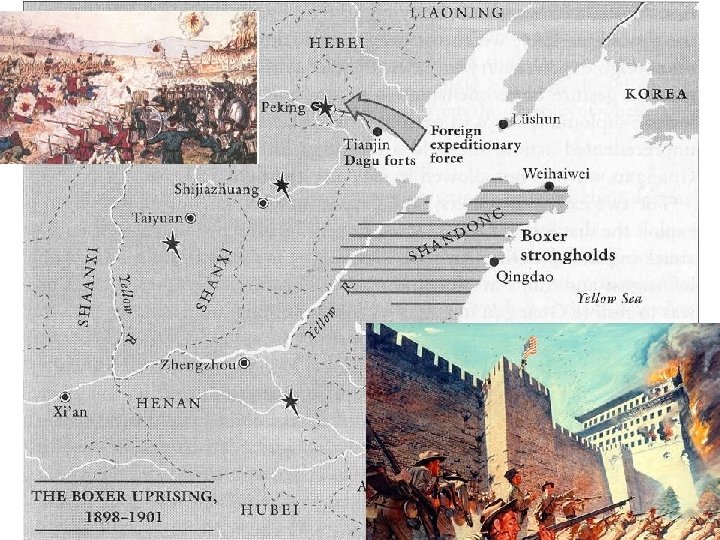
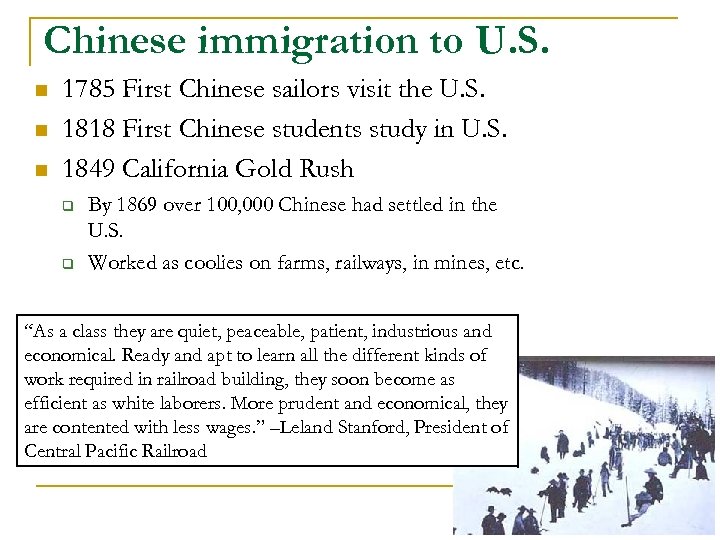 Chinese immigration to U. S. n n n 1785 First Chinese sailors visit the U. S. 1818 First Chinese students study in U. S. 1849 California Gold Rush q q By 1869 over 100, 000 Chinese had settled in the U. S. Worked as coolies on farms, railways, in mines, etc. “As a class they are quiet, peaceable, patient, industrious and economical. Ready and apt to learn all the different kinds of work required in railroad building, they soon become as efficient as white laborers. More prudent and economical, they are contented with less wages. ” –Leland Stanford, President of Central Pacific Railroad
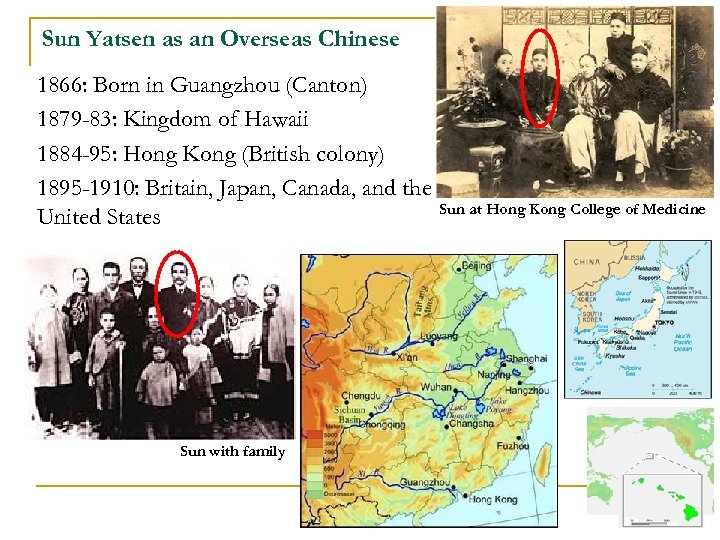 Sun Yatsen as an Overseas Chinese 1866: Born in Guangzhou (Canton) 1879 -83: Kingdom of Hawaii 1884 -95: Hong Kong (British colony) 1895 -1910: Britain, Japan, Canada, and the United States Sun with family Sun at Hong Kong College of Medicine
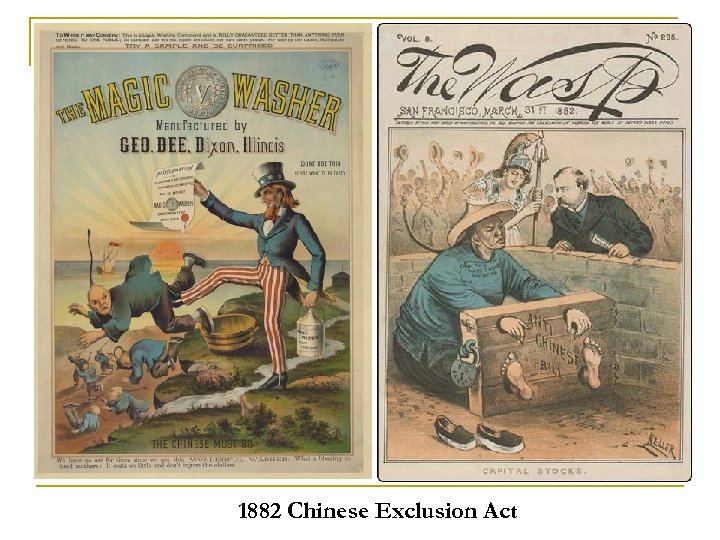 1882 Chinese Exclusion Act
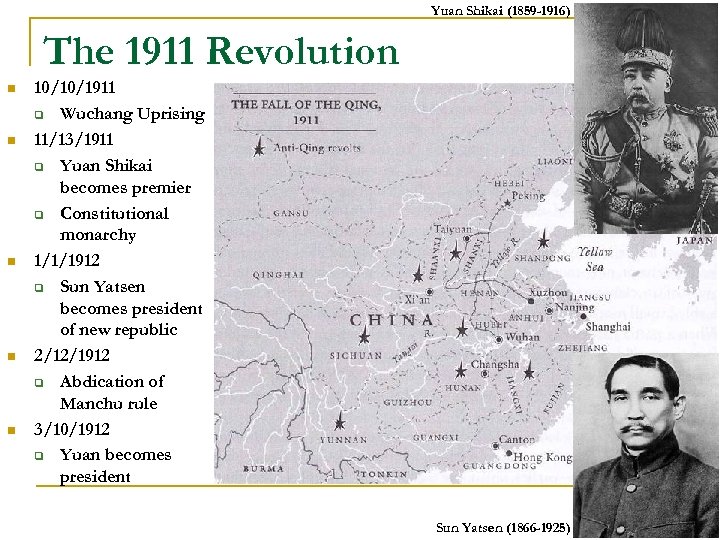 Yuan Shikai (1859 -1916) The 1911 Revolution n n 10/10/1911 q Wuchang Uprising 11/13/1911 q Yuan Shikai becomes premier q Constitutional monarchy 1/1/1912 q Sun Yatsen becomes president of new republic 2/12/1912 q Abdication of Manchu rule 3/10/1912 q Yuan becomes president Sun Yatsen (1866 -1925)
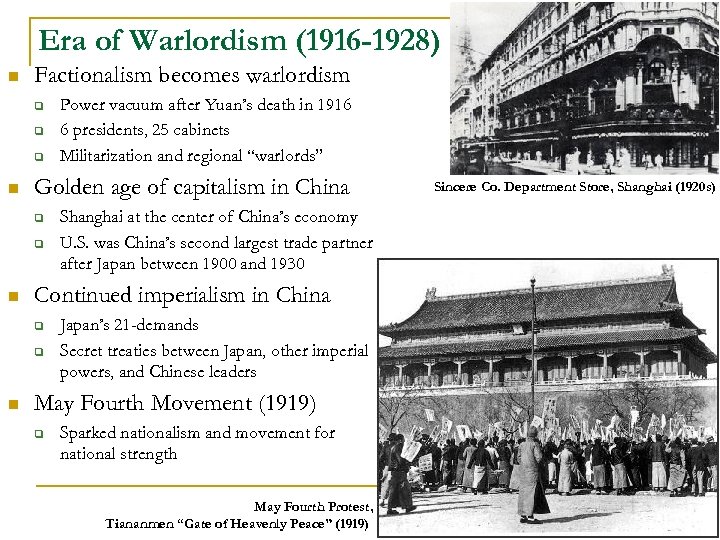 Era of Warlordism (1916 -1928) n Factionalism becomes warlordism q q q n Golden age of capitalism in China q q n Shanghai at the center of China’s economy U. S. was China’s second largest trade partner after Japan between 1900 and 1930 Continued imperialism in China q q n Power vacuum after Yuan’s death in 1916 6 presidents, 25 cabinets Militarization and regional “warlords” Japan’s 21 -demands Secret treaties between Japan, other imperial powers, and Chinese leaders May Fourth Movement (1919) q Sparked nationalism and movement for national strength May Fourth Protest, Tiananmen “Gate of Heavenly Peace” (1919) Sincere Co. Department Store, Shanghai (1920 s)
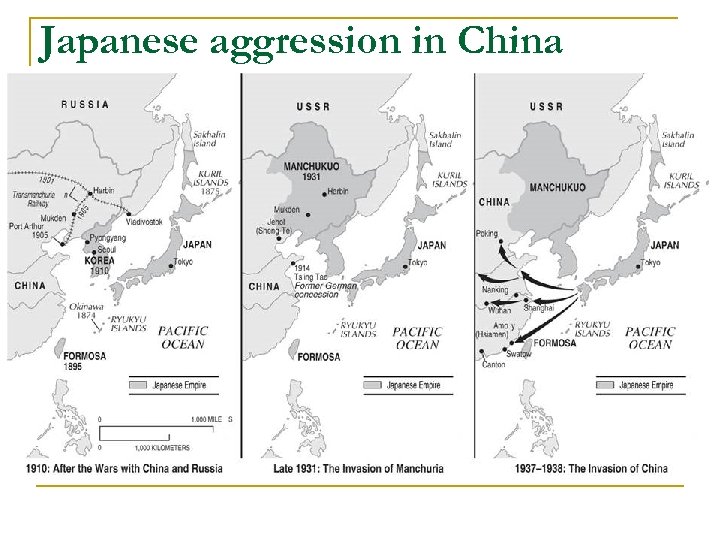 Japanese aggression in China
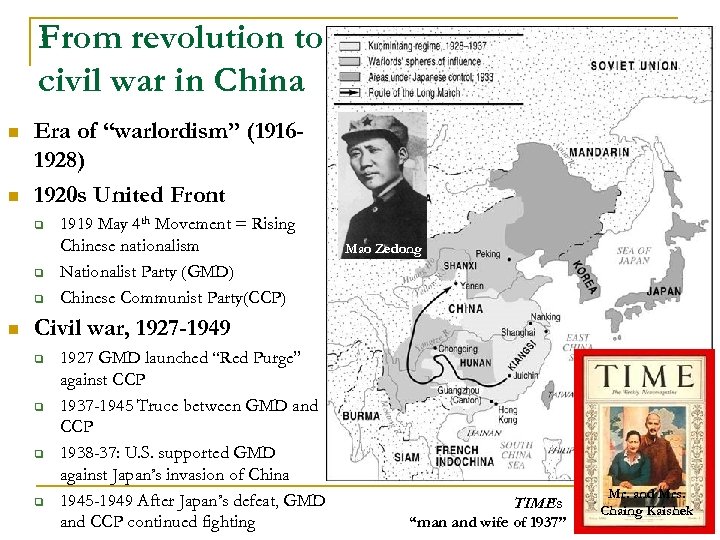 From revolution to civil war in China n n Era of “warlordism” (19161928) 1920 s United Front q q q n 1919 May 4 th Movement = Rising Chinese nationalism Nationalist Party (GMD) Chinese Communist Party(CCP) Mao Zedong Civil war, 1927 -1949 q q 1927 GMD launched “Red Purge” against CCP 1937 -1945 Truce between GMD and CCP 1938 -37: U. S. supported GMD against Japan’s invasion of China 1945 -1949 After Japan’s defeat, GMD and CCP continued fighting TIME’s “man and wife of 1937” Mr. and Mrs. Chaing Kaishek
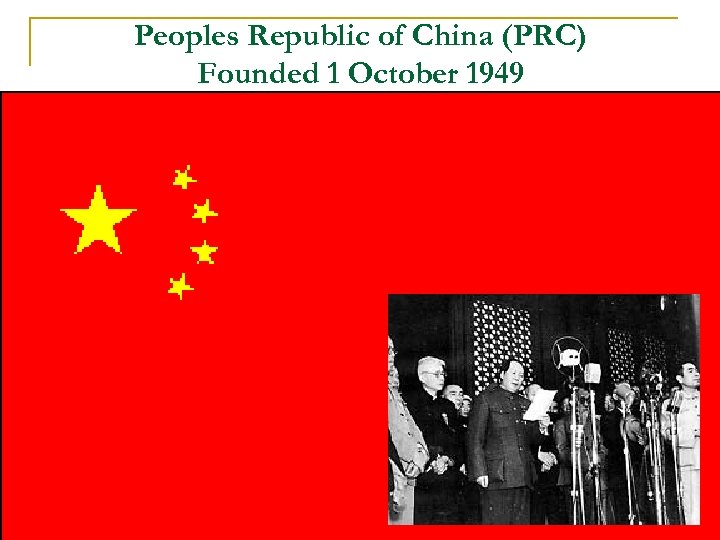 Peoples Republic of China (PRC) Founded 1 October 1949
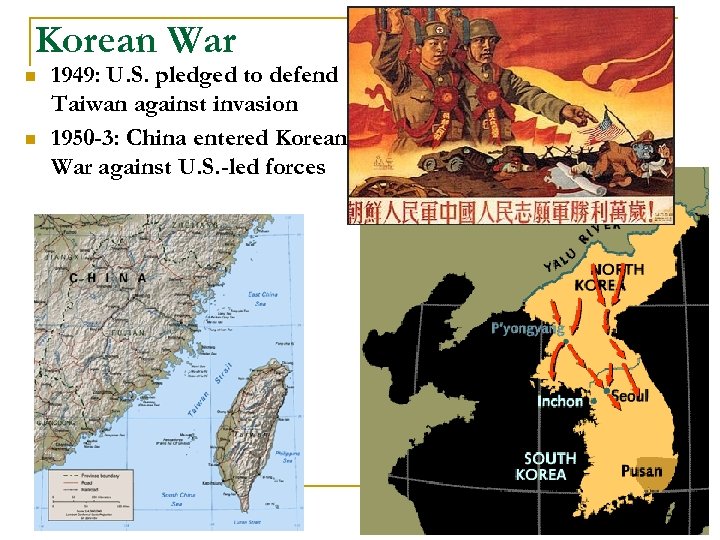 Korean War n n 1949: U. S. pledged to defend Taiwan against invasion 1950 -3: China entered Korean War against U. S. -led forces
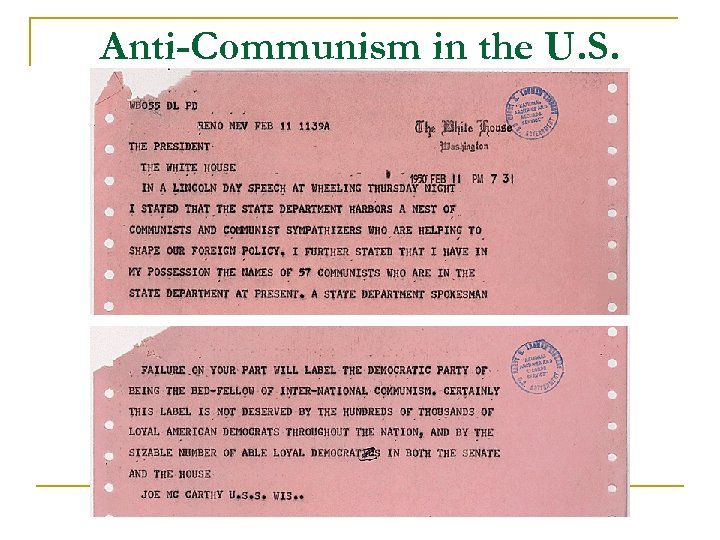 Anti-Communism in the U. S.
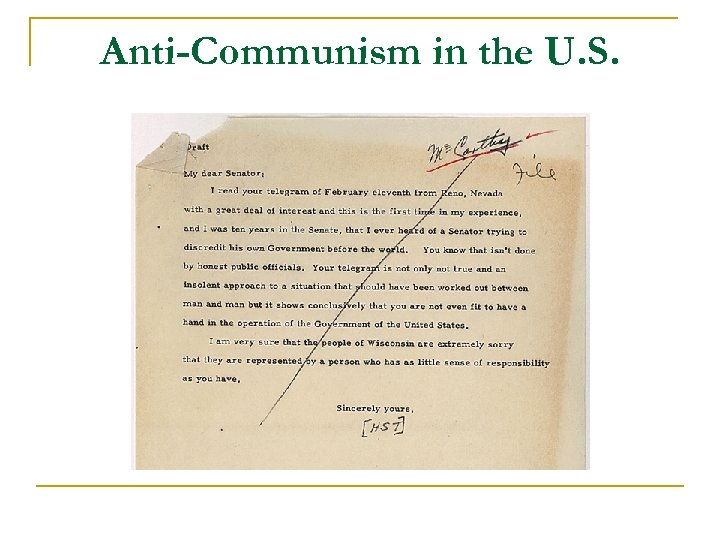 Anti-Communism in the U. S.
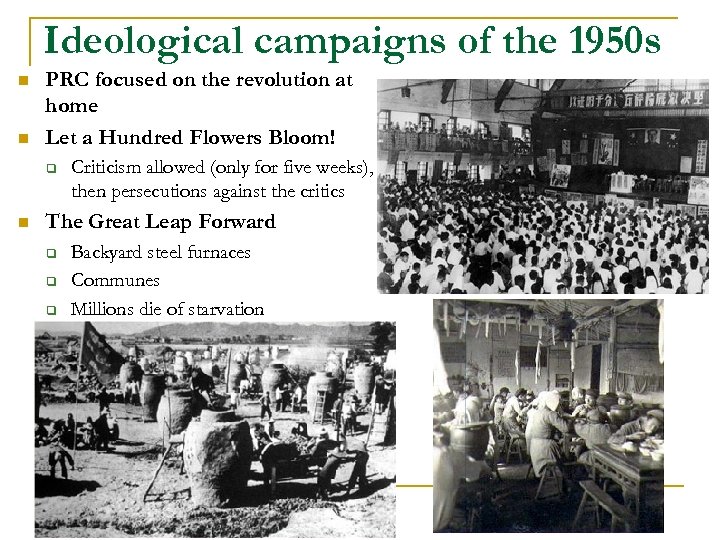 Ideological campaigns of the 1950 s n n PRC focused on the revolution at home Let a Hundred Flowers Bloom! q n Criticism allowed (only for five weeks), then persecutions against the critics The Great Leap Forward q q q Backyard steel furnaces Communes Millions die of starvation
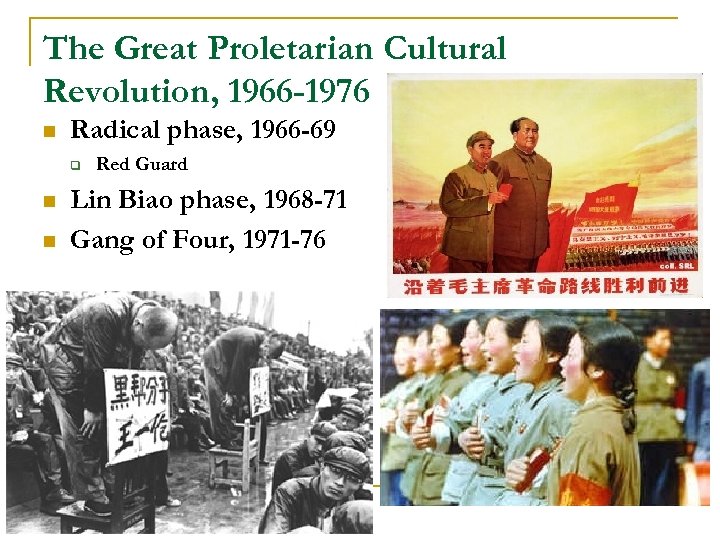 The Great Proletarian Cultural Revolution, 1966 -1976 n Radical phase, 1966 -69 q n n Red Guard Lin Biao phase, 1968 -71 Gang of Four, 1971 -76
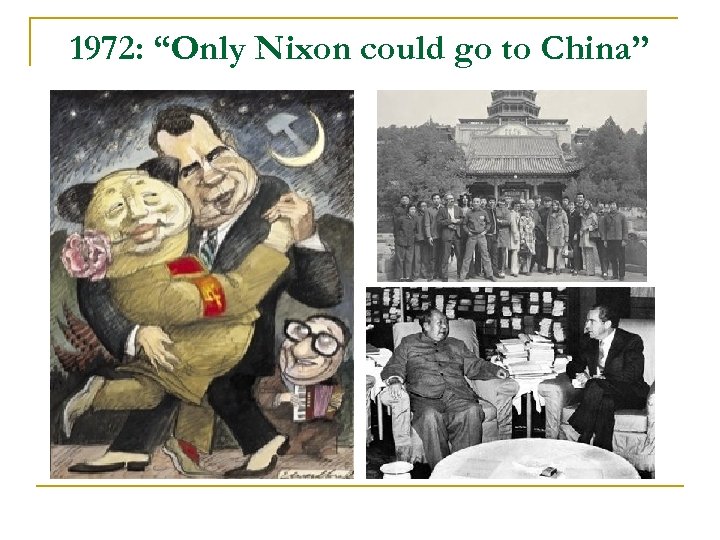 1972: “Only Nixon could go to China”
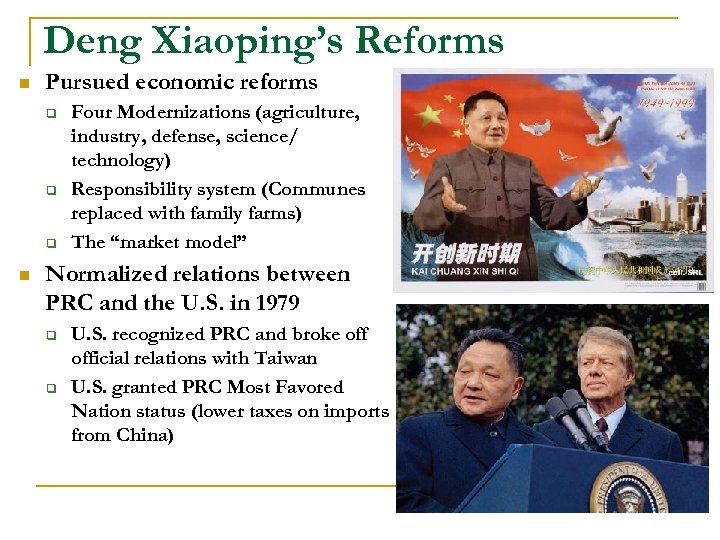 Deng Xiaoping’s Reforms n Pursued economic reforms q q q n Four Modernizations (agriculture, industry, defense, science/ technology) Responsibility system (Communes replaced with family farms) The “market model” Normalized relations between PRC and the U. S. in 1979 q q U. S. recognized PRC and broke official relations with Taiwan U. S. granted PRC Most Favored Nation status (lower taxes on imports from China)
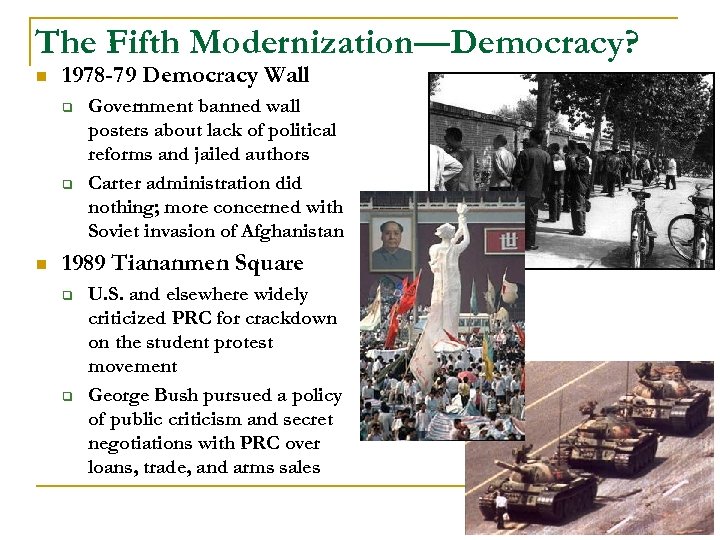 The Fifth Modernization—Democracy? n 1978 -79 Democracy Wall q q n Government banned wall posters about lack of political reforms and jailed authors Carter administration did nothing; more concerned with Soviet invasion of Afghanistan 1989 Tiananmen Square q q U. S. and elsewhere widely criticized PRC for crackdown on the student protest movement George Bush pursued a policy of public criticism and secret negotiations with PRC over loans, trade, and arms sales
 Take-away Questions n How has trade shaped U. S. relations with foreign countries like China? n Considering the absence of human rights issues in past U. S. -China relations, how important should they be considered now? n Given the U. S. and China are the two greatest polluting countries, how can the U. S. experience inform China’s economic development?
 Great websites for teaching China and Asia n Asia for Educators q n MIT Visualizing Cultures q n http: //history. state. gov/ China: Trade, Politics, and Culture 1793 -1980 q n http: //ocw. mit. edu/ans 7870/21 f. 027/home/index. html U. S. Dept. of State, Office of the Historian q n http: //afe. easia. columbia. edu/index. html http: //www. china. amdigital. co. uk/index. aspx A Visual Sourcebook of Chinese Civilization q http: //depts. washington. edu/chinaciv/